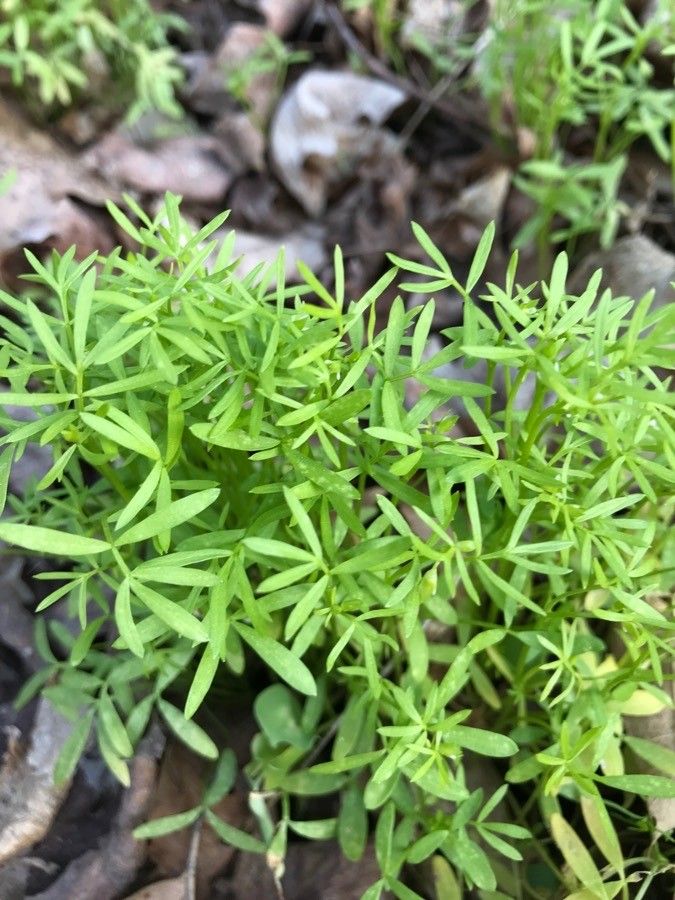
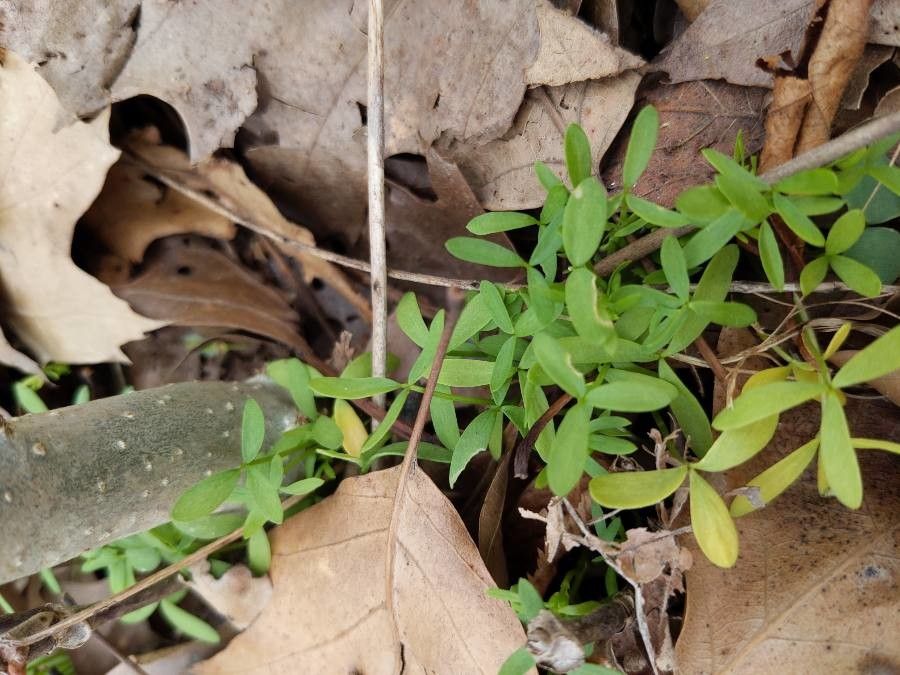
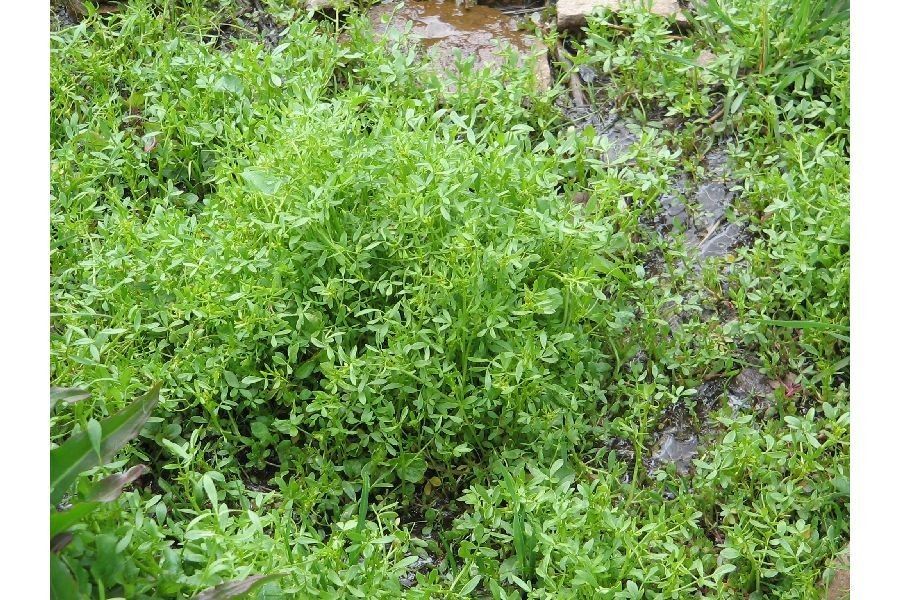
Floerkea is a monotypic genus of plants in the meadowfoam family containing the sole species Floerkea proserpinacoides, which is known by the common names false mermaid, false mermaidweed, and floerkea. This tiny wildflower is native to many parts of North America, where it is found in moist areas such as shady forests. It is a fleshy, annual herb which grows short stems which may lie flat on the ground, tangle into a clump, or grow somewhat erect. The foliage is hairless and shiny. The leaves are divided into many oval-shaped, pointed leaflets up to 2 cm (0.79 in) long. The flower is a cup of pointed green sepals containing three tiny white spoon-shaped petals and a bunch of stamens with yellow anthers. Growing in the center of the flower are the two to three fruits, which are bumpy, spherical nutlets.The logo for the Flora of North America is a Floerkea flower. The genus was named in honor of the German botanist, Heinrich Gustav Flörke.
False mermaidweed has moderate resistance to disease but can be susceptible to problems such as leaf spot. Its susceptibility to insect pests varies by variety, although most are generally less resistant to pests. For care, False mermaidweed requires regular watering and fertilizing, and yellow leaves should be pruned often. It is important to address pests and diseases when they occur and to harvest the plant promptly. False mermaidweed is suitable for those who can dedicate some time and effort to routine care.
How to keep Floerkea Proserpinacoides.
Light
False mermaidweed thrives in abundant sunlight, making it well suited to areas that get light throughout the day. It can persist in partly lit or completely shaded spots, though this may slow its growth. Its native habitat has accustomed it to generous sun exposure. However, both excessive and insufficient light can hinder its growth.
Water
False mermaidweed flourishes in moist environments, needing consistent hydration and weekly watering. It prefers soil that retains moisture but also has good drainage. Because it's sensitive to water balance, it's important to pay close attention during its active growth periods to avoid overwatering or drought stress.
Humidity
This plant will thrive in moderate humidity, which is probably the level in your home. However, misting it a few times a week can be very beneficial. Make sure the room has good ventilation.
Temperature
False mermaidweed is a temperate species adapted to a native growth environment with temperatures from 68 to 95 °F (20 to 35 ℃). Its temperature preferences fall within these bounds, and seasonal temperature adjustments should be made so conditions remain within this range.
Fertilizer
False mermaidweed species do well with one or two applications of organic natural fertilizers that include potassium and phosphorus. Apply the fertilizer before planting, work it into the soil and water thoroughly. Usually a single application suffices, but you can give a second application once seedlings are established. Avoid overusing fertilizer to prevent damage to the plants.
Pruning
False mermaidweed has delicate leaves and small white flowers. To maintain its shape and encourage growth, prune it from early to late spring. Key techniques include removing dead stems and lightly trimming for bushier growth, which also improves air circulation and reduces the risk of fungal diseases.
Botanical profile.
- Plant Type
- Herb
- Life Cycle
- Annual
- Genus
- Floerkea
- Family
- Limnanthaceae
- Hardiness Zone
- 5-8
- Mature Height
- 1 cm to 5 cm
- Mature Spread
- 30 cm
- Leaf Color
- Light Green
- Leaf Type
- Semi-evergreen
- Flower Color
- White
- Flower Size
- 0.76 cm
- Bloom Time
- Early spring, Mid spring
- Planting Time
- Spring, Summer
- Harvest Time
- Late spring, Early summer
Other names.
Reader questions.
How should I water my False mermaidweed in the best way?
The False mermaidweed has specific preferences for its water needs, including the method of watering. Proper watering is crucial for protecting your tomatoes. To water False mermaidweed effectively, apply water directly to the soil in a slow and gentle manner. Avoid pouring all of the water at once or using overhead watering. While watering slowly, make sure to water deeply to ensure sufficient moisture throughout the soil where your False mermaidweed is growing.
What are the sunlight requirements for False Mermaidweed?
False mermaidweed flourishes in locations that receive full sun, which means areas that get above 6 hours of sunlight a day. However, it can also survive in conditions of partial sun or full shade, receiving about 3-6 hours of sunlight, although growth may be slower in these conditions. The plant's natural habitat has conditioned it to thrive in ample sun exposure. Watch the sun's movement through your garden to find spots that offer a balance of light and shade, which is crucial for the plant’s well-being.
What temperature range is suitable for False mermaidweed?
False mermaidweed, known botanically as Floerkea proserpinacoides, thrives best in a temperate environment, specifically within a temperature range of 68 to 95 °F (20 to 35 °C). It is adapted to relatively warm temperatures, and it is beneficial for the plant's growth to maintain temperatures above 20°C, especially during winter cultivation. To prevent freezing damage, it is crucial to keep the temperature above the freezing point, and protective measures should be taken when outdoor temperatures approach -5°C (25°F), such as bringing the plant indoors or using a temporary greenhouse or wraps like plastic film or fabric.
What do I do if I give my False mermaidweed too much or too little water?
If you realize that you have overwatered your False mermaidweed and are worried about the risk of disease, take immediate action. The best approach is often to remove the plant from its current location and let the roots dry before replanting it in soil with good drainage. If you are growing it in pots, consider switching to a pot with better drainage. On the other hand, if you have underwatered your plant, simply increase the frequency of watering.
How does artificial lighting affect the growth of indoor False Mermaidweed plants?
For False mermaidweed plants grown indoors where natural sunlight is insufficient, especially in the winter or in areas that receive less sunshine, artificial lighting provides an essential alternative. Artificial lights support faster and healthier growth. LED lights are recommended because they can be tailored to emit specific wavelengths needed by the plants. Full sun plants require 30-50W/sq ft of artificial light, partial sun plants need 20-30W/sq ft, and full shade plants need 10-20W/sq ft. The artificial light source should be placed 12-36 inches above the plant to simulate natural sunlight, and most plants will benefit from 8-12 hours of light per day.
How should False mermaidweed be protected against low temperatures?
False mermaidweed has a moderate tolerance to low temperatures but thrives optimally when the temperature is kept between 20°C and 35°C. To protect the plant during winter, it is important to ensure that the temperature stays above 0°C. If temperatures fall below -25°C, the plant may exhibit symptoms such as darkening leaves, water-soaked necrosis, wilting, and drooping, with leaves turning brown in severe cases. The recommended solution is to trim away the frost-damaged parts and move the plant to a warm indoor environment or set up a temporary greenhouse. If placed indoors, positioning near a south-facing window for ample sunlight is advisable, along with supplemental lighting if necessary.
How often do I need to water my False mermaidweed?
False mermaidweed needs a lot of water while it is growing. To meet this need, you should water it frequently during the spring and summer. At the beginning of the growing season, water it once or twice a week. As the season goes on, increase the frequency of watering. In the hot summer months, you may need to water it twice a day or even more, depending on the weather. Once the False mermaidweed has finished its major growth phases, you can decrease the frequency of watering to about once a week until the growing season is over.
What symptoms indicate a light deficiency in indoor False Mermaidweed plants?
When False mermaidweed is grown indoors under limited light, it may display several symptoms indicating light deficiency. These include smaller new leaves compared to mature ones, a leggy or sparse growth appearance, faster leaf drop, slower or halted growth, leaves developing pale or irregular colors due to lack of chlorophyll, chlorosis (leaves turning yellow), sunscald (damage from intense sunlight exposure), leaf curling (a defense mechanism against excessive sunlight), wilting from increased water loss due to high sun exposure, and leaf scorching characterized by brown, dry edges or patches on leaves.
What are the effects of high temperatures on False mermaidweed and how can they be mitigated?
During the summer, it's essential to ensure that the temperature around False mermaidweed does not exceed 35°C. High temperatures above 38°C can slow the plant's growth, lead to a lighter color of the leaves, and increase susceptibility to sunburn. To mitigate these effects, remove any sunburned or dried-up parts of the plant. Relocate the plant to a shaded area, away from the harsh afternoon sun. Additionally, maintaining soil moisture is crucial, so watering the plant during the morning and evening can help keep it hydrated and healthy.
How much water does my False mermaidweed require?
False mermaidweed is a popular plant among both professional and amateur gardeners. As a result, we have gained a good understanding of how to care for these plants. Specifically, we know that on average, False mermaidweed should receive about 1 - 1.5 inches of water per week. It's important to distribute this amount evenly during your weekly watering. In hotter weather, you may need to increase the water supply, but in general, two inches per week is a good starting point.
How can I address light deficiency in False Mermaidweed plants?
To manage light deficiency in False mermaidweed plants, gradually introduce them to more sunlight. For indoor plants, move them closer to a sunnier spot each week, aiming for at least 6 hours of direct sunlight daily. Utilize a south-facing window, and consider using artificial lighting such as desk or ceiling lamps, or professional grow lights, for at least 8 hours a day if the plant is too large to move. Outdoors, acclimate your plants to brighter spots by moving them to sunnier locations gradually each week to prevent sunburn. Minimize sunlight obstructions by pruning trees or relocating plants to sunnier areas, ensuring they are transplanted during their dormant period for the best chance of thriving in their new location.
How can I know if I'm giving enough water to my False mermaidweed?
False mermaidweed can face problems of both underwatering and overwatering, which can present similar symptoms. Overwatering or underwatering can cause foliage discoloration and wilting. When underwatered, the leaves of False mermaidweed will initially curl and droop, with a decrease in their vibrancy. Stunted growth and poor overall development can result from underwatering, as this plant thrives with a high water intake. On the other hand, overwatering can lead to diseases like rot and unpleasant odors emanating from the soil. The symptoms of underwatering appear faster than those of overwatering. If you observe a lot of standing water or waterlogged soils, it is likely due to overwatering.