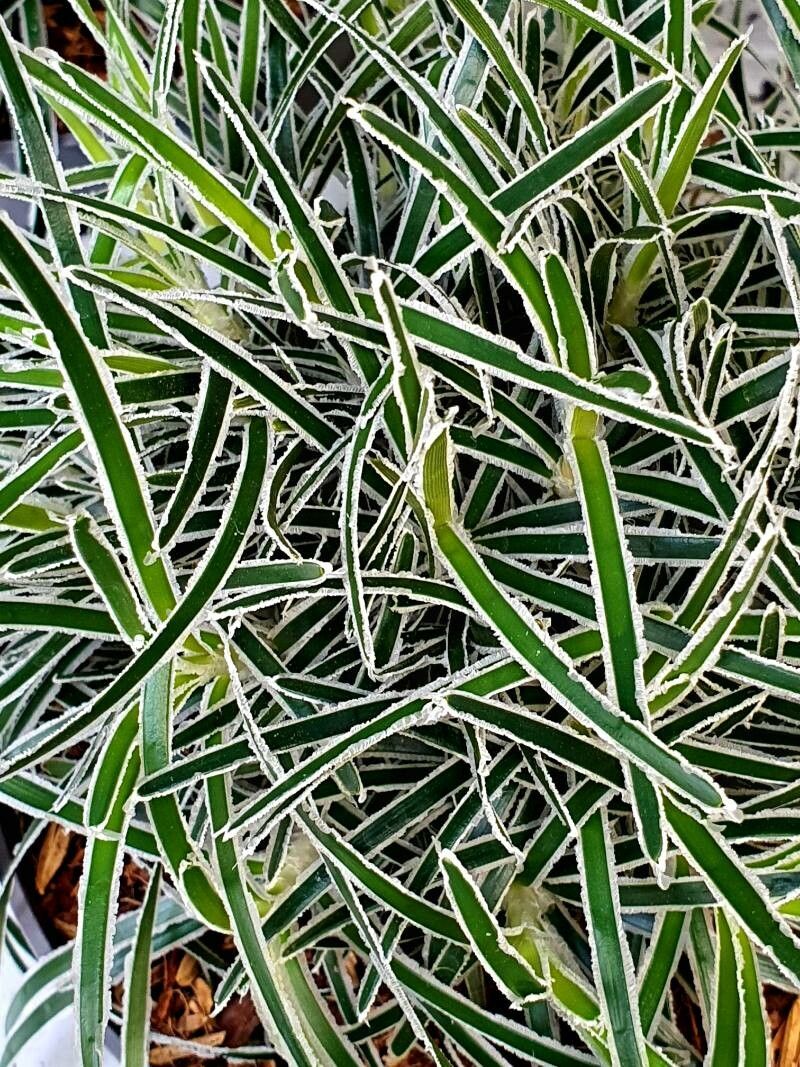
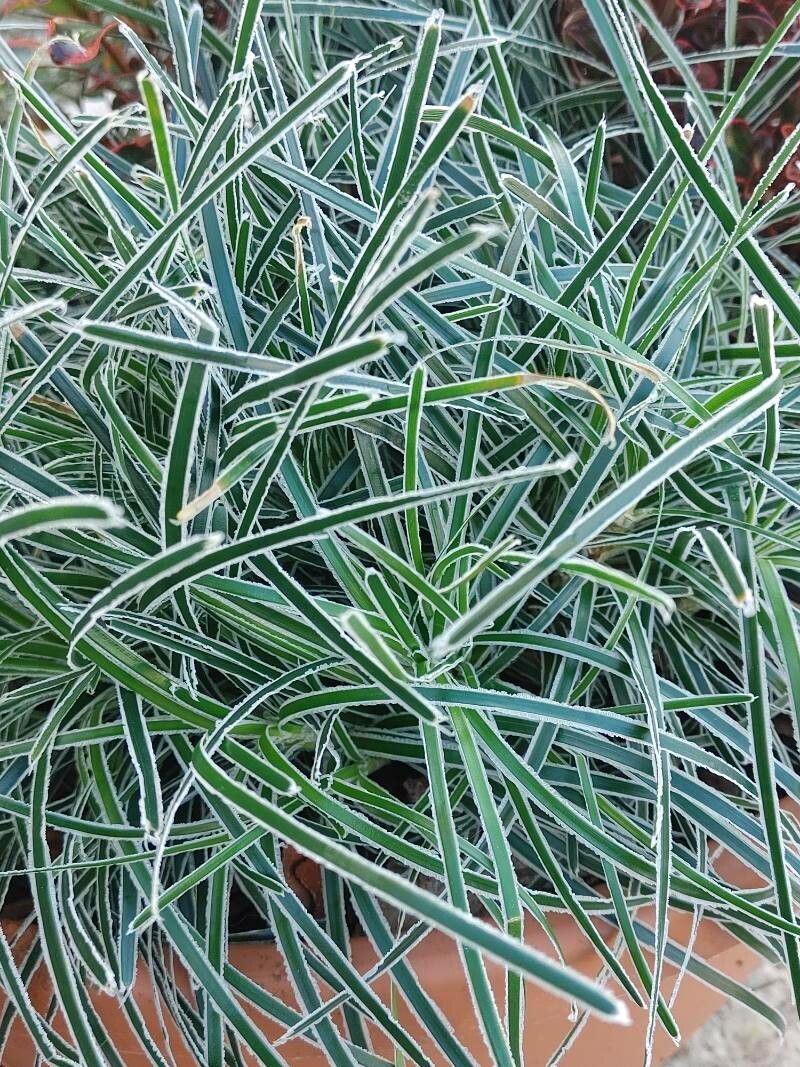
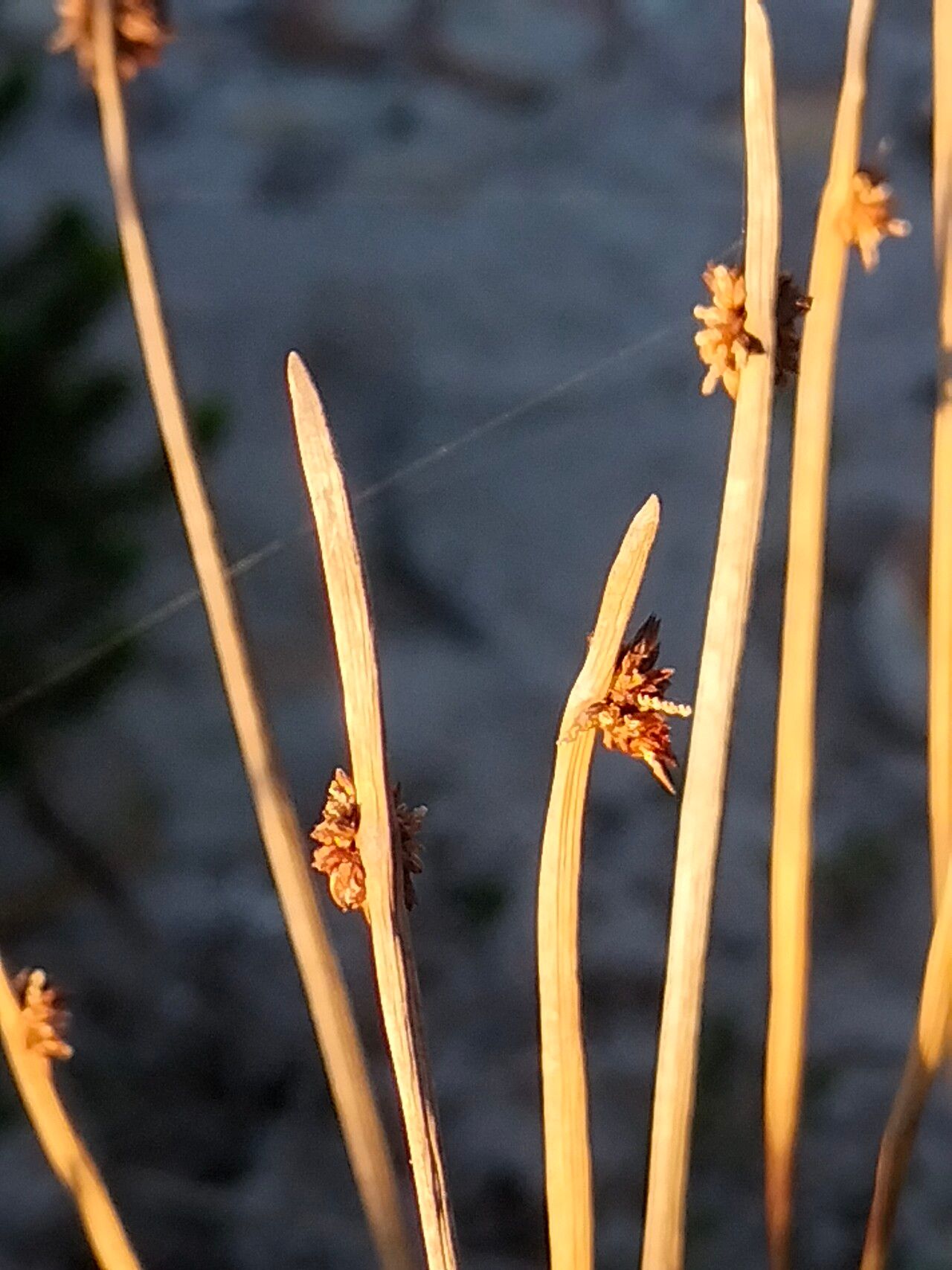
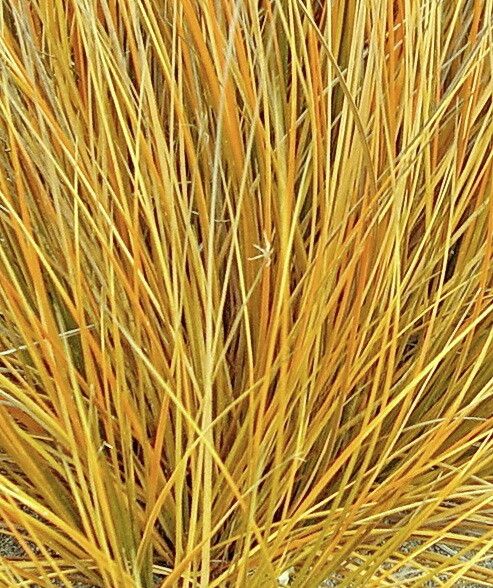
This small, grass-like perennial, with a frost-kissed appearance, brings charm to borders and containers. It forms neat tufts of flat, slightly upward-arching green leaves with white margins, creating a tidy mound. As summer approaches, delicate brown flower spikes add decorative interest. It works beautifully as a single planting for a rock garden accent or en masse as groundcover or edging. Plus, it's evergreen.
Ficinia truncata is disease-resistant and typically not susceptible to illnesses. In terms of maintenance, the plant is fairly low-maintenance. When grown outdoors it needs only minimal watering, and larger specimens usually do not require pruning. Smaller specimens, however, should be pruned after they flower. Ficinia truncatat is appropriate for anyone with an outdoor area, such as a garden or deck, and does not demand a lot of gardening experience.
How to keep Ficinia Truncata.
Light
Ficinia truncata is native to habitats like forest understories and rocky areas, where it grows under natural shade. It prefers partial sun but can tolerate both full sun and full shade, demonstrating its versatility and hardiness.
Water
Ficinia truncata thrives in high humidity and requires consistent moisture, benefiting from watering every two weeks. Although it is drought-tolerant, it requires well-draining soil to prevent waterlogging. Its watering needs can vary with seasonal rainfall, allowing it to adapt to different climate zones.
Fertilizer
Ficinia truncata needs extra nutrients to encourage healthy new growth. In spring, placing compost around the plant's base will effectively provide the nutrition it requires. Fertilizing supports vigorous growth and helps the plant resist diseases and pests.
Pruning
Ficinia truncata is a plant with compact growth and needle-like foliage. To maintain its health and appearance, follow these pruning tips: - Prune in early spring to remove any dead or damaged leaves, which enhances the plant's health. - Trim overgrown stems to improve air circulation. - Always use clean, sharp tools to prevent infections. Regular pruning not only improves the plant's shape and vigor but also enhances its overall beauty.
Botanical profile.
- Plant Type
- Grass
- Life Cycle
- Perennial
- Genus
- Ficinia
- Family
- Cyperaceae
- Hardiness Zone
- 9-11
- Mature Height
- 30 cm to 61 cm
- Mature Spread
- 20 cm to 40 cm
- Leaf Color
- Dark Green
- Leaf Type
- Evergreen
- Bloom Time
- Mid fall, Late fall, Early winter
- Planting Time
- Summer, Autumn
- Harvest Time
- Winter
- Native Area
- South Africa