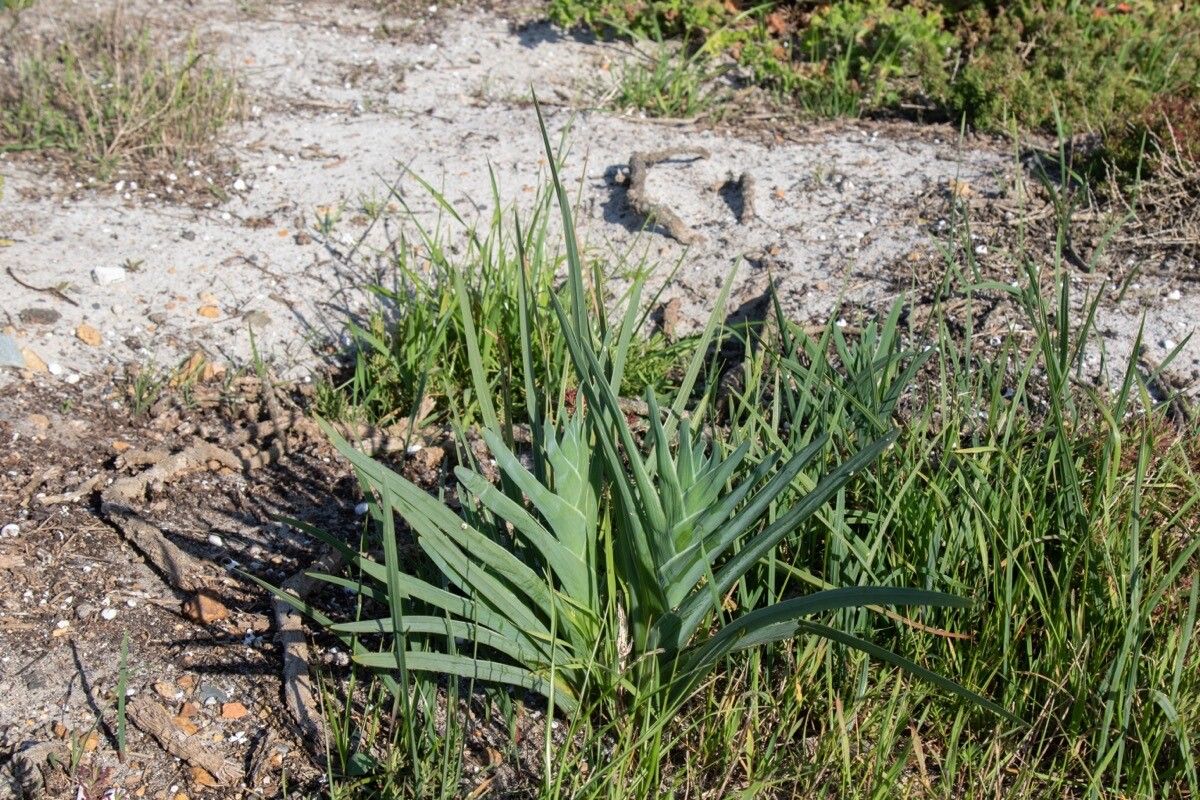
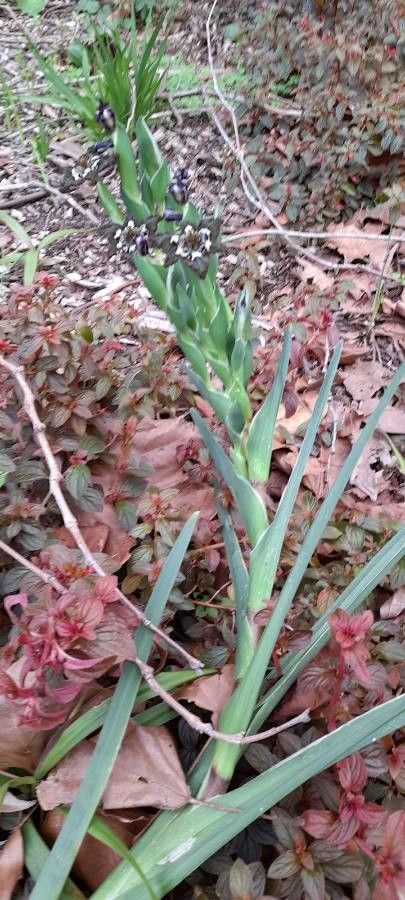
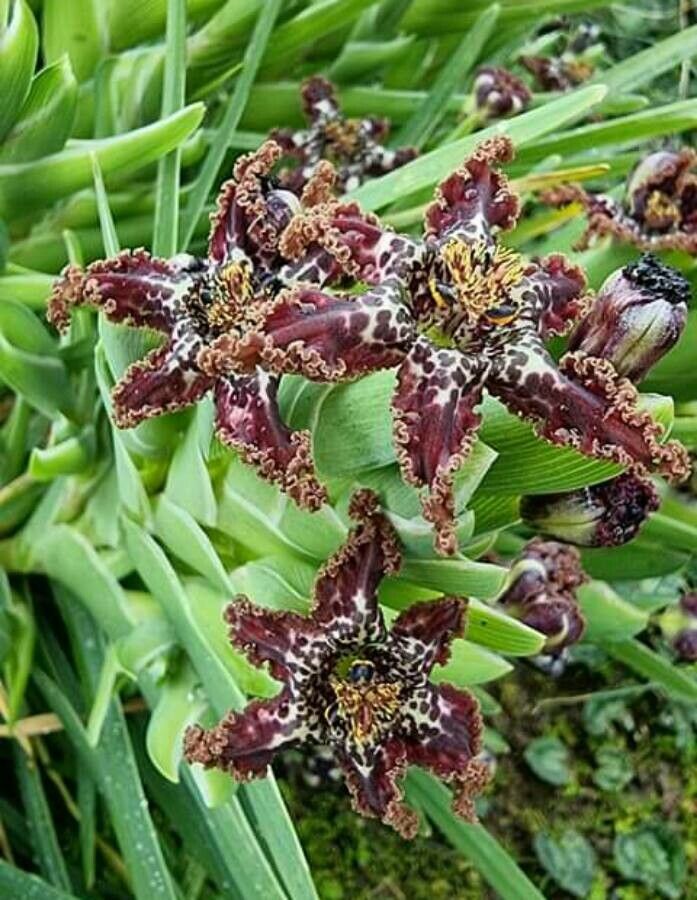
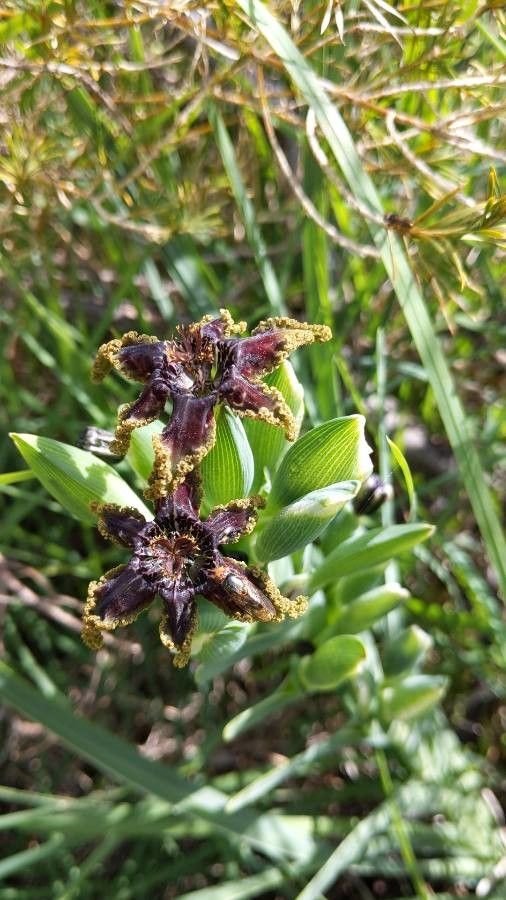
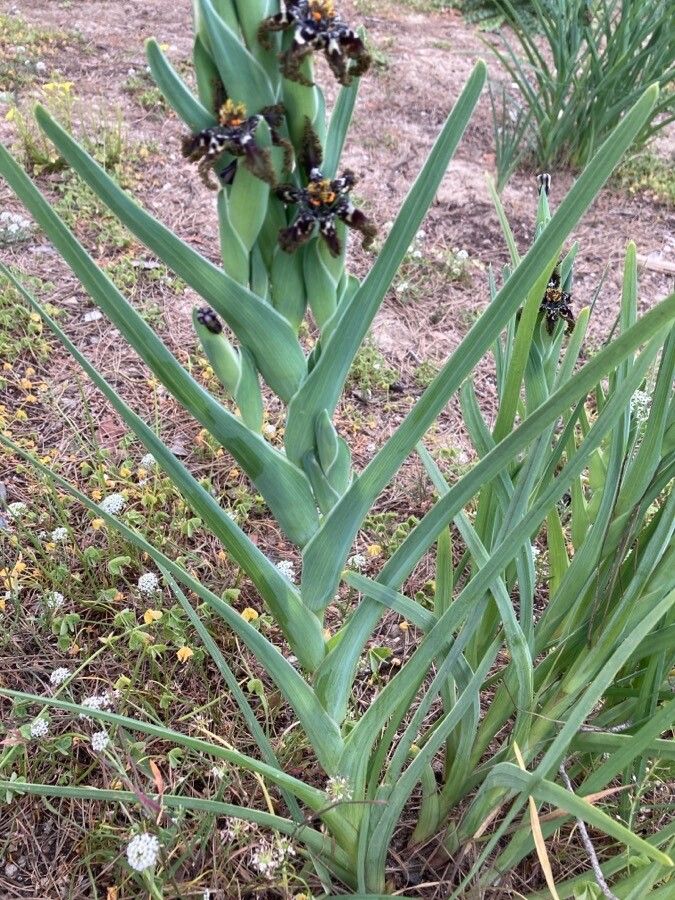
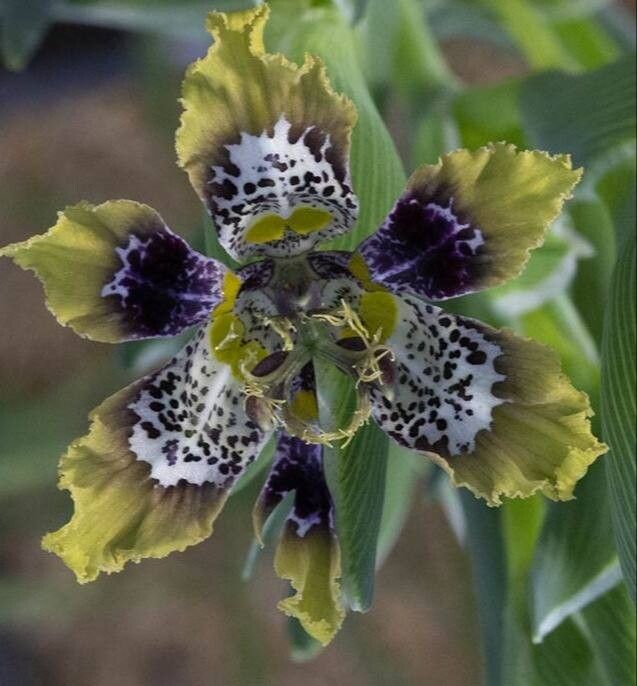
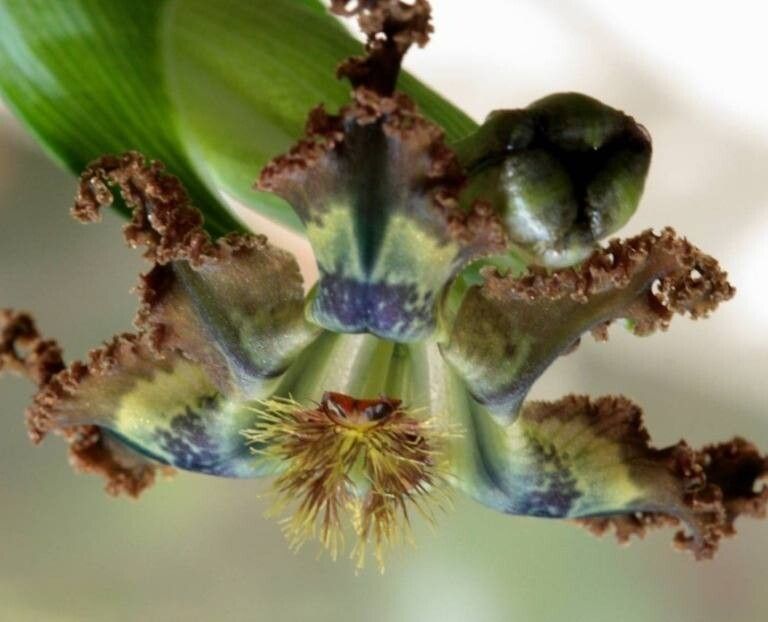
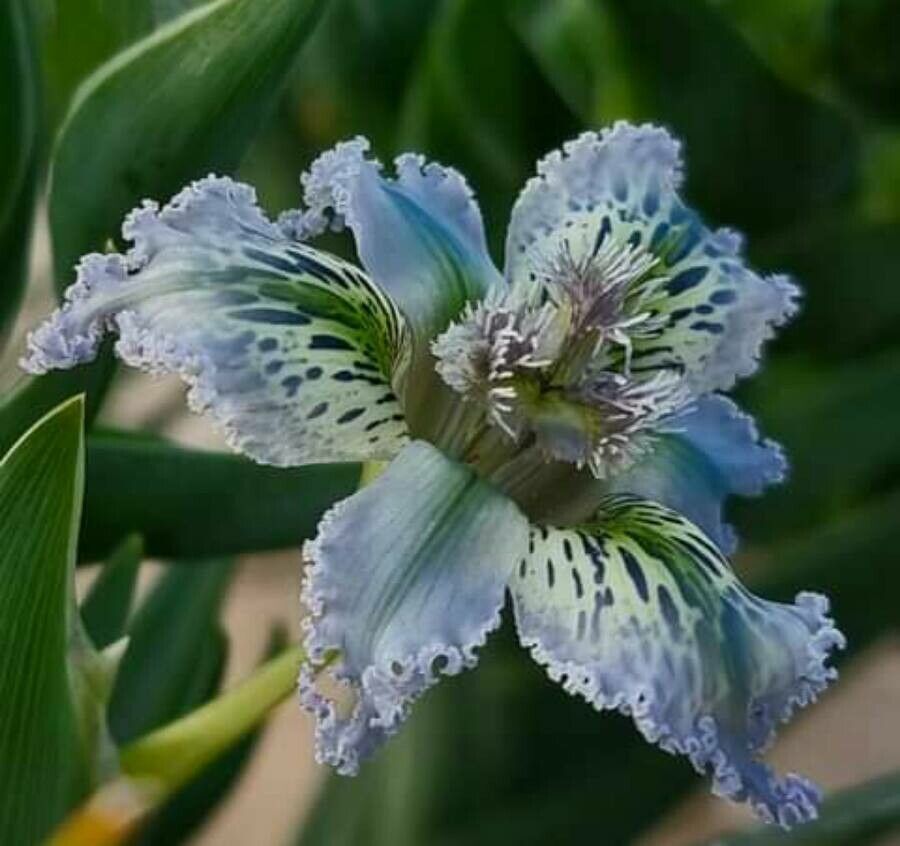
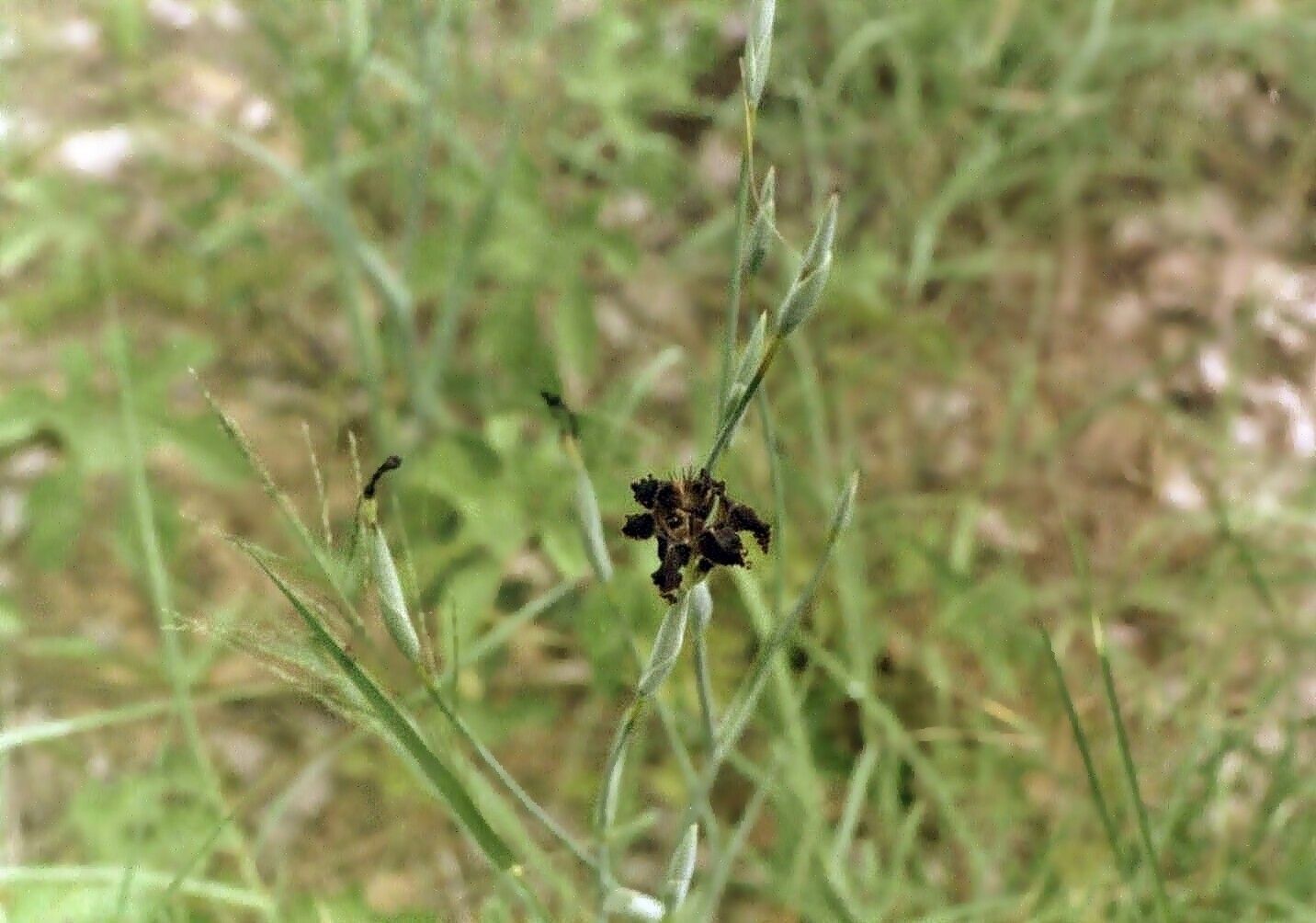
Ferraria crispa is a perennial plant species belonging to the Iridaceae family. Native to South Africa, it is commonly known as the "Curly Ferraria" for its distinctively curly leaves. This plant typically reaches up to 30 cm in height and features stunning flowers that are yellow with brownish-red markings. The blossoms appear in late winter or early spring, with each flower lasting only one day.
Ferraria crispa thrives in well-drained soil with moderate moisture levels, making it a suitable choice for rock gardens or containers. It requires full sun exposure but can also tolerate partial shade. The plant can be propagated through seeds or by dividing its bulbs.
Traditionally, indigenous people have used Curly Ferraria for its medicinal properties, such as treating stomach ailments, fever, and headaches due to its anti-inflammatory effects.
In summary, Ferraria crispa is an attractive ornamental plant that enhances the beauty and uniqueness of any garden setting while also offering medicinal benefits.
Starfish lily is fairly disease-resistant and usually not prone to illnesses. However, it can be vulnerable to pests and diseases present in its environment. These infections are typically not serious. In terms of care, this plant requires moderate maintenance. It should be pruned regularly to keep a good appearance and encourage healthy growth. Fertilizing can also help stimulate flowering. Starfish lily is suitable for anyone with outdoor space, such as a garden or patio, and does not demand much prior care experience. It may need more attention when kept indoors.
How to keep Ferraria Crispa.
Light
The starfish lily prefers plentiful sunlight, which is essential for its growth and development. In its native habitat, this plant prospers in full light. It draws on the sun’s energy at every stage of growth. Both insufficient and excessive sunlight can undermine its health, causing slowed growth or possible wilting.
Water
The starfish lily thrives in areas with sporadic rainfall, preferring less frequent watering. Adapted to dry conditions, it requires hydration only once a week to remain healthy. As an outdoor plant, it is well-suited for gardens that experience distinct wet and dry seasons, showing resilience to changing water availability.
Temperature
Starfish lily is fairly adaptable to temperature, able to withstand higher heat and considerable temperature swings. In hot weather, attention should be paid to watering and providing adequate shade to prevent sunburn. Conversely, Starfish lily is less tolerant of low temperatures. While it can endure some cold, too-cold conditions can cause frost damage.
Fertilizer
For Starfish lily, the primary time to apply fertilizer is in early spring when the flowers are developing. The appropriate fertilizer promotes better blooms and helps the Starfish lily produce attractive flowers. Fertilizing in early spring ensures strong flowering during the season and supplies energy for dormant growth periods.
Pruning
To keep your starfish lily healthy, it's best to prune it from early to late spring. Begin by removing any dead foliage and thinning out overcrowded areas to improve airflow. Avoid heavy pruning to maintain its natural shape. Regular maintenance helps prevent disease and encourages blooms. For optimal health, perform these tasks just as new growth starts to appear.
Botanical profile.
- Plant Type
- Herb
- Life Cycle
- Perennial
- Genus
- Ferraria
- Family
- Iridaceae
- Hardiness Zone
- 9-11
- Mature Height
- 4.57 m
- Mature Spread
- 4.57 m
- Leaf Color
- Green, Blue
- Leaf Type
- Deciduous
- Flower Color
- Yellow, Purple, Brown, Green, Black
- Flower Size
- 2.54 cm to 5.08 cm
- Bloom Time
- Mid spring, Late spring
- Planting Time
- Spring, Summer, Autumn
- Harvest Time
- Early summer, Mid summer
Other names.
Reader questions.
What are the sunlight requirements for a Starfish Lily?
The Starfish Lily (Ferraria crispa) requires full sunlight to thrive, meaning it should receive above 6 hours of sunlight daily. Ample solar exposure is essential throughout all stages of its growth and development. Both the lack and excess of sunlight can negatively affect the plant's health, possibly leading to slowed growth or wilting. It's important to observe how sunlight moves through your garden, choosing locations that ensure a balance of light and shade to maintain the plant's happiness.
How can indoor Starfish Lilies receive adequate light?
Indoor Starfish Lilies require sufficient lighting for optimal growth. When natural sunlight is insufficient, especially in winter or less sunny spaces, artificial lighting can be a vital solution. LED lights are recommended because they provide specific wavelengths needed by the plants. Full sun plants need 30-50W/sq ft of artificial light, while partial sun plants require 20-30W/sq ft, and full shade plants need 10-20W/sq ft. The artificial light source should be placed 12-36 inches above the plant to mimic natural sunlight and left on for 8-12 hours per day to replicate natural daylight hours.
What are the symptoms of inadequate light in Starfish Lilies?
Symptoms of inadequate light in Starfish Lilies include smaller new leaves, leggy or sparse growth, faster leaf drop, slowed or stopped growth, lighter-colored new leaves, chlorosis (leaves turning yellow), sunscald, leaf curling, wilting, and leaf scorching. These symptoms indicate the plant is either receiving too little light, hindering its ability to photosynthesize properly, or too much light, which can cause damage to its leaves and overall health.
What are the solutions for Starfish Lilies receiving inadequate sunlight?
For indoor Starfish Lilies, gradually moving the plant to a sunnier location by the week until it gets at least 6 hours of direct sunlight daily is crucial. Using a south-facing window and keeping curtains open during the day can help. If the plant is large or not easily movable, consider using artificial light, keeping a lamp on for at least 8 hours daily or investing in professional plant grow lights. For outdoor plants, carefully move them to optimal sunlight spots, avoiding sudden changes in light intensity. Reducing obstructions, like pruning trees that block sunlight, or transplanting smaller plants during their dormant period to spots with ample sunlight and good drainage can also aid in their recovery. Parts of the plant damaged by insufficient light may not fully recover, but new growth will be healthy with improved light conditions.