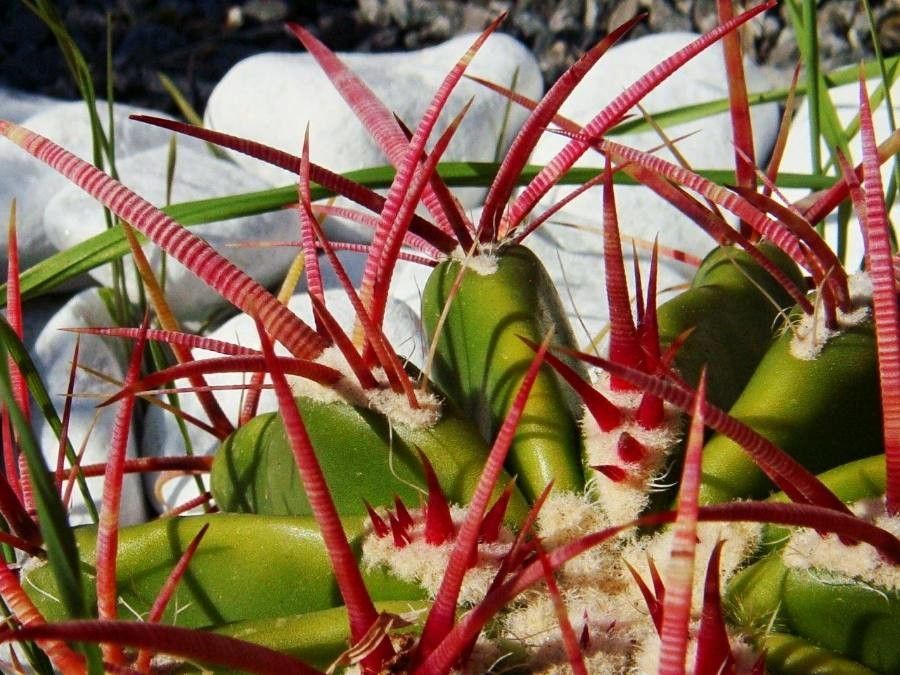
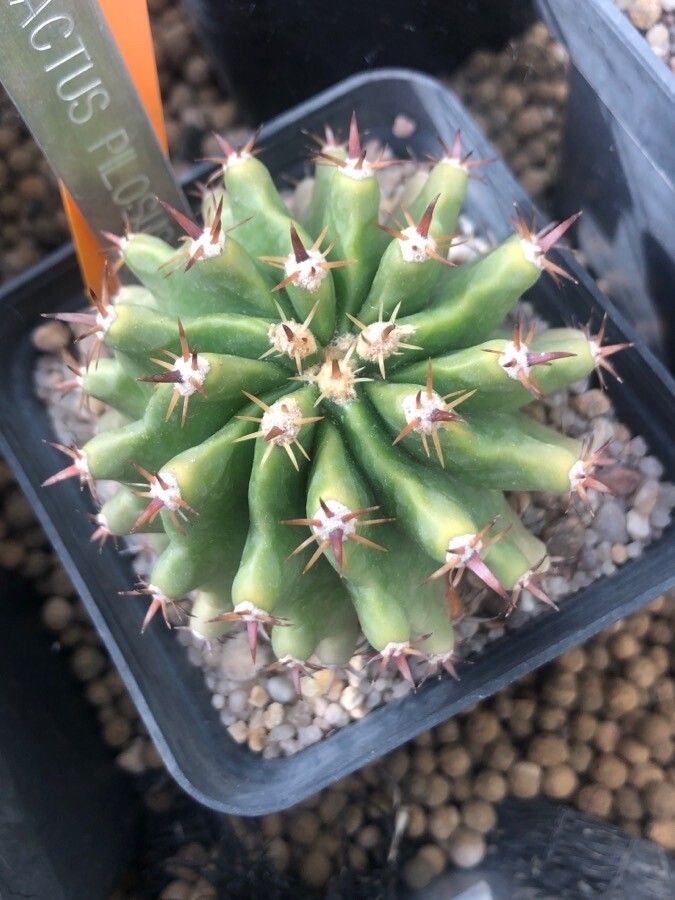
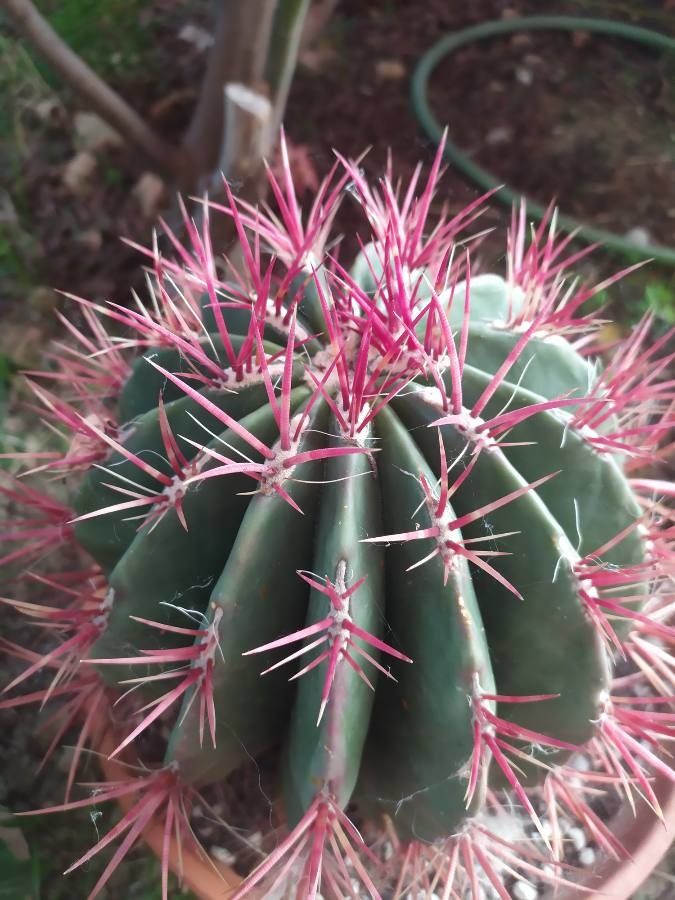
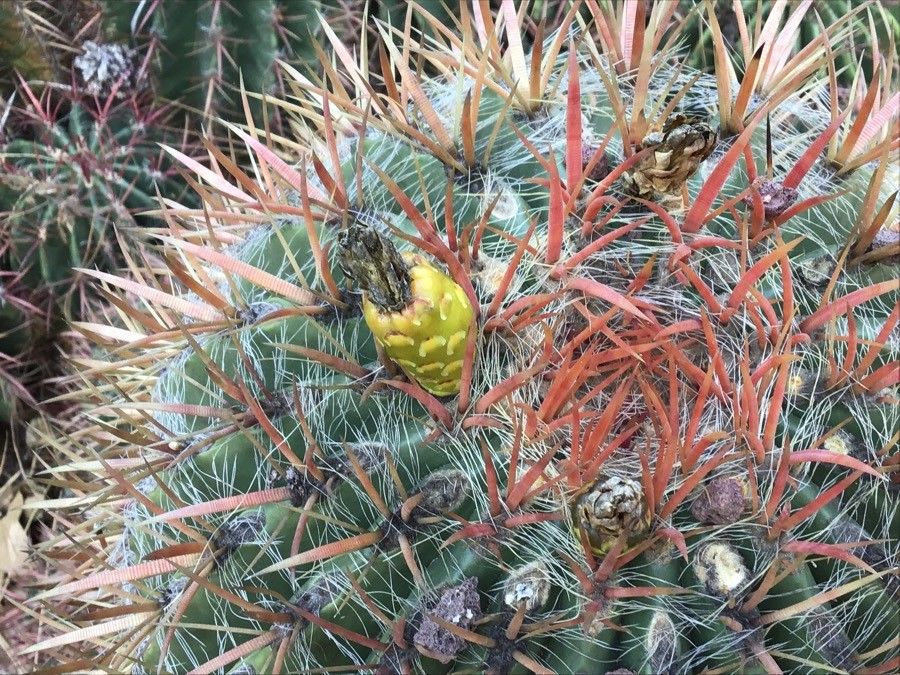
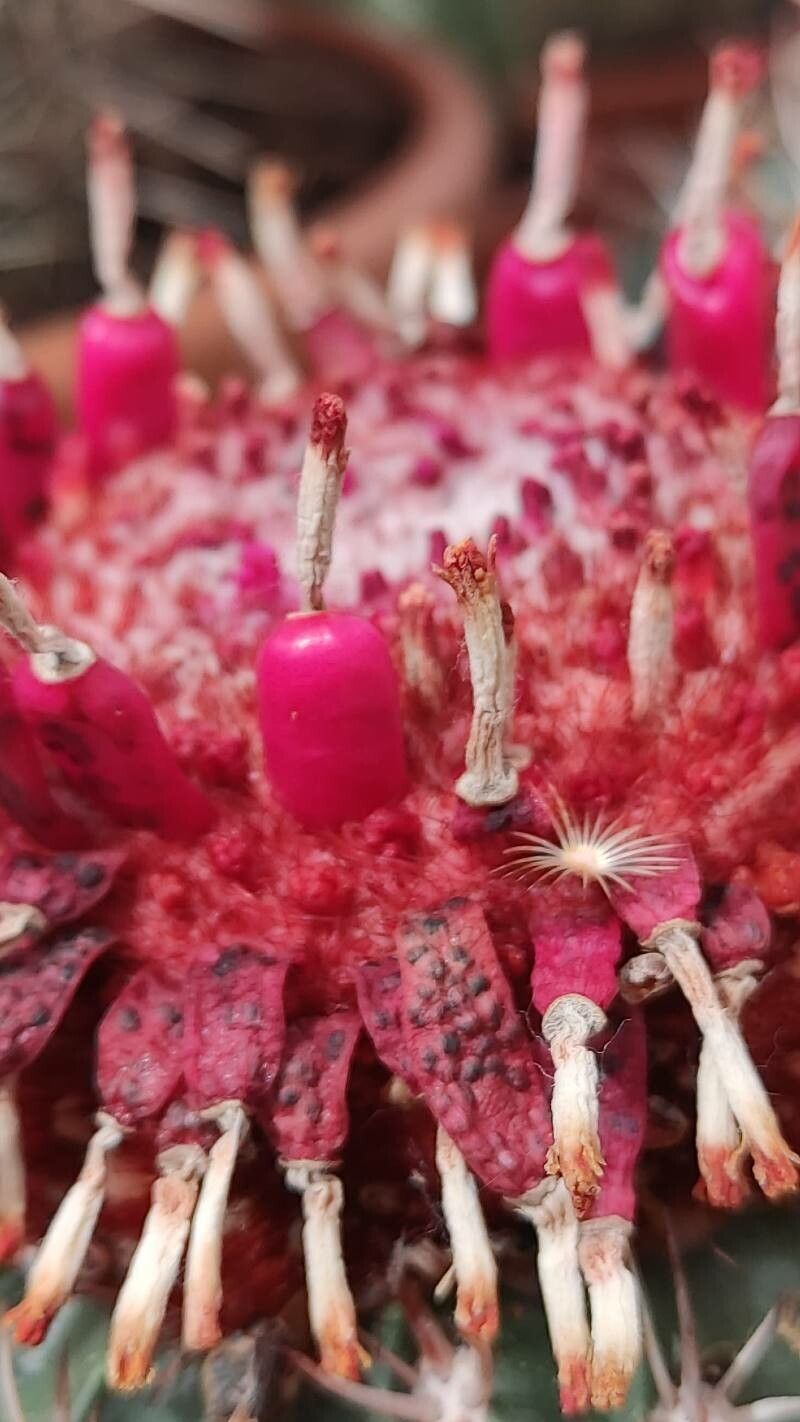
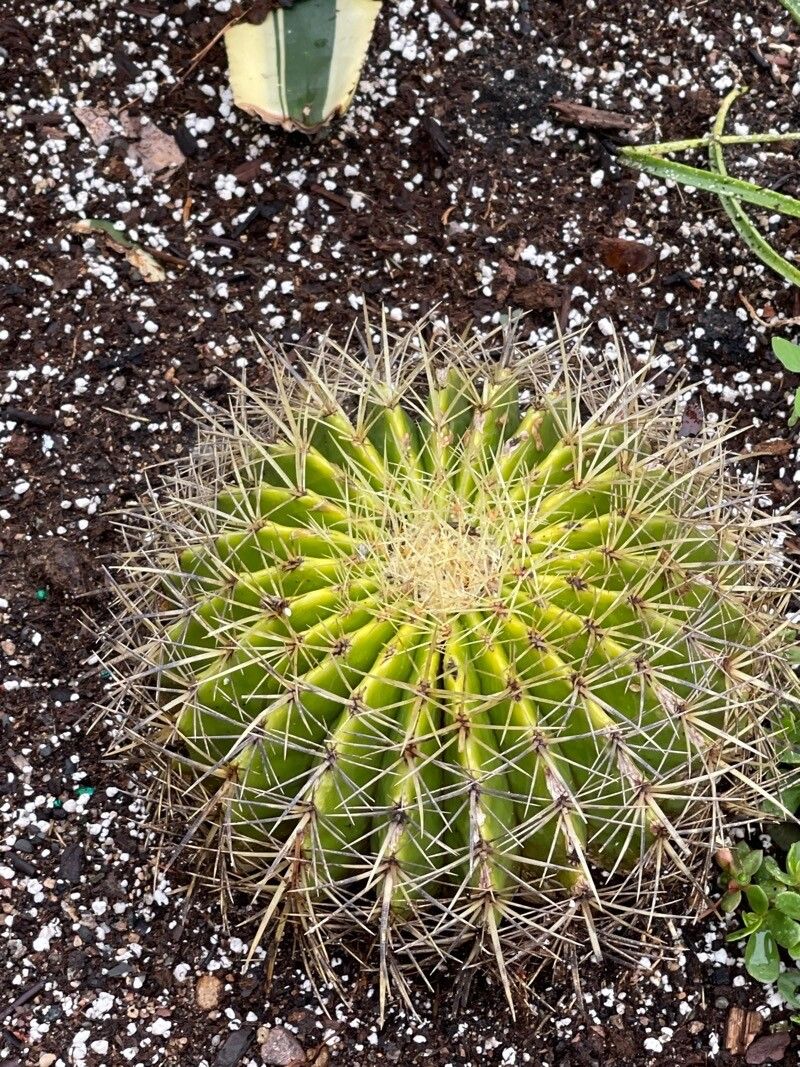
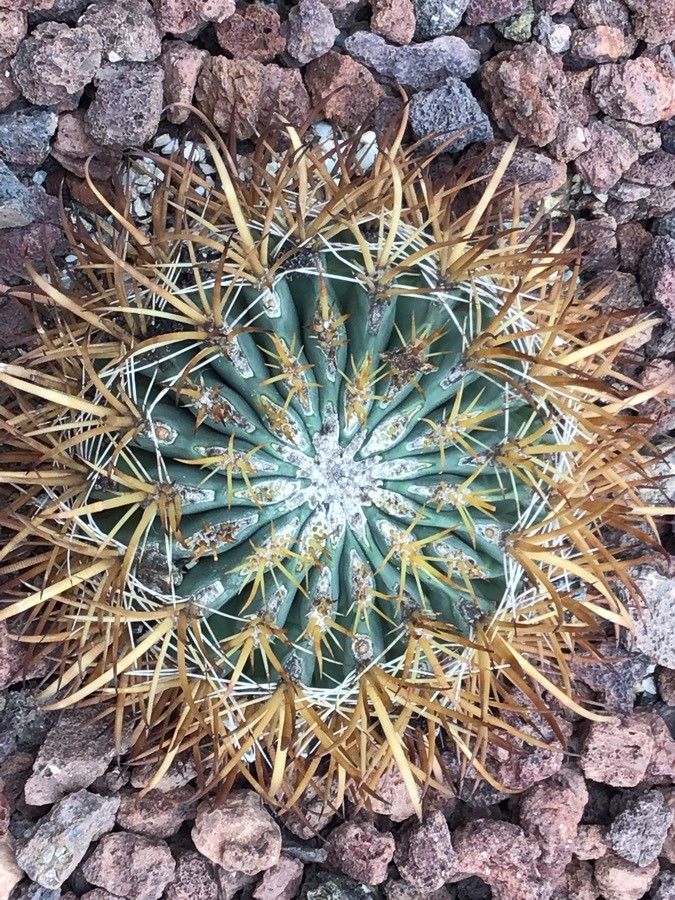
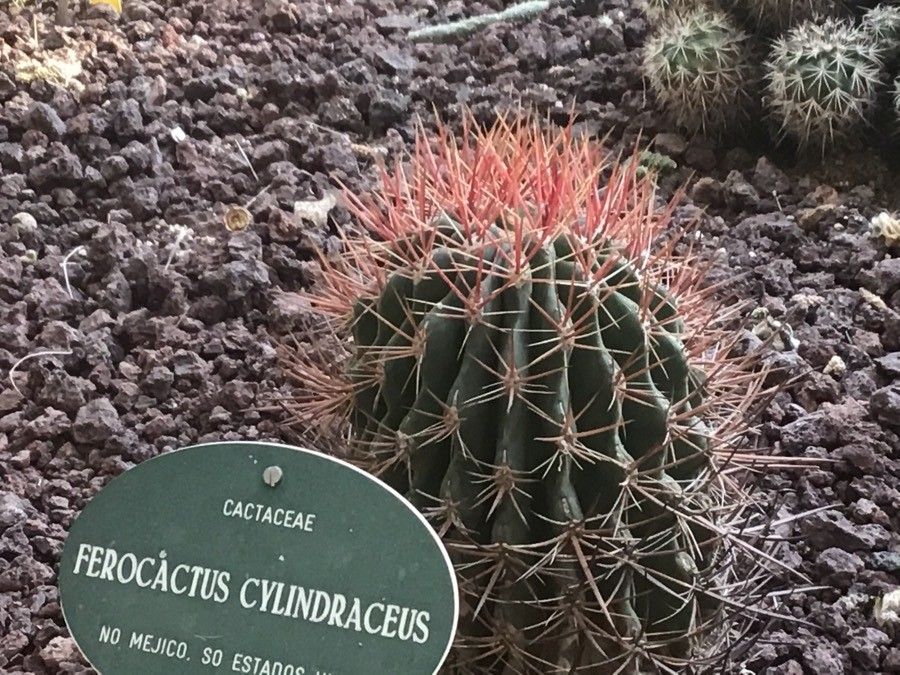
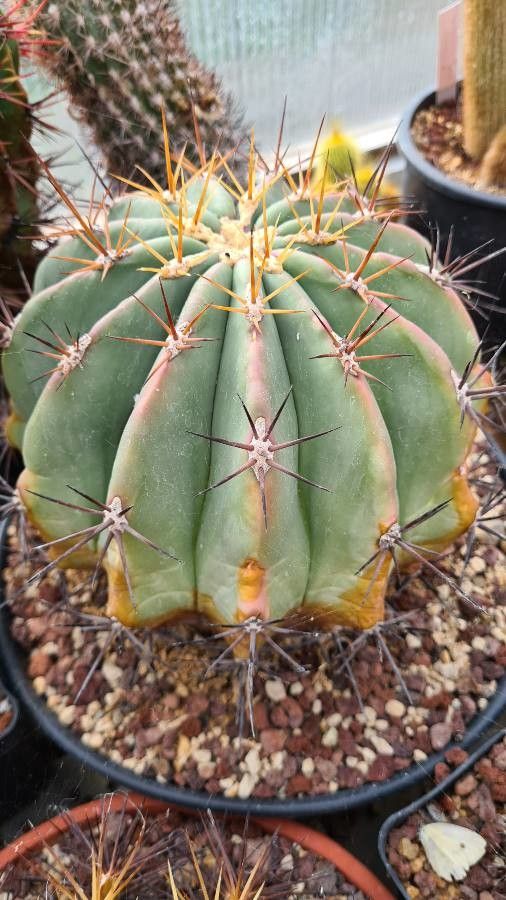
Ferocactus pilosus, commonly known as the Mexican Lime Cactus, is a cactus species native to Mexico. It is a slow-growing plant that can reach a height of up to 1 meter and a diameter of 60 cm. This cactus has a cylindrical shape adorned with ribs covered in dense white spines and woolly hairs. The spines can grow up to 5 cm in length and serve as protection against predators.
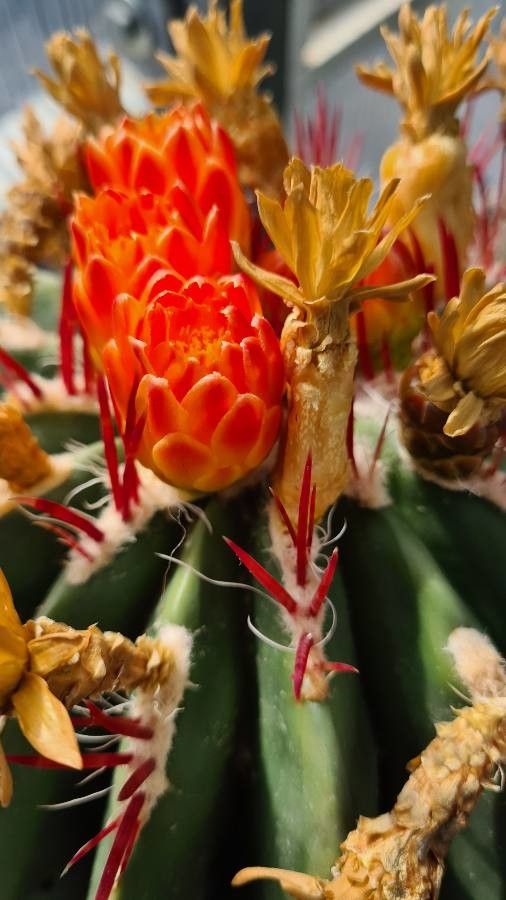
In summer, the Mexican Lime Cactus produces bright yellow flowers, which are followed by small red fruits containing edible seeds.
This cactus thrives in well-draining soil and full sun exposure, making it ideal for arid regions or xeriscaping gardens. It is drought-tolerant but requires occasional watering during the growing season.
Traditionally, indigenous communities have used Ferocactus pilosus for medicinal purposes, including treating wounds, fever, and stomach ailments.
Overall, Ferocactus pilosus is an attractive ornamental cactus species. Its unique features, such as dense white spines and woolly hairs, make it an excellent addition to any desert garden or succulent collection.
Mexican firebarrel shows strong resistance to disease and tolerates normal care without becoming ill easily. It can, however, be vulnerable to mealybugs; these pests may inflict some damage but typically do not pose a major risk. Regarding care, Mexican firebarrel is drought-tolerant and does not need frequent watering. It endures extended intervals without water and requires little fertilizer. Still, it is very prone to root rot if kept in poor light and given too much water. In general, Mexican firebarrel is a good choice for those who prefer to spend less time on plant care, though it’s important to meet its basic needs. It is especially appropriate for people who are away for long periods and might forget to water their plants regularly.
How to keep Ferocactus Pilosus.
Light
Originating from dry regions, Mexican firebarrel performs best in full sun, as its native habitat is marked by intense sunlight and scant shade. It can also tolerate partial sun, providing some flexibility in its growth.
Water
The Mexican firebarrel is well-suited to arid environments, needing water only once every three weeks and favoring dry soil. Adapted to hot climates, it effectively stores water during the rainy season, which reflects its natural desert habitat and makes it highly drought-tolerant.
Humidity
This plant prefers dry conditions, so don't mist it. However, watering it less often can also thrive in higher humidity.
Temperature
Mexican firebarrel does best in warm conditions and needs higher temperatures during the growing season to support growth and metabolism. It prefers plenty of sunlight, proper moisture levels, and good airflow. However, it is vulnerable to harm from very low temperatures and from too much watering. It's important to maintain a balance and to avoid temperatures that are too high and conditions that are too dry as well.
Fertilizer
Mexican firebarrel only needs light fertilizer applications once or twice a year during the growing season. Do not fertilize in winter or summer when the plant is dormant. Use less fertilizer for repotted specimens and wait a couple of months after repotting before applying fertilizer. Fertilizing supports healthy growth and promotes blooms.
Pruning
The Mexican firebarrel cactus has a cylindrical shape and red spines, and it requires minimal pruning. To care for it optimally, remove any dead or damaged parts in early spring using clean tools. This pruning process enhances airflow and promotes the plant's health. Regular inspections help ensure the cactus's longevity, but be careful not to prune excessively, as this can disrupt its natural form.
Toxicity
Although the Ferocactus Pringlei cactus is not toxic, its spines pose a hazard. They are known to penetrate protective gear such as gloves and boots when handling. They can be used as a source of water, however, they contain oxalic acid. If ingested on an empty stomach, it is likely to result in diarrhea.
Further reading →
The toxicity and danger assessments provided are for reference only. We do not assure their accuracy, so it's crucial not to depend on them. Seek professional advice when necessary for accurate guidance.
Botanical profile.
- Plant Type
- Succulent
- Life Cycle
- Perennial
- Genus
- Ferocactus
- Family
- Cactaceae
- Hardiness Zone
- 9-11
- Mature Height
- 49 cm
- Mature Spread
- 49 cm
- Leaf Color
- Green
- Leaf Type
- Evergreen
- Flower Color
- Red
- Flower Size
- 5.08 cm to 6.35 cm
- Bloom Time
- Summer
- Planting Time
- Spring, Summer, Winter
- Harvest Time
- Late summer, Early fall, Mid fall
- Native Area
- Mexico
Other names.
Reader questions.
What is the Mexican firebarrel's botanical name?
The botanical name for the Mexican firebarrel is Ferocactus pilosus. It is a species known for its distinctive appearance but specific care requirements, symptoms of distress, and other essential details should be considered for proper cultivation and maintenance.