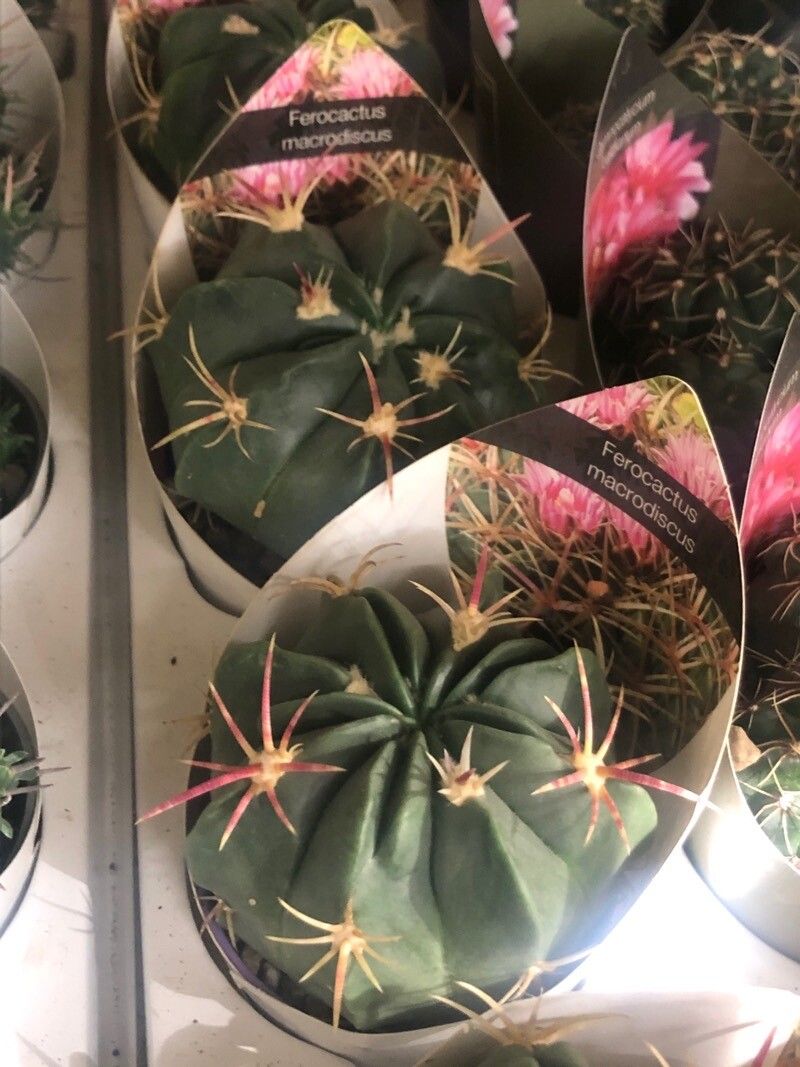
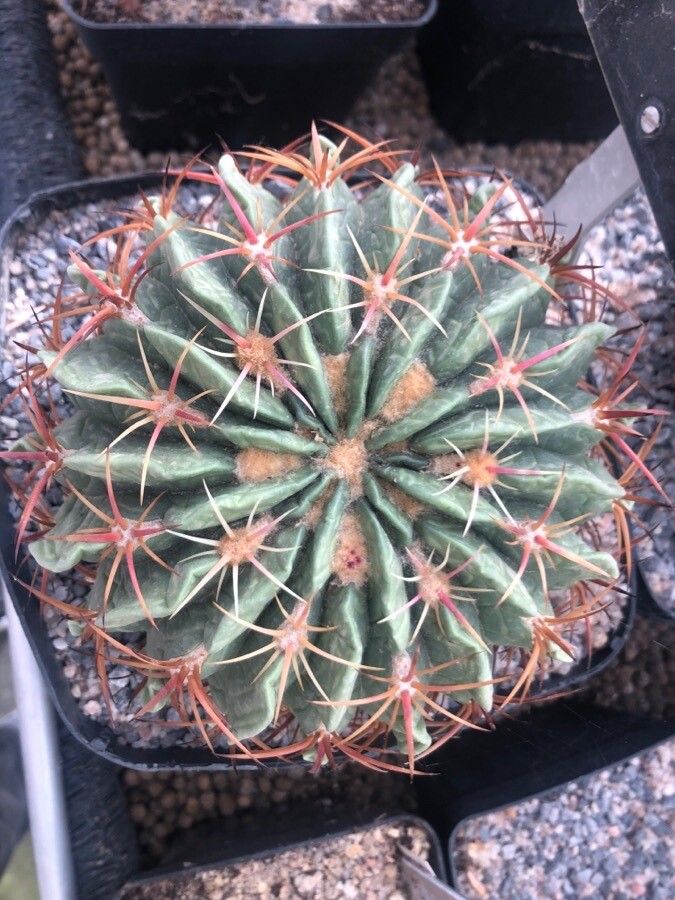
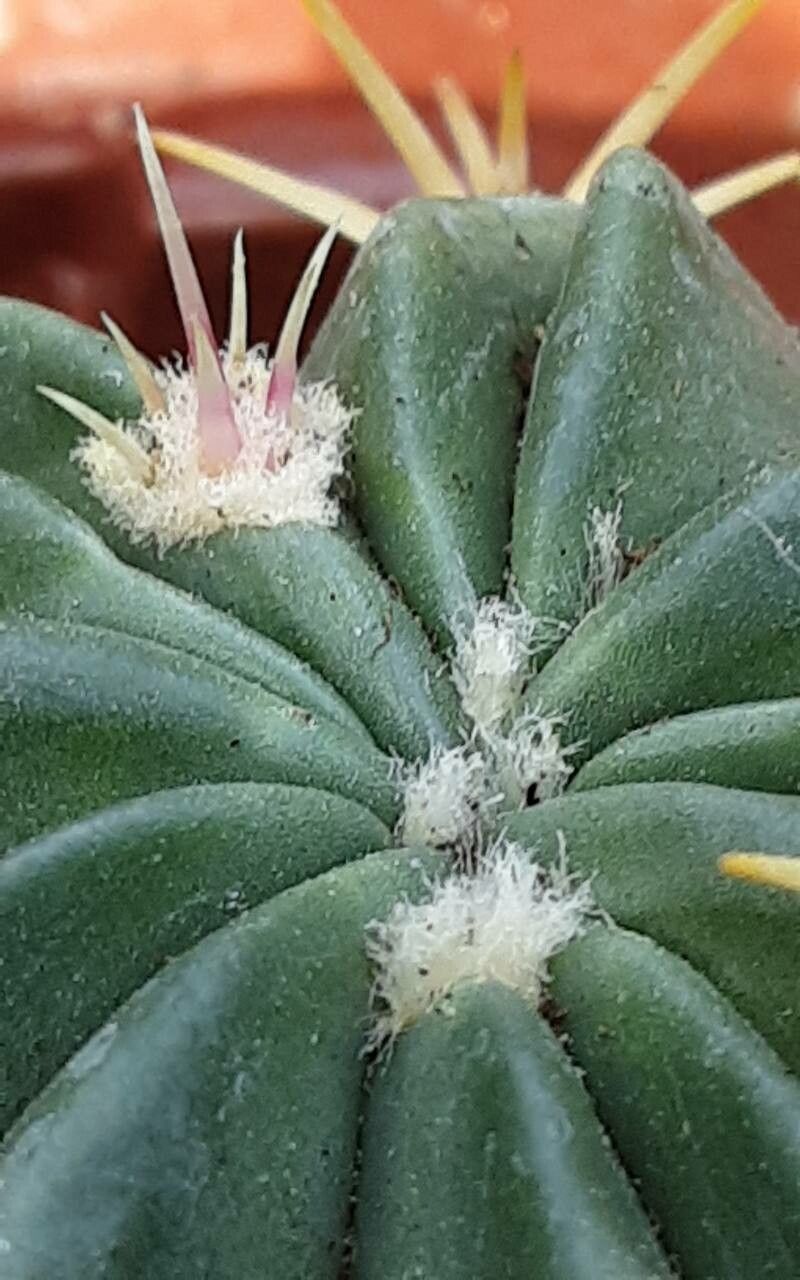
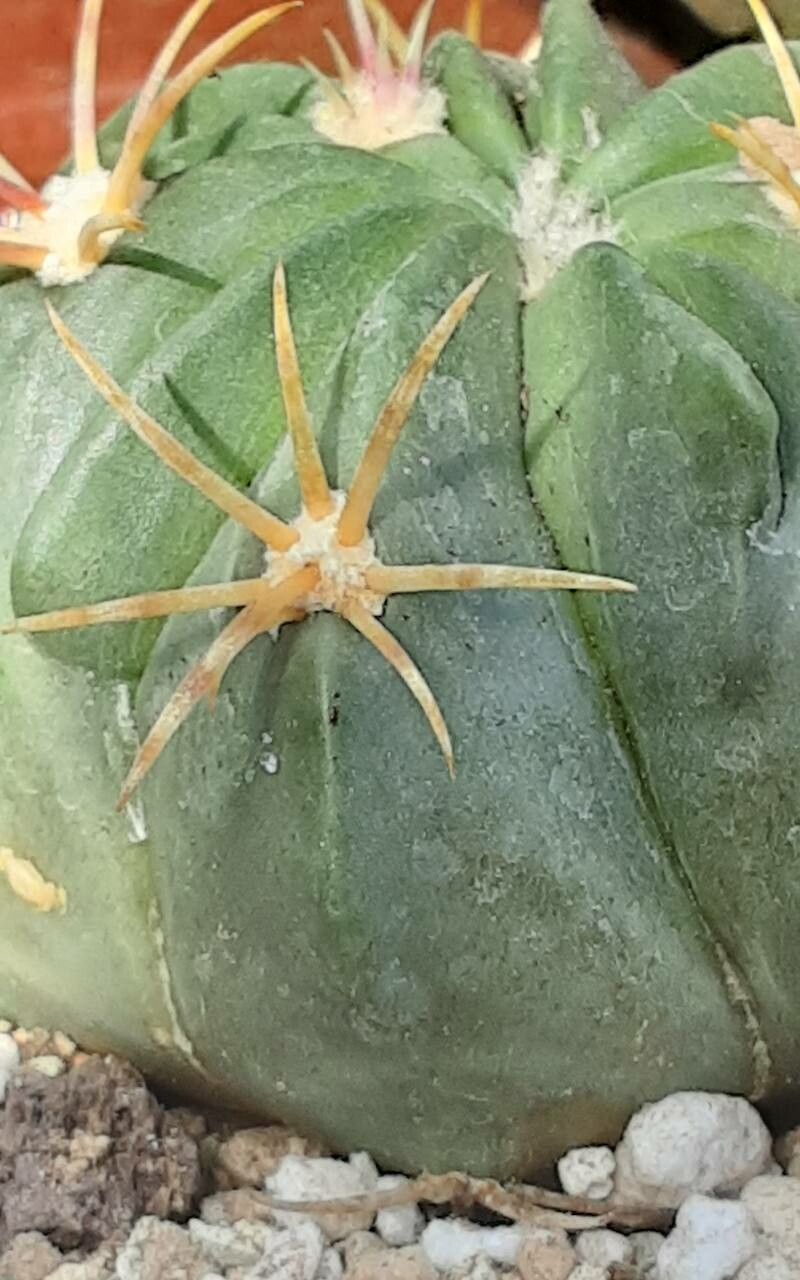
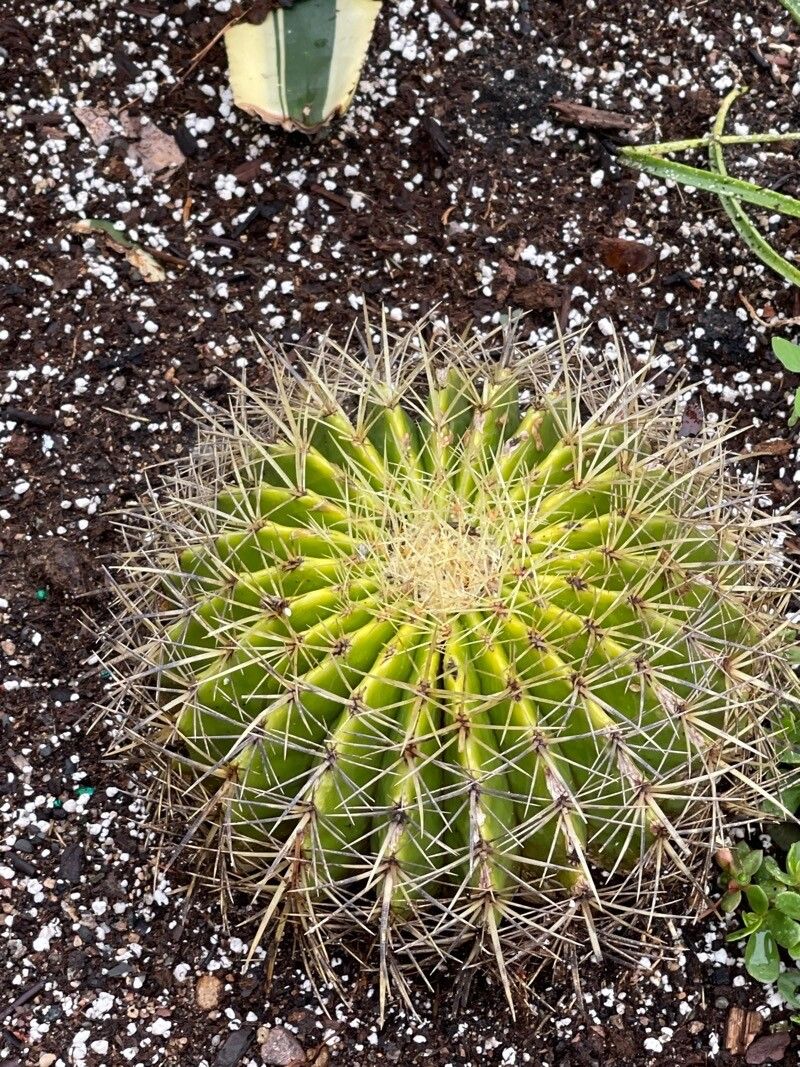
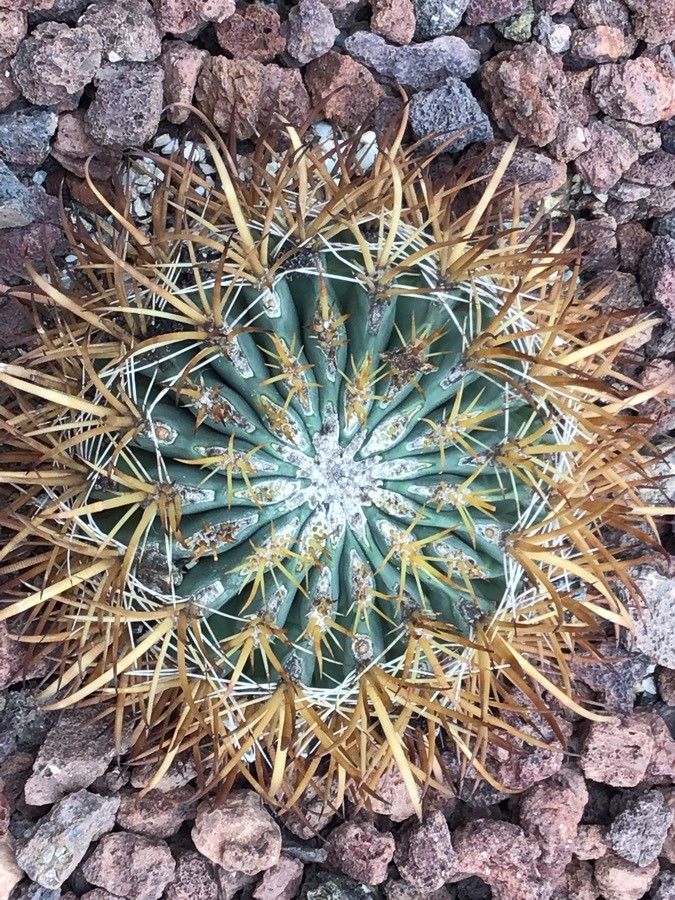
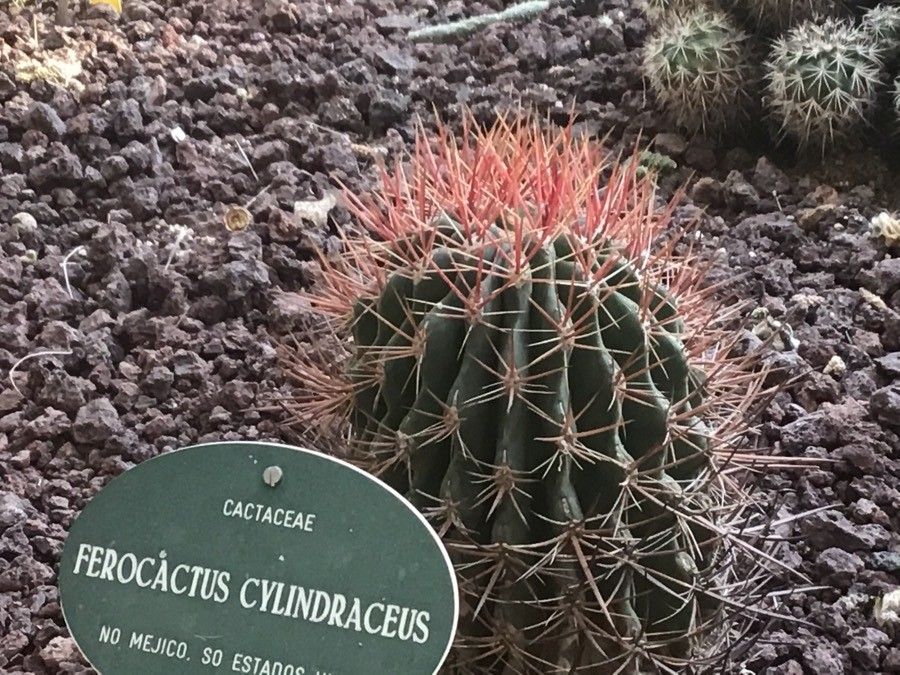
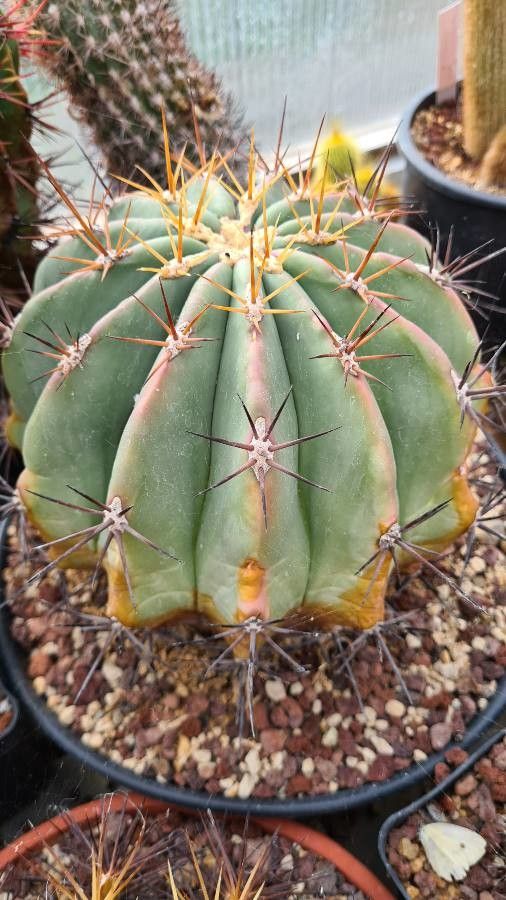
Ferocactus macrodiscus is a species of Ferocactus from Mexico.
Biznaga de dulce es bastante resistente a las enfermedades y soporta cuidados habituales sin enfermarse con facilidad. No obstante, puede ser vulnerable a las cochinillas, que pueden causar cierto daño pero por lo general no constituyen una amenaza grave. En cuanto a sus necesidades, Biznaga de dulce tolera la sequía y no necesita riegos frecuentes. Soporta periodos prolongados sin agua y requiere poco fertilizante. Sin embargo, si recibe riego excesivo con poca luz, es muy propensa a la pudrición de raíces. En conjunto, Biznaga de dulce conviene a quienes desean dedicar poco tiempo al cuidado de sus plantas, aunque es fundamental conocer y cubrir sus necesidades básicas. Resulta especialmente adecuada para personas que suelen ausentarse largos periodos y pueden olvidarse de regar con regularidad.
How to keep Ferocactus Macrodiscus.
Light
Native to arid regions, Biznaga de dulce prospers in full sun, its natural habitat marked by intense sunlight and very little shade. It also tolerates partial sun, providing some flexibility in its growth.
Water
Biznaga de dulce is a drought-tolerant plant that requires little watering. Make sure to water it thoroughly, but only when the soil is completely dry. During the growing season, which spans from spring to fall, water the plant 1 to 2 times a week. In winter, reduce watering to once a week. It's best to use rainwater or distilled water to prevent soil compaction that can be caused by tap water.
Temperature
Biznaga de dulce prospers in warm conditions and needs relatively high temperatures during the growing period to support growth and metabolic activity. It prefers plenty of sunlight, moderate moisture, and adequate airflow. However, it can be damaged by very low temperatures and excessive watering. Maintaining a balance is important, and extremely high temperatures or overly dry conditions should also be avoided.
Fertilizer
For Biznaga de dulce, light doses of fertilizer once or twice a year during the growing season are sufficient. Avoid fertilizing in winter and summer, when it is dormant. Reduce fertilizer for repotted plants and wait a couple of months after repotting before fertilizing. Fertilizing supports healthy growth and encourages blooms.
Pruning
The Biznaga de dulce cactus has a globe-shaped body adorned with vibrant spines. To promote healthy growth, prune it in early spring using sterilized tools to remove any dead parts. Avoid heavy pruning to minimize stress on the plant. Making clean cuts helps the cactus heal more effectively, while also improving air circulation and light exposure for better overall health.
Pot & Repot
Repot Biznaga de dulce in spring or summer, selecting a pot slightly larger than the current one that has good drainage. Use a sandy or gritty cactus mix that drains well. Handle the plant carefully to avoid its spines. Let the cactus dry out before repotting to help prevent root rot. After repotting, wait one week before watering so the roots can heal.
Botanical profile.
- Plant Type
- Succulent
- Life Cycle
- Perennial
- Genus
- Ferocactus
- Family
- Cactaceae
- Hardiness Zone
- 9-11
- Mature Height
- 20 cm to 30 cm
- Mature Spread
- 15 cm to 25 cm
- Leaf Color
- Green, Dark Green
- Leaf Type
- Semi-evergreen
- Flower Color
- Pink
- Flower Size
- 5.08 cm to 6.35 cm
- Bloom Time
- Late spring, Early summer, Mid summer
- Planting Time
- Spring, Summer, Autumn
- Harvest Time
- Mid summer, Late summer, Early fall
Other names.
Reader questions.
What is the common name of Ferocactus macrodiscus?
The common name of Ferocactus macrodiscus is Biznaga de dulce.
What is the botanical name of Biznaga de dulce?
The botanical name of Biznaga de dulce is Ferocactus macrodiscus.