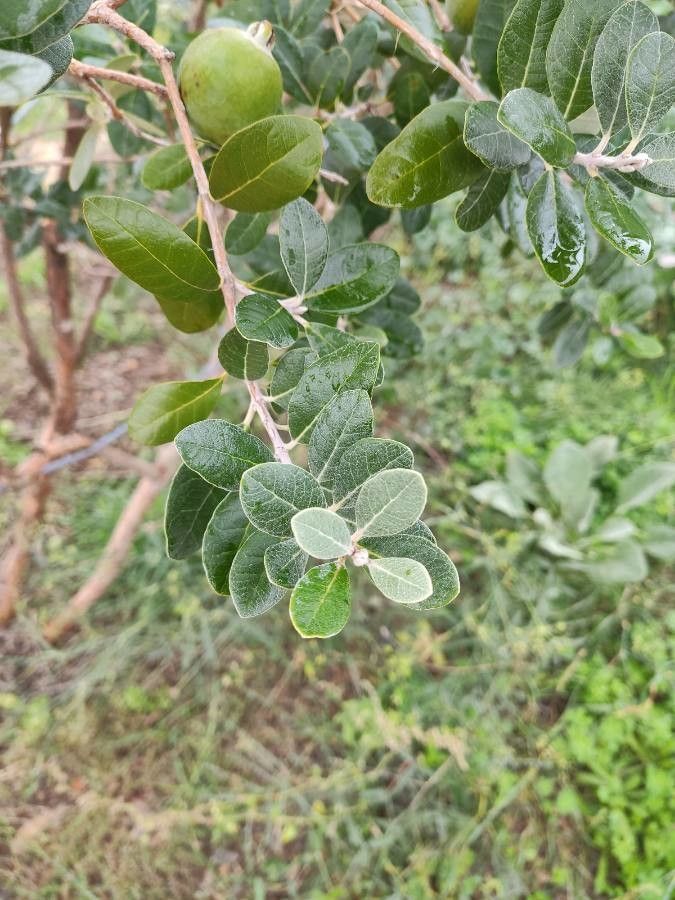
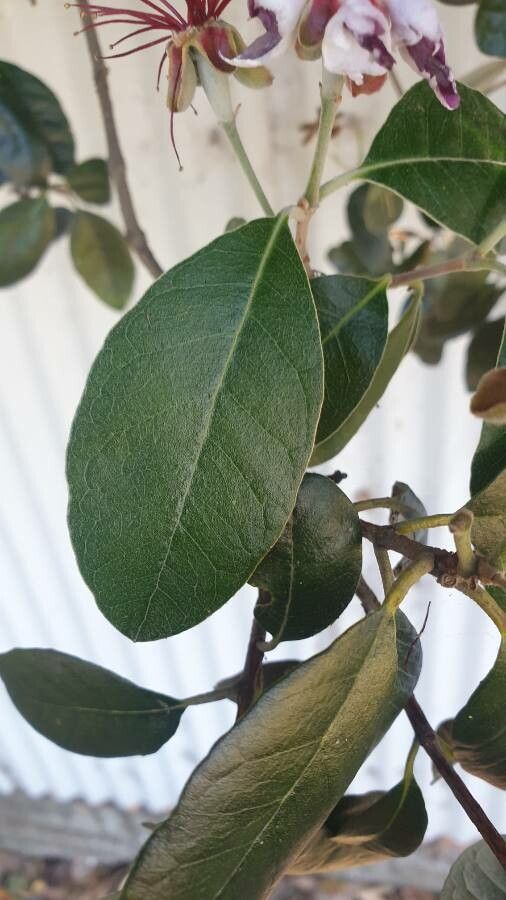
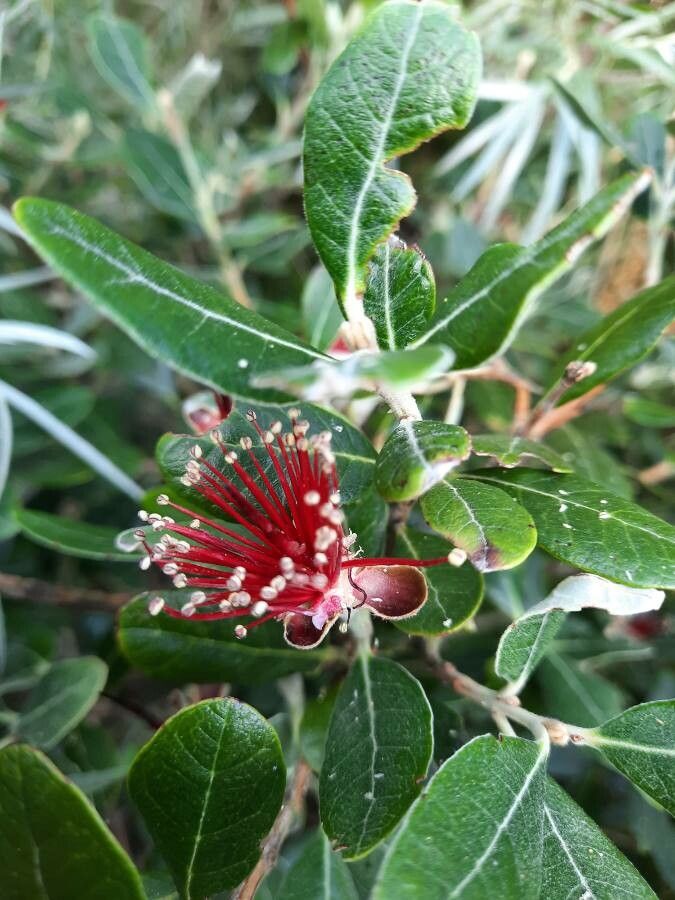
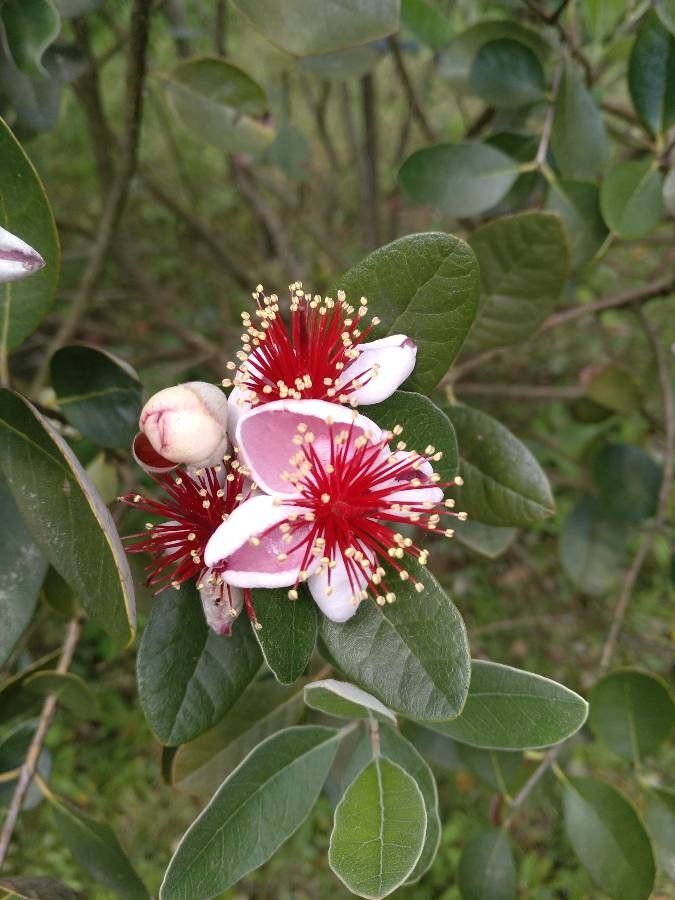
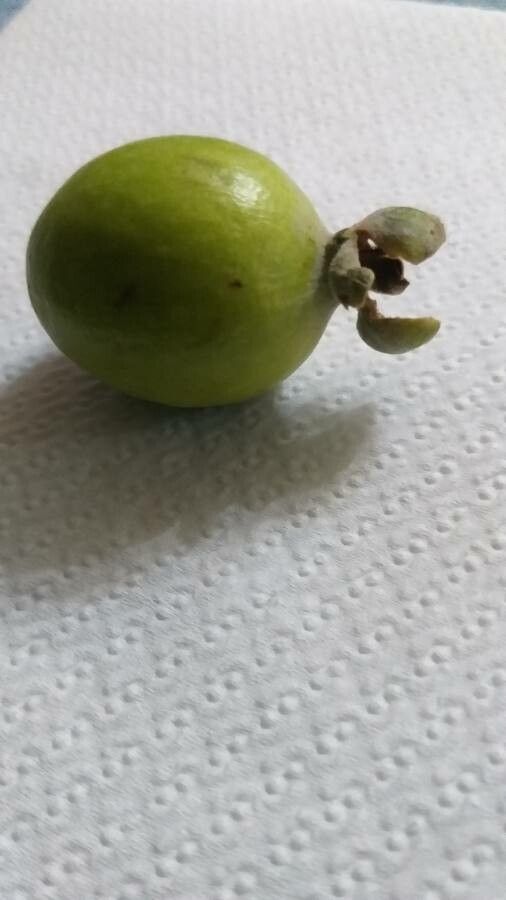
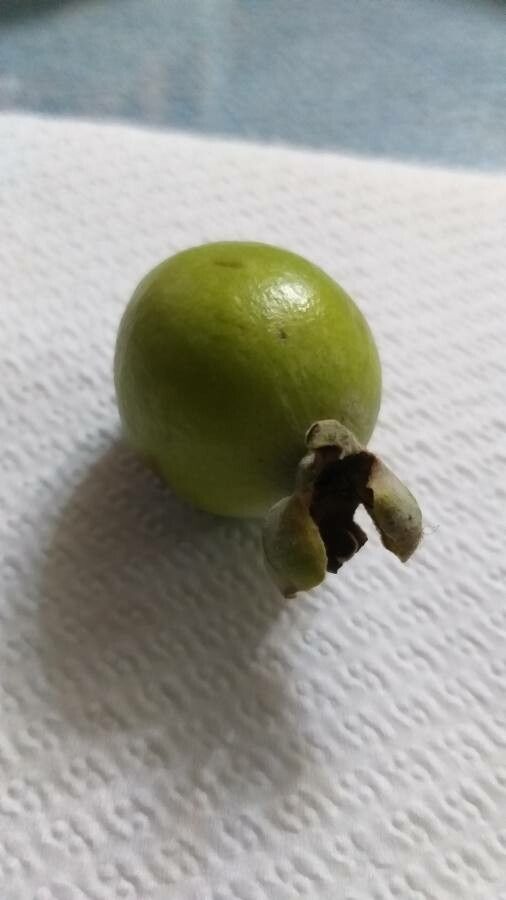
Versatile and easy to grow, this plant features an upright branching form, edible flowers, and tropical fruit. Its fleshy white flower petals, adorned with striking red accents, contrast beautifully with the gray-green foliage. The guava-like fruit, which ripens in late fall, is delicious. This plant can be easily trained as an espalier, a hedge, or a small specimen tree, making it suitable for both landscape and container gardening. It is also evergreen.
Pineapple guava has relatively strong disease resistance and is generally not vulnerable to many illnesses. However, if it is kept in poor conditions it can become more prone to disease. The plant also has few insect pests. For care, it has moderate requirements. It needs plenty of sunlight; in inadequate light it may become susceptible to disease and develop thin, weak growth. Because it is often grown indoors, it may need to be moved regularly to a bright spot. It does not need frequent watering. Overall, Pineapple guava is suitable for most people, though it is best for those who can provide good light.
How to keep Feijoa Sellowiana.
Light
Pineapple guava does best in locations that receive abundant sunlight for most of the day, though it can also tolerate spots with partial shade. Excessive sun or insufficient sun can harm its growth, causing weak development or discoloration.
Humidity
This plant needs special care because it loves high humidity levels of 60-80% or more. The best way to achieve this is by placing a humidifier near the plant. Daily misting is also essential! Make sure the room has good ventilation.
Temperature
The pineapple guava is native to South America and needs a warm temperature range of 15 to 35 ℃ (59 to 95 ℉) to thrive. It prefers mild winters and hot, humid summers to achieve the best fruit yield. In regions with a consistently warm climate, altering temperatures between seasons may not be necessary.
Fertilizer
The pineapple guava plant needs adequate nutrients to achieve optimal fruit production. Fertilize in early spring to promote new growth and bloom development. Regular feeding keeps the plant healthy, produces more flavorful fruit, and prevents nutrient deficiency problems like yellowing leaves and poor fruit production.
Pruning
Feijoas will gain from annual mild maintenance pruning. Eliminate all diseased, broken, and dead branches. To allow sunlight to reach developing and ripening fruit, thin dense interior growth. Fruit harvest is also made simpler by thinning. Feijoas used as a hedge can be trimmed, although less fruit will result.
Pot & Repot
When repotting Pineapple guava, select a pot 1–2 inches (2.5–5.1 cm) larger with ample drainage. Use a well-draining potting mix. Repot in spring or fall, ensuring that the root ball is slightly lower than the rim of the flower pot. Water thoroughly after repotting and place in a warm spot with indirect sunlight.
Toxicity
Overview. Feijoa, commonly known as Pineapple Guava, is full of minerals that have anti-inflammatory and antioxidant properties. Despite the fact that the fruit's flesh is edible, cyanide is present in the Feijoa seeds and leaves, which can poison dogs. The skin of feijoas ranges from light to dark green. Although some people believe the skin and flavor might be rather bitter to some palates, the skin is edible.
Further reading →
The toxicity and danger assessments provided are for reference only. We do not assure their accuracy, so it's crucial not to depend on them. Seek professional advice when necessary for accurate guidance.
Botanical profile.
- Plant Type
- Shrub
- Life Cycle
- Perennial
- Genus
- Feijoa
- Family
- Myrtaceae
- Hardiness Zone
- 8-10
- Mature Height
- 3.96 m to 7.01 m
- Mature Spread
- 3.96 m to 6.1 m
- Leaf Color
- Green, Silver, Gray
- Leaf Type
- Evergreen
- Flower Color
- Red, White
- Flower Size
- 2.54 cm
- Bloom Time
- Late spring, Early summer
- Planting Time
- Spring, Autumn
- Harvest Time
- Mid summer, Late summer, Early fall
- Native Area
- Brazil, Uruguay
Other names.