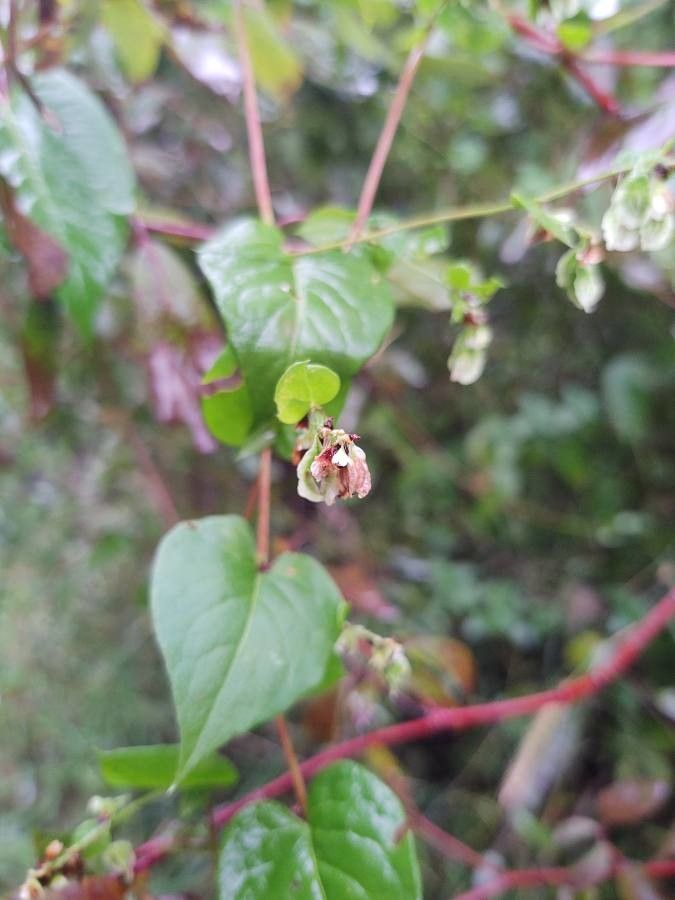
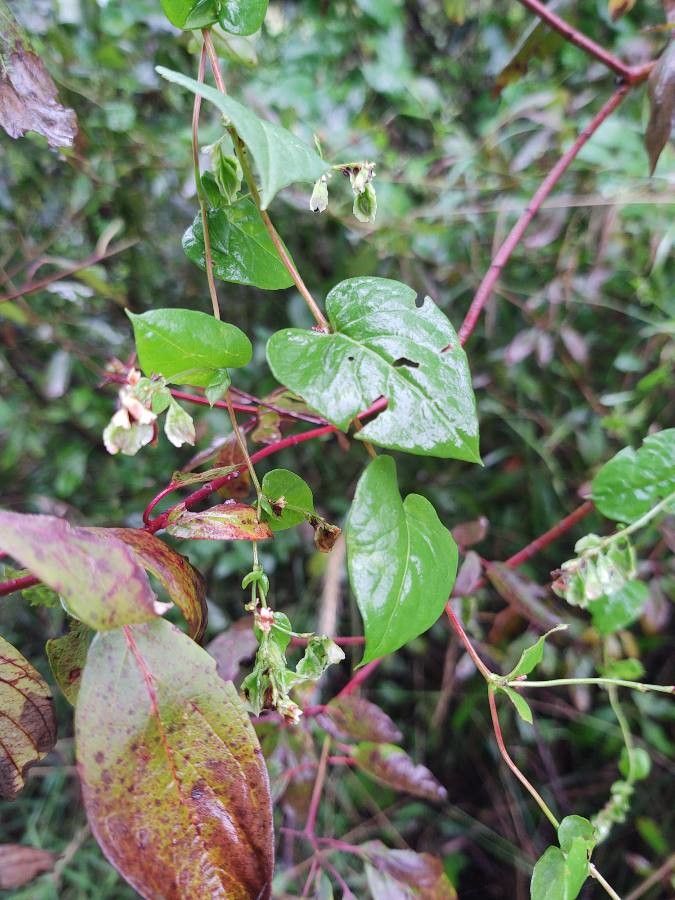
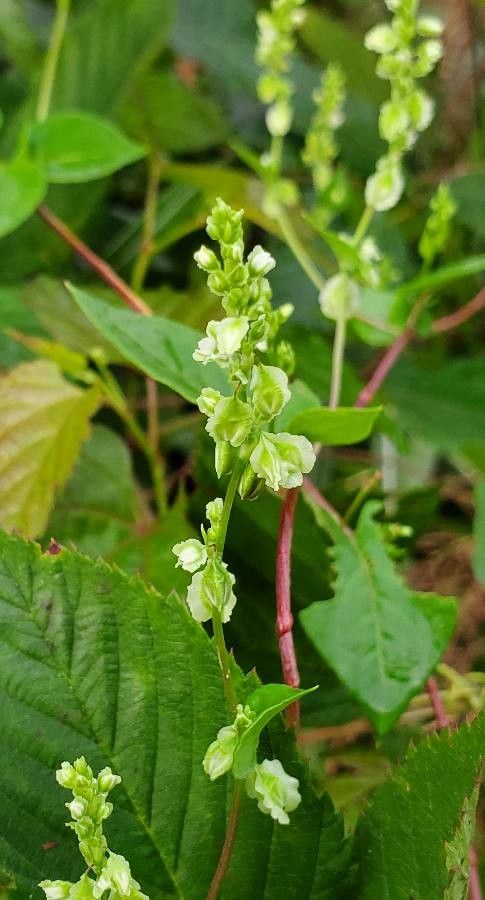
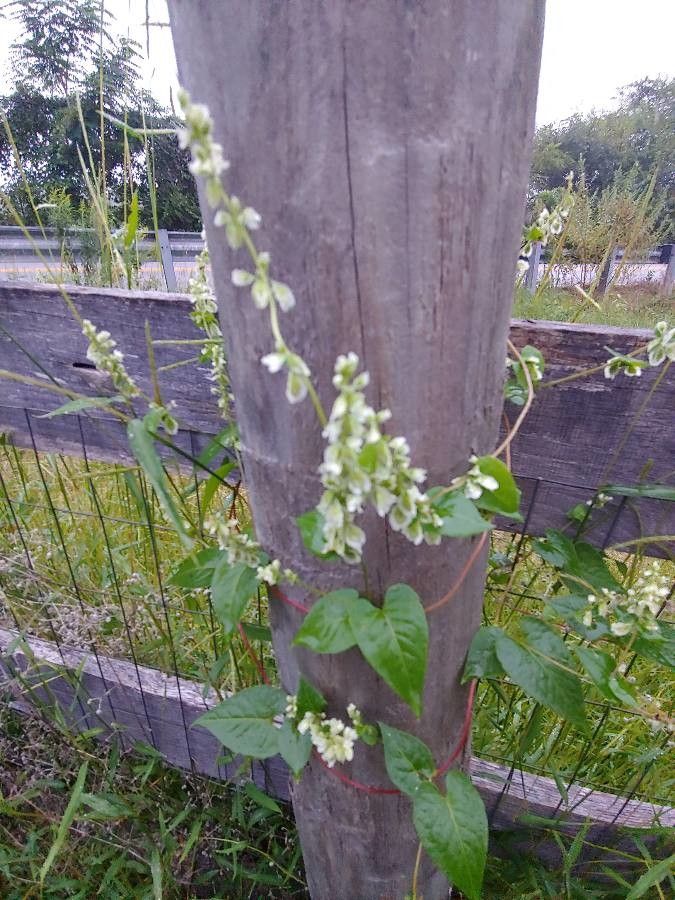
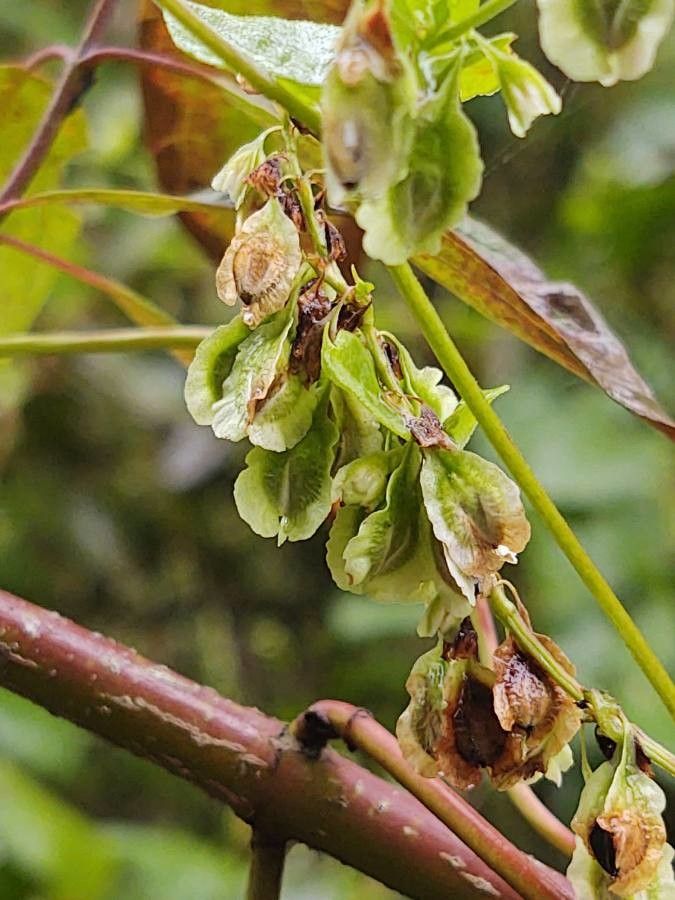
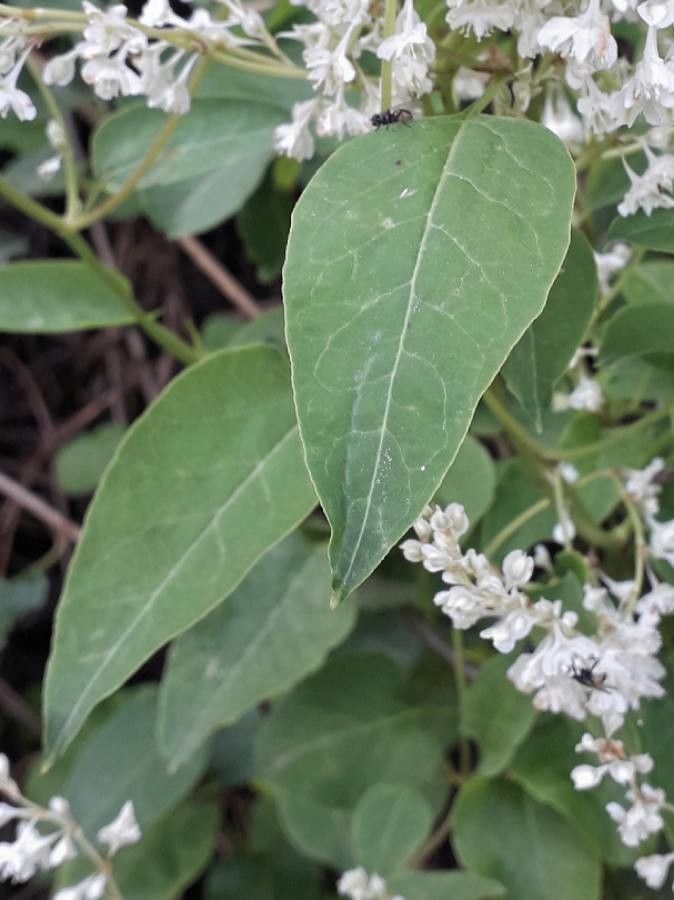
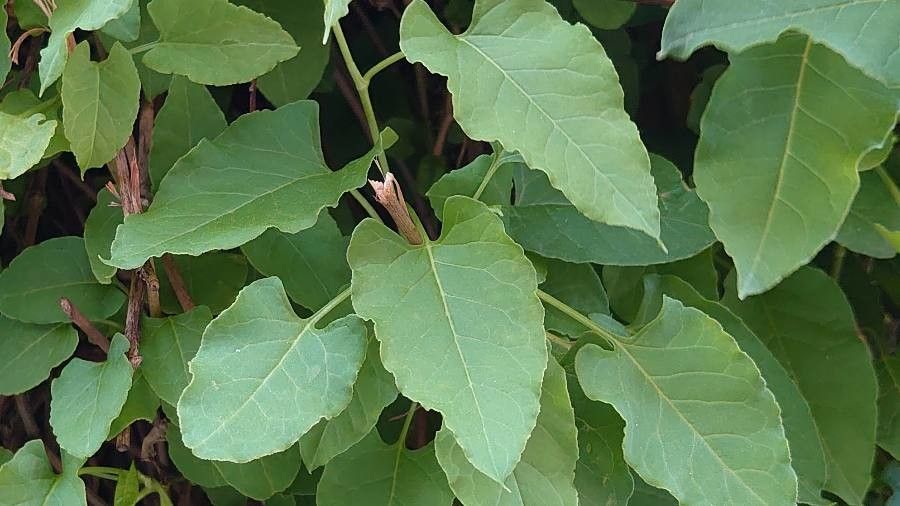
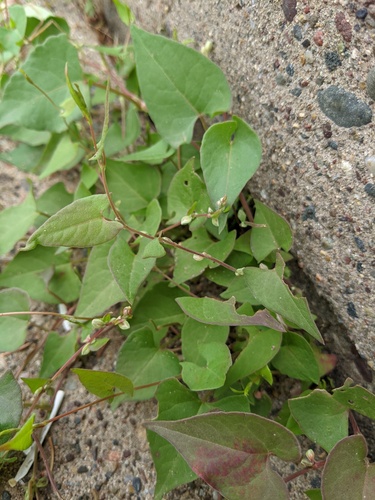
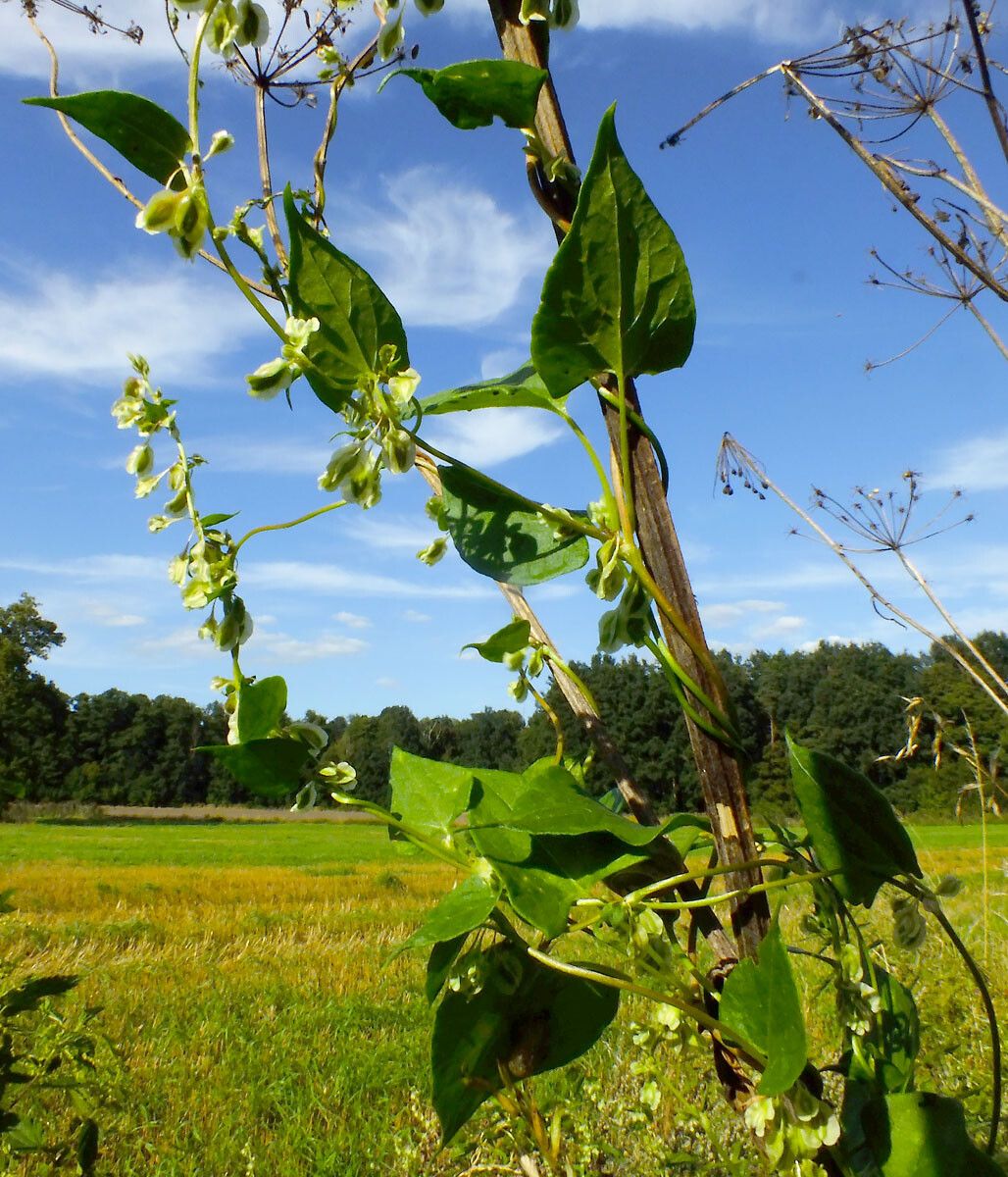
Fallopia scandens, the climbing false buckwheat, is a species of Fallopia native to North America. It is a herbaceous perennial plant which grows from to 1–5 m (3–16 ft) tall. Although they are semi-erect during bloom, when they are producing fruit, they hang from their pedicels in a downward position. Both the fruit and flower are greenish-white in appearance. In North America, it is often misidentified with Fallopia dumetorum, a species endemic to Europe.
Climbing false buckwheat is fairly disease-resistant and usually not prone to illnesses. Nevertheless, it can be affected by pests and diseases in its environment. These problems tend to be mild. With regard to care, the plant needs moderate maintenance. It should be pruned regularly to keep a tidy appearance and support healthy growth. Fertilizing can also encourage flowering. Climbing false buckwheat is suitable for people with outdoor spaces such as a garden or patio and does not require extensive care experience. It may demand more attention when grown indoors.
How to keep Fallopia Scandens.
Light
Climbing false buckwheat requires plenty of sunlight to grow vigorously, though it can tolerate moderate light. Coming from environments with abundant illumination, it is adapted to thrive under those conditions. Still, both prolonged low light and excessive direct sun can impede its development.
Water
Climbing false buckwheat is a plant native to woodland areas, where it thrives in moist, well-drained soil beneath tree canopies. For optimal growth, it needs consistent moisture, so it should be watered weekly. As an outdoor plant, it efficiently uses rainfall during its active growing season, allowing it to adapt well to its natural environment.
Temperature
The climbing false buckwheat usually grows in temperate regions and does well in temperatures between 50 to 95 ℉ (10 to 35 ℃). On hot summer days, frequent watering is advised to keep the plant hydrated. In cooler seasons, it may benefit from being moved indoors or protected from frost.
Fertilizer
A single spring application of fertilizer is generally enough for Climbing false buckwheat, though repeated feedings can enhance growth. Feed every month to every month and a half. Fertilizing improves the leaves’ appearance and function, helping maintain even color and a healthy texture. It also encourages root development and nutrient uptake, supporting long-term plant health.
Botanical profile.
- Plant Type
- Vine, Herb
- Life Cycle
- Perennial
- Genus
- Fallopia
- Family
- Polygonaceae
- Hardiness Zone
- 6-10
- Mature Height
- 0.91 m to 4.57 m
- Mature Spread
- 0.91 m to 2.13 m
- Leaf Color
- Green
- Leaf Type
- Deciduous
- Flower Color
- White
- Flower Size
- 5.08 cm to 20.32 cm
- Bloom Time
- Early summer, Mid summer
- Planting Time
- Spring
- Harvest Time
- Mid summer, Late summer
- Native Area
- Georgia
Other names.
Reader questions.
What are the sunlight requirements for Climbing false buckwheat?
Climbing false buckwheat requires ample sunlight for robust growth and is best suited to environments where it can receive more than 6 hours of sunlight daily, classified as 'full sun'. However, it can also tolerate 'partial sun' conditions, receiving about 3-6 hours of sunlight. Observing how sunlight moves through your garden to find spots that offer the right balance of light and shade is crucial for the plant's wellbeing.
What are the ideal growing conditions for Climbing False Buckwheat?
Climbing False Buckwheat, botanically known as Fallopia scandens, thrives in temperate climates with temperatures ranging from 50 to 95°F (10 to 35°C). It's recommended to water the plant frequently during hot summer days to ensure it stays hydrated. While the plant exhibits strong cold resistance and special frost protection measures aren't typically necessary, it's advisable to bring it indoors or protect it from frost in cooler seasons. Before the first freeze in autumn, watering the plant abundantly to keep the soil moist can help prevent drought and water scarcity during winter and early spring. If winter temperatures are expected to drop below -25°C, protecting the plant with non-woven fabric or cloth wrapped around the trunk and branches is important.
Can Climbing false buckwheat grow in artificial lighting?
Yes, Climbing false buckwheat can grow under artificial lighting, which is especially beneficial in environments where natural sunlight is insufficient, such as during winter or in less sunny indoor spaces. Optimal growth under artificial lighting requires the selection of the right type of light, such as LED lights, which can be customized to the specific light wavelengths needed by the plant. Full sun plants require 30-50W/sq ft, partial sun plants require 20-30W/sq ft, and full shade plants need 10-20W/sq ft of artificial light. The light source should be placed 12-36 inches above the plant to mimic natural sunlight, and plants typically require 8-12 hours of light per day.
How does Climbing False Buckwheat react to low temperatures?
Climbing False Buckwheat is versatile and cold-tolerant, ideally kept above -15°C during winter for optimal health. However, temperatures below -25°C won't cause immediate damage during the winter; come spring, you might notice that the branches have become brittle and dry, and no new shoots will emerge. To manage this, it's recommended to prune away any dead branches that have failed to produce new leaves in spring, aiding in the plant's recovery and future growth.
What are the symptoms of inadequate light exposure in Climbing false buckwheat?
Symptoms of inadequate light exposure in Climbing false buckwheat include smaller new leaves, leggy or sparse growth, quicker leaf drop, slowed or halted growth, lighter-colored new leaves, chlorosis (leaves losing their green color and turning yellow), sunscald (damage from intense sunlight), leaf curling (under extreme sunlight), wilting (due to overexposure to sunlight causing increased water loss), and leaf scorching (brown, dry, and crispy leaf edges due to excessive sunlight). These symptoms indicate either too little or too much exposure to sunlight.
What should I do if Climbing False Buckwheat experiences high temperatures?
During summer, it's crucial to ensure that the temperature around Climbing False Buckwheat doesn't exceed 35°C to prevent stress. If temperatures rise above 41°C, the plant's leaves may lighten in color, tips may become dry and withered, and it may become more prone to sunburn. To mitigate these issues, remove sunburned and dried-up parts of the plant. Relocating the plant to a shaded area or using a shade cloth to protect it from midday and afternoon sun can be beneficial. Also, watering the plant in the morning and evening will help keep the soil adequately moist.
What are the solutions for Climbing false buckwheat facing light-related growth issues?
For indoor plants, improving light exposure can involve gradually moving the plant to sunnier spots until it receives at least 6 hours of direct sunlight daily or using artificial lighting, such as desk or professional grow lights, for at least 8 hours per day. For outdoor plants, it's important to move them gradually to sunnier spots to avoid sunburn. Ground-level solutions include reducing obstructions to sunlight by pruning obstructive trees and transplanting smaller plants to a location with ample sunlight and good drainage. Note that parts of the plant affected by insufficient light may not recover, but new growth will be healthy after adjusting light exposure.