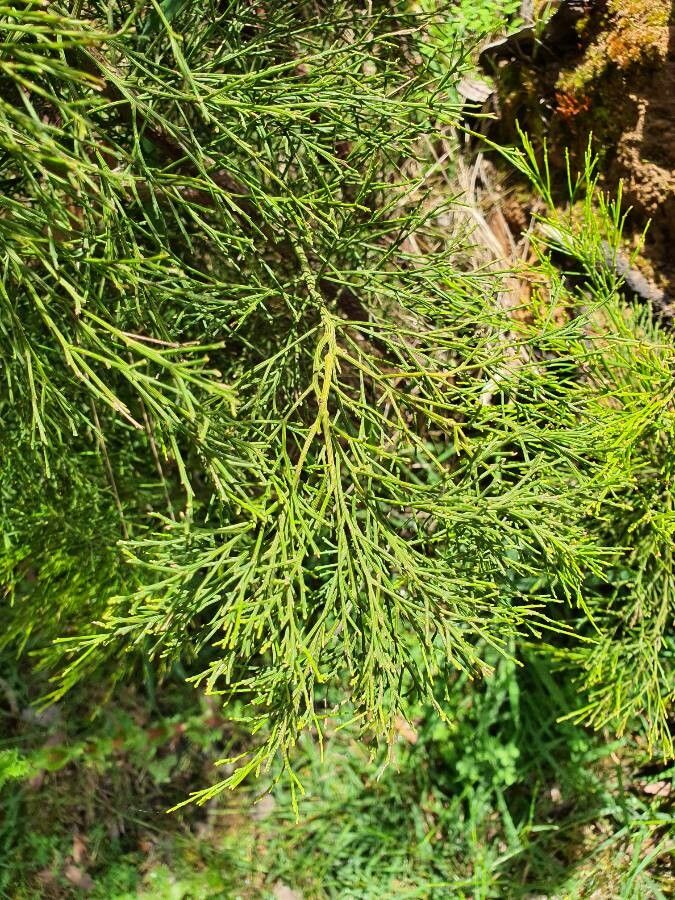
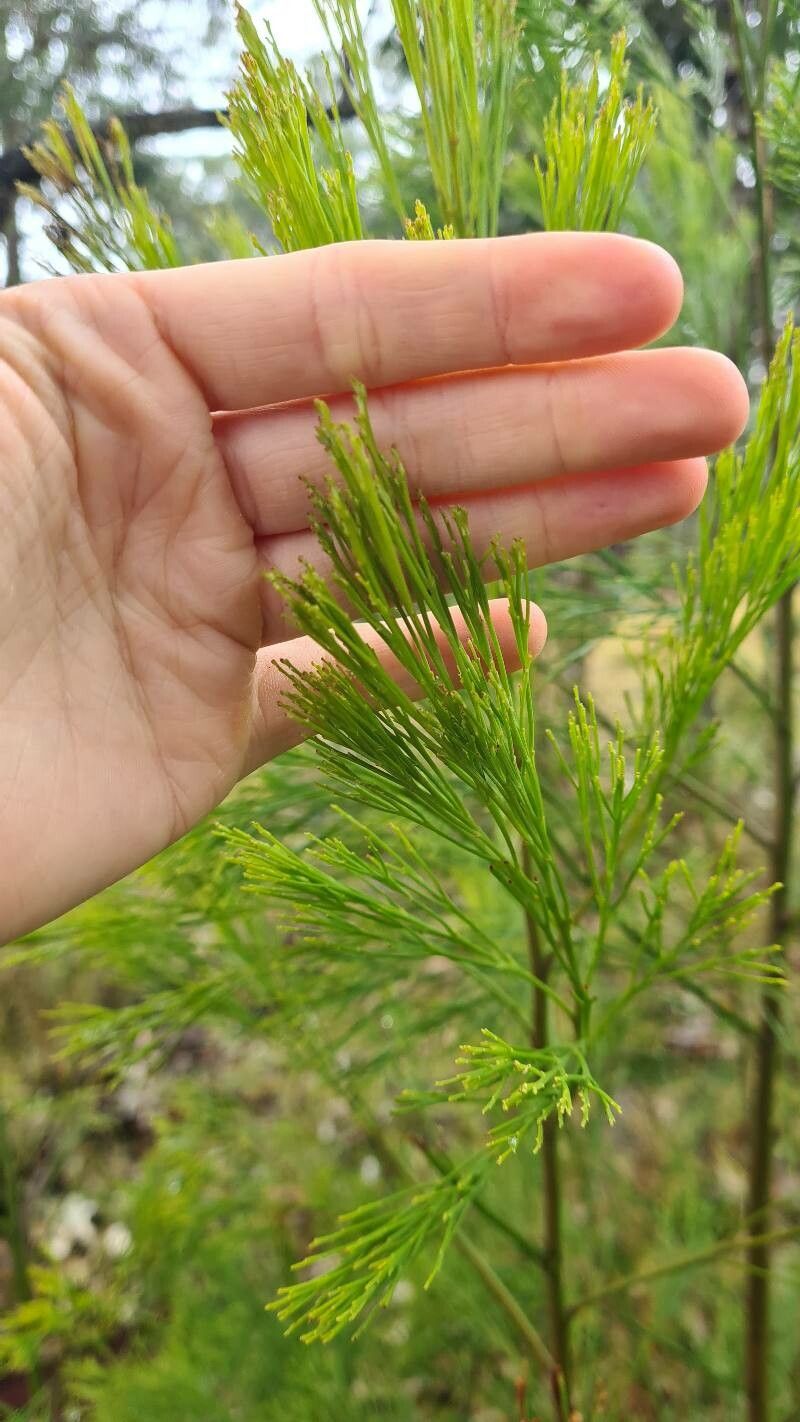
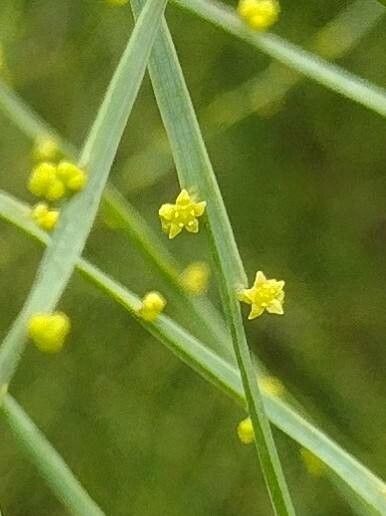
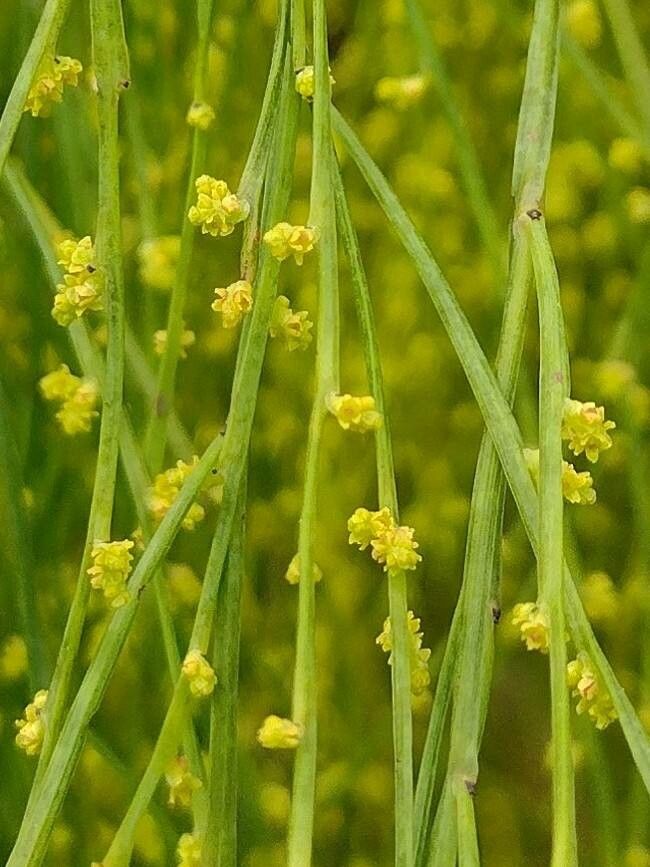
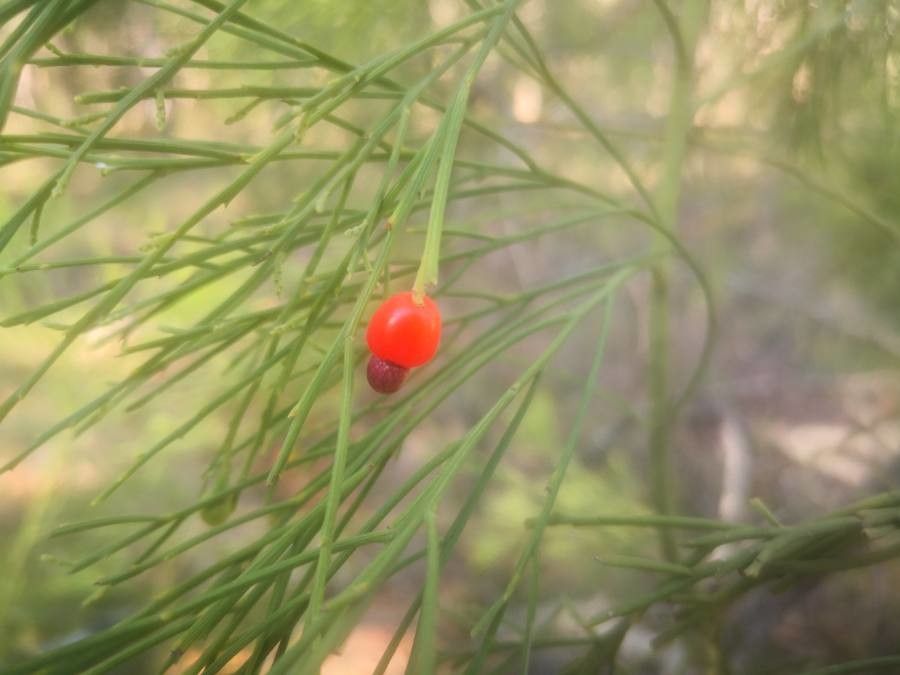
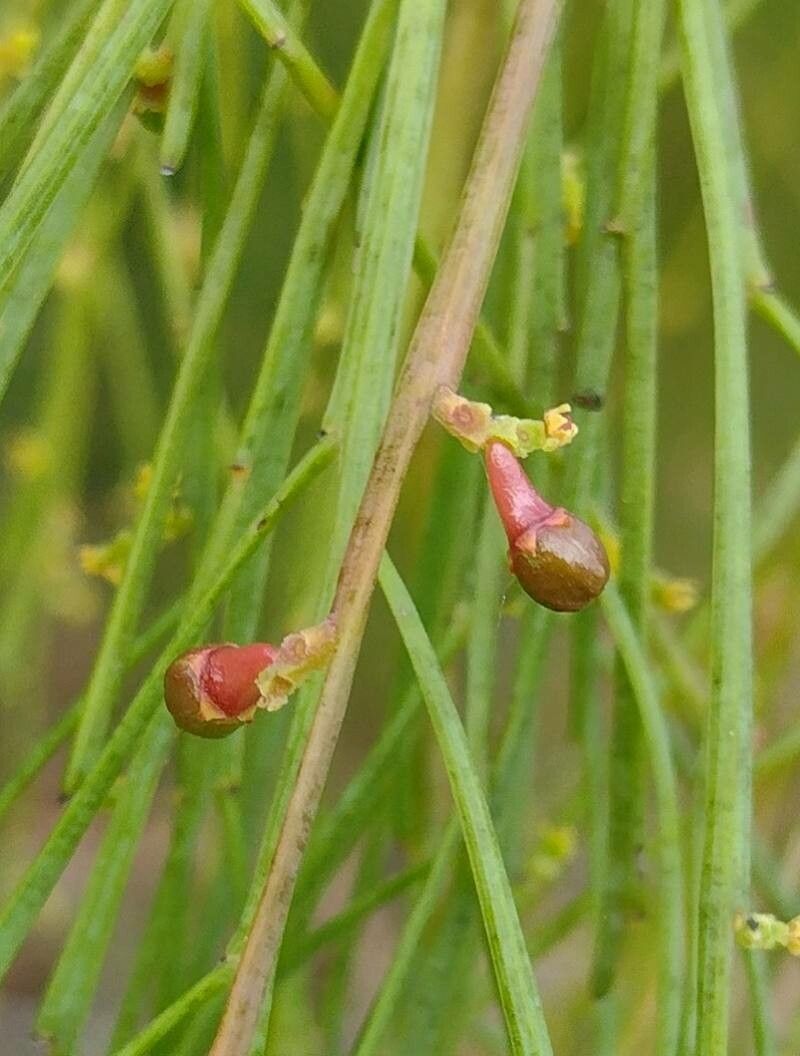
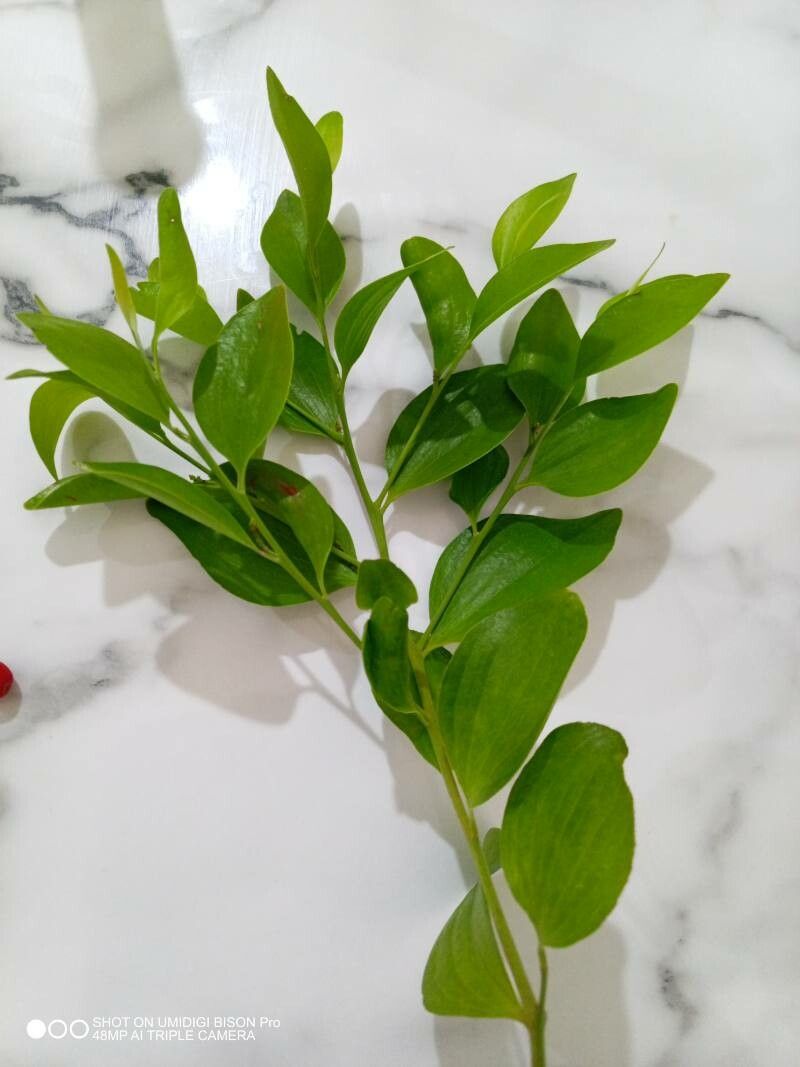
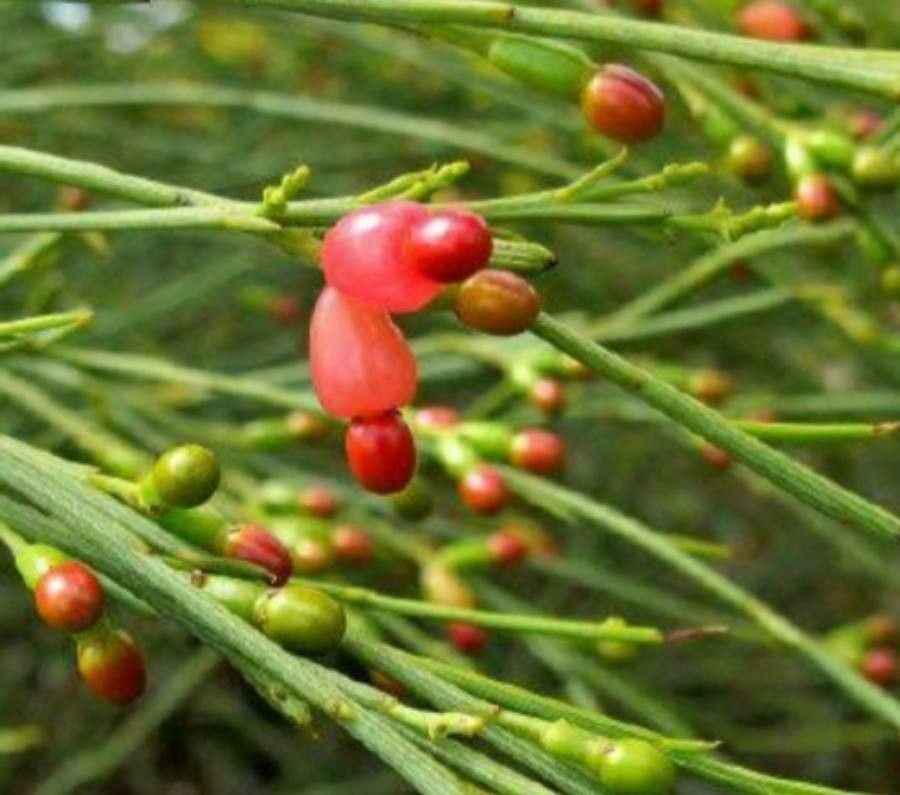
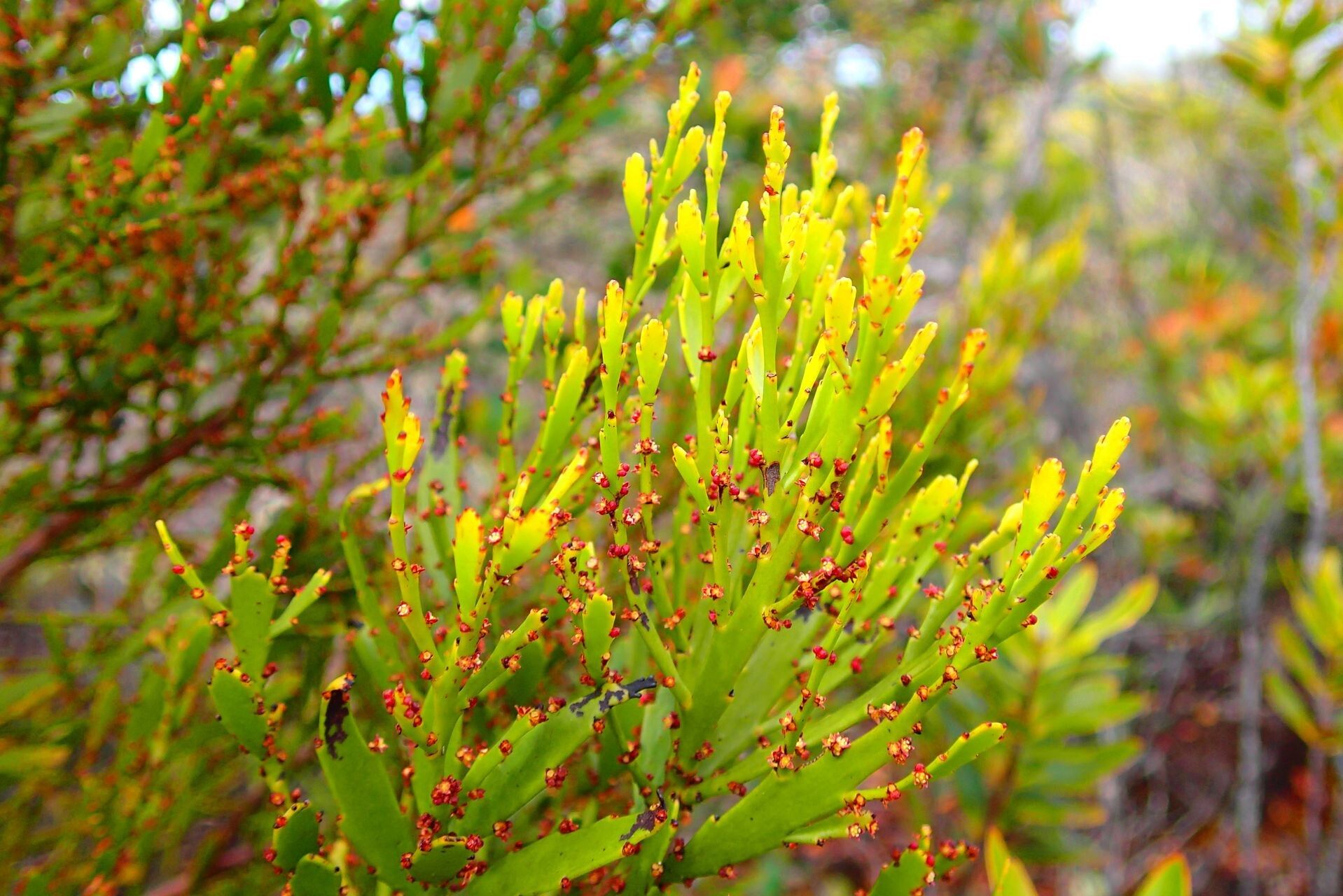
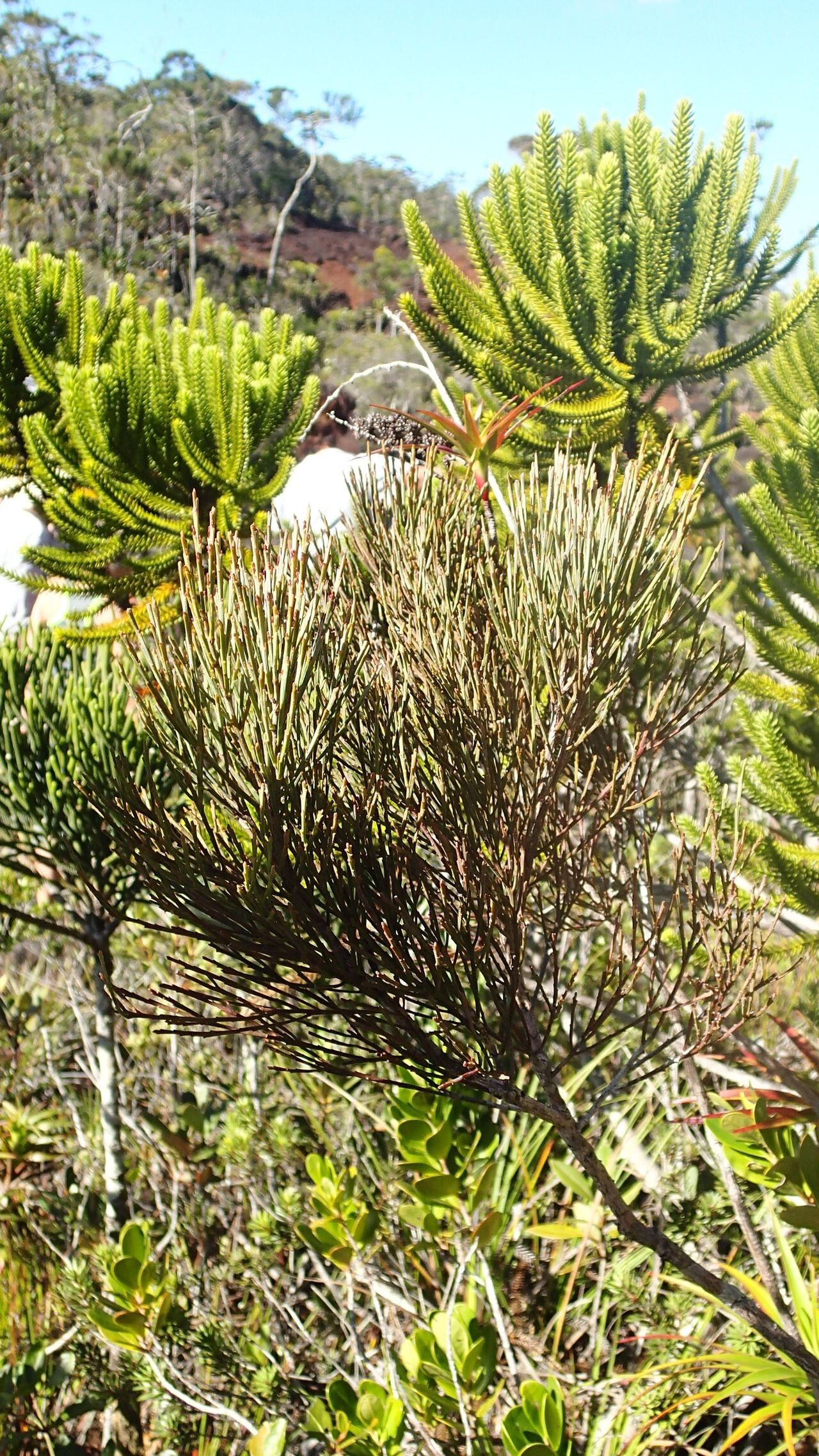
Exocarpos cupressiformis, with common names that include native cherry, cherry ballart, and cypress cherry, belongs to the sandalwood family of plants. It is a species endemic to Australia. Occasionally the genus name is spelt "Exocarpus" but it appears to be mostly no longer in use.
Native cherry shows strong resistance to disease and is generally unlikely to suffer from illnesses. Regarding maintenance, this plant is fairly low-maintenance. When grown outdoors it needs only light watering, and larger specimens usually do not require pruning. Smaller specimens, however, should be trimmed after they finish blooming. Native cherry is appropriate for anyone who has outdoor space such as a garden or a deck, and it does not demand extensive gardening experience.
How to keep Exocarpos Cupressiformis.
Light
The native cherry does best when it receives a high amount of sunlight during the day. Because it evolved in a region with abundant sunshine, its health and growth are strongly influenced by large amounts of light. Nevertheless, both too little and too much light can harm its growth.
Water
The native cherry, which originates from arid regions, is highly tolerant of drought and thrives in dry conditions. It requires minimal watering, ideally every 2-3 weeks, and grows best in well-draining soil. Its adaptability makes it an excellent choice for xeriscaping, especially in climates with infrequent rainfall.
Temperature
Native cherry is well suited to environments with temperatures ranging from 68 to 100.4 °F (20 to 38 ℃). During colder seasons, it may need adjustments, such as being placed in sheltered locations, to ensure optimum growth.
Fertilizer
Use organic fertilizers (e.g., fish emulsion, compost) instead of chemical fertilizers for Native cherry. Supply young plants with higher nitrogen and phosphorus in spring. Incorporate compost or fertilizer before or after planting. For mature plants, supplement in spring with a balanced fertilizer or one aimed at specific deficiencies. Nutrient deficiency causes small leaves, short branches, yellow or bronze leaves, acidic fruits, premature fruit fall, and splitting.
Pruning
The native cherry has delicate leaves and small, round fruits. Pruning in early spring is essential to improve airflow and remove dead wood, which promotes healthier growth and increases fruit yield. When shaping the plant, be gentle to prevent damage to its thin bark, and make sure to use the right tools and techniques.
Botanical profile.
- Plant Type
- Tree, Shrub
- Life Cycle
- Perennial
- Genus
- Exocarpos
- Family
- Santalaceae
- Hardiness Zone
- 9-11
- Mature Height
- 3.05 m to 7.92 m
- Mature Spread
- 3.05 m to 3.96 m
- Leaf Color
- Dark Green
- Leaf Type
- Semi-evergreen
- Flower Color
- Green
- Flower Size
- 0.10 cm to 0.20 cm
- Bloom Time
- Mid winter, Late winter, Early spring
- Planting Time
- Spring
- Harvest Time
- Spring
Other names.
Reader questions.
What are the sunlight requirements for Native cherry (Exocarpos cupressiformis)?
Native cherry (Exocarpos cupressiformis) thrives best in full sun conditions, requiring above 6 hours of sunlight daily for optimal growth. It's important to observe how sunlight moves through your garden throughout the day and choose locations that provide a good balance of light and shade. This ensures that your plants receive enough light without the detrimental effects of overexposure. In environments where natural sunlight is lacking, particularly indoors or during winter months, the use of artificial lighting can promote healthier growth by providing the necessary light intensity and duration.
What temperature range is ideal for Native cherry?
Native cherry thrives in environments where temperatures range from 68 to 100.4 °F (20 to 38 °C). It is extremely heat-loving, and cold temperatures can harm the plant. Therefore, maintaining temperatures above 20°C, especially during the winter, is beneficial for its growth. It is not tolerant to freezing temperatures, and care should be taken to avoid exposing it to temperatures approaching 0°C.
What are the symptoms of light deficiency or overexposure in Native cherry?
Symptoms of light deficiency in Native cherry include smaller new leaves, leggy or sparse growth, faster leaf drop, slower or halted growth, and lighter-colored new leaves. These symptoms indicate that the plant is not receiving enough light. On the other hand, symptoms of overexposure to sunlight include chlorosis (leaves turning yellow), sunscald, leaf curling, wilting, and leaf scorching. These symptoms show that the plant is receiving too much light, affecting its ability to photosynthesize properly and maintain its health.
What should I do with my Native cherry in the colder seasons?
In colder seasons, it's recommended to bring outdoor-grown Native cherry plants indoors and place them near a bright window. However, keep them at a certain distance from heaters to avoid harming the plants. This helps in maintaining an optimum growth temperature and protects the plant from cold damage. Adjusting the plant's location to ensure it stays within its preferred temperature range is crucial for its health during colder months.
How can I address light deficiency or overexposure for my Native cherry plant?
To address light deficiency in your Native cherry plant, gradually move it to a sunnier location, aiming for at least 6 hours of direct sunlight daily. If moving the plant is not feasible, or it's indoors, consider using artificial lighting, such as desk, ceiling, or professional grow lights, for at least 8 hours a day. For overexposure, relocate your plant to a spot with more shade to prevent sunburn and ensure a gradual adaptation to new light levels. If outdoor plants are in the ground and obstructed by trees, consider reducing these obstructions by pruning or relocating the plants to a brighter area with ample sunlight and good drainage.
How does low temperature affect Native cherry and what are the solutions?
Native cherry prefers warm temperatures and is not tolerant of low temperatures. When temperatures fall below -5°C, the leaves may lighten in color, and after frost damage, they gradually turn brown or black. Symptoms such as wilting and drooping may occur. The solution for frost damage involves trimming off the frost-damaged parts and moving the plant to a warm environment indoors, preferably near a south-facing window for ample sunlight, while also avoiding placing it near heaters or air conditioning vents to prevent air dryness.
What happens when Native cherry is exposed to high temperatures?
During summer, Native cherry should be kept below 38°C to avoid heat stress. When the temperature exceeds 43°C, the leaves may lighten in color, and the plant becomes more susceptible to sunburn. To remedy this, trim away the sunburned and dried parts of the plant. Relocate the plant to a shaded location during the midday and afternoon sun, and ensure to water the plant in the morning and evening to keep the soil moist.