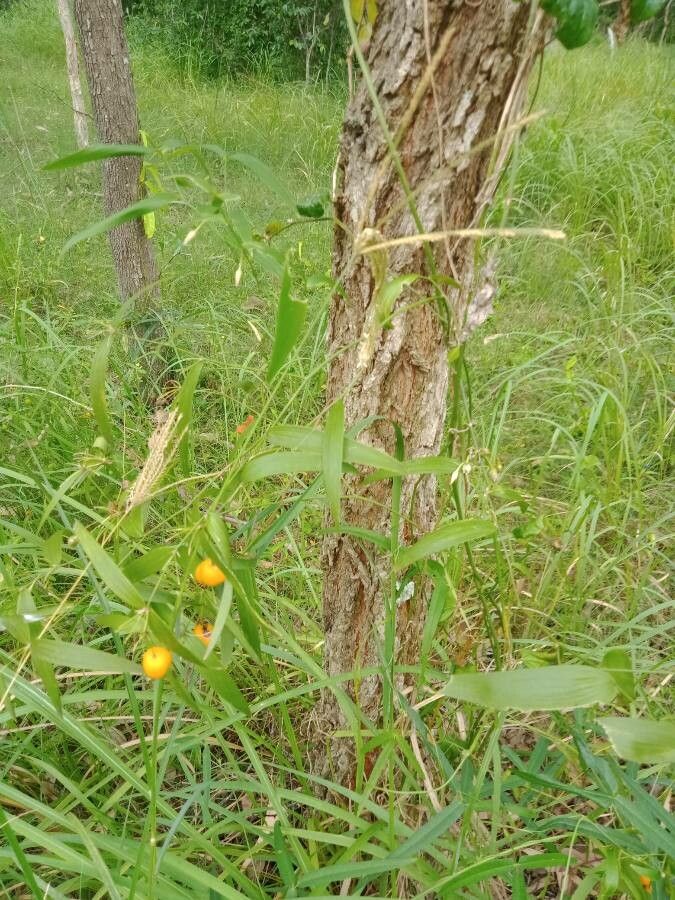
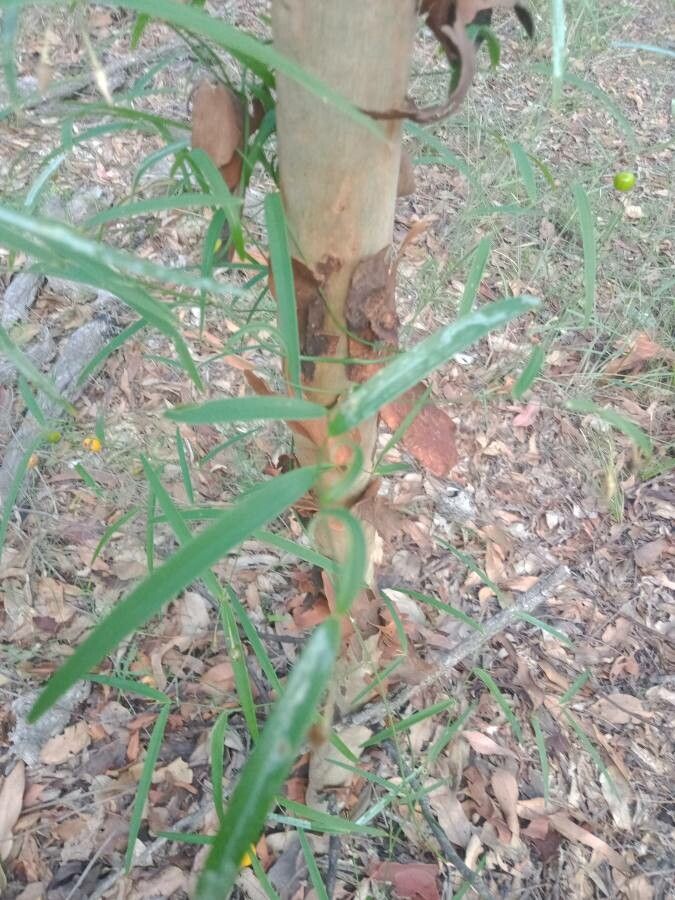
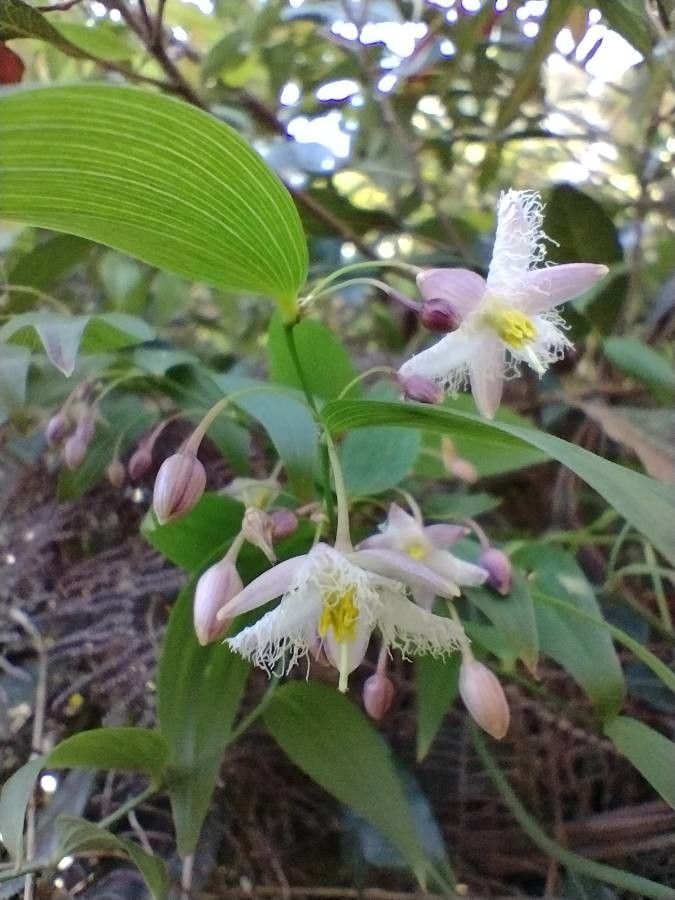
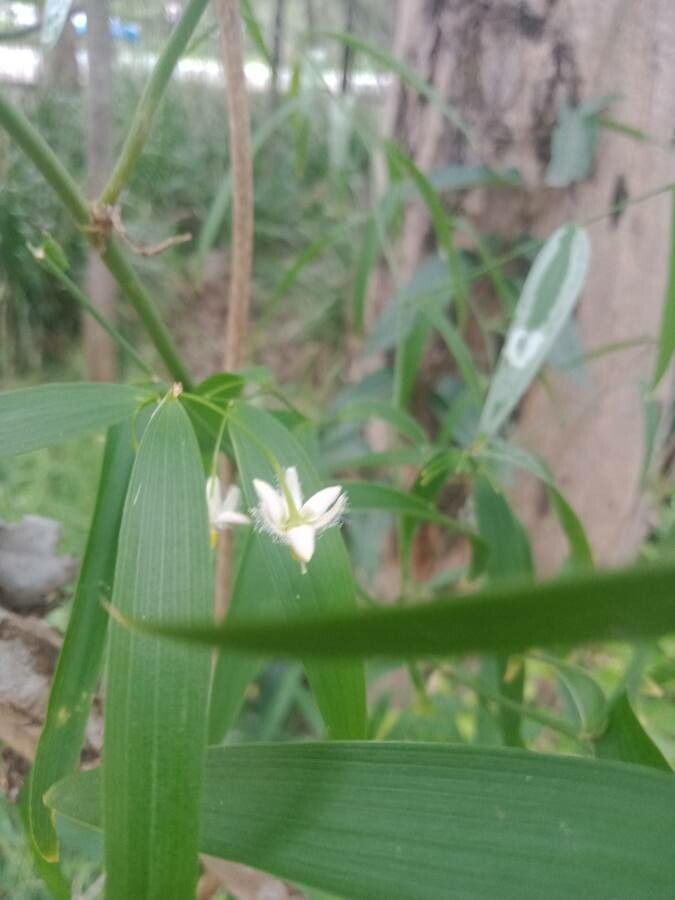
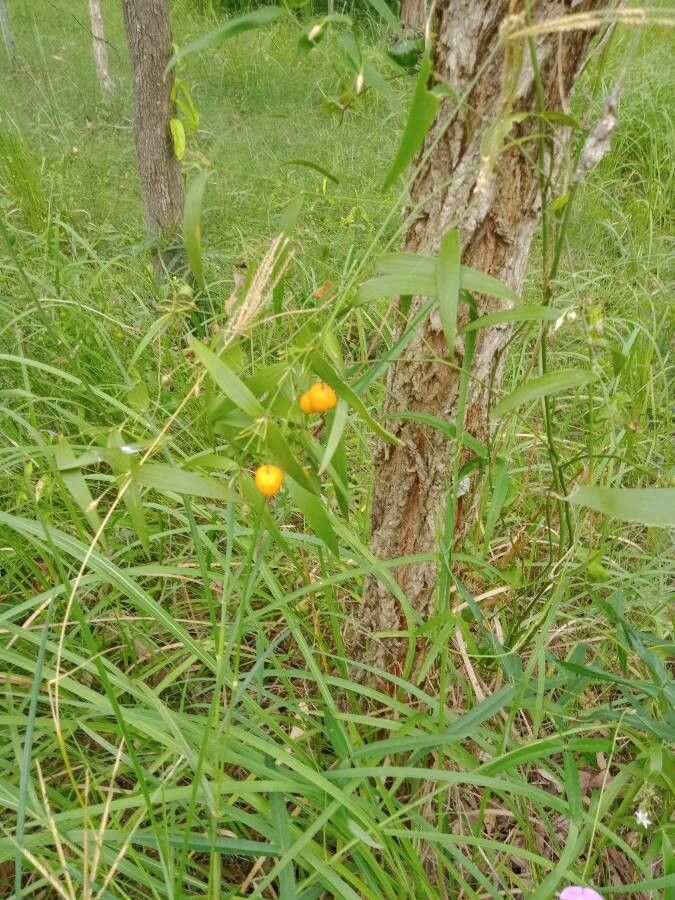
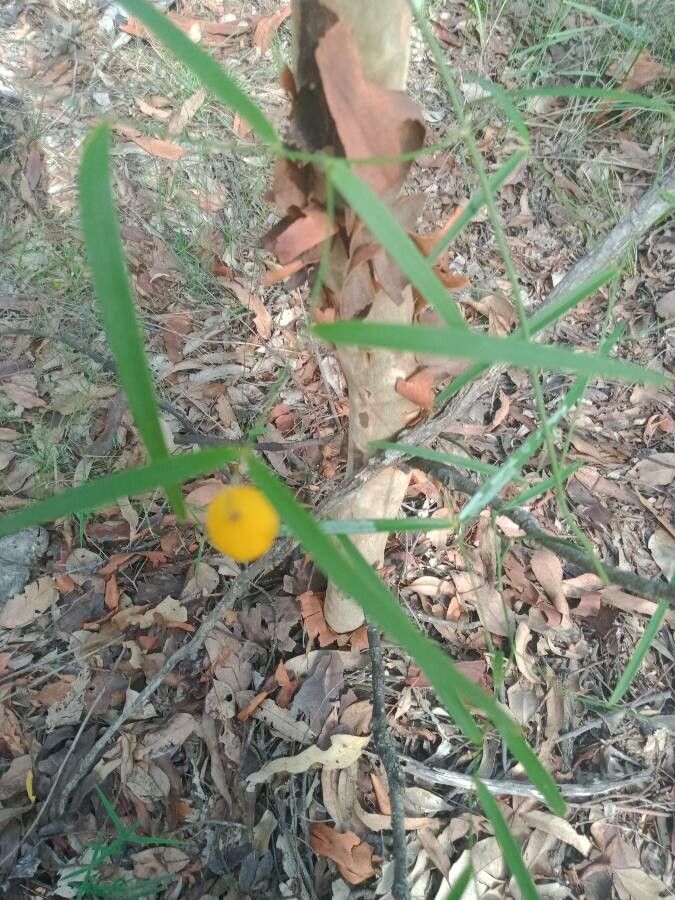
Eustrephus is a monotypic genus in the family Asparagaceae, subfamily Lomandroideae.Eustrephus latifolius, commonly named wombat berry, is the sole species of evergreen vines which grow naturally in Malesia, the Pacific Islands and eastern Australia. They grow in sclerophyll forest, woodland, heathlands, shrublands, gallery forest and on the margins of and in rainforests.They have leaves with lamina variable in shape, elliptic to linear, 3–10 cm (1.2–3.9 in) long and 3–35 mm (0.12–1.38 in) wide. All leaf veins are equally distinct. Flowers are pink to mauve or white. The yellow-orange, globose, capsules of 1–2 cm (0.4–0.8 in) diameter contain numerous black seeds set in a white aril. The variation in the shapes of the leaves has resulted in the creation of numerous infraspecific taxa over the years, none of which are recognised by most present-day systematists.
Wombat berry is resistant to disease and generally not susceptible to many ailments. In terms of upkeep, this plant is fairly low-maintenance. When grown outdoors it needs only occasional watering, and larger specimens typically do not require pruning. Smaller plants, though, should be pruned after they finish blooming. Wombat berry is well suited for anyone with outdoor space, like a garden or a deck, and does not call for extensive gardening experience.
How to keep Eustrephus Latifolius.
Light
Wombat berry comes from habitats like forest understories and rocky sites, where it exists in natural shade. It prefers partial sun but can tolerate both full sun and full shade, which demonstrates its versatile, hardy nature.
Water
The wombat berry flourishes in the moist and moderately humid conditions typical of Australian forest understories. To maintain its lush foliage, it should be watered twice a week, particularly when grown in well-draining soil. As an evergreen plant, the wombat berry keeps its leaves throughout the year, requiring consistent hydration for continuous growth.
Temperature
Wombat berry adapts well to heat, tolerating higher temperatures and fairly large temperature fluctuations. In hot conditions, attention should be paid to watering and providing adequate shade to prevent sunburn. On the other hand, Wombat berry has limited cold tolerance; though it can handle some chill, very low temperatures may cause frost damage.
Fertilizer
Proper timing is essential for fertilizing Wombat berry. Apply fertilizer in early spring and continue monthly until early summer. Fertilizer promotes attractive blooms and supplies energy both during dormant periods and active growth.
Pruning
The wombat berry is a versatile climbing plant known for its bright orange berries and lush foliage. For best results, prune the plant in early spring to remove dead branches, improve air circulation, and boost fruit production. Be sure to use sharp, sterilized tools to ensure effective pruning, and do so in accordance with the plant's growth cycle to maintain its optimal health.
Botanical profile.
- Plant Type
- Vine, Shrub
- Life Cycle
- Perennial
- Genus
- Eustrephus
- Family
- Asparagaceae
- Hardiness Zone
- 9-11
- Mature Height
- 2.13 m to 4.88 m
- Mature Spread
- 0.91 m to 3.05 m
- Leaf Color
- Dark Green
- Leaf Type
- Evergreen
- Flower Color
- Pink
- Flower Size
- 1.02 cm to 2.03 cm
- Bloom Time
- Late spring, Summer
- Planting Time
- Spring, Autumn
- Harvest Time
- Late summer, Fall
Other names.