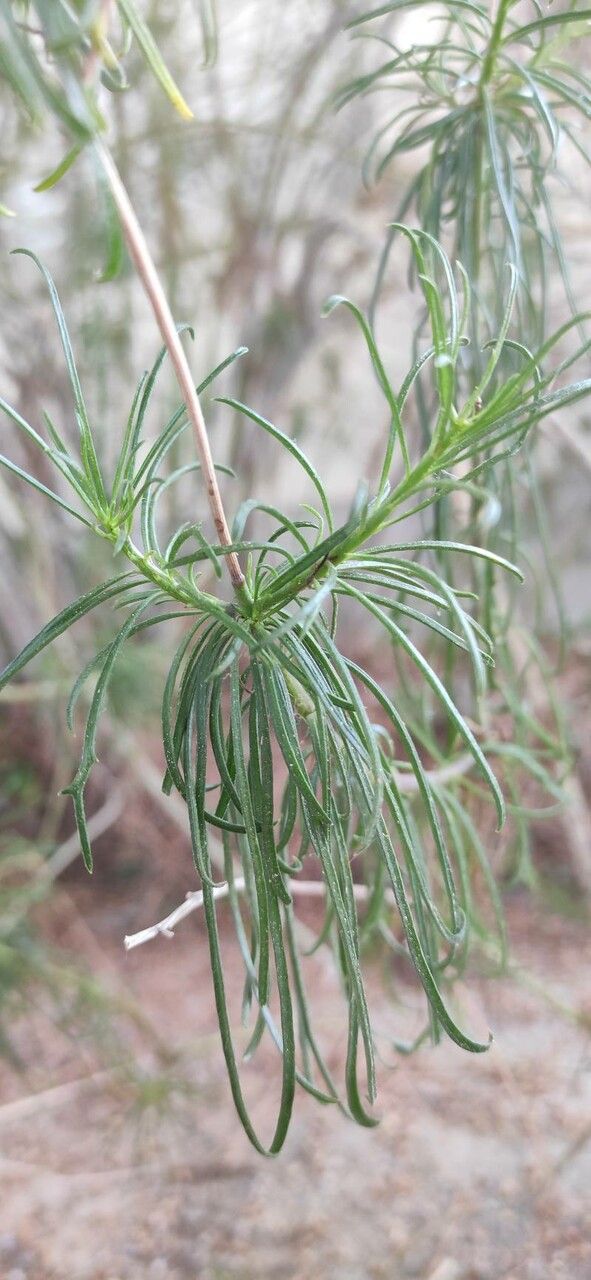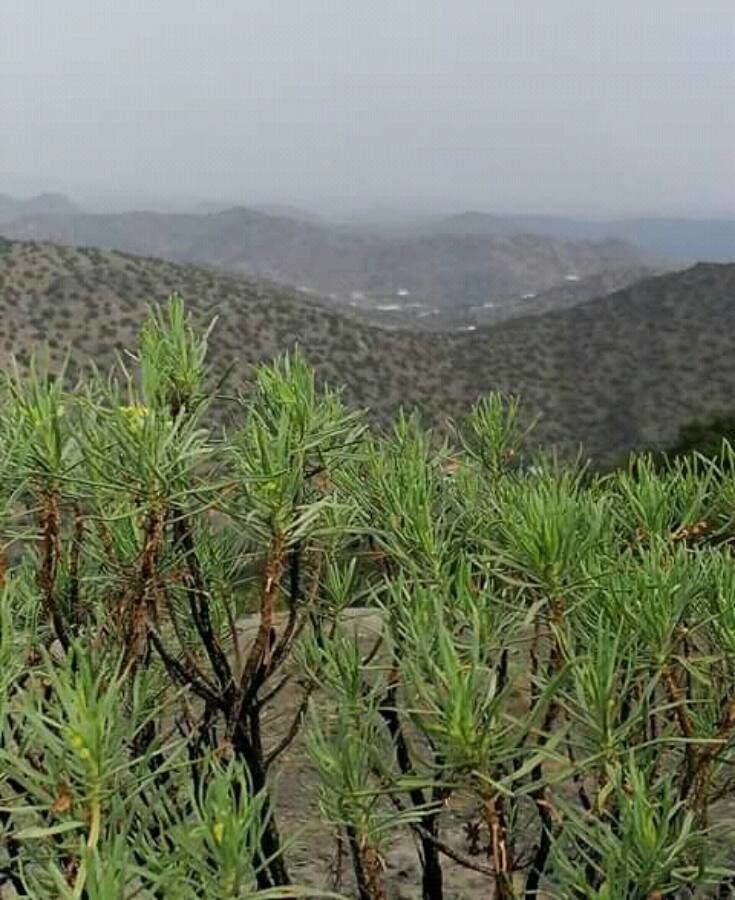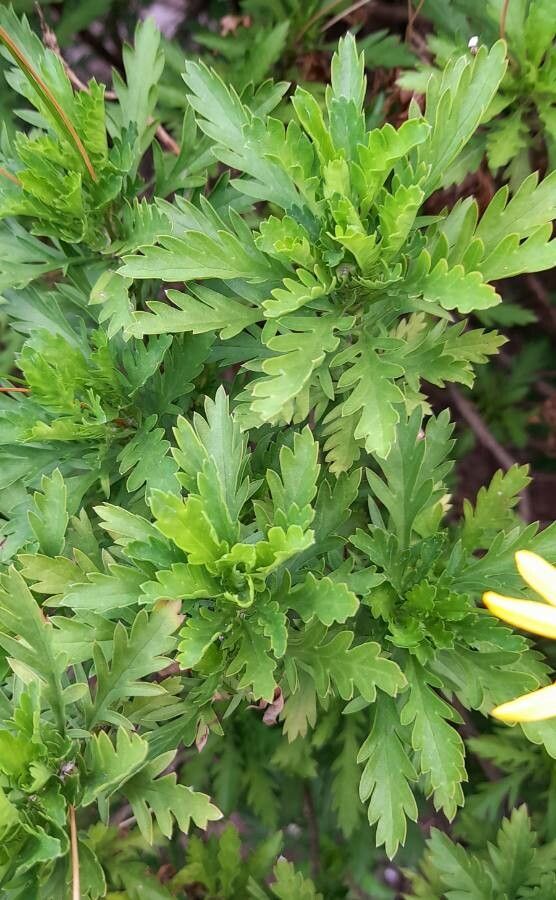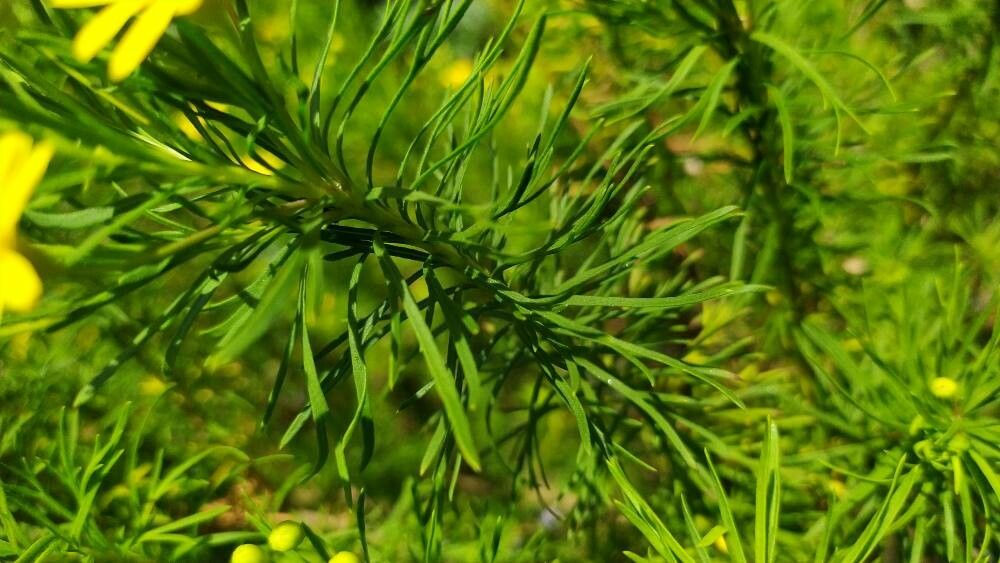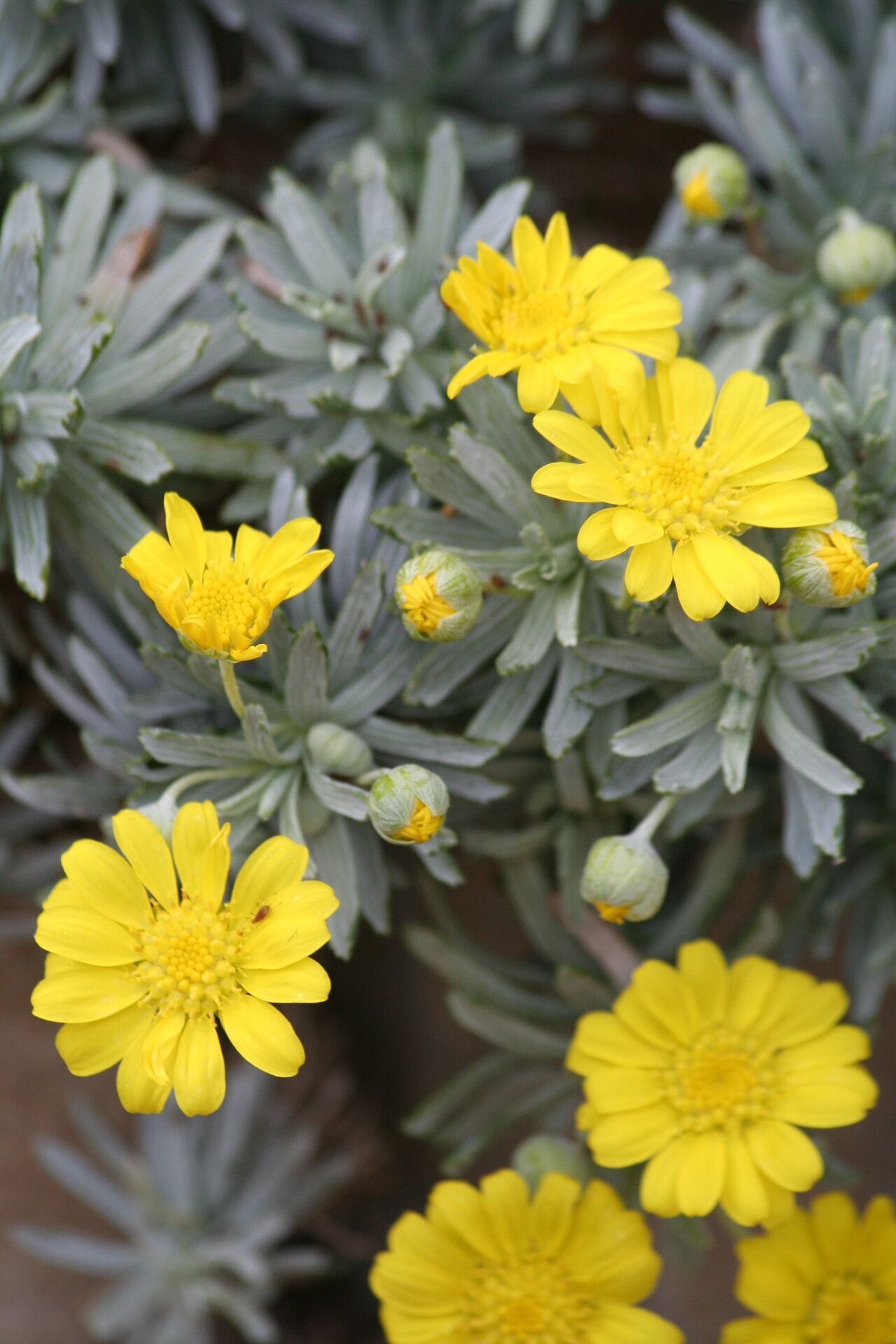
Euryops acraeus, the mountain euryops, is a species of flowering plant in the daisy family Asteraceae, native to the Drakensberg Mountains of South Africa. It is a dwarf, rounded evergreen shrub growing to 30 cm (12 in) tall and wide, with silver-blue leaves and masses of yellow composite flowers in spring and summer.The Latin specific epithet acraeus means "dwelling on high ground". Reflecting its rocky mountainous habitat, in cultivation this plant requires full sun and very sharp drainage, preferably in an alpine garden. It has gained the Royal Horticultural Society's Award of Garden Merit.
Mountain euryops is highly resistant to disease and typically does not suffer from illnesses. Regarding care, this plant is fairly low maintenance. When grown outdoors it needs only minimal watering, and larger specimens generally do not require pruning. Smaller plants, however, should be pruned after they finish blooming. Mountain euryopst is suitable for anyone who has an outdoor area, such as a garden or deck, and does not need extensive care experience.
How to keep Euryops Acraeus.
Light
Mountain euryops is native to open habitats, such as sunny meadows and forest margins, which offer abundant light. It does best in full sun but can tolerate partial sun, adapting well to a range of sunlight conditions.
Water
Originating from arid regions, the mountain euryops is highly drought-tolerant and requires watering only every 2-3 weeks, allowing the soil to dry out between sessions. It thrives in rocky terrains, preferring well-draining soil and benefiting from occasional rainfall that mimics the conditions of its natural habitat.
Temperature
Mountain euryops shows strong adaptability to different climate conditions, whether in scorching summers or cold winters. It nevertheless has an optimal temperature range for growth. If temperatures become too high, the plant is susceptible to heat and humidity stress, which can lead to its death. In areas where temperatures approach the lower limit of its cold tolerance, it is important to apply insulation measures to protect the plant.
Fertilizer
The timing of fertilizing Mountain euryops is important. Apply fertilizer in early spring and continue monthly through early summer. Fertilizer encourages attractive blooms and supplies energy during both dormant and active growth phases.
Pruning
Mountain euryops features vibrant yellow flowers and evergreen leaves. To encourage growth and maintain its shape, prune the plant from early to late winter. Cut away dead branches and thin out older stems to improve air circulation. This will help the plant form a more compact shape, produce more blooms, and increase its longevity.
Botanical profile.
- Plant Type
- Shrub
- Life Cycle
- Perennial
- Genus
- Euryops
- Family
- Asteraceae
- Hardiness Zone
- 8-11
- Mature Height
- 30 cm
- Mature Spread
- 30 cm
- Leaf Color
- Gray, Silver
- Leaf Type
- Evergreen
- Flower Color
- Yellow
- Flower Size
- 3.05 cm to 5.08 cm
- Bloom Time
- Spring, Early summer, Mid summer
- Planting Time
- Spring, Summer
- Harvest Time
- Late spring, Summer, Early fall
- Native Area
- South Africa, Lesotho
Reader questions.
What are the sun requirements for Mountain euryops?
Mountain euryops thrives in environments that emulate its native open habitats, such as sunny meadows and forest edges, demanding ample exposure to sunlight. It flourishes the most under full sun conditions, requiring more than 6 hours of direct sunlight per day. However, it can also adapt and grow under partial sun, with about 3-6 hours of sunlight daily. When planning your garden or selecting a spot for your Mountain euryops, it's essential to observe the movement of sunlight across the area to ensure the plant receives the ideal balance of light and shade for optimal growth.
What is the botanical name of Mountain euryops?
The botanical name of Mountain euryops is Euryops acraeus.
How can artificial lighting support Mountain euryops grown indoors?
For Mountain euryops cultivated indoors where natural sunlight may be insufficient, especially during winter or in less sunny spaces, artificial lighting can play a crucial role in supporting its growth. Utilizing the right type of artificial light, such as LED lights that can be customized to provide specific wavelengths needed by the plant, is vital. Full sun plants like Mountain euryops will need an intensity of 30-50W per square foot. It's important to place the light source 12-36 inches above the plant to best mimic natural sunlight conditions and adjust the duration to mimic natural daylight hours, typically between 8-12 hours per day, to promote healthier and faster growth.
What signs indicate Mountain euryops is receiving insufficient light?
When Mountain euryops is exposed to inadequate lighting, several symptoms may surface, signaling the plant's struggle to adapt. New leaves may grow smaller in size, and the plant might exhibit leggy or sparse growth due to longer spaces between leaves or stems, creating a thin appearance that may cause the plant to lean or break. Faster leaf drop, slower or halted new growth, and the development of lighter-colored or pale new leaves are also common signs of insufficient light. Other symptoms like chlorosis, sunscald, leaf curling, wilting, and leaf scorching indicate either excessive sunlight or the adverse effects of poor light conditions.
What are the solutions for Mountain euryops suffering from light deficiencies?
To address light deficiency in Mountain euryops, whether grown indoors, outdoors, or in the ground, gradual adaptation to brighter conditions is key. For indoor plants, gradually shifting them to sunnier spots or utilizing artificial lighting such as desk or ceiling lamps, or professional grow lights for a minimum of 8 hours daily, can significantly improve their light exposure. Outdoor and ground-planted specimens should also be gradually moved to areas with more sunlight to prevent sunburn, considering the removal of obstacles blocking sunlight or transplanting smaller plants during their dormant periods to locations with better light access and drainage. It's important to note that parts of the plant already damaged by insufficient light may not recover, yet new growth should be healthy following these adjustments.