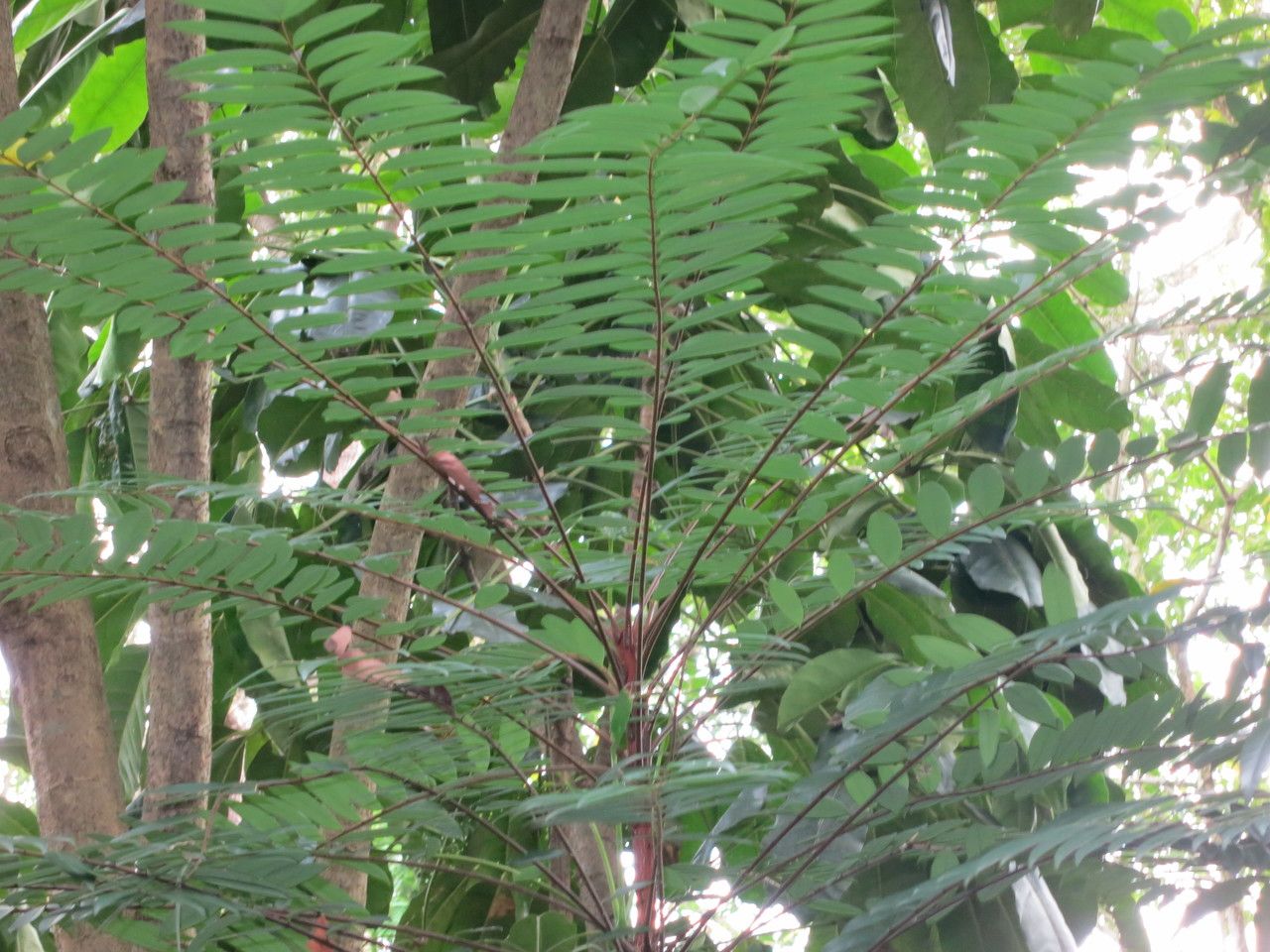
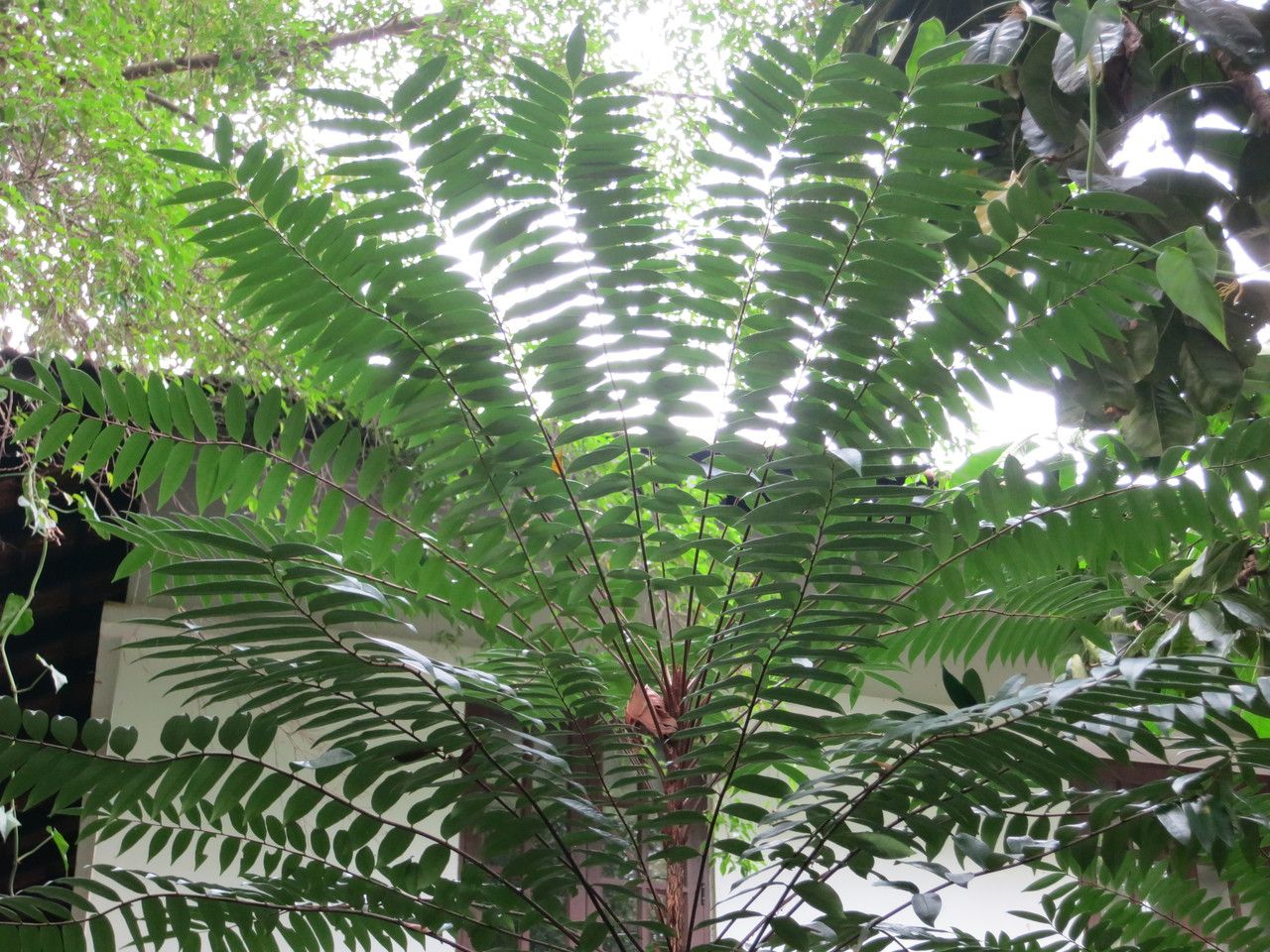
Eurycoma longifolia (commonly called tongkat ali, pasak bumi, or longjack) is a flowering plant in the family Simaroubaceae. It is native to Indochina (Cambodia, Laos, Malaysia, Myanmar, Thailand and Vietnam) and Indonesia (the islands of Borneo and Sumatra), but has also been found in the Philippines. The plant is a medium-sized slender shrub that can reach 10 m (33 ft) in height, and is often unbranched. The root of the plant has been used in folk medicine of the South East Asian region, and in modern times has common use as supplements, as well as food and drink additives.
Long jack has good resistance to disease and is generally not susceptible to illnesses. Regarding care, this plant is fairly low-maintenance. When grown outdoors it needs only minimal watering, and larger plants typically do not require pruning. However, smaller plants should be pruned after they finish blooming. Long jackt is suitable for anyone with an outdoor space, such as a garden or deck, and does not require much experience in plant care.
How to keep Eurycoma Longifolia.
Light
Long jack grows best when it gets an adequate amount of sunlight for most of the day, yet it can manage if it isn't completely in direct sun. Both excessive and inadequate exposure may damage its health, reflecting that it originates from an environment with balanced sun exposure.
Water
Originally from Southeast Asian rainforests, Long Jack thrives in high humidity and requires consistent moisture. It should be watered every 2-3 weeks, though it can tolerate brief periods of dryness. The growth cycle of Long Jack is heavily influenced by seasonal rainfall patterns, which are crucial for maintaining balanced hydration without causing over-saturation.
Temperature
Long jack is commonly found in habitats where temperatures lie between 68 and 100.4°F (20 and 38℃). The plant favors a warmer climate. To promote healthy growth, keep temperatures within that range throughout the seasons.
Fertilizer
Fertilization is essential for the care of Long jack. Regular feeding during the growing season maintains the energy needed for its showy leaves and supports overall growth. Failing to fertilize can lead to unhealthy leaves, reduced ornamental value, and stunted or weak growth that is prone to breaking.
Pruning
To maintain the health and shape of Long Jack, it is beneficial to prune it regularly, preferably from early to late winter. During pruning, remove any dead or diseased branches and thin out crowded areas to improve air circulation. This will help reduce pests and encourage strong, healthy growth. Consistent pruning not only improves the plant's health but also enhances its appearance.
Botanical profile.
- Plant Type
- Shrub
- Life Cycle
- Perennial
- Genus
- Eurycoma
- Family
- Simaroubaceae
- Hardiness Zone
- 12
- Mature Height
- 10.06 m
- Mature Spread
- 3.05 m to 4.88 m
- Leaf Color
- Green
- Leaf Type
- Evergreen
- Flower Color
- Pink, Red
- Flower Size
- 0.51 cm
- Bloom Time
- All year round
- Planting Time
- Spring, Summer, Autumn
- Harvest Time
- All year round
Other names.
Reader questions.
What are the sunlight requirements for Long Jack?
Long Jack, or Eurycoma longifolia, thrives best in full sunlight, requiring above 6 hours of sunlight daily to flourish optimally. It can also tolerate partial sun, with about 3-6 hours of sunlight. For gardeners, it's advised to observe the movement of sunlight in your garden to find the ideal balance of light and shade for planting Long Jack, ensuring the plant's health and happiness.
What are the ideal temperature conditions for Long jack?
Long jack thrives in warmer climates, with ideal temperatures ranging from 68 to 100.4°F (20 to 38°C). To ensure its healthy growth, it's important to maintain these temperature conditions throughout the year. During colder months, it's advisable to bring outdoor-grown Long jack indoors, placing it near a bright window yet keeping it at a distance from direct heat sources like heaters. Ensuring indoor temperatures remain above 20°C during winter is beneficial for the plant's growth, while temperatures nearing 15°C or lower can be harmful.
How does artificial lighting benefit Long Jack when grown indoors?
When natural sunlight is not sufficient, especially during winter or in spaces that do not receive enough sunlight, artificial lighting serves as a crucial support for Long Jack's growth. Indoor plants like Long Jack require adequate lighting for optimal growth. LED lights are recommended because they can be customized to provide specific wavelengths needed by plants. For full sun plants, 30-50W/sq ft is ideal, partial sun plants need 20-30W/sq ft, and full shade plants should have 10-20W/sq ft of artificial light. The lights should be positioned 12-36 inches above the plant to mimic natural sunlight and should be kept on for 8-12 hours a day depending on the plant species’ needs.
How does low temperature affect Long jack and what are the solutions?
Long jack is sensitive to low temperatures and prefers conditions above 20°C. Exposure to temperatures below 15°C can cause damage, and below 10°C, the leaves may begin to lighten in color. Following frost, the damage may manifest as browning or blackening of the leaves, alongside wilting and drooping. To mitigate such damage, frost-affected parts should be trimmed off and the plant should be moved indoors to a warmer environment. Placing it near a south-facing window maximizes sunlight exposure, but it should not be placed near heaters or air conditioners to avoid air dryness.
What are the signs of insufficient or excessive sunlight in Long Jack?
Insufficient sunlight can lead to several visible symptoms in Long Jack, including smaller new leaves, leggy or sparse growth, faster leaf drop, halted growth, and leaves that are lighter in color or exhibit chlorosis (yellowing). Excessive sunlight can cause symptoms such as sunscald, leaf curling to reduce surface area exposed to the sun, wilting from increased water loss, and leaf scorching characterized by brown, dry edges on leaves. These symptoms indicate the plant's struggle with its light environment, affecting its overall health and ability to photosynthesize.
What should be done if Long jack is exposed to high temperatures?
During the summer, it's important to keep Long jack's exposure to temperatures below 38°C. Exposure to temperatures above 43°C can lighten the leaves' color and increase susceptibility to sunburn. To address sunburn, trim away the affected areas and relocate the plant to a shaded spot, especially away from the harsh midday and afternoon sun. Additionally, watering the plant in the morning and evening can help keep the soil adequately moist, reducing stress from high temperatures.
How can you manage sunlight exposure for Long Jack to ensure healthy growth?
To optimize Long Jack's health, gradually increase its exposure to sunlight by moving it to sunnier locations each week, ensuring it receives at least 6 hours of direct sunlight daily. For indoor plants that are large or not easily movable, consider using artificial light, keeping a desk or ceiling lamp on for at least 8 hours daily, or investing in professional plant grow lights. Outdoors, avoid sudden changes in light to prevent sunburn, and indoors or on the ground, work on reducing obstructions like pruning trees that block sunlight, or consider transplanting smaller plants to sunnier locations during their dormant periods to improve light access.