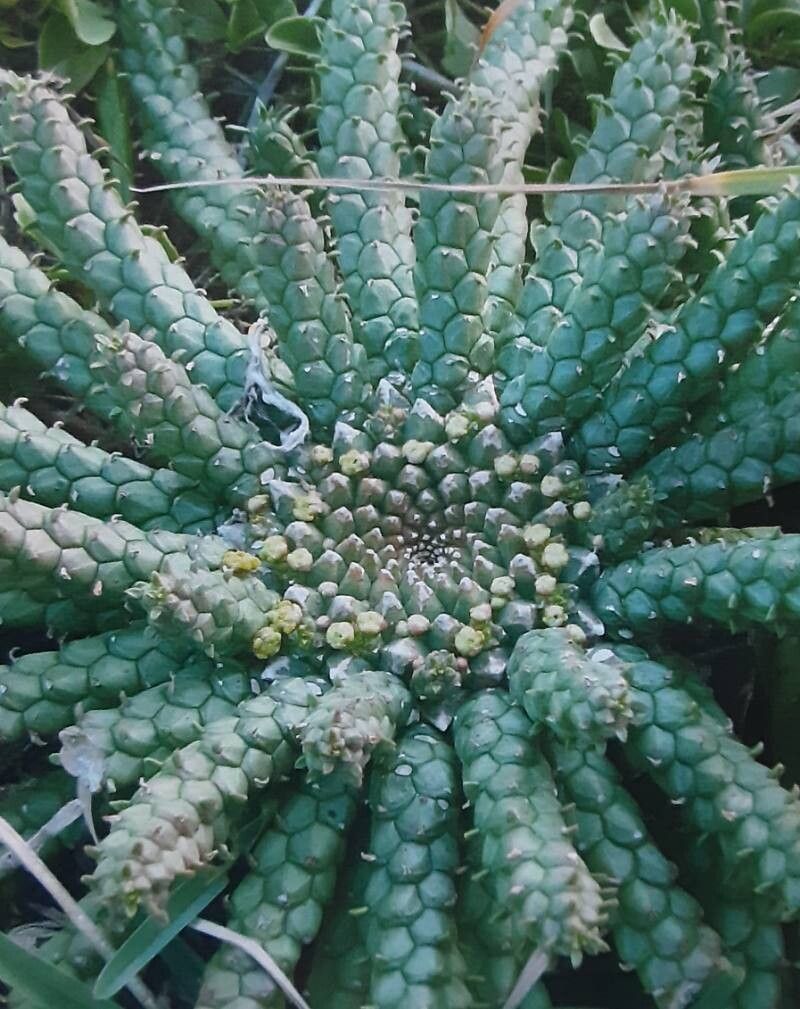
The Medusa plant has moderate disease resistance but is more sensitive to humidity and overwatering. It becomes especially prone to disease if it lacks light and is overwatered. In terms of care, the Medusa plant is drought-tolerant and can endure long stretches without watering. It needs little fertilizer and only occasional pruning. These characteristics make it suitable for people of all experience levels, particularly those who want to spend less time on plant care and who may sometimes be away from home for extended periods. It is a good option for anyone who does not want to invest a lot of time in tending plants yet still wants an easy-to-maintain specimen.
How to keep Euphorbia Woodii.
Light
The Medusa plant thrives when exposed to direct sunlight. It's growth and vitality are driven by copious amounts of sun. Stemming from a habitat with abundant light, it is well adjusted to such conditions. However, it can wilt or develop sunburn if it gets too much sun, and grow poorly or lose its vitality if it does not get enough sunlight.
Temperature
Originating from hot climates, the medusa plant grows optimally in temperatures between 68 and 100°F (20 to 38℃). During cooler seasons, create a favorable environment by keeping the temperature over 68°F (20℃).
Fertilizer
When it comes to the Medusa plant, applying a light amount of fertilizer once or twice a year during its growth phase is adequate. Refrain from fertilizing in the dormant periods of winter and summer. After repotting, lower the fertilizer amount and hold off on fertilizing for a few months. Fertilization assists in healthy plant development and promotes flowering.
Pot & Repot
During the hotter months, transplant the Medusa plant into a pot slightly more extensive than its existing one, which should have sufficient drainage. Utilize a soil mix that drains well, ideal for cacti or succulents. Be cautious with the plant's roots and caudex during the transplantation process. Following the repotting, hold off watering for approximately a week to avoid root decay. Position the plant in a sunlit area to encourage maximum growth.
Botanical profile.
- Plant Type
- Succulent
- Life Cycle
- Perennial
- Genus
- Euphorbia
- Family
- Euphorbiaceae
- Hardiness Zone
- 9-11
- Mature Height
- 20 cm
- Mature Spread
- 40 cm
- Leaf Color
- Green
- Leaf Type
- Evergreen
- Flower Color
- Yellow, Red
- Flower Size
- 0.51 cm
- Bloom Time
- Late spring, Summer, Early fall
- Planting Time
- Spring
- Harvest Time
- Late summer, Fall
- Native Area
- South Africa