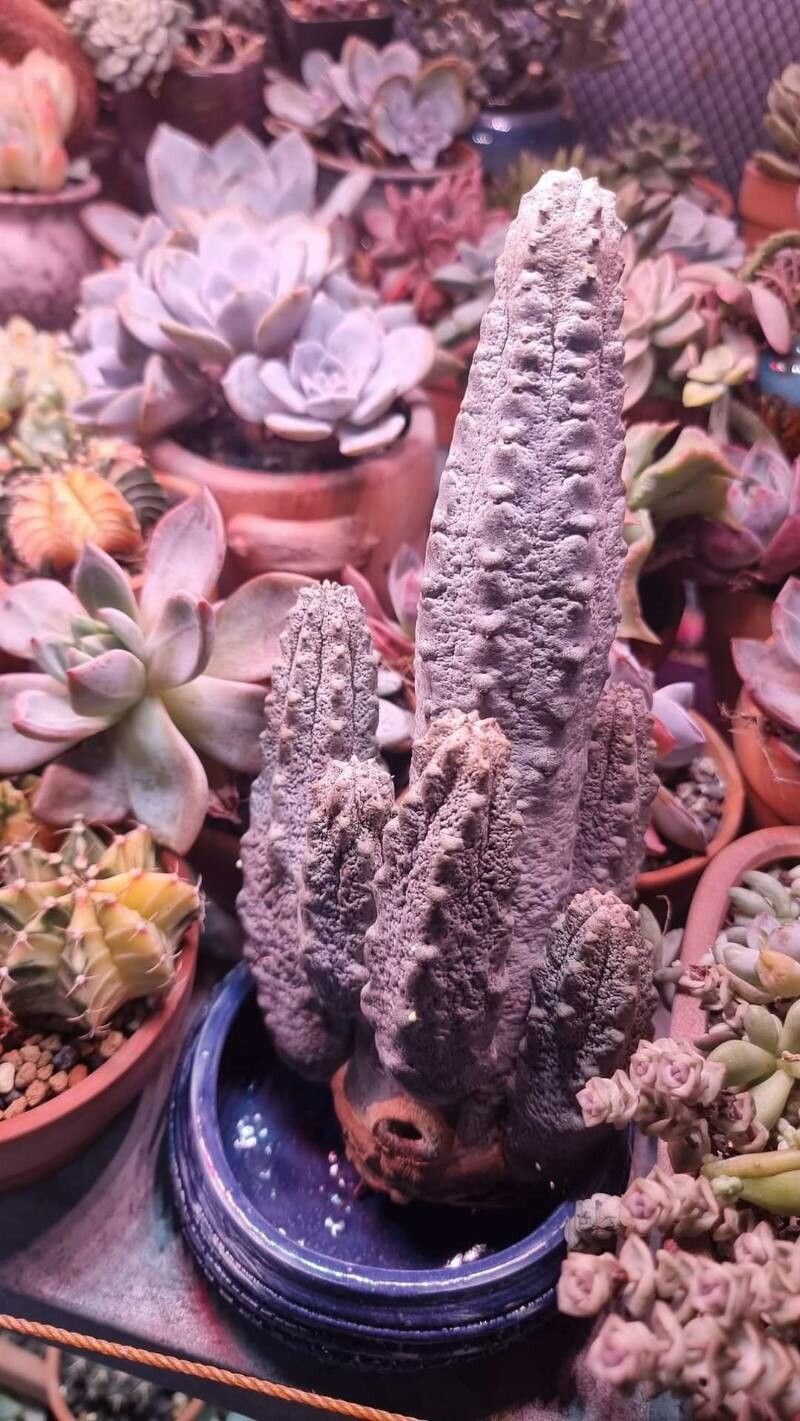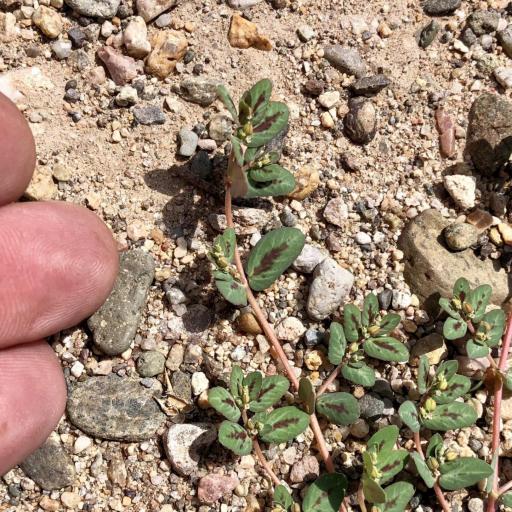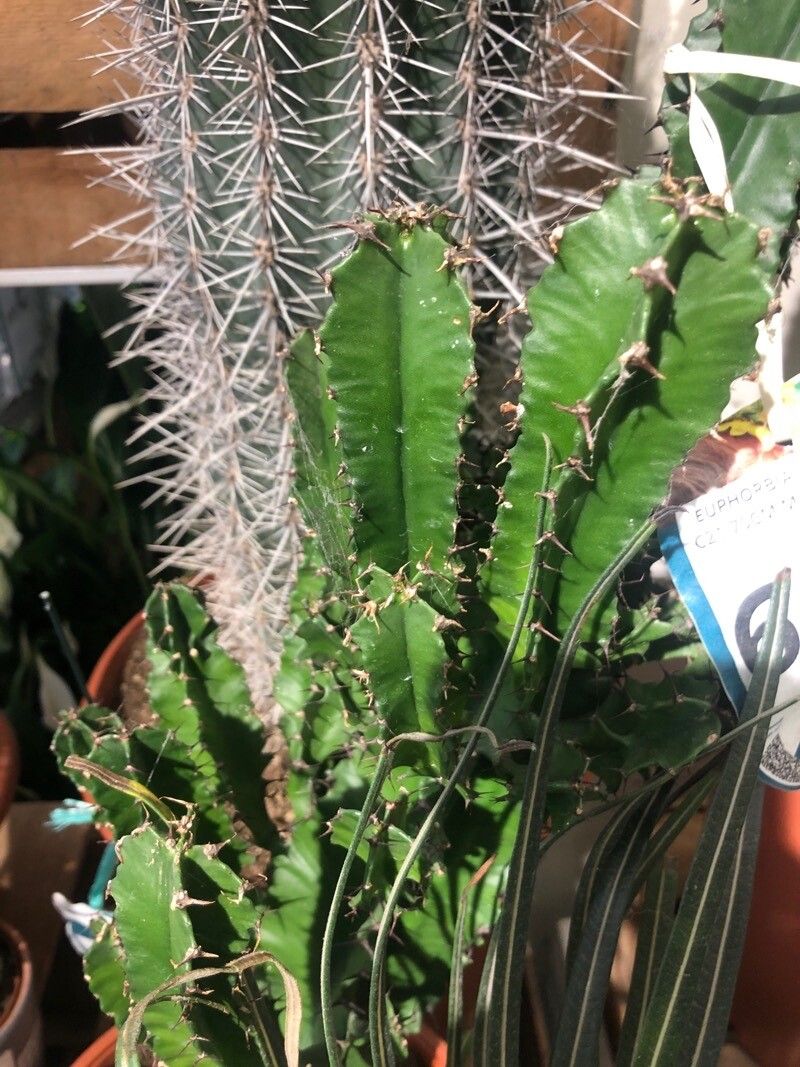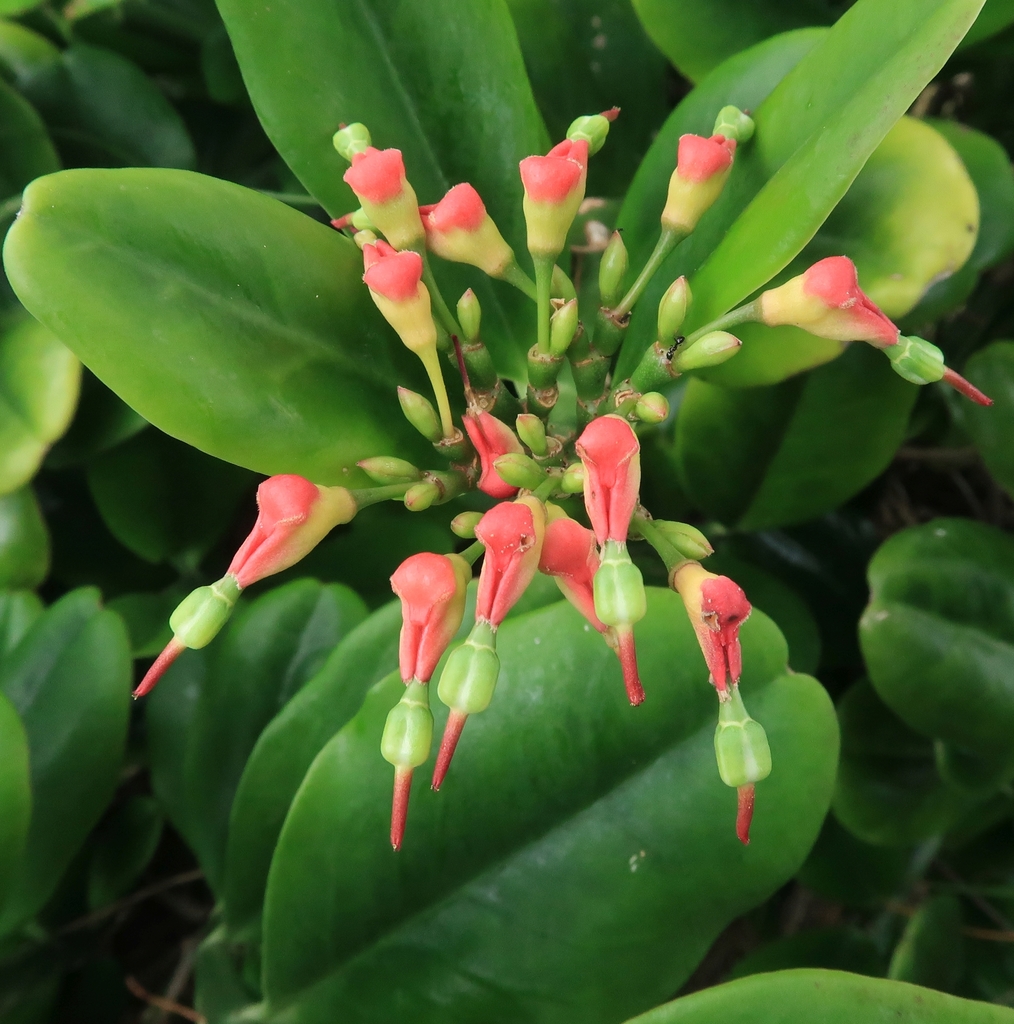
Euphorbia tithymaloides, commonly known as Devil's Backbone or Jacob's Ladder, is a succulent plant native to Central and South America. It's a popular ornamental plant, prized for its unique appearance and easy care requirements. The plant features thick, upright stems that can grow up to 3 feet tall, with small, oval-shaped leaves that pair along the stem.
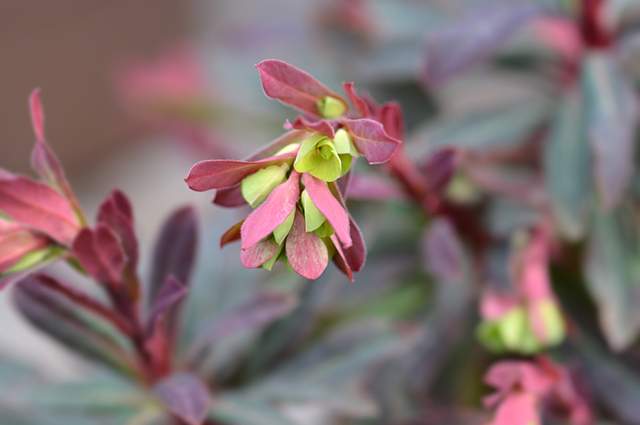
One of the most distinctive characteristics of Euphorbia tithymaloides is its flowers. Although the actual flowers are small and yellow-green, they are surrounded by showy red bracts that mimic flowers.
Devil's Backbone thrives in bright, indirect light but can tolerate some direct sunlight. It requires well-draining soil and moderate watering during the growing season (spring through fall). During the dormant season (winter), the soil should dry out between waterings.
Devil's-backbone has no known psychoactive properties, yet it is often included in hallucinogenic ceremonial drinks in Peru and Bolivia. These brews, known as cimora, have been part of traditional healing ceremonies since 200 B.C. Although the San Pedro cactus, known for its hallucinogenic effects, is the primary active ingredient, devil's-backbone is frequently used as a standard component in the mixture. FUN FACT · FROM THE LIBRARY
While Euphorbia tithymaloides is generally easy to care for, it should be handled with caution due to its milky sap, which can cause skin irritation or even blindness if it contacts the eyes.
Overall, Euphorbia tithymaloides is an excellent addition to any succulent collection, thanks to its unique appearance and low maintenance needs.
Devil's Backbone: This plant is native to regions ranging from southern Florida and the Caribbean to Venezuela. It is a clump-forming succulent shrub that can grow up to 15 cm tall and 8 cm wide in the wild. Euphorbia tithymaloides is commonly known as the devil's backbone due to its zigzag stems, which are said to resemble a spinal column.
Devil's-backbone has moderate disease resistance and is more sensitive to humidity and overwatering. It becomes more prone to disease if it lacks light and is overwatered. Regarding care, Devil's-backbone is drought-tolerant and can go long periods without watering. It needs little fertilizer and only occasional pruning. This makes it appropriate for people at any experience level, especially those who prefer to spend less time on plant care and who may be away from home for extended periods. It is a suitable option for anyone who does not want to invest a lot of time in plant care but still wants an easy-to-maintain plant.
How to keep Euphorbia Tithymaloides.
Light
Devil's-backbone prefers abundant sunlight in its surroundings, reflecting its natural habitat. It flourishes when allowed to enjoy bright light for most of the day, yet it can tolerate areas with less-than-full light. However, both excessive and insufficient light can harm its growth and overall health.
Water
Devil's-backbone flourishes in warm, humid tropical climates and can occasionally handle missed waterings. While it prefers consistent moisture, it can tolerate short periods of dryness. For best results, water the plant every three weeks, ensuring the soil dries out between waterings. Ideal for indoor growth, this plant requires well-draining soil and appropriate containers to thrive.
Humidity
This plant will thrive in moderate humidity, which is probably the level in your home. However, misting it a few times a week can be very beneficial. Make sure the room has good ventilation.
Temperature
The devil's-backbone prefers temperatures between 68 and 100 ℉ (20 and 38 ℃). Native to tropical areas, it does best in warm, humid conditions. In colder months, keep the plant in a spot that maintains those temperatures to prevent damage.
Fertilizer
For Devil's-backbone, light applications of fertilizer once or twice a year during the growing season are sufficient. Avoid fertilizing in winter and in summer when the plant is dormant. Reduce the amount of fertilizer for repotted plants and wait a couple of months after repotting before you fertilize. Fertilizing helps maintain healthy growth and encourages blooms.
Pruning
The Zigzag plant does not require much trimming, although it is necessary to remove any withered or yellowing leaves. To avoid spreading fungal or bacterial illnesses among plants, make sure to use clean garden shears at all times. Pruning should be done carefully to prevent wounding the stem.
Pot & Repot
Repot Devil's-backbone in the warmer months, choosing a pot only a little bigger than the current one with good drainage. Use a well-draining cactus or succulent soil mix. Be careful with the roots and caudex during repotting. After repotting, wait about a week before watering to avoid root rot. Place it in a sunny spot for best growth.
Botanical profile.
- Plant Type
- Succulent, Herb
- Life Cycle
- Perennial
- Genus
- Euphorbia
- Family
- Euphorbiaceae
- Hardiness Zone
- 10-12
- Mature Height
- 1.83 m to 2.44 m
- Mature Spread
- 46 cm to 61 cm
- Leaf Color
- Green, White
- Leaf Type
- Evergreen
- Flower Color
- Red, Pink
- Flower Size
- 2.54 cm
- Bloom Time
- Late spring, Early summer, Mid summer
- Planting Time
- Spring, Summer, Autumn
- Harvest Time
- Summer
- Native Area
- Belize, Mexico, Guatemala, Dominican Republic, Jamaica, Haiti, Venezuela, Brazil, Suriname, Honduras, Peru, Trinidad and Tobago, Panama, Colombia, Bahamas, Guyana, El Salvador, Nicaragua, Ecuador, Costa Rica
Other names.
Reader questions.
What should I do if I give my Devil's-backbone plant too much or too little water?
Devil's-backbone plants are quite resilient when it comes to needing water. They can go for long periods without it, so it's not common to find one suffering from underwatering. However, if you forget to water your Devil's-backbone for a month or more, you'll likely notice that it looks thirsty or has leaf damage. You can easily identify an underwatered plant by its shriveled, dry, and flat leaves. Some leaves may have turned brown and crispy or fallen off, starting with the lower leaves and moving up. The soil will also be completely dried out. To remedy this, give your Devil's-backbone plenty of water by submerging the pot in water for about 5-10 minutes. Once the soil feels moist on the surface, the watering is done. Remove any dried out leaves to make room for new growth. On the other hand, overwatering can be dangerous and potentially fatal for Devil's-backbone plants. Too much moisture over time leads to root rot, which prevents the roots from absorbing nutrients and water from the soil. This occurs when wet conditions allow fungi and bacteria to thrive and feed on the roots. Symptoms of overwatering include yellow, swollen, and translucent leaves that may burst open due to excess water. If untreated, leaves may turn brown or black and easily fall off. It's important to check the soil to confirm overwatering as the cause, as other issues can cause similar symptoms. Saving an overwatered plant can be challenging but not impossible if caught early. First, remove the plant from its pot and inspect the roots and soil. Gently remove wet soil from the roots and rinse them clean in room-temperature water to remove any lurking fungus and assess root health. Rotten roots will be dark brown or black, soft, mushy, or slimy. If most of the roots are affected, it may not be possible to save the plant. However, if only some roots are affected, it may still be salvageable. Use a sterilized cutting tool to remove any unhealthy-looking roots, leaving only firm and pale roots. Dip the roots in a fungicide to eliminate any remaining spores, then repot the plant in fresh, well-draining soil. Though not always successful, this process often allows the Devil's-backbone to fully recover and begin new growth in the next growing season. If the plant cannot be saved, try propagating new plants from healthy leaves. Devil's-backbone is an easy plant to propagate even from single leaves.
Why should I put fertilizer on my Devil's-backbone plant?
Fertilizing Devil's-backbone adds nutrients to the growing medium and supports healthy growth. Although it does store water and nutrients, applying plant food during the growing season can further enhance its growth. Additionally, fertilizing can encourage mature specimens to produce blooms.
What are the sunlight requirements for Devil's-backbone?
Devil's-backbone thrives in environments with plentiful sunlight, embodying its natural habitat with a preference for basking in light-filled surroundings for most of the day. It can also exhibit resilience in locations with less-than-full light levels. The plant needs above 6 hours of sunlight for full sun conditions and about 3-6 hours for partial sun. It's important to watch how sunlight moves through your garden, choosing spots that offer a perfect balance of light and shade, ensuring the plant's happiness. Both extremes of excessive or scarce light exposure can negatively impact its growth and overall health.
What are the ideal temperature conditions for Devil's-backbone?
Devil's-backbone thrives in temperatures between 68 to 100°F (20 to 38°C), which reflects its preference for warm, humid environments native to tropical regions. To prevent damage during the colder seasons, it's crucial to keep the plant within this temperature range. As a heat-loving plant, Devil's-backbone enters a dormant state in winter. When temperatures drop below its minimum tolerable growing temperature, indoor cultivation near a south-facing window is recommended to ensure it receives ample sunlight. If natural light is insufficient, supplemental lighting can be utilized. Care should be taken to reduce or stop watering when the temperature falls below the plant's suitable growth temperature minimum to avoid root rot, especially for those grown outdoors, where watering should halt in low temperatures. Techniques like setting up a temporary greenhouse for insulation or using protective materials like plastic film or fabric can help safeguard the plant in cold weather.
How often do I need to water my Devil's-backbone plant?
To determine how often to water Devil's-backbone, there is no fixed rule. The simplest way is to check the soil and only water when it is completely dry. You can check the soil by sticking your finger in the pot or using a moisture meter to check beneath the surface. If you have planted it in a deep pot, you can use a stick or a chopstick to do the same. If the soil feels slightly moist, wait a few days and check again. Generally, most people will water Devil's-backbone about every two weeks in summer and once a month in winter. However, there are various factors that can affect the watering frequency. Below is a list of considerations that can help you determine how often to water.
When should I fertilize my Devil's-backbone?
Devil's-backbone plants require only a small amount of fertilizer during their growing season. It is recommended to fertilize them 1-2 times a year. For best results, fertilize in the spring and autumn, avoiding winter and summer when the plant is dormant. When repotting, be cautious with the amount of fertilizer, as it should be reduced. It is also advisable to wait a few months after repotting before starting to apply fertilizer.
How can artificial lighting be used for Devil's-backbone indoors?
When natural sunlight is insufficient, artificial lighting offers a vital solution for Devil's-backbone's growth, especially during winter or in less sunny spaces. Adequate lighting promotes faster, healthier growth. LED lights are popular for indoor plant lighting, customizable to provide the specific wavelengths needed by plants. Full sun plants require 30-50W/sq ft of artificial light, partial sun plants need 20-30W/sq ft, and full shade plants need 10-20W/sq ft. The light source should be placed 12-36 inches above the plant, mimicking natural sunlight duration with most plants needing 8-12 hours of light per day.
How should you care for Devil's-backbone in low temperature conditions?
Devil's-backbone prefers high temperatures and doesn't tolerate low temperatures well, requiring conditions above its suitable growth temperature minimum. During winter, keeping it above its tolerable growing temperature minimum is essential. Exposure to temperatures below its limit growth temperature can make the plant weak, cause wilting, and increase susceptibility to root rot. If mild frost damage occurs, you may not see symptoms initially, but the plant could gradually wither a week later. To mitigate frost damage, trim frostbitten areas, and if root rot has occurred, cut off the rotted roots. The plant can then be propagated through cuttings. It's also advisable to move the plant indoors to a warm environment and place it near a south-facing window for sufficient sunlight. Using supplemental lighting is an alternative if natural light is scarce.
What things should I think about when giving water to my Devil's-backbone plant?
To properly water your Devil's-backbone plant, you need to consider several environmental factors such as container size, soil type, temperature, and humidity. The container and soil you choose will determine how often and how much water to use. It's best to use a container with good drainage so excess water can escape. Smaller containers hold less moisture and need to be watered more frequently, while larger pots stay wet longer and require watering less often. It's important not to use an oversized pot as this can lead to overwatering. When repotting, choose a container just one size larger than the current one. Shallow containers work better because Devil's-backbone has shallow root systems. During winter, Devil's-backbone needs less frequent watering as its growth slows down and it uses less energy and water. The soil retains moisture longer in cooler winter air with less evaporation. The local climate also affects watering needs. Humid areas with abundant rainfall require less frequent watering compared to dry, arid climates. It's important to note that even within the same geographic location, conditions can vary with the season and indoor heating or air conditioning. If Devil's-backbone is planted in the ground, once its root system is established, it usually doesn't need additional water aside from natural precipitation and dew. However, during prolonged dry periods, occasional watering may be necessary. In areas where Devil's-backbone can only be grown in containers, it can be moved outdoors during spring and summer when temperatures are suitable, and then brought back indoors as temperatures drop. Outdoor Devil's-backbone plants typically need more water due to increased exposure to sunlight, even if they are on a shaded porch.
When is it a bad idea to put fertilizer on my Devil's-backbone?
Devil's-backbone, like other plants, goes through a dormant period when fertilizer applications should be halted. This dormant period occurs during the summer and winter when the plant stops growing. It is also advisable to cease fertilizing for a few months after repotting in the spring.
What are the symptoms of suboptimal lighting in Devil's-backbone?
Devil's-backbone may exhibit symptoms of light deficiency when placed in suboptimal lighting conditions, including leggy or sparse growth, where spaces between leaves or stems lengthen, resulting in a thin, stretched appearance. Leaves may develop lighter colors or irregular patterns, indicating a lack of chlorophyll and essential nutrients. Other symptoms include faster leaf drop, chlorosis (leaves turning yellow), sunscald (damage from intense sunlight exposure), leaf curling as a defense mechanism against excessive sunlight, wilting due to increased water loss, and leaf scorching characterized by brown, dry edges on leaves.
What care is needed for Devil's-backbone in high temperature conditions?
In summer, it’s important to maintain Devil's-backbone below its suitable growth temperature maximum. Exceeding its tolerable growing temperature maximum halts the plant's growth, leading to water loss, wilting, and increased risk of sunburn. To care for a plant affected by high temperatures, remove sunburned and rotten parts. Providing shade from the afternoon sun until recovery is essential for its growth resumption. If root rot has developed, cease watering until new roots emerge. This care helps the plant recover from the stress of high temperatures and encourages healthy growth.