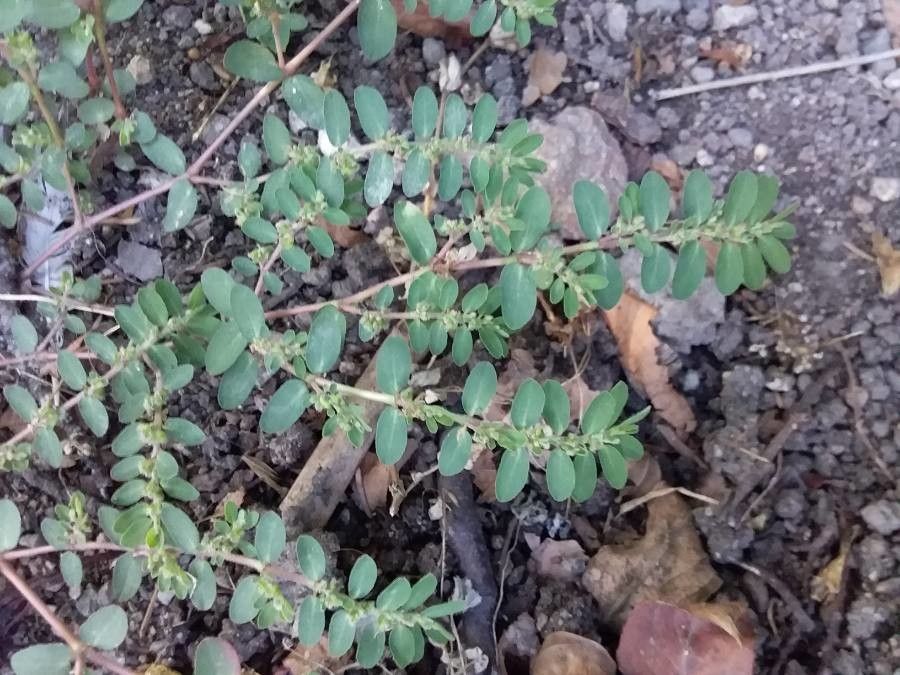
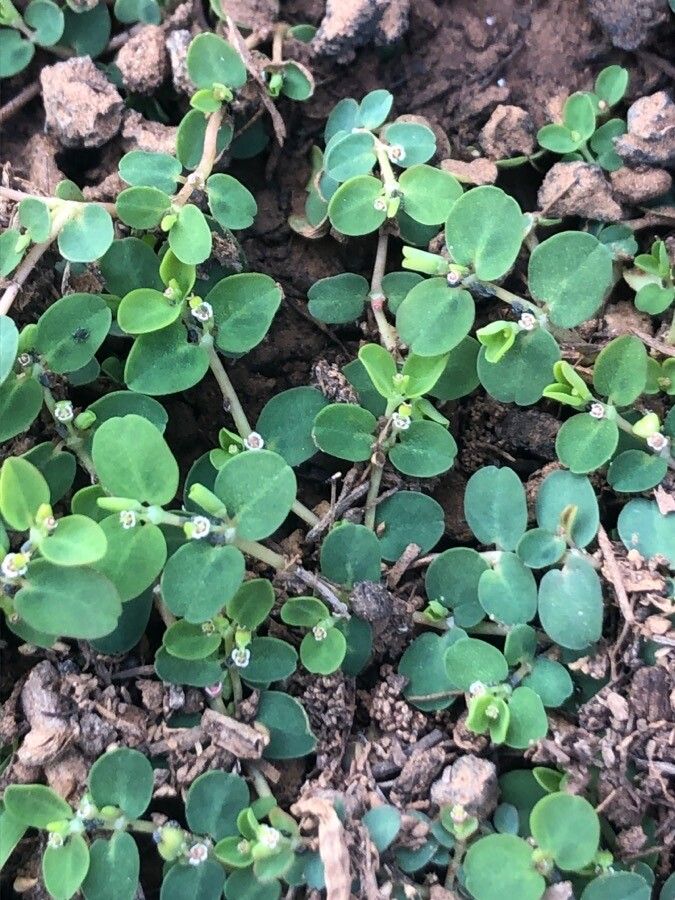
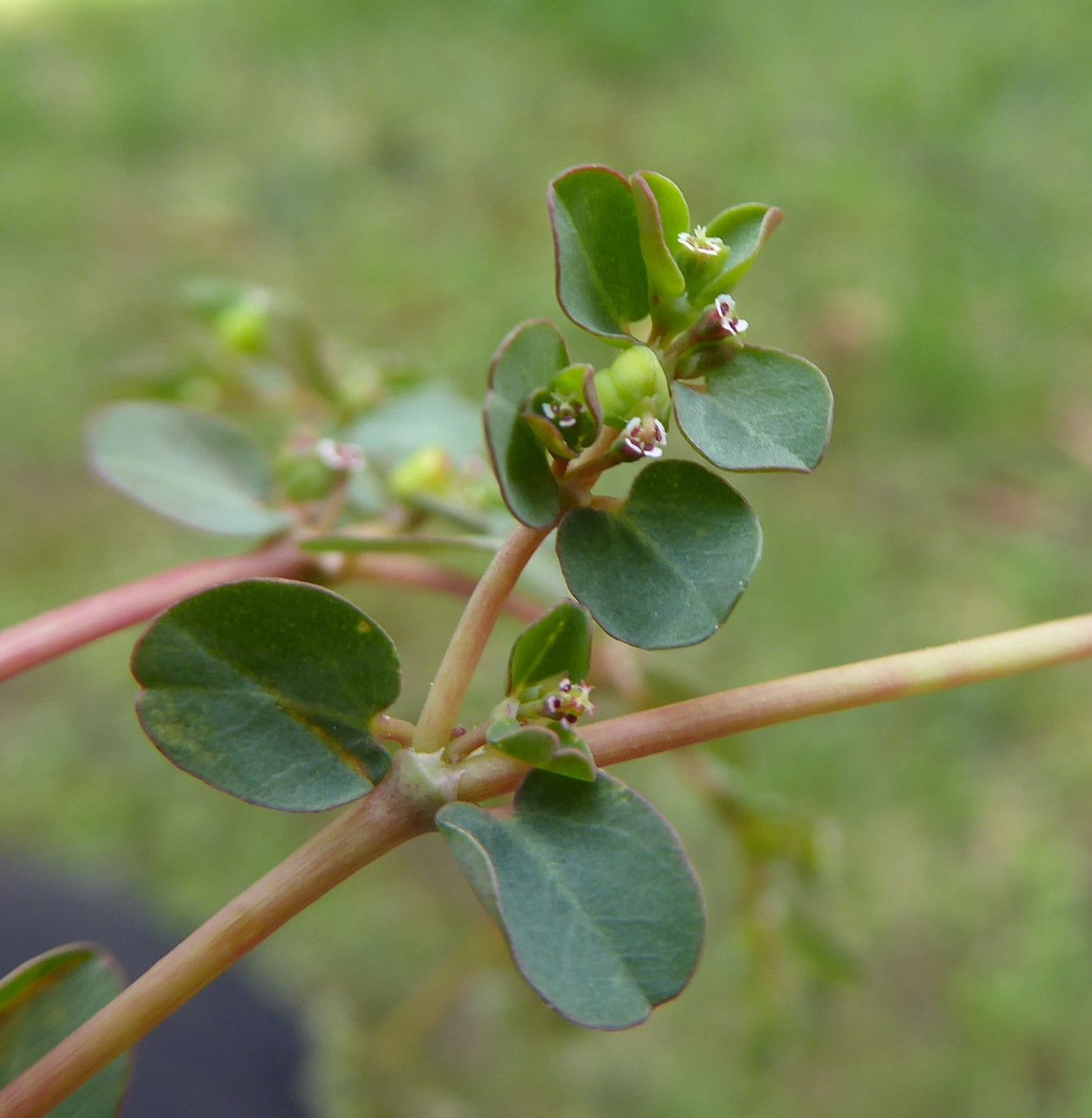
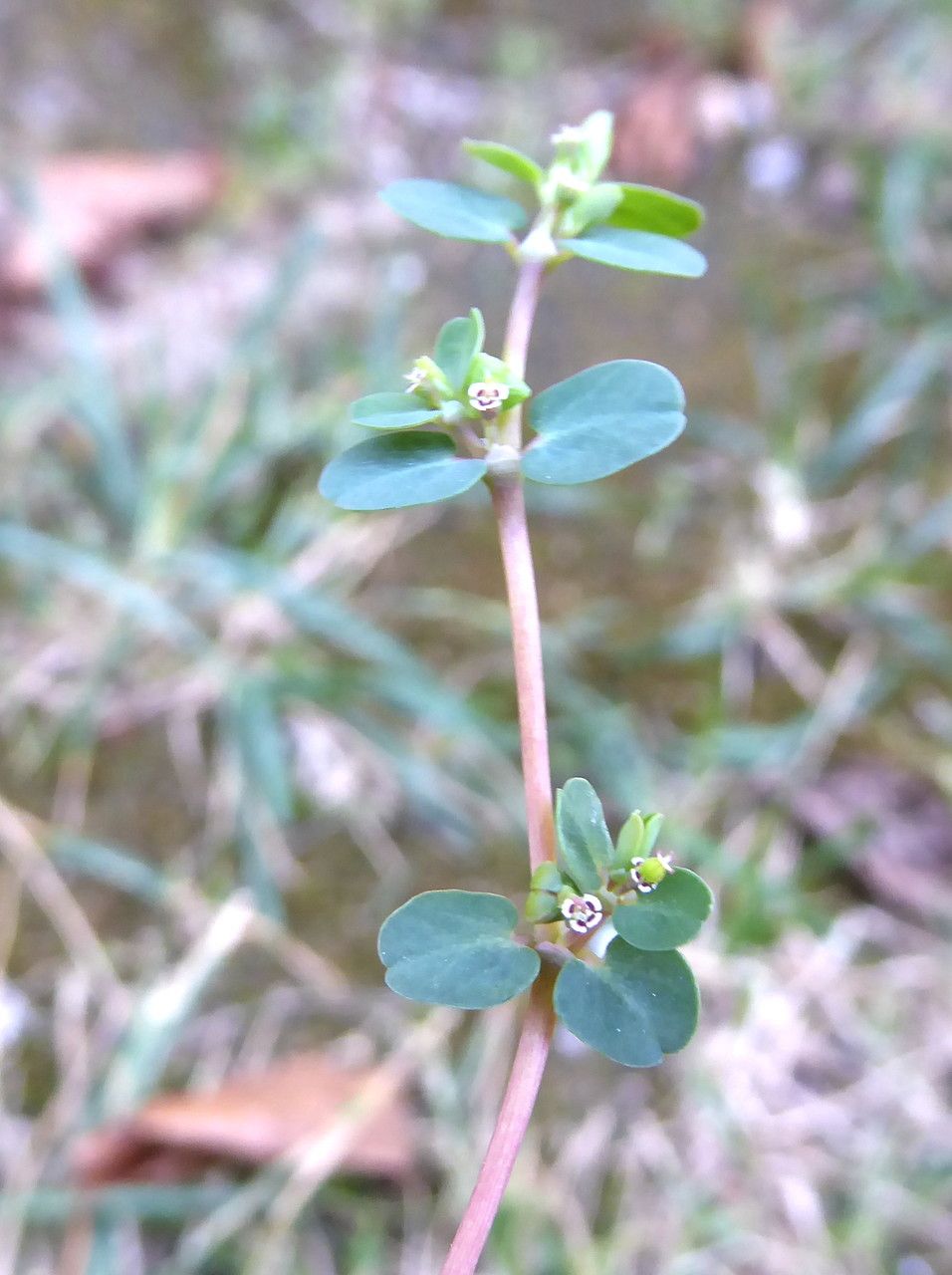
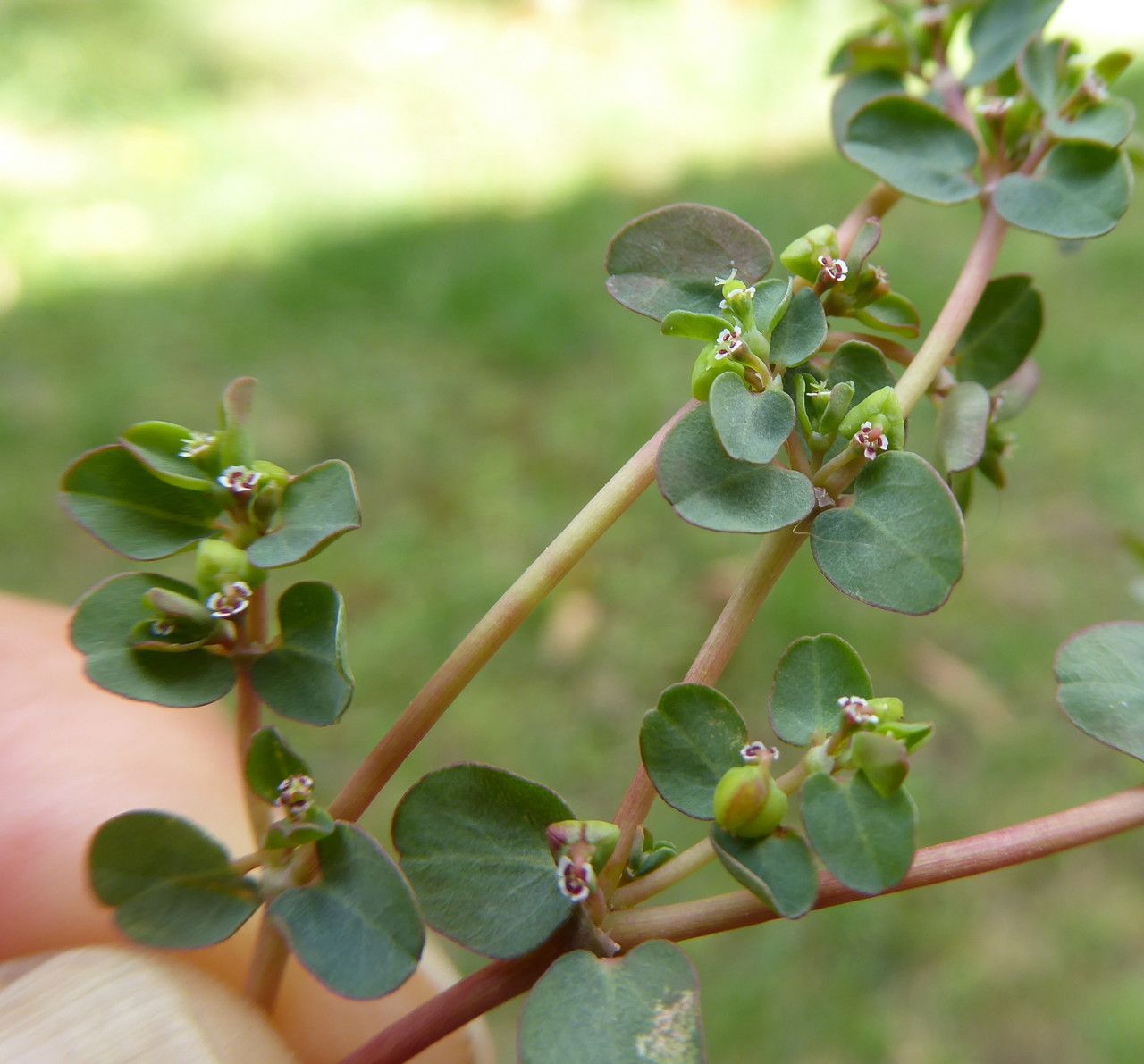
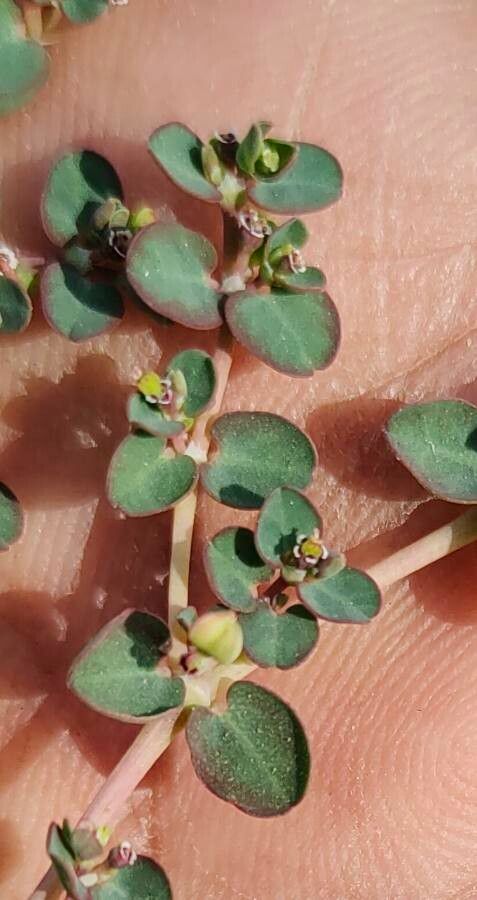
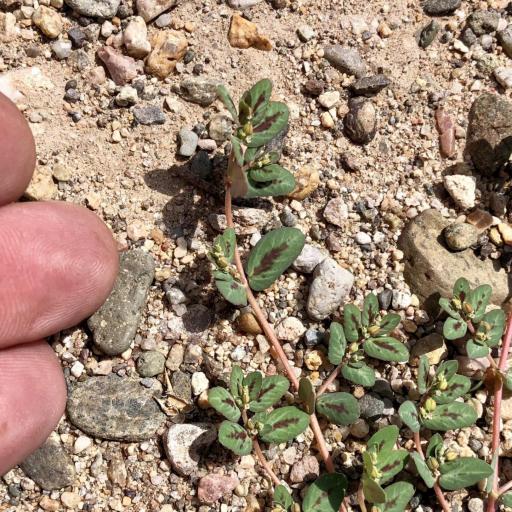
Euphorbia serpens is a species of Euphorbia known by the common name matted sandmat. It is native to South America but it can be found on most continents as an introduced species and often a weed. This is an annual herb forming a mat of prostrate stems which root at nodes where the stem comes in contact with the ground. The oval leaves occur in oppositely arranged pairs, each leaf less than a centimeter long. The inflorescence is a cyathium with scalloped white petal-like appendages surrounding the actual flowers. A red nectar gland is at the base of each appendage, and at the center of the cyathium are several male flowers around one female flower. The fruit is a lobed, spherical capsule.
Matted Sandmat is fairly resistant to disease and generally does not suffer from them. Nonetheless, it can be vulnerable to pests and diseases present in its environment, although these outbreaks are typically mild. For care, this plant requires a moderate level of maintenance. It should be pruned regularly to preserve a neat appearance and support healthy growth. Fertilizing can also aid in encouraging flowering. Matted Sandmat is suitable for anyone with outdoor space, such as a garden or patio, and does not demand extensive care experience. It may need more attention when grown indoors.
How to keep Euphorbia Serpens.
Light
Matted Sandmat is a sun-loving plant that flourishes in places with abundant light, consistent with its origin in open, exposed habitats. If it is deprived of adequate light, its growth may be stunted and its health affected. On the other hand, too much light is not harmful, because Matted Sandmat is exceptionally resilient.
Water
Matted Sandmat, native to arid regions, is highly drought-tolerant and requires only weekly watering. It thrives in full sun and dry climates, preferring well-draining soil. This reduces the risk of overwatering, making it more resilient than many other species.
Temperature
Matted Sandmat thrives in its native habitat where temperatures range from 68 to 105.8 °F (20 to 41 ℃). It favors warmer climates and adapts well across different seasons. Depending on your geographic location, you may need to make adjustments to reproduce these conditions.
Fertilizer
Matted Sandmat benefits from regular, light applications of fertilizer to encourage healthy leaf growth. You should feed Matted Sandmat roughly once a month during the summer months. Nitrogen is important for foliage, and providing nitrogen-rich sources helps Matted Sandmat prosper.
Botanical profile.
- Plant Type
- Herb
- Life Cycle
- Annual
- Genus
- Euphorbia
- Family
- Euphorbiaceae
- Hardiness Zone
- 6-13
- Mature Height
- 15 cm to 49 cm
- Mature Spread
- 61 cm
- Leaf Color
- Green
- Leaf Type
- Semi-evergreen
- Flower Color
- White, Green, Red
- Flower Size
- 0.13 cm
- Bloom Time
- Late spring, Early summer, Mid summer
- Planting Time
- Spring, Summer, Autumn
- Harvest Time
- Summer
- Native Area
- Colombia, Belize, Cuba, Honduras, Mexico, Bolivia, Venezuela, Peru, Guyana, Brazil, Ecuador, Costa Rica, Jamaica
Other names.
Reader questions.
How should I water my Matted Sandmat plant?
There are several ways to water Matted Sandmat, including using a garden hose with a spray nozzle, a watering can, or any other common watering tool. Matted Sandmat is not too particular about the type of water it receives, as it can survive with rainwater, tap water, or filtered water. It is generally advised to avoid watering this plant from above, as it can harm the leaves and flowers and potentially lead to disease. Using a drip irrigation system is often the most effective method for watering Matted Sandmat, as it ensures that water is applied evenly and directly to the soil. When watering a Matted Sandmat that is grown in a container, you can use a cup, watering can, or tap to water it directly at the soil.
What are the sunlight requirements for Matted Sandmat?
Matted Sandmat thrives in environments offering plentiful light exposure. It requires full sun, meaning above 6 hours of sunlight daily, but it can also grow in partial sun, about 3-6 hours of sunlight. It's crucial to observe how sunlight moves through your garden to ensure the plants receive the perfect balance of light and shade, ensuring their health and happiness.
What is the native climate for Matted Sandmat?
Matted Sandmat flourishes in its native climate with temperatures ranging between 68 to 105.8 °F (20 to 41 °C). It thrives in warmer climates but can adapt to different seasonal conditions. Depending on your geographical location, some adjustments might be needed to replicate these native conditions for optimal growth. Matted Sandmat is known for its strong cold resistance, typically eliminating the need for special frost protection measures during winter. However, if temperatures are expected to drop below the plant's cold tolerance limit, protective measures such as covering the plant with soil or straw should be considered. To prepare for winter, it is advised to water the plant abundantly before the first freeze of autumn, ensuring the soil remains moist and enters a frozen state. This precaution helps prevent drought and water scarcity for the plant during winter and early spring.
What should I do if I give too much or too little water to my Matted Sandmat?
If you notice that your Matted Sandmat is not getting enough water, start watering it more consistently. Overwatering, on the other hand, can be a bigger problem. It can lead to diseases and the decline of your plant. To prevent this, choose a growing location with lots of sunlight and good drainage. If you overwater a potted Matted Sandmat, consider changing it to a new pot with better drainage. When repotting, use loose soil and a pot that drains well.
How does inadequate light affect Matted Sandmat's growth?
When Matted Sandmat is grown indoors or in conditions where it receives inadequate light, it may experience hindered growth and compromised health. Symptoms of light deficiency include smaller new leaves, leggy or sparse growth, faster leaf drop, slower or no new growth, and lighter-colored new leaves. Adequate lighting, particularly full sunlight exposure, is essential for optimal growth and health of the plant.
How does Matted Sandmat react to low temperatures?
Matted Sandmat exhibits strong cold tolerance and prefers temperatures above its minimum suitable growth temperature. During winter, it's important to maintain temperatures above the plant's tolerable growing temperature minimum to avoid damage. If temperatures fall below the plant's growth limit, there might not be immediate noticeable changes; however, a decrease in sprouting or absence of sprouting could occur in the spring. In instances where parts of the plant fail to sprout in spring, it's advisable to remove these non-sprouting parts to encourage new growth.
How frequently should I water my Matted Sandmat?
Matted Sandmat requires regular watering throughout the growing season. Initially, water once a week from spring onwards. As the temperature rises, you may need to increase watering to two or three times per week, but avoid excessive watering as it can harm the plant. Regardless of the watering frequency, ensure the soil remains moist but not overly wet. Watering Matted Sandmat in a pot differs slightly. Due to the heat and faster drying, you should water container-grown plants a few times per week, compared to just once per week for those planted in the ground.
Can artificial lighting be used for Matted Sandmat? How?
Yes, artificial lighting can be a vital solution for Matted Sandmat, especially when natural sunlight is insufficient. LED lights are recommended as they can be customized to provide specific wavelengths needed by plants. Full sun plants need 30-50W/sq ft, partial sun plants need 20-30W/sq ft, and full shade plants need 10-20W/sq ft of artificial light. The light source should be placed 12-36 inches above the plant to mimic natural sunlight, and most plants require 8-12 hours of light per day.
What should I do if Matted Sandmat experiences high temperatures?
During the summer, it is crucial to ensure that Matted Sandmat's exposure to high temperatures is minimized and remains below its maximum suitable growth temperature. Exceeding the maximum tolerable growing temperature can lead to symptoms such as lighter leaf color, curling, increased susceptibility to sunburn, and in severe cases, wilting and drying of the entire plant. To mitigate these issues, trim away the affected areas, move the plant to a shaded location or utilize a shade cloth to protect it from intense midday and afternoon sun. Also, water the plant during cooler times like morning and evening to maintain soil moisture and alleviate stress from high temperatures.
How much water does my Matted Sandmat plant require?
To determine how much water to give your Matted Sandmat, you have a few options. One approach is to feel the soil and water until the top six inches feel moist. Another option is to use a set measurement, like two gallons per week, taking into account the temperature and soil dryness. However, be cautious with strict guidelines as it may lead to overwatering if your plant needs less water. When growing Matted Sandmat in a container, check the soil moisture by sticking your finger in it or water until you see some excess water draining from the pot.
What are the common symptoms of too much sunlight for Matted Sandmat?
Excessive sunlight can be harmful to Matted Sandmat, leading to chlorosis (leaves turning yellow), sunscald (damage from intense sunlight exposure), leaf curling (a mechanism to reduce surface area exposed to sunlight), wilting (loss of turgor pressure causing droopiness), and leaf scorching (brown, dry edges on leaves). These symptoms indicate damage from overexposure to sunlight and can reduce the plant's overall health.
How can I know if I'm giving enough water to my Matted Sandmat plant?
Avoiding overwatering your Matted Sandmat can be somewhat difficult because these plants have deep roots that need weekly moisture. However, Matted Sandmat are highly prone to root rot, which can cause browning. Underwatering is less likely as this plant can survive without supplemental watering for a while. However, if you wait too long to water it, the plant will likely wilt and develop dry leaves.