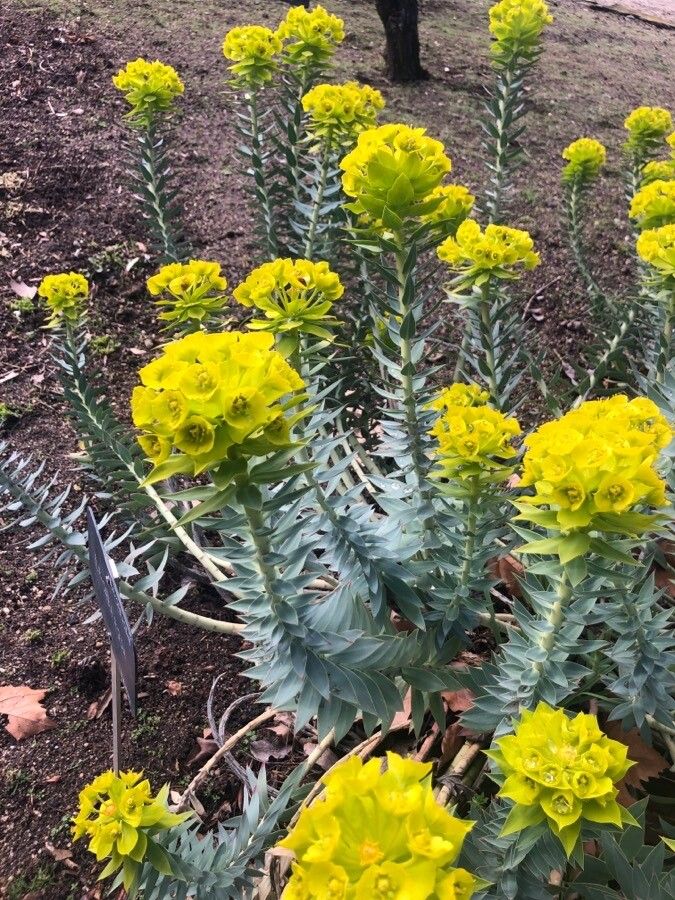
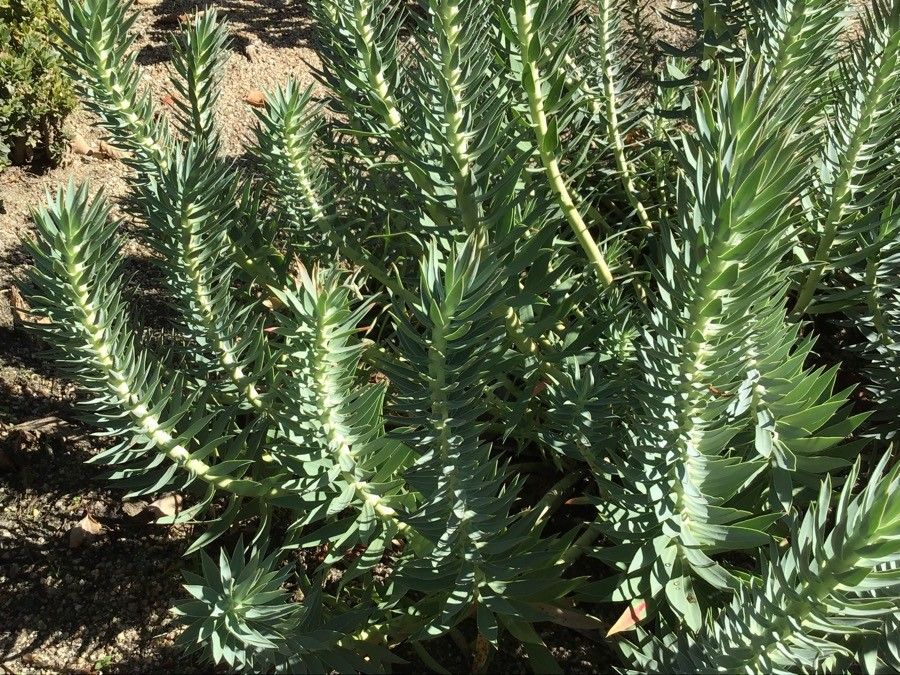
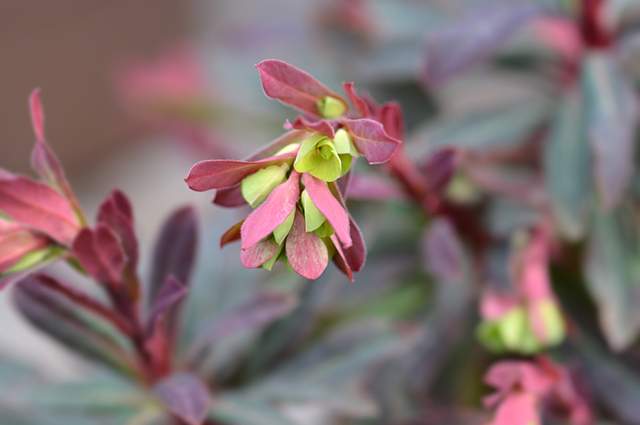
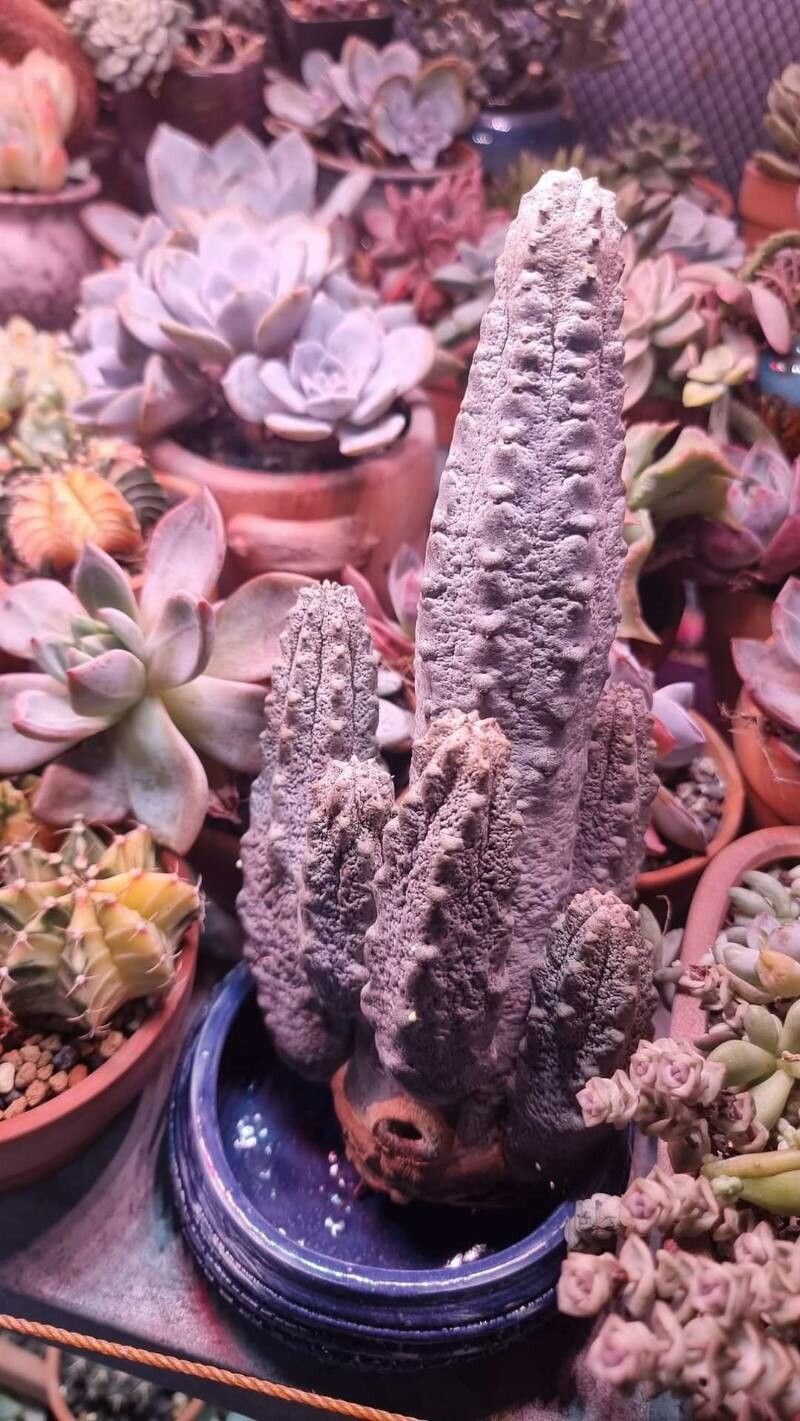
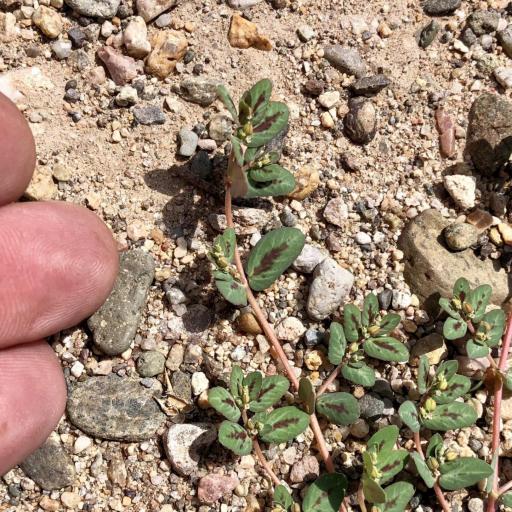
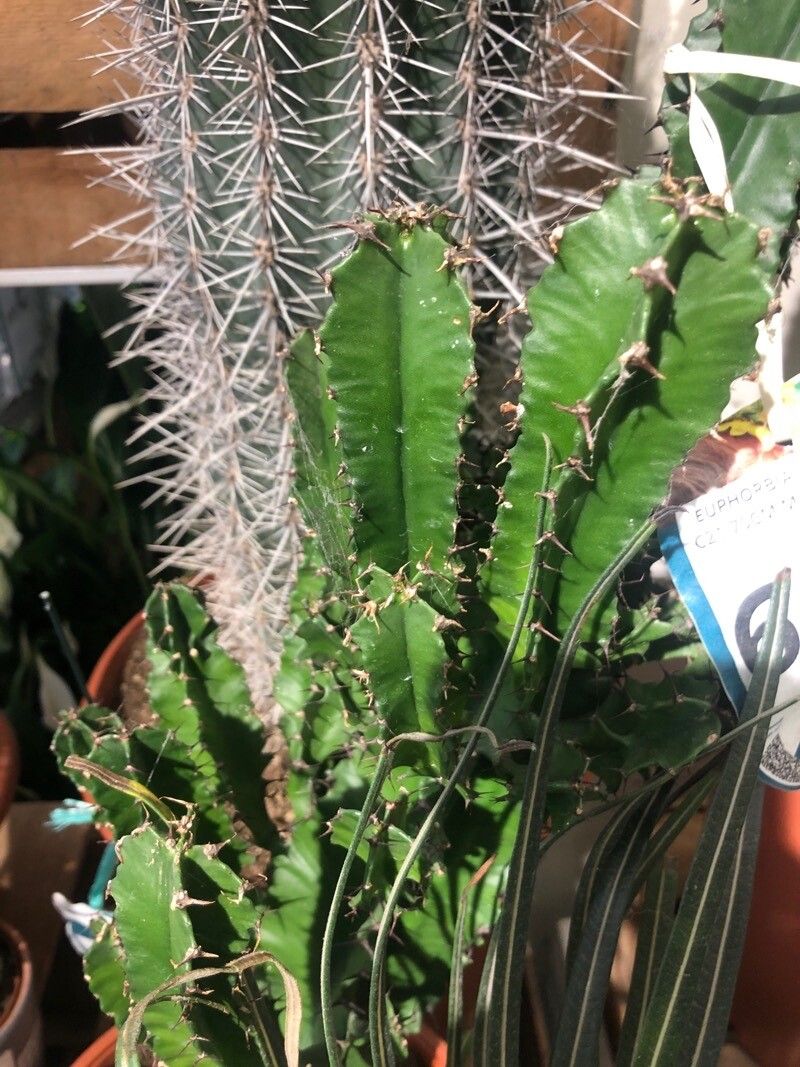
Euphorbia rigida is a perennial succulent belonging to the Euphorbia family. Native to the Mediterranean region, it thrives in rocky and dry habitats. The plant can grow up to 60 cm tall, featuring blue-green leaves arranged in a spiral pattern around the stem.
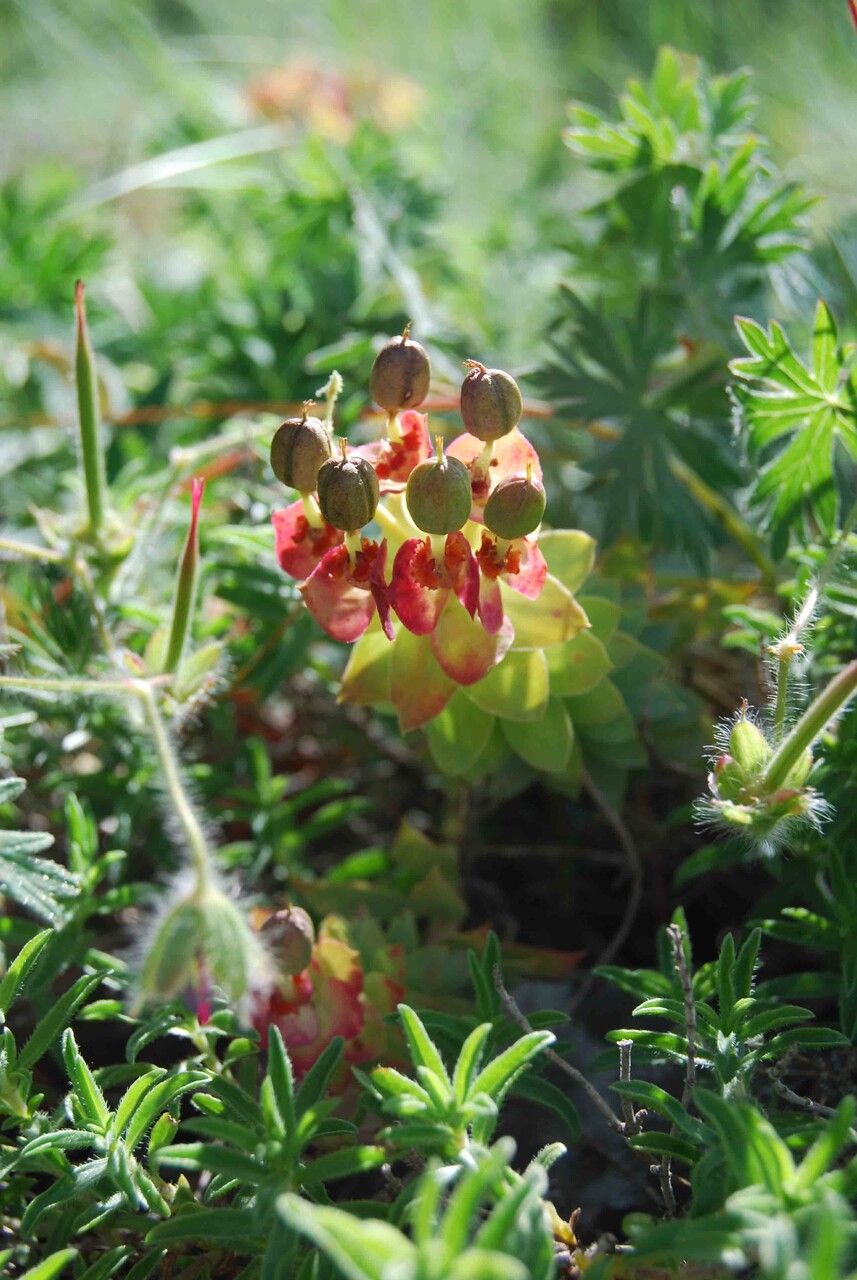
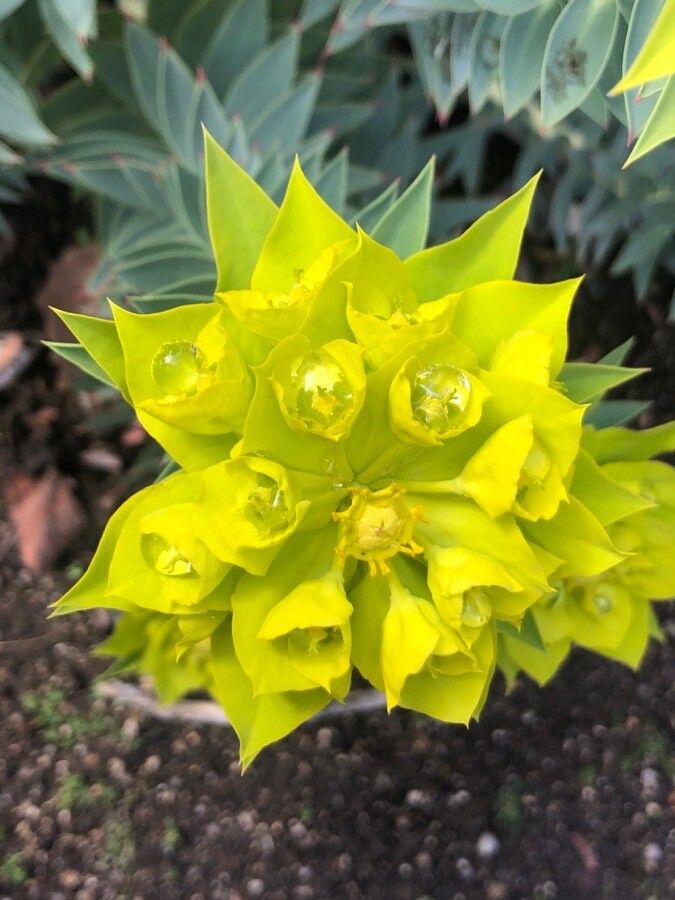
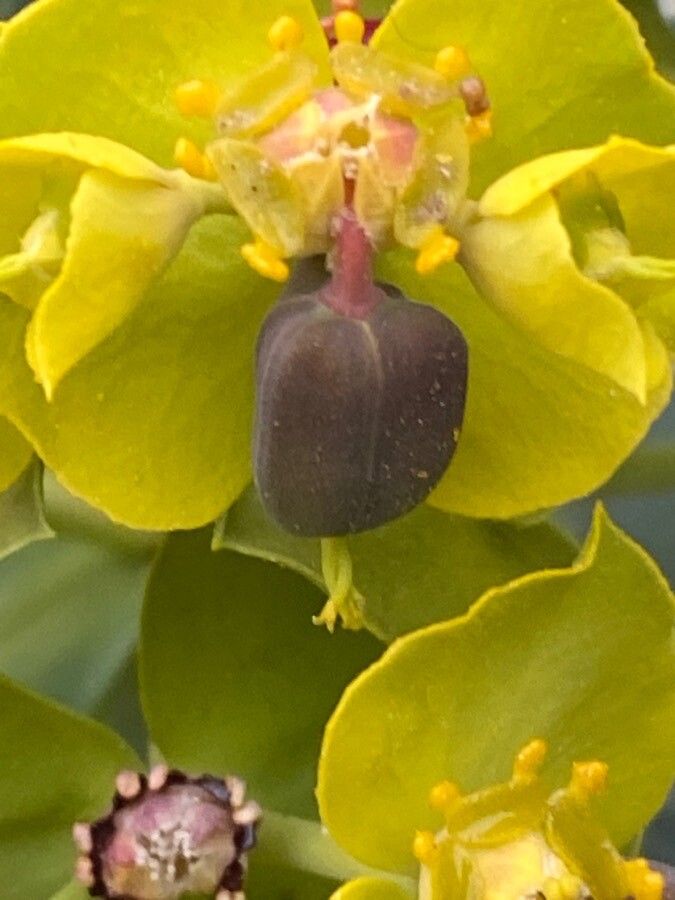
The flowers of Euphorbia rigida are small and yellow-green, appearing in clusters at the top of the stem. They bloom from late winter to early spring, attracting bees for pollination.
This hardy plant requires minimal care once established. It prefers well-draining soil and full sun exposure but can also tolerate partial shade. While it is drought-tolerant, it should be watered occasionally during prolonged dry spells.
The sap of Euphorbia rigida contains toxic compounds that can cause skin irritation or allergic reactions if ingested or touched without protection. Therefore, handle the plant with care when pruning or propagating.
Overall, Euphorbia rigida makes an excellent addition to rock gardens or xeriscapes due to its unique appearance and low maintenance requirements.
Upright myrtle spurge has moderate disease resistance and is relatively sensitive to humidity. It is prone to disease when humidity is high and can develop root rot during dormancy. Regarding care, Upright myrtle spurge is drought tolerant but requires more water in the growing season. Watering should be greatly reduced or stopped entirely during the dormant period. Upright myrtle spurge is suited to growers with some experience, though it can be challenging to care for, particularly while dormant. It is especially appropriate for those who can dedicate time to its care during the winter months.
How to keep Euphorbia Rigida.
Light
Upright myrtle spurge needs ample sunlight throughout the day to prosper, although it can also tolerate moderate light. Coming from an environment with plentiful sun, it is adapted to do well in those conditions. Its different growth stages require similar light levels. Both too much and too little light can harm its health.
Water
Native to the Mediterranean, upright myrtle spurge is well-suited for dry, rocky soils and is drought-tolerant, requiring only weekly watering. As an evergreen perennial, it maintains its foliage all year round, making it a low-maintenance option for both indoor and outdoor settings with minimal need for additional watering.
Temperature
Upright myrtle spurge comes from temperate regions, so its preferred temperature range is 59 to 95 °F (15 to 35℃). It thrives when summer highs are near the upper limit and winters do not fall below 15℃.
Fertilizer
For Upright myrtle spurge, light applications of fertilizer once or twice a year during the growing season are enough. Do not fertilize in winter or in summer when the plant is dormant. Cut back on fertilizer for plants that have been repotted, and wait a couple of months after repotting before applying any. Fertilizing helps maintain healthy growth and promotes flowering.
Pruning
Upright myrtle spurge is known for its stiff growth and blue-green leaves. To keep it healthy and encourage thicker foliage and more abundant flowers, it's important to trim it annually in early spring or late winter. You can cut back up to one-third of the plant. Be sure to wear gloves when pruning, as the plant can release a milky sap that may irritate the skin.
Pot & Repot
Repot upright myrtle spurge every 2 to 3 years in early spring, using a slightly larger pot with proper drainage. After repotting, provide bright light and be cautious not to overwater. Handle upright myrtle spurge carefully, as its sap can cause irritation. This will help maintain its vibrant blooms and structure.
Botanical profile.
- Plant Type
- Herb
- Life Cycle
- Perennial
- Genus
- Euphorbia
- Family
- Euphorbiaceae
- Hardiness Zone
- 7-10
- Mature Height
- 30 cm to 61 cm
- Mature Spread
- 61 cm to 91 cm
- Leaf Color
- Green, Blue
- Leaf Type
- Evergreen
- Flower Color
- Yellow, Green
- Flower Size
- 2.54 cm
- Bloom Time
- Early spring, Mid spring
- Planting Time
- Spring, Summer, Autumn
- Harvest Time
- Late spring, Early summer
- Native Area
- Libya, Egypt, Turkey, Tunisia, Mauritania, Greece, Croatia, Morocco, Ukraine, Lebanon, Russia, Syria, Italy, Iran, Albania, Algeria
Other names.
Reader questions.
How should I water my Upright myrtle spurge for best results?
To properly water the Upright myrtle spurge, it is best to use filtered water at room temperature. Tap water may have harmful particles, so filtering is recommended. The water should be at room temperature or slightly warmer as this plant is used to warm climates and cold water may shock it. Avoid watering from above as it can cause problems with the foliage. Instead, focus on watering the soil directly until it is completely soaked. This helps to provide moisture to the roots and supports the spread of nutrients in the soil.
Why is it important for me to fertilize my Upright myrtle spurge?
Fertilization is important for the Upright myrtle spurge because it provides essential nutrients for its growth both above and below ground. However, the fertilization needs for this plant are relatively low. Although it can sometimes survive without fertilization, annual fertilization can greatly benefit the Upright myrtle spurge. It helps keep the plant alive and encourages the production of better and longer-lasting flowers. Therefore, those looking to enhance the appearance of their Upright myrtle spurge should prioritize annual fertilization.
What are the sunlight requirements for upright myrtle spurge?
Upright myrtle spurge requires optimal exposure to sunlight throughout the day to thrive. This plant originates from habitats where sunlight is abundant, making it well-adjusted to flourish under full sun conditions. It needs above 6 hours of direct sunlight to be categorized under full sun exposure, and about 3-6 hours to be considered as having partial sun exposure. However, it's important to observe how sunlight moves through your garden and choose spots that provide the right balance of light and shade, ensuring the plant's happiness.
What is the comfortable temperature range for upright myrtle spurge?
Upright myrtle spurge, which is native to temperate climates, thrives in a comfortable temperature range between 59 to 95 °F (15 to 35°C). It can withstand high temperatures approaching the upper limit during summer, while in winter, the temperatures should not drop below 15°C. This plant exhibits strong cold resistance, making special frost protection measures generally unnecessary during winter.
What should I do if I give too much or too little water to my Upright myrtle spurge plant?
Overwatering is a more common problem than underwatering for Upright myrtle spurge. Too much water can cause wilting and yellowing of the stems and leaves. It can also lead to diseases like root rot, mold, and mildew, which can kill the plant. Underwatering is less common because this plant can tolerate drought, but it can still happen. Signs of underwatering include brittle, brown leaves. It's important to spot signs of overwatering early because some of the resulting diseases cannot be fixed if you wait too long. If you notice early signs, reduce watering immediately and consider the soil's drainage. If the soil doesn't drain well, replace it with a loose, well-draining potting mix. If you see signs of underwatering, simply water more regularly until the signs disappear.
When should I fertilize my Upright myrtle spurge?
The best time to fertilize a Upright myrtle spurge is in late winter to early spring when it is transitioning from dormancy to active growth. Fertilizing during this time promotes healthy growth and sets the plant up for a good season. Although spring is generally the most advantageous time to fertilize, fall is also acceptable. However, it is not recommended to fertilize during summer or winter.
How can artificial lighting be used for upright myrtle spurge indoors?
Indoor plants, including upright myrtle spurge, require adequate lighting for optimal growth. When natural sunlight is insufficient, especially in winter or less sunny areas, artificial lights serve as a critical substitute for sunlight, promoting healthier and faster growth. LED lights are recommended because they can offer the specific wavelengths your plants need. For full sun plants like upright myrtle spurge, 30-50W/sq ft of artificial light is needed. The light source should be placed 12-36 inches above the plant and turned on for 8-12 hours per day to mimic natural sunlight conditions.
What should I do if winter temperatures are expected to drop below -15°C for my upright myrtle spurge?
If winter temperatures are forecasted to fall below -15°C, it's crucial to protect upright myrtle spurge from the cold. This can be done by covering the plant with materials like soil or straw to insulate it. Additionally, before the first freeze in autumn, water the plant abundantly. This ensures the soil remains moist and enters a frozen state, helping prevent drought and water scarcity for the plant during the winter and early spring months.
How often do I need to water my Upright myrtle spurge?
If your Upright myrtle spurge is in a pot, the best way to determine if it needs water is by checking the soil. Stick your finger into the soil and if the top two to three inches are dry, it's time to water it. If you have your Upright myrtle spurge planted outdoors in the ground, you can use the same method to test the soil. When the top few inches of soil have dried out, it's time to water it. Generally, during spring and early fall, watering once a week is enough. However, during extremely hot weather, you may need to water it two or more times per week. It's important to note that mature, well-established Upright myrtle spurge can withstand drought well.
When is the best time to not fertilize my Upright myrtle spurge?
To effectively care for your Upright myrtle spurge, it is important to understand the appropriate times for fertilization. Generally, you should only fertilize this plant during late winter and early spring. This is because the plant has low fertilization needs and a single feeding during this time is sufficient. It is crucial to avoid fertilizing throughout the spring, summer, and fall seasons, as this can easily result in overfertilization and its associated issues. However, there is one exception. If you mistakenly missed fertilizing in the spring, it is acceptable to feed the plant during the fall. Additionally, during the winter months, it is unnecessary to fertilize the Upright myrtle spurge. This is because the plant experiences a dormant growth phase during this period, preventing new growth. Therefore, it is not recommended to fertilize during most of the winter.
What are the symptoms of light deficiency in upright myrtle spurge?
When upright myrtle spurge is grown in conditions with inadequate lighting, it may exhibit several symptoms indicating light deficiency. These include smaller new leaves, leggy or sparse growth, faster leaf drop, slower or halted new growth, and lighter-colored new leaves. Light deficiency can also lead to chlorosis—the loss of leaf green color—and symptoms of excessive sunlight exposure such as sunscald, leaf curling, wilting, and leaf scorching. Monitoring these symptoms can help identify and rectify light-related issues for your plant's health.
How does low temperature affect upright myrtle spurge, and what are the solutions?
Upright myrtle spurge is cold-tolerant and thrives best when temperatures remain above 15°C. In winter, temperatures should be kept above -10°C. However, if temperatures fall below -15°C, while there may not be noticeable changes in winter, there could be a decrease in sprouting or complete lack of sprouting during spring. If this happens, in spring, remove any parts of the plant that have failed to sprout as a solution to encourage new growth.