Euphorbia polycarpa, commonly known as cushion spurge, is a perennial succulent plant in the Euphorbiaceae family. Native to Europe and Asia, this species thrives in rocky areas, dry meadows, and hillsides. It typically reaches a height of up to 30 cm and a spread of about 60 cm.
The cushion spurge features blue-green leaves arranged in rosettes at the base of its thick, fleshy stem. The oval-shaped leaves, with smooth edges, can grow up to 5 cm long. Notably, the plant's stem contains a milky sap that can cause skin irritation.
In spring, Euphorbia polycarpa produces clusters of small, bright yellow-green flowers at the top of its stems. These numerous flowers offer a striking contrast to the plant's blue-green foliage, creating an eye-catching display.
Cushion spurge is an easy-to-grow plant requiring minimal care once established. It prefers well-draining soil and thrives in full sun or partial shade. Once established, it can tolerate drought conditions.
Although the plant possesses some medicinal properties, such as treating warts or skin infections when applied topically, it should be handled carefully. The toxic sap can cause irritation or allergic reactions if it comes into contact with skin or eyes.
Overall, Euphorbia polycarpa is a visually appealing addition to any garden. Its unique foliage and bright yellow flowers make it a popular choice for gardeners seeking low-maintenance plants for springtime interest.
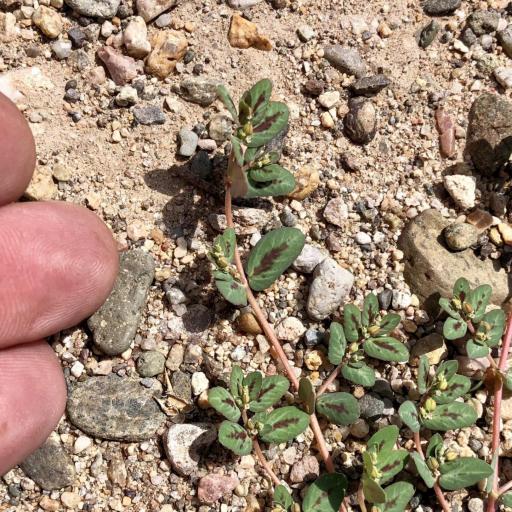
Smallseed sandmat is relatively disease-resistant and typically does not develop illnesses. Nonetheless, it can be vulnerable to pests and diseases present in its environment. These problems are usually minor. In terms of care, the plant needs moderate maintenance. It should be pruned regularly to keep a neat appearance and support healthy growth. Fertilizing can also encourage flowering. Smallseed sandmat works well for anyone with outdoor space, such as a garden or patio, and does not demand extensive care experience. It may need more attention when grown indoors.
How to keep Euphorbia Polycarpa.
Light
Smallseed sandmat flourishes with plenty of exposure to light, typically found in its natural habitats that are bathed in sunlight. However, it can also survive in environments with less light. Too much or too little light can hinder the plant's healthy growth and could potentially influence its overall health.
Water
Smallseed sandmat is well-suited for arid environments due to its drought tolerance and minimal water requirements. It should be watered weekly without over-saturating the soil, making it perfect for xeric landscapes. Preferring direct sunlight, smallseed sandmat is also an excellent choice for rock gardens and desert-themed settings.
Temperature
The smallseed sandmat grows best in temperatures ranging from 68 to 105.8°F (20 to 41℃). It has an affinity for warmer environments. Severe cold or frost can be detrimental to the plant. It is recommended to make seasonal modifications based on the local weather conditions for its ideal growth.
Fertilizer
The Smallseed sandmat can thrive when given regular, mild applications of fertilizer to enhance the growth of healthy leaves. This plant should be fertilized about once a month throughout the summer season. Nitrogen is vital for leaf growth, and administering sources rich in nitrogen aids in the prosperity of the Smallseed sandmat.
Pruning
Smallseed sandmat thrives in dry conditions, characterized by its small leaves and sprawling growth habit. To maintain its health and vibrancy, it is beneficial to prune the plant from early to late spring. This pruning helps remove weak stems and improve airflow, promoting vigorous growth and flowering.
Botanical profile.
- Plant Type
- Herb
- Life Cycle
- Annual, Perennial
- Genus
- Euphorbia
- Family
- Euphorbiaceae
- Hardiness Zone
- 2-13
- Mature Height
- 10 cm
- Mature Spread
- 15 cm to 40 cm
- Leaf Color
- Green, Light Green
- Leaf Type
- Semi-evergreen
- Flower Color
- Yellow, Green
- Flower Size
- 0.20 cm
- Bloom Time
- All year round
- Planting Time
- Spring, Summer, Autumn
- Harvest Time
- All year round
- Native Area
- Mexico
Other names.
Reader questions.
What are the sunlight requirements for Smallseed Sandmat?
Smallseed Sandmat requires full sun, meaning it needs above 6 hours of sunlight daily, or partial sun, about 3-6 hours of sunlight. It's important to observe how sunlight moves through your garden and select locations that offer the right balance of light and shade to ensure the plants thrive.
What is the ideal temperature range for Smallseed sandmat?
Smallseed sandmat thrives best within a temperature range of 68 to 105.8°F (20 to 41°C), preferring warmer climates. Extreme cold or frost can harm the plant, and seasonal adjustments may be needed for optimal growth. Although the plant has strong cold resistance and usually does not require special frost protection measures, if temperatures are expected to fall below -40°C, it is important to protect the plant by covering it with soil or straw and watering it abundantly before the first freeze in autumn to ensure the soil remains moist.
What are the essentials for growing Smallseed Sandmat successfully?
Smallseed Sandmat thrives in abundant light conditions, mirroring its native, sun-drenched habitats. However, it can also grow in less illuminated environments. Both overexposure and insufficient light can impact its growth and overall health. When natural light is not enough, particularly in winter or shady spaces, artificial lighting becomes essential. LED lights are recommended because they can be tailored to the plant’s needs, with full sun plants requiring 30-50W/sq ft, partial sun plants 20-30W/sq ft, and full shade plants 10-20W/sq ft of artificial light. The light should be positioned 12-36 inches above the plant, for 8-12 hours per day to mimic natural sunlight.
How does Smallseed sandmat respond to low temperatures?
Smallseed sandmat is cold-tolerant and does best when temperatures are above 20°C. During winter, it should remain above 0°C to avoid damage. When temperatures drop below -40°C, the plant may not show immediate changes but could experience decreased or absent sprouting in spring. In spring, any parts of the plant that have failed to sprout should be removed.
What are symptoms of light deficiency in Smallseed Sandmat?
When Smallseed Sandmat doesn't receive enough light, it may show several symptoms including smaller new leaves, leggy or sparse growth, faster leaf drop, slowed or halted growth, lighter-colored new leaves, and even chlorosis—where leaves lose their green color. Excessive sunlight, however, can lead to sunscald, leaf curling, wilting, and leaf scorching, indicating damage from too much light exposure.
What should be done if Smallseed sandmat experiences high temperatures?
During summer, it is crucial to keep Smallseed sandmat below 41°C. When temperatures exceed 45°C, the plant's leaves may lighten in color, curl, become prone to sunburn, and in severe cases, the plant may wilt and dry out. To mitigate these issues, trim away the sunburned and dried-up parts, move the plant to a shaded location or use a shade cloth to protect it from midday and afternoon sun. Additionally, water the plant in the morning and evening to maintain soil moisture.
How can I solve light-related issues for Smallseed Sandmat growing indoors, outdoors, or in the ground?
For indoor Smallseed Sandmats, gradually move the plant to sunnier spots until it gets at least 6 hours of direct sunlight, using a south-facing window for natural light, or artificial grow lights for at least 8 hours a day. Outdoors, move your plants gradually to sunnier locations each week to prevent sunburn. To allow more sunlight for ground-planted Smallseed Sandmats, reduce obstructions by pruning trees or transplant the plants during their dormant period to a sunnier location with good drainage. Remember, parts of the plant that suffered from insufficient sunlight may not recover, but new growth will be healthy once light exposure is improved.
What are the botanic name and common name of Smallseed sandmat?
Smallseed sandmat is commonly known by its botanic name, Euphorbia polycarpa. It is a resilient plant known for its ability to thrive in warmer climates and withstand cold temperatures to a certain extent.