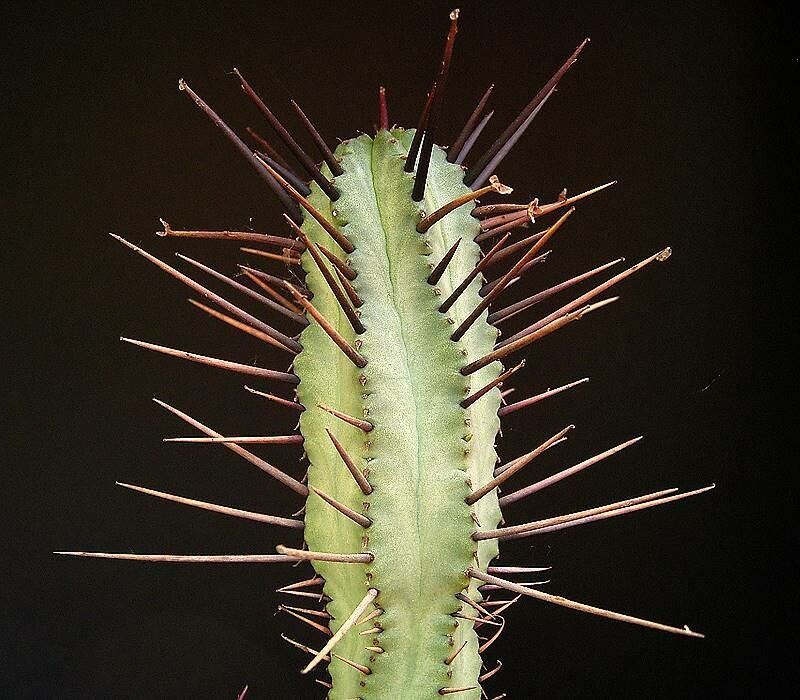
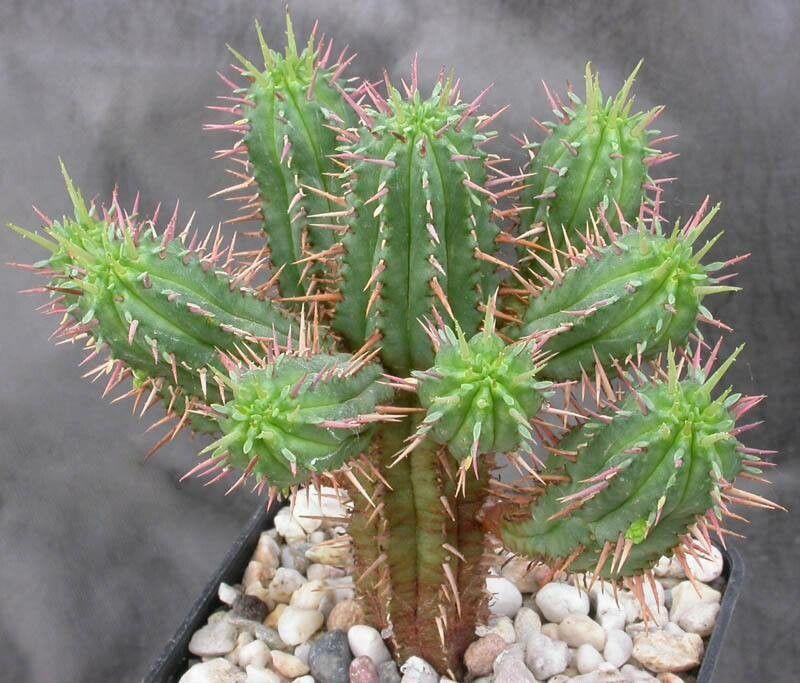
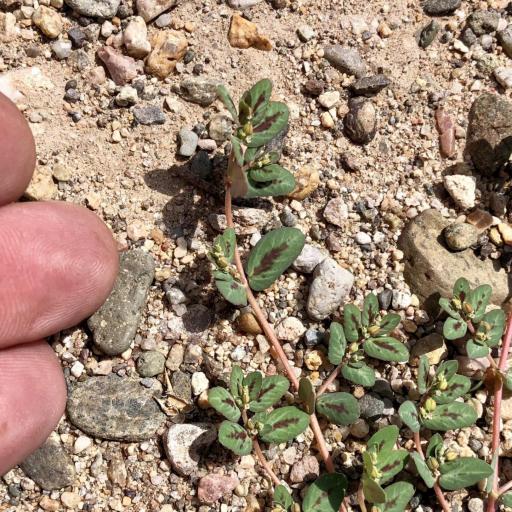
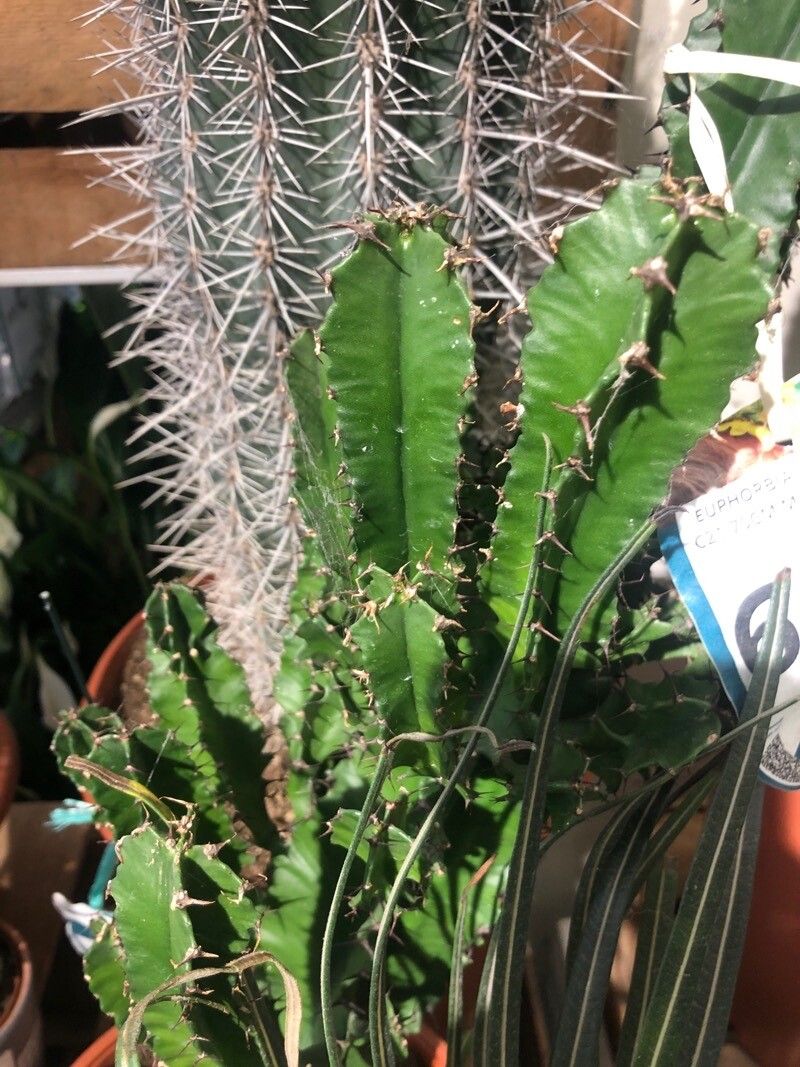
Euphorbia pentagona is a medium-green Euphorbia; starts off as having a pentagonal prism shape where each vertex is extruded outwards, and each side is a mild concavity, along the height of the euphorb. Spines, red in colour when fresh, exit the body along each extrusion at equal intervals. As the spines age, they tend to lose their colour. The cross-sectional polygonal shape can gain extra vertexes as new branches grow from the sides. Often branches grow from where a spine once was, or should have been.
Indian spurgetree has moderate disease resistance but is more sensitive to humidity and excessive watering. It becomes more prone to disease if it lacks light and is overwatered. Regarding care, Indian spurgetree is drought tolerant and can withstand long periods without watering. It needs little fertilizer and only occasional pruning. These characteristics make it suitable for people of all experience levels, especially those who want to spend less time on plant care and who may occasionally be away from home for extended periods. It is a good option for anyone who does not want to spend much time caring for plants but still wants an easy-to-maintain plant.
How to keep Euphorbia Pentagona.
Light
The Indian spurgetree does best with abundant sunlight, which is vital for its healthy growth and development. Native to areas where sunny conditions are common, it can also cope with moderate amounts of light. Still, both very low light and excessive sun exposure can harm its vitality and vigor.
Water
Pincushion euphorbia needs regular weekly watering, especially during its growing seasons and even more so on hot days. Water the plant when the top 2 inches (5 cm) of soil feels dry. For indoor plants, it's important to keep the soil slightly moist during their resting periods. To avoid overwatering, consider watering from below.
Temperature
Indian spurgetree is a plant whose native habitat is associated with temperate climates, particularly preferring temperatures between 68 and 100 °F (20 to 38 ℃). Adjust seasoning temperature to conform to these thresholds to ensure optimal growth.
Fertilizer
For the Indian spurgetree, light applications of fertilizer one to two times a year during the growing season are sufficient. Do not fertilize in winter or in summer, when it is dormant. Cut back on fertilizer for repotted plants and wait a couple of months after repotting before feeding. Fertilizing promotes healthy growth and encourages flowering.
Pruning
The pincushion euphorbia is characterized by its angular stems and sparse leaves. It thrives when selectively pruned in early spring. Important pruning techniques include removing dead stems and thinning out the plant to improve air circulation. This not only enhances the plant’s shape and vigor, but it also reduces the risk of pests, promoting healthier growth.
Botanical profile.
- Plant Type
- Tree, Shrub
- Life Cycle
- Perennial
- Genus
- Euphorbia
- Family
- Euphorbiaceae
- Hardiness Zone
- 10-12
- Mature Height
- 5.49 m to 7.32 m
- Mature Spread
- 20 cm
- Leaf Color
- Green
- Leaf Type
- Evergreen, Deciduous
- Flower Color
- Yellow
- Flower Size
- 0.25 cm
- Bloom Time
- Winter, Early spring, Mid spring
- Planting Time
- Spring
- Harvest Time
- Spring, Early summer, Mid summer
- Native Area
- Nepal, India, Indonesia, Cambodia, Vietnam, Myanmar, Philippines, Iran, Bangladesh, Pakistan, Thailand, China
Other names.