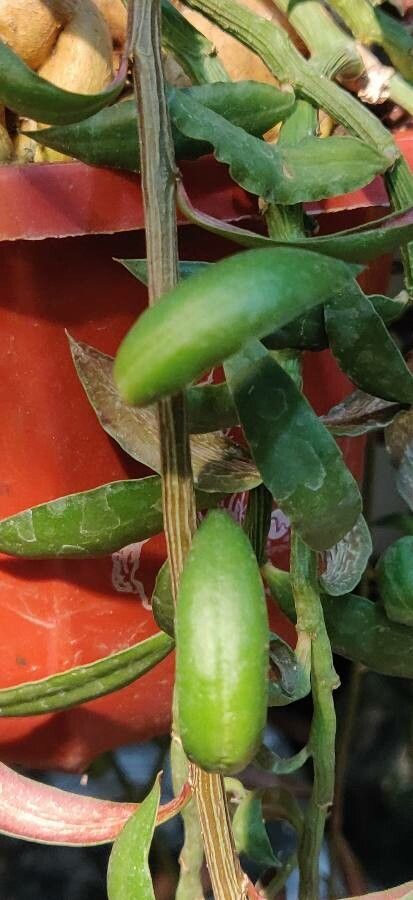
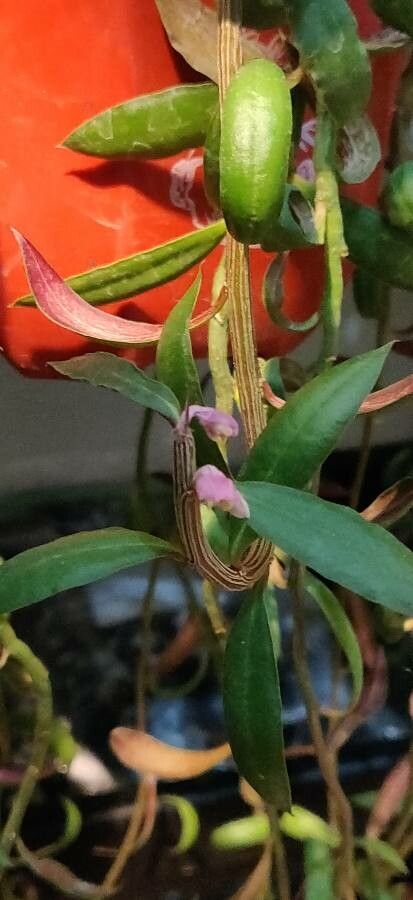
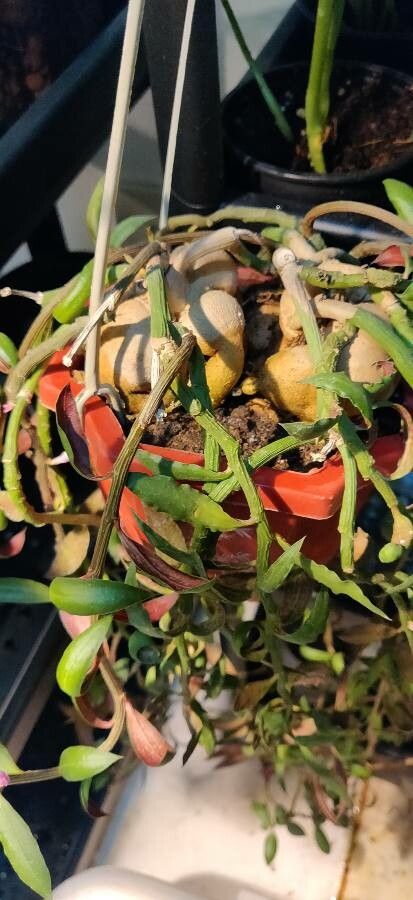
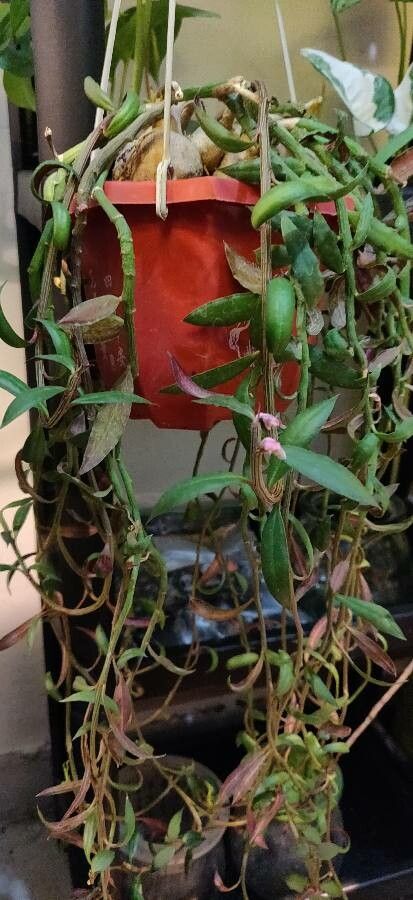
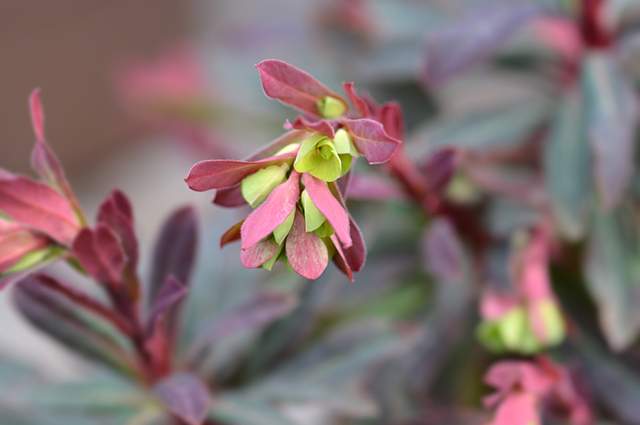
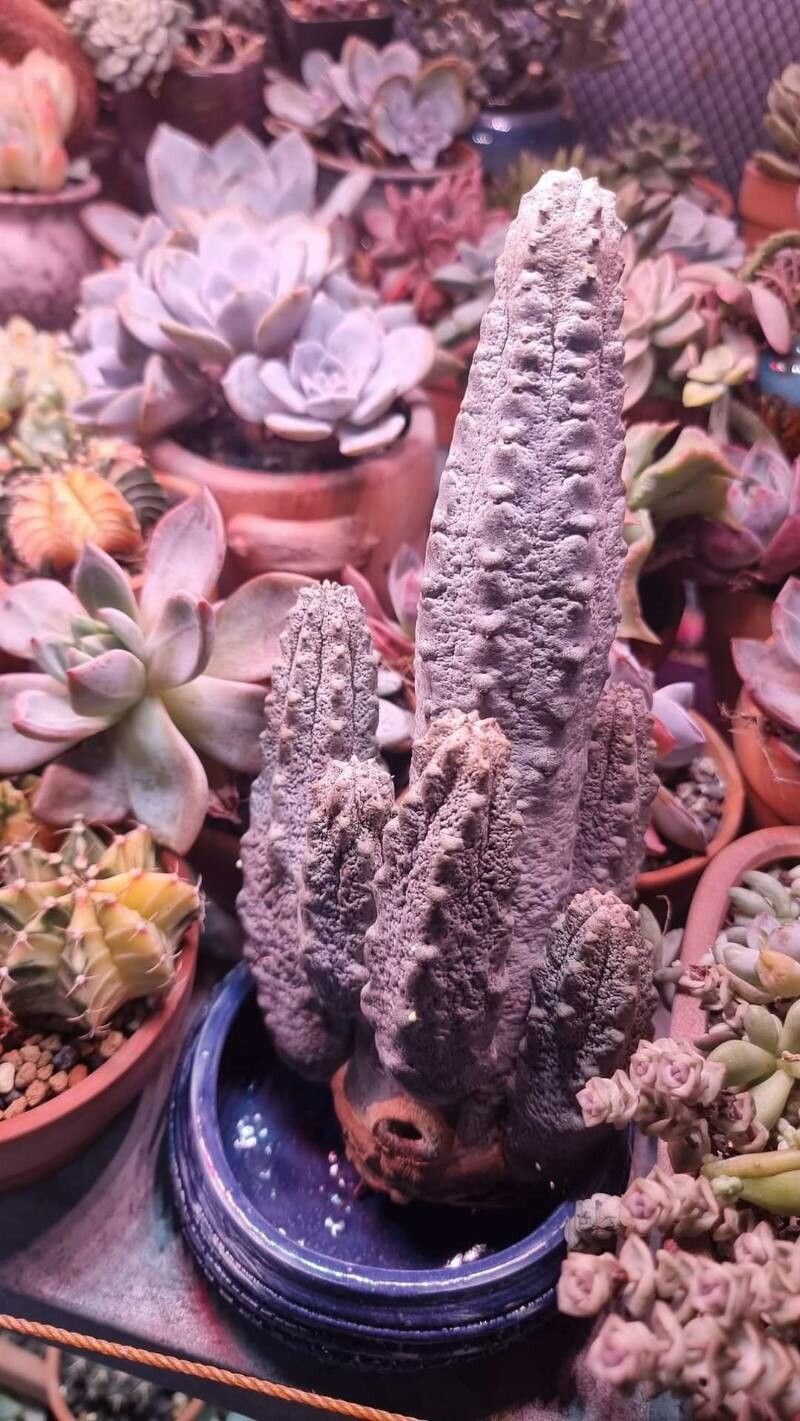
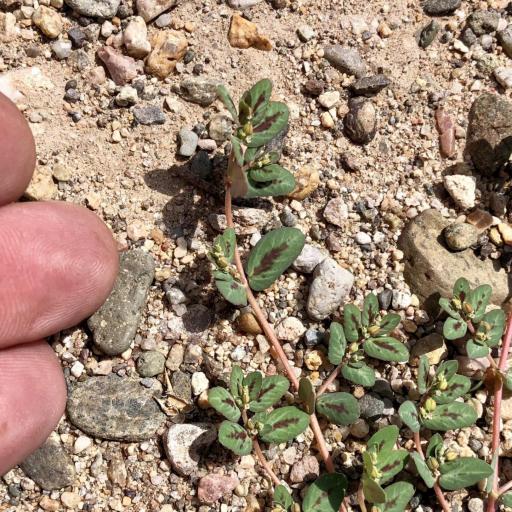
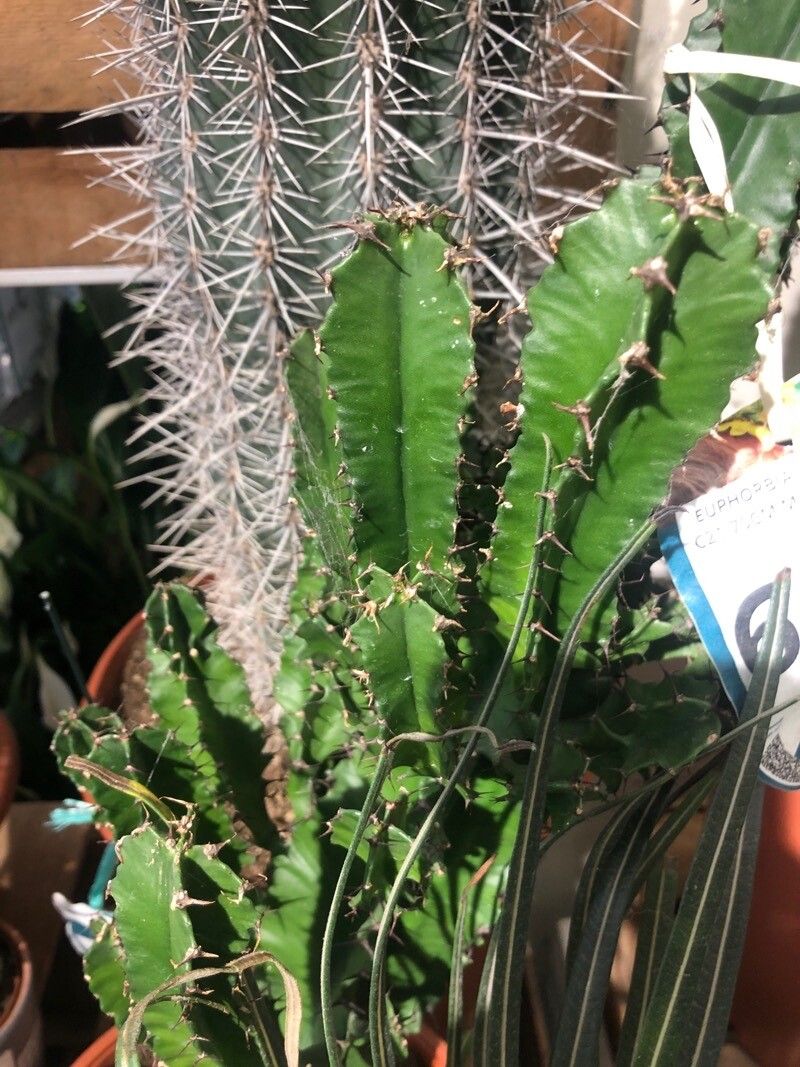
Red monadenium has moderate resistance to disease but is more sensitive to high humidity and excess watering. It is also likelier to develop disease when it receives insufficient light and is overwatered. Regarding care, Red monadenium is drought-tolerant and can endure long periods without water. It needs little fertilizer and only occasional pruning. For these reasons it suits people of all experience levels, especially those who prefer to spend less time on plant care or who may sometimes be away from home for extended periods. It is a good option for anyone who does not want to devote much time to caring for plants yet still wants one that is easy to maintain.
How to keep Euphorbia Neorubella.
Light
The red monadenium does best when it spends most of the day in places heavily illuminated by the sun. It tolerates times when the sunlight intensity decreases. If it originates from very bright habitats, its health can decline when it does not receive enough solar exposure.
Water
Red Monadenium hails from arid regions, making it highly drought-tolerant. It requires infrequent watering, approximately every 2 to 3 weeks. When grown indoors, it thrives best in well-draining soil and benefits from bright light, which helps to simulate its natural habitat and optimize its growth.
Temperature
Red monadenium comes from warm areas and does best in temperatures between 68 and 100°F (20 to 38°C). It prefers higher heat in summer for vigorous growth and needs moderate temperatures in winter to survive.
Fertilizer
For Red monadenium, light applications of fertilizer one to two times a year during the growing season are sufficient. Do not fertilize during its dormancy in winter and summer. Use less fertilizer for recently repotted plants and wait a couple of months after repotting before fertilizing. Fertilizing supports healthy growth and encourages blooms.
Pot & Repot
The Red Monadenium is a compact, bushy succulent that needs to be repotted every 2 to 3 years during the spring. When you repot, choose a larger pot with good drainage to prevent waterlogging. After repotting, water the plant sparingly once it shows signs of recovery. This will encourage growth while avoiding root rot.
Botanical profile.
- Plant Type
- Succulent
- Life Cycle
- Perennial
- Genus
- Euphorbia
- Family
- Euphorbiaceae
- Hardiness Zone
- 10-11
- Mature Height
- 30 cm
- Mature Spread
- 40 cm
- Leaf Color
- Green, Dark Green
- Leaf Type
- Semi-evergreen
- Flower Color
- Red
- Flower Size
- 2.54 cm
- Bloom Time
- Late spring, Summer
- Planting Time
- Spring, Summer, Autumn
- Harvest Time
- Mid summer, Late summer, Early fall, Mid fall
- Native Area
- Kenya
Other names.
Reader questions.
What are the sunlight requirements for Red monadenium?
Red monadenium thrives best in conditions where it can enjoy full sun exposure, which means the plant should bask in sunlight for more than 6 hours a day. However, it can also endure partial sun, requiring about 3-6 hours of sunlight daily. It's vital to observe how sunlight maneuvers through your garden or indoor space to ensure your plants get the perfect balance of light and shade they need for optimal growth. Insufficient sunlight can lead to health issues for plants accustomed to bright environments.
What is the optimal temperature range for growing Red monadenium?
Red monadenium thrives best in warm climates, with an optimal temperature range between 68 to 100°F (20 to 38°C). During summer, it enjoys high temperatures for robust growth, while in winter, it needs to be kept in moderate conditions to ensure its survival. When the temperature begins to fall below 68°F (20°C), the plant's growth will slow down, and special care should be taken to reduce or stop watering to prevent root rot.
How important is sunlight for Red monadenium's health?
Sunlight plays a crucial role in the health and well-being of Red monadenium. This plant greatly appreciates environments bathed in sun for the majority of the day and can withstand fluctuations in sunlight intensity. Originating from naturally bright habitats, Red monadenium might suffer from weakened health if it experiences a lack of sufficient sunlight. Therefore, ensuring ample solar exposure is essential for maintaining its health and vitality.
How should Red monadenium be cared for in winter?
During winter, when temperatures drop below 41°F (5°C), Red monadenium requires special care. It should be moved indoors to protect it from the cold. Placing the plant near a south-facing window ensures it receives ample sunlight, which is crucial for its survival in the colder months. If natural light is insufficient, supplemental lighting can be used. Watering should be reduced or halted to prevent root rot. For those growing Red monadenium outdoors, consider setting up a temporary greenhouse or using materials like plastic film or fabric for insulation against low temperatures.
What artificial lighting requirements do indoor Red monadenium plants have?
Indoor Red monadenium plants require adequate artificial lighting to support optimal growth, especially when natural sunlight is insufficient, such as in winter or less sunny spaces. LED lights are recommended due to their ability to provide specific wavelengths needed by the plants. Depending on the plant's sunlight needs, full sun plants should have 30-50W/sq ft, partial sun plants 20-30W/sq ft, and full shade plants 10-20W/sq ft of artificial light. The artificial light source should be placed 12-36 inches above the plant for 8-12 hours per day to mimic natural daylight conditions.
What are the signs of low-temperature damage in Red monadenium, and how can it be treated?
Low temperature is detrimental to Red monadenium's health, as it thrives at temperatures above 68°F (20°C). Signs of low-temperature damage include the plant becoming weak, wilting, and being prone to root rot, especially when temperatures fall below 33.8°F (1°C). In cases of mild frost damage, the plant may show no immediate symptoms but will gradually wither over a week. The solution involves trimming frostbitten areas, checking for and removing any rotten roots, and propagating through cuttings if necessary. Immediately move the plant to a warmer environment and provide ample sunlight through a south-facing window or supplemental lighting.
What are the symptoms of insufficient light in Red monadenium?
When Red monadenium doesn't receive enough light, several symptoms can manifest, including the development of smaller leaves compared to previous ones, leggy or sparse growth, faster leaf drop, slower or halted growth, and the appearance of lighter-colored or yellowing leaves (chlorosis). Excessive sunlight exposure, on the other hand, can cause issues such as sunscald, leaf curling, wilting, leaf scorching, and damage from intense sunlight exposure. Each symptom reflects the plant's struggle to adapt to suboptimal lighting conditions.
How should Red monadenium be cared for during extremely high temperatures?
During the summer, it's crucial to ensure that the temperature around Red monadenium does not exceed 100°F (38°C). High temperatures above 109.4°F (43°C) can halt the plant's growth, lead to water loss, wilting, and increase the risk of sunburn. To care for a plant affected by high temperature, remove any sunburned and rotten parts immediately. Provide protection from the afternoon sunlight until the plant has recovered and shows signs of growth. If the plant suffers from root rot, cease watering until new roots develop.
What solutions can combat Red monadenium's light deficiency?
To address light deficiency in Red monadenium, gradually adjusting the plant to receive at least 6 hours of direct sunlight daily is recommended. For indoor plants, utilizing a south-facing window or artificial plant grow lights for at least 8 hours daily can help. For outdoor plants, gradually moving them to sunnier spots while avoiding sudden, drastic changes in light intensity is crucial. If direct sunlight is obstructed, consider pruning or relocating plants to sunnier locations. While parts of the plant that suffered from insufficient light may not recover, new growth will be healthy with proper light exposure.