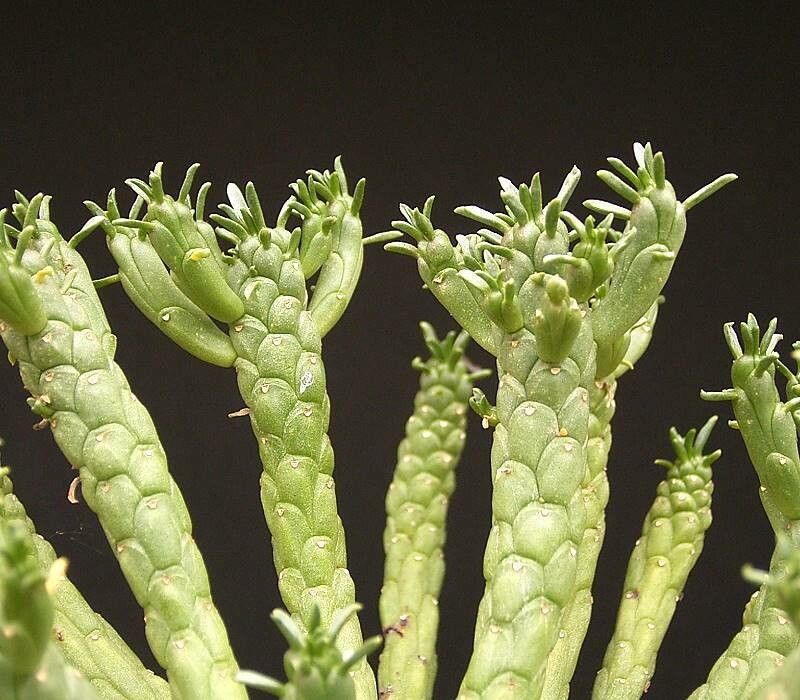
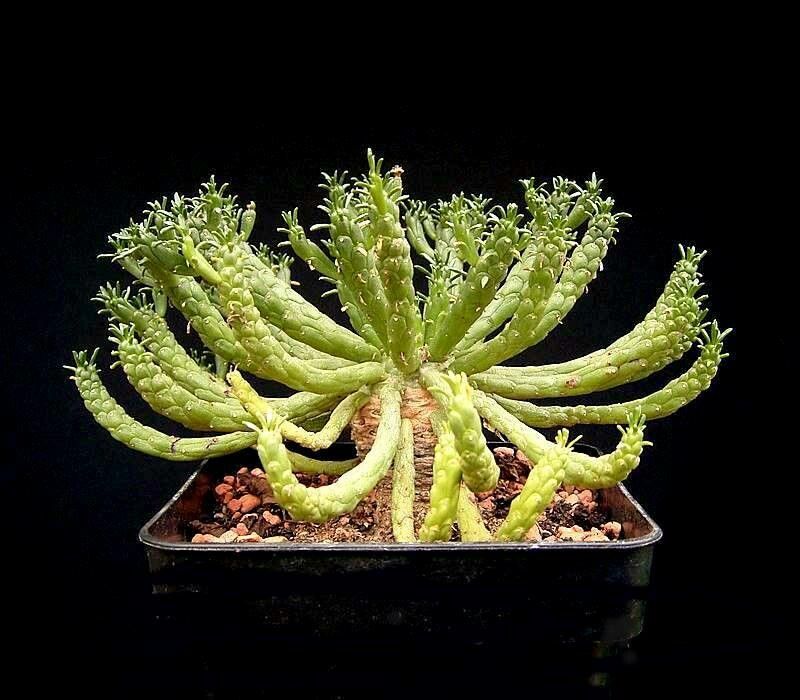
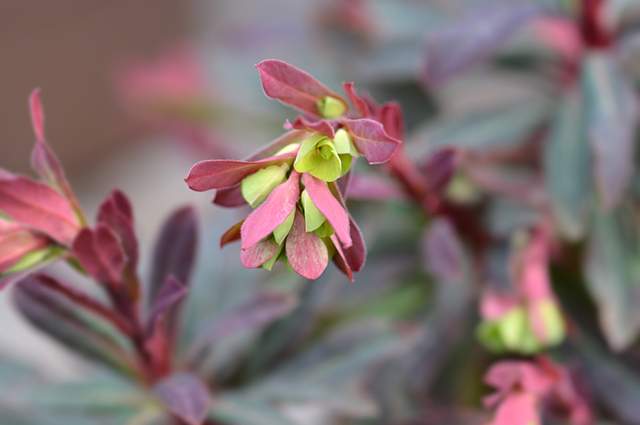
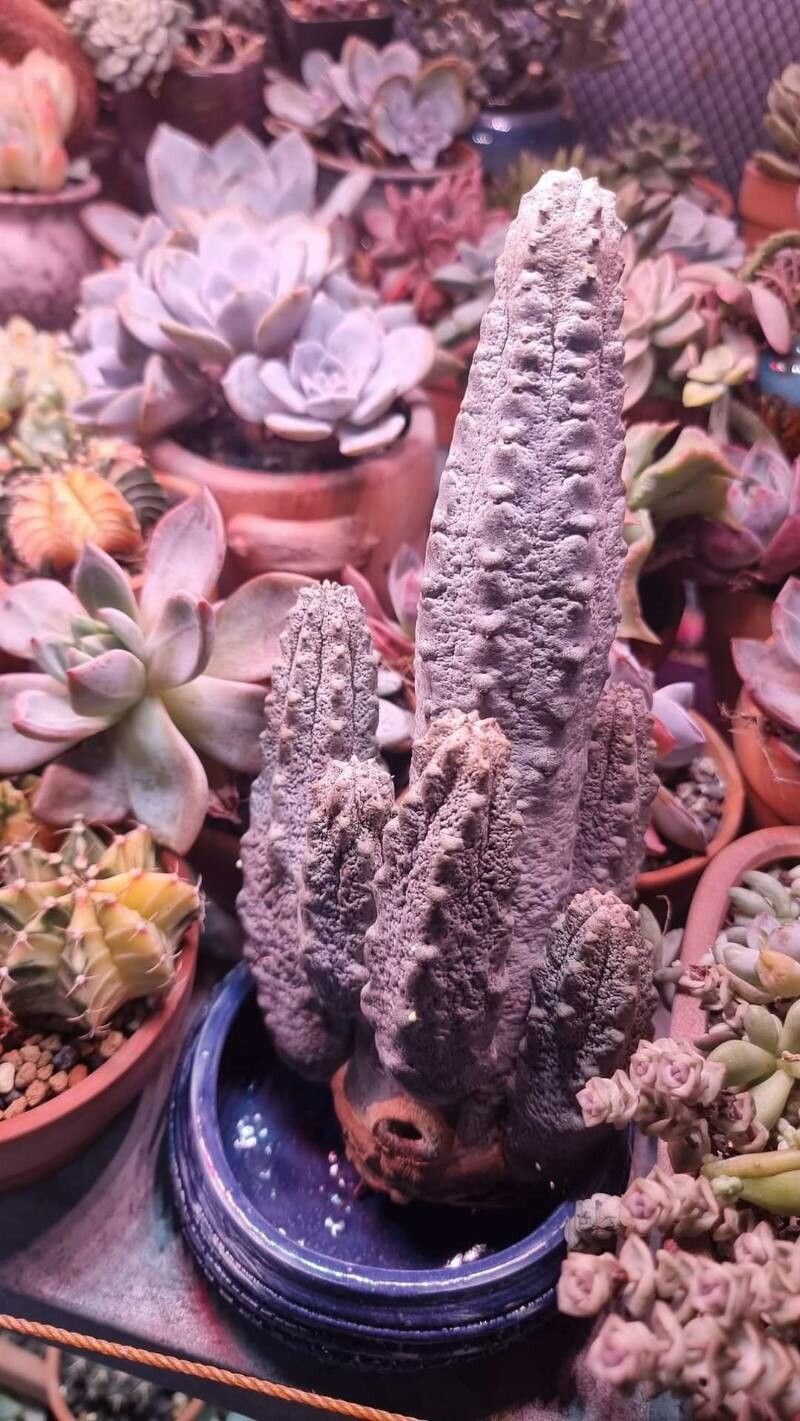
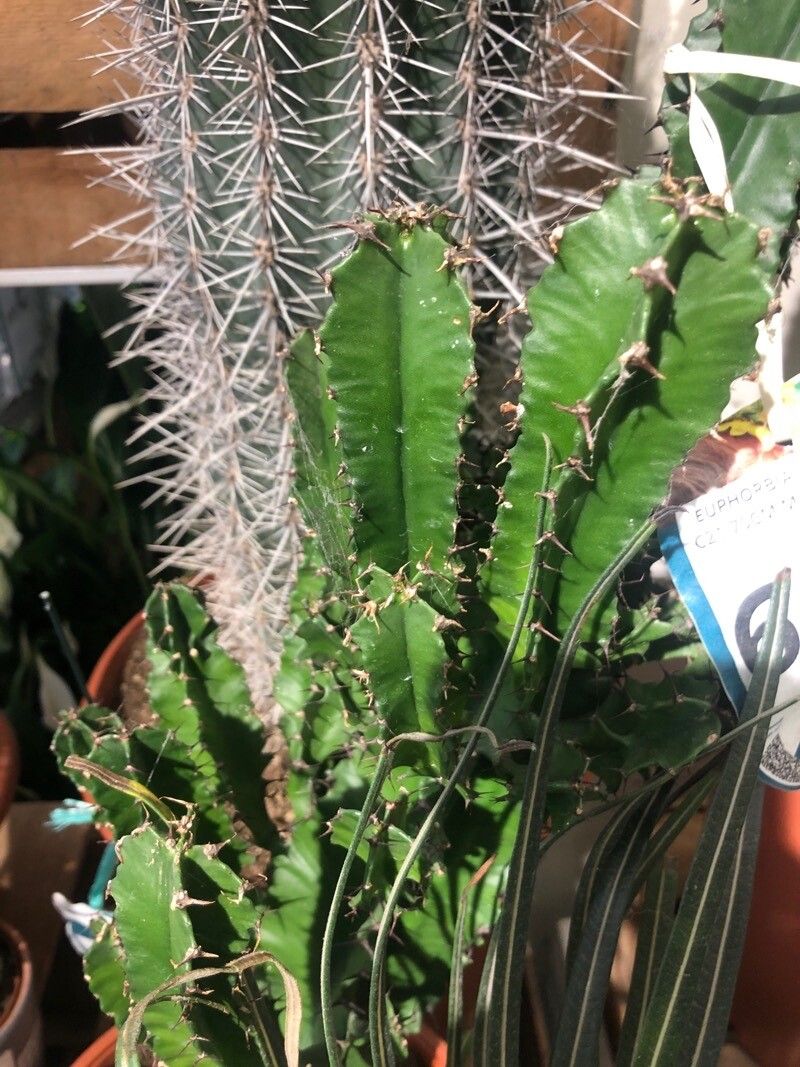
Medusa's head has moderate disease resistance and is more sensitive to humidity and overwatering. It also becomes more prone to disease if it is kept without sufficient light and is overwatered. Regarding care, Medusa's head is drought-tolerant and can withstand extended periods without watering. It requires little fertilizer and only occasional pruning. This makes it an appropriate plant for people at all experience levels, particularly those who prefer to spend less time on plant care and who may sometimes be away from home for long stretches. It is a good option for anyone who does not want to invest a lot of time in maintenance but still wants a plant that is simple to look after.
How to keep Euphorbia Muirii.
Light
Medusa's head, indigenous to dry areas, flourishes under direct sunlight as its natural habitat is dominated by intense sunlight with scarce shadow. It can also endure partial sunlight, exhibiting some flexibility in its development.
Temperature
The Medusa's head plant flourishes in hot climates and needs elevated temperatures during its growth period to stimulate its development and metabolism. It appreciates plenty of sun exposure, suitable humidity, and adequate air circulation. Yet, it can be harmed by particularly low temperatures and too much watering. It's significant to maintain moderation and avert excessively high temperatures and extreme dryness as well.
Fertilizer
Medusa's head only needs light applications of fertilizer once or twice a year during the growing season. Do not fertilize in winter or in summer when the plant is dormant. Cut back on feeding for plants that have been repotted, and wait a couple of months after repotting before applying fertilizer. Fertilizing helps maintain healthy growth and encourages flowering.
Botanical profile.
- Plant Type
- Succulent
- Life Cycle
- Perennial
- Genus
- Euphorbia
- Family
- Euphorbiaceae
- Hardiness Zone
- 9b-11
- Mature Height
- 91 cm
- Mature Spread
- 46 cm
- Leaf Color
- Light Green, Gray
- Leaf Type
- Evergreen
- Flower Size
- 0.51 cm to 1.02 cm
- Bloom Time
- Mid spring, Late spring
- Planting Time
- Summer, Autumn
- Harvest Time
- Early summer, Mid summer
- Native Area
- South Africa