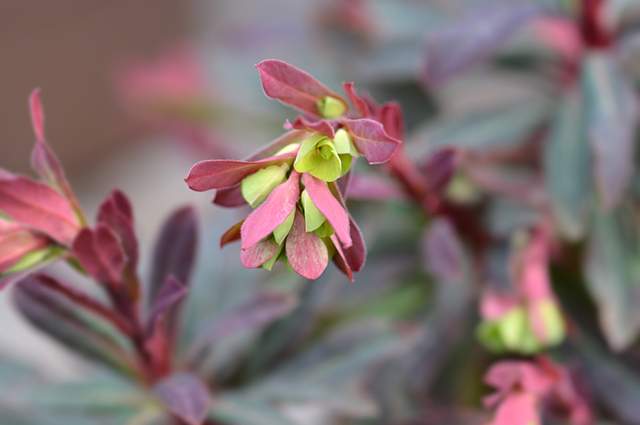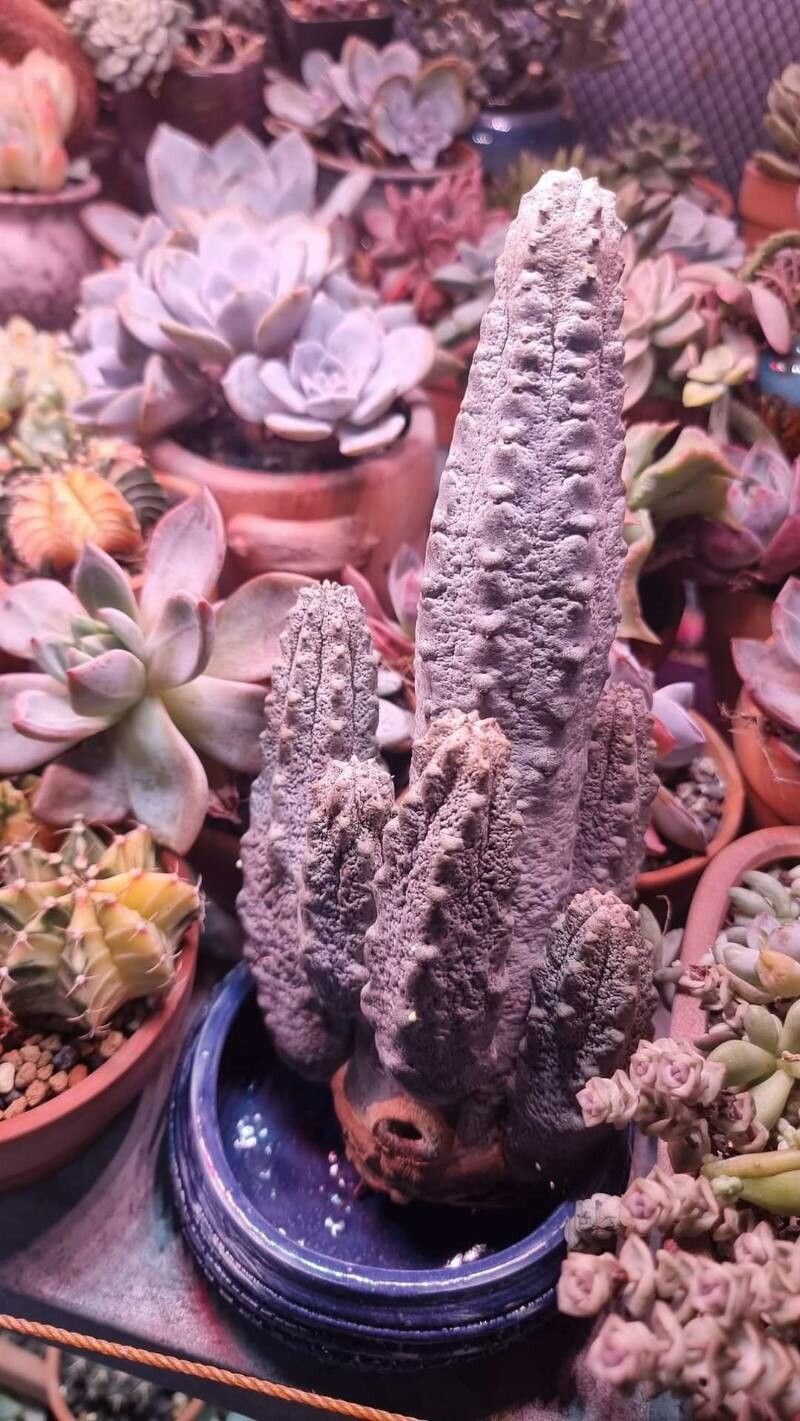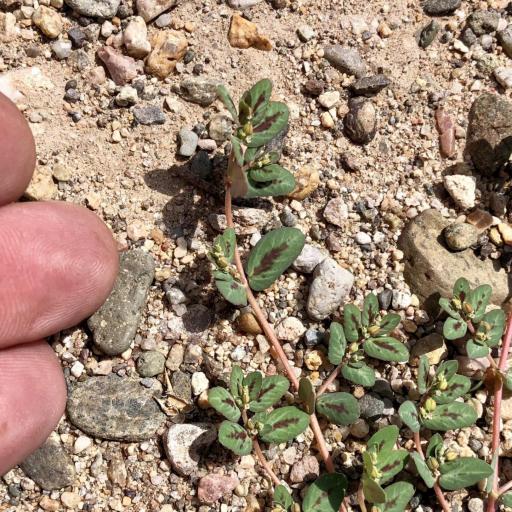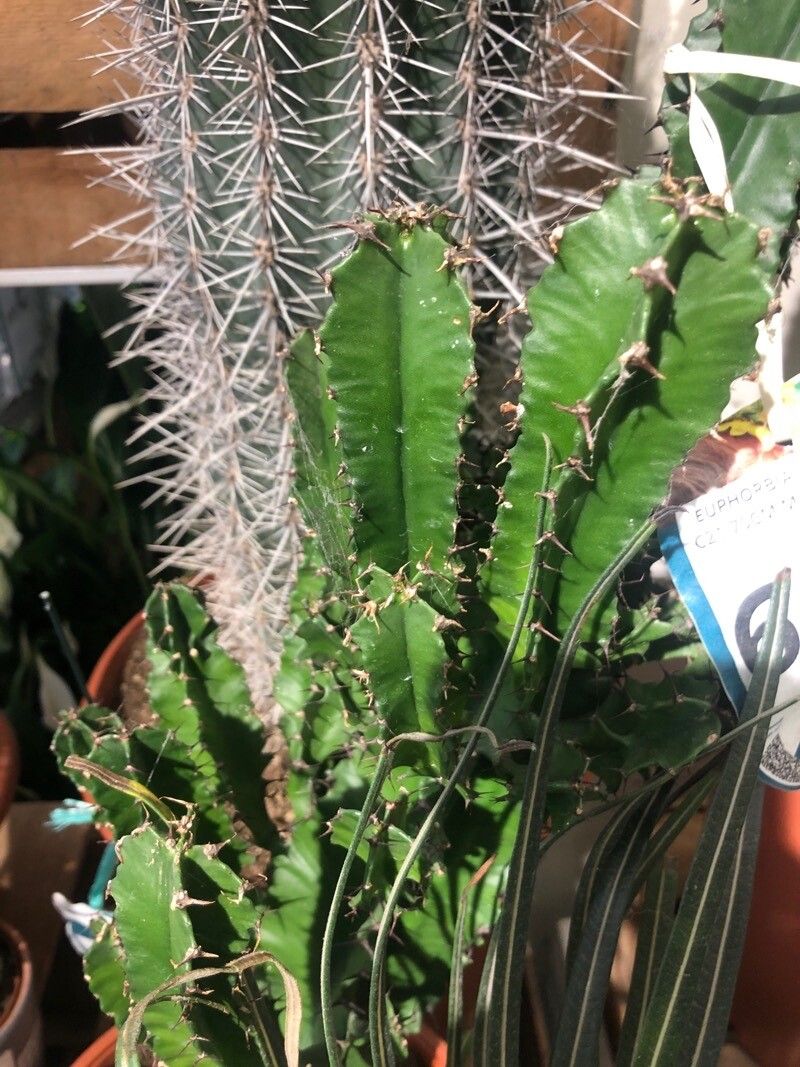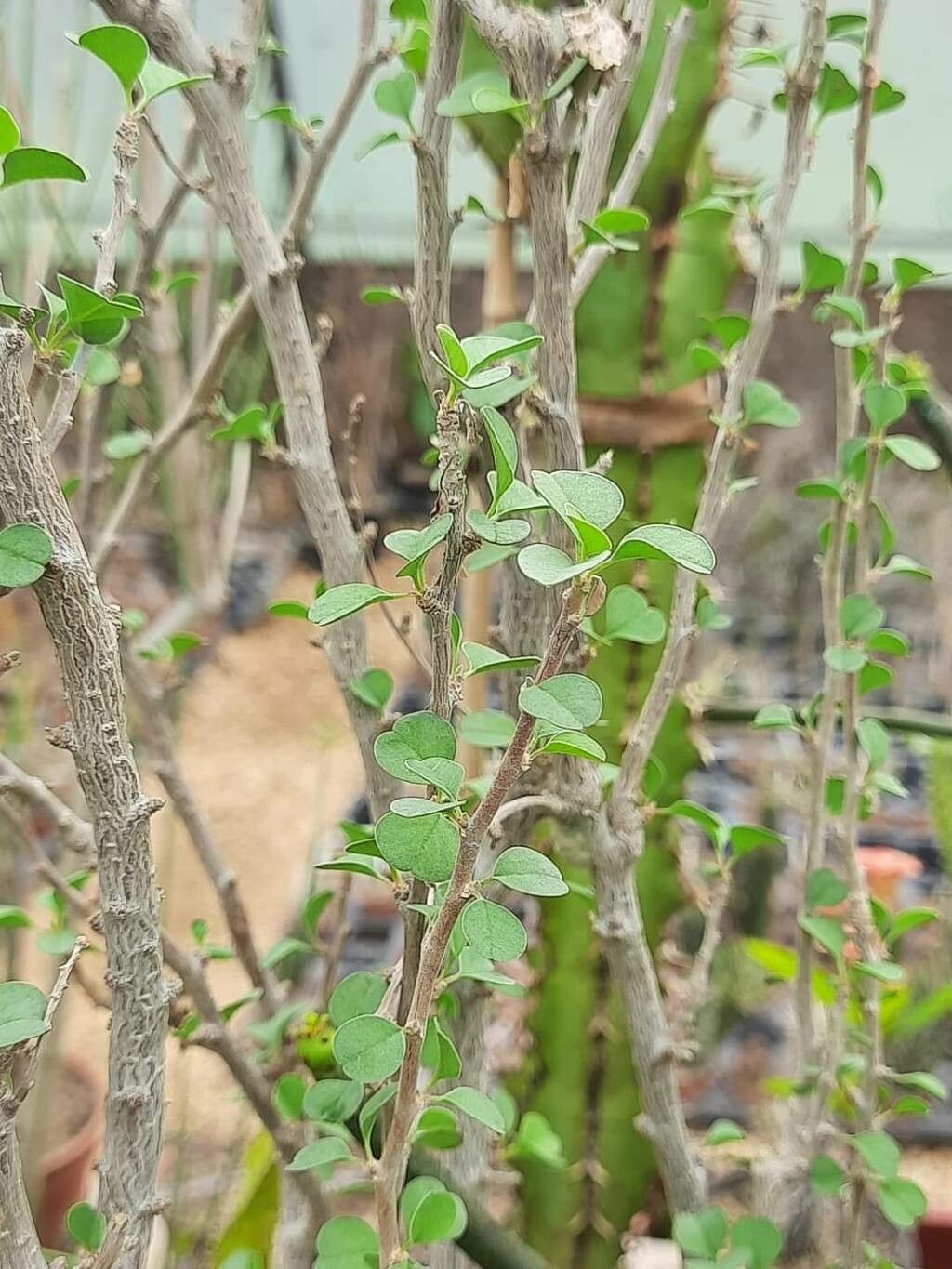
Euphorbia misera is a semi-succulent shrub in the genus Euphorbia commonly known as the cliff spurge or coast spurge. A drought-deciduous shrub, it is typically found as a gnarled, straggly plant occupying seashore bluffs, hills and deserts. Like other members of its genus, it has a milky sap, which can be found exuding out of the light gray bark when damaged. The alternately-arranged leaves are round and folded in the middle, with small hairs on them. The "flowers" can be found blooming year-round, and are colored maroon or yellow in the center with 5 white to light-yellow petal-like appendages attached outside. This species is native to the Baja California peninsula and Sonora in Mexico, and the coast of Southern California in the United States, where it is a rare species. It is threatened in some localities by the development of its coastal habitat, which tends to be prime locations for high-end residential and commercial developments.
Cliff spurge has strong disease resistance and is generally not susceptible to disease. In terms of care, this plant is fairly low maintenance. When grown outdoors it needs only minimal watering, and larger specimens usually do not require pruning. Smaller plants, however, should be pruned after they finish blooming. Cliff spurget is suitable for anyone with outdoor space, like a garden or deck, and does not demand a lot of care experience.
How to keep Euphorbia Misera.
Light
Cliff spurge grows best when it gets plenty of sunlight; not having enough can hinder its healthy development. Native to sun-rich habitats, it can adjust to a range of light levels but cannot tolerate excessive shade or too little sun, both of which can harm its growth cycle.
Water
Cliff spurge is well-suited to arid environments due to its drought tolerance and ability to thrive with minimal moisture. It only needs to be watered every two weeks, as it efficiently stores water in its succulent tissues. These characteristics make it perfect for xeric landscapes and long periods of dryness.
Temperature
Cliff spurge comes from habitats where temperatures generally range from 32 to 106 °F (0 to 41 ℃). It does best under those conditions. Adjusting temperatures seasonally to imitate its native environment is recommended for optimal growth.
Fertilizer
Fertilize your Cliff spurge in early spring to encourage healthy growth. Regular feeding boosts overall health, producing vigorous growth, greater tolerance of harsh conditions, and improved resistance to pests and diseases. Follow a consistent fertilization routine for your Cliff spurge to maintain vibrant, deeply colored, and lush foliage.
Pruning
Cliff spurge is a drought-tolerant shrub known for its gray-green leaves and small yellow flowers. To promote healthy growth and improve airflow, prune it in early spring. Light pruning encourages the plant to become denser, while heavy pruning could stress it. Regular pruning also boosts the plant's vitality and flowering potential.
Pot & Repot
When repotting Cliff spurge, select a pot 1-2 inches (2.5–5.1 cm) larger with good drainage. Use a well-draining potting mix. Repot in spring or fall, making sure the root ball sits slightly below the rim of the flower pot. Water thoroughly after repotting and place it in a warm spot with indirect sunlight.
Botanical profile.
- Plant Type
- Shrub
- Life Cycle
- Perennial
- Genus
- Euphorbia
- Family
- Euphorbiaceae
- Hardiness Zone
- 2-13
- Mature Height
- 49 cm to 91 cm
- Mature Spread
- 0.61 m to 1.22 m
- Leaf Color
- Gray, Light Gray
- Leaf Type
- Semi-evergreen
- Flower Color
- White, Red
- Flower Size
- 2.54 cm
- Bloom Time
- Spring, Summer, Early fall, Mid fall
- Planting Time
- Spring, Autumn
- Harvest Time
- Late spring, Summer, Fall
- Native Area
- Mexico