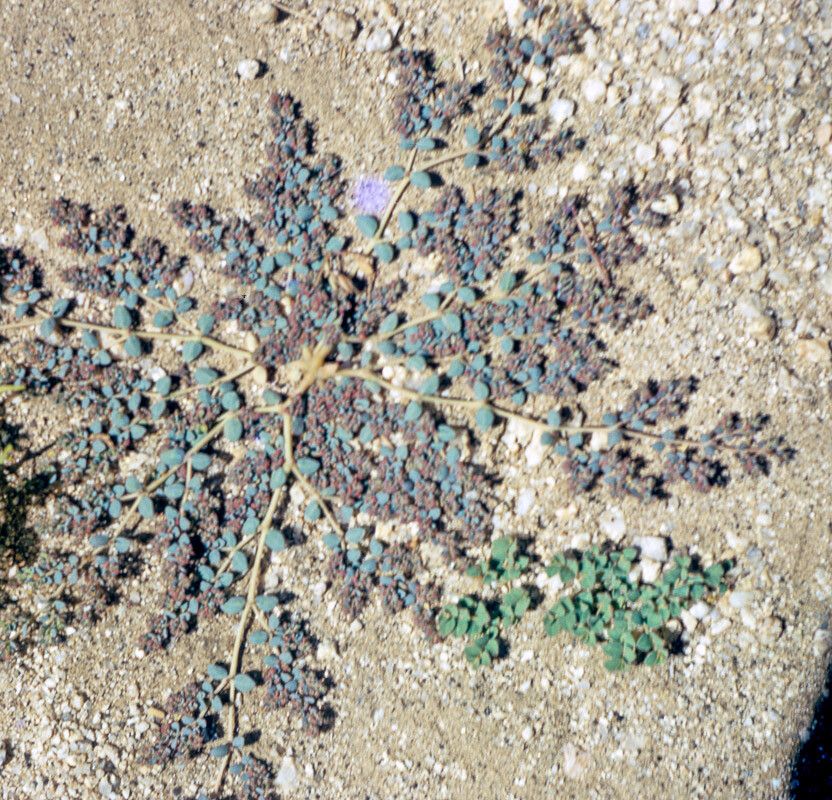
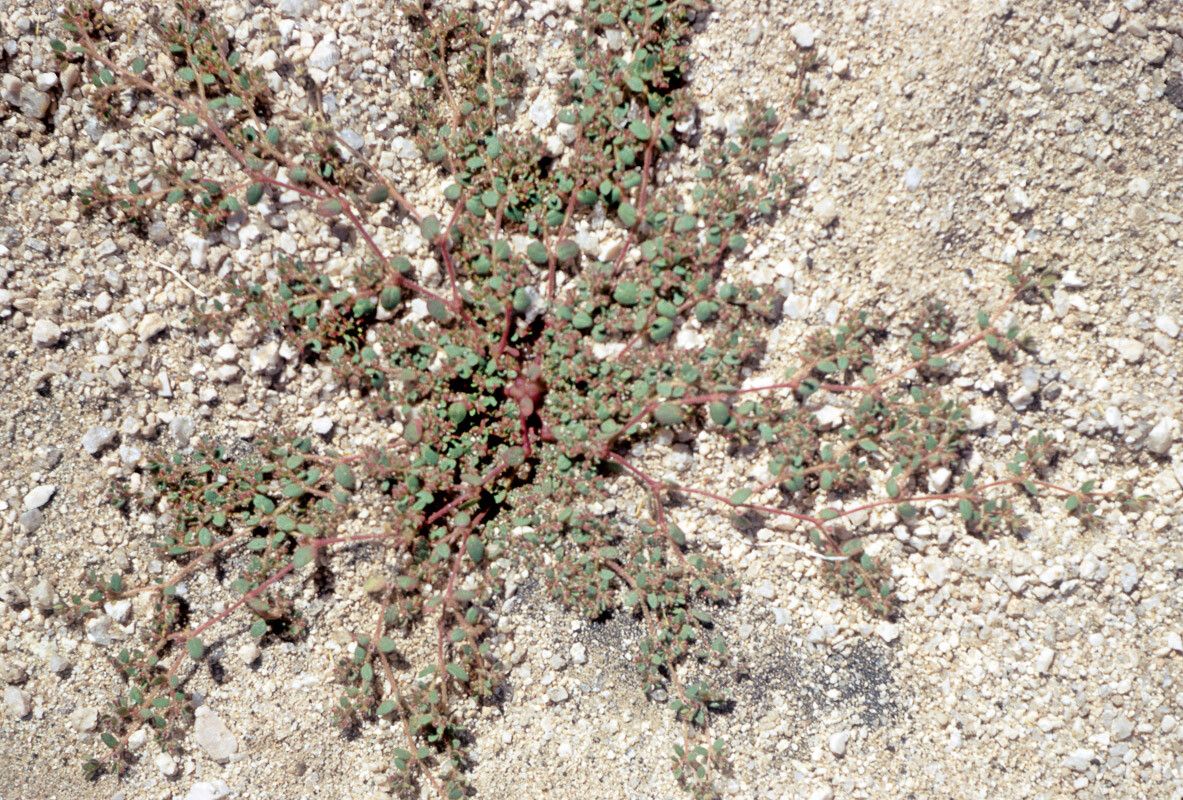
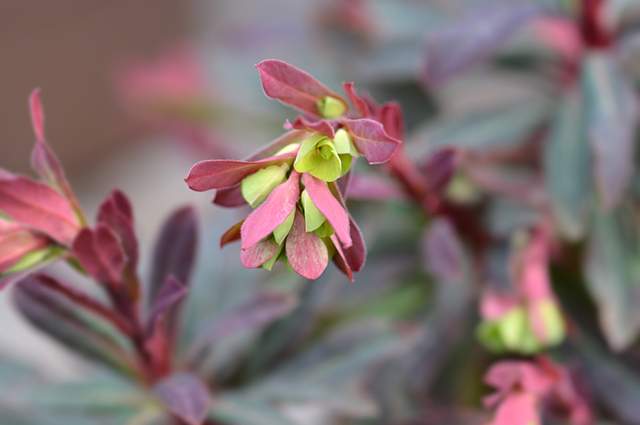
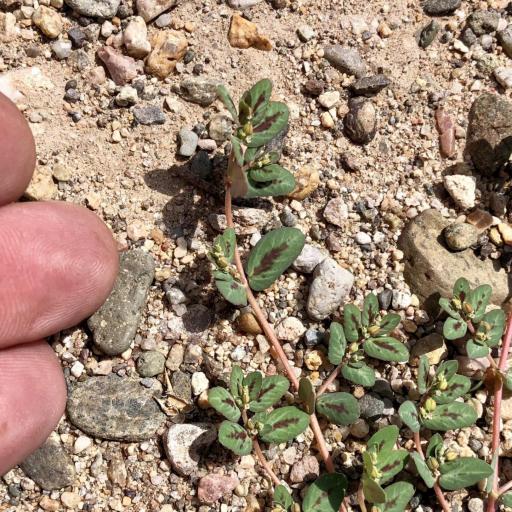
Euphorbia micromera is a species of flowering plant in the family Euphorbiaceae. It is known by the common name Sonoran sandmat. It is native to the southwestern United States from California to Texas, and northern Mexico, where it grows in sandy soils in desert and other dry habitat. It is an annual herb forming a small mat of slender stems. The hairy to hairless leaves are oblong in shape and just a few millimeters long. The tiny inflorescence is a cyathium less than a millimeter wide. It lacks the appendages that many similar species have in their cyathia. It has only a central female flower and 2 to 5 male flowers surrounded by round red nectar glands. The fruit is a minute round capsule.
Sonoran sandmat has strong disease resistance and is typically not vulnerable to illnesses. Still, it can be affected by pests and diseases present nearby. Such infections are generally mild. Regarding care, this plant demands a moderate level of maintenance. It should be pruned regularly to preserve its appearance and encourage healthy growth. Applying fertilizer can also aid in boosting flowering. Sonoran sandmat is appropriate for anyone with outdoor areas like a garden or patio and does not need extensive gardening experience. It may, however, require more attention when cultivated indoors.
How to keep Euphorbia Micromera.
Light
Sonoran sandmat performs best in places that receive almost uninterrupted sunlight for most of the day. While it can tolerate locations where sunlight is broken up during the day, consistent light promotes its best growth. Excessive sun can scorch the leaves, whereas too little light may cause weak, spindly growth or wilting.
Water
The Sonoran sandmat is a drought-tolerant plant that thrives with minimal water and only needs to be watered once a week. It prefers well-draining soil, similar to its native sandy desert habitat, which helps prevent root rot from excess moisture. This adaptability makes it an excellent choice for arid outdoor environments.
Temperature
Sonoran sandmat originates from habitats where temperatures range between 68 and 100.4 °F (20 to 38 ℃). It favors moderate heat; therefore, during seasonal shifts, conditions should be adjusted to emulate those temperatures.
Fertilizer
Sonoran sandmat does well with regular, light applications of fertilizer to encourage healthy leaf development. You should feed Sonoran sandmat roughly once a month during the summer. Nitrogen is vital for foliage, and providing nitrogen-rich sources helps Sonoran sandmat thrive.
Pruning
To keep Sonoran sandmat healthy and well-shaped, it's best to prune it regularly from early to late spring. By cutting away dead stems and trimming excessive growth, you can improve air circulation and prevent overcrowding. Always use clean, sharp tools to minimize damage and reduce the risk of spreading disease.
Botanical profile.
- Plant Type
- Herb
- Life Cycle
- Annual
- Genus
- Euphorbia
- Family
- Euphorbiaceae
- Hardiness Zone
- 9-11
- Mature Height
- 15 cm
- Mature Spread
- 10 cm to 30 cm
- Leaf Color
- Green, Dark Green
- Leaf Type
- Evergreen
- Flower Color
- Yellow, Green, Red, Orange
- Flower Size
- 0.20 cm to 0.25 cm
- Bloom Time
- Late spring, Summer, Fall
- Planting Time
- Spring, Summer, Autumn
- Harvest Time
- Summer, Fall, Early winter
- Native Area
- Mexico
Other names.
Reader questions.
What are the sunlight requirements for Sonoran Sandmat?
Sonoran sandmat requires full sun exposure for optimal growth, thriving best when illuminated by the sun's rays for the majority of the day. While it can survive in areas with divided sun exposure, its growth is maximized under continuous sunlight. However, care must be taken as excessive sun exposure can cause leaf scorch, and insufficient sunlight may lead to weak growth or wilting. It's important to observe the movement of sunlight through your garden and choose locations that provide a healthy balance of light and shade.
What is the ideal temperature range for Sonoran sandmat?
Sonoran sandmat thrives in environments where temperatures fluctuate between 68 to 100.4 °F (20 to 38°C). The plant prefers moderate heat, and it is essential to adjust the conditions to replicate these temperatures during seasonal changes. It's extremely heat-loving, and exposure to cold temperatures can be harmful. During autumn, outdoor-grown Sonoran sandmat should be brought indoors and placed near a bright window, albeit a certain distance from heaters, to maintain temperatures above 20°C. Keeping the plant away from temperatures approaching 0°C during winter is crucial for its growth.
How important is artificial lighting for indoor Sonoran Sandmat plants?
Artificial lighting plays a crucial role in the growth of indoor Sonoran sandmat plants, particularly when natural sunlight is insufficient, such as during winter or in less sunny spaces. Indoor plants require adequate lighting to maintain optimal growth, with options like LED lights being popular for their ability to provide specific wavelengths needed by the plants. Full sun plants need 30-50W/sq ft of artificial light, partial sun plants need 20-30W/sq ft, and full shade plants need 10-20W/sq ft. Position the light source 12-36 inches above the plant to mimic natural sunlight and ensure the plant receives 8-12 hours of light per day.
How does low temperature affect Sonoran sandmat, and what are the solutions?
Sonoran sandmat is not tolerant of low temperatures and thrives best when the temperature is above 20°C. In winter, it's important to keep it above 0°C. When the temperature falls below -5°C, the leaves may lighten in color. Following frost damage, the leaves gradually turn brown or black, and the plant may exhibit wilting and drooping. To address this, frost-damaged parts should be trimmed off and the plant moved indoors to a warm environment for cold protection. Placing the plant near a south-facing window ensures ample sunlight, but it should not be placed near heaters or air conditioning vents to avoid excessive dryness in the air.
What are the signs of inadequate lighting for Sonoran Sandmat?
When Sonoran sandmat is grown indoors with insufficient light, it may display several symptoms of light deficiency including smaller new leaves, leggy or sparse growth, faster leaf drop, slower or halted new growth, and lighter-colored new leaves. Additionally, excessive sunlight can cause chlorosis, sunscald, leaf curling, wilting, and leaf scorching. These symptoms indicate a need for adjusting the lighting conditions to better suit the plant's requirements.
What should be done if Sonoran sandmat is exposed to high temperatures?
During the summer, it's crucial to keep Sonoran sandmat below 38°C. Exposure to temperatures exceeding 43°C can cause the leaves to lighten in color and make the plant more susceptible to sunburn. In such cases, the sunburned and dried-up parts of the plant should be trimmed away. Moving the plant to a location that provides shade from the midday and afternoon sun can help. Additionally, watering the plant in the morning and evening will keep the soil moist and assist in temperature management.
What solutions exist for Sonoran Sandmat experiencing light-related issues?
To address light-related issues for both indoor and outdoor Sonoran Sandmat plants, gradually moving them to locations with more sunlight each week is recommended. For indoors, use a south-facing window or consider artificial lighting like desk, ceiling lamps, or plant grow lights for at least 8 hours a day. Outdoors, avoid sudden changes in light exposure to prevent sunburn. If obstructions block sunlight, consider pruning or moving the plants to better-lit areas. Note that parts of the plant damaged by poor light may not recover, but new growth should be healthy with improved light conditions.