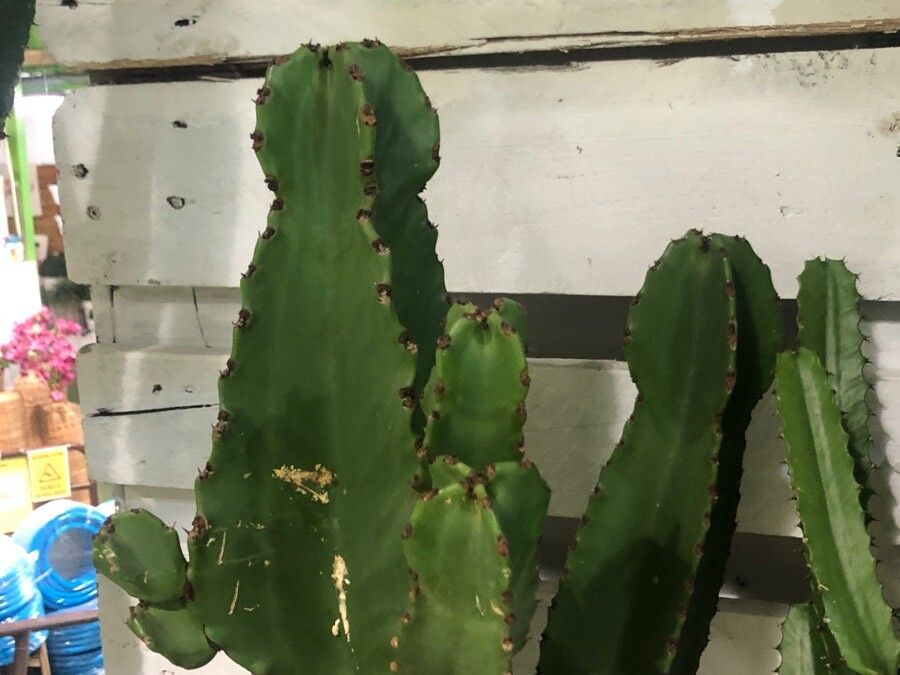
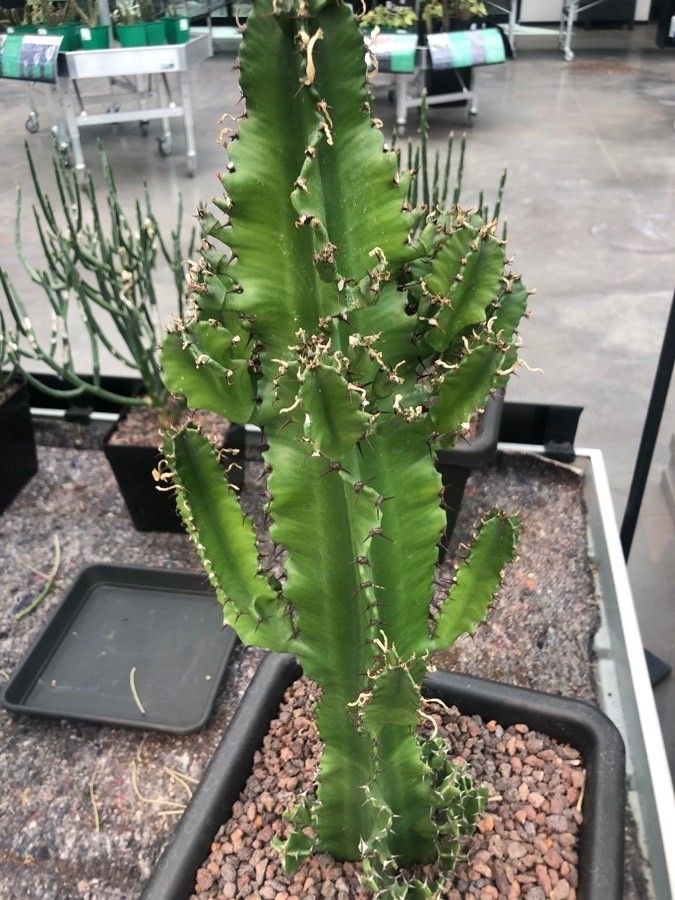
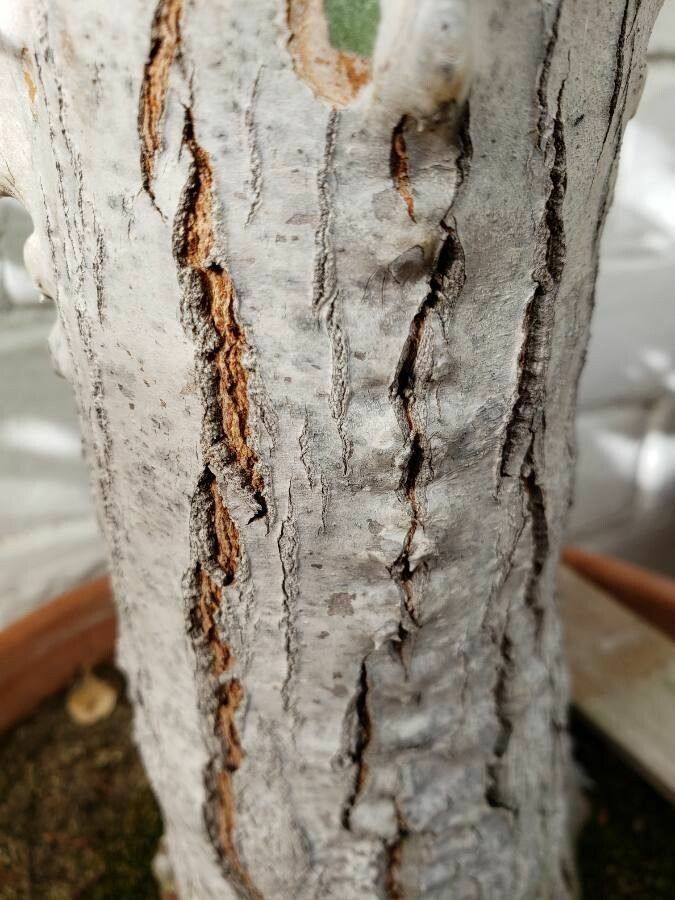
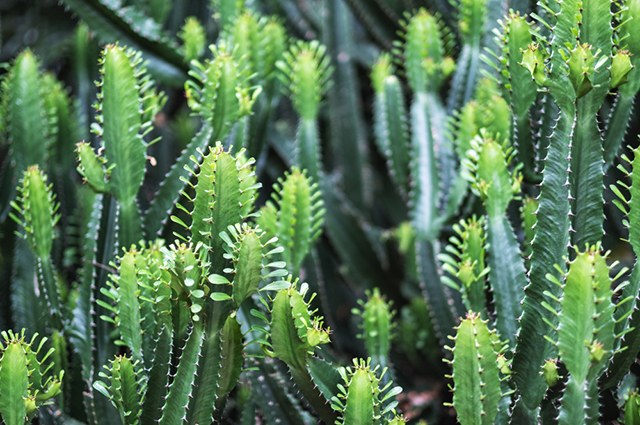
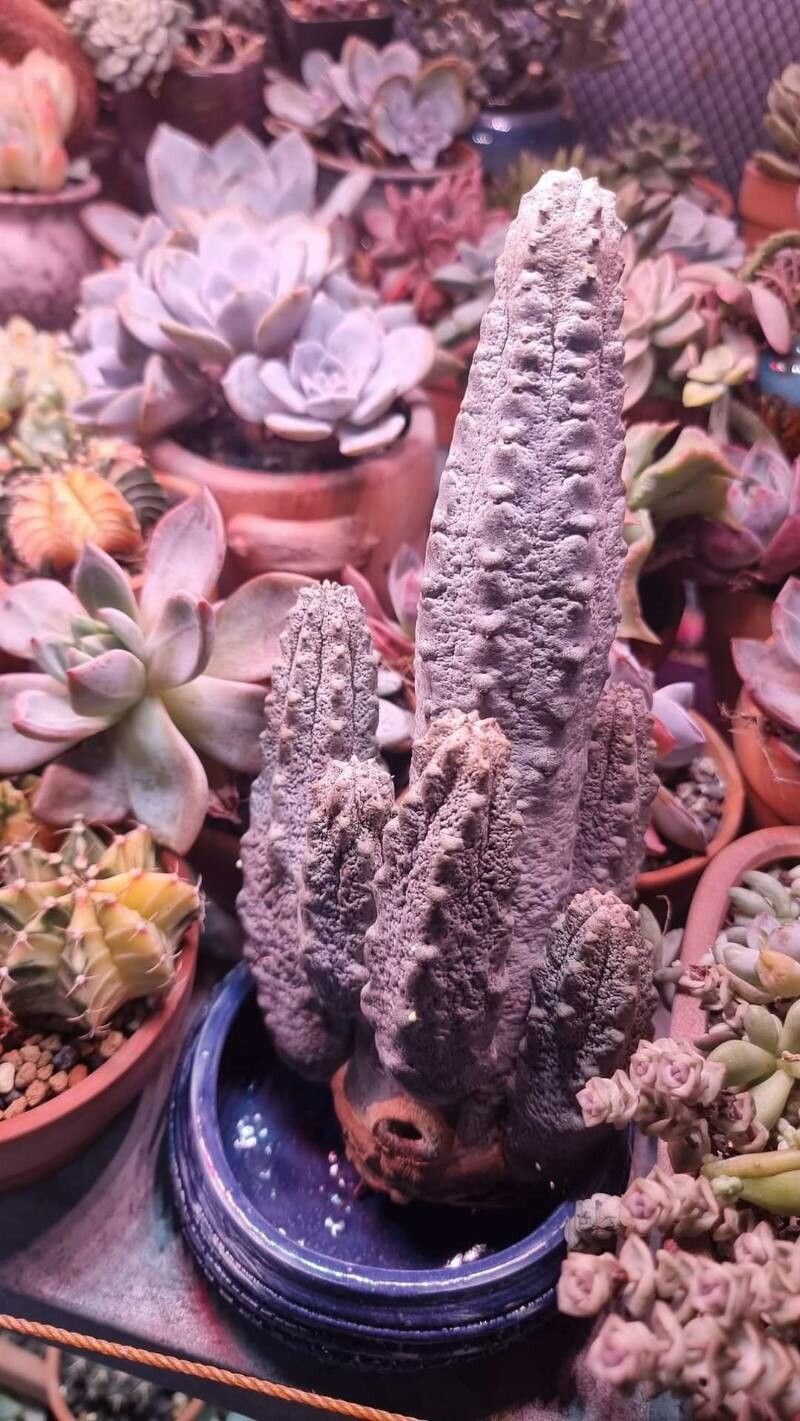
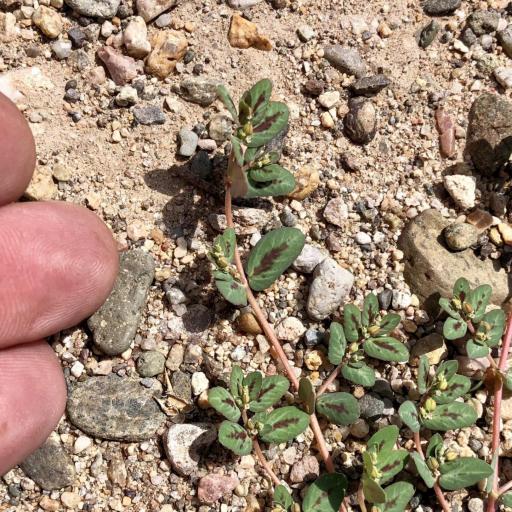
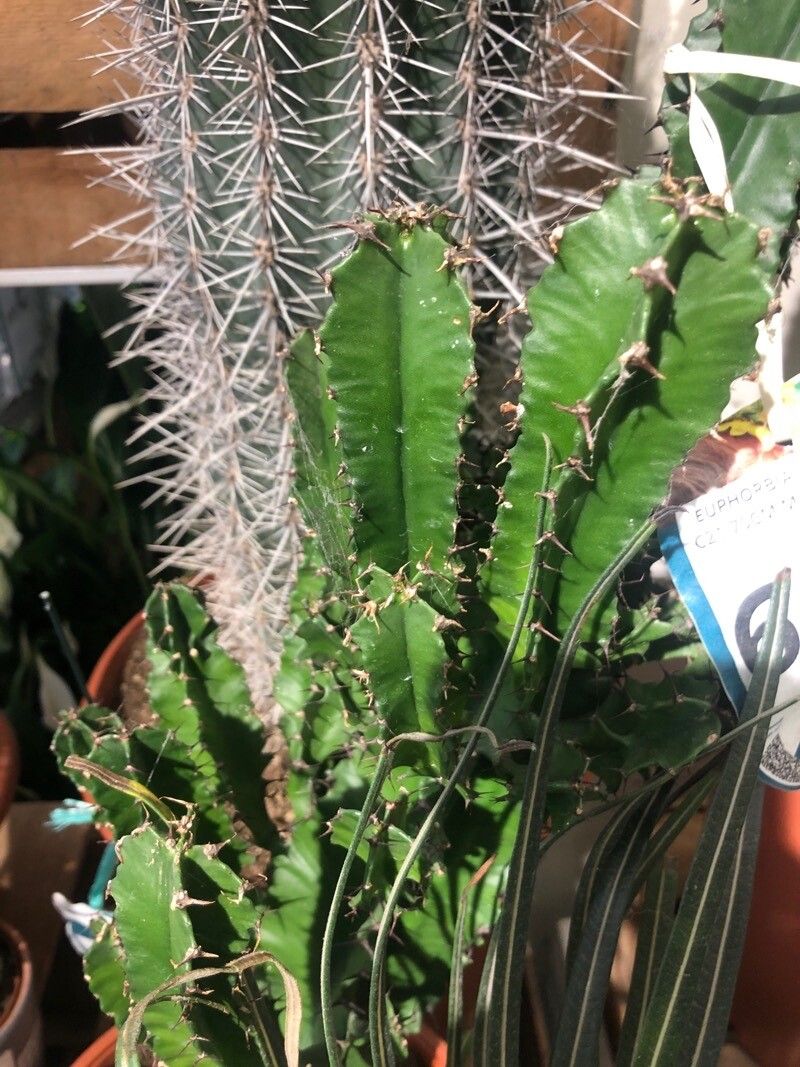
Euphorbia ingens, commonly known as the candelabra tree or cowboy cactus, is a succulent plant species native to southern Africa. This large, tree-like plant can grow up to 30 feet tall and 20 feet wide. The thick, green stems have small spines along their ridges. The plant’s small leaves fall off quickly as the stem elongates.
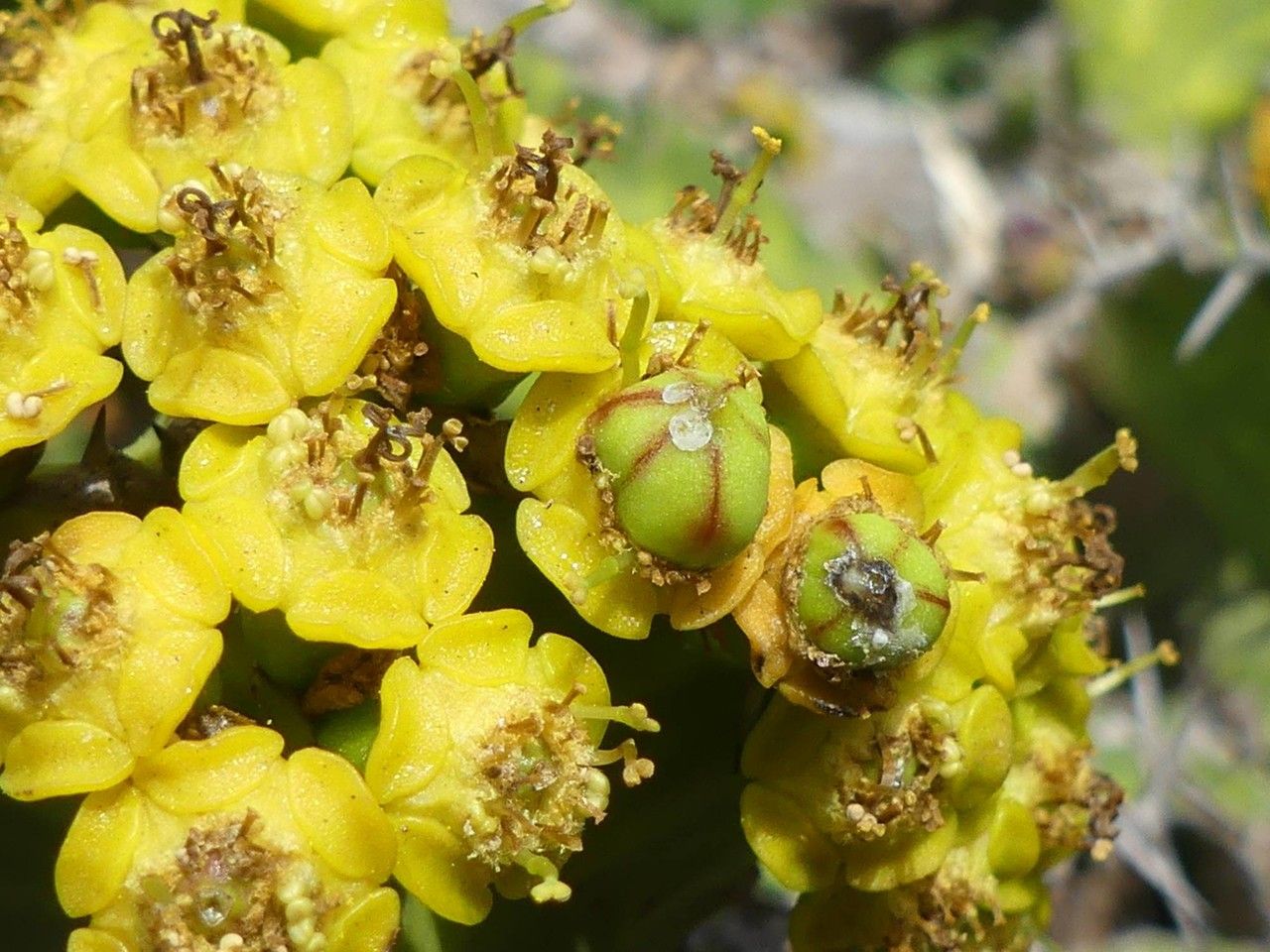
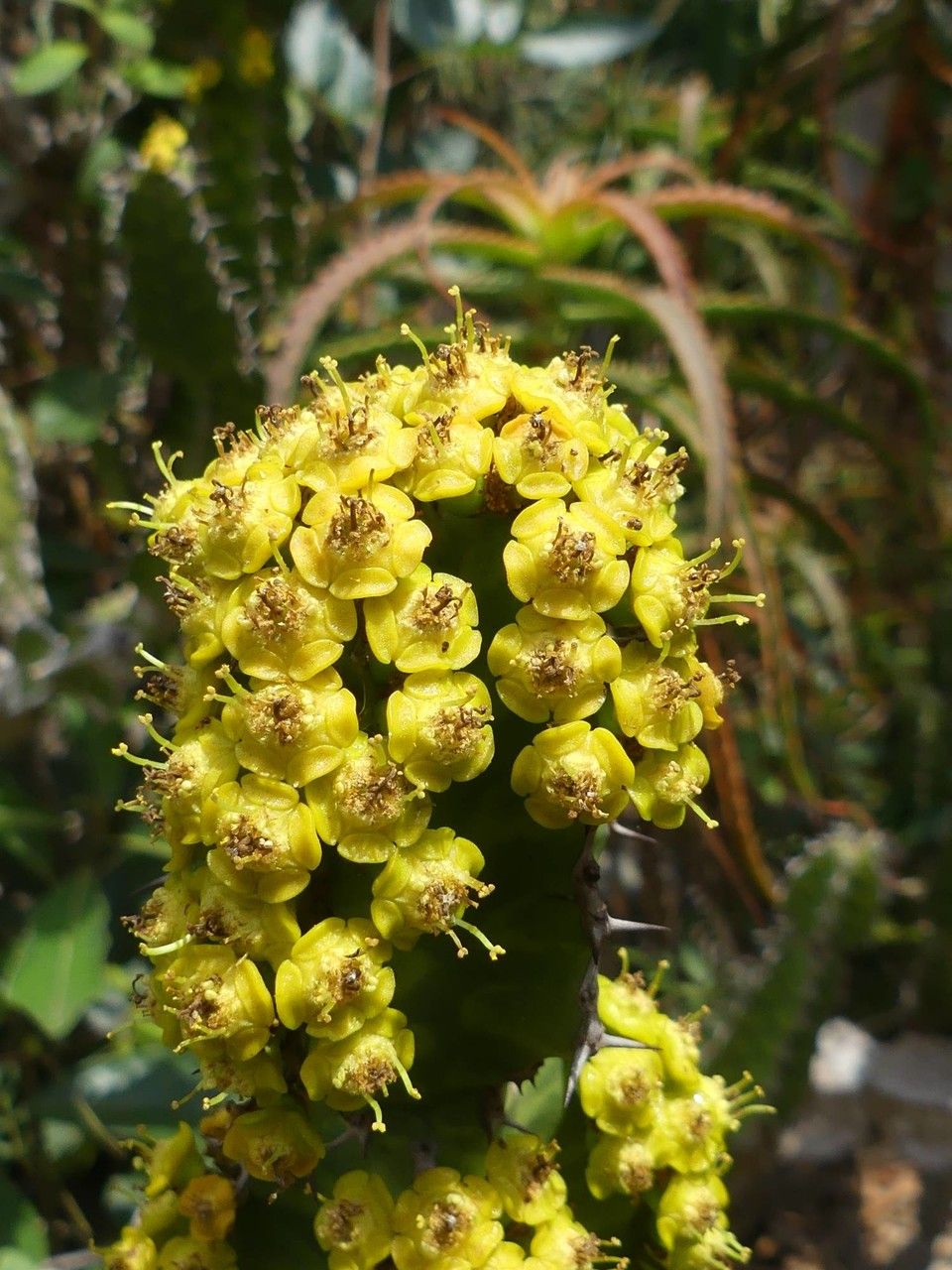
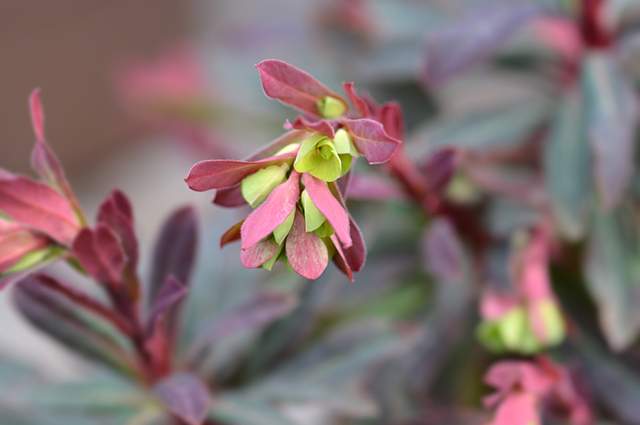
The candelabra tree gets its name from its distinctive branching structure, which resembles a candelabrum or chandelier. During late winter to early spring, it produces clusters of greenish-yellow flowers at the tips of each branch.
The sap of Euphorbia ingens contains toxic compounds that can cause skin irritation and eye damage if not handled properly. However, in traditional medicine, it has been used to treat various ailments, such as warts, skin infections, and respiratory problems.
When cultivating Euphorbia ingens, it requires well-draining soil and moderate watering during the summer months. In the winter, when the plant goes dormant, it should be kept dry. The plant prefers full sun exposure but can tolerate partial shade.
Overall, Euphorbia ingens is an intriguing succulent species known for its unique branching structure and toxic sap. It is an interesting addition to any garden or collection for those who take proper precautions when handling it.
Candelabra tree has moderate disease resistance but is more sensitive to humidity and overwatering. It is also more prone to disease when it lacks light and is overwatered. In terms of care, Candelabra tree is drought tolerant and can withstand long periods without watering. It needs little fertilizer and only occasional pruning. This makes it a suitable plant for people of all experience levels, especially those who prefer to spend less time on plant care and who may occasionally be away from home for extended periods. It is a good option for people who do not want to devote much time to caring for their plants yet still want an easy-to-maintain plant.
How to keep Euphorbia Ingens.
Light
Originating in arid regions, the Candelabra tree flourishes in full sun; its natural habitat is marked by intense sunlight and little shade. It can also tolerate partial sun, giving it some flexibility in where it grows.
Water
The candelabra tree comes from arid regions and is highly efficient at storing water, making it well-suited for dry conditions. This drought-tolerant species should be watered weekly, but take care not to over-water it. When grown outdoors in xeriscapes, the candelabra tree thrives in well-draining soil that replicates the drainage of its natural habitat.
Temperature
The candelabra tree is native to warm climates and therefore prefers a temperature range of around 68 to 100 °F (20 to 38 ℃). In chilly seasons, ensure indoor temperatures are maintained within this range for optimum growth.
Fertilizer
For the Candelabra tree, light applications of fertilizer once or twice a year during the growing season are enough. Do not fertilize in winter or in summer while the tree is dormant. Use less fertilizer for repotted plants and wait a couple of months after repotting before applying fertilizer. Fertilizing helps maintain healthy growth and promotes flowering.
Pruning
The candelabra tree has unique triangular stem segments and benefits from pruning from early to late winter. Use clean tools to remove diseased or overcrowded branches, which helps prevent infections. This practice improves air circulation and access to sunlight, promoting healthier growth and enhancing its aesthetic appeal.
Toxicity
The milky sap (latex) running throughout Euphorbia plants is toxic to people and animals both via skin contact and ingestion. The plants actually use the sap as a defense mechanism to prevent animals from feeding on it, and the sap has some antifungal and antibacterial properties.
Further reading →
The toxicity and danger assessments provided are for reference only. We do not assure their accuracy, so it's crucial not to depend on them. Seek professional advice when necessary for accurate guidance.
Botanical profile.
- Plant Type
- Tree
- Life Cycle
- Perennial
- Genus
- Euphorbia
- Family
- Euphorbiaceae
- Hardiness Zone
- 10-12
- Mature Height
- 1.22 m
- Mature Spread
- 15 cm
- Leaf Color
- Green
- Leaf Type
- Evergreen
- Flower Color
- Yellow
- Flower Size
- 0.51 cm to 1.02 cm
- Bloom Time
- Early spring, Mid spring, Late summer, Fall, Winter
- Planting Time
- Spring, Autumn
- Harvest Time
- Spring, Fall, Winter
- Native Area
- Benin, Saudi Arabia, Malawi, Angola, Mozambique, South Africa, Zambia, Eswatini, Namibia, Yemen, Botswana, Zimbabwe
Other names.