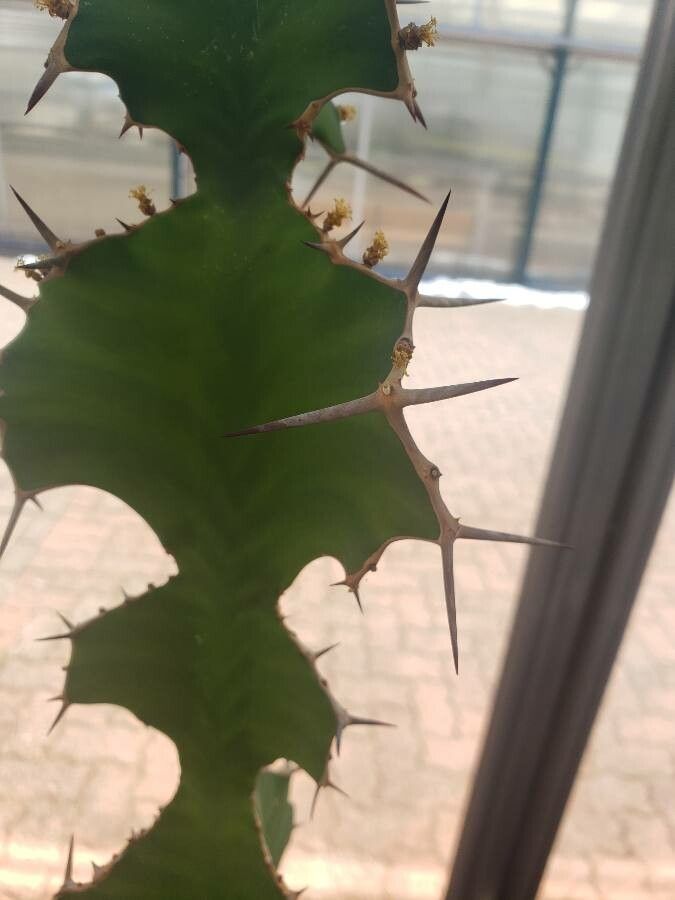
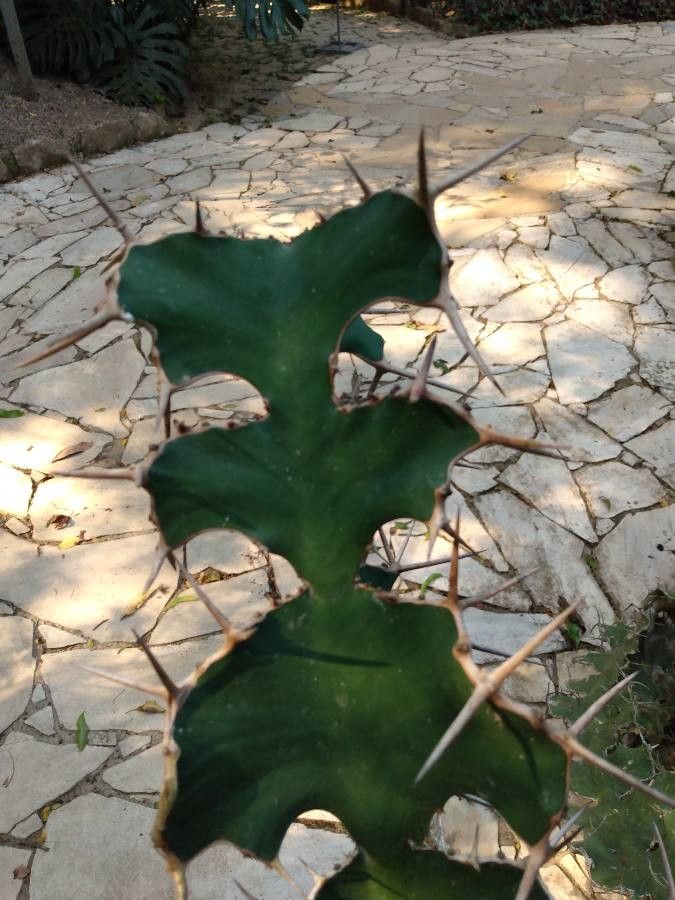
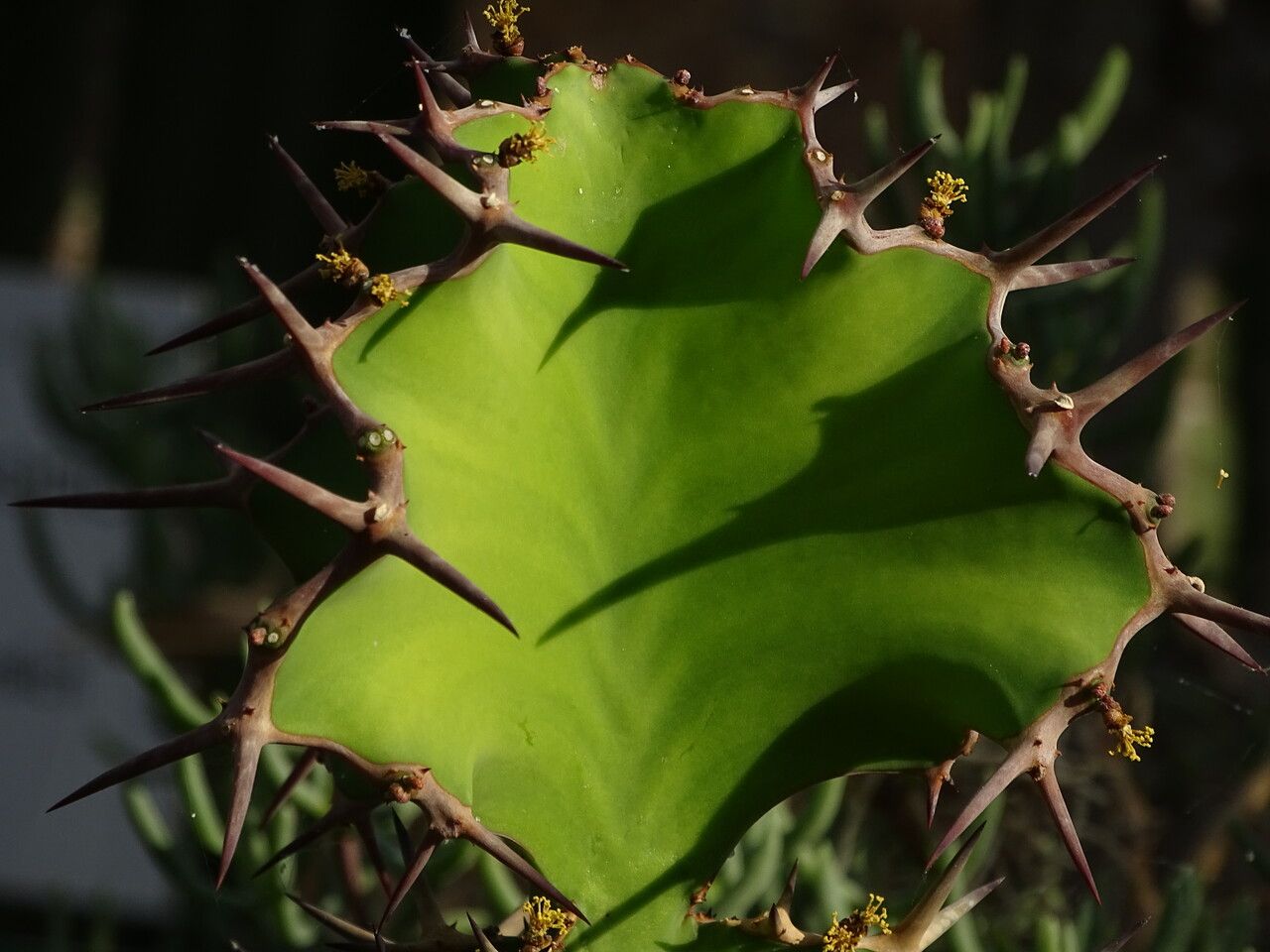
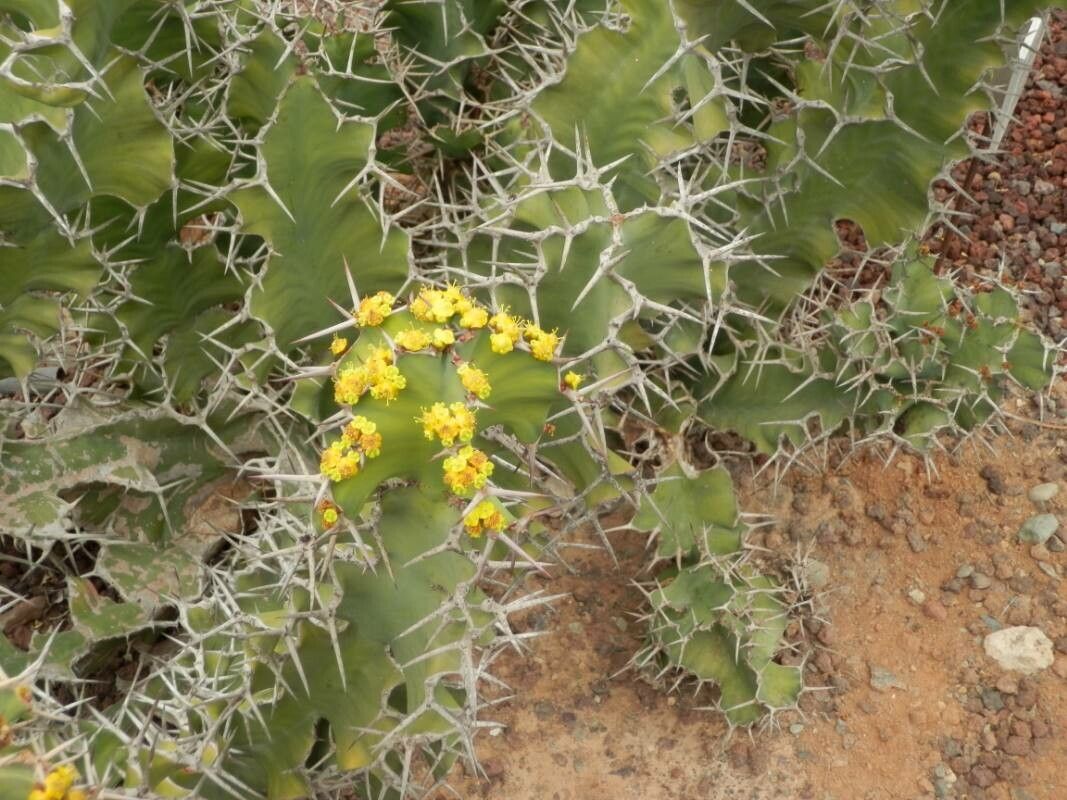
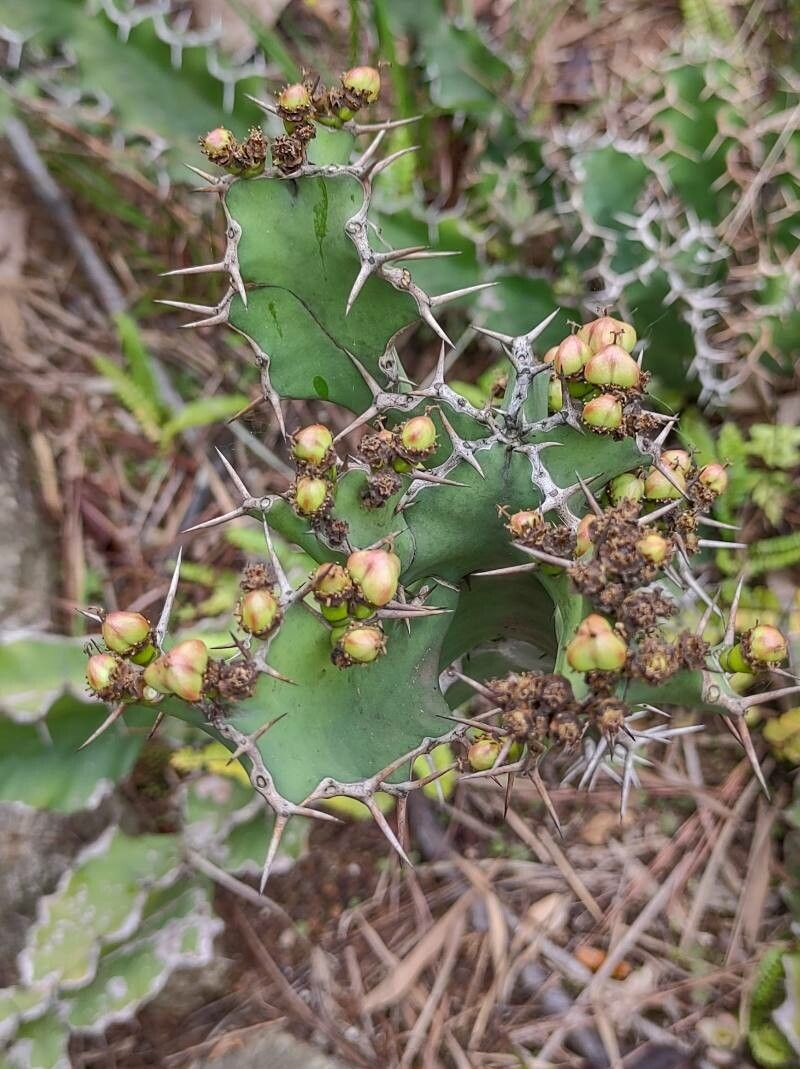
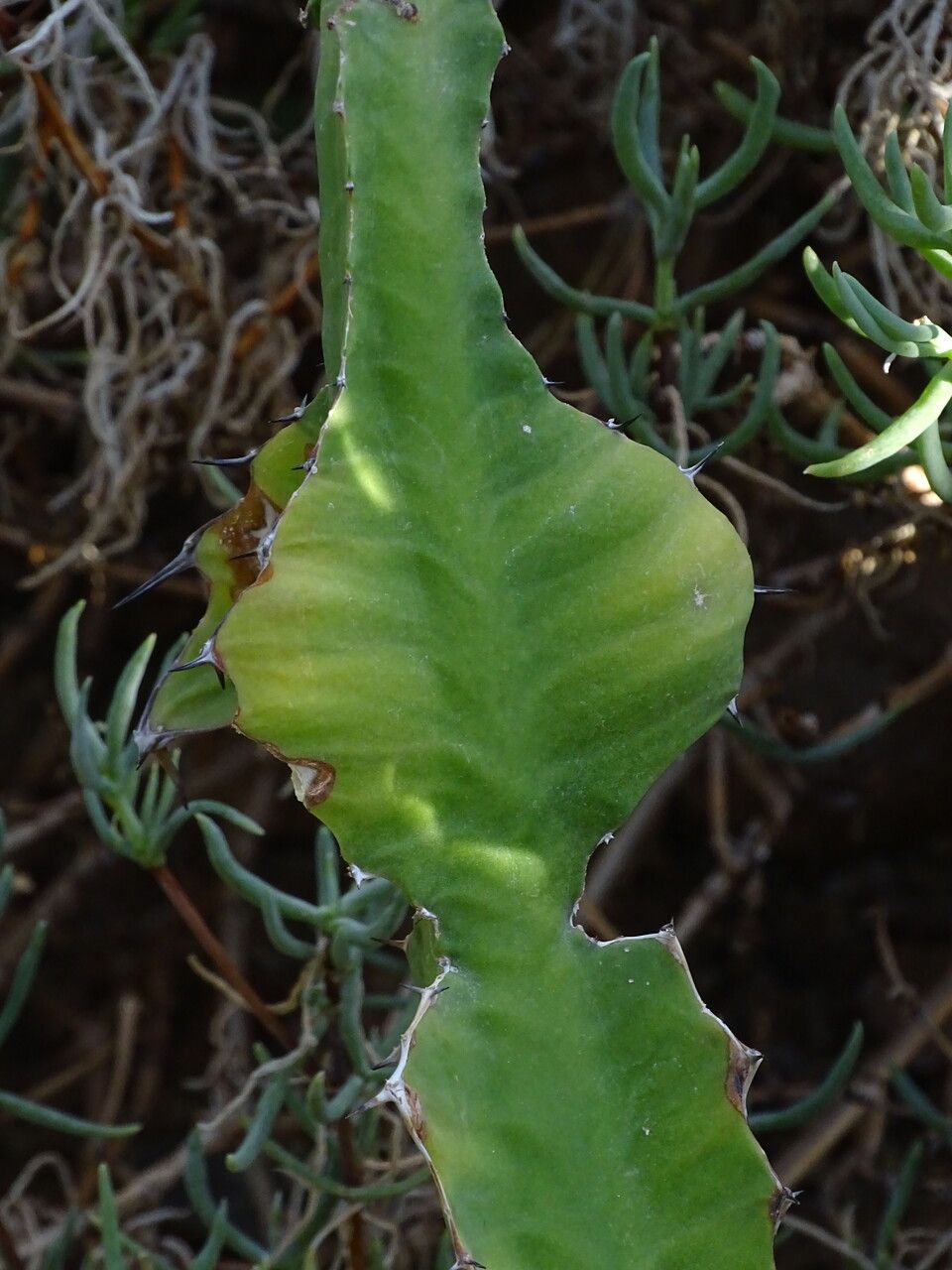
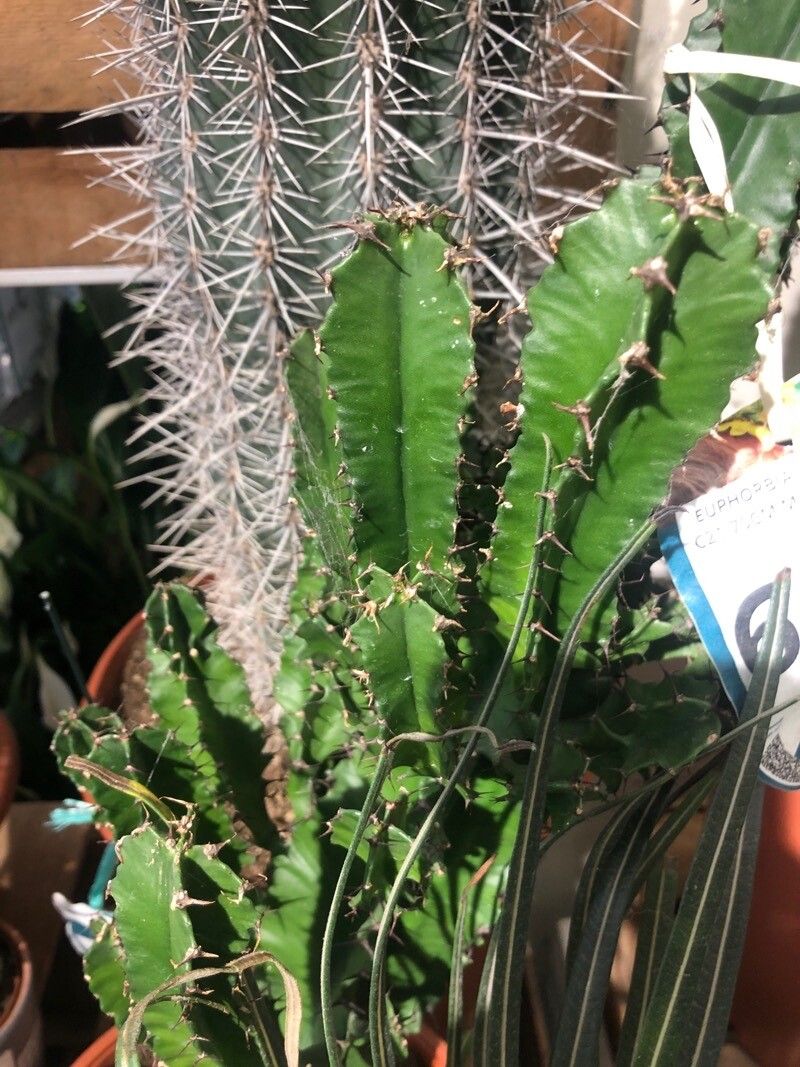
Euphorbia grandicornis is a succulent plant native to Madagascar and a member of the Euphorbia family. Commonly known as the "Cow's Horn Euphorbia" due to its distinctive horn-shaped stems, this plant can reach up to 6 feet in height. Its green, cylindrical stems are adorned with small spines, and it possesses small leaves that quickly fall off, leaving behind scars on the stem.
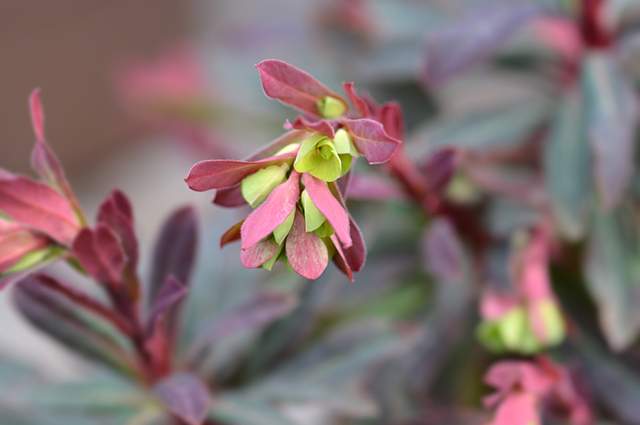
During the spring and summer months, the Cow's Horn Euphorbia blooms with small clusters of yellow-green flowers at the tips of its stems. The plant thrives in well-draining soil and requires moderate watering, though it is also capable of tolerating drought conditions.
Like all members of the Euphorbia family, Euphorbia grandicornis contains a milky sap that can be toxic if ingested or if it comes into contact with skin or eyes. Therefore, it should be handled with care.
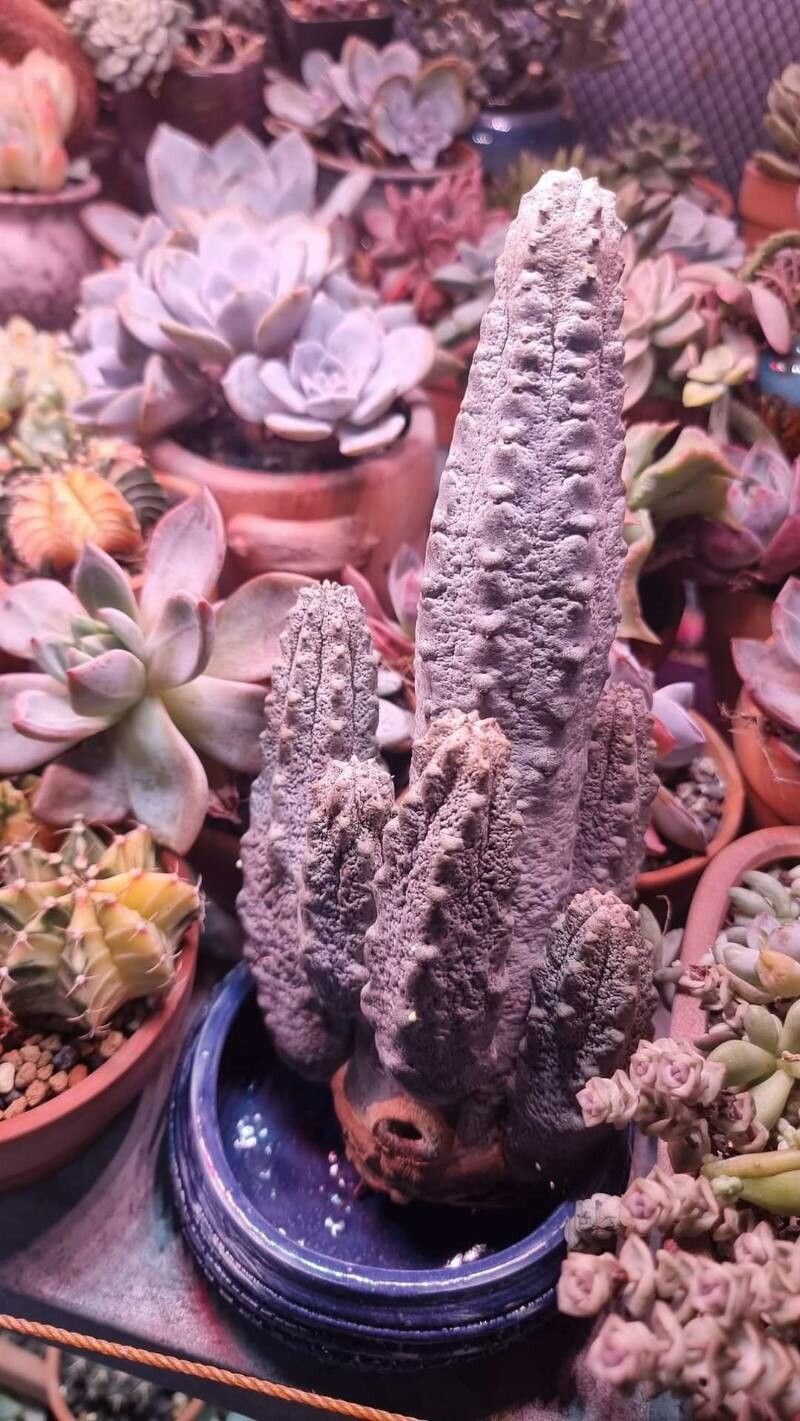
This species is popular as an ornamental plant due to its unique shape and low maintenance requirements. It can be grown both indoors and outdoors, provided it receives adequate sunlight and is protected from frost during the winter months in colder climates.
Cow horn has moderate resistance to disease but is more vulnerable to humidity and excess watering. It is also likelier to develop illnesses when it receives insufficient light and is overwatered. Regarding maintenance, Cow horn tolerates drought and can go long stretches without water. It requires little fertilizer and only needs pruning occasionally. Because of this, it suits people at any experience level, particularly those who prefer to spend less time on plant care or who may be away from home for extended periods. It’s a solid option for anyone who does not want to devote a lot of time to plant maintenance yet still wants an easy-to-care-for specimen.
How to keep Euphorbia Grandicornis.
Light
Native to arid regions, Cow horn does best in full sun, its native habitat marked by intense sunlight and very little shade. It can also tolerate partial sun, giving it some flexibility in how it grows.
Water
Cow horn plants thrive in arid environments, needing only minimal water—about once every three weeks. They prefer well-draining soil, which mimics their native habitat, making them an excellent choice for xeric landscapes and regions with low rainfall. Their drought tolerance enables them to efficiently store water.
Temperature
Cow horn is native to regions with a hot climate and thrives at temperatures of 68 to 100 °F (20 to 38 ℃). In cooler seasons, providing a warmer environment is recommended.
Fertilizer
Light applications of fertilizer once or twice a year during the growing season are enough for Cow horn. Do not fertilize in winter or summer when it is dormant. Cut back on fertilizer after repotting and wait a couple of months following repotting before applying any. Fertilizing helps maintain healthy growth and encourages blooms.
Botanical profile.
- Plant Type
- Succulent
- Life Cycle
- Perennial
- Genus
- Euphorbia
- Family
- Euphorbiaceae
- Hardiness Zone
- 10-12
- Mature Height
- 2.13 m
- Mature Spread
- 49 cm
- Leaf Color
- Dark Green
- Leaf Type
- Evergreen
- Flower Color
- Yellow
- Bloom Time
- Mid spring, Late spring, Early summer
- Planting Time
- Spring, Summer, Autumn
- Harvest Time
- Summer
Other names.