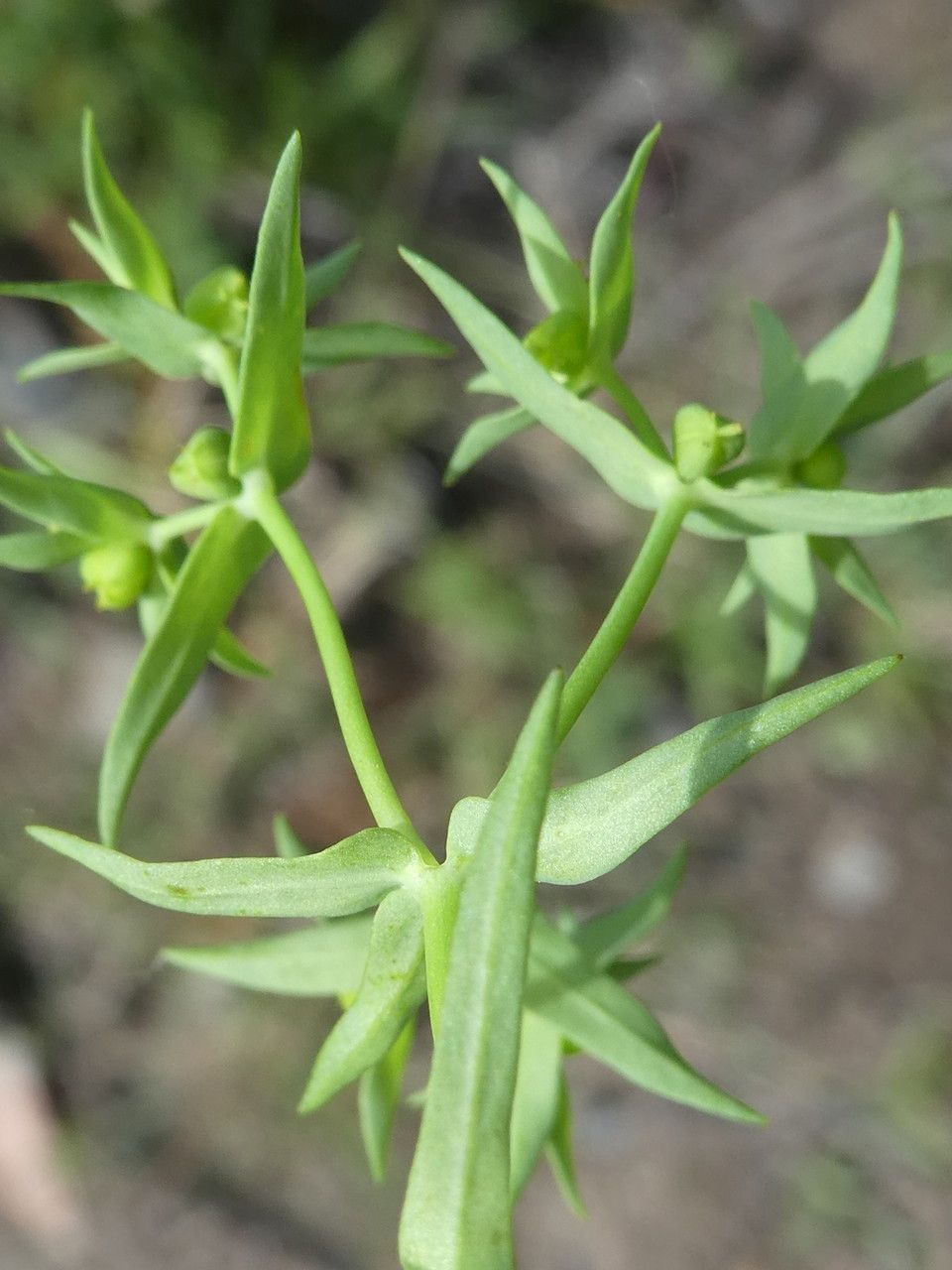
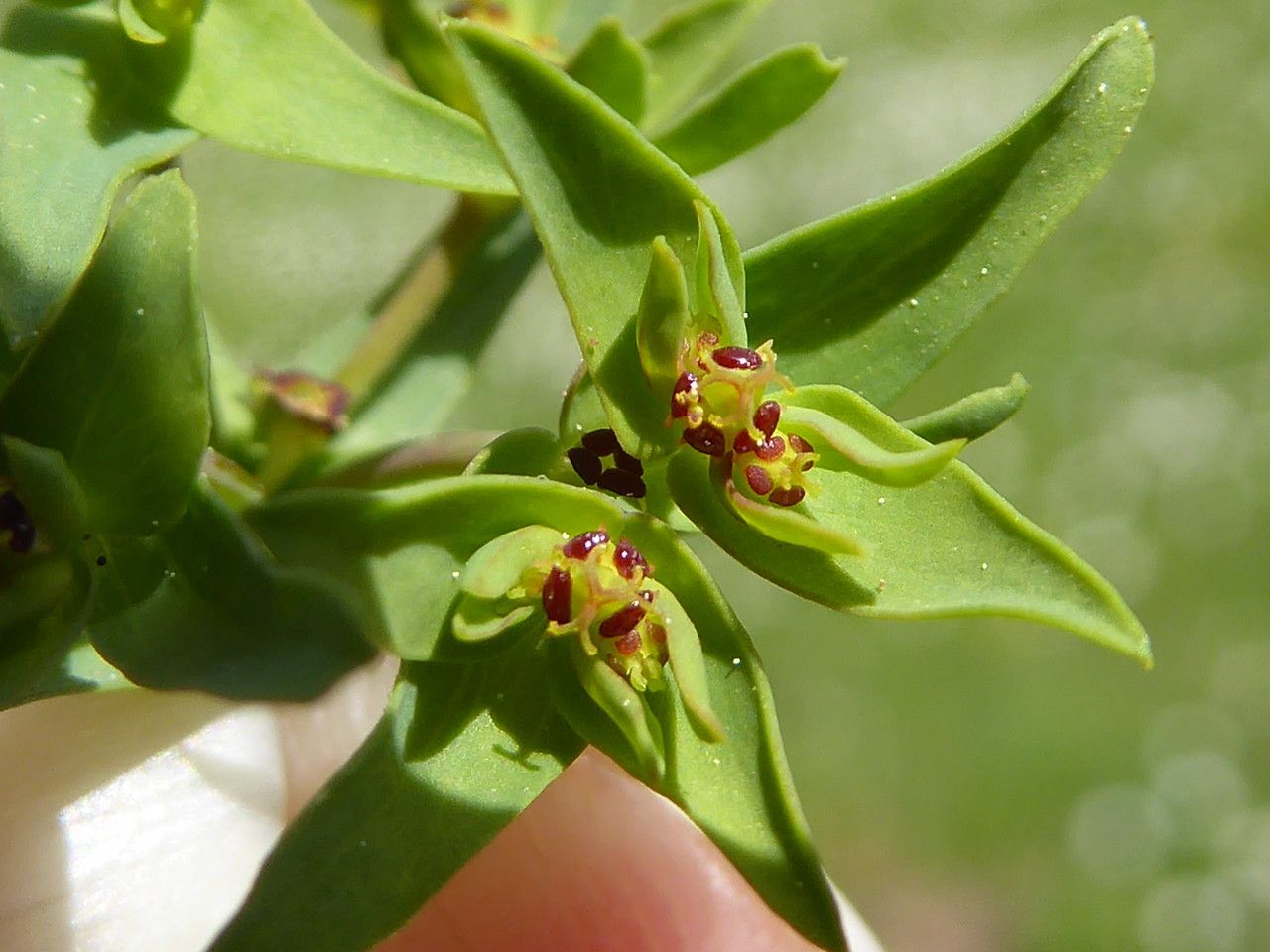
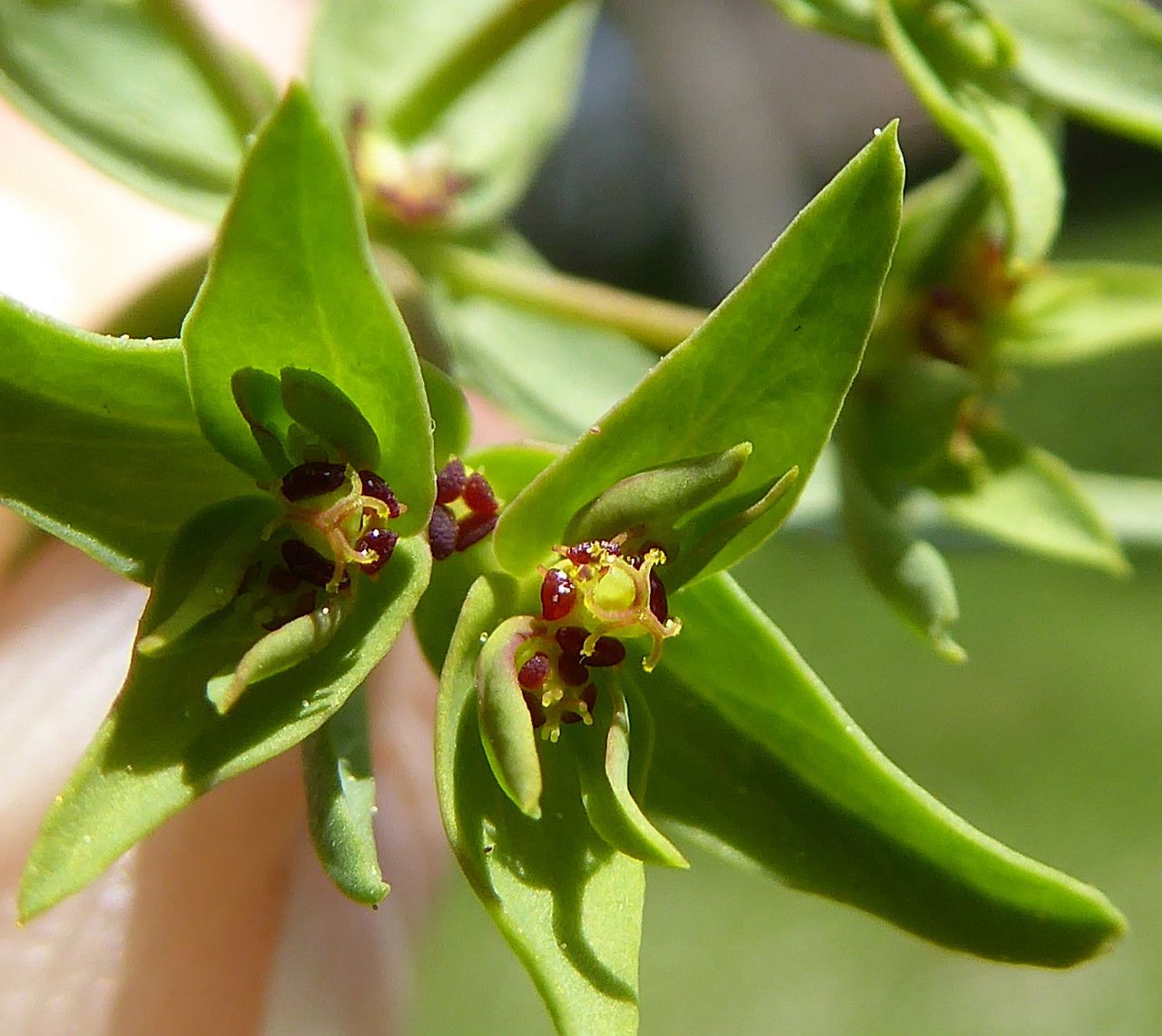
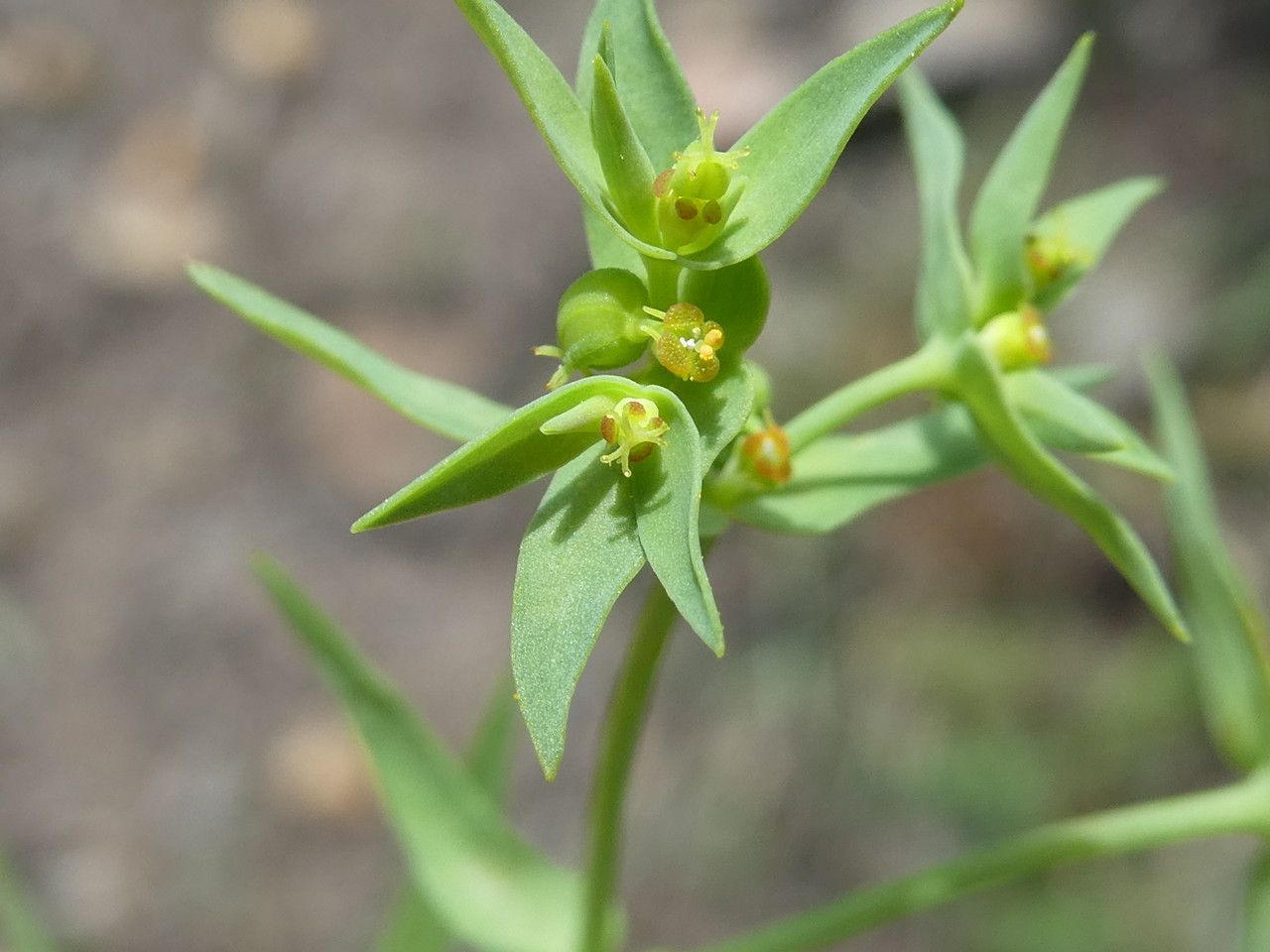
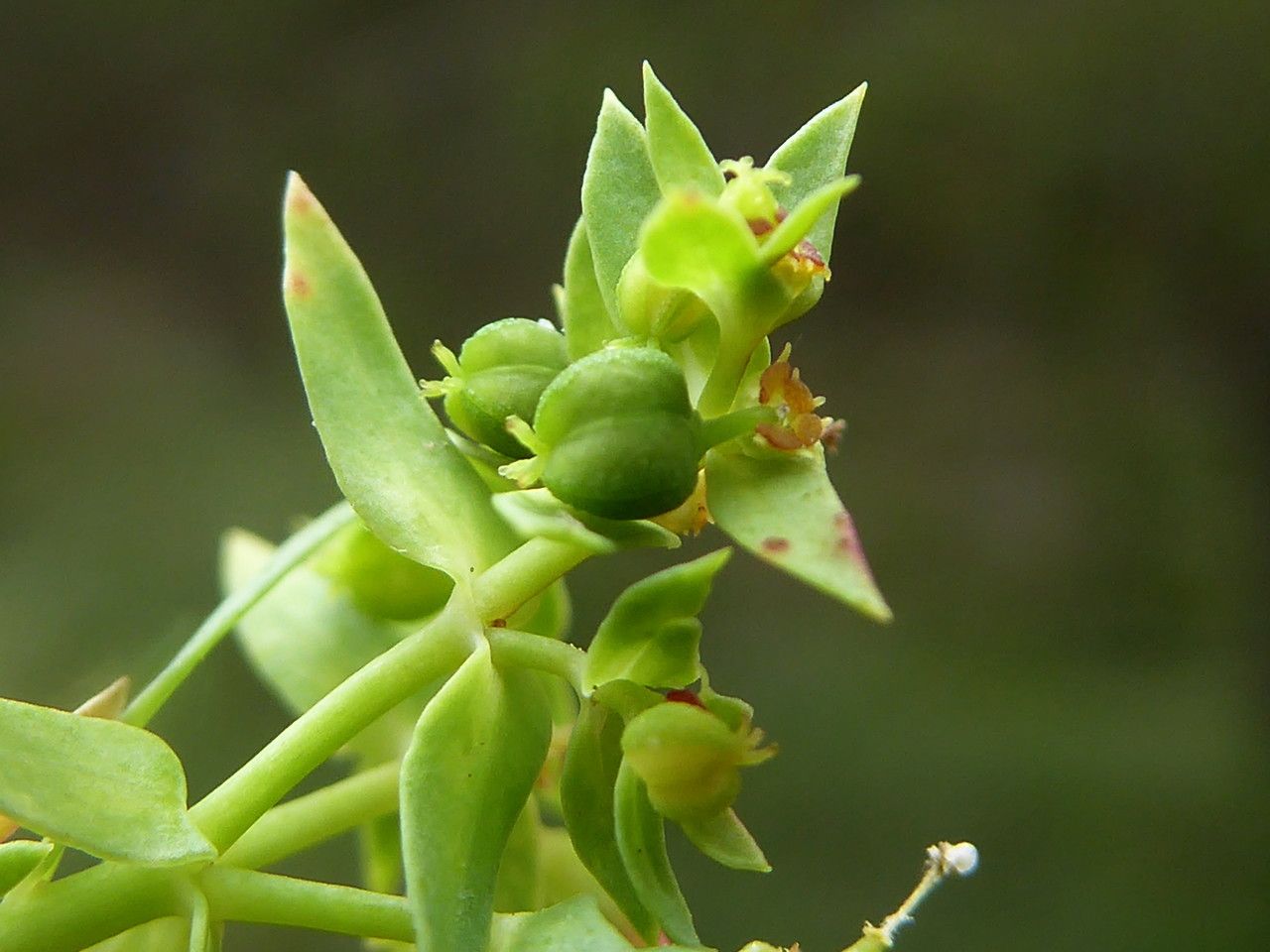
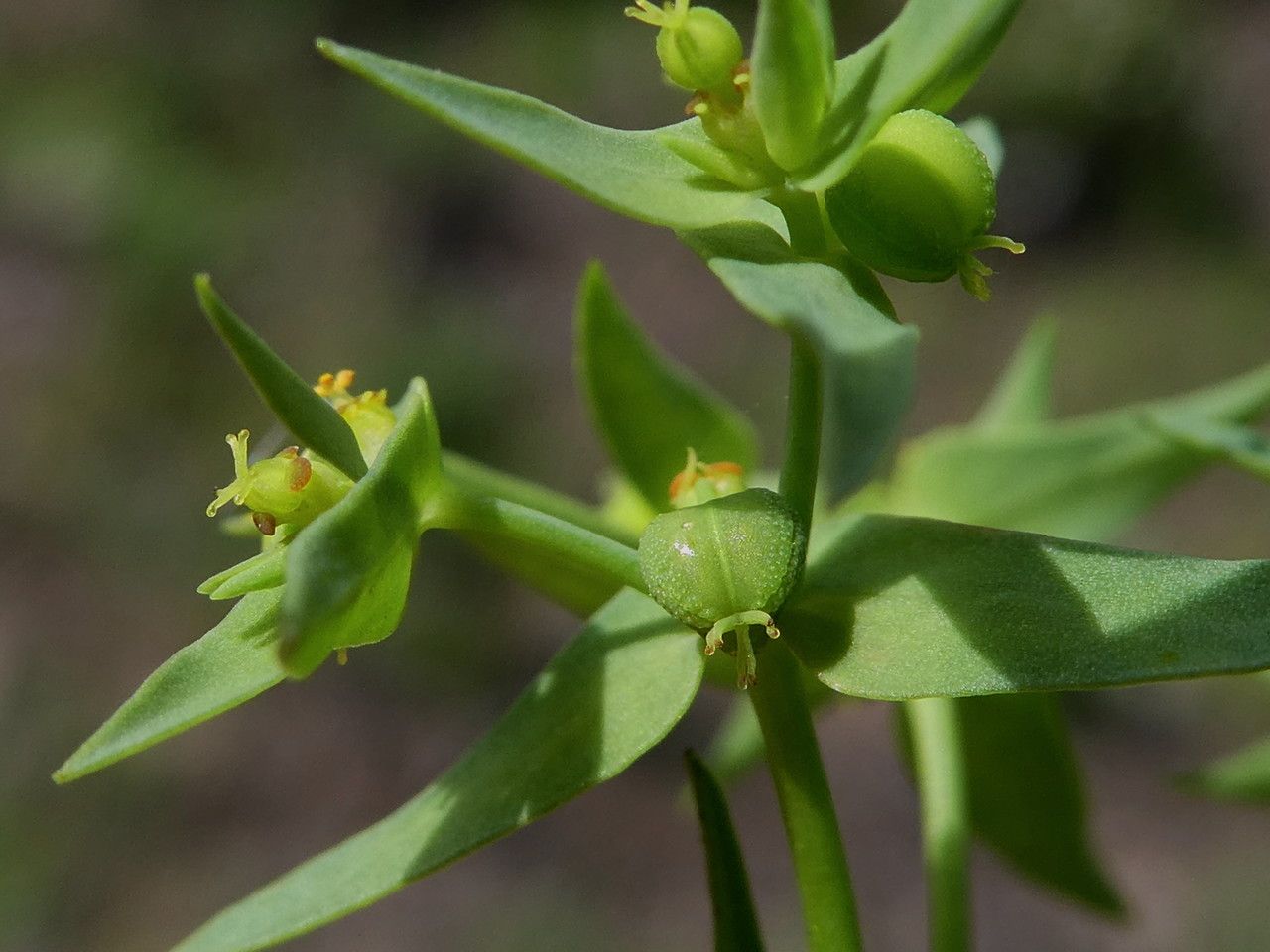
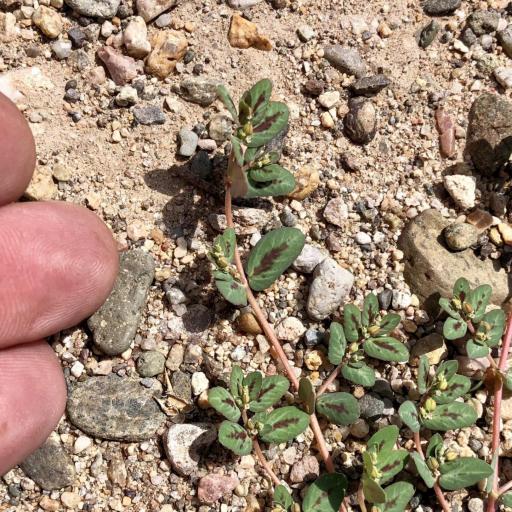
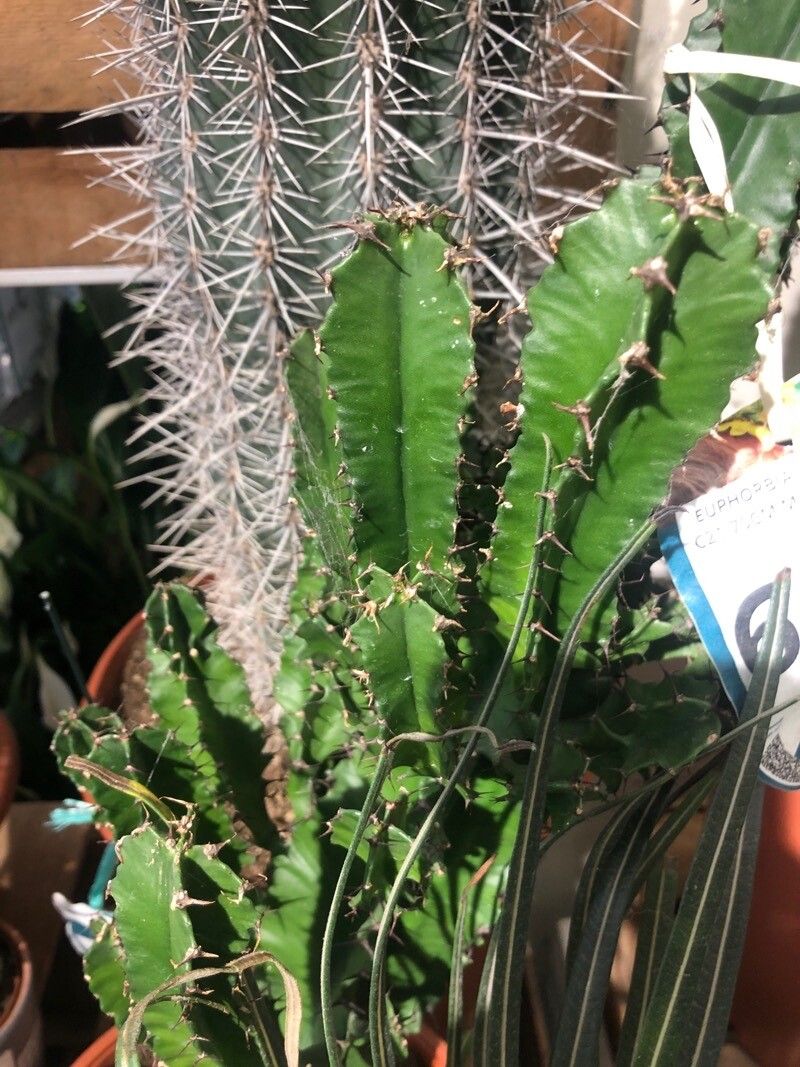
Euphorbia exigua is a compact succulent that belongs to the Euphorbia family. Native to the Canary Islands and North Africa, this plant has also spread to various regions worldwide as an introduced species. It features distinctive thin, green stems that can grow up to 30 cm in height, adorned with small, paired leaves arranged along the stem.
The flowers of Euphorbia exigua are small and yellow-green, emerging at the tips of the stems from late winter to early spring. The plant thrives in well-drained soil with full sun exposure but can also tolerate partial shade.
Indigenous people have utilized Euphorbia exigua for centuries due to its anti-inflammatory properties. However, caution is necessary when handling the plant, as its sap is toxic and can cause skin irritation or even blindness if it contacts the eyes.
In summary, Euphorbia exigua is a fascinating succulent known for its unique appearance and medicinal properties. Nonetheless, it should be handled with care due to its toxic sap.
How to keep Euphorbia Exigua.
Light
Dwarf spurge does best with extended periods of bright light during the day. It can tolerate moderate light levels, but its growth may be reduced. Both excessive and insufficient light can influence its vigor. Bear in mind that these light preferences come from its origin in regions with plentiful sunlight.
Water
Dwarf spurge thrives in open fields and adapts well to moderate moisture. Once established, it becomes drought-tolerant. For best results, water it weekly, but keep in mind that its water needs significantly decrease during dormancy. This helps the dwarf spurge conserve resources for the growing season.
Temperature
Dwarf spurge is naturally adapted to a mild climate and prefers a temperature range of 68 to 95 °F (20 to 35 ℃). In extreme temperatures, seasonal adjustments may be necessary to maintain consistent warmth throughout the year.
Fertilizer
Dwarf spurge benefits from regular, dilute fertilizer applications to encourage healthy foliage. You should feed Dwarf spurge about once a month during the summer. Nitrogen is essential for leaf development, and supplying nitrogen-rich sources helps Dwarf spurge thrive.
Pruning
Dwarf spurge is known for its slender stems and delicate foliage, but it needs careful pruning to ensure healthy growth. Important techniques include removing dead parts and trimming to shape the plant. It's best to prune from early to late spring to prevent the plant from becoming leggy and to improve its overall health and appearance.
Botanical profile.
- Plant Type
- Herb
- Life Cycle
- Annual
- Genus
- Euphorbia
- Family
- Euphorbiaceae
- Hardiness Zone
- 7-10
- Mature Height
- 5 cm to 20 cm
- Mature Spread
- 0.3 m to 3.96 m
- Leaf Color
- Light Green
- Leaf Type
- Semi-evergreen
- Flower Color
- Yellow
- Flower Size
- 0.10 cm to 0.20 cm
- Bloom Time
- Late spring, Summer, Early fall, Mid fall
- Planting Time
- Spring, Summer, Autumn
- Harvest Time
- Mid summer, Late summer, Fall, Early winter
Other names.
Reader questions.
How should I water my Dwarf spurge plants?
Watering Dwarf spurge is a flexible process. You can use various tools like a garden hose, watering can, or any common watering tool. It is not too particular about the water source and can survive on rainwater, tap water, or filtered water. It's best to avoid watering this plant from above as it can harm the leaves and flowers and may cause diseases. Using a drip irrigation system is often the most effective method, as it ensures even and direct watering to the soil. If you have a container-grown Dwarf spurge, the watering approach is similar, but you can use a cup, watering can, or tap to directly water the soil.
What are the sunlight requirements for Dwarf spurge?
Dwarf spurge requires full sun, which is above 6 hours of sunlight, for optimal growth. However, it can also tolerate partial sun, meaning about 3-6 hours of sunlight. It's important to observe how sunlight moves through your garden to choose spots that offer the right balance of light and shade, ensuring the plants' well-being.
What is the ideal temperature range for Dwarf Spurge?
Dwarf spurge thrives in a mild environment, with an ideal temperature range being between 68 to 95 °F (20 to 35 °C). It is naturally acclimated to these conditions, requiring seasonal adjustments only in extreme temperatures to maintain consistent warmth throughout the year.
What do I do if I give my Dwarf spurge too much or too little water?
To help your Dwarf spurge thrive, it's important to address both underwatering and overwatering. If you notice your plant is lacking moisture, simply water it more regularly. However, overwatering can be a more serious problem, leading to diseases and eventually the death of the plant. To prevent this, choose a location with ample sunlight and good drainage. This will help dry the soil and prevent water from pooling, which can lead to waterlogged soil. If you have an overwatered Dwarf spurge in a pot, consider transferring it to a new pot with better soil drainage and sufficient drainage holes. Use loose soil when repotting and select a pot that drains efficiently.
How does sunlight affect Dwarf spurge?
Dwarf spurge thrives under prolonged exposure to ample light throughout the day due to its origin in regions with abundant solar radiation. While it can endure moderate light conditions, its growth might be hindered in excessive or insufficient light, affecting its robustness.
How does Dwarf Spurge handle cold temperatures?
Dwarf spurge possesses strong cold resistance, usually negating the need for special frost protection measures during winter. However, should winter temperatures be expected to drop below -15°C, cold protection should be considered by covering the plant with soil or straw for insulation. Additionally, watering the plant abundantly before the first freeze in autumn helps keep the soil moist, entering a frozen state which aids in preventing drought and water scarcity during winter and early spring.
How often do I need to water my Dwarf spurge plant?
Dwarf spurge requires regular watering throughout the growing season. In the spring, it is recommended to water this plant once per week. As the season progresses and the weather gets warmer, you may need to increase watering to two to three times per week. However, be cautious not to exceed this rate as it can harm the plant. It is important to keep the soil moist but not overly wet regardless of the watering frequency. When it comes to watering Dwarf spurge in a pot, you will generally need to water more frequently compared to an in-ground plant. This is because the soil in a pot can heat up and dry out faster. In most cases, watering a container-grown Dwarf spurge a few times per week is recommended, as opposed to just once per week for an in-ground plant.
Can artificial lighting be used for Dwarf spurge?
Yes, artificial lighting is beneficial for indoor Dwarf spurge plants, especially when natural sunlight is insufficient. LED lights are recommended because they can be customized to provide specific wavelengths needed by the plants. Full sun plants require 30-50W/sq ft, partial sun plants need 20-30W/sq ft, and full shade plants need 10-20W/sq ft of artificial light. The light source should be positioned 12-36 inches above the plant, mimicking natural sunlight for about 8-12 hours per day.
What should I do if the Dwarf Spurge experiences temperatures below -15°C?
If the temperature falls below -15°C, Dwarf spurge may not show noticeable changes during winter but could experience decreased sprouting or fail to sprout during spring. To address this, it's recommended to remove any parts of the plant that have failed to sprout come spring.
How much water does my Dwarf spurge plant need?
Determining the appropriate amount of water for your Dwarf spurge can be done in a few different ways. Some gardeners prefer to gauge the moisture level of the soil by feeling it. For this method, you would water the plant until the first six inches of soil feel moist. Alternatively, you can follow a set measurement for watering. Typically, Dwarf spurge requires about two gallons of water per week, taking into consideration factors like heat and soil dryness. However, sticking strictly to these guidelines may result in overwatering if your plant requires less water. When growing Dwarf spurge in a container, a different approach is needed. In this case, you should water enough to make sure all layers of dry soil are moist. To check if the soil is adequately watered, simply insert your finger to feel for moisture. Another indication is when a small amount of excess water drains through the pot's drainage holes.
What are the signs of light deficiency in Dwarf spurge?
When cultivated indoors with inadequate light, Dwarf spurge may exhibit symptoms such as smaller new leaves, leggy or sparse growth, faster leaf drop, slower or no new growth, and lighter-colored new leaves. These indicate light deficiency. Conditions like chlorosis, sunscald, leaf curling, wilting, and leaf scorching may arise from excessive sunlight.
How should Dwarf Spurge be cared for during high temperatures?
In the summer, it's essential to keep the Dwarf spurge's environment below 35°C to avoid stress. Temperatures exceeding 41°C can lead to the leaves becoming lighter, prone to curling, susceptible to sunburn, and in severe cases, wilting or drying out the entire plant. To mitigate these effects, trim away sunburned and dried-up parts of the plant, relocate it to a shaded area or use a shade cloth to protect it from midday and afternoon sun, and ensure the soil remains moist by watering in the morning and evening.