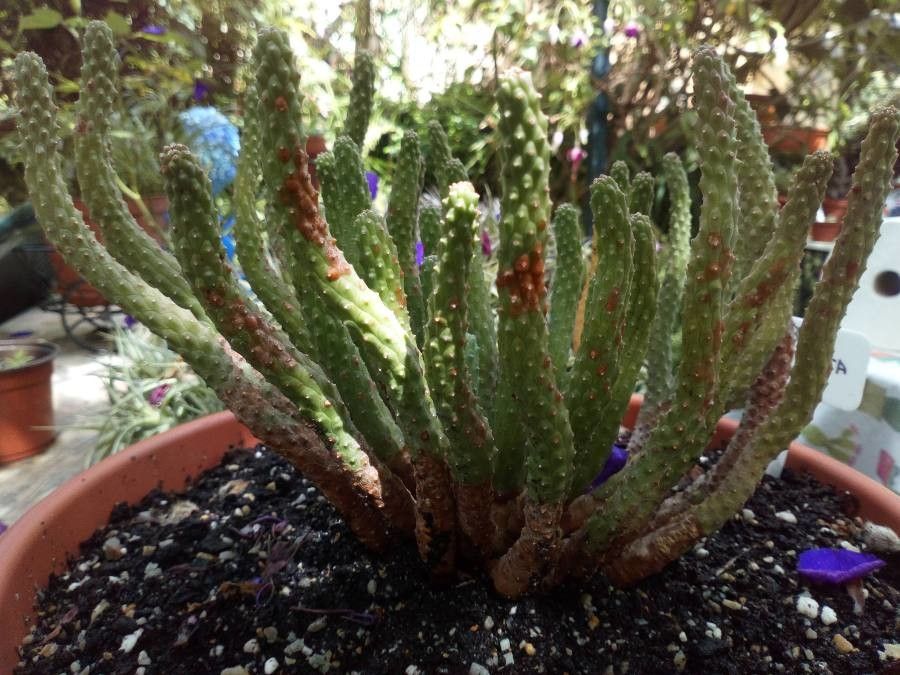
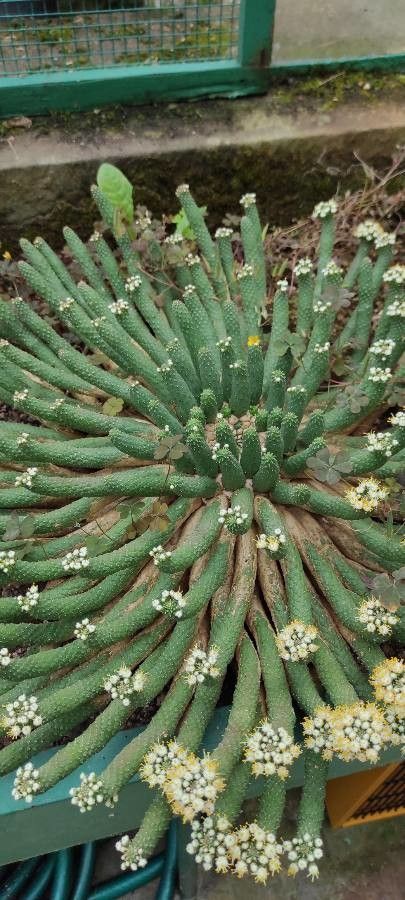
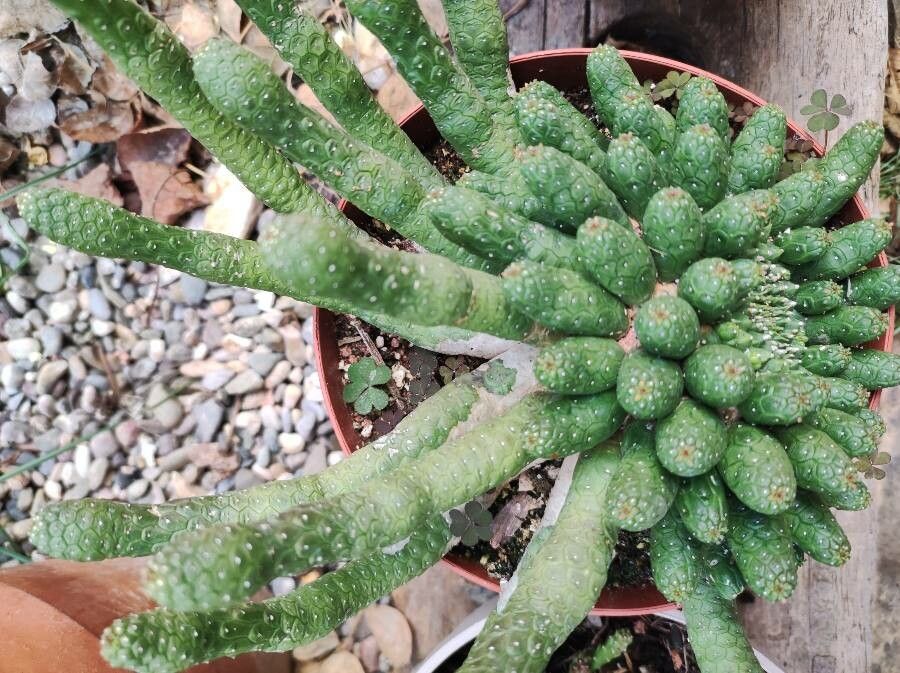
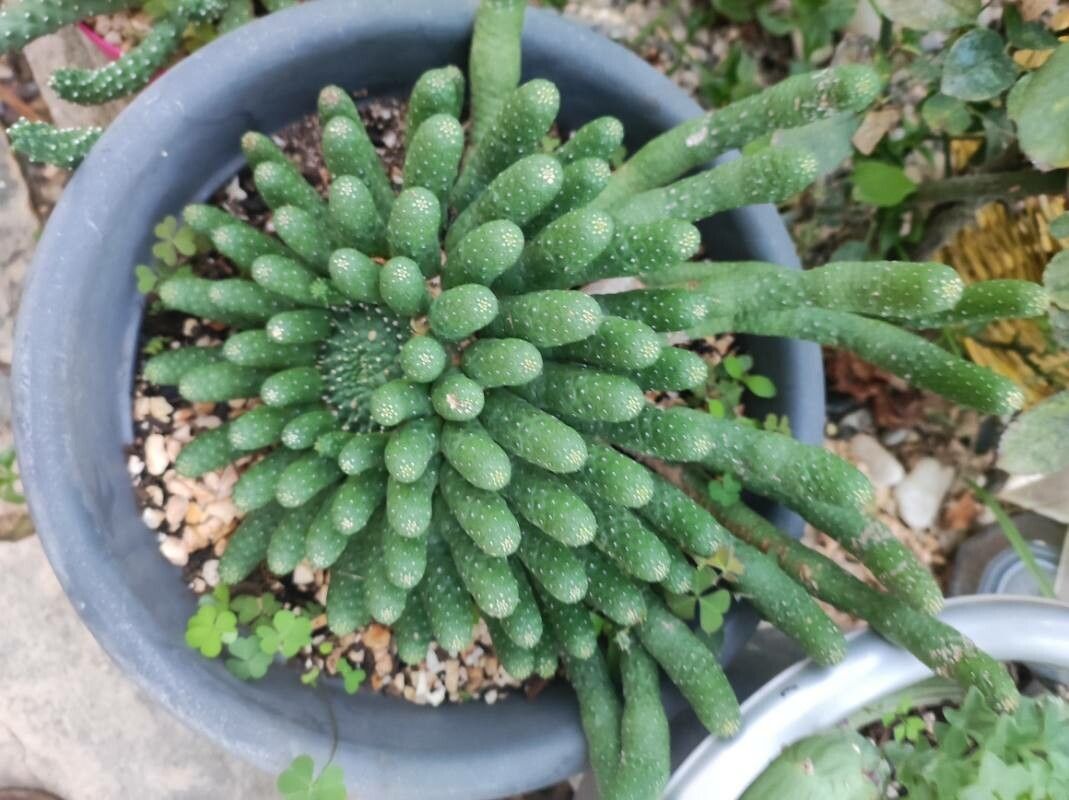
Sweet Vingerpol has moderate disease resistance but is more sensitive to humidity. It becomes vulnerable to disease when humidity is high and is likely to suffer root rot while dormant. Regarding care, Sweet Vingerpol tolerates drought but requires increased watering during the growing season. Water should be reduced sharply or stopped entirely during dormancy. Sweet Vingerpol is appropriate for growers with some experience, though it can be challenging to maintain, especially during the dormant period. It is particularly well suited to people who can dedicate time to its care in the winter months.
How to keep Euphorbia Esculenta.
Light
Originating from arid areas, Sweet Vingerpol does best in full sun, as its native habitat features intense sunlight and very little shade. It will also tolerate partial sun, providing some flexibility in its growth.
Water
Euphorbia esculenta needs regular watering, about once a week, particularly during the growing season. On hot days, the plant requires more frequent watering. Water the plant when the top 2 inches (5 cm) of the soil are dry. It's best to add small amounts of water from below to avoid excess moisture.
Temperature
Sweet Vingerpol tolerates some heat, but it mainly thrives and grows in the cooler seasons and becomes dormant during summer. In hot summer conditions, provide shade to prevent scorching from intense sunlight. Watering should be reduced or stopped during the hottest part of the year to avoid root rot. Sweet Vingerpol shows vigorous growth in winter and spring, and as long as temperatures do not fall too low, it will keep growing steadily.
Fertilizer
For Sweet Vingerpol, small amounts of fertilizer applied one to two times per year during the growing season are adequate. Do not fertilize in winter or summer when the plant is dormant. Reduce fertilizer for plants that have been repotted and wait a couple of months after repotting before applying fertilizer. Fertilizing helps sustain healthy growth and promotes blooming.
Pruning
Euphorbia esculenta benefits from pruning in early spring to remove dead or damaged stems and to shape the plant for healthy growth. This seasonal maintenance helps prevent disease and strengthens the plant's structure. It's important to use clean, sharp tools for precise cuts, which enhances both the appearance and vigor of the plant. Pruning is essential for the care of Euphorbia esculenta.
Botanical profile.
- Plant Type
- Succulent
- Life Cycle
- Perennial
- Genus
- Euphorbia
- Family
- Euphorbiaceae
- Hardiness Zone
- 9-11
- Mature Height
- 30 cm to 61 cm
- Mature Spread
- 30 cm to 49 cm
- Leaf Color
- Light Green
- Leaf Type
- Deciduous
- Flower Size
- 0.51 cm to 1.02 cm
- Bloom Time
- Late spring, Early summer, Mid summer
- Planting Time
- Spring, Autumn
- Harvest Time
- Mid summer, Late summer, Early fall
- Native Area
- South Africa
Other names.
Reader questions.
What are the sun requirements for Euphorbia esculenta?
Euphorbia esculenta thrives in areas that receive full sun, which means the plant should be exposed to more than 6 hours of sunlight a day. However, it can also tolerate partial sun, requiring about 3 to 6 hours of sunlight daily. It's important to observe how sunlight moves through your garden throughout the day to identify spots that offer an ideal mix of light and shade. This consideration will help ensure your Euphorbia esculenta stays healthy and happy.
What is the name and botanical name of Euphorbia esculenta?
Euphorbia esculenta, also known by its botanical name, Euphorbia esculenta, is a plant without additional details on its essentials or symptoms provided.