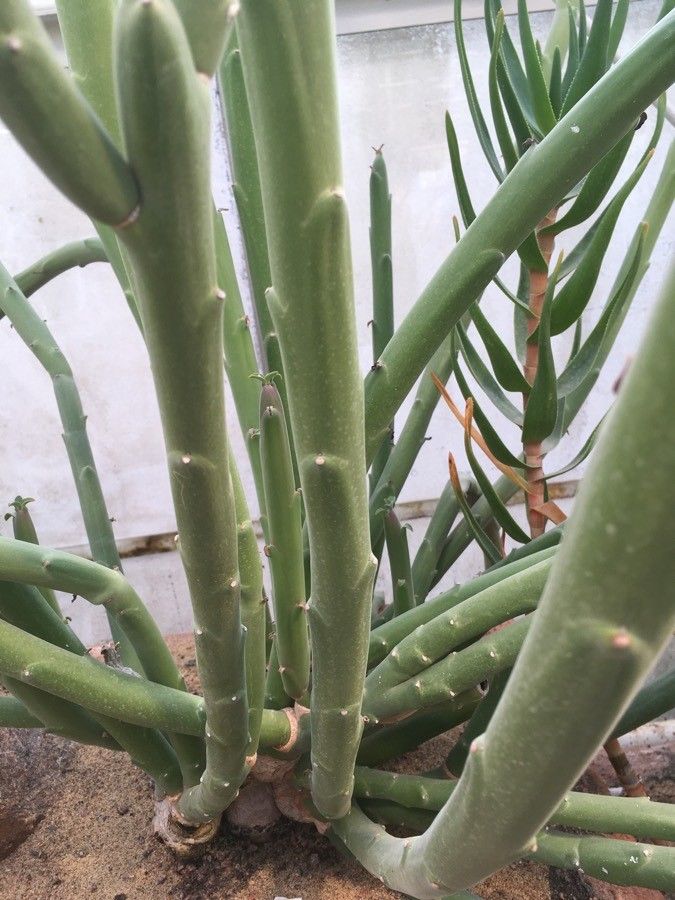
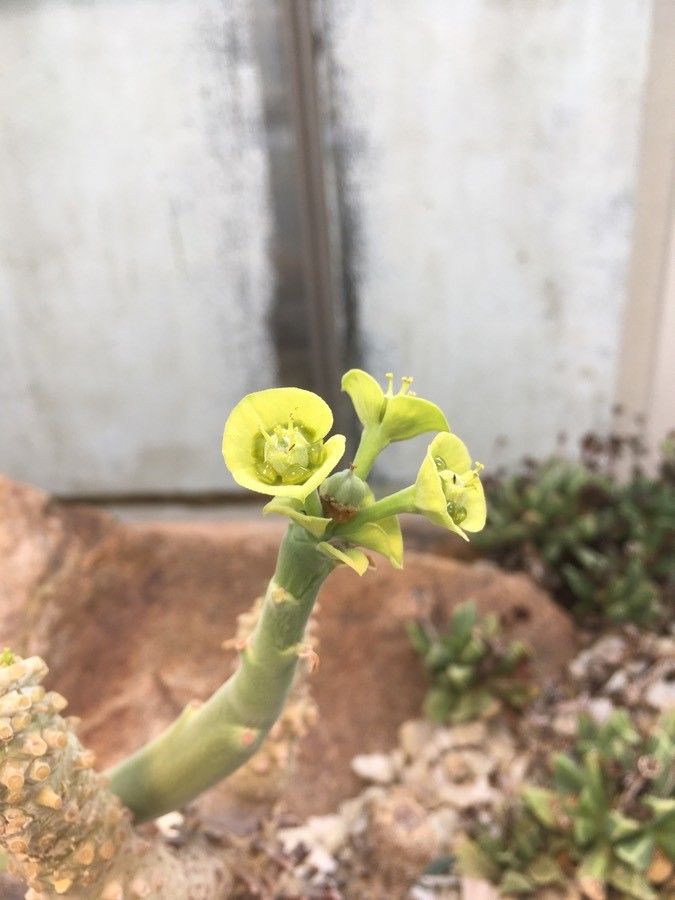
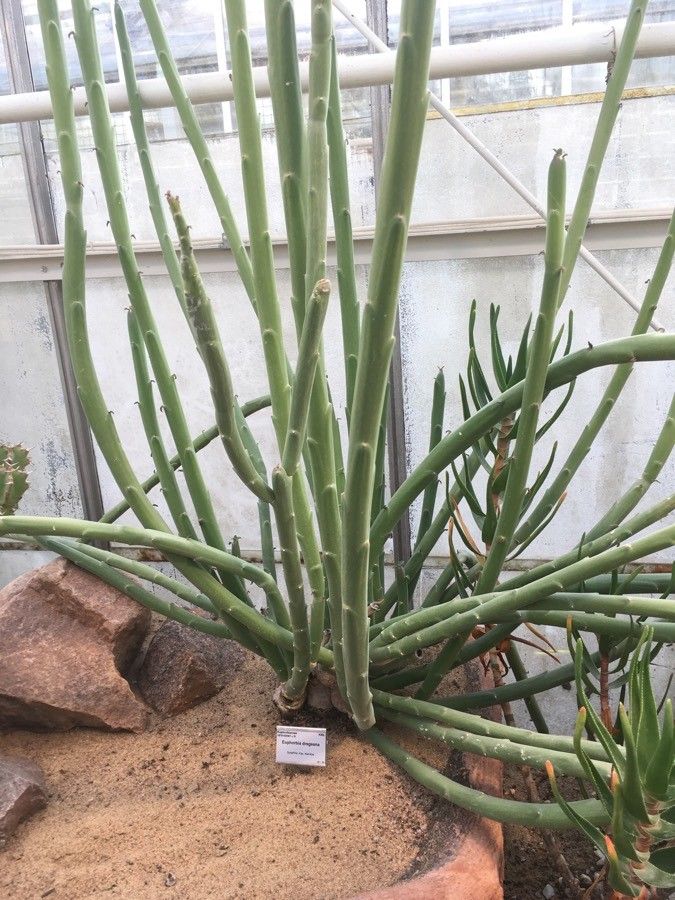
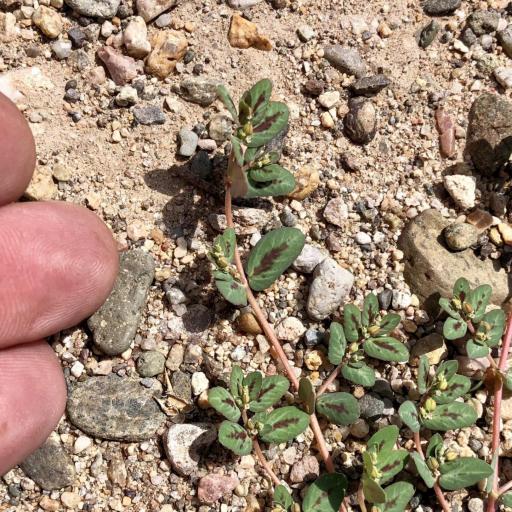
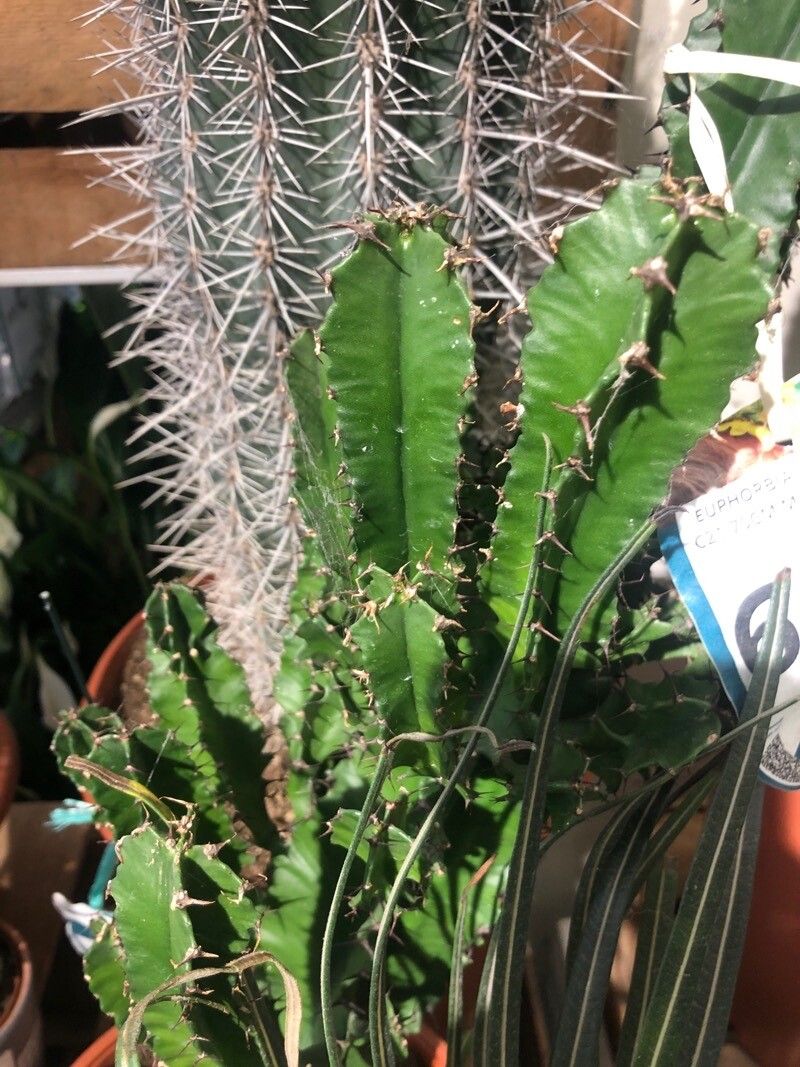
Elephantbush exhibits moderate resistance to disease but is more vulnerable to issues caused by humidity and excess watering. It becomes especially prone to disease when it is both deprived of light and overwatered. Regarding care, Elephantbush tolerates drought and can go for extended periods without being watered. It requires little fertilizer and only needs pruning occasionally. Because of these traits, it is a suitable plant for growers of any skill level, particularly for those who prefer to spend less time on plant care and who might be away from home for extended periods. It is an attractive option for people who do not want to invest a lot of time in tending plants but still desire a specimen that is simple to maintain.
How to keep Euphorbia Dregeana.
Light
Elephantbush is a plant that is indigenous to dry areas and flourishes under direct sunlight, as it comes from habitats primarily exposed to bright light and very little shade. It still manages to grow in places with somewhat less sun, showing some flexibility in its cultivation.
Water
Euphorbia dregeana needs to be watered regularly, about once a week, with more frequent watering required during hot summer days. You should water the plant when the top 2 inches (5 centimeters) of the soil feels dry. Indoor plants also require moisture during their resting season. To avoid excessive moisture, it's best to use bottom watering for these plants.
Temperature
Elephantbush prospers in hot climates and needs increased temperatures during its development phase to promote its growth and metabolism. It prefers abundant sunlight, sufficient moisture, and proper ventilation. Nevertheless, it is vulnerable to harm from extremely cold temperatures and too much watering. A balance must be maintained to prevent temperatures that are too high and conditions that are extremely dry.
Fertilizer
For Elephantbush, it is sufficient to lightly fertilize it 1-2 times annually during the growth period. Refrain from fertilizing in winter and summer as the plant is dormant during these seasons. After repotting, lower the amount of fertilizer used and wait for a few months before fertilizing again. The process of fertilizing promotes a healthy development and stimulates flowering.
Pruning
Euphorbia dregeana is a unique succulent that benefits from pruning in early spring to promote healthy growth. To achieve this, you should remove any damaged stems and lightly shape the plant. Pruning encourages bushiness and helps prevent legginess, resulting in a more robust and visually appealing plant. When handling the plant, be sure to wear gloves to protect yourself from the milky sap.
Botanical profile.
- Plant Type
- Succulent, Shrub
- Life Cycle
- Perennial
- Genus
- Euphorbia
- Family
- Euphorbiaceae
- Hardiness Zone
- 9-11
- Mature Height
- 2.13 m to 3.96 m
- Mature Spread
- 0.91 m to 2.13 m
- Leaf Color
- Green Yellow, Yellow Green
- Leaf Type
- Evergreen
- Flower Size
- 0.51 cm to 1.02 cm
- Bloom Time
- Early fall, Mid fall
- Planting Time
- Spring, Summer, Autumn
- Harvest Time
- Late fall, Early winter
- Native Area
- South Africa, Namibia
Reader questions.
What are the sunlight requirements for Euphorbia dregeana?
Euphorbia dregeana, also known by its botanical name Euphorbia dregeana, requires specific sunlight conditions to thrive. It needs full sun, which means the plant should receive above 6 hours of sunlight daily. Alternatively, it can grow in partial sun, with about 3-6 hours of sunlight. It's important to observe the movement of sunlight through your garden to ensure that you choose locations that provide an ideal balance of light and shade for your plants. This careful placement is crucial for the health and happiness of your Euphorbia dregeana.
What is Euphorbia dregeana?
Euphorbia dregeana is a plant species known by its common name, which is the same as its botanical name, Euphorbia dregeana. There are no specific essentials or symptoms provided related to this plant in the given information.