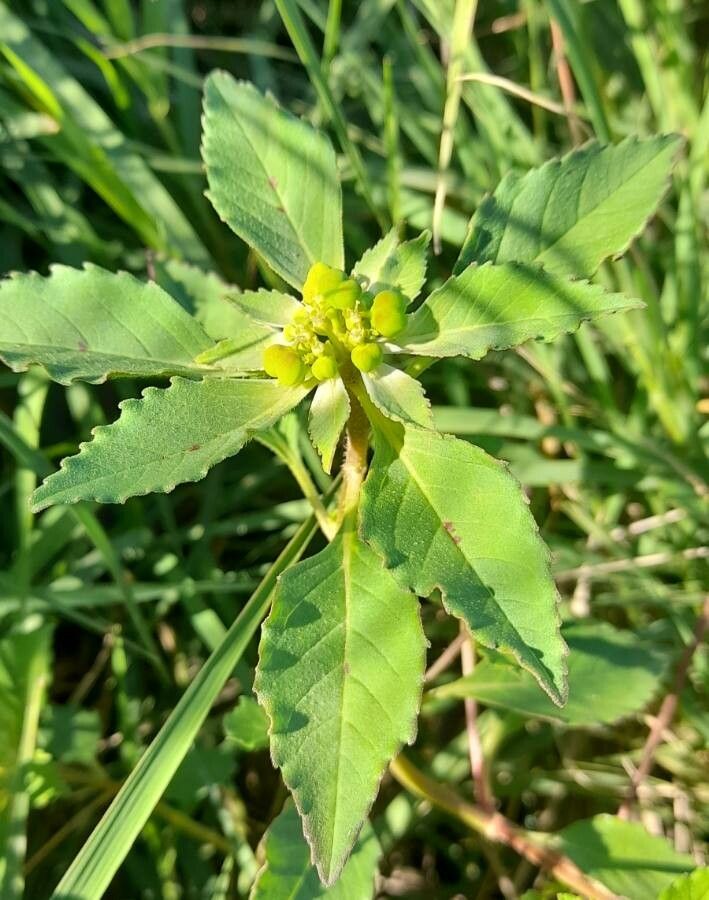
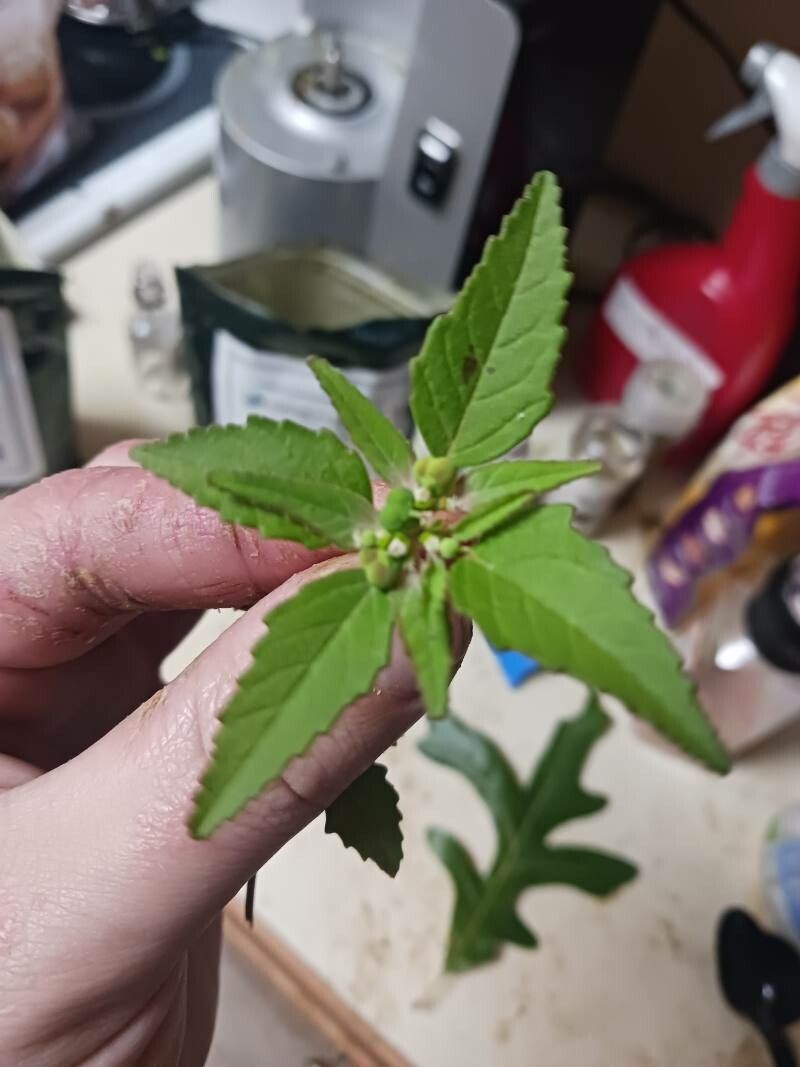
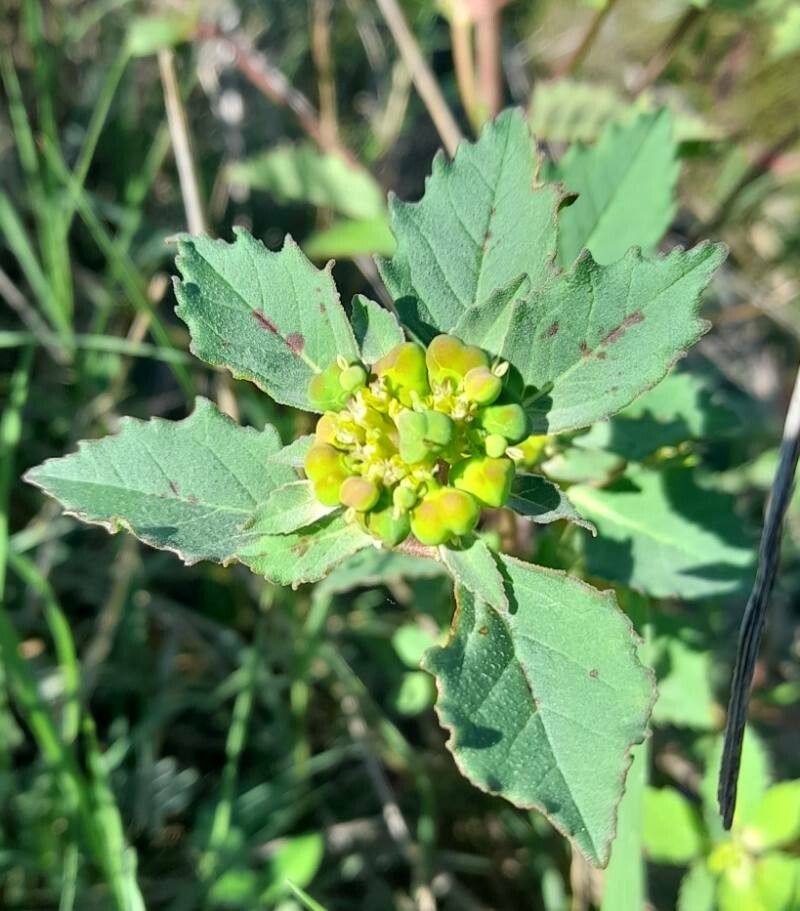
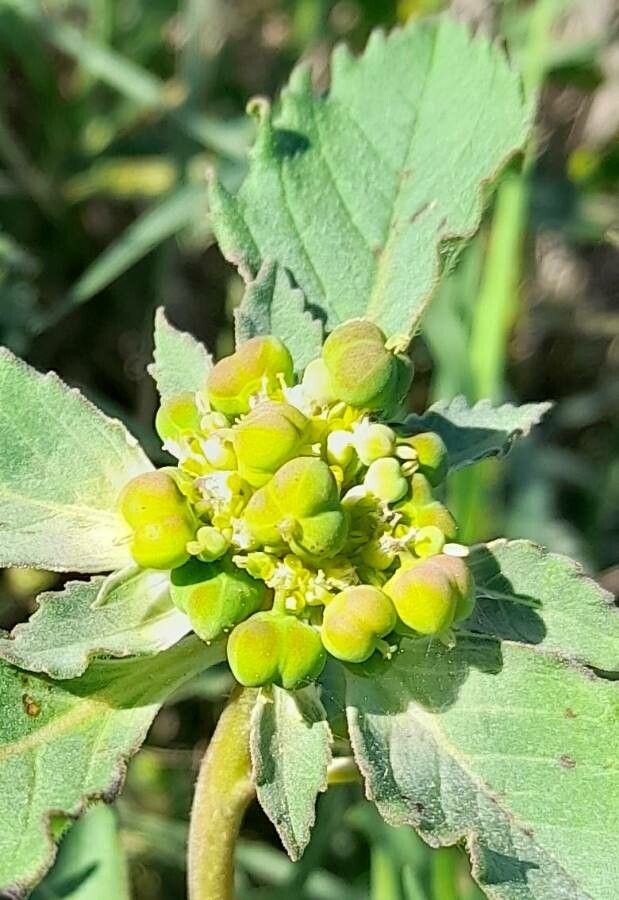
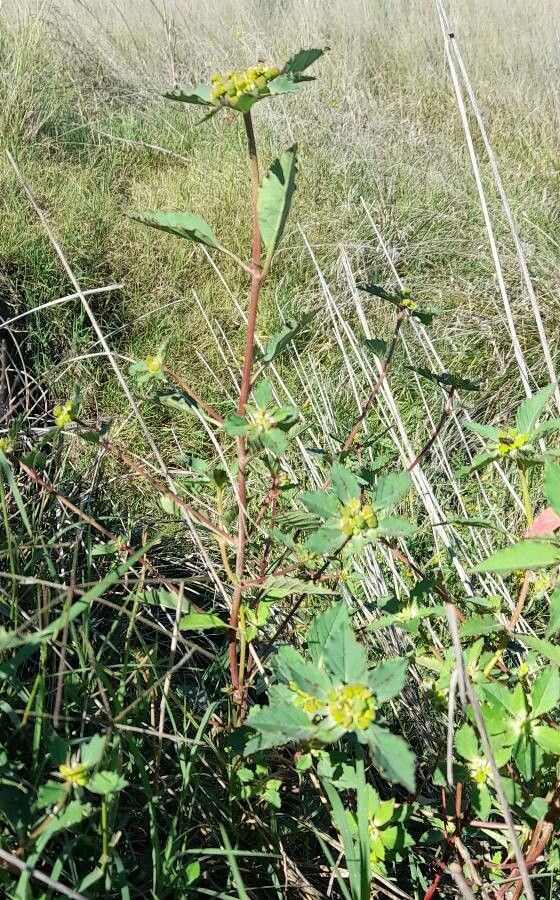
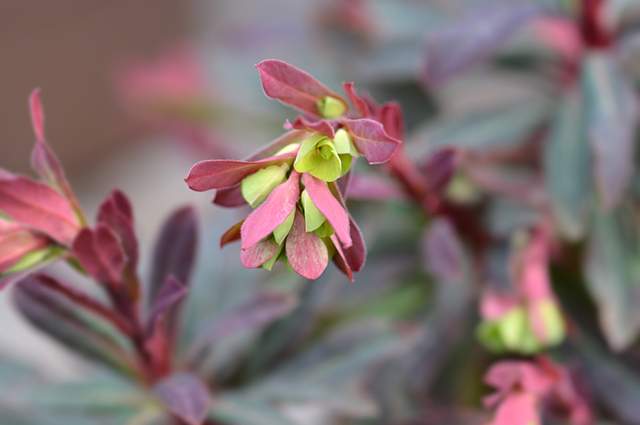
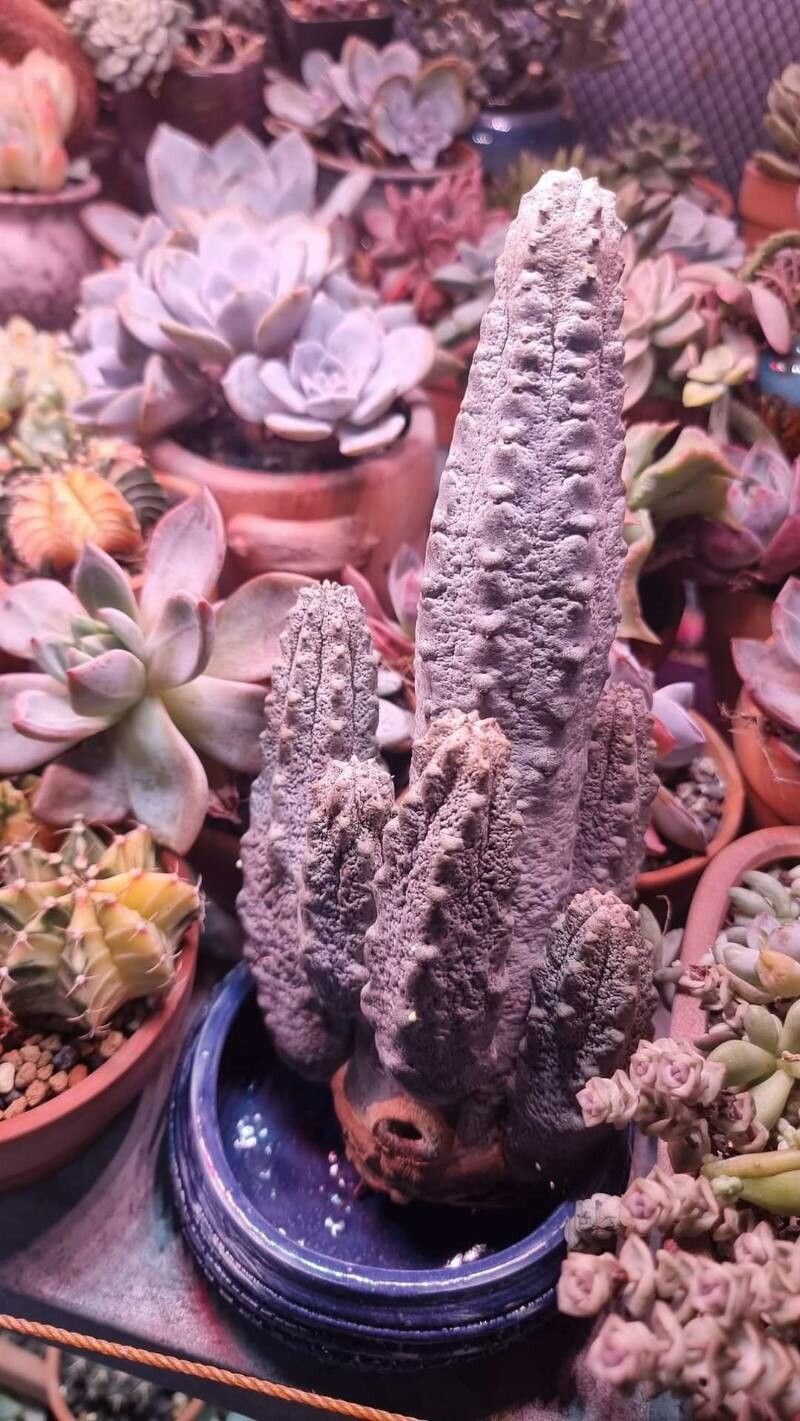
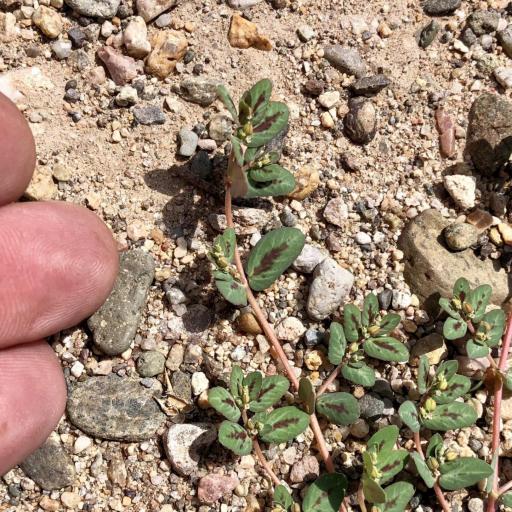
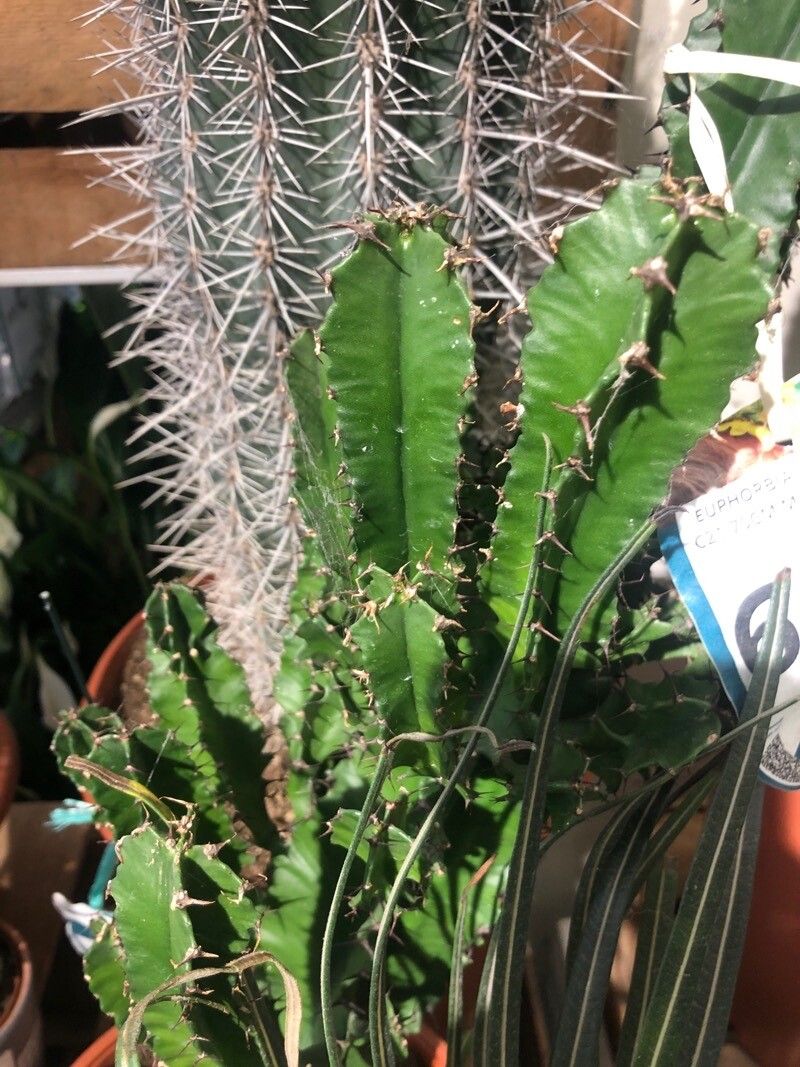
Euphorbia dentata is a species of spurge known by the common names toothed spurge and green poinsettia. It is native to parts of North and South America, and is present elsewhere on the continents. Its true native range is uncertain. It is a noxious weed in some areas. This is a hairy annual herb with an erect or somewhat erect stem reaching anywhere from 20 to 50 centimeters tall. Its hairy, pointed leaves are a few centimeters long, widely to narrowly lance-shaped, and generally toothed. The inflorescence appears at the end of branches and contain cream or yellowish staminate or pistillate flowers just a few millimeters wide. The fruit is a lobed spherical or heart-shaped capsule about half a centimeter wide which contains three bumpy rounded seeds.
Toothed spurge is a hairy annual herb characterized by its upright or slightly leaning stem, which can grow to a height of 20 to 50 centimeters. This plant features hairy, pointed leaves that are a few centimeters in length, ranging from wide to narrow lance shapes, and typically have toothed edges. It belongs to the Euphorbia genus, which is why it is commonly referred to as toothed spurge.
Toothed spurge has strong disease resistance and is generally not prone to illness. However, it can be vulnerable to pests and diseases present in its environment. These infections are usually minor. Regarding care, this plant needs a moderate amount of maintenance. It should be pruned regularly to maintain an attractive appearance and vigorous growth. Fertilizing can also help promote flowering. Toothed spurge is suitable for anyone with outdoor space, such as a garden or patio, and does not demand extensive gardening experience. It may, however, require more attention when cultivated indoors.
How to keep Euphorbia Dentata.
Light
Toothed spurge grows best in full sun, which supports strong development. It can tolerate partial sun as well, as found in its native environments with varying light levels. Very deep shade can cause the plant to become unhealthy, showing stress and growth issues. Likewise, excessively intense sunlight can be damaging.
Water
Toothed spurge, which comes from moderate climates, thrives in a balance of moisture and dryness. Once established, it is drought-tolerant. For optimal growth, it should be watered weekly. Rainwater during its growing season also enhances its resilience and promotes vigorous growth.
Temperature
Toothed spurge is a hardy plant that grows well in climates with temperatures between 68 and 95 °F (20 to 35 °C). It rarely needs seasonal adjustments because it prospers in these moderate temperature ranges.
Fertilizer
Toothed spurge does well with regular, light applications of fertilizer to encourage healthy leaf development. You should feed Toothed spurge roughly once a month during the summer. Nitrogen is important for foliage, and adding nitrogen-rich sources helps Toothed spurge thrive.
Botanical profile.
- Plant Type
- Herb
- Life Cycle
- Annual
- Genus
- Euphorbia
- Family
- Euphorbiaceae
- Hardiness Zone
- 4-9
- Mature Height
- 23 cm to 61 cm
- Mature Spread
- 30 cm
- Leaf Color
- Green, Red
- Leaf Type
- Deciduous
- Flower Color
- White, Cream
- Flower Size
- 2.54 cm
- Bloom Time
- Early summer, Mid summer
- Planting Time
- Spring
- Harvest Time
- Mid summer
- Native Area
- Honduras, Mexico, Guatemala
Other names.
Reader questions.
What are the sunlight requirements for toothed spurge?
Toothed spurge requires full sun exposure, which means it thrives in conditions with more than 6 hours of sunlight daily. However, it can also endure partial sun, with about 3-6 hours of sunlight. Because sunlight influences the plant's growth significantly, finding a spot in your garden that offers a balance of light and shade ensures the plant's health and vitality. Pay attention to how sunlight moves through your garden to choose the best location for your toothed spurge, ensuring it meets its light requirements for optimal growth.
What are the ideal growing temperatures for Toothed Spurge?
Toothed spurge thrives in climates with temperatures ranging from 68 to 95 °F (20 to 35 °C). It adapts well throughout the seasons, flourishing in moderate temperature zones without the need for significant seasonal adjustments. It has a high cold resistance, thus special frost protection measures are usually not required during winter. Nonetheless, in cases where winter temperatures are expected to drop below the growth limit temperature, protecting the plant against cold by covering it with soil or straw is advised. Additionally, watering the plant abundantly before the first freeze in autumn to keep the soil moist can help prevent drought and water scarcity during winter and early spring.
How important is lighting for indoor-grown toothed spurge?
For toothed spurge grown indoors, adequate lighting is essential for optimal growth, especially in conditions where natural sunlight is insufficient. Artificial lighting sources such as LED lights, which can be customized to provide specific wavelengths, can significantly benefit indoor plants. For plants requiring full sun, 30-50W/sq ft of artificial light is recommended; for partial sun plants, 20-30W/sq ft; and for full shade plants, 10-20W/sq ft. The proper distance (12-36 inches above the plant) and duration (8-12 hours per day) of light exposure are crucial to mimic natural sunlight conditions and promote healthier growth.
How does Toothed Spurge react to low temperatures?
Toothed spurge is cold-tolerant, performing best when temperatures are kept above its suitable growth minimum. During winter, temperatures should be maintained above its tolerable growing minimum. If temperatures drop below the limit growth temperature, there might not be noticeable changes during winter, but there could be a decrease in sprouting or no sprouting at all come spring. If parts of the plant fail to sprout in spring, those parts should be removed.
What are the symptoms of improper light exposure in toothed spurge?
Toothed spurge shows several symptoms when exposed to inadequate light, including smaller new leaves, leggy or sparse growth, faster leaf drop, and slower or no new growth at all. Signs of too much light exposure include chlorosis, where leaves turn yellow due to chlorophyll breakdown; sunscald, characterized by damaged plant tissue; leaf curling as a defense mechanism against water loss; wilting due to increased water loss; and leaf scorching, where leaves show brown, dry edges. These symptoms highlight the plant's struggle to adapt to the available light, thus indicating the need for adjustment to its light exposure.
What should be done if Toothed Spurge experiences high temperatures?
During summer, it's important to keep Toothed spurge below its suitable growth maximum temperature. Should the temperature exceed its tolerable growing maximum, the plant's leaves may lighten in color, become prone to curling, suffer from sunburn, and in severe cases, the entire plant may wilt and dry out. To address this, sunburned and dried parts of the plant should be trimmed away. Moving the plant to a shaded area during the midday and afternoon sun or using a shade cloth for protection is advisable. Watering the plant during the morning and evening hours to maintain moist soil can also mitigate the impact of high temperatures.
What solutions can improve light exposure for toothed spurge?
Improving light exposure for toothed spurge involves several strategies, depending on its growing environment. Indoors, gradually moving the plant to a sunnier spot, using a south-facing window, or employing artificial light sources can help achieve at least 6 hours of direct sunlight daily. For outdoor plants, a gradual transition to sunnier spots prevents sunburn and encourages healthy growth. Additionally, for plants in the ground, reducing obstructions like overhanging branches and considering transplantation to sunnier locations can significantly enhance light exposure. Remember, parts of the plant that suffered from insufficient light may not recover, but new growth will be healthy with improved light conditions.