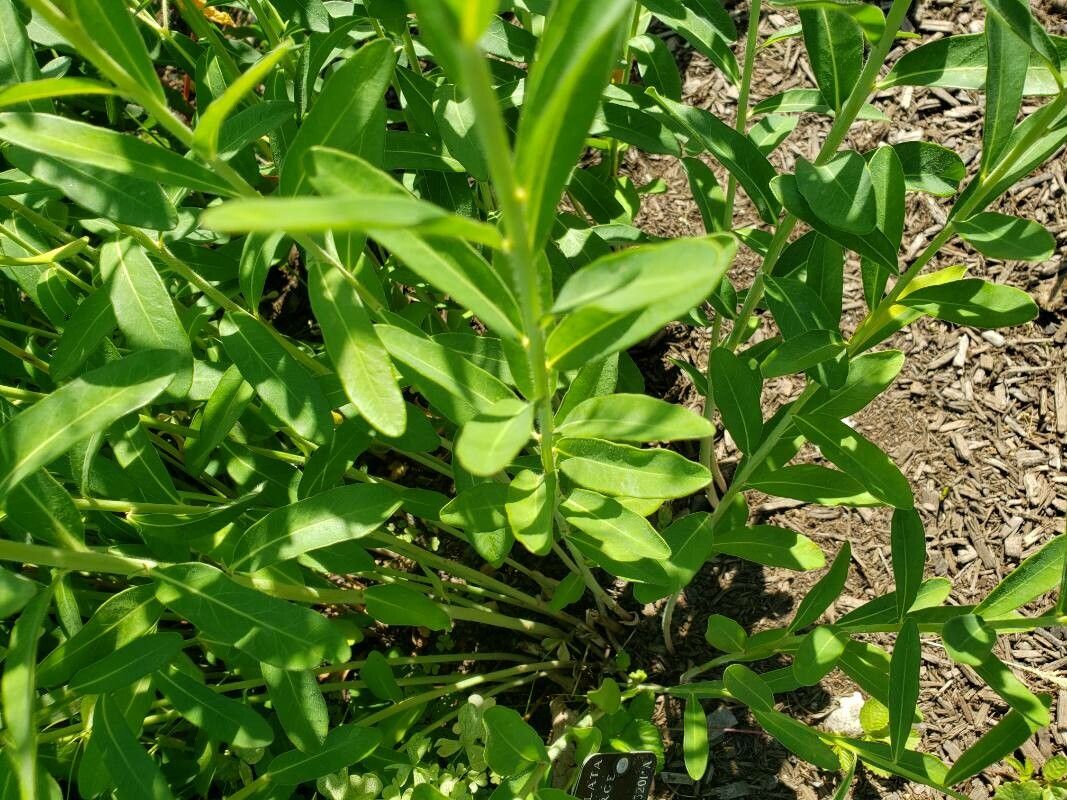
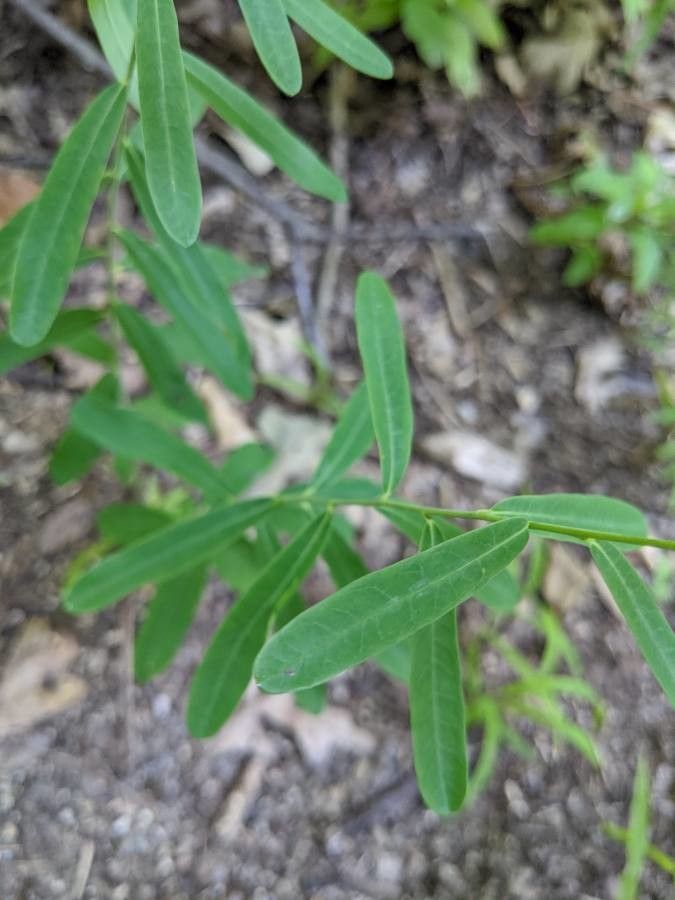
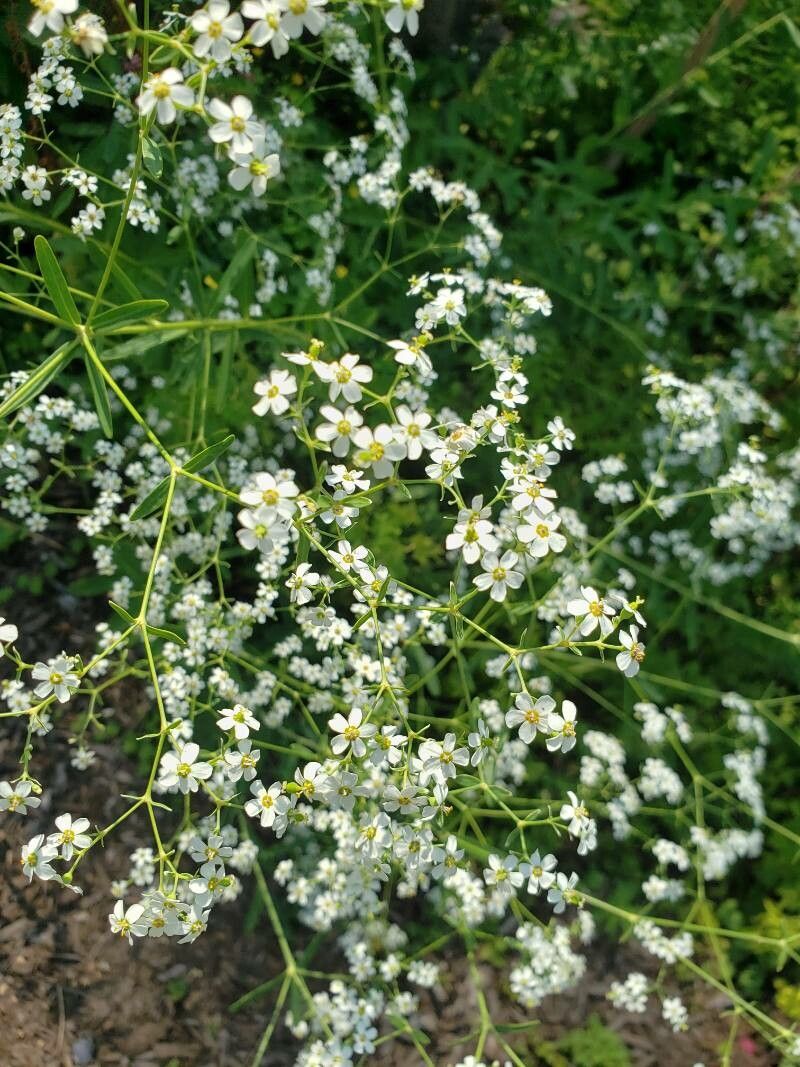
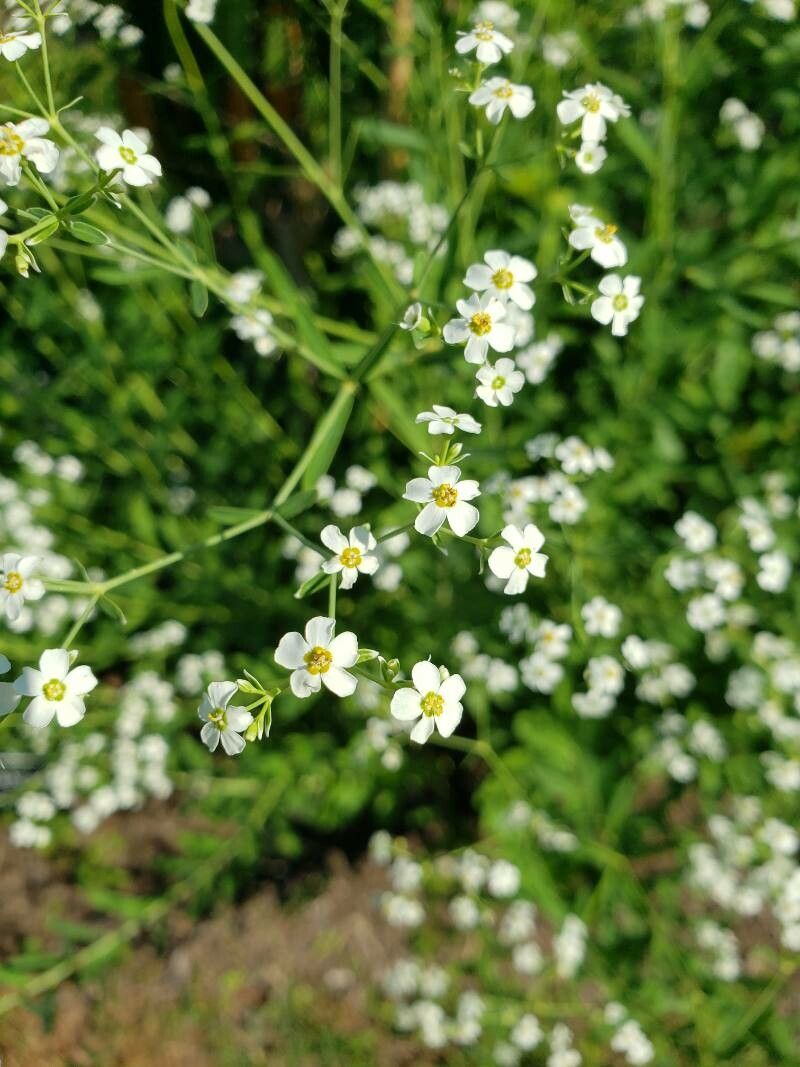
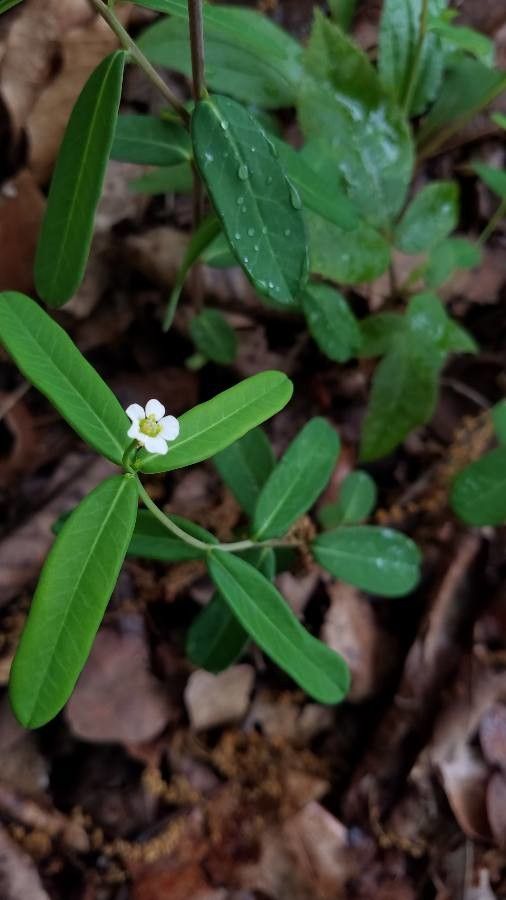
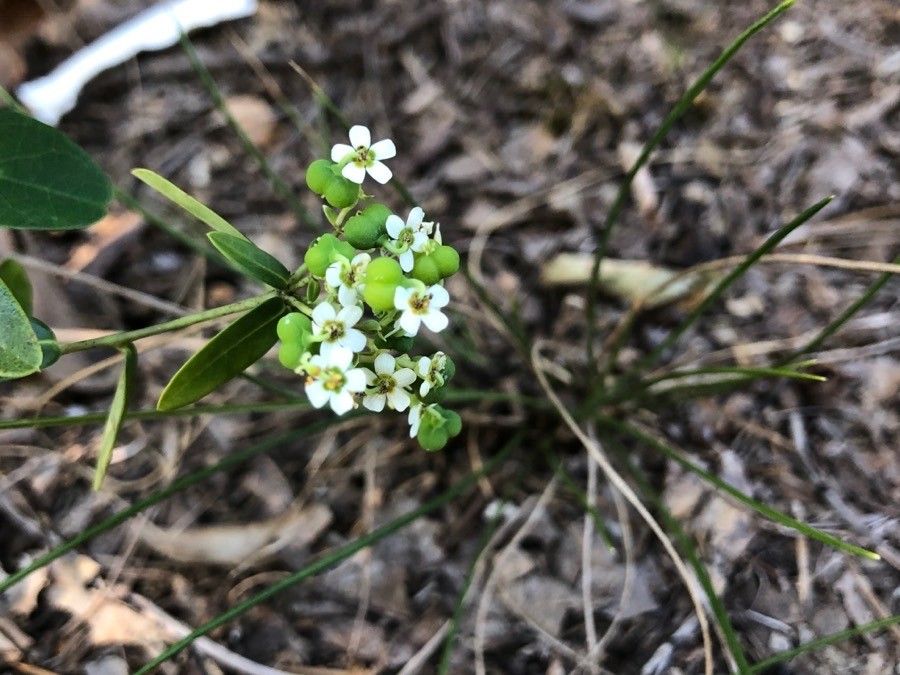
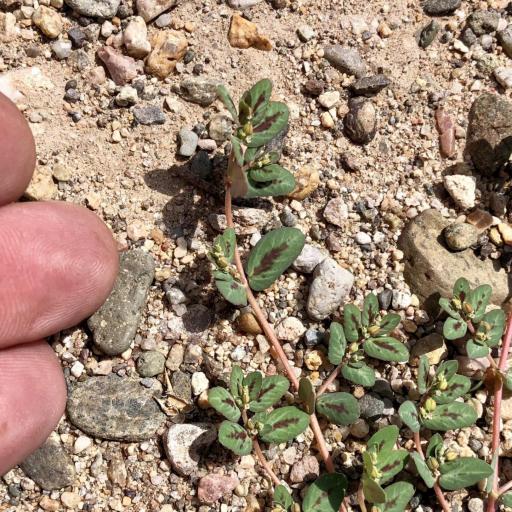
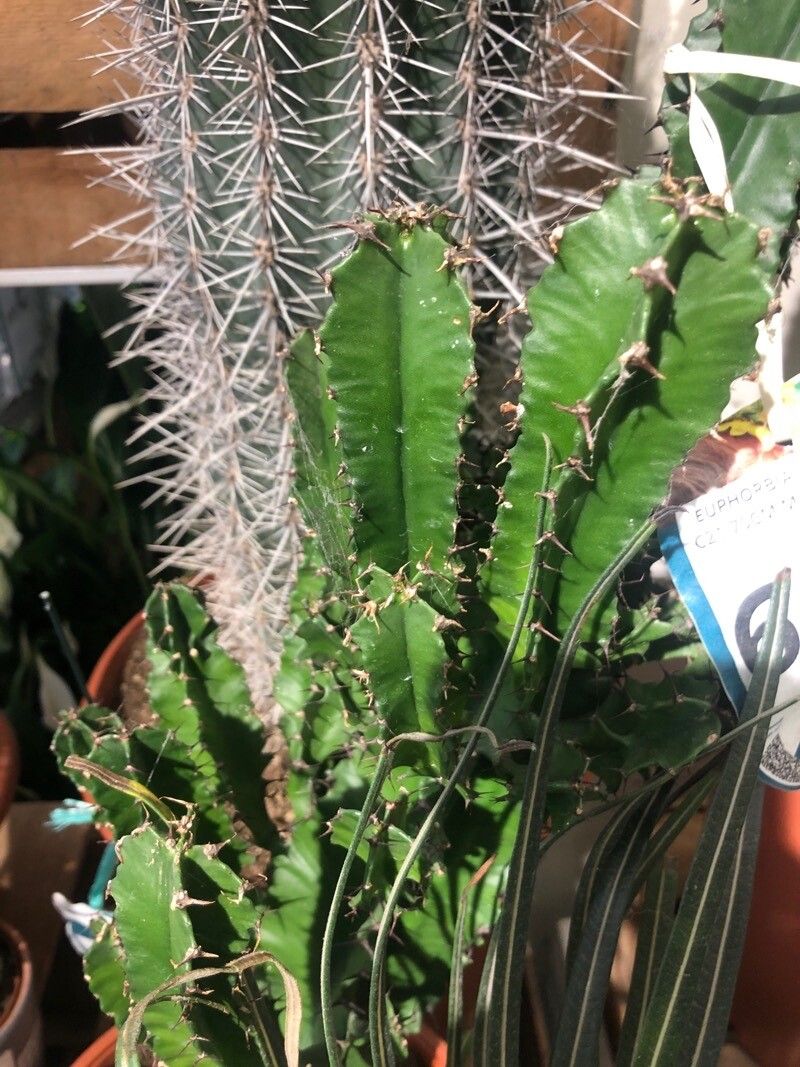
Euphorbia corollata is an herbaceous perennial plant in the family Euphorbiaceae that is native to North America. A common name for the species is flowering spurge. It has a milky sap that can cause skin and eye irritation in some people. It grows up to 1 m (3 ft) tall, with smooth stems and light green leaves arranged alternately or in whorls. Leaves are about 10 mm (1/2 in) wide and 75 mm (3 in) long. Each stem terminates in a panicle 20 to 25 mm (3/4 to 1 in) across. Flowers are about 6 mm (1/4 in) across and consist of one pistillate and several staminate flowers surrounded by five white bracts - not petals but formed from the involucre at the base of the flowers. Flowering spurge blooms from June to September.
Flowering Spurge has strong disease resistance and is usually not prone to illnesses. Still, it can be affected by pests and diseases present in its surroundings. These problems are typically mild. In terms of care, the plant needs moderate maintenance. It should be pruned regularly to keep a neat appearance and support healthy growth. Fertilizing can also encourage flowering. Flowering Spurge is well suited for anyone with outdoor space, such as a garden or patio, and does not demand extensive gardening experience. It may require more attentive care if kept indoors.
How to keep Euphorbia Corollata.
Light
Flowering Spurge needs ample sunlight to grow well, reflecting the conditions of its native open areas and meadows. Insufficient light can reduce its flowering, while direct sunlight encourages stronger blooms. However, it can tolerate locations that receive somewhat fewer hours of sun.
Water
Flowering Spurge thrives in well-drained soils and generally prefers consistent moisture, although it can tolerate occasional dry spells. To keep it healthy, it is recommended to water it weekly. This plant is commonly found in temperate regions where it enters a dormant phase, during which it requires less water. This adaptation aligns with the seasonal rainfall patterns of its natural habitat.
Temperature
Flowering Spurge is native to temperate regions and prefers a temperature range of 41 to 89.6 °F (5 to 32 ℃). As seasons change, adjust the temperature to keep it within this range for optimal growth.
Fertilizer
The best time to fertilize a Flowering Spurge is in early spring, as it comes out of dormancy and starts active growth. Fertilization supplies essential nutrients for healthy development. Although Flowering Spurge has modest fertilizer requirements, giving it fertilizer once a year can improve its survival and encourage better, longer-lasting blooms.
Pruning
To encourage robust growth and prevent legginess, prune Flowering Spurge in early to late spring. Trim away old stems and remove any damaged parts to maintain the plant's health. Always clean your tools to prevent the spread of disease. For the best results, make your cuts just above the nodes. This will promote bushier growth and help the plant thrive throughout the season.
Botanical profile.
- Plant Type
- Herb
- Life Cycle
- Perennial
- Genus
- Euphorbia
- Family
- Euphorbiaceae
- Hardiness Zone
- 4-8
- Mature Height
- 30 cm to 61 cm
- Mature Spread
- 30 cm to 61 cm
- Leaf Color
- Green
- Leaf Type
- Semi-evergreen
- Flower Color
- White
- Flower Size
- 15.24 cm
- Bloom Time
- Early summer, Mid summer
- Planting Time
- Spring, Autumn
- Harvest Time
- Mid summer
Other names.
Reader questions.
How should I water my Flowering Spurge for the best results?
To properly water the Flowering Spurge, it is best to use filtered water at room temperature. Tap water may contain harmful particles, so filtered water is preferred. The Flowering Spurge is accustomed to warm environments, so using cold water can be a bit of a shock. It is also advised to avoid overhead watering as it can cause issues with the foliage. Instead, it is recommended to thoroughly soak the soil with filtered room temperature water. This helps moisturize the roots and promote the spread and collection of nutrients.
Why should I add fertilizer to my Flowering Spurge?
The main structure of the Flowering Spurge consists of its leaves. Fertilization plays a vital role in maintaining the appearance and function of these leaves. By fertilizing properly, you can ensure that the leaves of your Flowering Spurge maintain a consistent color and healthy texture. Additionally, fertilization also benefits the plant below the soil's surface. It helps in the growth of new roots and the maintenance of existing ones. This means that fertilization not only keeps the plant healthy in the present but also improves its ability to absorb nutrients from the soil in the future.
What are the sunlight requirements for Flowering Spurge?
Flowering Spurge requires a generous amount of sunlight for healthy growth, thriving best in conditions that mimic its native open areas and meadows. It needs full sun, which is above 6 hours of sunlight daily, to foster robust flowering, although it can manage with partial sun, about 3-6 hours of sunlight. Insufficient light may impact its blooming capability negatively. It's crucial to observe how sunlight moves through your garden, allowing you to choose spots that provide the optimal balance of light and shade for your plants.
What is the optimal temperature range for Flowering Spurge?
Flowering Spurge thrives in temperate environments, preferring a temperature range between 41 to 89.6 °F (5 to 32 °C). To ensure optimal growth, it's crucial to adjust the plant's environment in response to season changes to maintain this temperature range.
What should I do if I give my Flowering Spurge too much water or not enough water?
Both overwatering and underwatering can harm the health of your Flowering Spurge, but overwatering is more common. Overwatering can cause wilting, yellowing, and disease such as root rot, mold, and mildew. Underwatering is less common, but can cause brittle, brown leaves. It's important to watch for signs of overwatering and take action quickly. Reduce watering if you see signs of overwatering and consider using well-draining soil. If your plant shows signs of underwatering, simply water more regularly.
What is the ideal time to fertilize my Flowering Spurge?
If you grow your Flowering Spurge outdoors each year, it will start producing new growth in early spring. This is when you should begin fertilizing it for the year. Usually, one application of fertilizer in the spring is sufficient for the Flowering Spurge to thrive. However, if you want to maximize its growth, you can fertilize it multiple times throughout the spring and early summer. In this case, you can feed the Flowering Spurge about once every month to a month and a half.
How can artificial lighting support the growth of Flowering Spurge indoors?
Indoor Flowering Spurge can benefit significantly from artificial lighting, especially when natural sunlight is insufficient, such as in winter or less sunny spaces. Artificial lights, including LED lights which can be customized for specific wavelengths, offer a viable solution. For optimal growth, full sun plants require 30-50W/sq ft of artificial light, partial sun plants need 20-30W/sq ft, and full shade plants need 10-20W/sq ft. Position the light source 12-36 inches above the plant and keep it on for 8-12 hours per day to mimic natural daylight hours as closely as possible.
How does Flowering Spurge handle cold weather?
Flowering Spurge possesses strong cold resistance, meaning special frost protection measures are typically unnecessary. However, if winter temperatures are expected to drop below the plant's tolerable limit, providing cold protection by covering the plant with soil or straw is beneficial. Watering the plant abundantly before the first freeze of autumn, to ensure the soil stays moist and enters a frozen state, helps prevent drought and water scarcity during winter and early spring.
How frequently do I need to water my Flowering Spurge?
If your Flowering Spurge is in a pot, the most accurate way to determine if it needs water is by checking the soil with your finger. When the top two to three inches of soil feel dry, it's time to water it. If your Flowering Spurge is planted outdoors in the ground, you can use a similar method to check the soil. Again, if the top few inches of soil are dry, it's time to water. During spring and early fall, you'll typically need to water this plant about once a week using this method. However, during extremely hot weather, you may need to increase watering to about twice a week or more. It's worth noting that mature, well-established Flowering Spurges have a remarkable ability to tolerate drought.
When is it better to not put fertilizer on my Flowering Spurge?
During the late fall and winter, your Flowering Spurge will go dormant and stop growing. So, you shouldn't fertilize it during this time. In the spring and summer, if you do fertilize, start reducing the amount as summer comes because the plant's growth slows down. In general, avoid fertilizing when it's very hot or the soil is extremely dry as it can stress the plant and cause it to die early.
What are some common symptoms of insufficient light in Flowering Spurge?
Flowering Spurge may display several symptoms when exposed to inadequate lighting, including small and mature leaves, leggy or sparse growth, faster leaf drop, slower or no new growth, and lighter-colored or yellowing leaves (chlorosis). Other symptoms like sunscald, leaf curling, wilting, and leaf scorching can occur due to excessive sunlight. These signs indicate the plant's struggle with either too little or too much light, affecting its ability to photosynthesize and maintain health.
What are the symptoms of too low temperature for Flowering Spurge and how can they be managed?
Flowering Spurge is relatively cold-tolerant and thrives best when the temperature is kept above its suitable minimum. During the winter, it's important to keep it above a tolerable minimum temperature. If temperatures fall below the growth limit, there may be a noticeable decrease in sprouting or a complete absence of sprouting in spring. To manage this issue in spring, it's advised to remove any parts of the plant that have failed to sprout.