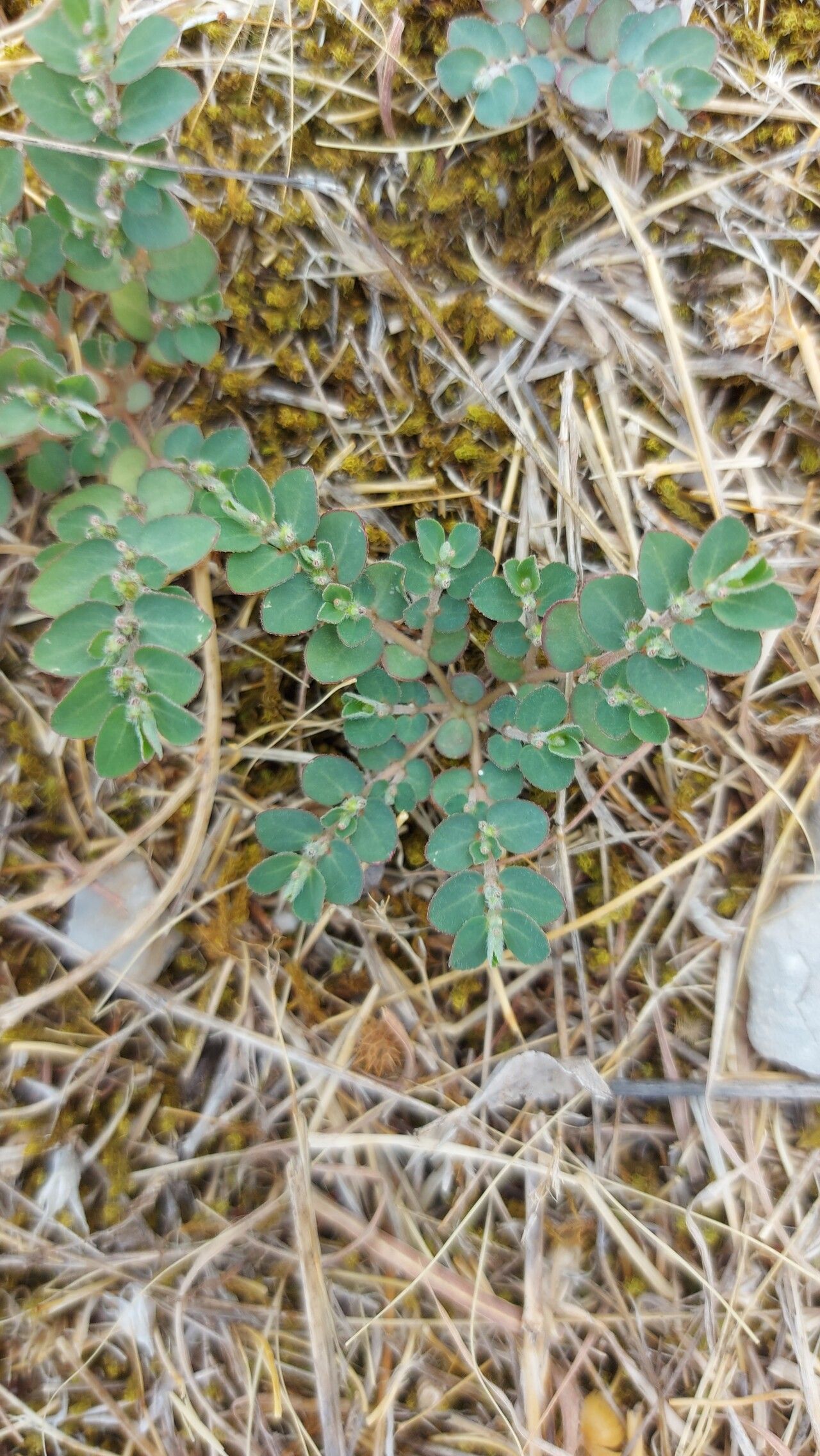
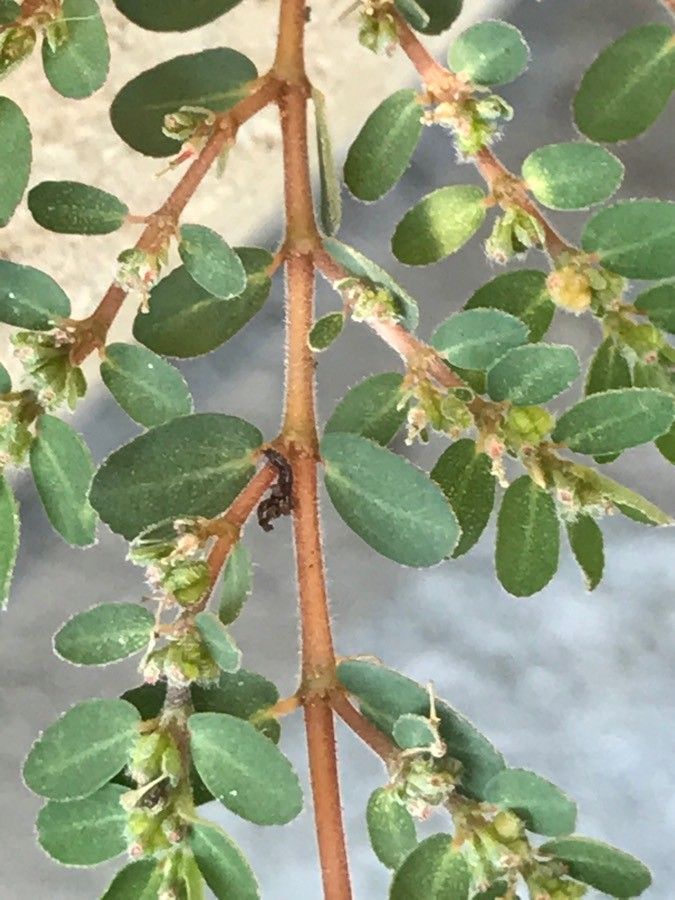
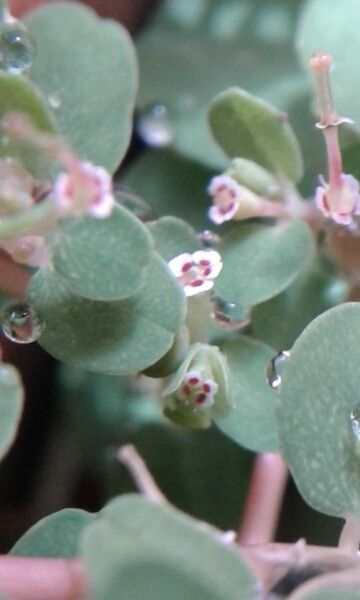
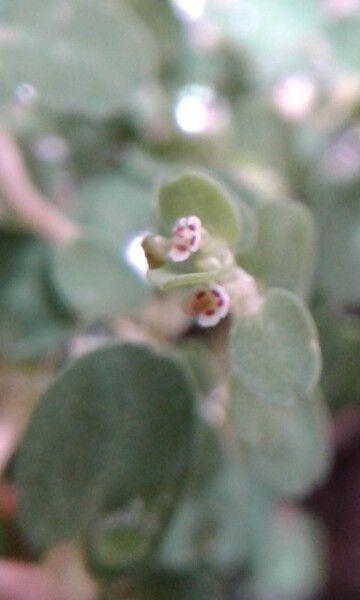
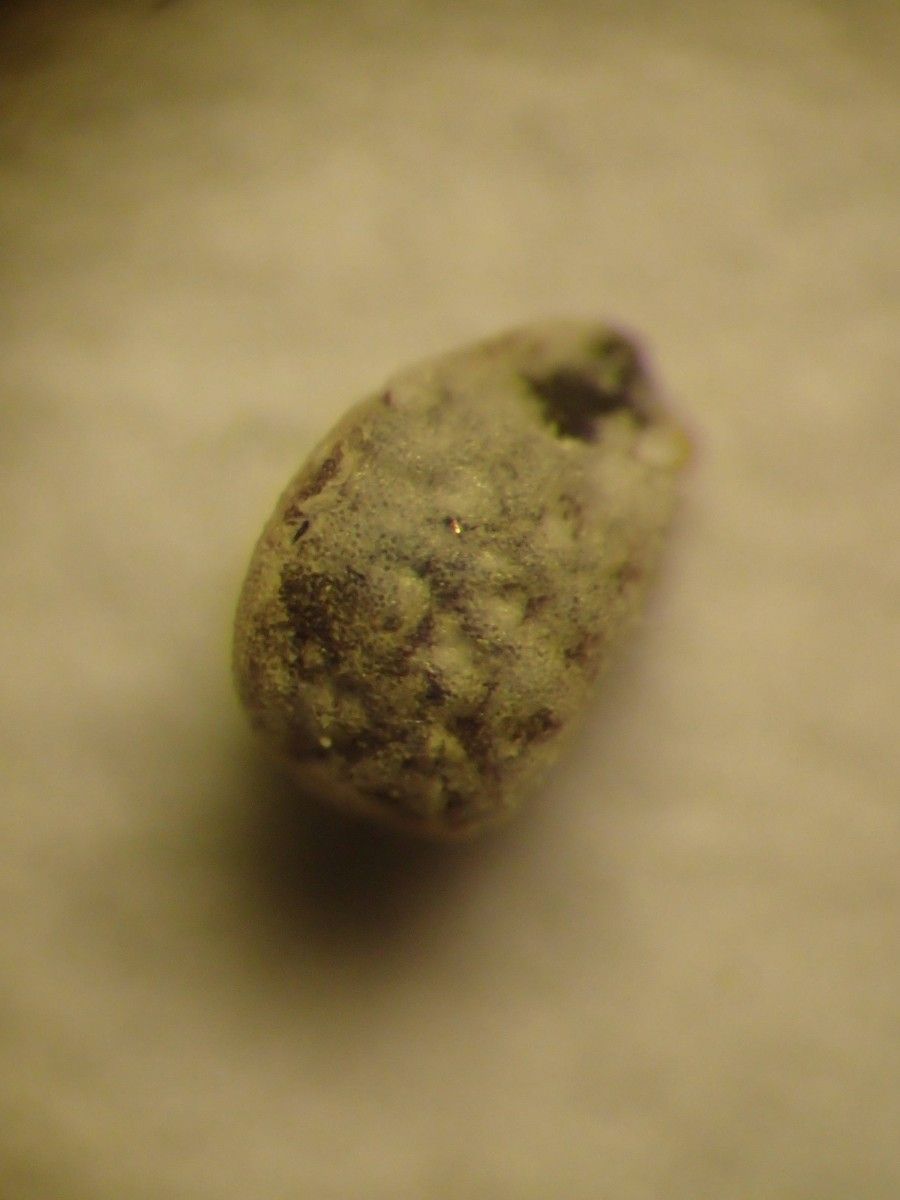
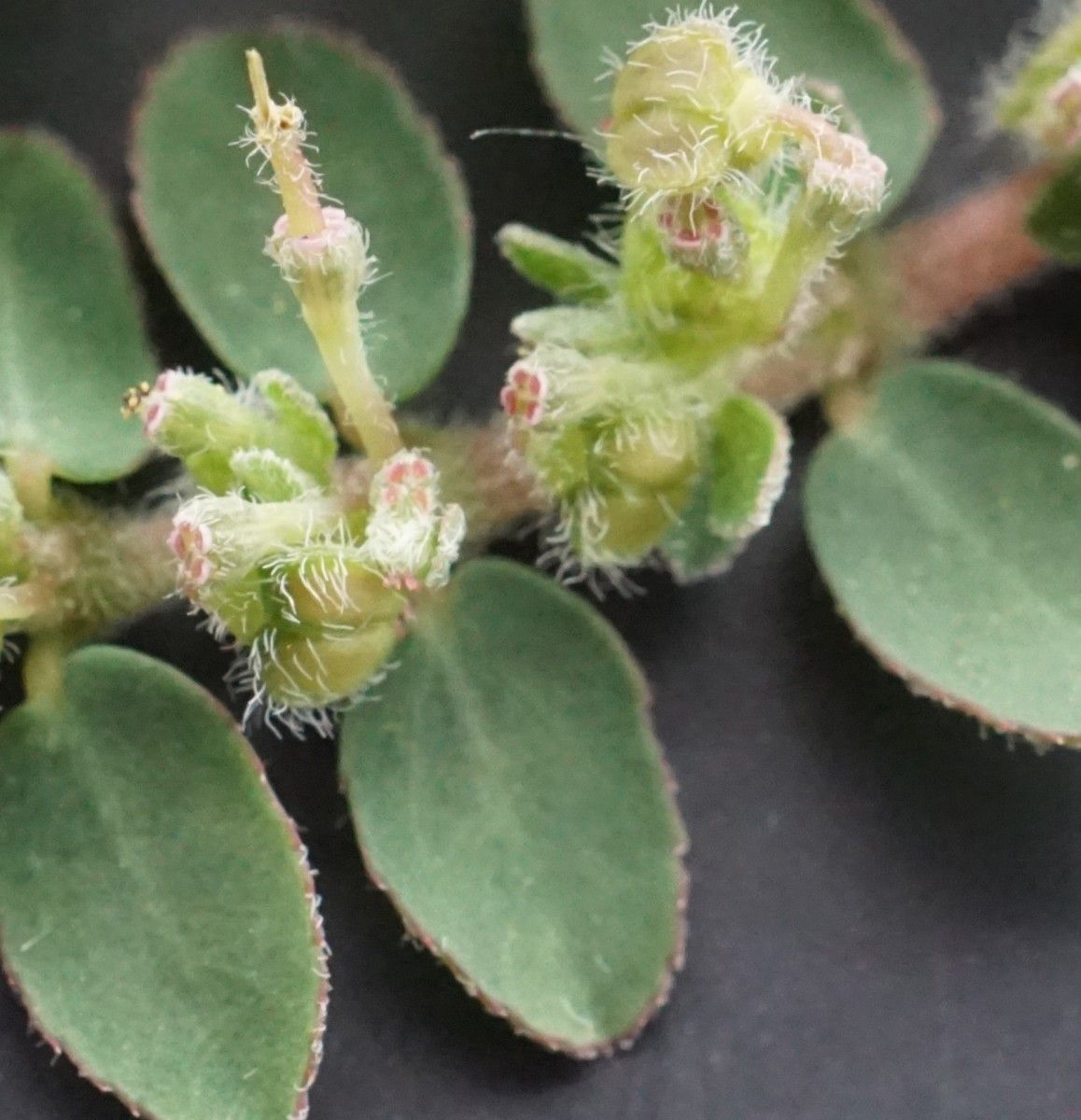
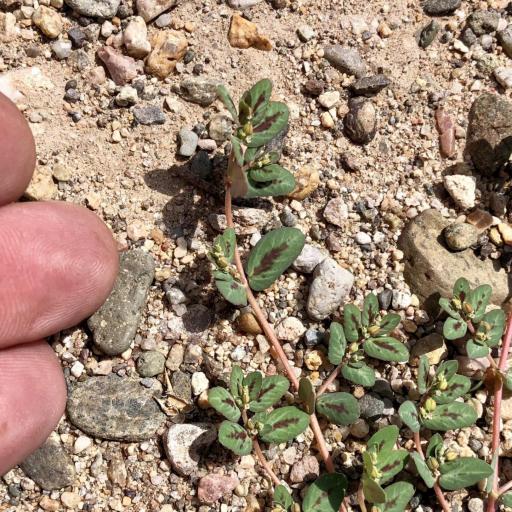
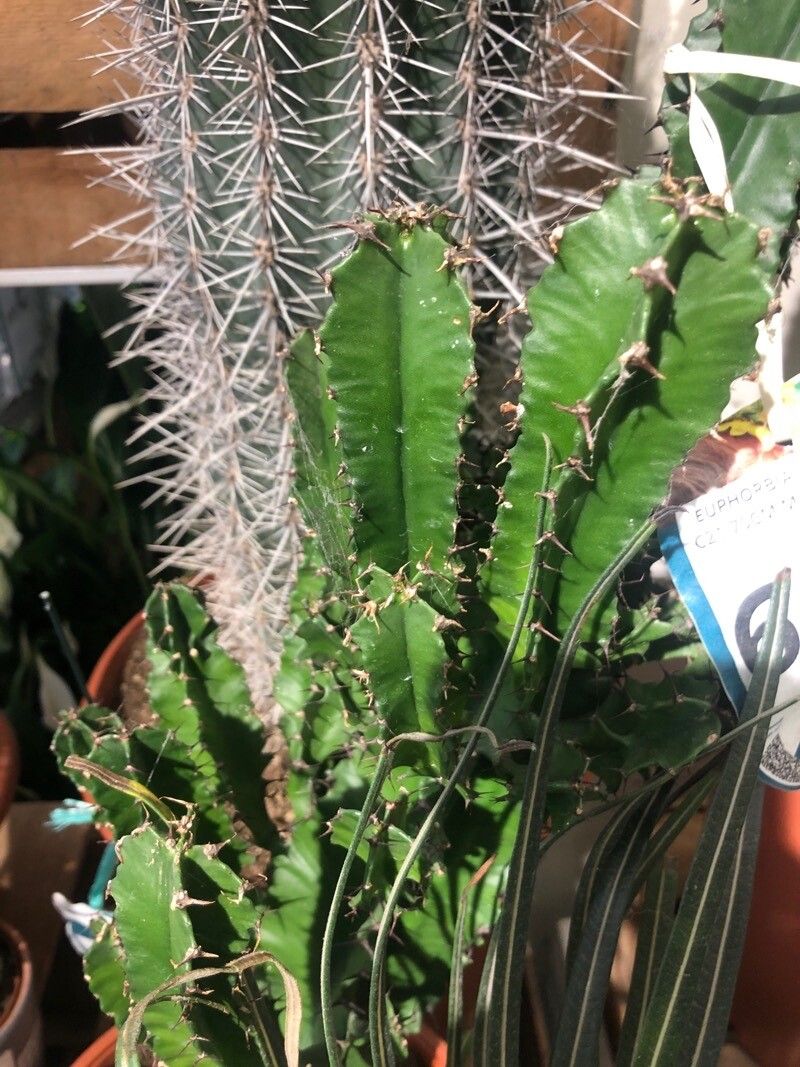
Euphorbia chamaesyce, the prostrate spurge, is an annual plant in the family Euphorbiaceae. It is native to southern North America, and has been introduced and established in other areas of North America and other countries worldwide. It is a prostrate plant, with stems growing along the ground up to 45 cm or longer. The leaves are oval in shape, up to one cm long, and arranged in opposite pairs. The flowers are very small, with four greenish white petals. It grows in sunny locations and a variety of soils, and is frequently found as a weed in gardens. The seeds are sharply quadrangular in shape, about 1mm long, and marked with 3 or 4 transverse ridges.
Spurge has good resistance to disease and is generally not likely to develop illnesses. Still, it can be affected by pests and diseases present in its environment. These problems are typically mild. Regarding care, this plant needs moderate maintenance. It should be pruned regularly to preserve a neat appearance and support healthy growth. Applying fertilizer can also encourage blooming. Spurge is appropriate for anyone with outdoor space, such as a garden or patio, and does not demand extensive gardening experience. It may need more attention when kept indoors.
How to keep Euphorbia Chamaesyce.
Light
Spurge does best in places that receive direct sunlight for most of the day; however, it can tolerate sites with partly filtered light. In outdoor, open settings, steady sun exposure encourages healthy growth and vigor. Too little or too much sun can negatively impact its overall health.
Water
Spurge, native to arid environments, thrives in dry conditions and requires very little water. Watering it once a week is sufficient for optimal growth. This resilient outdoor plant is well-suited to xeric landscapes, efficiently managing water during its intense growing season.
Humidity
This plant prefers dry conditions, so don't mist it. However, watering it less often can also thrive in higher humidity.
Temperature
Spurge is naturally adapted to survive in conditions where temperatures range from 68 to 100.4 °F (20 to 38 ℃). It prefers moderate to high warmth, so adjustments may be needed during colder seasons or when temperatures fall.
Fertilizer
Spurge does well with regular, light applications of fertilizer to encourage healthy leaf growth. You should apply fertilizer about once a month during the summer. Nitrogen is important for foliage, and adding nitrogen-rich sources helps Spurge thrive.
Pruning
To keep your spurge plants healthy and well-shaped, prune them from early to late spring. Start by removing any dead or diseased stems to encourage new growth. Thin out dense areas to improve air circulation. Avoid making drastic cuts, as these can stress the plant. Proper pruning will enhance blooming and improve the overall appearance of your garden.
Botanical profile.
- Plant Type
- Herb
- Life Cycle
- Annual
- Genus
- Euphorbia
- Family
- Euphorbiaceae
- Hardiness Zone
- 5-11
- Mature Height
- 5 cm to 8 cm
- Mature Spread
- 40 cm
- Leaf Color
- Green, Dark Green
- Leaf Type
- Semi-evergreen
- Flower Color
- White
- Flower Size
- 0.20 cm
- Bloom Time
- Summer, Fall
- Planting Time
- Summer
- Harvest Time
- Late summer, Fall, Early winter
Other names.
Reader questions.
How should I water my Spurge plant for best results?
To water Spurge, you have several options. You can use a garden hose with a spray nozzle, a watering can, or any other common watering tool. Spurge is not too finicky about how it gets its water, as it can survive on rainwater, tap water, or filtered water. However, it is best to avoid watering this plant from overhead, as it can harm the leaves and flowers and potentially cause disease. A drip irrigation system is often the most effective way to water Spurge, as it delivers water evenly and directly to the soil. If you have a container-grown Spurge, you can follow a similar watering approach but change the tools you use. You can use a cup, watering can, or tap to water the soil directly.
What are the sunlight requirements for Spurge?
Spurge requires areas where it can receive unobstructed sunlight for most of the day to thrive, illustrating its need for full sun exposure—above 6 hours of direct sunlight. Nonetheless, it can also withstand partial sun, about 3-6 hours of sunlight, with somewhat filtered conditions being acceptable. In its natural habitat, Spurge benefits from a consistent amount of sunlight, which is crucial for healthy growth and vigor. Lack or excess of sunlight can harm its health. It's essential to observe how sunlight moves through your garden, selecting sites that offer an optimal balance of light and shade to ensure the plant's well-being.
What temperature conditions are ideal for Spurge?
Spurge thrives in environments where the temperature ranges from 68 to 100.4 °F (20 to 38 °C), indicating a preference for moderate to high heat. Despite its strong resistance to cold, precautions should be taken when winter temperatures are expected to drop below -25°C, including providing cold protection by covering the plant with soil or straw. To help the plant through winter and early spring, it's recommended to water it abundantly before the first freeze in autumn, ensuring the soil remains moist and frozen.
What should I do if I give my Spurge too much or too little water?
To help an underwatered Spurge plant, simply water it more regularly when you notice it lacking moisture. Overwatering, on the other hand, can be a more serious issue. When a Spurge is overwatered, it can lead to diseases and ultimately its decline and death. To prevent this, choose a location with plenty of sunlight and good drainage. If your Spurge is in a pot and you've overwatered it, consider changing it to a new pot with better drainage. When repotting, use loose soil and a pot that drains efficiently.
How do I use artificial lighting for indoor Spurge plants?
For Spurge plants indoors, where natural sunlight may be insufficient—especially during winter or in less sunny spaces—artificial lighting becomes an essential solution. It's recommended to use LED lights as they can be tailored to provide specific wavelengths needed by your plants. Full sun plants should have 30-50W/sq ft, partial sun plants 20-30W/sq ft, and full shade plants 10-20W/sq ft of artificial light. Place the light source 12-36 inches above the plant, simulating natural sunlight conditions, and ensure it stays on for 8-12 hours per day to mimic the length of natural daylight hours appropriate for the plant species.
How should I care for Spurge in low temperatures?
Spurge is cold-tolerant, performing best when temperatures remain above 20°C and should be kept above 0°C during winter. If temperatures fall below -25°C, you might not notice changes immediately, but there could be a decrease in sprouting or even a lack of sprouting come spring. In the spring, you should remove any parts of the plant that have failed to sprout as part of your care routine.
How often do I need to water my Spurge plant?
To keep your Spurge plant healthy, it's important to water it regularly. In the spring, once a week should be sufficient. However, as the weather gets warmer, you may need to increase watering to two or three times per week. It's important not to go overboard with watering, as this can harm the plant. Regardless of the frequency, make sure the soil is consistently moist but not overly wet. When it comes to potted Spurge plants, you'll need to water them more frequently compared to plants in the ground. Potted soil tends to dry out faster, so plan on watering them a few times per week.
What are some common symptoms of inadequate light in Spurge plants?
When Spurge is grown indoors under inadequate light conditions, it may show several symptoms indicating light deficiency. These include smaller new leaves compared to older ones, leggy or sparse growth due to elongated spaces between leaves or stems, faster leaf drop as a way to conserve resources, delayed growth or a complete halt in new leaf production, and lighter-colored new leaves signaling a lack of chlorophyll. Other symptoms like chlorosis, sunscald, leaf curling, wilting, and leaf scorching can also occur, demonstrating the plant's struggle with inappropriate light conditions.
What measures should I take if Spurge is exposed to high temperatures?
During the summer, it's crucial to ensure that Spurge's temperature does not exceed 38°C. Exposure to temperatures above 43°C can cause the leaves to lose their color, curl, become susceptible to sunburn, and in severe cases, the entire plant may wilt and dry out. In such instances, trim away any sunburned and dried-up parts of the plant. Relocate the plant to a shadier location, especially away from the harsh midday and afternoon sun, or use a shade cloth to protect it. Also, water the plant in the morning and evening to maintain soil moisture.
How much water does my Spurge plant need?
Determining how much water to give your Spurge can be approached in a few different ways. Some gardeners use a moisture-based method, where they water until the first six inches of soil feel moist. Others prefer a measured approach, typically giving their Spurge about two gallons of water per week, taking into account factors like temperature and soil dryness. However, it's important to be mindful of overwatering if your plant requires less than two gallons per week. When growing Spurge in a container, you'll need to use a different method. Make sure to moisten all the dry layers of soil by checking with your finger or watering until you see a slight trickle of excess water from the drainage holes.
What solutions can I use for Spurge plants with insufficient sunlight?
To address insufficient sunlight for your Spurge plants, indoors, gradually move them to a sunnier spot, increasing exposure to at least 6 hours of direct sunlight daily. Use south-facing windows and keep curtains open during the day. If moving the plant isn't feasible, consider using artificial light, keeping a desk or ceiling lamp on for at least 8 hours a day or investing in grow lights. For outdoor plants, acclimate them to brighter conditions by moving them to sunnier locations gradually to avoid sunburn. If physical obstructions like trees block sunlight, consider pruning to increase sun exposure. For smaller plants, transplant them during their dormant period to a well-lit and drained area. Note that parts of the plant already affected by insufficient light may not recover, but new growth should be healthy post-adjustment.
How do I know if I'm giving enough water to my Spurge plant?
Avoiding overwatering your Spurge can be tricky due to its deep roots that need weekly soil moisture. However, Spurge is highly prone to root rot and can also experience browning from overwatering. Underwatering is less of a concern as Spurge can survive without frequent watering, but if you wait too long, the plant will wilt and the leaves may become dry.