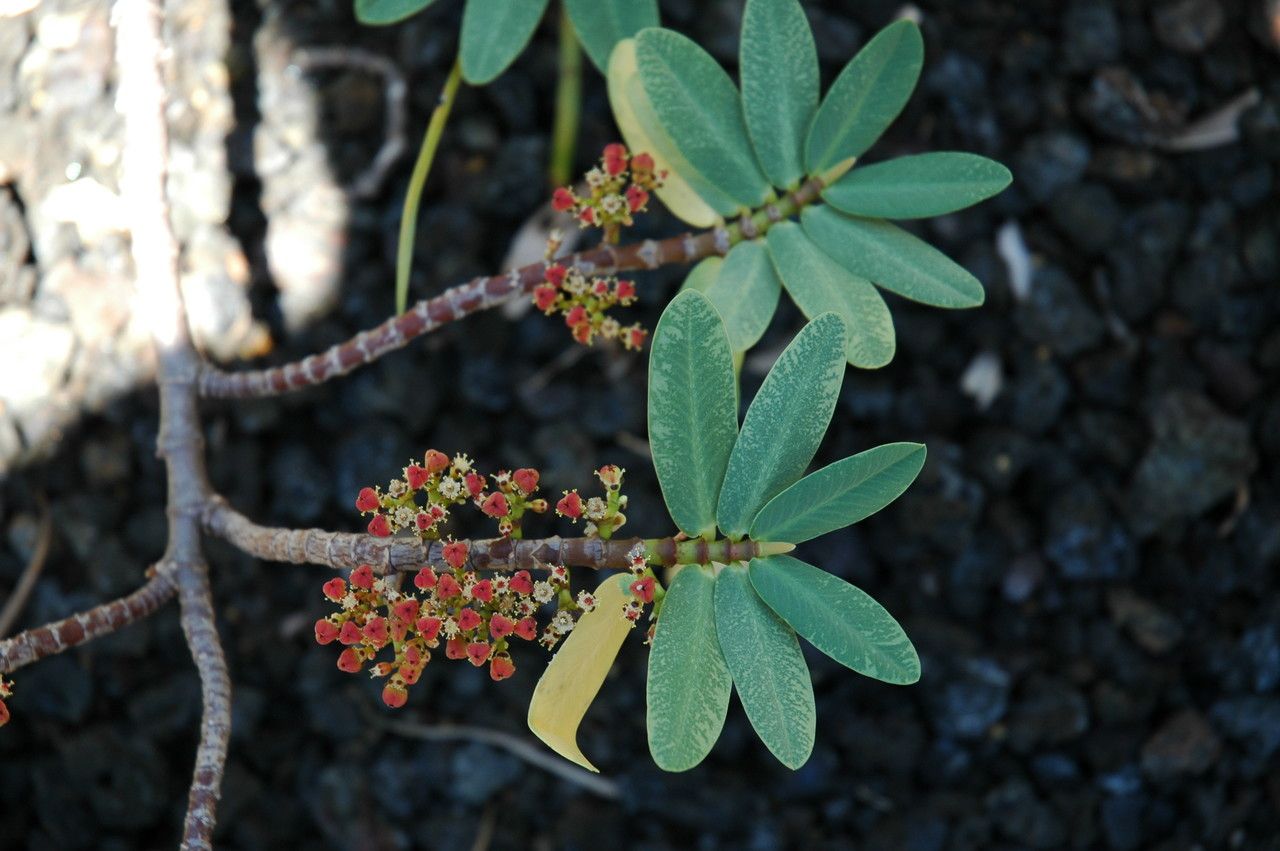
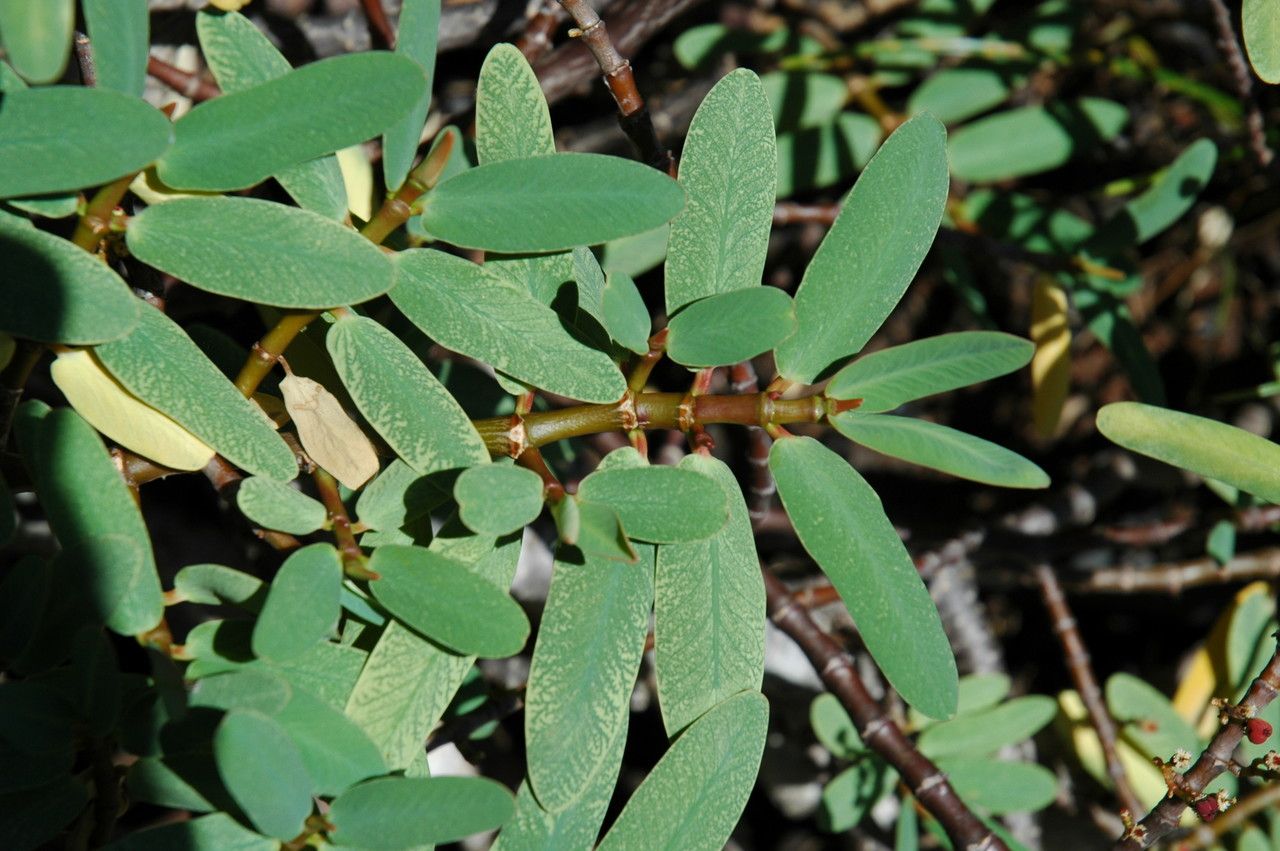
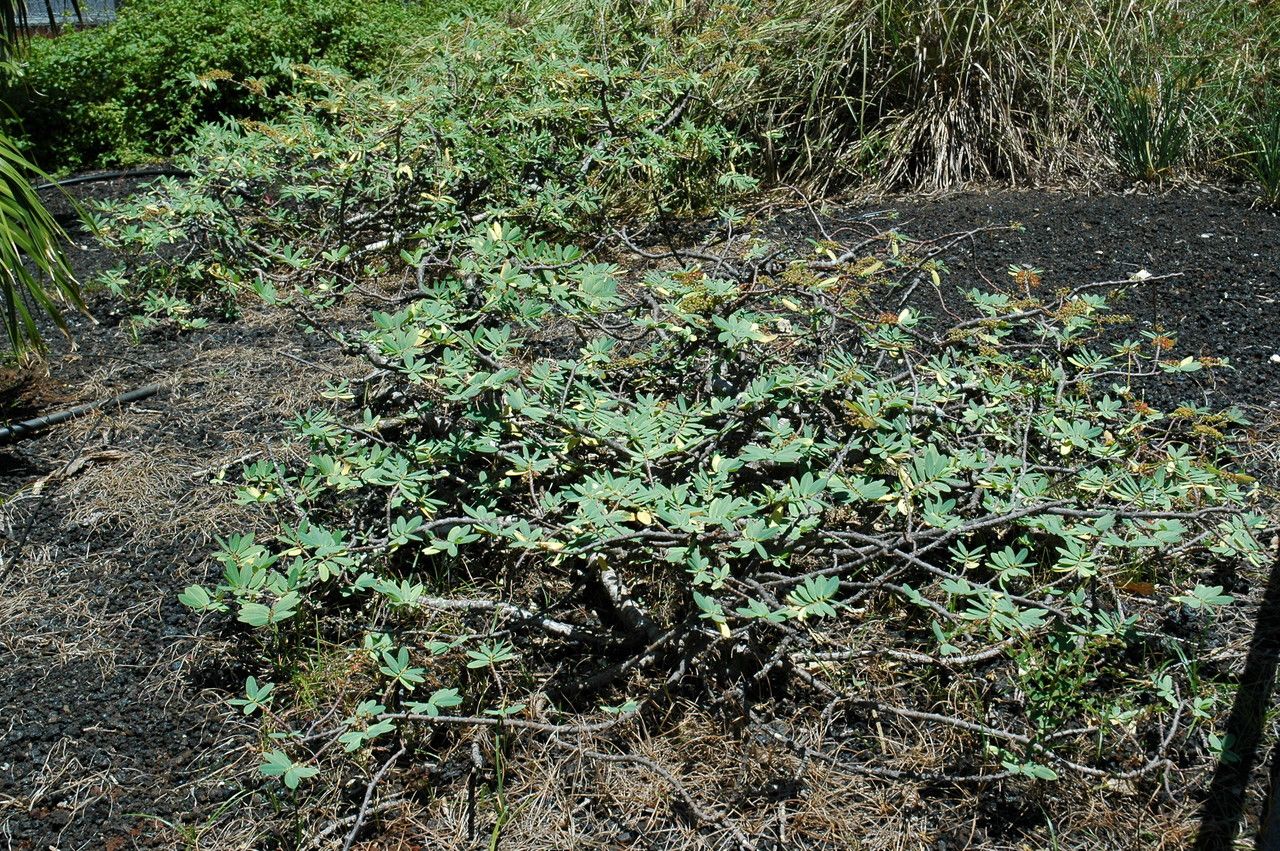
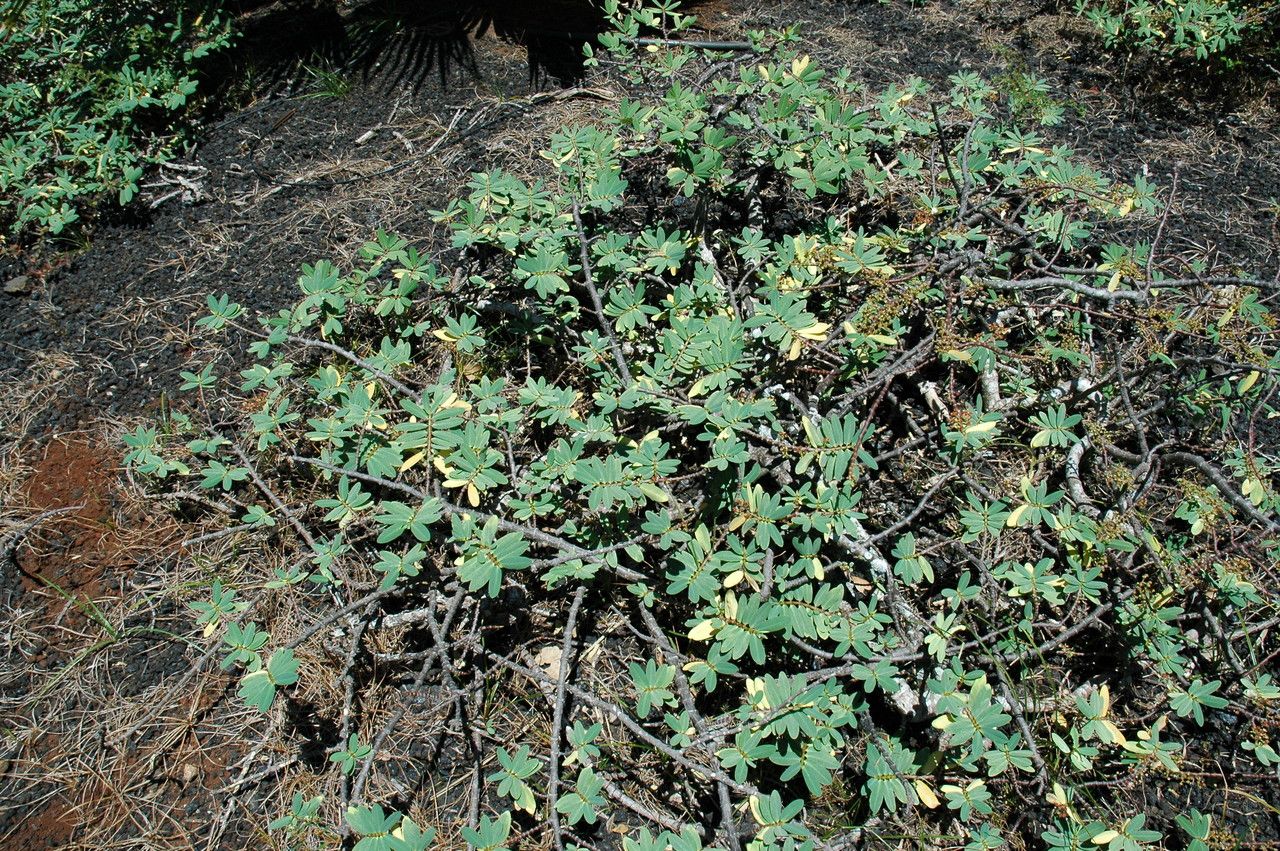
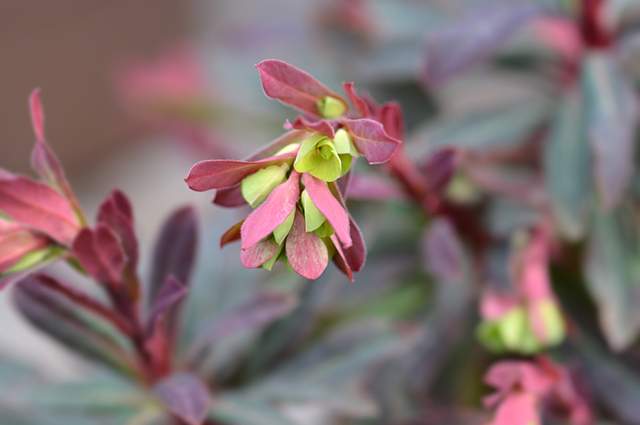
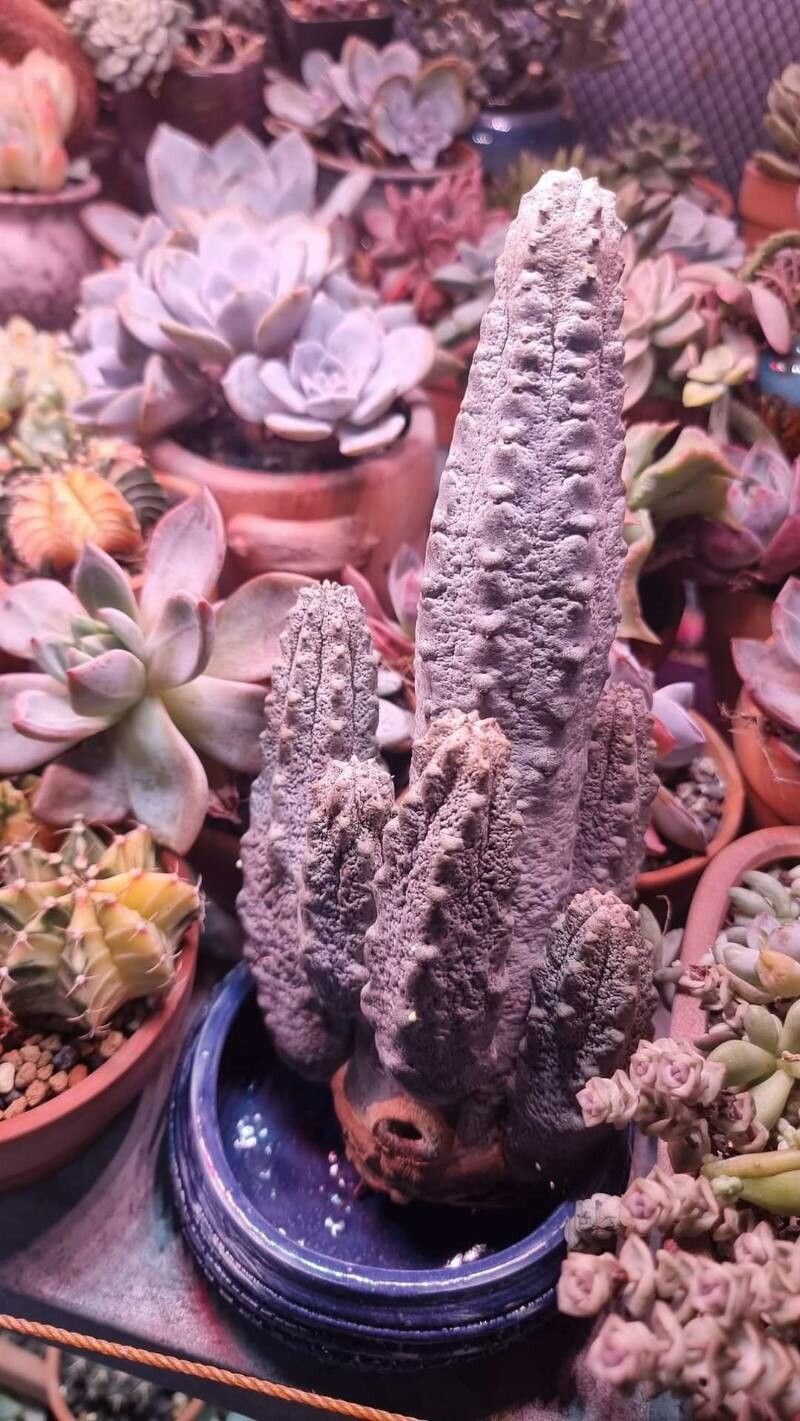
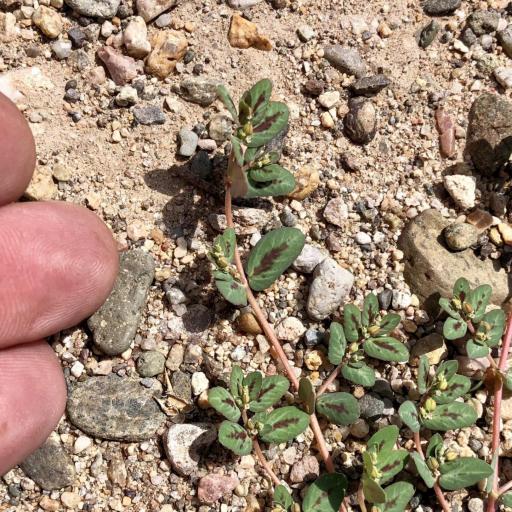
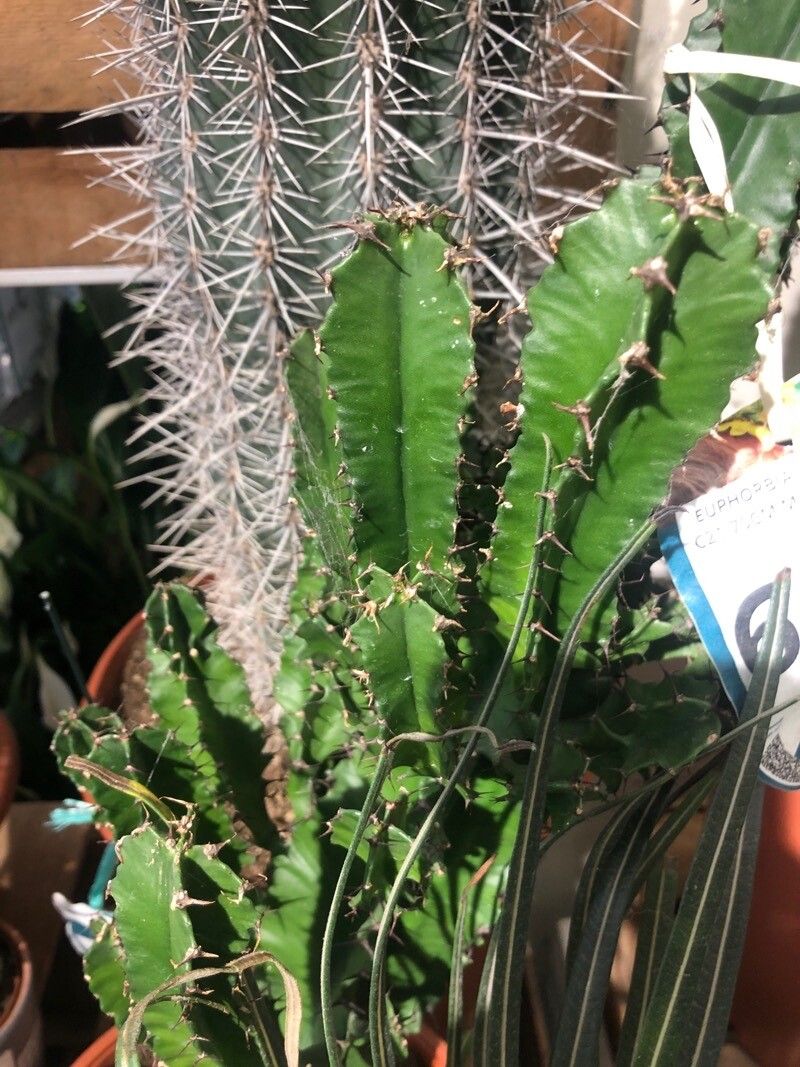
Euphorbia celastroides is a succulent plant from the Euphorbia family, native to South Africa. It typically grows in rocky areas and on hillsides, featuring thin, green stems that can reach up to 30 cm in height. The small leaves are arranged in pairs along the stem, giving the plant a distinctive look.
The flowers of Euphorbia celastroides are small and yellow-green, with five petals arranged around a central disk. The plant blooms from late winter to early spring.
Traditionally used by indigenous people for its medicinal properties, Euphorbia celastroides has been employed to treat conditions such as skin infections, wounds, fever, and respiratory problems.
However, the plant's sap contains toxic compounds that can cause skin irritation and potentially lead to blindness if it comes into contact with the eyes or mucous membranes. Therefore, it should be handled with care, especially when pruning or propagating.
Overall, Euphorbia celastroides is an intriguing succulent species that adds unique texture to any garden while also offering medicinal benefits.
'ekoko has strong disease resistance and is usually not susceptible to illnesses. In terms of care, this plant is fairly low-maintenance. When grown outdoors, it needs only minimal watering, and larger plants typically do not require pruning. Smaller plants, however, should be pruned after they have bloomed. 'ekokot is appropriate for anyone with an outdoor area, such as a garden or deck, and does not need much care experience.
How to keep Euphorbia Celastroides.
Light
'ekoko comes from open habitats, like sunlit meadows and forest margins, which supply abundant light. It flourishes in full sun but can also withstand partial sun, showing good adaptability to different sunlight levels.
Water
Ekoko needs to be watered regularly, about once a week, particularly during its growing seasons. To determine when to water, check the top 2 inches (5 cm) of soil and water only if it feels dry. When grown indoors, it's important to maintain sufficient moisture even during dormant periods. To avoid excess moisture, water the plant from below.
Temperature
Ekoko comes from tropical areas where the climate is usually warm and humid. Because of that, it is well suited to high temperatures and humidity. It does not like abrupt temperature changes and prefers a consistent thermal environment, so it's important to prevent temperature fluctuations indoors. It generally cannot tolerate cold and needs warmer conditions to grow. If the surrounding temperature falls too low, the plant may stop growing or even die.
Fertilizer
The best time to fertilize a 'ekoko is in early spring, when it comes out of dormancy. Doing so stimulates overall growth and encourages flower development. Fertilization improves the foliage, stems, and branches, and encourages flowers that are large, bright, and long-lasting. It helps move nutrients from the roots to the flowers and bolsters the plant’s health and resistance to disease.
Pruning
The 'ekoko plant thrives due to its drought tolerance and distinctive foliage. To support new growth, improve air circulation, and remove any damage, it is best to prune the plant in early spring. Regular pruning encourages vigorous growth, reduces pest problems, and requires the use of clean tools to prevent the spread of disease. This helps ensure the health and longevity of the 'ekoko.
Botanical profile.
- Plant Type
- Shrub, Succulent
- Life Cycle
- Perennial
- Genus
- Euphorbia
- Family
- Euphorbiaceae
- Hardiness Zone
- 9-11
- Mature Height
- 0.91 m to 2.13 m
- Mature Spread
- 0.91 m to 1.52 m
- Leaf Color
- Light Green, Gray
- Leaf Type
- Evergreen
- Flower Size
- 0.51 cm to 1.02 cm
- Bloom Time
- All year round
- Planting Time
- Spring, Summer, Winter
- Harvest Time
- All year round
Other names.
Reader questions.
What are the sunlight requirements for Euphorbia celastroides ('ekoko)?
Euphorbia celastroides ('ekoko) thrives in various sunlight conditions, requiring full sun to partial sun exposure. For full sun, the plant should receive above 6 hours of sunlight daily, while partial sun means it should get about 3-6 hours of sunlight. It's important to observe how sunlight moves through your garden carefully, choosing spots that offer a balanced mix of light and shade. This careful selection ensures that your 'ekoko plants grow happily and healthily.