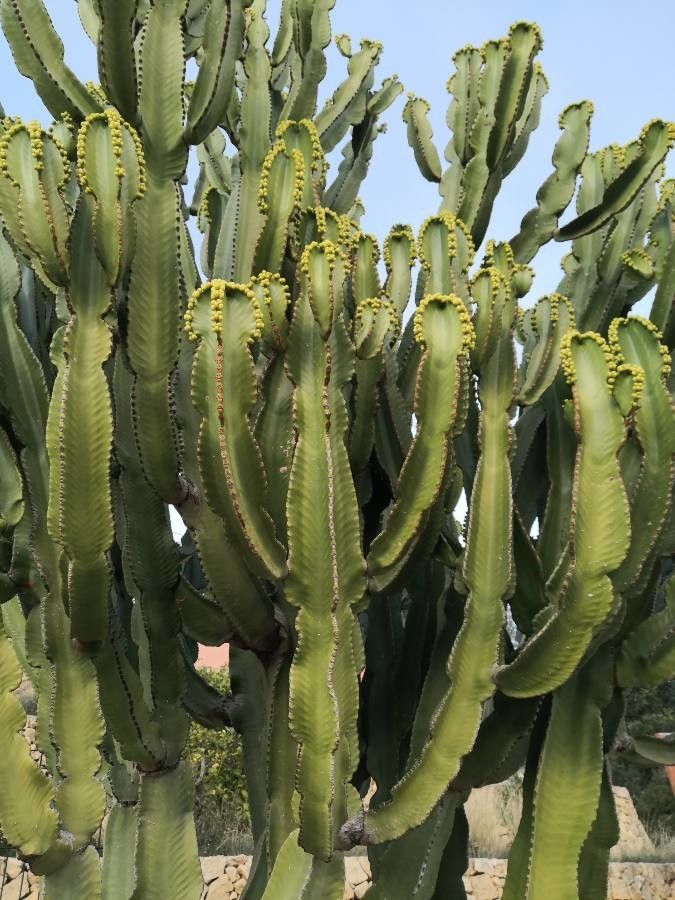
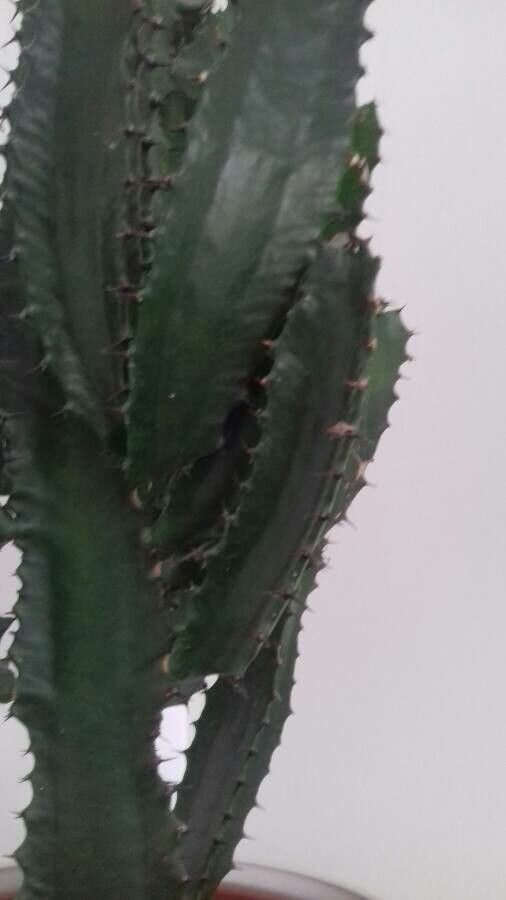
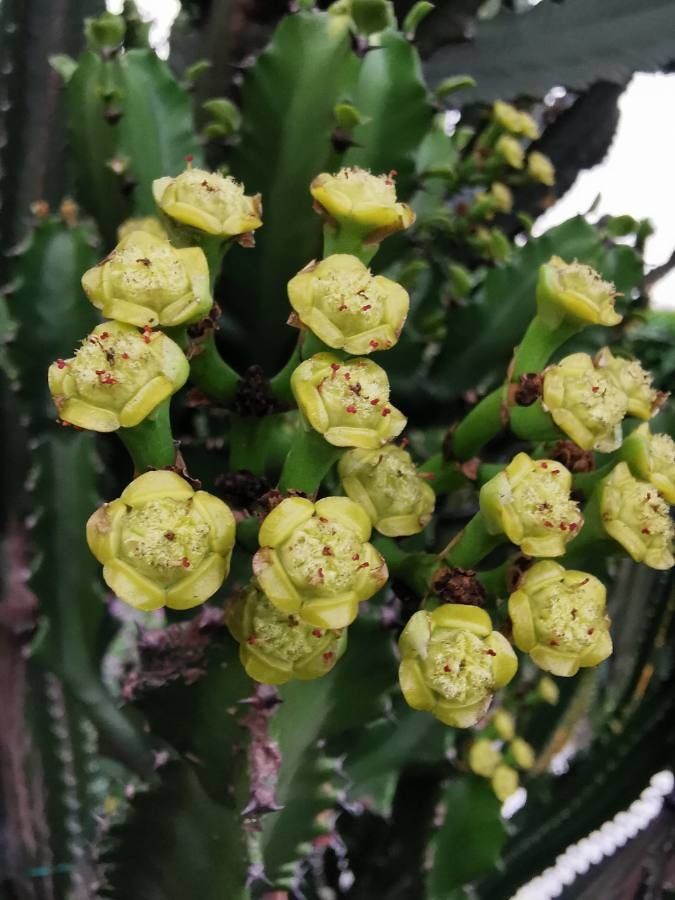
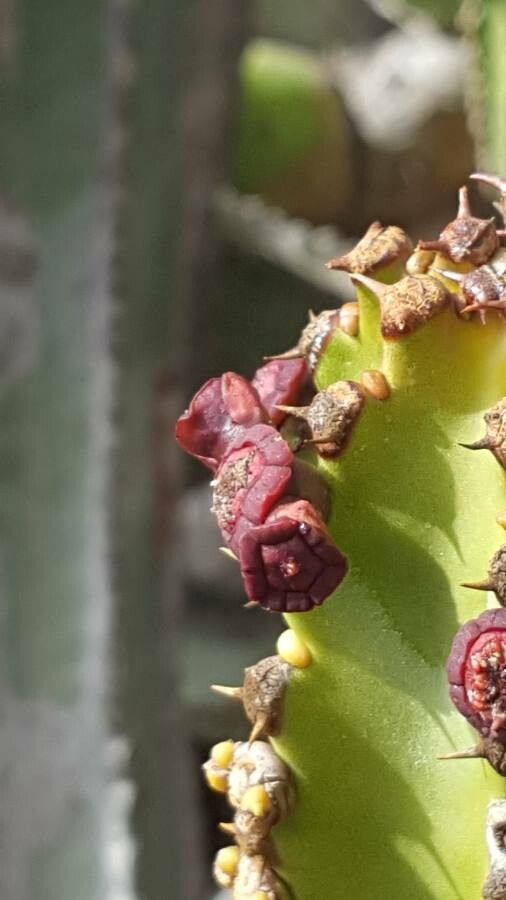
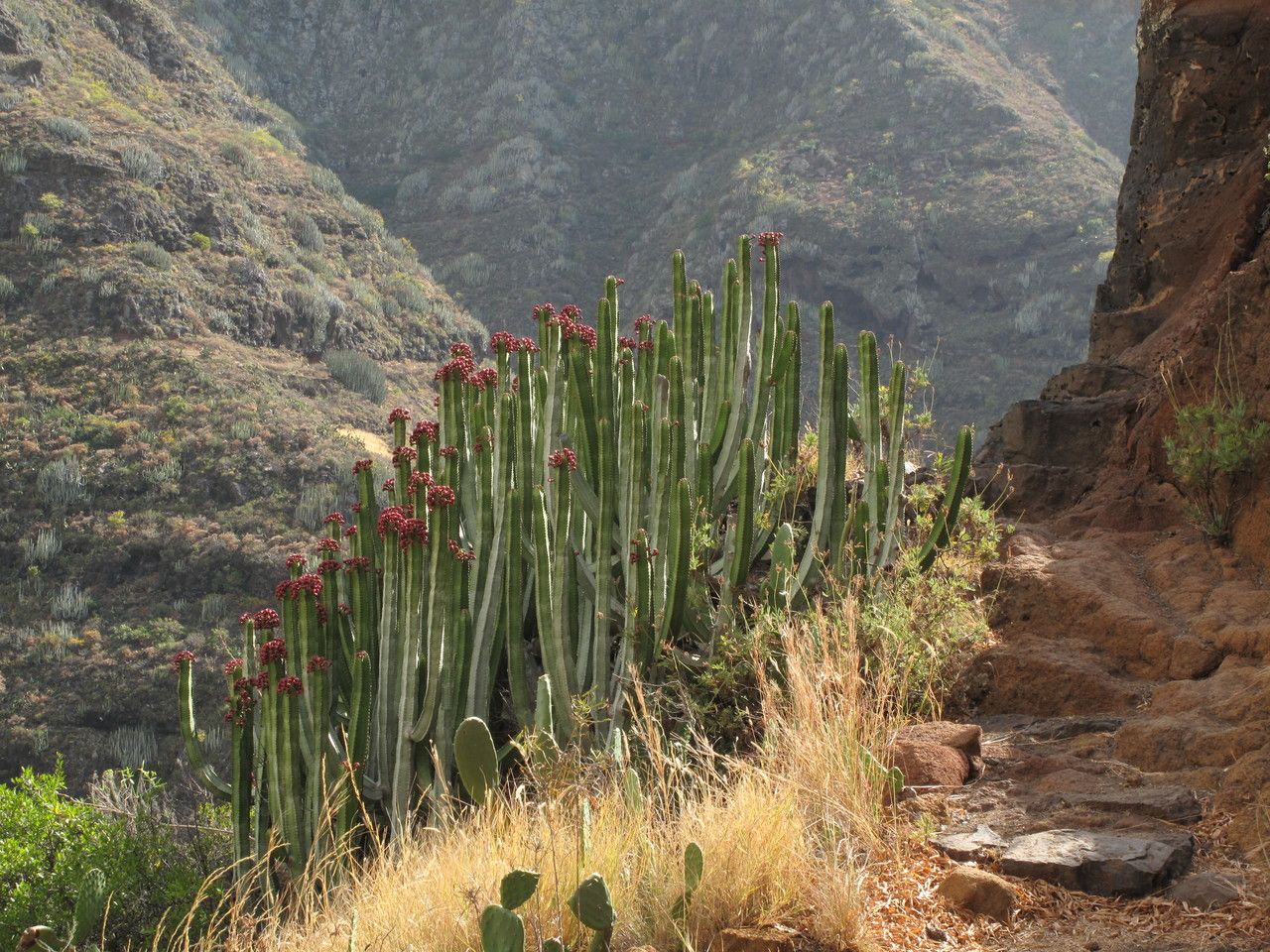
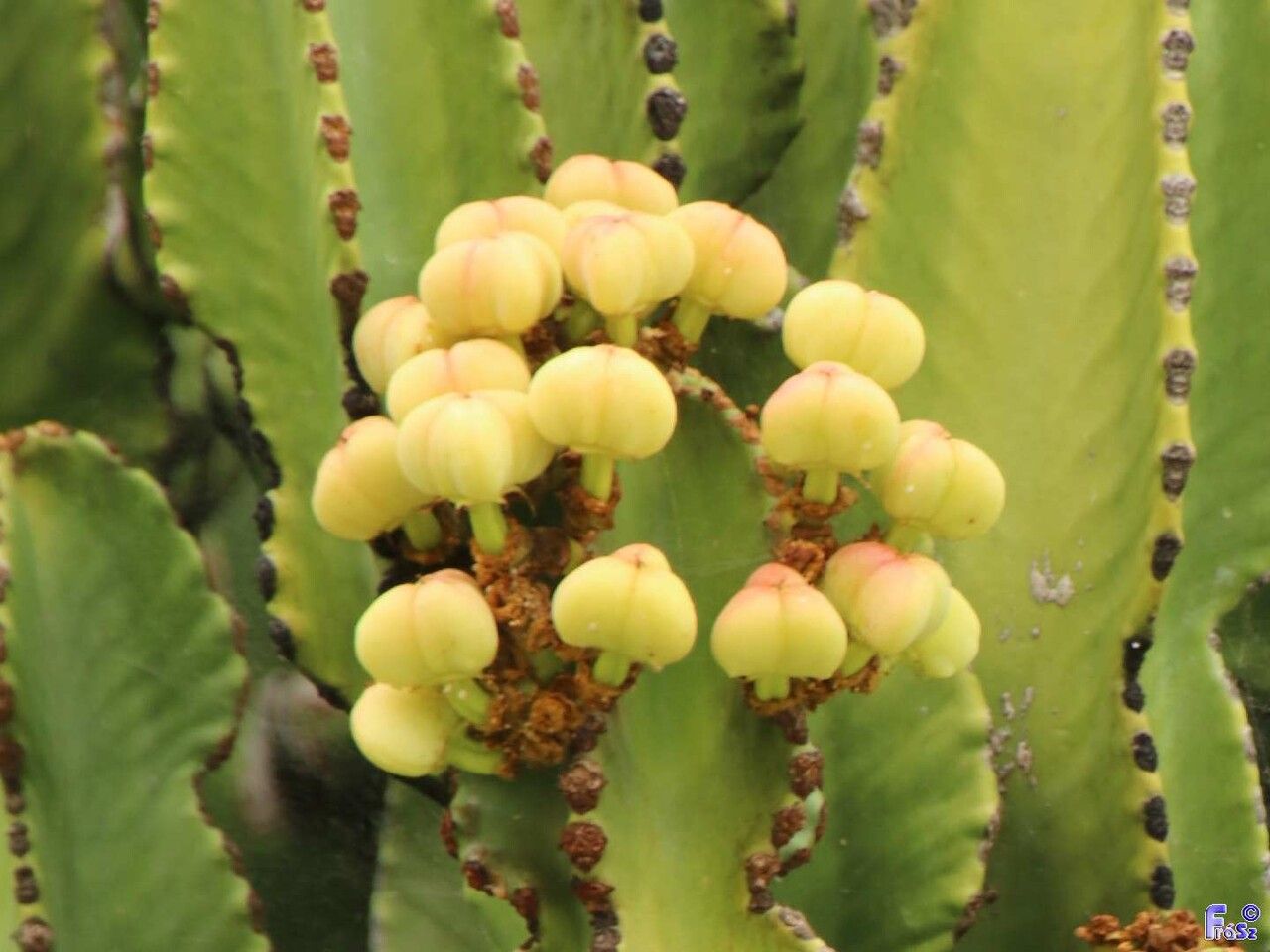
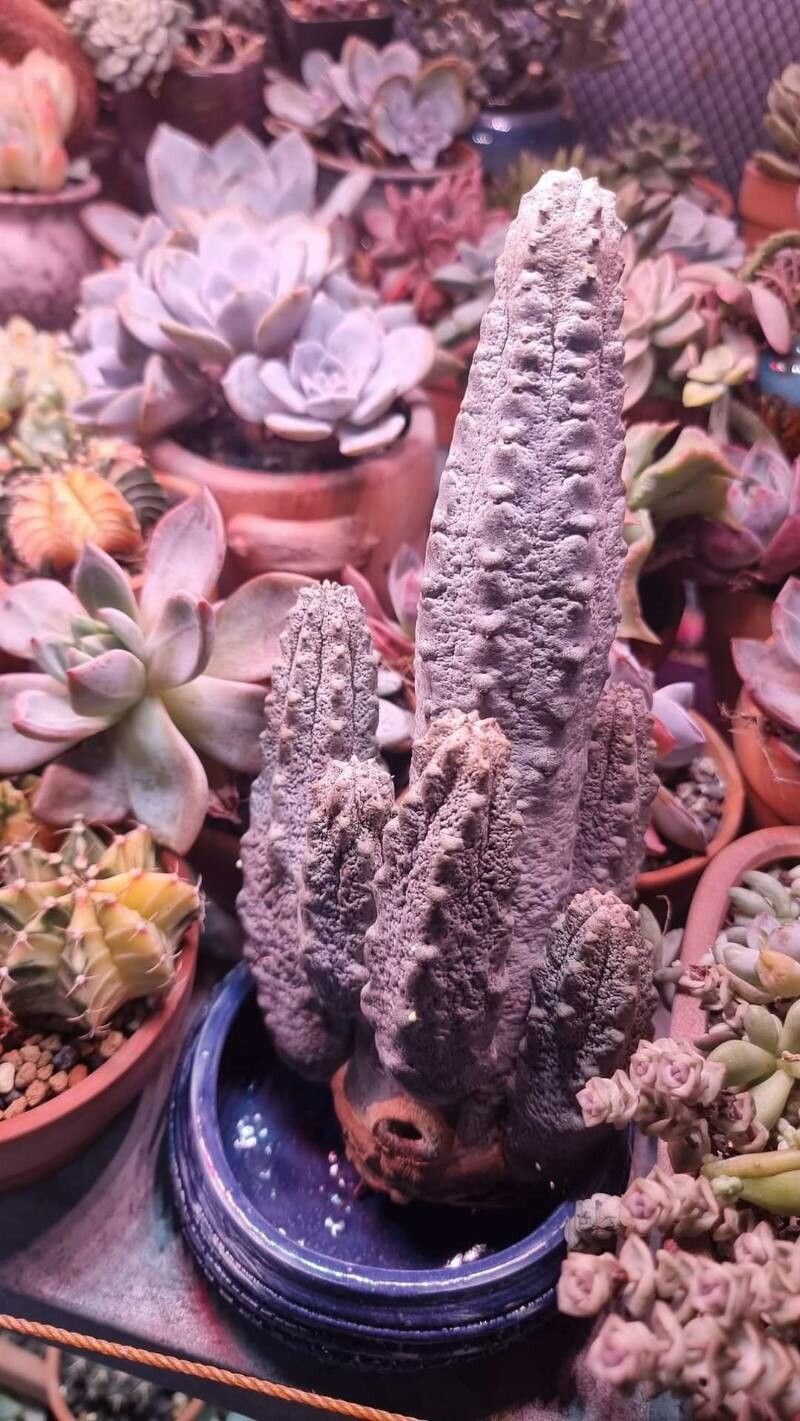
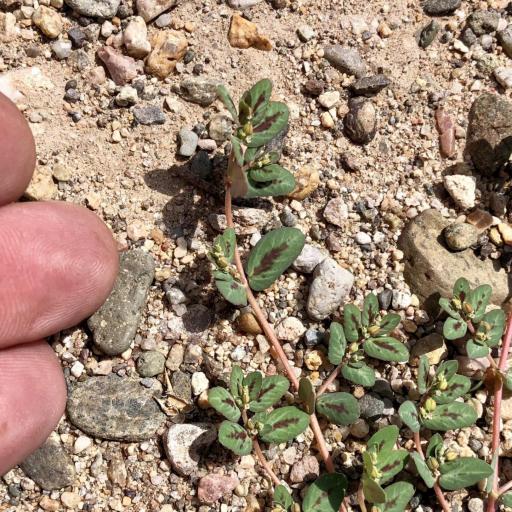
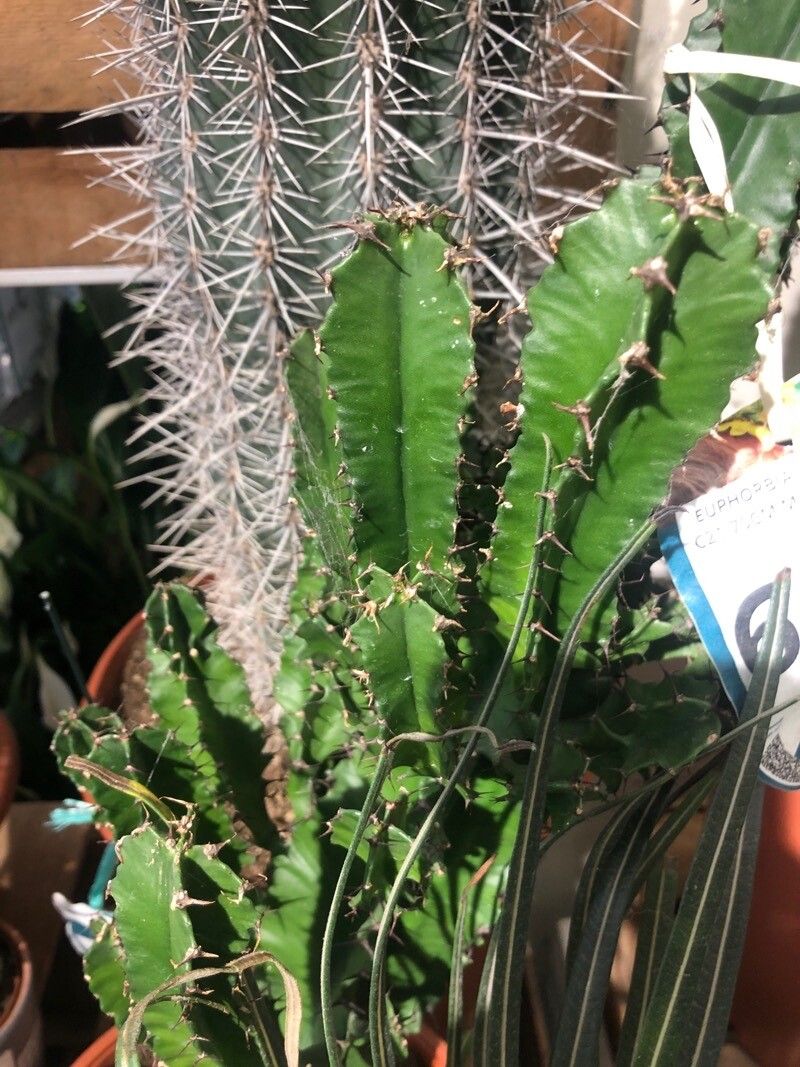
Euphorbia canariensis, commonly known as the Canary Island Spurge, is a succulent plant native to the Canary Islands. This perennial shrub can grow up to 2 meters tall and 1.5 meters wide. Its thick, fleshy stems are green and covered with small spines.
The leaves of Euphorbia canariensis are small, oval-shaped, and grow in clusters along the stems. The plant's flowers are small and yellow-green, typically blooming from late winter to early spring.
Euphorbia canariensis is a hardy plant that requires minimal care once established. It thrives in well-draining soil and full sun exposure but can tolerate partial shade as well. Although drought-tolerant, it should be watered occasionally during dry periods.
The sap of Euphorbia plants contains toxic compounds and may cause skin irritation or allergic reactions if ingested or touched without proper protection, such as gloves or long-sleeved clothing.
Overall, Euphorbia canariensis is an excellent addition to any garden due to its unique appearance and low maintenance requirements. Its drought tolerance makes it ideal for xeriscaping projects and arid climates with low rainfall, much like its native Canary Islands.
Canary island spurge has moderate disease resistance but is more sensitive to humidity and overwatering. It is also more prone to disease when it lacks light and is overwatered. In terms of care, Canary island spurge is drought tolerant and can endure long periods without watering. It requires little fertilizer and only occasional pruning. This makes it suitable for people of all experience levels, especially those who want to spend less time caring for their plants and who may occasionally be away from home for long periods. It is a good choice for people who do not want to devote much time to plant care but still want a plant that is easy to maintain.
How to keep Euphorbia Canariensis.
Light
Native to dry regions, Canary island spurge does best in full sun; its natural habitat is marked by strong sunlight and minimal shade. It will also tolerate partial sun, giving it some flexibility in growth.
Water
The Canary Island spurge thrives in arid conditions due to its strong drought tolerance, requiring water only once every three weeks. As an evergreen plant, it retains its leaves year-round, which helps minimize water loss through transpiration and enhances its resistance to drought.
Temperature
Canary island spurge does best in warm conditions and needs higher temperatures during the growing season to support growth and metabolism. It prefers plenty of sunlight, suitable moisture, and good air circulation. It can be harmed by very low temperatures and by overwatering. It's also important to maintain balance and avoid temperatures that are too high or conditions that are too dry.
Fertilizer
For Canary island spurge, small amounts of fertilizer applied one to two times a year during the growing season are enough. Do not fertilize in winter or in summer when the plant is dormant. Cut back on fertilizer for repotted plants and wait a couple of months after repotting before fertilizing. Fertilizing helps maintain healthy growth and promotes blooming.
Pruning
The Canary Island spurge is a columnar succulent known for its milky sap. Prune it in early spring to shape the plant, remove damaged stems, and encourage healthy growth. Make sure to use clean tools and wear gloves for protection. Avoid heavy pruning; instead, opt for light trims to improve airflow and help manage pests. For additional care advice, consult reliable horticultural guides.
Botanical profile.
- Plant Type
- Succulent, Shrub
- Life Cycle
- Perennial
- Genus
- Euphorbia
- Family
- Euphorbiaceae
- Hardiness Zone
- 9-11
- Mature Height
- 3.05 m
- Mature Spread
- 49 cm
- Leaf Color
- Dark Green
- Leaf Type
- Semi-evergreen
- Flower Color
- Yellow, Green
- Flower Size
- 0.51 cm to 0.76 cm
- Bloom Time
- Late spring, Summer
- Planting Time
- Spring, Summer, Autumn
- Harvest Time
- Late summer, Fall
Other names.
Reader questions.
What are the sunlight requirements for growing Canary Island Spurge (Euphorbia canariensis)?
Canary Island Spurge (Euphorbia canariensis) thrives in various sunlight conditions. For optimal growth, it requires full sun, which means it should receive more than 6 hours of sunlight daily. However, it can also grow in partial sun, where it gets about 3-6 hours of sunlight each day. It's important to observe the sunlight patterns through your garden to select the ideal spots that provide the perfect balance of light and shade. This ensures the plants remain happy and healthy.
What is the botanical name of Canary Island Spurge?
The botanical name of Canary Island Spurge is Euphorbia canariensis. This detailed nomenclature helps in scientifically identifying the plant, distinguishing it from other species within the Euphorbia genus.