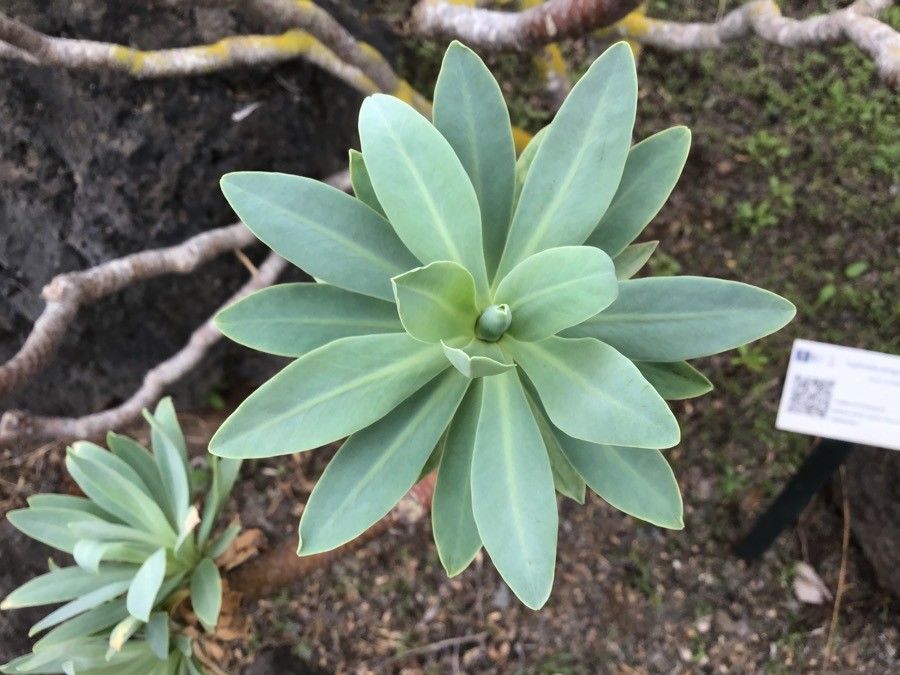
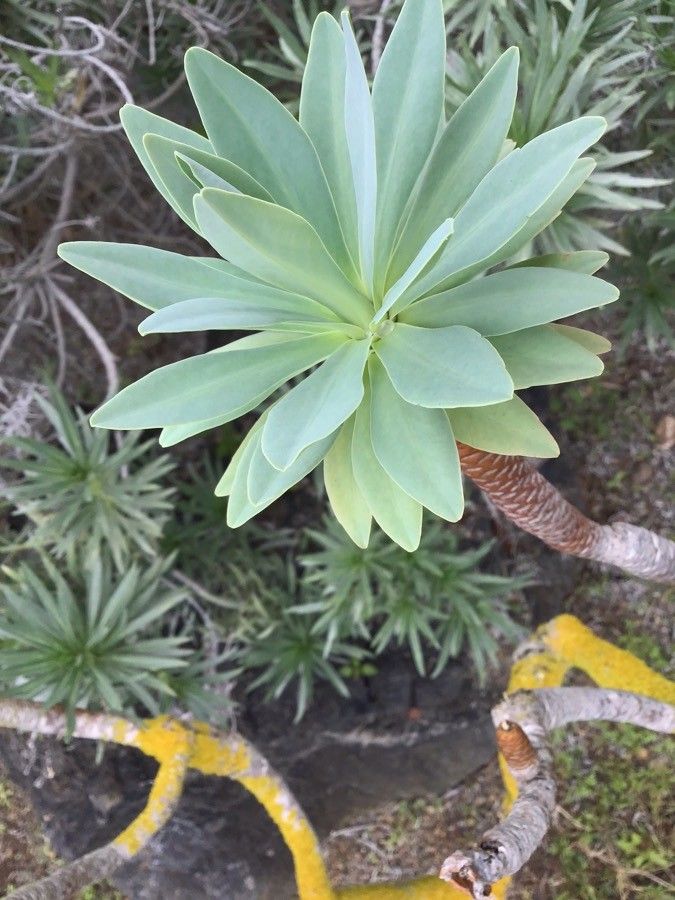
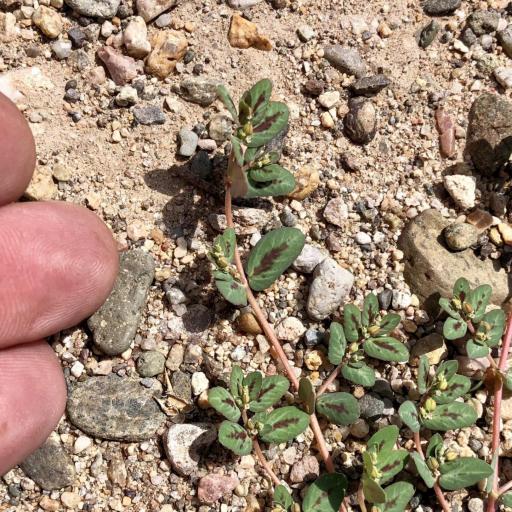
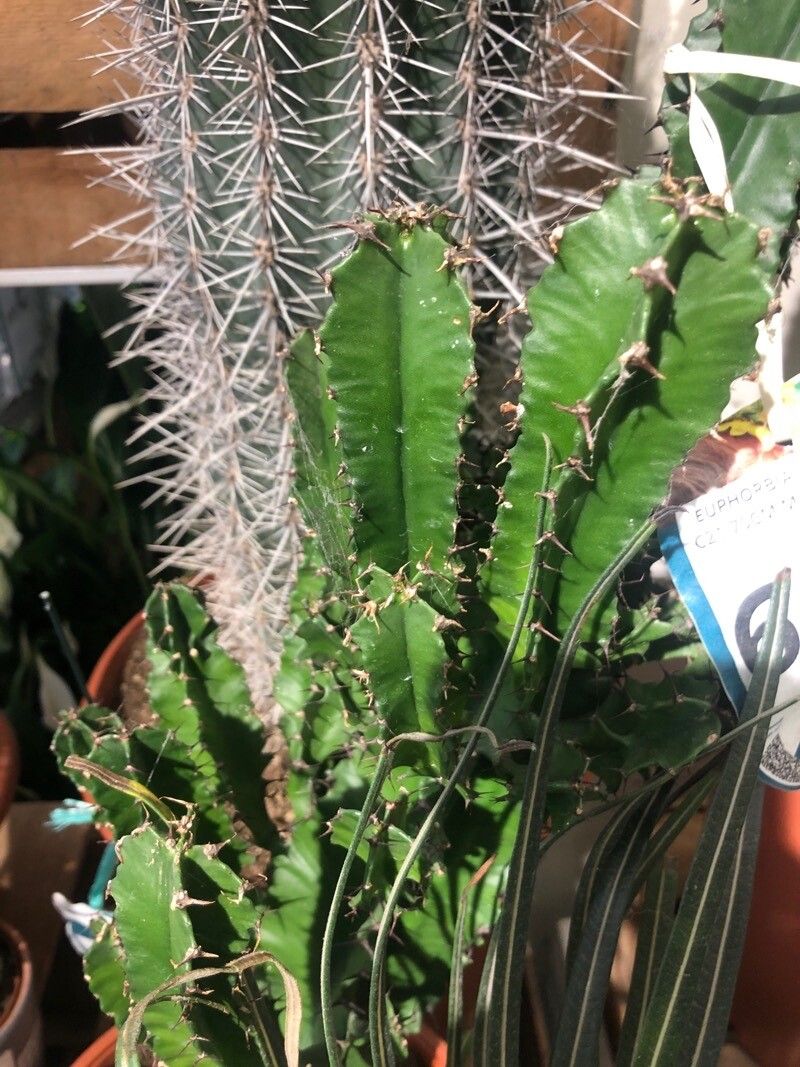
Euphorbia atropurpurea, called tabaiba majorera or tabaiba roja in Spanish, is a shrub in the family Euphorbiaceae native to Tenerife in the Canary Islands. It can reach 2 metres in height, and grows in ravines, and on slopes and terraces. The plant grows best in humid conditions in mid to low altitudes (300-1,200 m) on the south and west parts of the island. It is plentiful in the towns of Teno, Santiago del Teide, and the slope of Güímar.
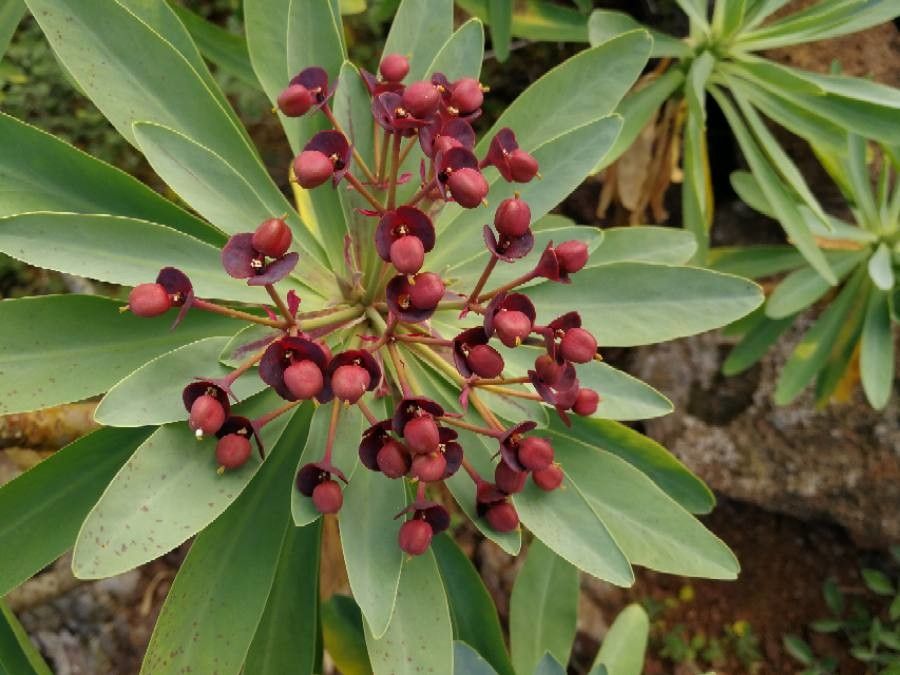
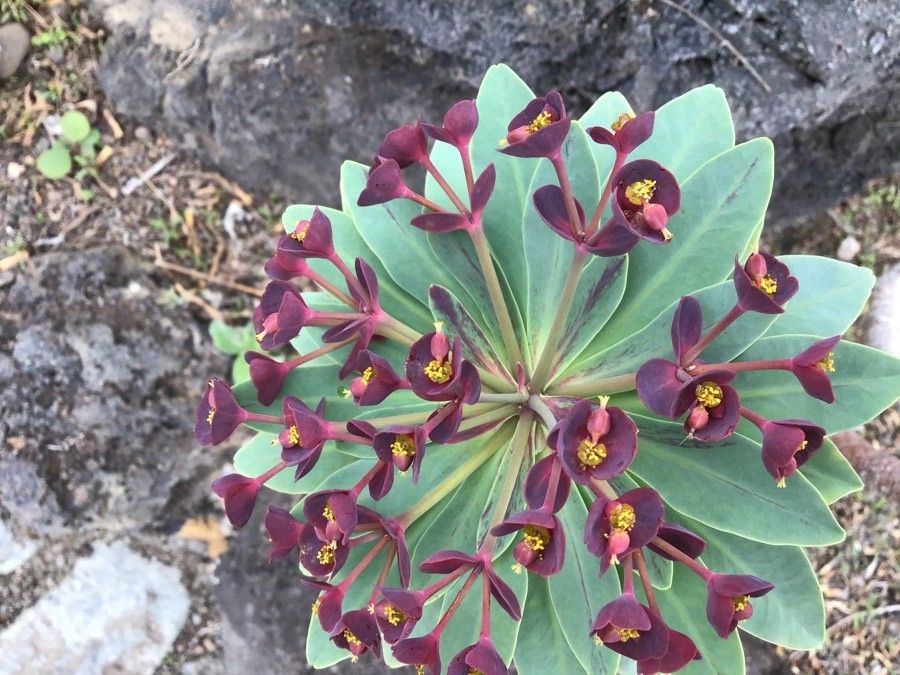
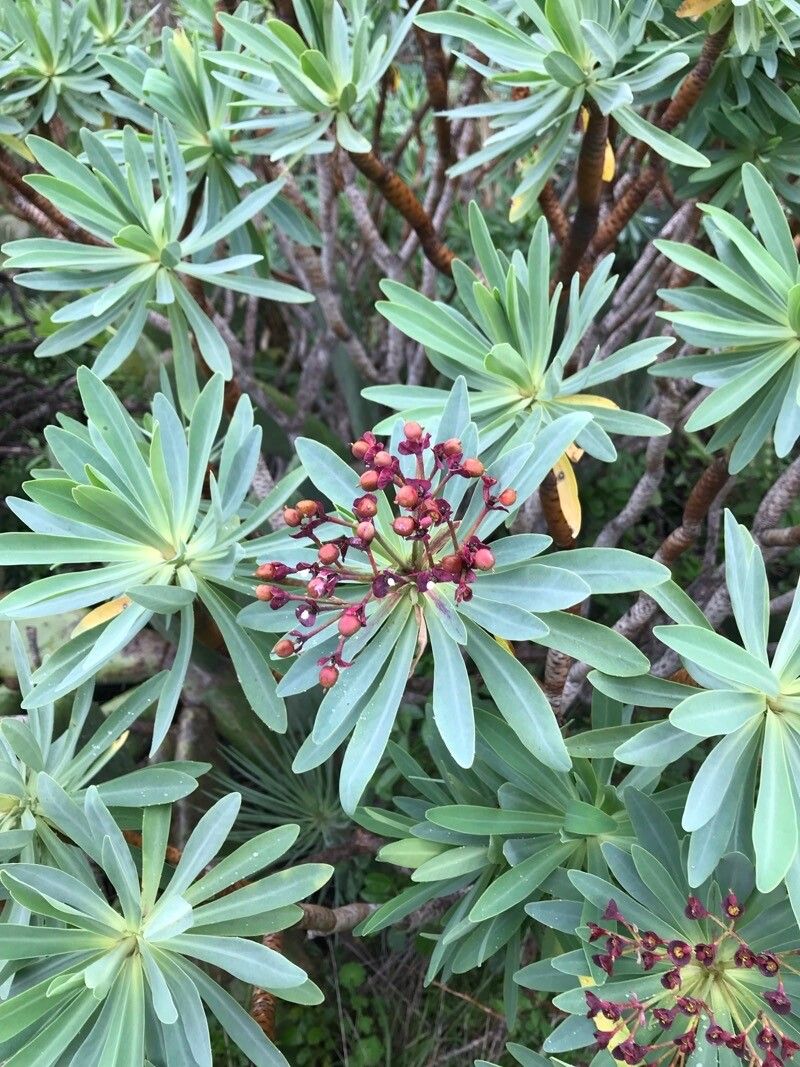
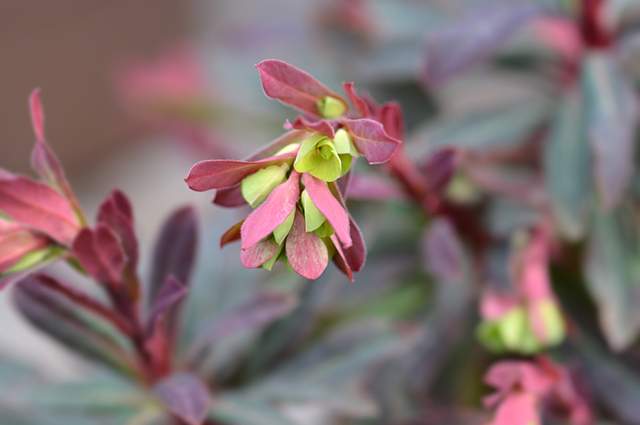
The shrub can reach over 2 m with succulent brown stems and branches without spines.: 210 It has large bluish green leaves, which form a rosette at the end of the branches. The plant flowers from winter to spring (December to May). The flowers have dark red bracts greater than 1 cm in size. These bracts lend the plant its name, atropurpurea (from the Latin ater or "black", and purple). It should not be confused with E. bravoana, which is endemic to the nearby island of La Gomera and also has purple-red bracts. The fruit is a red capsule with three dark brown seeds. Like other plants in the genus Euphorbia, it produces a toxic white latex if cut. E. atropurpurea is used as an ornamental plant in gardens for its eye-catching appearance and flowers. It requires little care, but requires sunlight and a certain amount of environmental humidity. It generally spreads by seeds, or more rarely by simply branching out. In the area of Masca, in Tenerife, hybrids between E. atropurpurea and Euphorbia regis-jubae occur, which the Swedish botanist Eric Ragnor Sventenius named Euphorbia navae in honour of Alonso de Nava y Grimón, founder of the Botanical Garden of La Orotava.
Euphorbia atropurpurea has moderate disease resistance but is fairly sensitive to humidity and overwatering. It also becomes more prone to disease when it receives insufficient light and is overwatered. In terms of care, Euphorbia atropurpurea tolerates drought and can endure long periods without watering. It needs little fertilizer and only occasional pruning. This makes it appropriate for people of all experience levels, particularly those who want to spend less time on plant care and who may sometimes be away from home for extended periods. It is a good option for those who do not wish to invest a lot of time in caring for their plants but still want an easy-to-maintain species.
How to keep Euphorbia Atropurpurea.
Light
Originating from dry regions, Euphorbia atropurpurea prospers in full sun, as its native habitat has intense sunlight and little shade. It also tolerates partial sun, offering some flexibility in its growth.
Water
Euphorbia atropurpurea needs regular watering, about once a week, especially during the growing season. Water the plant when the top 5 cm (2 in) of soil feels dry. Even during rest periods, indoor plants require some moisture. It's best to water them from below to avoid overwatering.
Humidity
This plant prefers dry conditions, so don't mist it. However, watering it less often can also thrive in higher humidity.
Temperature
Euphorbia atropurpurea prospers in warm conditions and requires elevated temperatures during its growing period to support growth and metabolic activity. It prefers plenty of sunlight, suitable moisture levels, and good air circulation. However, it can be damaged by excessively low temperatures and by overwatering. It is important to maintain balance and to avoid both excessively high temperatures and overly dry conditions.
Fertilizer
For Euphorbia atropurpurea, applying fertilizer once or twice a year during the active growing season is sufficient. Avoid feeding in winter and in summer when the plant is dormant. Use less fertilizer for plants that have been repotted and wait a couple of months after repotting before you start fertilizing. Fertilizing helps maintain healthy growth and encourages flowering.
Botanical profile.
- Plant Type
- Shrub, Succulent
- Life Cycle
- Perennial
- Genus
- Euphorbia
- Family
- Euphorbiaceae
- Hardiness Zone
- 9-11
- Mature Height
- 2.13 m
- Mature Spread
- 49 cm
- Leaf Color
- Dark Red, Maroon
- Leaf Type
- Evergreen
- Flower Size
- 1.02 cm to 2.03 cm
- Bloom Time
- Spring, Early summer, Mid summer
- Planting Time
- Spring, Autumn
- Harvest Time
- Summer, Early fall, Mid fall
Other names.