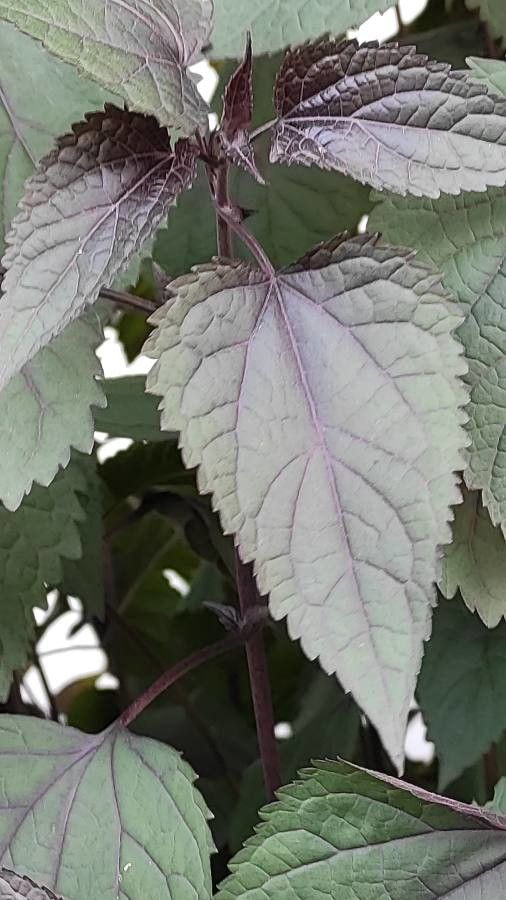
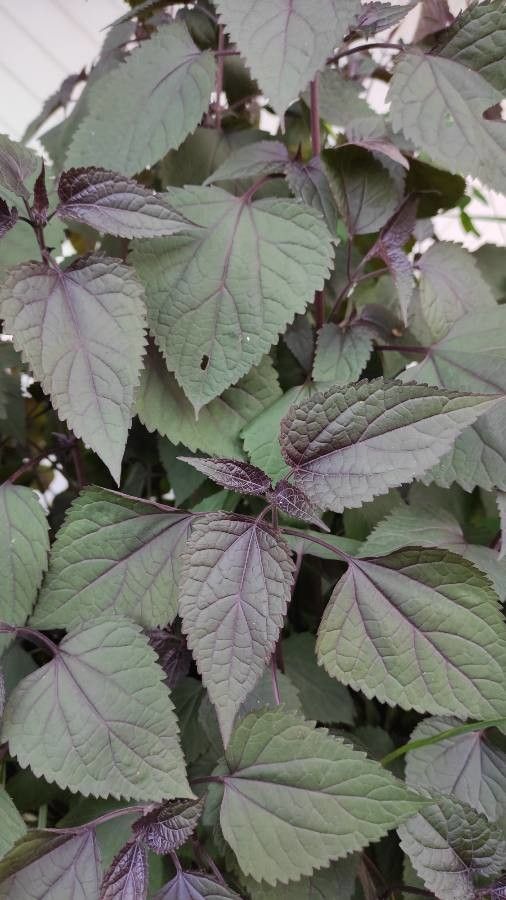
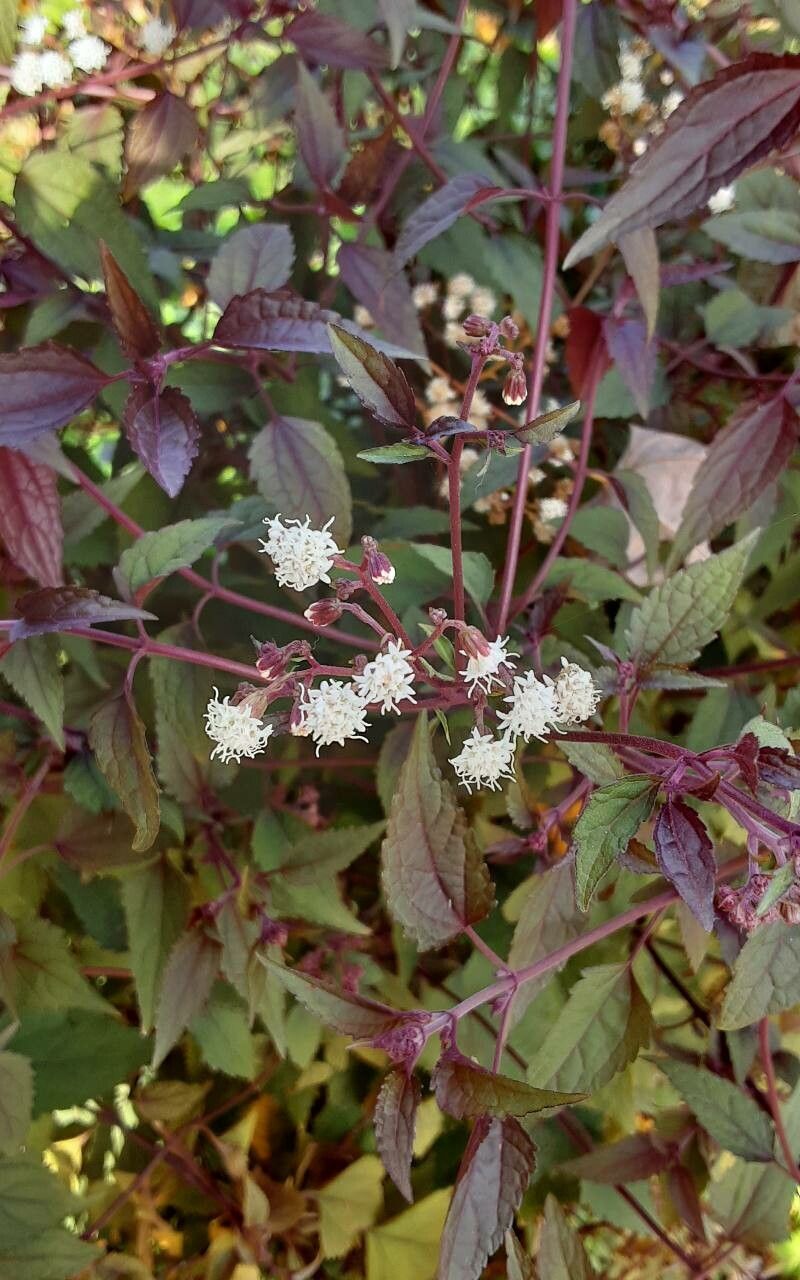
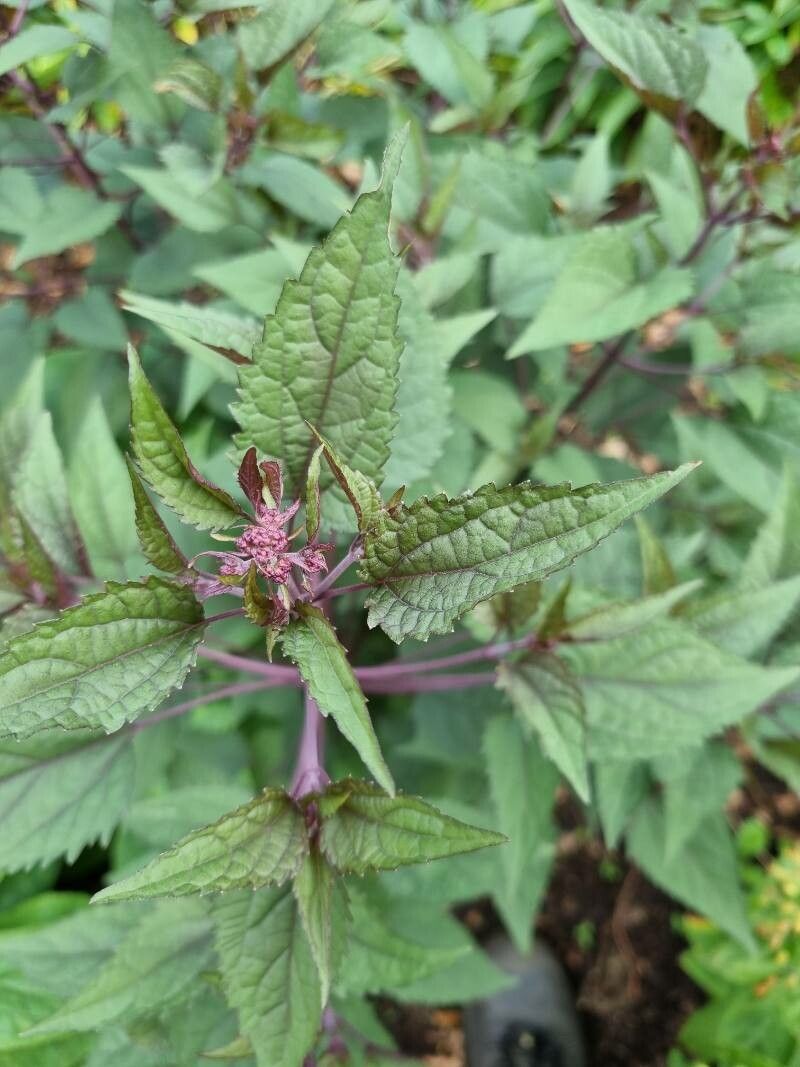
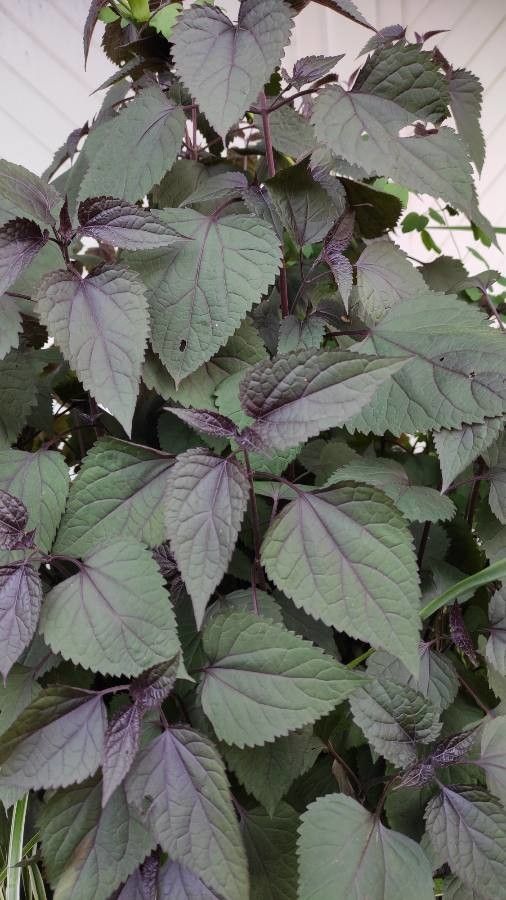
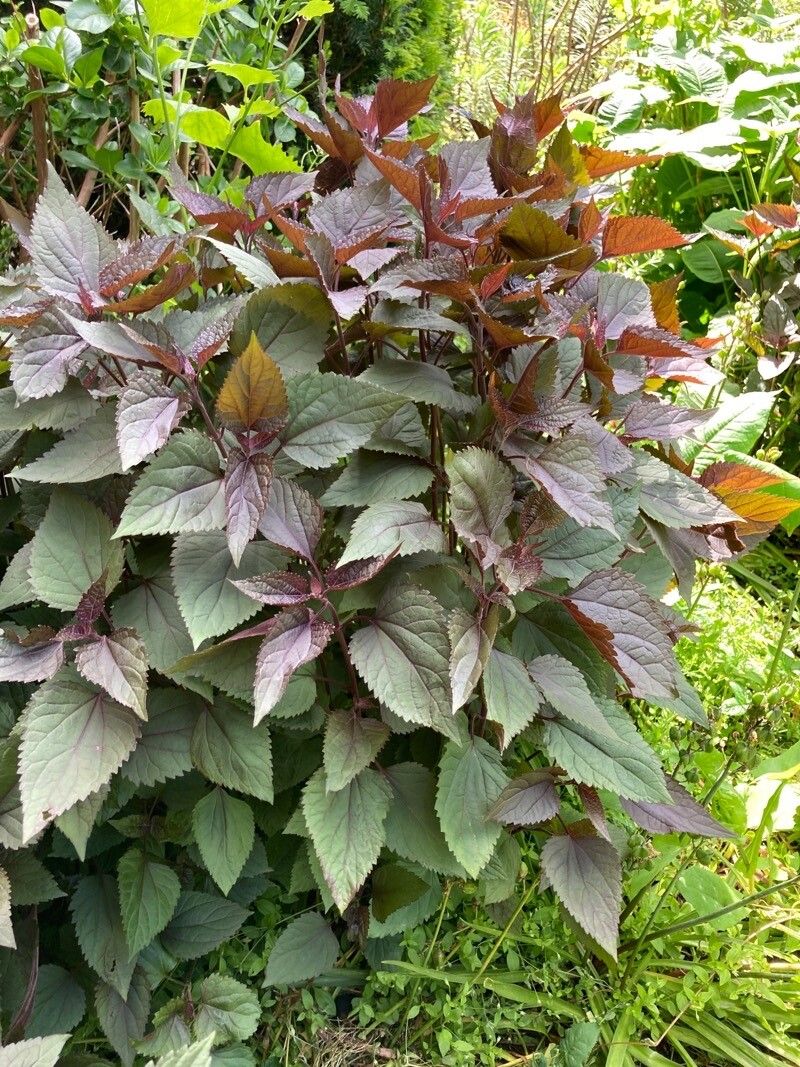
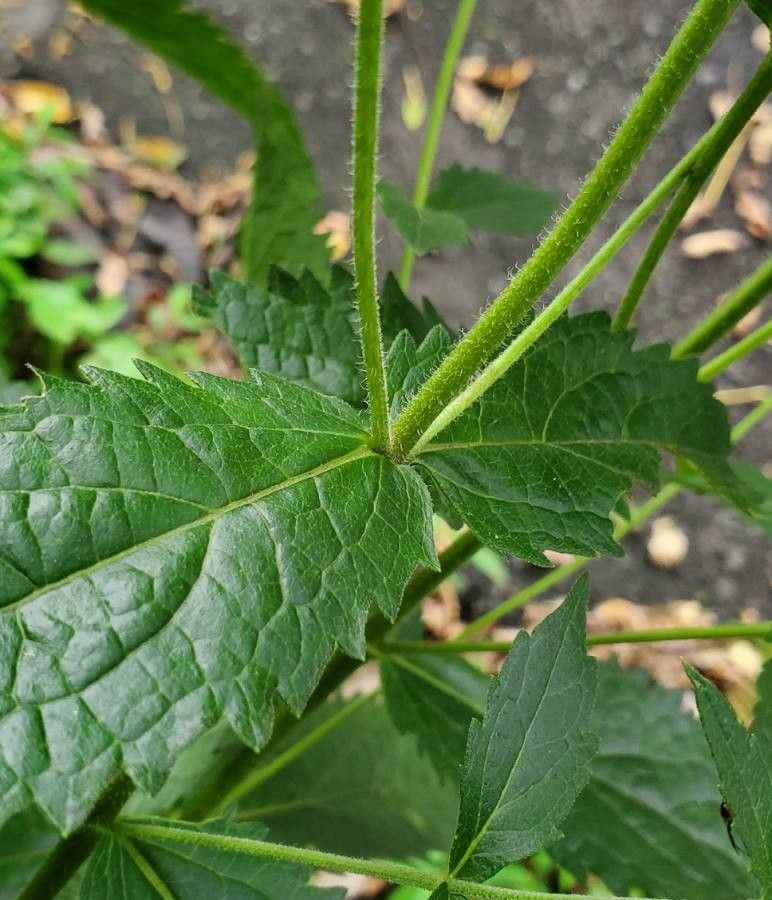
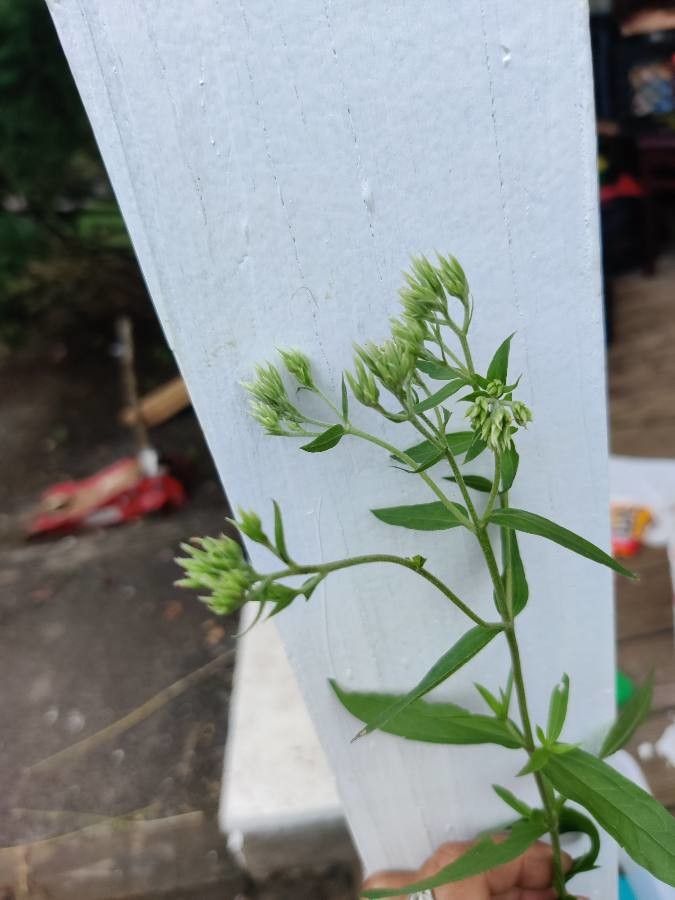
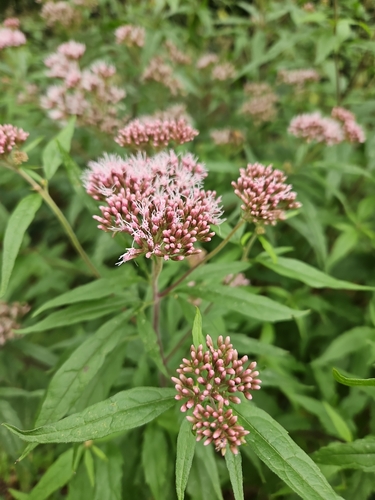
Eupatorium rugosum, commonly known as white snakeroot, is a herbaceous perennial plant that belongs to the Asteraceae family. Native to eastern North America, it thrives in woodlands, meadows, and along stream banks. The plant reaches a height of 3 to 4 feet and has a bushy appearance, characterized by dark green, rough-textured leaves arranged oppositely on the stem with serrated edges.
In late summer or early fall, white snakeroot produces clusters of small white flowers that attract butterflies and bees. These flowers subsequently give way to small seeds with fluffy hairs that facilitate wind dispersal.
Although the plant has been used medicinally, including for treating snakebites (hence its common name), it can be toxic if ingested by livestock or humans due to its tremetol content, which can cause tremors or even death in large quantities.
Overall, Eupatorium rugosum is an attractive native perennial valuable for pollinators, but it should be handled with caution due to its potential toxicity.
White snakeroot is fairly disease-resistant and generally does not tend to get sick. However, it can be vulnerable to pests and diseases found nearby. These problems are typically not serious. For care, this plant needs a moderate level of maintenance. It should be pruned regularly to keep an attractive appearance and encourage healthy growth. Fertilizing can also aid in promoting blooms. White snakeroot is well suited to people with outdoor spaces like a garden or patio and does not demand extensive gardening experience. It may need more attention when grown indoors.
How to keep Eupatorium Rugosum.
Light
White snakeroot does best in areas where sunlight is neither excessive nor too weak. Its growth can be constrained in places exposed to continuous sunlight or subjected to prolonged shading. Its original habitat includes environments that combine sun and shade. Unbalanced light conditions may negatively affect its overall growth health.
Temperature
White snakeroot thrives in temperatures between 32 and 90 ℉ (0 to 32 ℃) because it is a temperate species. It naturally grows in places with cool, moist soils, such as woodlands, prairies, and meadows. In colder seasons the plant can acclimate to lower temperatures, and in warmer seasons it can endure slightly higher heat.
Fertilizer
One fertilizer application in spring is generally adequate for White snakeroot, although multiple feedings can boost growth to its fullest. Apply fertilizer about every month to six weeks. Fertilizing improves the leaves' appearance and function, supporting uniform color and a healthy texture. It also promotes root development and nutrient uptake, contributing to the plant's long-term health.
Botanical profile.
- Plant Type
- Herb
- Life Cycle
- Perennial
- Genus
- Eupatorium
- Family
- Asteraceae
- Hardiness Zone
- 3-8
- Mature Height
- 1.52 m
- Mature Spread
- 0.61 m to 1.22 m
- Leaf Color
- Green
- Leaf Type
- Deciduous
- Flower Color
- White
- Flower Size
- 5.08 cm to 15.24 cm
- Bloom Time
- Mid summer
- Planting Time
- Spring, Summer
- Harvest Time
- Mid summer, Late summer
Other names.