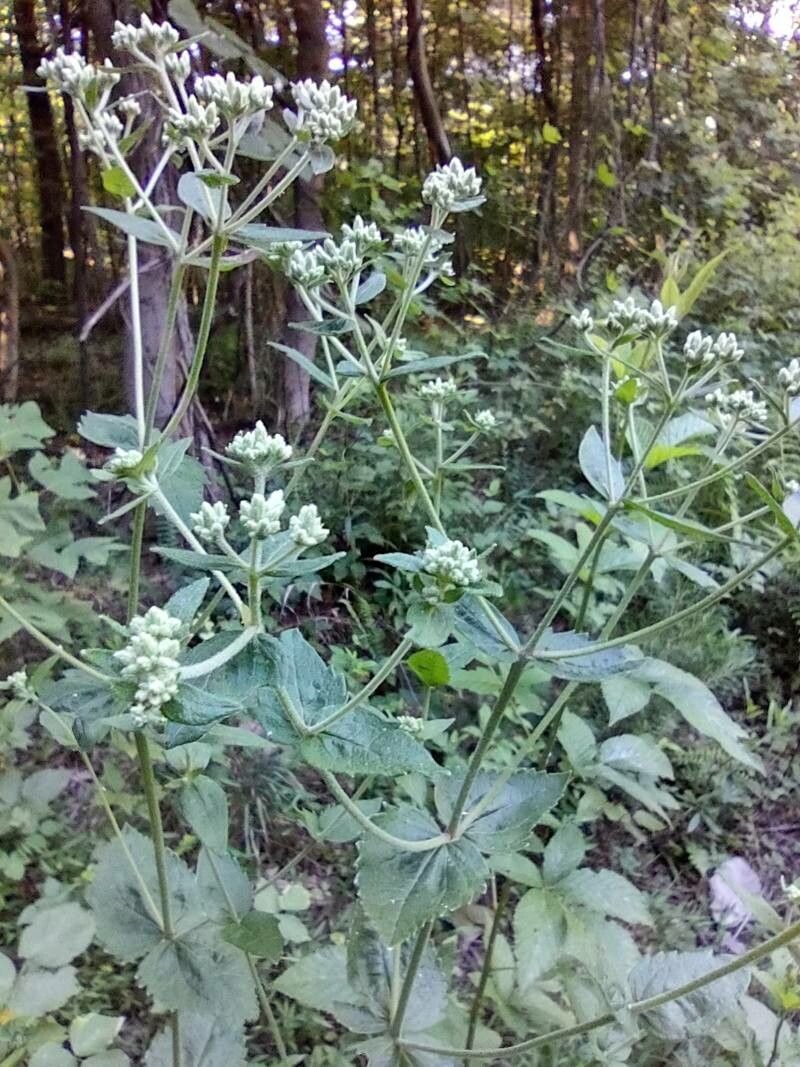
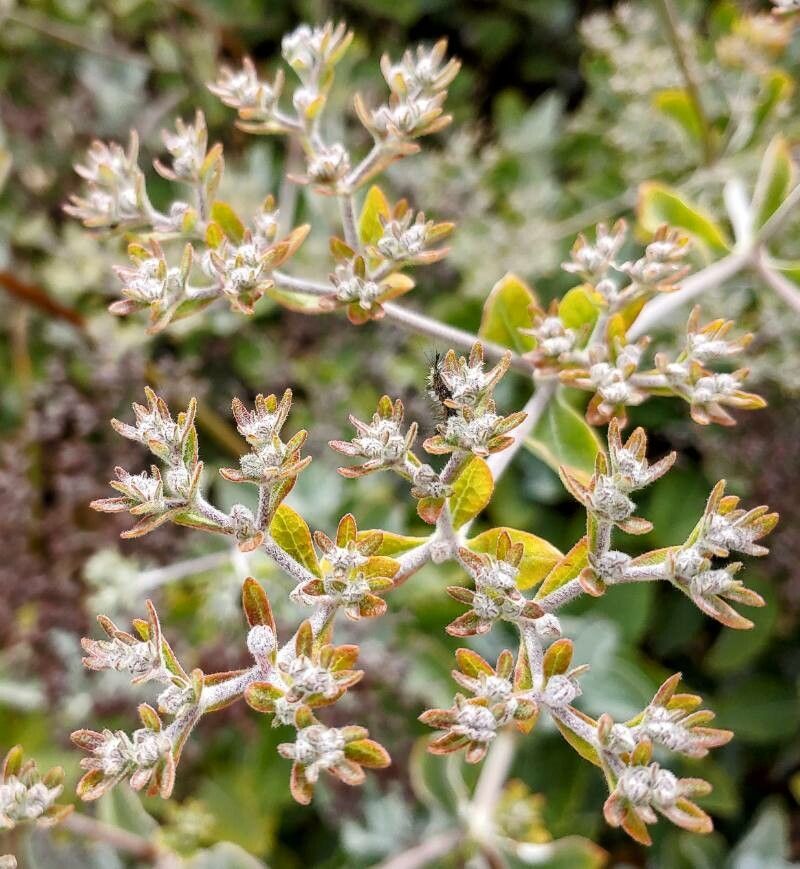
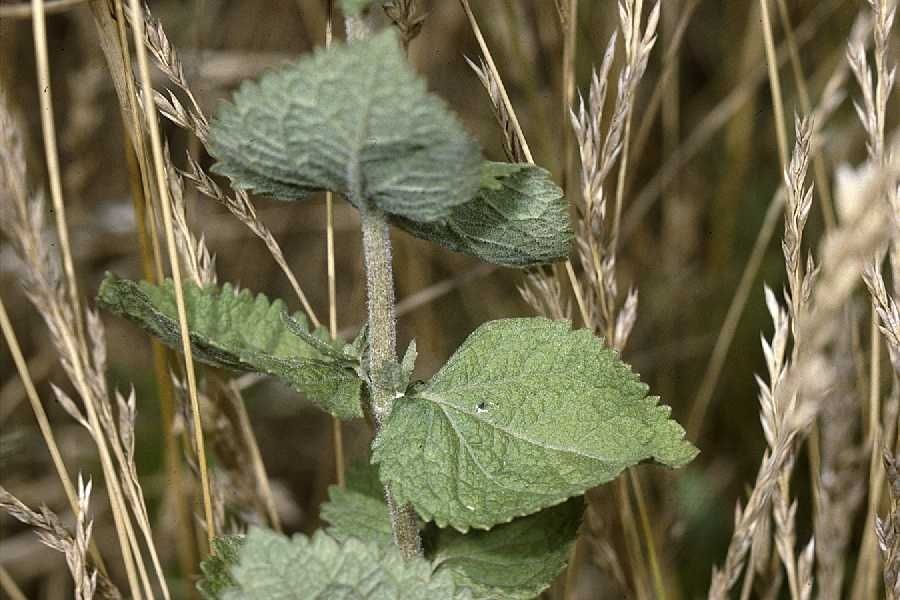
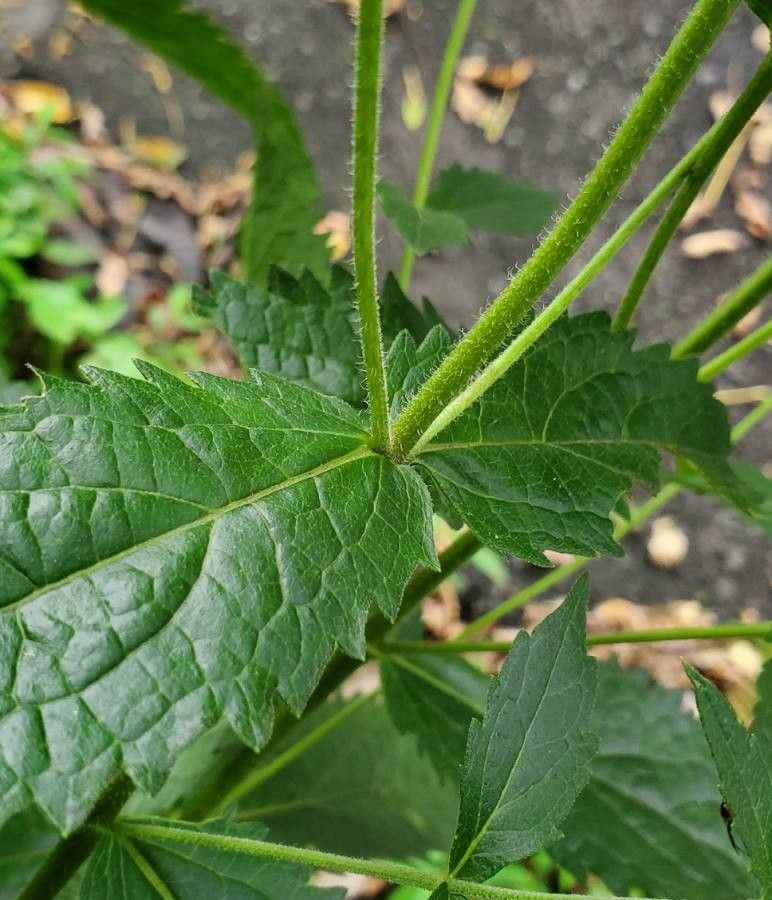
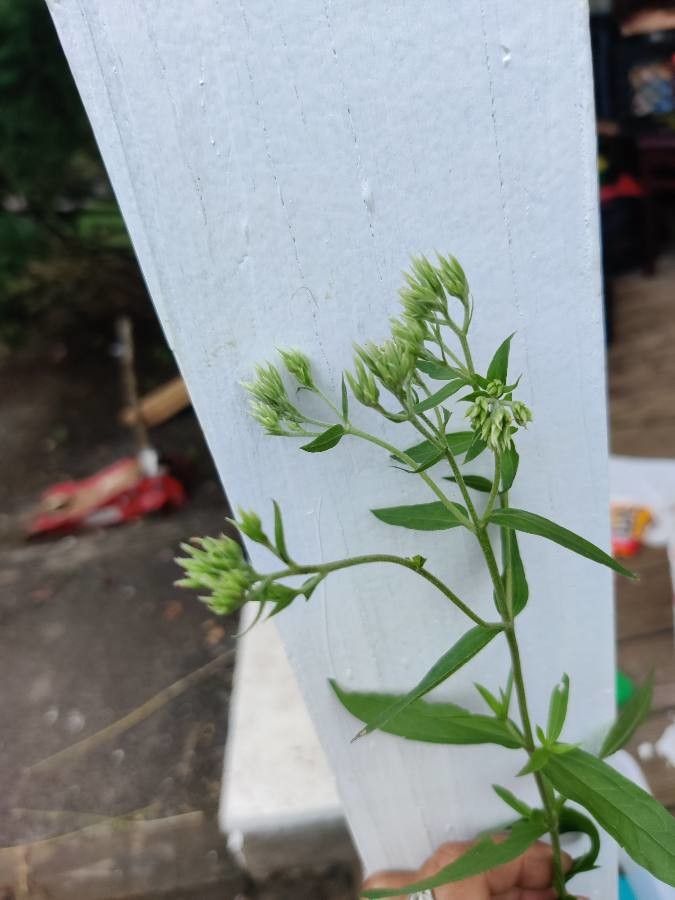
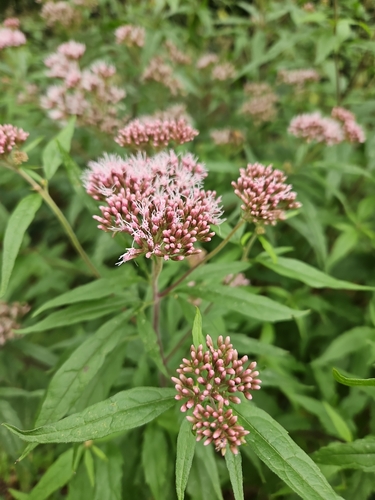
Eupatorium rotundifolium, commonly called roundleaf thoroughwort, is a North American species of plant in the family Asteraceae. It native to the eastern and central United States, in all the coastal states from Maine to Texas, and inland as far as Missouri and the Ohio Valley. It is found in low, moist habitats such as wet savannas and bogs.
Roundleaf thoroughwort has strong disease resistance and is generally not susceptible to illnesses. However, it can be affected by pests and diseases present in its environment. These infections are typically mild. Regarding care, the plant needs a moderate amount of attention. It should be pruned on a regular basis to preserve an attractive appearance and encourage healthy growth. Applying fertilizer can also aid in stimulating blooms. Roundleaf thoroughwort is well suited for anyone with outdoor areas like a garden or patio and does not demand extensive gardening experience. It may need extra care if cultivated indoors.
How to keep Eupatorium Rotundifolium.
Light
Roundleaf thoroughwort favors locations that receive full sun for most of the day but can also thrive in spots that are not completely exposed. Excessive sunlight can stress the plant, while too little light may limit its full growth. Its native habitat shows similar light conditions.
Water
Roundleaf thoroughwort thrives in moist environments and needs regular watering, ideally once a week. Although it is somewhat drought-tolerant, the plant flourishes best in outdoor settings that resemble its natural habitat. During the active growing season, it requires more water to ensure optimal growth and vitality.
Temperature
Roundleaf thoroughwort naturally occurs in habitats with cool to moderate temperatures, preferably from 41 to 89.6 °F (5 to 32 ℃). Seasonal temperature changes should approximate the natural variations within that range.
Fertilizer
A single fertilizer application in spring is generally enough for Roundleaf thoroughwort, although multiple feedings can boost growth to its fullest. Feed once every month to a month and a half. Fertilization improves the leaves’ appearance and function, helping maintain even color and a healthy texture. It also promotes root development and nutrient uptake for the plant’s long-term health.
Pruning
Prune roundleaf thoroughwort from early to late spring by removing any dead stems to encourage growth and shape the plant. Trim spent flowers to promote additional blooms, but be careful not to over-prune. Proper pruning improves air circulation and light penetration, which helps reduce the risk of disease. Remember, both timing and technique are essential for maintaining the plant's optimal health.
Botanical profile.
- Plant Type
- Herb
- Life Cycle
- Perennial
- Genus
- Eupatorium
- Family
- Asteraceae
- Hardiness Zone
- 4-8
- Mature Height
- 91 cm
- Mature Spread
- 61 cm
- Leaf Color
- Green, Gray
- Leaf Type
- Deciduous
- Flower Color
- White, Pink
- Flower Size
- 0.25 cm to 0.51 cm
- Bloom Time
- Mid summer, Late summer, Early fall
- Planting Time
- Winter
- Harvest Time
- Early fall, Mid fall
Other names.
Reader questions.
What are the sunlight requirements for Roundleaf thoroughwort?
Roundleaf thoroughwort thrives best in locations that are exposed to the sun's full glory throughout the day, requiring above 6 hours of sunlight to flourish, known as full sun conditions. However, it can also grow in conditions offering about 3-6 hours of sunlight, termed as partial sun. It's crucial to watch how sunlight moves through your garden, to ensure that you're choosing spots which provide a balance of light and shade optimal for your plants' growth and happiness.
What is the ideal temperature range for Roundleaf thoroughwort?
The ideal temperature range for Roundleaf thoroughwort (Eupatorium rotundifolium) is between 41 to 89.6 °F (5 to 32 °C). The plant is native to environments that offer cool to moderate temperatures within this range. To mimic its natural habitat, temperature fluctuations across different seasons should remain within this specified range.
Can Roundleaf thoroughwort grow under artificial lighting?
Yes, Roundleaf thoroughwort can grow under artificial lighting, which is especially useful in environments where natural sunlight is insufficient, like during winter or in less sunny spaces. The key is to provide the right type and amount of artificial light. LED lights are recommended as they can be tailored to the specific light wavelengths needed by the plant. Full sun plants should receive 30-50W/sq ft, partial sun plants 20-30W/sq ft, and full shade plants 10-20W/sq ft of artificial light. The light source should be placed 12-36 inches above the plant for a duration mimicking natural daylight of 8-12 hours per day.
How does Roundleaf thoroughwort handle cold temperatures?
Roundleaf thoroughwort displays strong cold resistance, and special frost protection measures are not typically required. However, in regions where winter temperatures are anticipated to fall below -30°C, it's essential to provide additional cold protection by using materials such as soil or straw to cover the plant. Additionally, watering the plant abundantly before the first freeze in autumn helps the soil remain moist and freeze, which prevents drought and water scarcity for the plant during winter and early spring.
What symptoms indicate light deficiency in Roundleaf thoroughwort?
Symptoms of light deficiency in Roundleaf thoroughwort include new leaves growing smaller than the mature ones, leggy or sparse growth, accelerated leaf drop, slower or ceased new growth, pale new leaves indicating a lack of chlorophyll, and chlorosis where leaves lose their green coloring. These symptoms indicate that the plant is not receiving the right amount of sunlight it needs to thrive.
What should be done if the Roundleaf thoroughwort experiences temperatures below -30°C?
If Roundleaf thoroughwort experiences temperatures below -30°C, there might not be any noticeable issues during winter, but a decrease in sprouting or complete lack of sprouting may occur in spring. To manage this, any parts of the plant that have not sprouted by spring should be removed.
How does excessive sunlight affect Roundleaf thoroughwort?
Excessive sunlight can lead to several issues for Roundleaf thoroughwort, including sunscald, which presents as pale or necrotic areas on the plant's tissues; leaf curling as a defense mechanism to reduce surface area exposed to sunlight; wilting due to increased water loss through transpiration; and leaf scorching, characterized by brown, dry, and crispy leaf edges. These symptoms suggest the plant is receiving too much sunlight.
How does Roundleaf thoroughwort react to high temperatures?
During summer, it's vital to keep Roundleaf thoroughwort's temperature below 32°C. If temperatures exceed 35°C, the plant's leaves might become lighter in color, start to curl, become prone to sunburn, and in severe cases, the entire plant may wilt and dry up. To counteract these issues, trim away the sunburned and dried parts, move the plant to a shaded location or use a shade cloth to create shade, especially from the midday and afternoon sun. Also, ensure to water the plant in the morning and evening to keep the soil moist.
What solutions can help Roundleaf thoroughwort with insufficient or excessive sunlight?
To address insufficient sunlight, gradually move Roundleaf thoroughwort to sunnier locations, aiming for at least 6 hours of direct sunlight daily or use artificial lights if the plant can't be moved easily. For plants exposed to too much sunlight, increase shade and ensure gradual adjustments to light conditions to prevent sunburn. Minimizing obstructions, like pruning trees, can also increase sunlight. For excessive sunlight, transplanting during the plant's dormant period to a location with adequate sunlight and good drainage can be beneficial. Note that parts of the plant damaged by light issues may not recover, but new growth should be healthy with proper light adjustments.