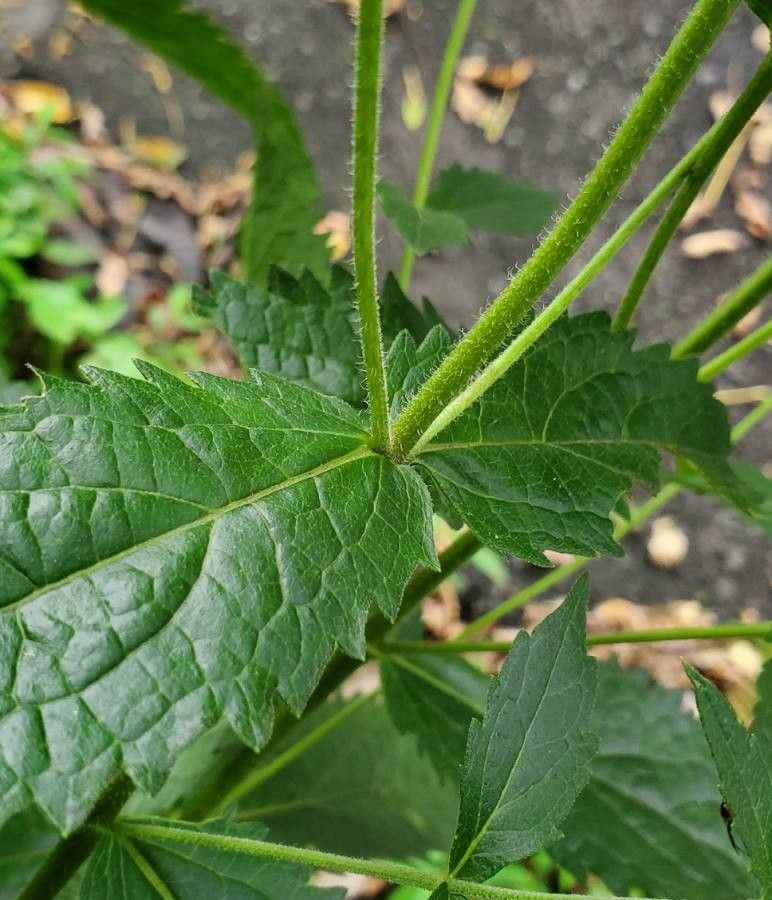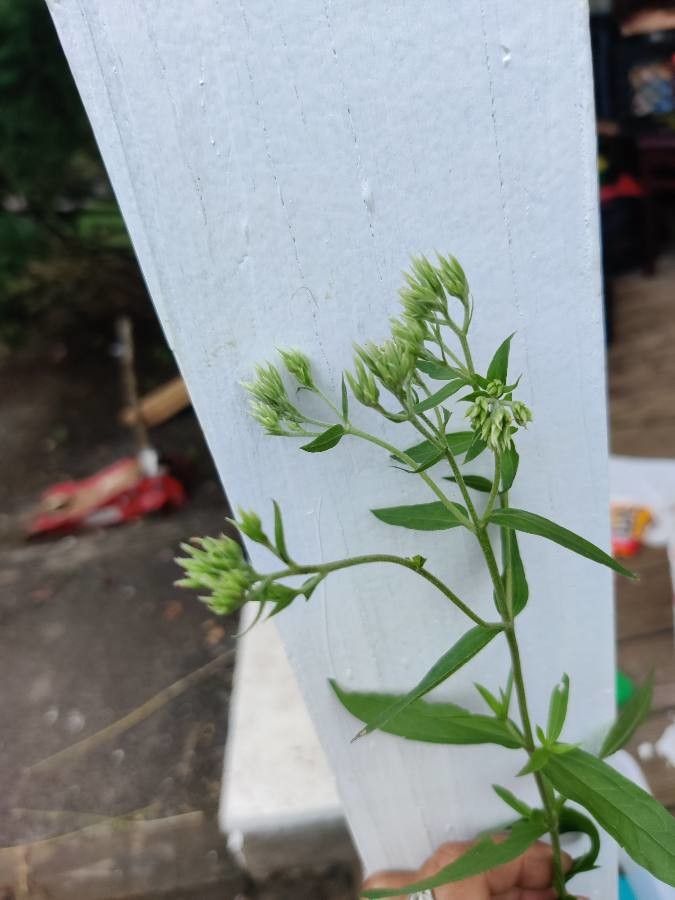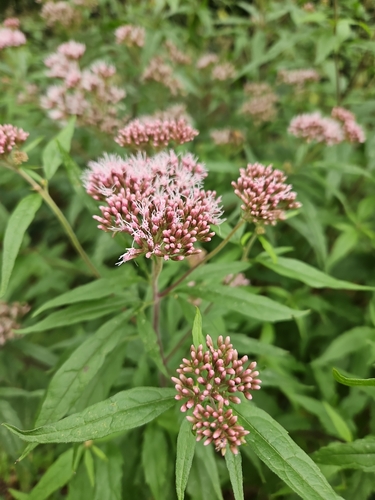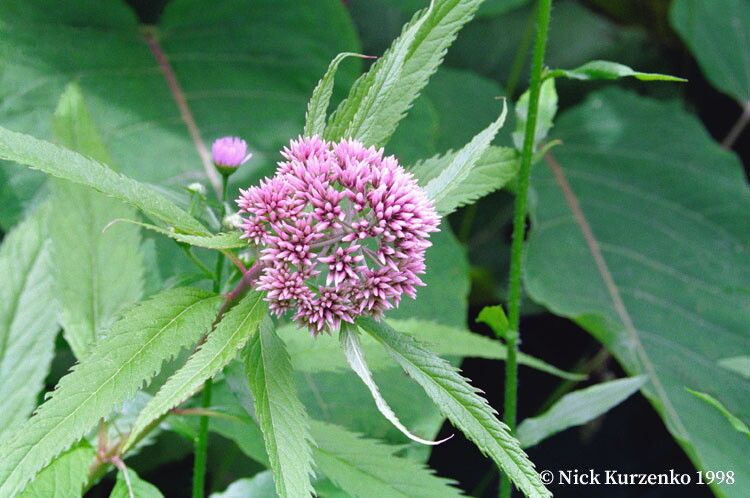
Eupatorium chinense is a plant species in the family Asteraceae. The exact boundaries of this species have been defined differently by different authors. King and Robinson's 1987 paper defines it broadly, to include Eupatorium japonicum, Eupatorium makinoi, some varieties of Eupatorium fortunei, and other plants sometimes considered to be separate species.
Chinese joe pye weed is fairly resistant to disease and typically does not suffer from many illnesses. Still, it can be vulnerable to pests and pathogens found in its environment. When infections occur, they are generally mild. Regarding upkeep, the plant is of moderate maintenance. It should be pruned on a regular basis to preserve a neat appearance and support healthy growth. Applying fertilizer can also encourage more abundant flowering. Chinese joe pye weed is well suited for anyone who has outdoor space, like a garden or patio, and does not demand extensive gardening experience. It can be more demanding to care for if kept indoors.
How to keep Eupatorium Chinense.
Light
The Chinese Joe Pye weed desires a copious amount of light to grow healthily. It has developed in regions with plenty of sunshine and so thrives in these conditions. Its growth can be inhibited by insufficient light, but too much light isn't typically an issue. Each phase of its growth, as needed, also profits from this consistent requirement of light exposure.
Water
Chinese Joe Pye Weed thrives in humid conditions and prefers soil that remains consistently moist. It benefits from weekly watering. As an herbaceous perennial usually grown outdoors, it requires sufficient hydration during its active growing season to ensure lush foliage and robust flowering.
Temperature
Chinese joe pye weed displays a strong ability to handle a variety of temperatures, with a capacity to withstand higher temperatures and greater changes in temperature. It's crucial to monitor the watering and to provide necessary shade to prevent sunburn during periods of extreme heat. However, its ability to survive low temperatures is somewhat limited. Although it has some degree of frost resistance, extremely cold conditions can result in frost injury.
Fertilizer
The best period to fertilize a Chinese joe pye weed is during the start of spring, as it transitions from dormancy to active growth. Through fertilization, crucial nutrients are provided for its robust growth. While the fertilization requirements for Chinese joe pye weed are generally low, annual fertilization can improve its survival chances and encourage the production of more durable, high-quality flowers.
Pruning
Chinese Joe Pye weed thrives when regularly pruned from early to late spring. To encourage new growth and vibrant flowering, trim the older stems. Additionally, remove any dead or weak stems to improve the plant's shape, enhance air circulation, and reduce the risk of disease. These practices contribute to a healthier plant overall.
Botanical profile.
- Plant Type
- Herb
- Life Cycle
- Perennial
- Genus
- Eupatorium
- Family
- Asteraceae
- Hardiness Zone
- 5-9
- Mature Height
- 61 cm to 91 cm
- Mature Spread
- 0.76 m to 1.22 m
- Leaf Color
- Green, Blue
- Leaf Type
- Deciduous
- Flower Color
- White, Pink
- Flower Size
- 30.48 cm
- Bloom Time
- Late summer, Early fall, Mid fall
- Planting Time
- Spring, Summer, Autumn
- Harvest Time
- Mid fall, Late fall, Early winter
- Native Area
- Russia, Nepal, India, Vietnam, Myanmar, Japan, Koppen, Bhutan, Pakistan, South Korea, China
Reader questions.
How much sunlight does Chinese joe pye weed require?
Chinese joe pye weed thrives in full sunlight, necessitating over 6 hours of sunlight daily for optimal growth. Originating from environments abundant in sunshine, it flourishes when exposed to generous light conditions. Inadequate sunlight may impede its growth, but it generally handles excessive light well. This requirement for abundant light applies uniformly across all its growth stages. Observing how sunlight moves through your garden and choosing locations with a perfect balance of light and shade is crucial for plant health.
What are the considerations for using artificial lighting for Chinese joe pye weed?
For indoor Chinese joe pye weed plants, artificial lighting can be essential when natural sunlight is insufficient, especially during winter or in areas receiving less sunlight. LED lights are often recommended because they can be adapted to provide specific light wavelengths needed by plants. The intensity of artificial lighting should range between 30-50W/sq ft for full sun plants, 20-30W/sq ft for partial sun plants, and 10-20W/sq ft for full shade plants. The light source should be placed 12-36 inches above the plant, mimicking natural sunlight, for 8-12 hours per day to promote optimal growth.
What symptoms indicate insufficient light in Chinese joe pye weed?
Symptoms of insufficient light in Chinese joe pye weed include smaller new leaves, leggy or sparse growth, faster leaf drop, slower or halted new growth, lighter-colored new leaves indicating a lack of chlorophyll, and symptoms of excessive light such as chlorosis (yellowing leaves), sunscald, leaf curling, wilting, and leaf scorching. These symptoms reflect the plant's struggle with inadequate or excessive sunlight exposure, affecting its health and growth.
How can you address light-related issues in Chinese joe pye weed?
To address light-related issues in Chinese joe pye weed, adjust the plant's exposure to sunlight. Indoors, gradually increase sunlight exposure to at least 6 hours daily by moving the plant closer to a south-facing window or supplementing with artificial light, using a lamp or grow lights for at least 8 hours a day. Outdoors, acclimate the plant to sunnier spots gradually to prevent sunburn. If sunlight is blocked by trees, consider pruning to let more light through. For smaller plants, transplanting during the dormant period to a sunnier location with good drainage may also help. It's vital to remember that while parts of the plant affected by insufficient sunlight may not fully recover, new growth will be healthy with proper light adjustments.