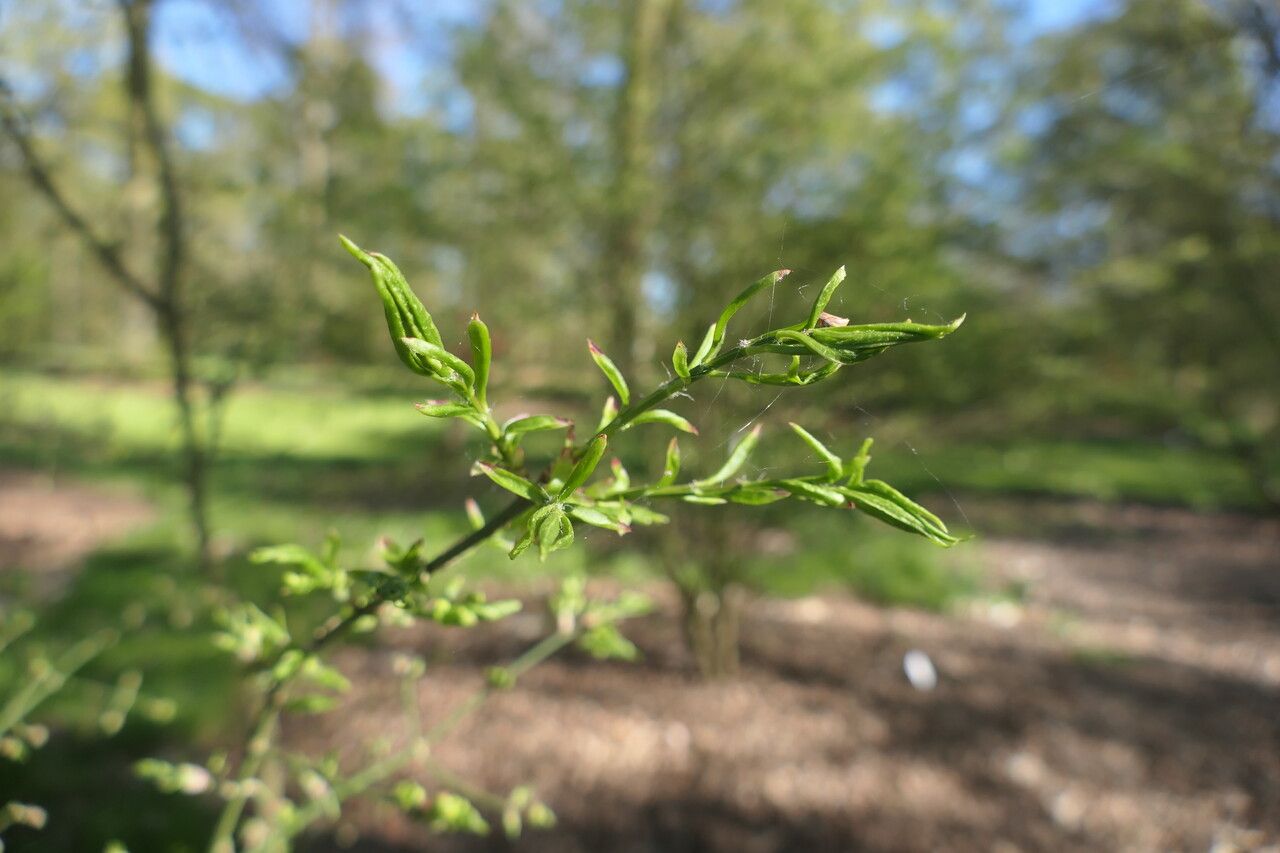
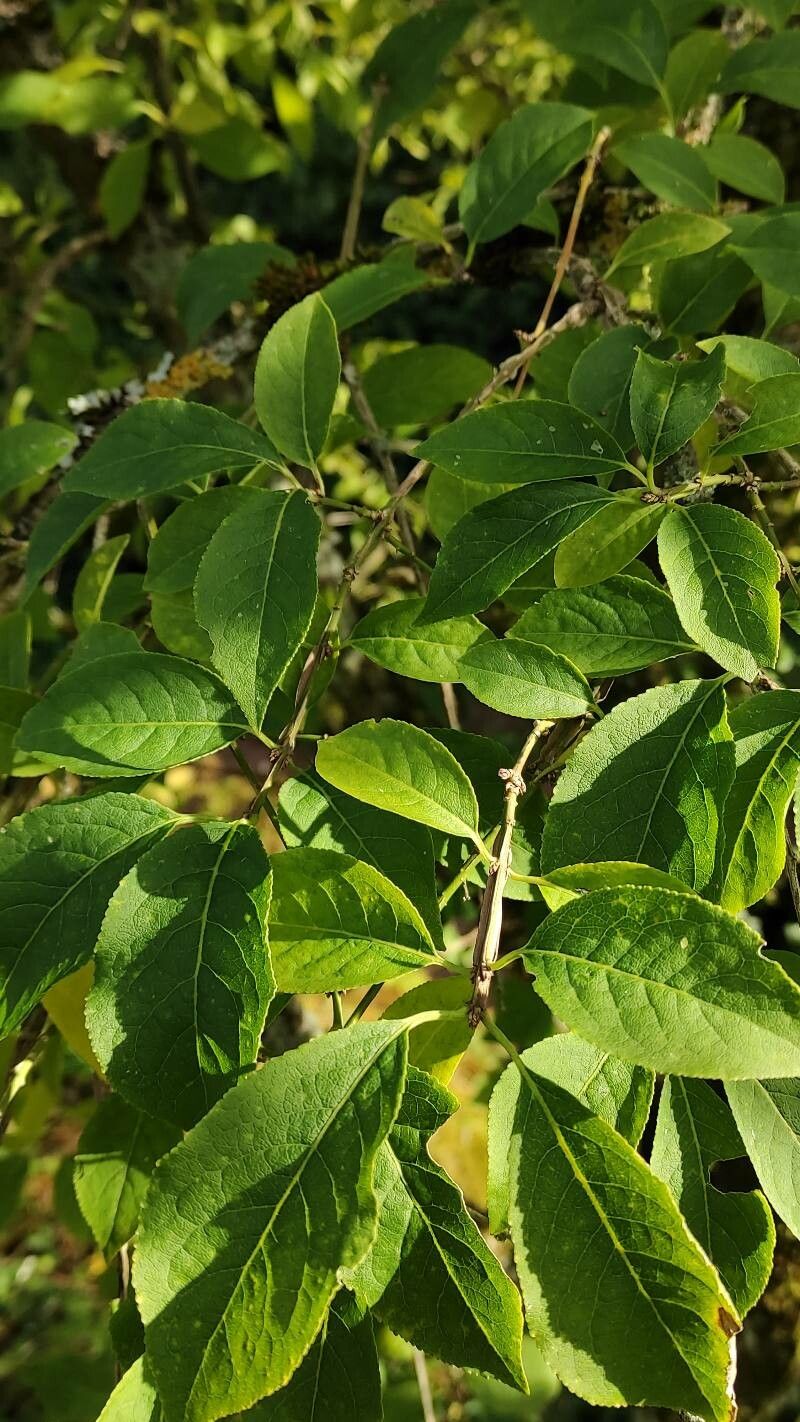
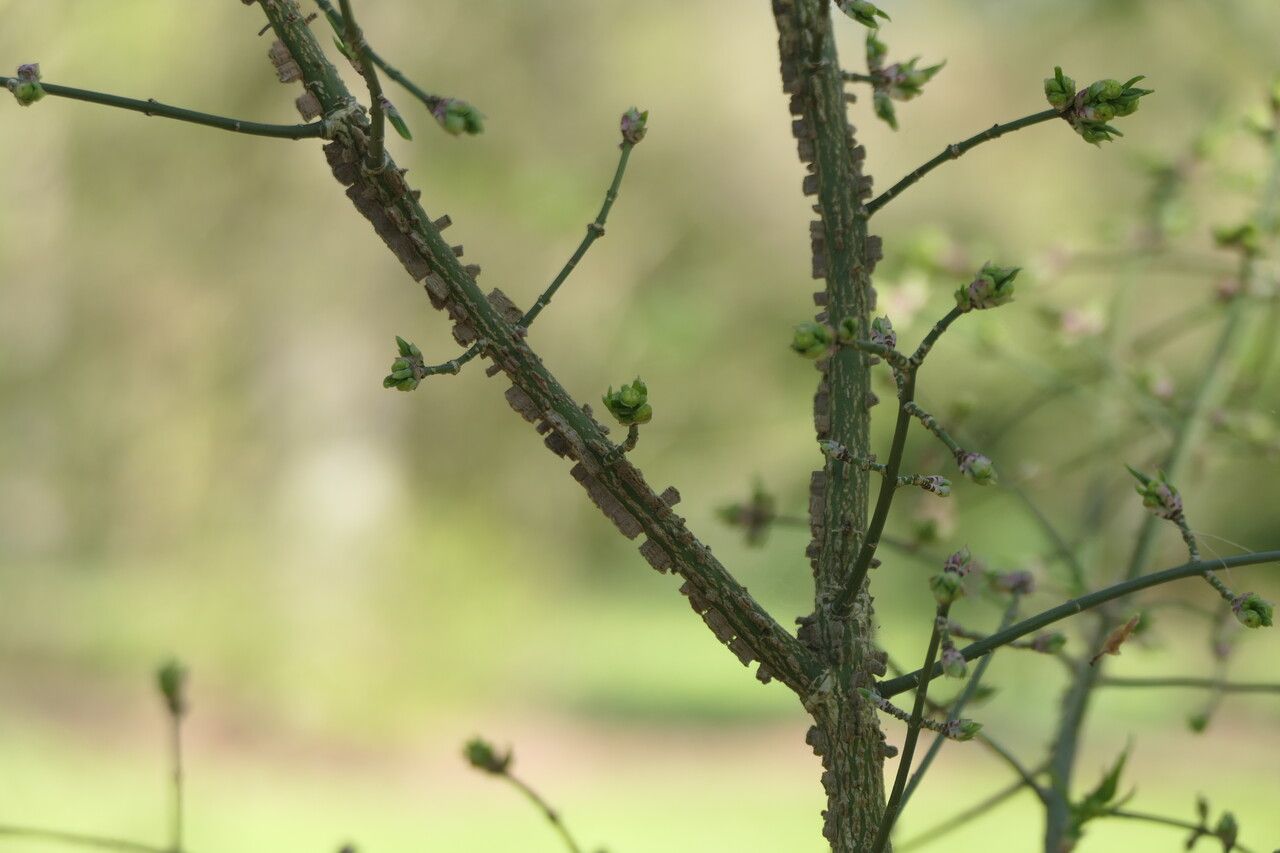
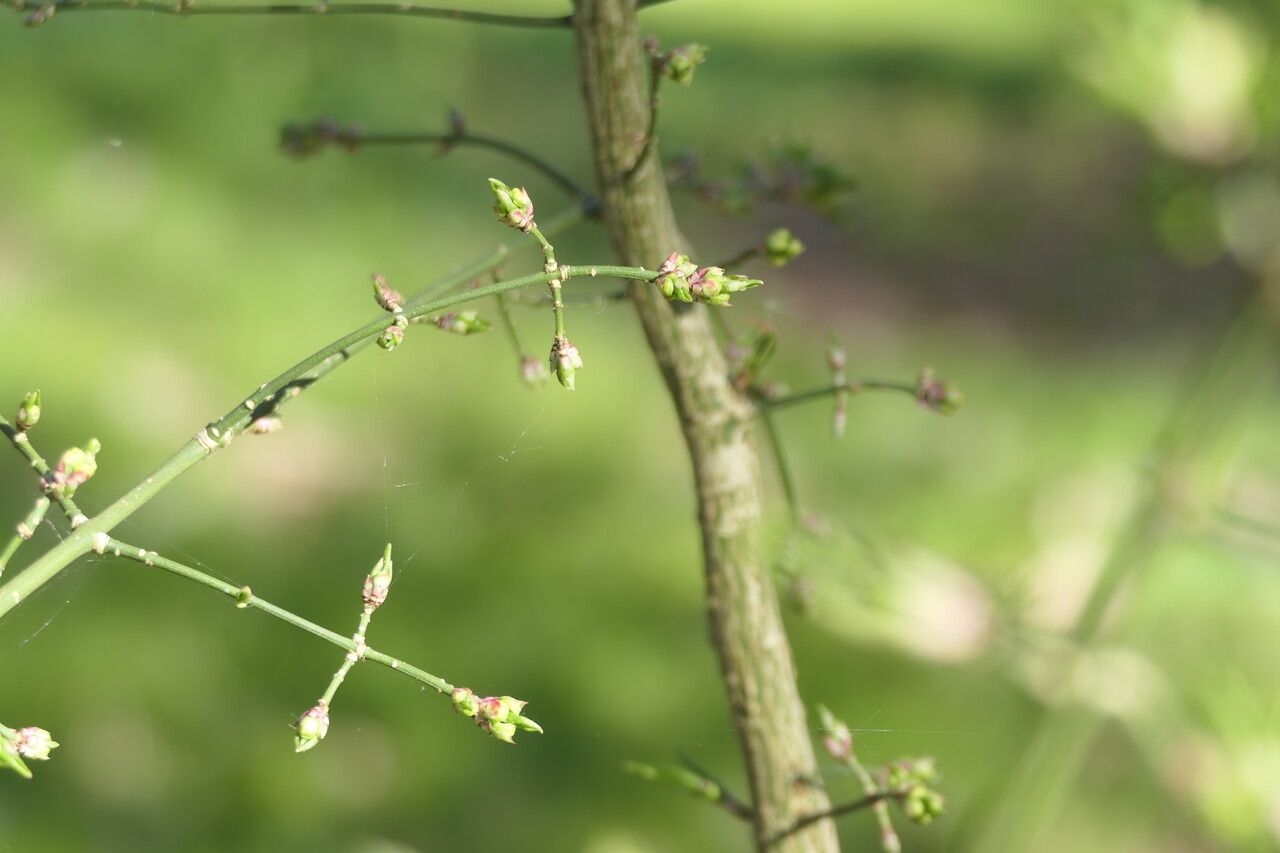
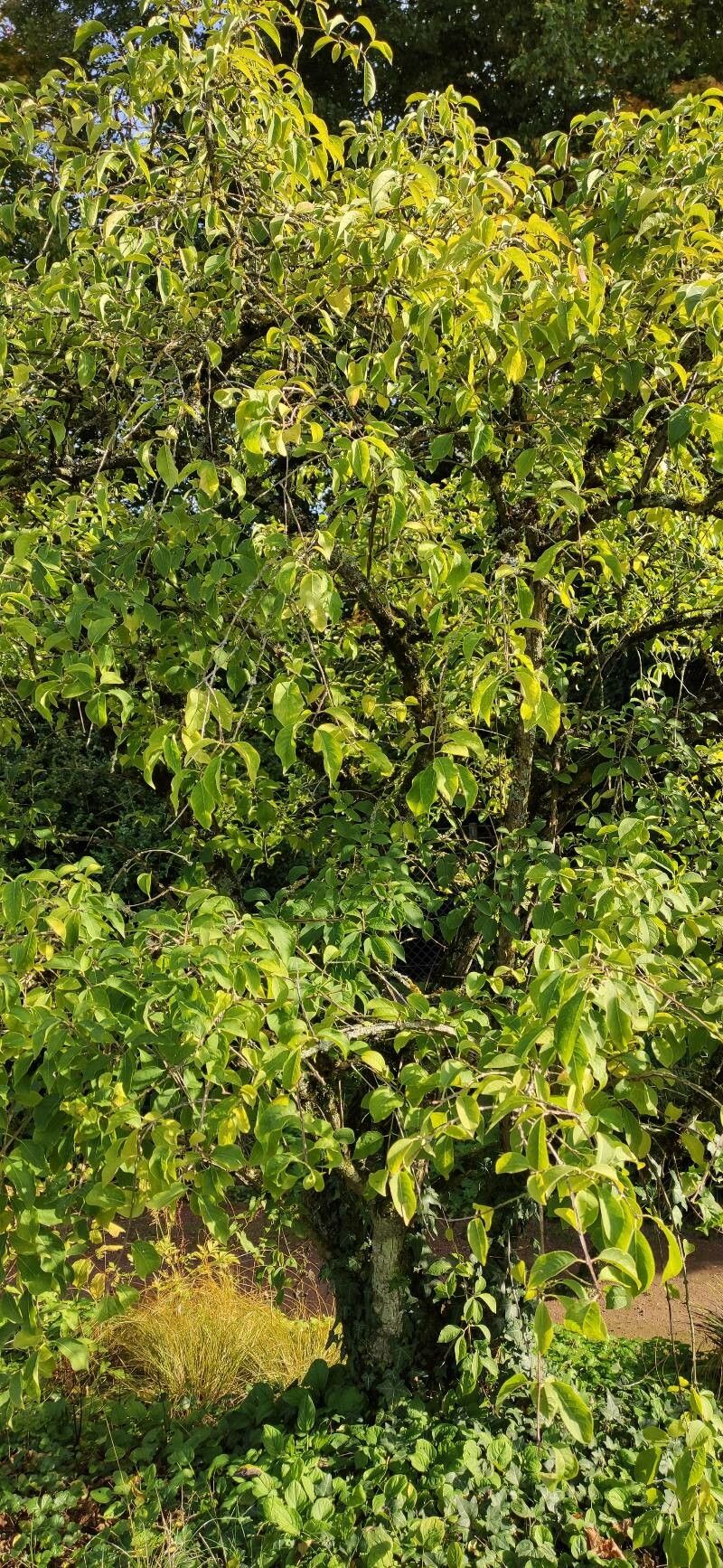
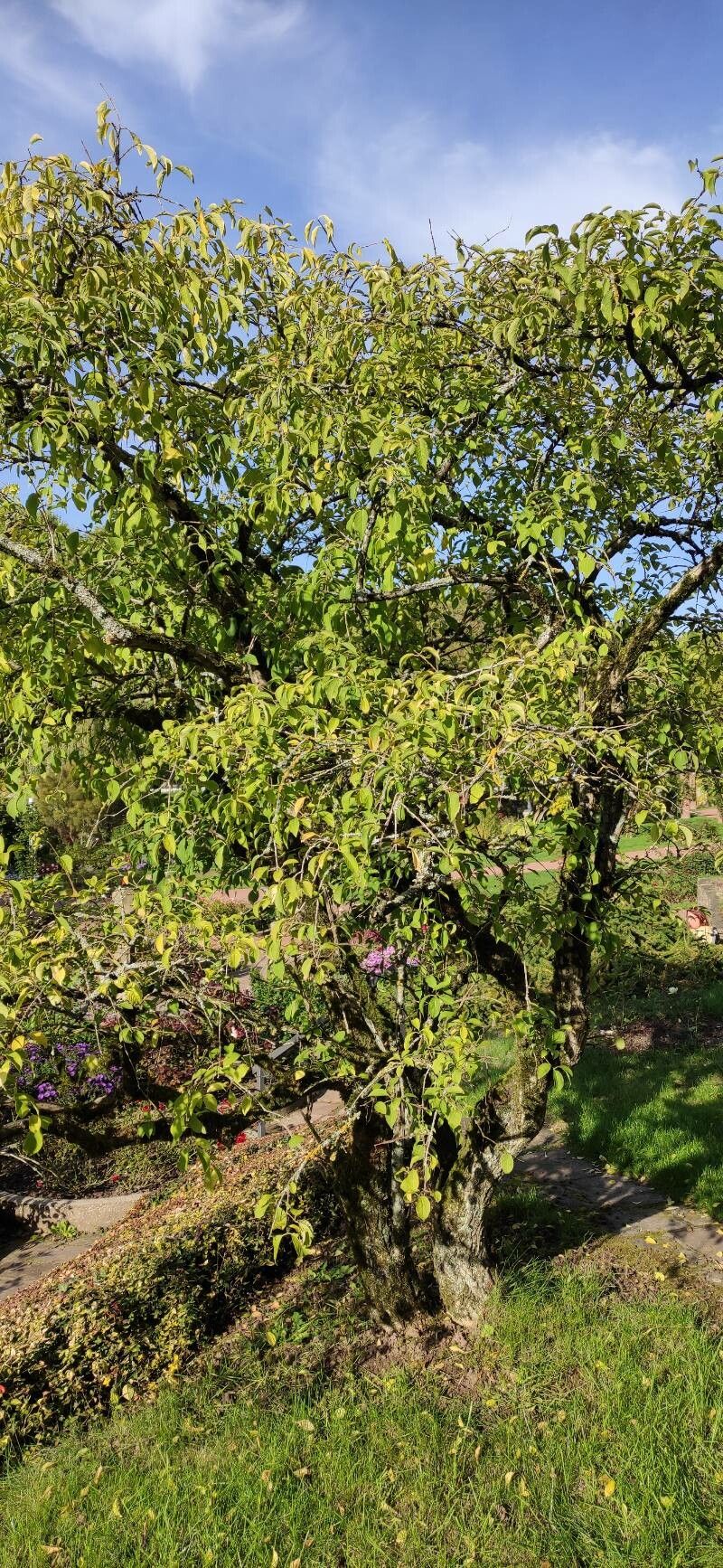
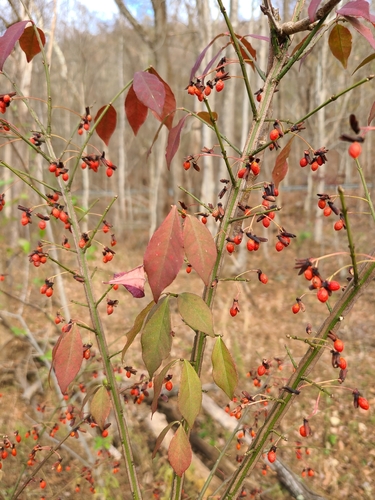
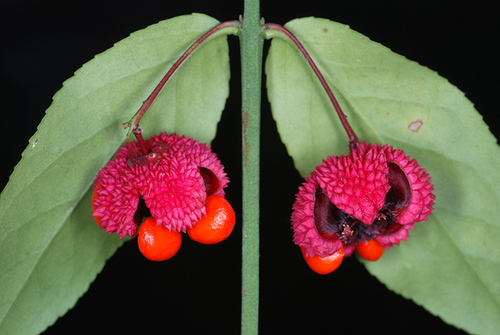
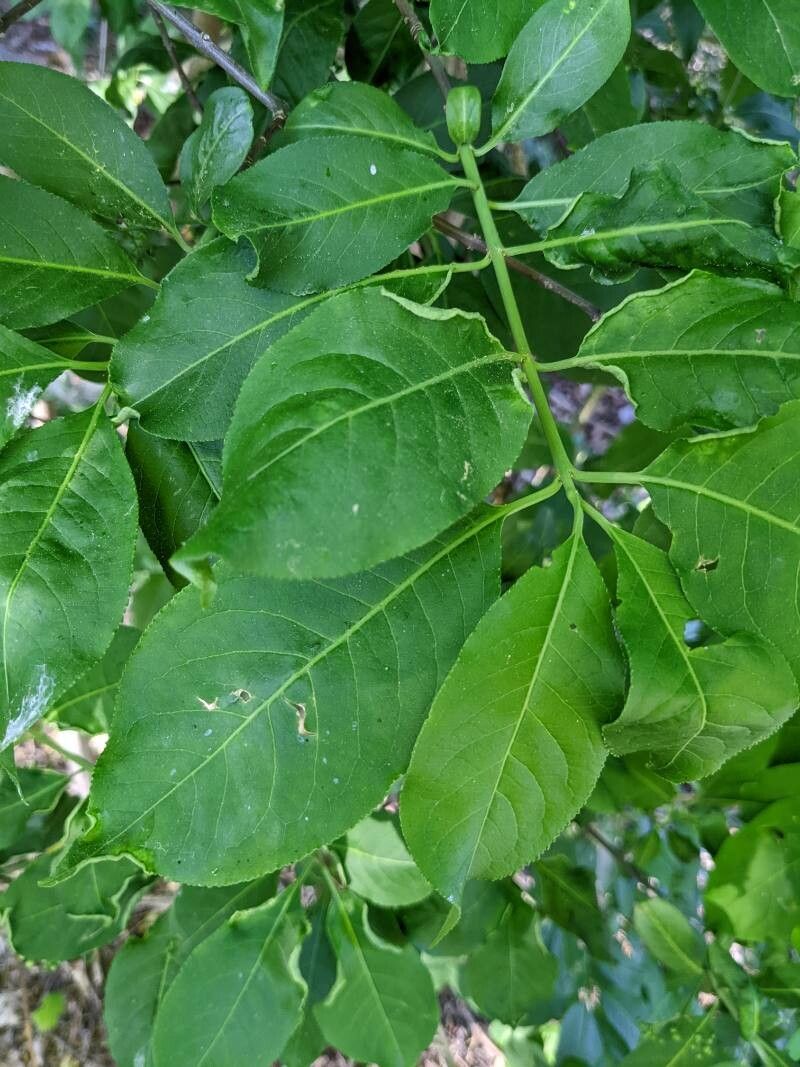
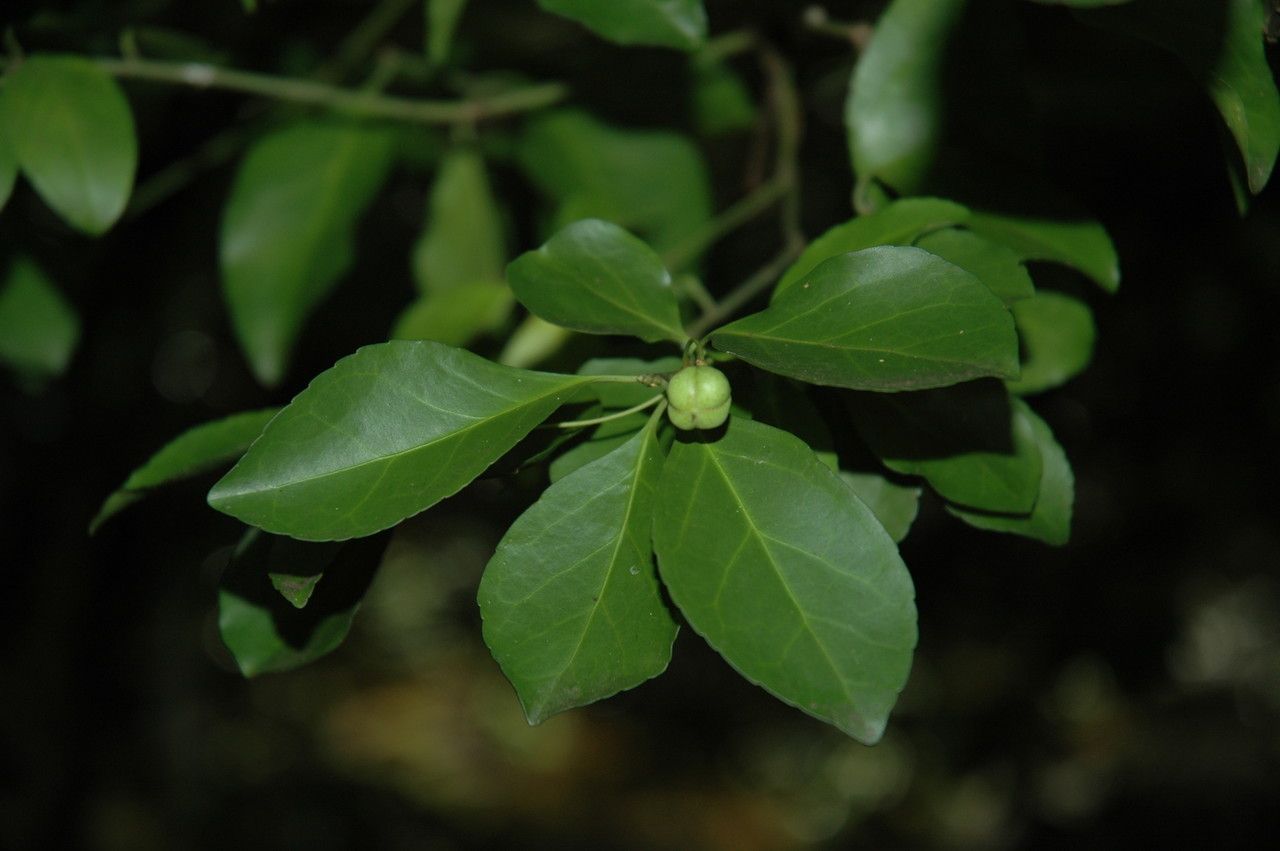
Euonymus phellomanus is a species of flowering plant in the family Celastraceae, native to China. It is one of several species within Euonymus called spindle or spindle tree. A substantial deciduous shrub growing to 2–4 m (6.6–13.1 ft) tall by 2.5 m (8.2 ft) broad, it produces insignificant yellow-green flowers in May followed by brilliant pink fruits in autumn. The fruits sometimes break open to reveal bright orange seeds. A notable feature is the rough corky bark which with age develops “wings” clothing the length of each branch. A similar effect is seen in the related Euonymus alata. This feature gives rise to a name occasionally used, the corktree (or cork tree). In cultivation this hardy plant is very adaptable, accepting moist or dry soil in full or partial sunshine. In the UK it has gained the Royal Horticultural Society’s Award of Garden Merit.
Corktree is highly resistant to disease and typically not vulnerable to illnesses. As for maintenance, this plant is fairly low-maintenance. When grown outdoors it needs only light watering, and larger specimens usually do not require pruning. Smaller specimens, however, should be pruned after they finish blooming. Corktree is appropriate for anyone who has outdoor space, like a garden or deck, and does not demand extensive care experience.
How to keep Euonymus Phellomanus.
Light
Corktree does best in full sun but can also tolerate getting sunlight for only part of the day. Its native habitat usually has plenty of sun, which promotes strong growth. Too much light may cause leaf scorch, while too little can impede growth and vibrancy.
Water
The corktree thrives in environments that resemble its native habitat and needs moderate watering about every three weeks. While it can handle dry conditions better than overly wet ones, it's usually grown outdoors. The corktree adapts to changes in the seasons by shedding its leaves, which helps it conserve water during droughts or cooler temperatures.
Temperature
Corktree is highly adaptable to a variety of climate conditions, from blistering summers to freezing winters. Nevertheless, it has an optimal temperature range for growth. When temperatures become too high, the plant is vulnerable to heat and humidity stress, which can lead to its death. In areas where temperatures approach the lower limit of its cold tolerance, it is important to provide insulation to protect the plant.
Fertilizer
Timing is critical when fertilizing the Corktree. Apply fertilizer in early spring and continue doing so monthly until early summer. Fertilizer promotes attractive blooms and supplies energy during both dormant and active growth periods.
Pruning
Prune corktrees in early spring to remove dead branches and shape the plant, which helps improve air circulation and reduce the risk of disease. Pay special attention to overgrown branches to support healthier growth. Make clean cuts at a slight angle to prevent water accumulation, promote healing, and encourage denser foliage and better flowering.
Botanical profile.
- Plant Type
- Shrub
- Life Cycle
- Perennial
- Genus
- Euonymus
- Family
- Celastraceae
- Hardiness Zone
- 5-9
- Mature Height
- 2.44 m
- Mature Spread
- 91 cm
- Leaf Color
- Green
- Leaf Type
- Deciduous
- Flower Color
- Yellow, Green
- Flower Size
- 0.51 cm to 0.76 cm
- Bloom Time
- Late spring, Early summer
- Planting Time
- Spring, Summer, Autumn
- Harvest Time
- Late summer, Early fall, Mid fall
- Native Area
- China
Other names.
Reader questions.
What are the sunlight requirements for Corktree?
Corktree thrives in full sunlight, requiring more than 6 hours of sunlight daily, but can also manage with about 3-6 hours of sunlight (partial sun). It is crucial to observe the movement of sunlight through your garden to ensure that Corktree is planted in an area that achieves a healthy balance of light and shade, promoting optimal growth and wellbeing. The native habitat of Corktree provides it with abundant sunlight, which is essential for its growth and vitality. However, it's important to note that excessive light exposure can cause leaf scorch, while insufficient light may impede growth and diminish the vibrancy of the plant.
How can artificial lighting support indoor Corktree growth?
For indoor Corktrees, adequate lighting is critical, especially when natural sunlight is insufficient, like in winter or less sunny spaces. Artificial lighting becomes a significant aid in these scenarios, encouraging healthier, faster growth. LED lights are recommended for indoor plants because they can provide specific light wavelengths needed for plant growth. The intensity of the light should be 30-50W/sq ft for full sun plants, 20-30W/sq ft for partial sun plants, and 10-20W/sq ft for full shade plants. The artificial light source should be placed 12-36 inches above the plant to mimic the sun's natural light. Most plants, including Corktree, benefit from 8-12 hours of artificial light per day to simulate natural daylight hours optimally.
What are the key symptoms of insufficient light in Corktree?
Corktrees exhibit specific symptoms when they receive insufficient light, indicating a need for better sunlight exposure. These symptoms include the development of smaller new leaves, leggy or sparse growth due to stretched-out appearance, accelerated leaf drop as a resource conservation measure, delayed or halted growth, and the appearance of lighter-colored or pale new leaves. Additionally, excessive sunlight can cause chlorosis, where leaves lose their green color, sunscald with pale or bleached areas on leaves, leaf curling as a defense mechanism against sunlight, wilting from excessive water loss, and leaf scorching with brown, dry edges.
How can you address sunlight-related issues for indoor and outdoor Corktrees?
To optimize growth for Corktrees facing sunlight-related issues, gradual adjustments to their sunlight exposure can be helpful. For indoor plants, progressively move them to locations that receive at least 6 hours of direct sunlight daily, utilizing south-facing windows for maximum daylight exposure. If moving the plant isn't feasible, consider using artificial lighting, such as desk lamps or grow lights, for at least 8 hours a day. For outdoor plants, avoid drastic changes in sunlight exposure to prevent sunburn. Instead, gradually relocate them to sunnier spots over several weeks. Additionally, for plants blocked from sunlight, consider pruning obstructions or transplanting smaller plants during their dormant period to sunnier locations with good drainage. It's essential to remember that while affected parts may not recover, new growth will be healthy with improved light conditions.