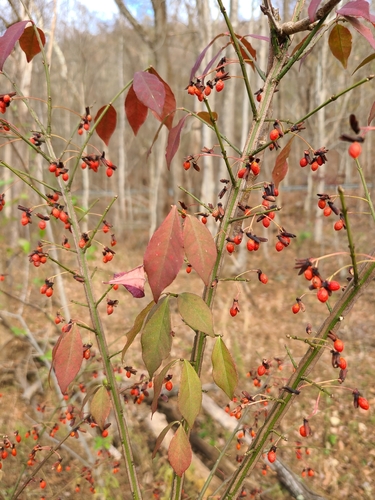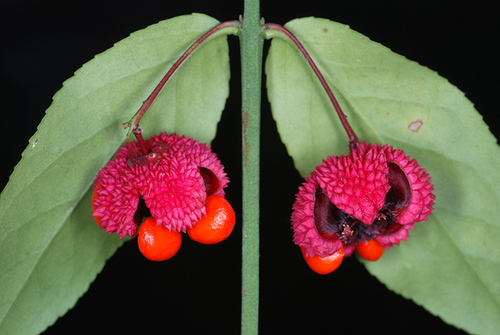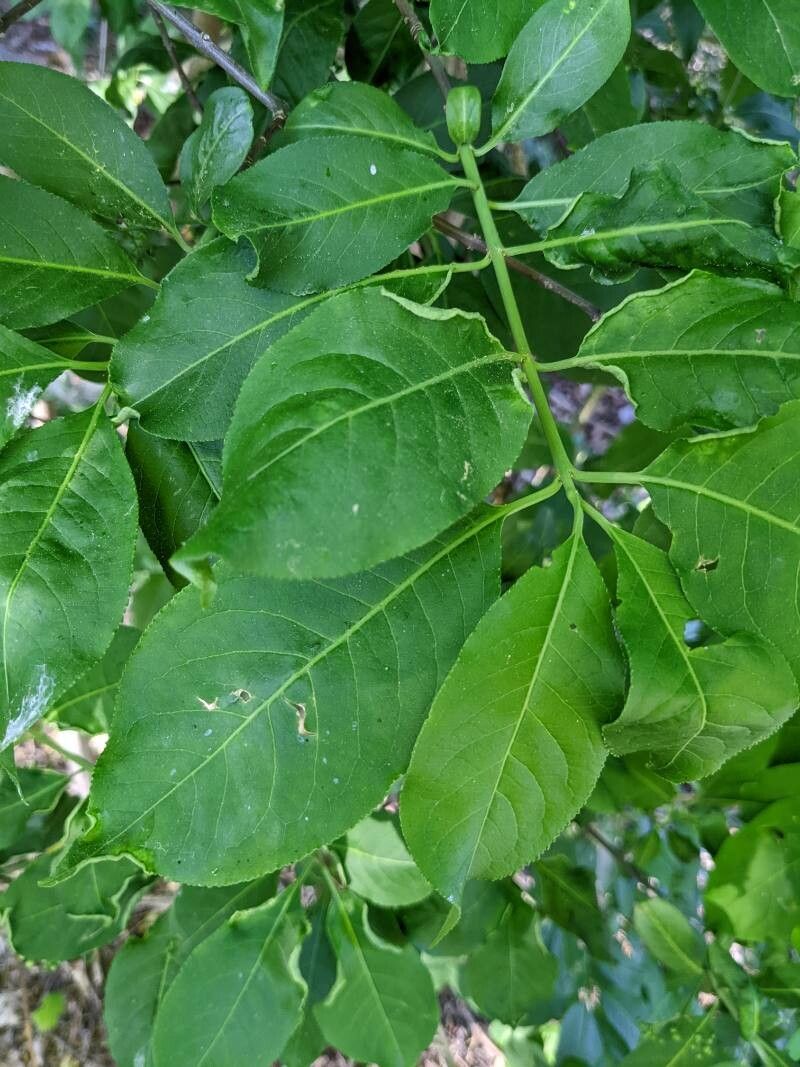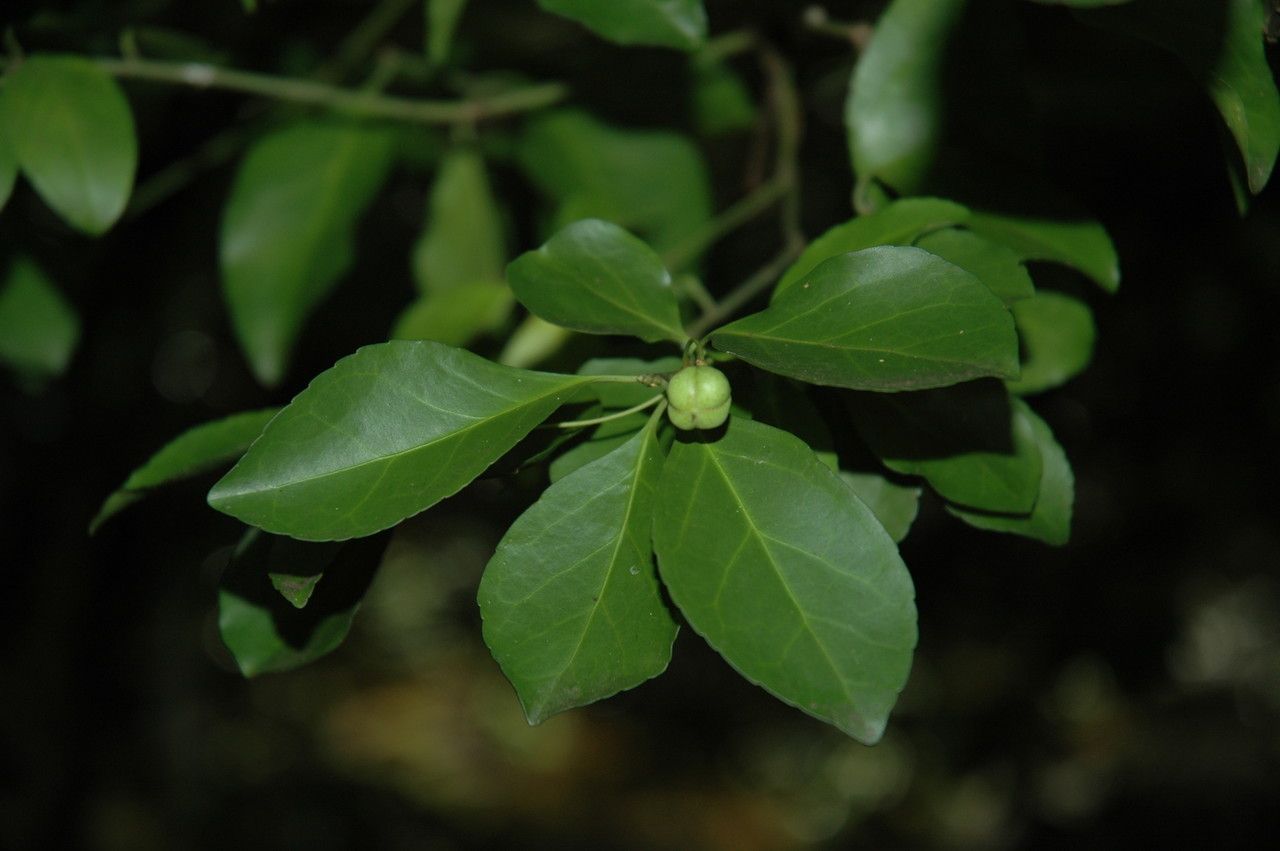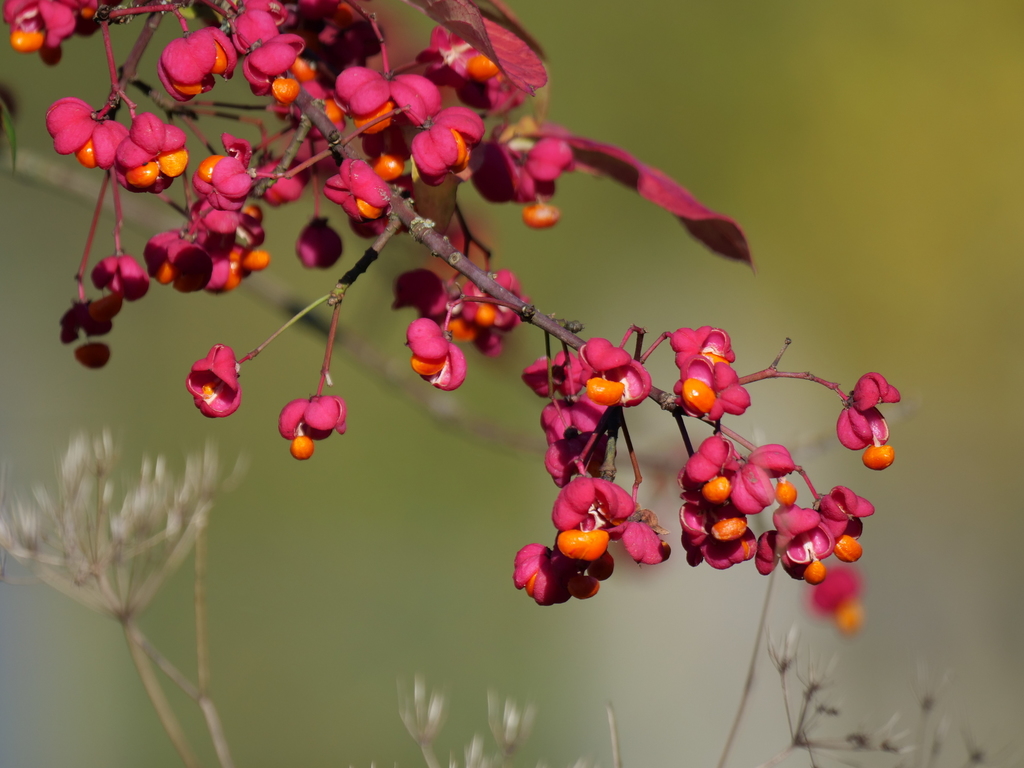
Euonymus europaeus, the spindle, European spindle, or common spindle, is a species of flowering plant in the family Celastraceae, native to much of Europe, where it inhabits the edges of forest, hedges and gentle slopes, tending to thrive on nutrient-rich, chalky and salt-poor soils. It is a deciduous shrub or small tree.
The name "European spindletree" comes from two key characteristics of this plant. Firstly, the stem is extremely hard, which made it suitable for carving into spindles in the past. Additionally, this plant is native to Europe, which explains its regional name.
The European spindle tree shows strong resistance to disease and is typically not susceptible to illnesses. In terms of care, this plant is fairly low-maintenance. When grown outdoors it needs only minimal watering, and larger plants usually do not require pruning. Smaller plants, however, should be pruned after they have finished blooming. The European spindle tree is appropriate for anyone with outdoor space, such as a garden or a deck, and does not demand much care experience.
How to keep Euonymus Europaeus.
Light
The european spindle tree does best with full exposure to sunlight, which promotes its vigorous growth. It can tolerate partial shade, though its growth may be reduced. Native to sunny habitats, the health and vigor of the european spindle tree can suffer if it does not receive enough sun.
Water
The European spindletree thrives best with moderate and consistent soil moisture. Ideally, it should be watered every 1-2 weeks to keep the soil slightly damp. Additionally, natural rainfall during the growing season significantly contributes to its watering requirements.
Temperature
The european spindle tree grows well in temperate climates, preferring temperatures of 32 to 90 ℉ (0 to 32 ℃). In winter it requires protection from frostbite and grows best at 30 to 70 ℉ (-1 to 21 ℃). In summer it thrives at 60 to 90 ℉ (16 to 32 ℃).
Fertilizer
Fertilize your European spindle tree in early spring to encourage healthy growth. Regular feeding improves overall health, leading to strong growth, better toughness in challenging conditions, and increased resistance to pests and diseases. Keeping to a consistent fertilization schedule will ensure the foliage stays vibrant, richly colored, and lush in appearance.
Pruning
The European spindletree, known for its striking red berries and vibrant foliage, thrives when pruned in early spring. To promote healthy growth and improve aesthetics, concentrate on removing dead or diseased wood and thinning out crowded branches to enhance air circulation. Remember to handle its sharp thorns with care to ensure your safety while pruning.
Pot & Repot
When repotting a European spindle tree, choose a pot 1-2 inches (2.5–5.1 cm) larger that provides ample drainage. Use a well-draining potting mix. Repot in spring or fall, making sure the root ball sits slightly lower than the rim of the flower pot. Water thoroughly after repotting and place it in a warm spot with indirect sunlight.
Botanical profile.
- Plant Type
- Shrub, Tree
- Life Cycle
- Perennial
- Genus
- Euonymus
- Family
- Celastraceae
- Hardiness Zone
- 3-7
- Mature Height
- 2.13 m to 10.06 m
- Mature Spread
- 2.13 m to 2.44 m
- Leaf Color
- Green, Yellow, Red
- Leaf Type
- Deciduous
- Flower Color
- Yellow, Green, White
- Flower Size
- 0.10 cm to 0.20 cm
- Bloom Time
- Late spring, Early summer
- Planting Time
- Spring, Autumn
- Harvest Time
- Mid summer, Late summer
- Native Area
- Turkey, Sweden, Austria, Slovakia, Montenegro, Croatia, Slovenia, Belarus, Russia, Germany, Estonia, Romania, Latvia, Belgium, Portugal, Netherlands, France, Czech Republic, Bulgaria, Armenia, Poland, Greece, Ukraine, Serbia, Lithuania, Norway, Italy, Spain, Switzerland, Denmark, Albania, Ireland, United Kingdom, Hungary, Azerbaijan
Other names.
Reader questions.
How can I water my European spindletree the best way?
To encourage strong root development in your plants, consider the following watering tips. Avoid spraying the leaves directly, as this may cause issues. If the plants are outdoors and exposed to direct sunlight, the leaves will require more water. To moisturize the roots, you can utilize bubblers or soaker hoses for individual plants, or use soaker hoses that cover the entire garden or bed when adding or removing plants. After watering, make sure to drain any excess water and allow the soil to dry before watering again. It's best to water at ground level to prevent diseases. On sunny days, it may be beneficial to spray the entire bush with water. Whether your plants are in pots or in the ground, it is important to remember that the European spindletree prefers deep watering rather than light sprinkling.
How can I make my European spindletree grow better?
To fertilize your European spindletree, you have two options: using a granular or liquid fertilizer. With granular fertilizer, simply sprinkle it on the soil at the right time. The nutrients will slowly release into the soil over time. Remember to lightly water your tree before applying the fertilizer. Using a liquid fertilizer is less common but still an option. Mix the fertilizer with water and pour it around the base of your tree. If needed, you can perform a soil test beforehand to check if any pH adjustments are required.
What are the sunlight requirements for a European Spindletree?
The European Spindletree thrives best in conditions where it can bask in the full glare of the sun for substantial periods. Requiring more than 6 hours of direct sunlight to flourish, it can also adapt to partial sun, about 3-6 hours of sunlight, but with a caveat of potentially inhibited growth. Originating from sunlight-rich environments, this plant's health and vigor are at risk if it doesn't receive enough sunlight. When planning where to plant or place your European Spindletree, observing how sunlight dances through your garden can provide valuable insights, helping you find the ideal balance of light and shade to keep your plant happy.
What are the ideal growing conditions for the European spindletree?
The European spindletree, or Euonymus europaeus, thrives in temperate climates and prefers temperatures ranging from 32 to 90 °F (0 to 32 °C). It requires protection from frostbite in winter, growing best between 30 and 70 °F (-1 to 21 °C), while during summer, it flourishes in temperatures from 60 to 90 °F (16 to 32 °C). This plant is notably cold-tolerant and does not usually need extra frost protection. To prepare for winter, it's advised to water the plant generously before the first freeze to keep the soil moist, helping to prevent drought and water shortage during the colder months and early spring.
What should I do if I give too much or too little water to the European spindletree?
An overwatered European spindletree will show signs of distress such as yellowing, dropping, and wilting leaves. The plant may also appear dull and unhealthy, with mushy stems. To address these issues, it's advisable to adjust your watering schedule if possible. Wilting can also be a sign of under watering, which is characterized by crispy and dry leaves. In such cases, check the soil moisture level and provide a thorough watering if it is dry. However, even with sufficient water, the plant may still exhibit dryness and yellow leaves due to root damage. Once the plant has recovered, the yellowing of the leaves will cease. When keeping a European spindletree indoors, regularly check the moisture levels in the pot and avoid overwatering. Look out for signs of black spots, and if present, allow the soil to dry out by refraining from watering for a few days. Overwatering can lead to root rot, so if you observe discolored and slimy roots, consider transferring the plant to a different pot. Be cautious to prevent root rot by not letting the soil become too soggy. When planting your European spindletree outdoors, ensure that you dig a bit deeper into the soil. If you find the soil to be excessively dry when touching it with your fingers, it may indicate underwatering. Therefore, adequate watering is necessary to aid the plant's recovery.
Why should I use fertilizer on my European spindletree?
No matter which type of European spindletree you have, regular fertilization will improve its overall health. By providing the right nutrients, your spindletree will grow stronger and be better equipped to handle tough conditions and resist diseases and pests. Keeping the foliage intact is important for the tree's appearance, so follow a regular fertilization schedule tailored to your spindletree to encourage vibrant and lush leaves.
How does insufficient sunlight affect the European Spindletree, and what are the symptoms?
When deprived of adequate sunlight, the European Spindletree may exhibit several symptoms indicative of light deficiency, despite its preference for ample sunlight. These symptoms include smaller new leaves, leggy or sparse growth, accelerated leaf drop, slower or halted new growth, lighter colored or chlorotic new leaves, symptoms of sunscald, and leaf curling, wilting, or scorching due to intense light exposure. These signs reflect the plant's struggle in suboptimal lighting conditions, highlighting the crucial role sunlight plays in its health and development.
How does low temperature affect the European spindletree and what are the solutions?
The European spindletree is extremely cold-tolerant, but it's important to keep winter temperatures above 30 °F (-1 °C). If temperatures drop below this, the plant may not show immediate signs of distress; however, by spring, the branches might become brittle and dry, and new shoots may fail to emerge. The solution to this issue is to prune away any dead branches that have not produced new leaves come spring, allowing for healthier growth.
How frequently should I give water to my European spindletree?
The European spindletree prefers deep, infrequent watering. For potted plants, soak them in a gallon of water each time to account for their limited water storage. In colder regions, water every 3 to 5 days, preferably in the early morning when the soil is dry. Check the soil inside the pot to determine if watering is needed - when the top 2-3 inches are dry, it's time for a full watering. During hot days, monitor the moisture daily to prevent the soil from drying out quickly. If you have a garden, irrigation is necessary. In hot climates, water once a week when you observe that about 2 to 3 inches of soil have become too dry. Consider rainfall levels and avoid adding excessive water to prevent root rot. During the growing seasons of spring and fall, apply 3 to 4 inches of mulch around outdoor plants to conserve water. Adjust watering frequency based on soil type - sandy soil requires more frequent watering, while clay soil can go 2-3 days without drying out. Keep track of watering dates to avoid any delay. If you notice drooping leaves, it may indicate that you need to water the plant the following day.
When should I put fertilizer on my European spindletree?
To ensure healthy growth, fertilize your European spindletree for the first time in late winter or early spring. This provides the necessary nutrients for the tree to resume growth once the weather warms up. Additionally, it is helpful to give an extra round of fertilizer in early fall if you live in a warmer climate region. This second feeding adds nutrients to the soil for the following growing season and helps the spindletree withstand winter without foliage damage. Fertilizing earlier in the fall allows the new branches to grow sufficiently to withstand the cold winter.
What solutions can help a European Spindletree suffering from insufficient sunlight?
Addressing insufficient sunlight for a European Spindletree involves several strategies, both for indoor and outdoor plants. Indoors, gradually relocating the plant to sunnier spots or employing artificial lighting can significantly enhance light accessibility. For outdoor plants, a gradual movement to well-lit areas minimizes the risk of sunburn. Reducing obstructions like overhanging branches can also increase sunlight exposure. Critical is the understanding that while damaged parts may not recover, proper light management encourages healthy new growth, underpinning the plant's resilience and adaptability.
How does high temperature affect the European spindletree and what are the solutions?
The European spindletree is not tolerant to high temperatures. Experiencing temperatures above 90 °F (32 °C) can lead to significant leaf drop, and in extreme cases, the entire plant may wither and die. To mitigate high temperature stress, it's advisable to trim away sunburned and dried parts of the plant. Moving the plant to a shade or employing a shade cloth to protect it from the harsh midday and afternoon sun can also be beneficial. Ensuring the soil remains moist by watering the plant in the morning and evening is another key step in helping the European spindletree survive through hotter periods.