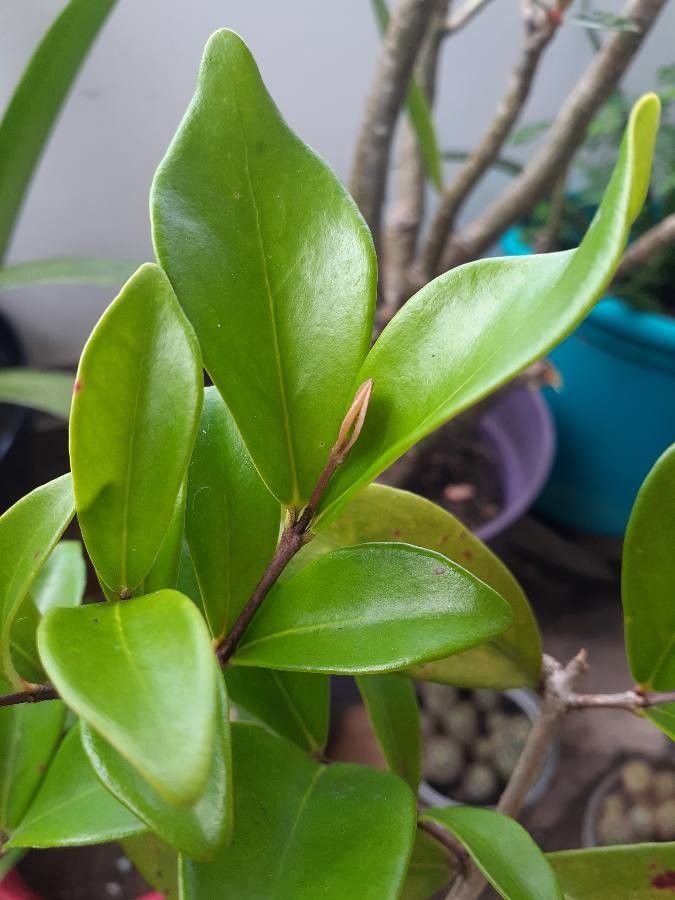
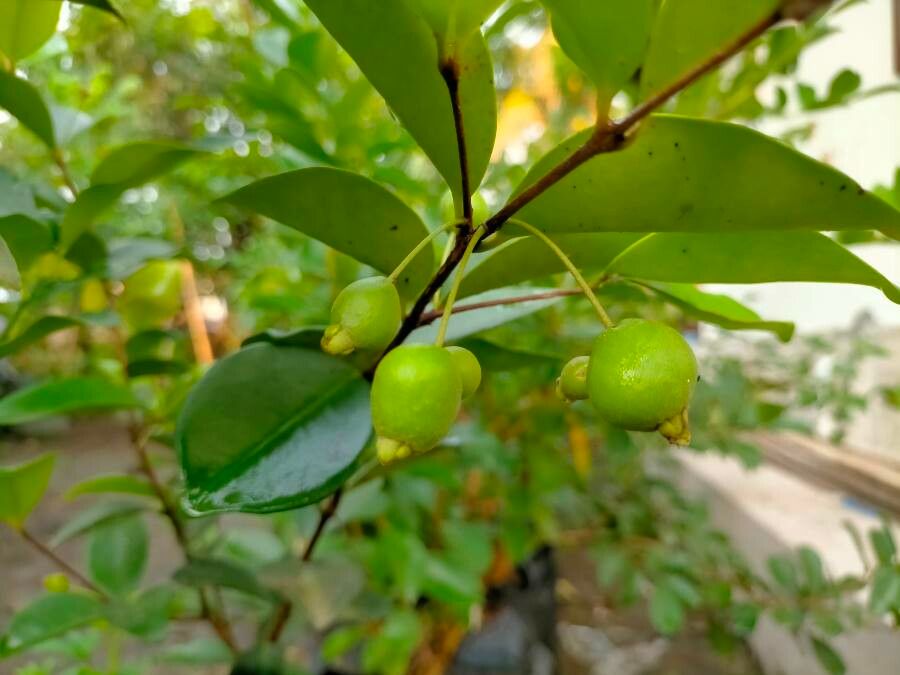
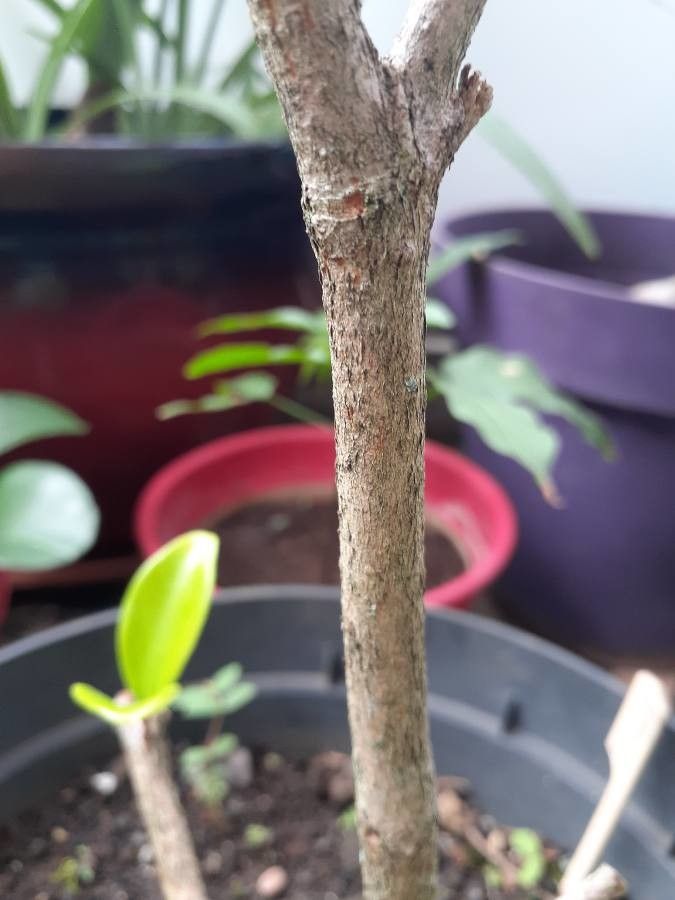
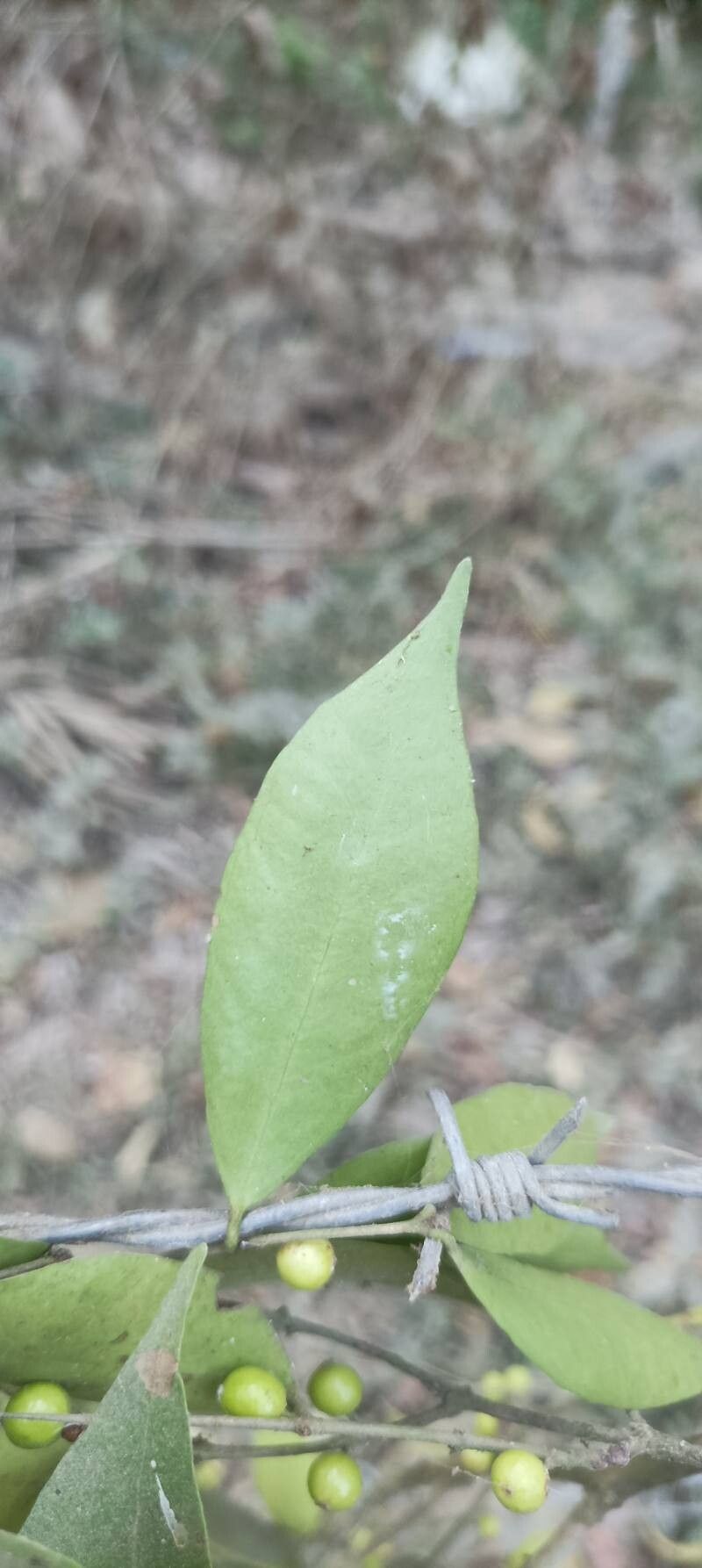
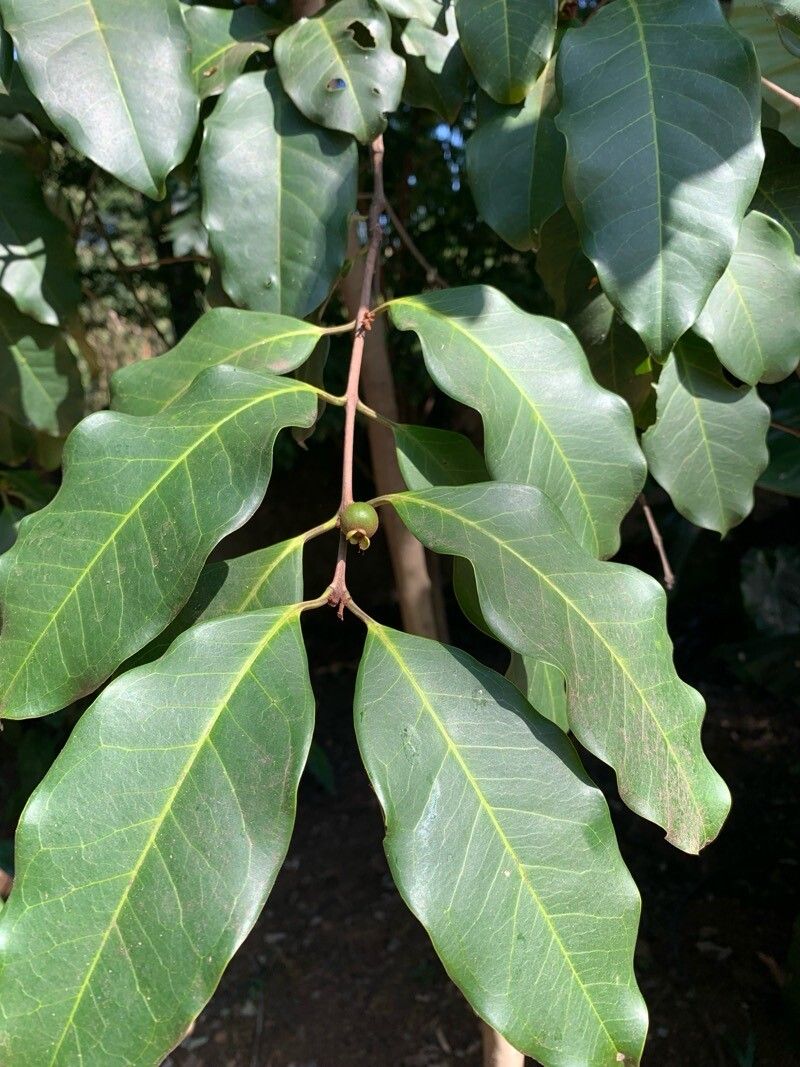
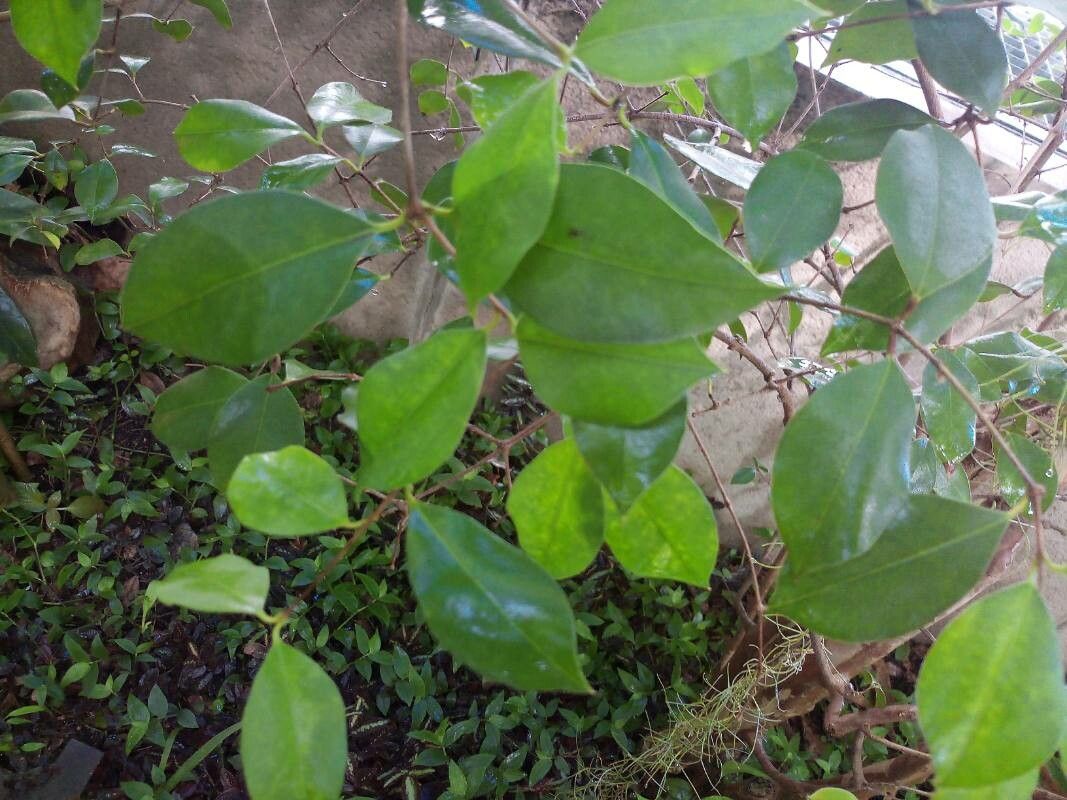
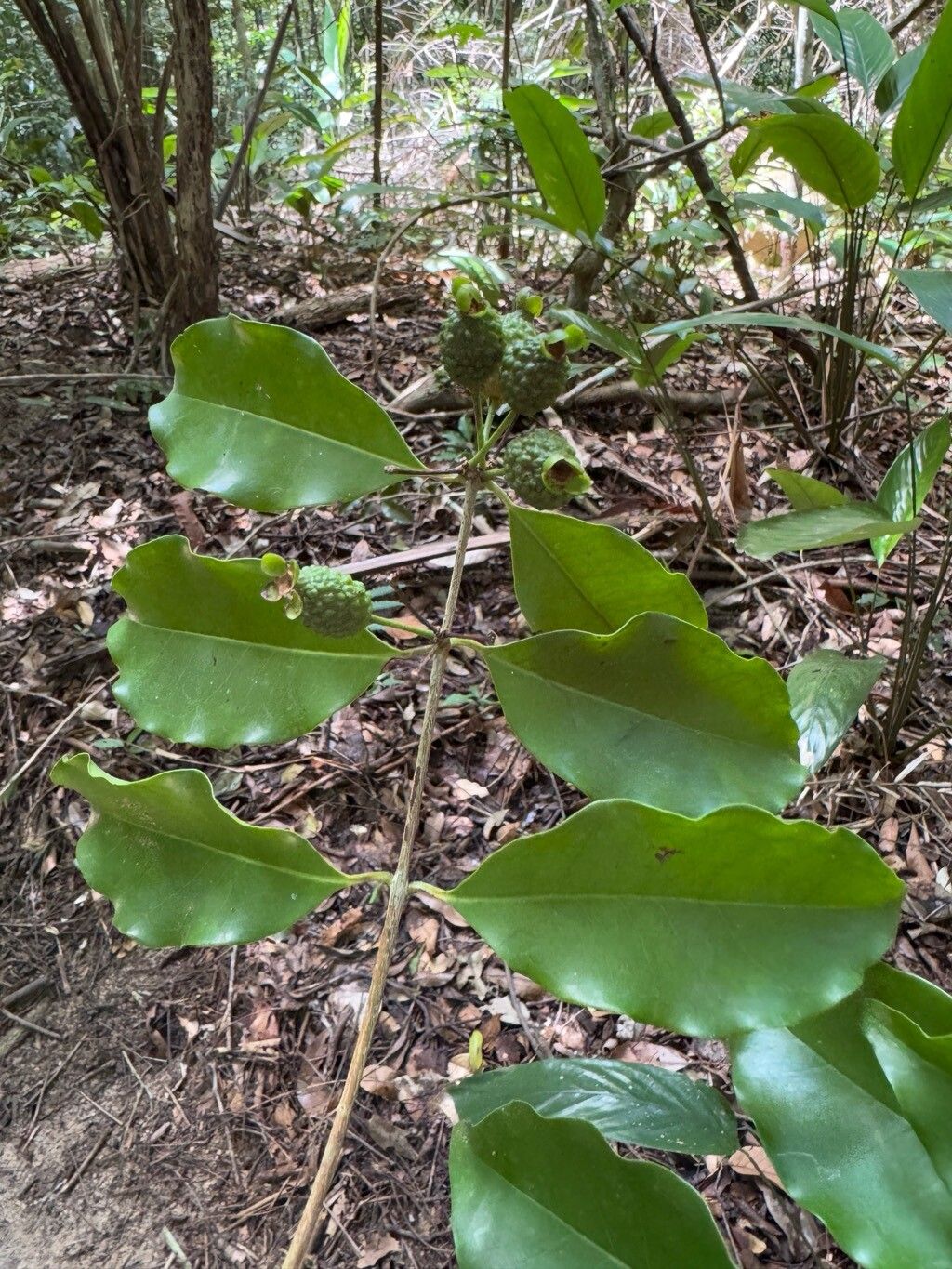
Eugenia reinwardtiana (Chamorro: a'abang) is a shrub to small tree in the family Myrtaceae, (Native to tropical forests in northern Queensland, Australia; Indonesia, and the Pacific Islands). Also known as the Cedar Bay cherry. Other common names include Beach Cherry, Australian Beach, Mountain Stopper, and Nioi (Hawaii). They are typically 2 to 6 m (6.6 to 19.7 ft) in height.The tree is particularly common around the Cedar Bay National Park in northern Australia and the edible fruit was especially popular with the hippies who lived there in the 1970s. The fruits are green at first, when ripe it turns to a bright orange-red colour, these fruits are also taste sweet and delicious with its soft flesh.
Mountain stopper is resistant to disease and typically does not easily develop illnesses. As for maintenance, this plant is fairly low-maintenance. Planted outdoors it needs only light watering, and larger specimens usually do not require pruning. Smaller plants, however, should be trimmed after they finish blooming. Mountain stopper is appropriate for anyone who has outdoor space, like a garden or a deck, and it does not demand extensive care experience.
How to keep Eugenia Reinwardtiana.
Light
Mountain stopper does best when it receives abundant, unobstructed sunlight throughout the day. Its native habitat is very bright, which promotes healthy growth. If it lacks sufficient light, the plant can show stunted development. Conversely, too much sun can burn the leaves and reduce its vigor.
Water
The Mountain Stopper plant thrives in humid coastal rainforests and can withstand short periods of drought. To prevent over-saturation, it should be watered every two weeks. Being an evergreen, its foliage helps retain soil moisture, making it adaptable to a variety of climate zones.
Temperature
Mountain stopper comes from tropical areas, where the climate is generally warm and humid. As a result, it is adapted to high temperatures and humidity. It does not tolerate sudden temperature changes and prefers a consistent temperature, so avoiding indoor temperature fluctuations is important. It typically cannot withstand cold and needs warmer conditions to grow. If the surrounding temperature falls too low, the plant may stop growing or even die.
Fertilizer
Use organic fertilizers (e.g., fish emulsion, compost) instead of chemical fertilizers for Mountain stopper. Supply young plants with higher nitrogen and phosphorus in spring. Incorporate compost or fertilizer before or after planting. For mature plants, supplement in spring with a balanced fertilizer or one specific to a deficiency. Nutrient deficiency causes small leaves, short branches, yellow or bronze leaves, acidic fruits, premature fruit fall, and splitting.
Pruning
Prune mountain stopper plants from early to late spring while they are actively growing. Remove any dead or crossing branches to enhance air circulation and shape the plant. Regular pruning encourages healthier growth and flowering. Be careful not to over-prune, and always use clean tools to prevent the spread of disease.
Botanical profile.
- Plant Type
- Tree, Shrub
- Life Cycle
- Perennial
- Genus
- Eugenia
- Family
- Myrtaceae
- Hardiness Zone
- 10-12
- Mature Height
- 4.88 m
- Mature Spread
- 2.44 m
- Leaf Color
- Dark Green
- Leaf Type
- Evergreen
- Flower Color
- White
- Flower Size
- 1.02 cm to 1.52 cm
- Bloom Time
- Late spring, Summer, Early fall
- Planting Time
- Spring, Summer, Autumn
- Harvest Time
- Late summer, Fall, Early winter
- Native Area
- Indonesia, Fiji
Other names.
Reader questions.
What are the sunlight requirements for Mountain Stopper?
Mountain Stopper (Eugenia reinwardtiana) requires full sun, meaning it thrives best with over 6 hours of sunlight daily. Its natural habitat provides extensive light, essential for its healthy growth. It's crucial to ensure the plant receives a balance of light and shade, as too little light can cause stunted growth, while too much can lead to scorched leaves. For indoor plants lacking natural sunlight, especially during winter or in less sunny spaces, artificial lighting can be a viable solution. LED lights, advisable for plant lighting, can mimic the necessary wavelengths, with recommendations ranging from 10-50W/sq ft based on the plant's sunlight needs.
What symptoms indicate Mountain Stopper is getting insufficient or excessive sunlight?
Symptoms of insufficient sunlight in Mountain Stopper include small leaves, leggy or sparse growth, faster leaf drop, slower or no new growth, and lighter-colored or yellowing leaves due to chlorosis. Excessive sunlight can cause symptoms like sunscalding, leaf curling to minimize water loss, wilting from high transpiration rates, and leaf scorching, characterized by brown, dry edges. These symptoms are crucial indicators of the plant's need for adjusted sunlight exposure.
How do you remedy the sunlight exposure for Mountain Stopper?
To remedy sunlight exposure for Mountain Stopper, for indoor settings, gradually move plants to sunnier spots to achieve at least 6 hours of direct sunlight, using south-facing windows or artificial lights for plants that are large or immobile. Outdoors, plants should be gradually relocated to sunnier areas to prevent sunburn, with a focus on avoiding drastic light intensity changes. If obstructions like trees limit sunlight, consider pruning or transplanting smaller plants during their dormant period to more favorable locations. It's important to note that parts of the plant already impacted by insufficient sunlight might not recover, but new growth should thrive under improved conditions.