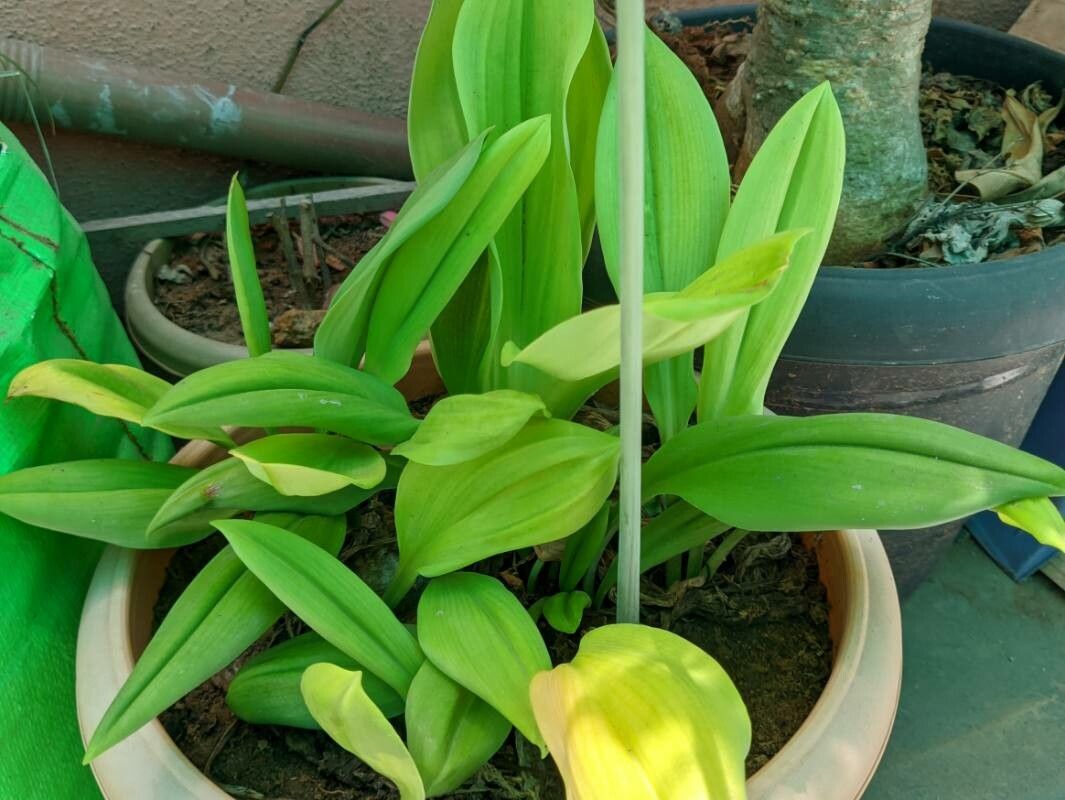
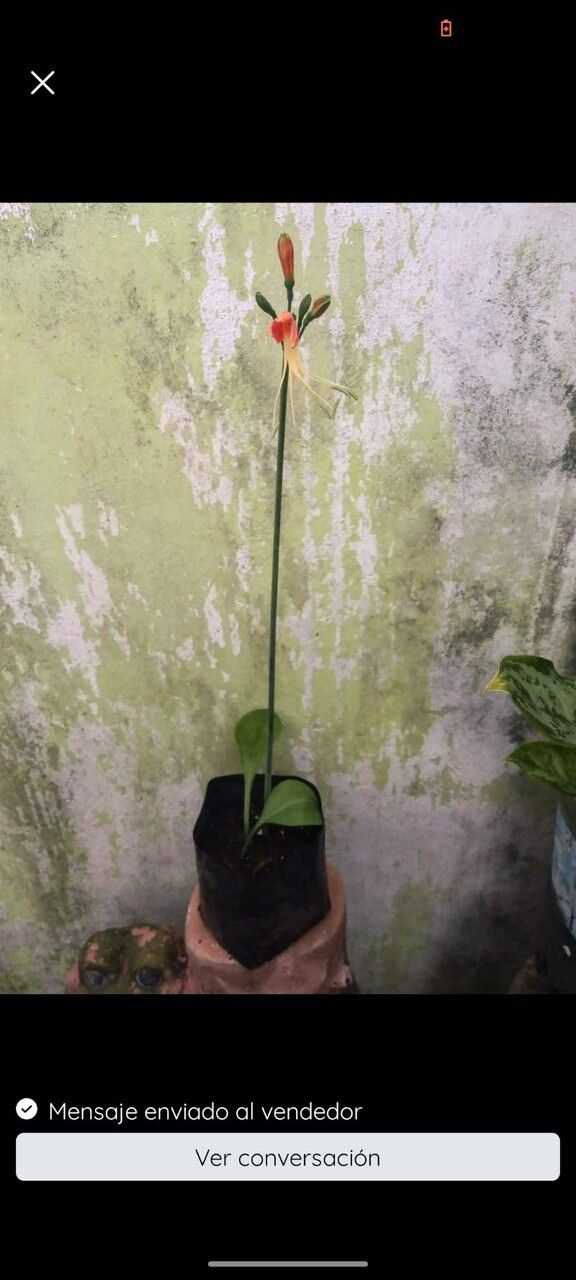
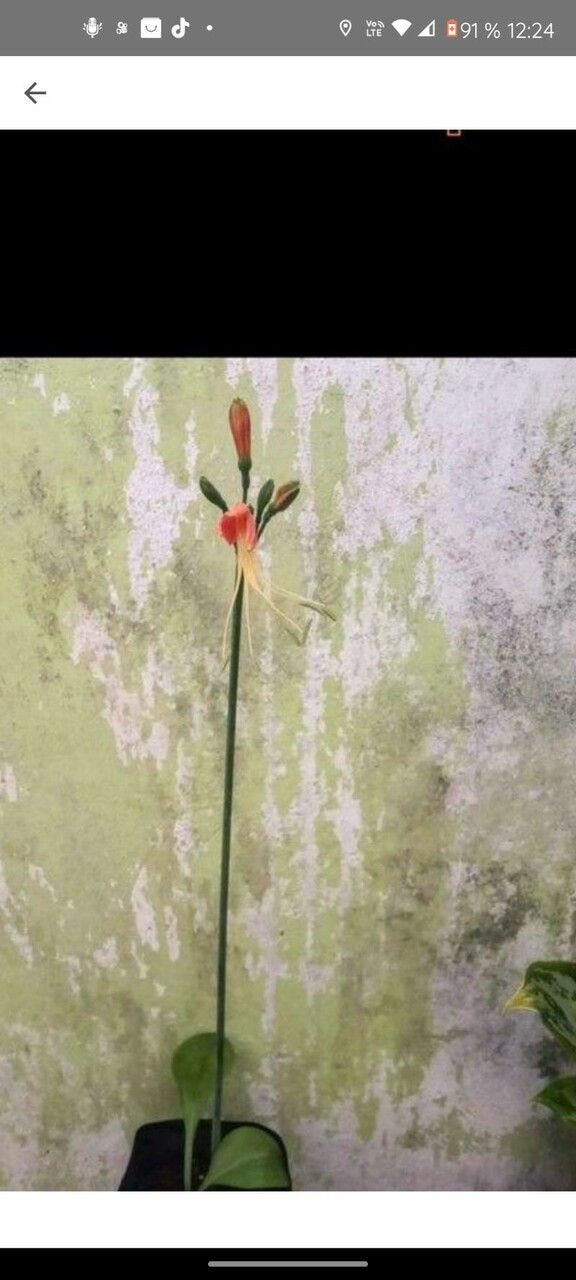
Eucrosia bicolor is a species of plant found in Ecuador and Peru. Its natural habitats are seasonally dry lowland areas. It was the first species of Eucrosia to be scientifically described, in 1817, and the first to be introduced into cultivation in Europe, flowering outside its homeland for the first time in 1817. It is the most widely grown species of Eucrosia. It grows from bulbs up to 4.5 cm in diameter. The slightly glaucous leaves, which usually appear by flowering time, have short petioles and blades (laminae) which are 20 cm long by 10 cm wide. The flowers are umbellate, on a stem (scape) up to 60 cm in height, pale red in colour, with stamens with prominent long filaments. The stamens are yellow in the Ecuadorian var. bicolor and red in the Peruvian var. plowmanii. When grown in cultivation in Europe, it should be kept dry at 10 °C or above when the leaves wither, and watered again when the flowers and leaves begin to appear in spring, when it should be kept in a sunny position.
The Peruvian lily is fairly resistant to disease and generally not prone to problems. However, it can be affected by pests and diseases present in its surroundings. These issues are usually mild. Regarding care, this plant requires moderate maintenance. It should be pruned regularly to keep a neat appearance and support healthy growth. Fertilizing can also help encourage flowering. The Peruvian lily is suitable for anyone with outdoor space, such as a garden or patio, and does not demand extensive care experience. It may need more attention if grown indoors.
How to keep Eucrosia Bicolor.
Light
Peruvian lily grows best with broad, bright light similar to its native habitat. Places that offer ample light that is slightly filtered support its healthy growth. Although it can tolerate lower light conditions, an excessive shortage of light can impede the plant's vigor and development.
Water
The Peruvian lily thrives in tropical environments and needs consistent moisture to grow well. It's best to water it weekly to keep the soil slightly moist, but be careful not to overwater and cause waterlogging. Although it can tolerate moderate drought, the Peruvian lily prefers higher humidity levels, making it an excellent choice for bathrooms or kitchens where the air tends to be more humid.
Temperature
The Peruvian lily comes from tropical areas, where the climate is commonly warm and humid. Consequently, it is well suited to high temperatures and humidity. It does not tolerate sudden temperature changes and favors a stable thermal environment, so avoiding temperature fluctuations indoors is important. It typically cannot withstand cold and requires warmer conditions to grow. If the ambient temperature becomes too low, the plant may stop growing or even die.
Fertilizer
Correct fertilization is essential for a Peruvian lily's health and appearance. Fertilize the Peruvian lily in summer, repeating the application monthly throughout the season. Nutrients drive growth and preserve the plant's tissues. Feeding the plant improves its flower display, producing the best blooms.
Pruning
The Peruvian lily showcases vibrant, two-tone flowers. To encourage new growth and keep the plant healthy, prune it from early to late spring to remove spent blooms. Additionally, trim away dead stems and yellowing leaves to improve the plant's shape and health. This also promotes better air circulation and reduces the risk of disease. Following these practices helps ensure robust blooming and overall plant vitality.
Botanical profile.
- Plant Type
- Herb
- Life Cycle
- Perennial
- Genus
- Eucrosia
- Family
- Amaryllidaceae
- Hardiness Zone
- 9-11
- Mature Height
- 30 cm to 61 cm
- Mature Spread
- 30 cm to 46 cm
- Leaf Color
- Green
- Leaf Type
- Deciduous
- Flower Color
- Red
- Flower Size
- 2.54 cm to 5.08 cm
- Bloom Time
- Mid spring, Late spring, Early summer
- Planting Time
- Spring
- Harvest Time
- Summer
- Native Area
- Ecuador, Peru
Other names.
Reader questions.
What are the sunlight requirements for Peruvian lily?
Peruvian lily thrives best in environments that replicate its native, brightly lit habitats, requiring significant but slightly diffused light for optimal growth. It can adapt to less sunny conditions, but a lack of enough sunlight may hamper its vitality and development. Specifically, the plant needs full sun, defined as above 6 hours of sunlight daily, or partial sun, which is about 3-6 hours of sunlight. It's important to observe the movement of sunlight in your garden to place your plants in locations that provide an ideal balance of light and shade.
How can artificial lighting support Peruvian lily's growth indoors?
Indoor Peruvian lilies require adequate lighting, especially when natural sunlight is insufficient. In such cases, artificial lights, such as LEDs customized to emit specific wavelengths beneficial for plants, serve as an excellent alternative, promoting healthier and faster growth. The appropriate amount of artificial light varies depending on the plant's sunlight needs; full sun plants require 30-50W/sq ft, partial sun plants need 20-30W/sq ft, and full shade plants need 10-20W/sq ft. The light source should be placed 12-36 inches above the plant, for about 8-12 hours per day to mimic natural daylight hours.
What are the symptoms of improper lighting on Peruvian lily?
Peruvian lilies show various symptoms when exposed to inadequate lighting, which may not be immediately evident. Light deficiency can lead to smaller new leaves, leggy or sparse growth, faster leaf drop, slower or ceased new growth, and leaves that appear lighter or develop chlorosis. Additionally, excessive sunlight can cause issues such as sunscald, leaf curling, wilting, and leaf scorching. These symptoms provide critical insights into the plant's health and its need for optimal lighting conditions.
What are some solutions for light-related issues in Peruvian lilies?
To address light-related issues in Peruvian lilies, a gradual adjustment to sunlight exposure is recommended. For indoor plants, this might involve moving the plant to a sunnier location weekly until it gets at least 6 hours of direct sunlight a day, utilizing a south-facing window, or employing artificial lighting like desk lamps or professional plant grow lights for at least 8 hours daily. Outdoors, plants should be gradually moved to sunnier spots to avoid sunburn. Additionally, removing obstructions to sunlight or transplanting smaller plants during their dormant period to sites with better sunlight and drainage can be effective solutions. Note, parts of the plant that have suffered from insufficient sunlight may not recover, but new growth will be healthy following these adjustments.