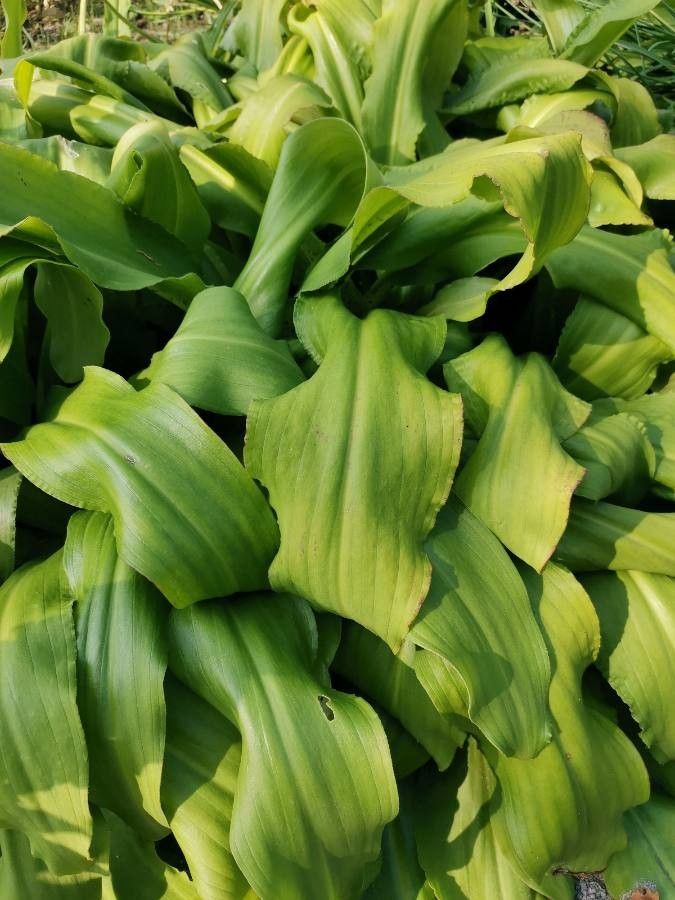
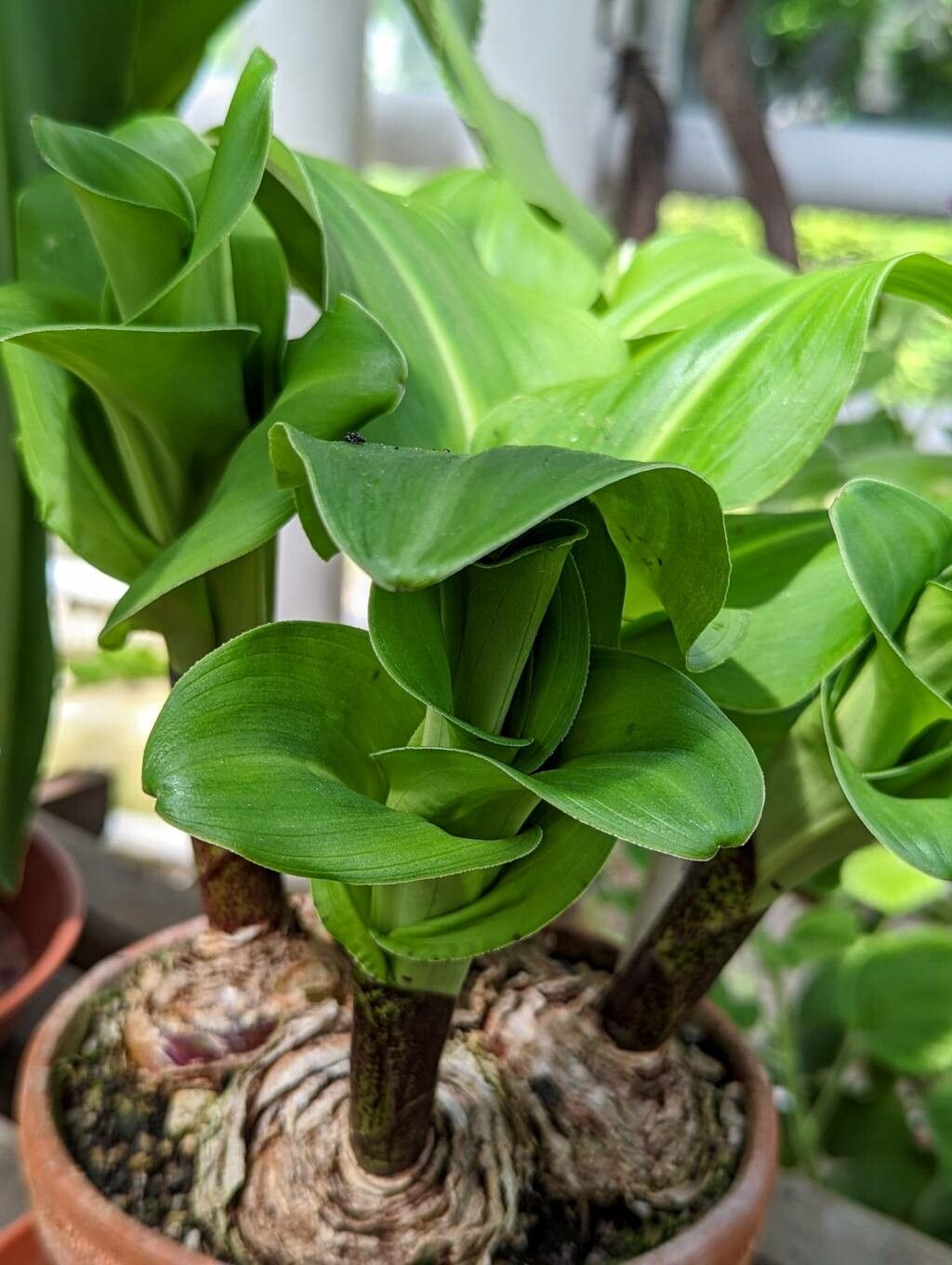
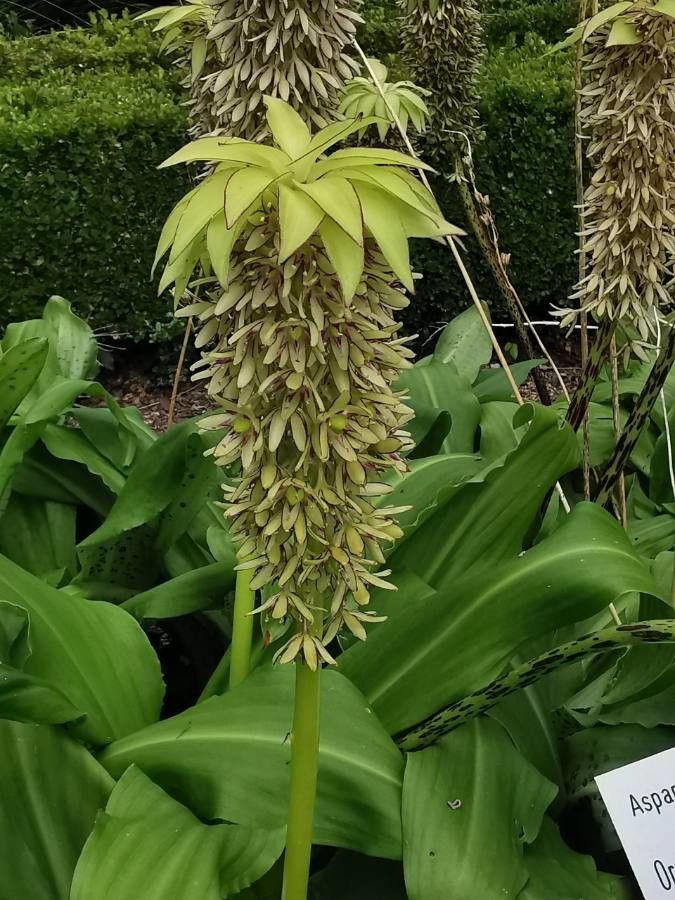
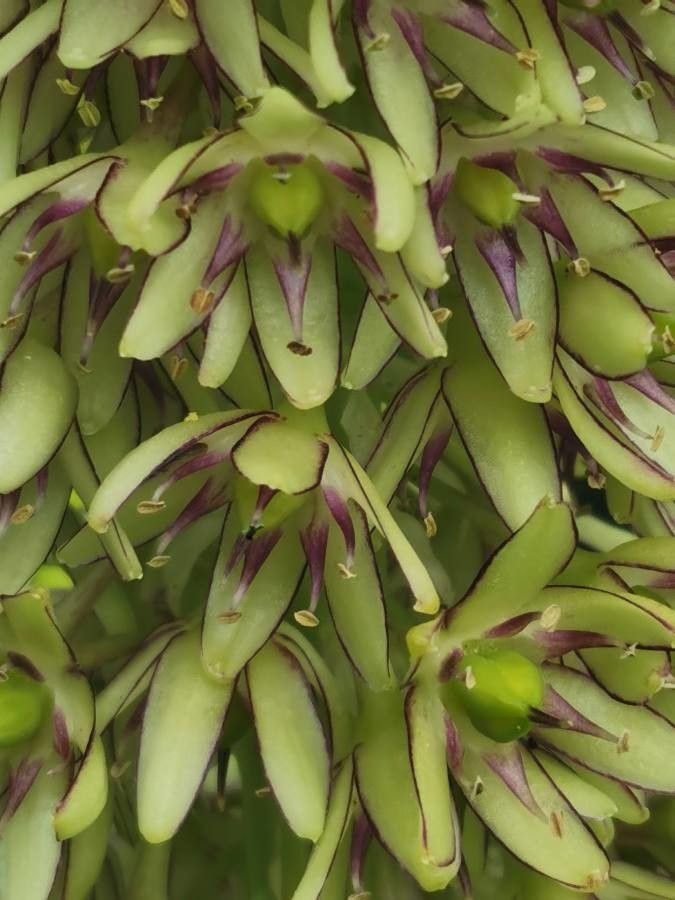
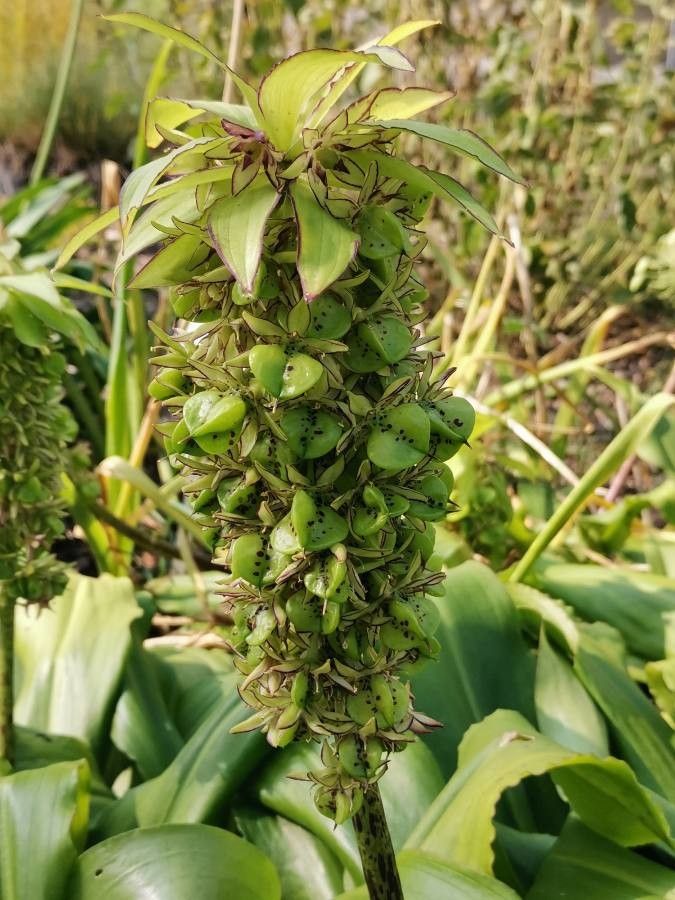
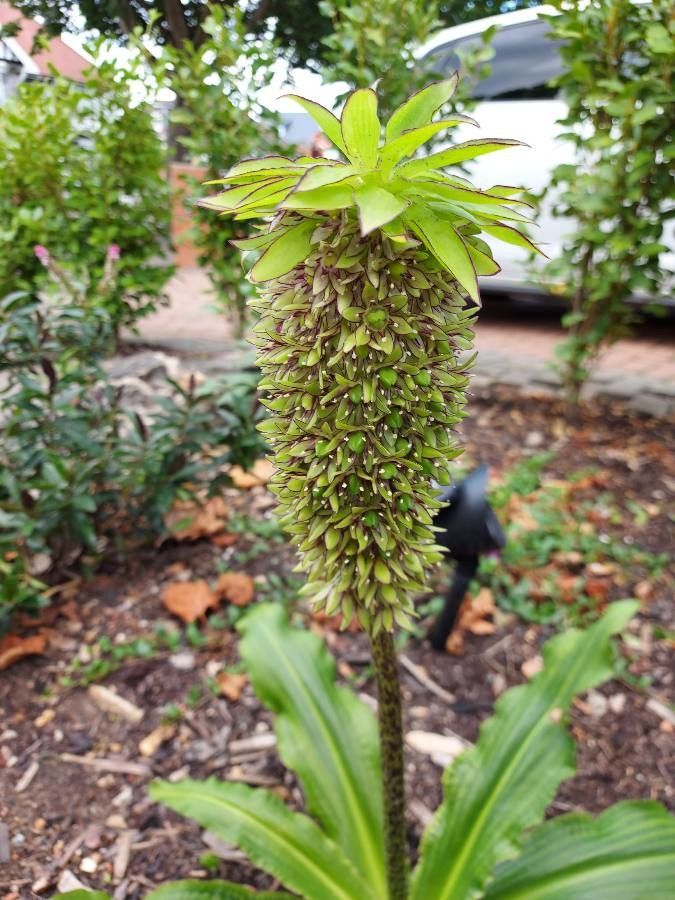
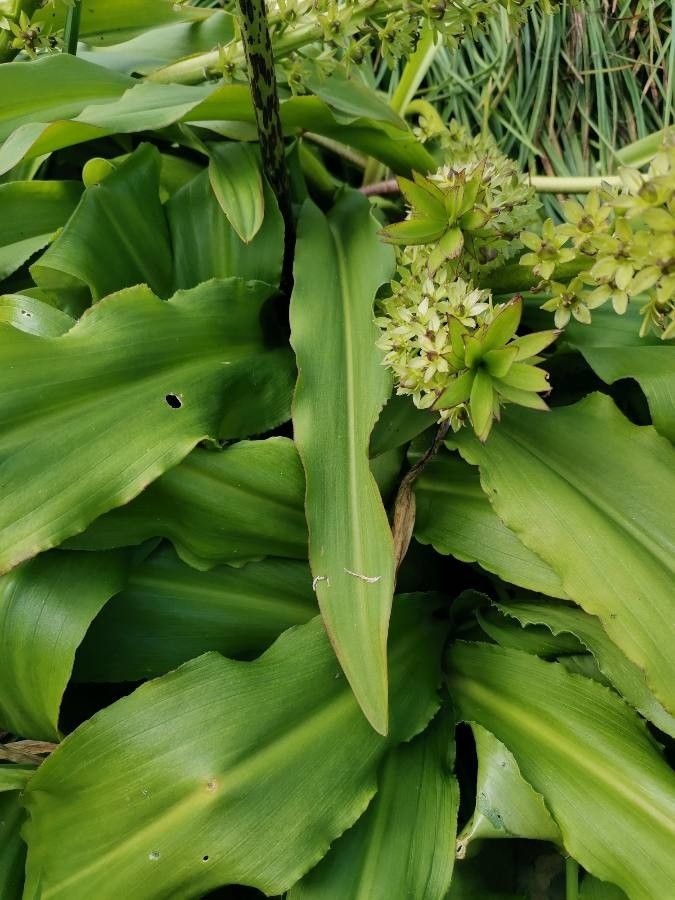
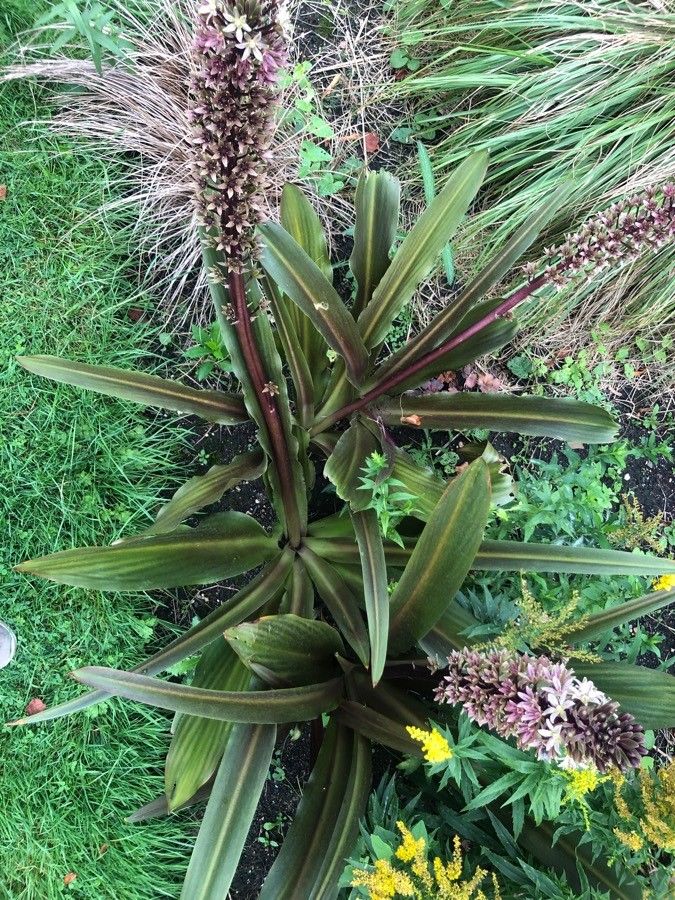
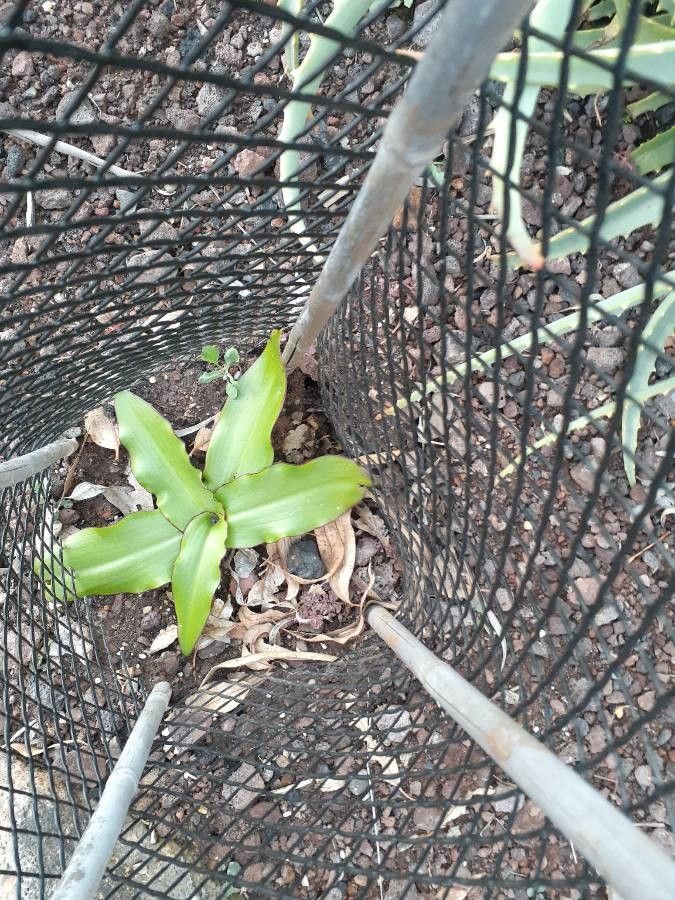
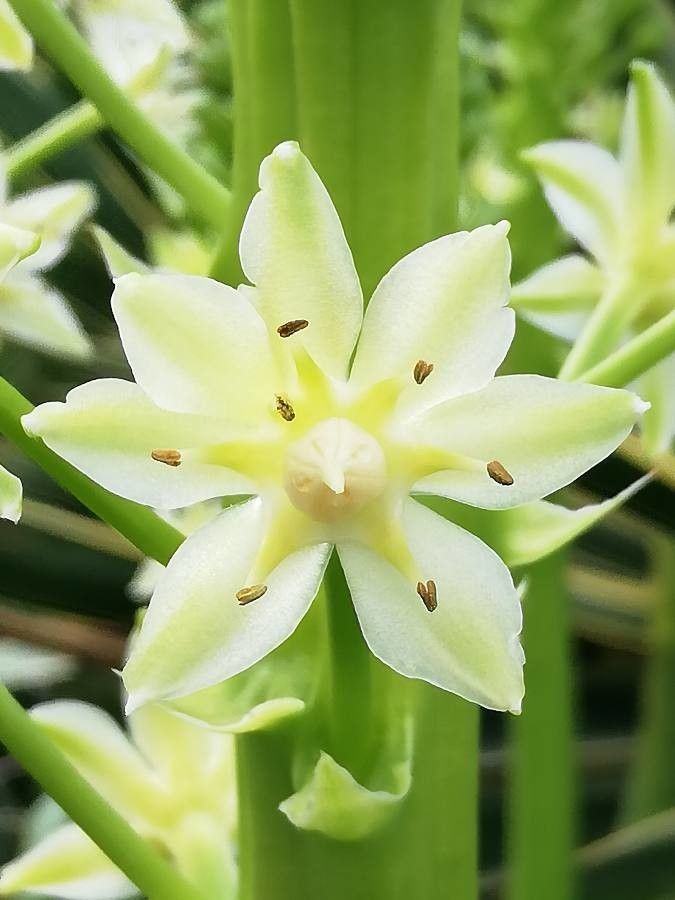
Eucomis bicolor, the variegated pineapple lily or just pineapple lily, is a bulbous species of flowering plant in the family Asparagaceae, subfamily Scilloideae, native to Southern Africa (the Cape Provinces, Lesotho, KwaZulu-Natal, the Free State, and the Northern Provinces). The pale green, purple-margined flowers are arranged in a spike (raceme), topped by a "head" of green leaflike bracts. It is cultivated as an ornamental bulbous plant, although its flowers have an unpleasant smell, attractive to the main pollinators, flies.
The variegated pineapple lily is fairly resistant to disease and generally not prone to illness. However, it can be affected by pests and diseases present in its surroundings. These infections are typically not serious. Care-wise, this plant calls for a moderate amount of maintenance. It should be pruned regularly to maintain a good appearance and support healthy growth. Fertilizing can also help encourage flowering. The variegated pineapple lily is suitable for anyone with outdoor space, such as a garden or patio, and does not demand extensive care experience. It may require more attention when grown indoors.
How to keep Eucomis Bicolor.
Light
Variegated pineapple lily originates from habitats such as forest understories or rocky areas, where it occurs in natural shade. It prefers partial sun but can adapt to full sun or full shade, reflecting its versatile and hardy nature.
Water
The variegated pineapple lily, native to South Africa, is well-suited to dry conditions due to its strong drought tolerance. While it requires weekly watering, it thrives best in well-draining soil when planted outdoors. Its succulent-like leaves efficiently store water, allowing the plant to grow during sporadic rainfall and preventing root rot.
Temperature
Variegated pineapple lily adapts well to temperature, tolerating higher heat and wider temperature fluctuations. In hot weather, attention should be paid to watering and suitable shading should be provided to avoid sunburn. Conversely, variegated pineapple lily is not very tolerant of low temperatures; although it can endure some cold, extremely cold conditions can cause frost damage.
Fertilizer
The optimal time to fertilize a Variegated pineapple lily is in early spring, as it comes out of dormancy and begins active growth. Fertilizing supplies essential nutrients needed for healthy development. While the Variegated pineapple lily requires relatively little fertilizer, applying it annually can improve its survival and encourage better, longer-lasting blooms.
Pruning
To improve the health and appearance of variegated pineapple lilies, it's best to prune them from early to late spring. Begin by removing spent flower stalks and any dead leaves to promote healthy growth and good air circulation. Always use clean, sharp tools to minimize stress on the plant. Pruning at the right time aids in recovery and encourages lush blooms, keeping the plant vigorous and attractive.
Pot & Repot
Repot your variegated pineapple lily every 2-3 years in the spring, using a slightly larger pot to accommodate its bulbous growth. After repotting, ensure the plant receives consistent but moderate watering to aid its recovery. This striking plant makes an excellent centerpiece and requires minimal care.
Botanical profile.
- Plant Type
- Herb
- Life Cycle
- Perennial
- Genus
- Eucomis
- Family
- Asparagaceae
- Hardiness Zone
- 7-10
- Mature Height
- 46 cm to 61 cm
- Mature Spread
- 46 cm to 61 cm
- Leaf Color
- Green
- Leaf Type
- Deciduous
- Flower Color
- White
- Flower Size
- 2.03 cm to 3.05 cm
- Bloom Time
- Early summer, Mid summer
- Planting Time
- Spring, Summer
- Harvest Time
- Late summer, Early fall
- Native Area
- South Africa, Lesotho
Other names.