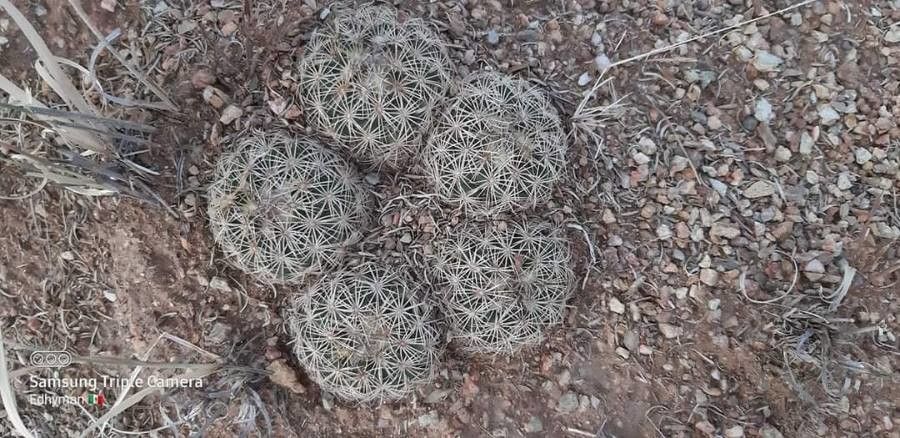
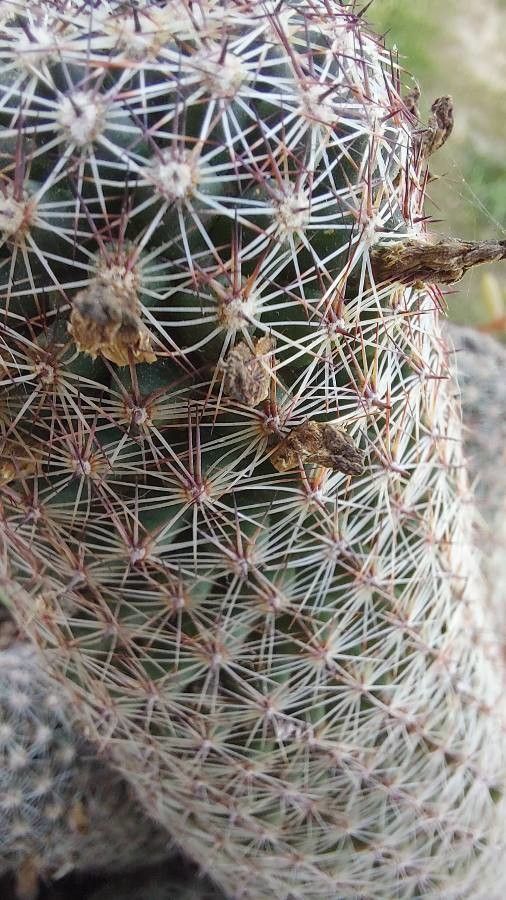
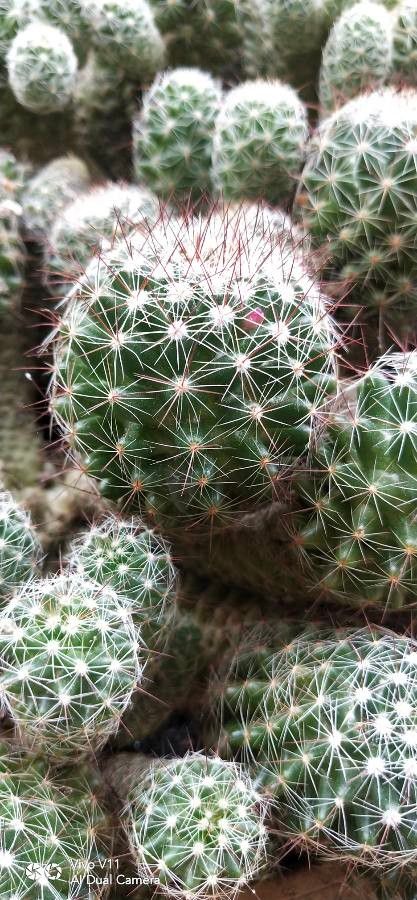
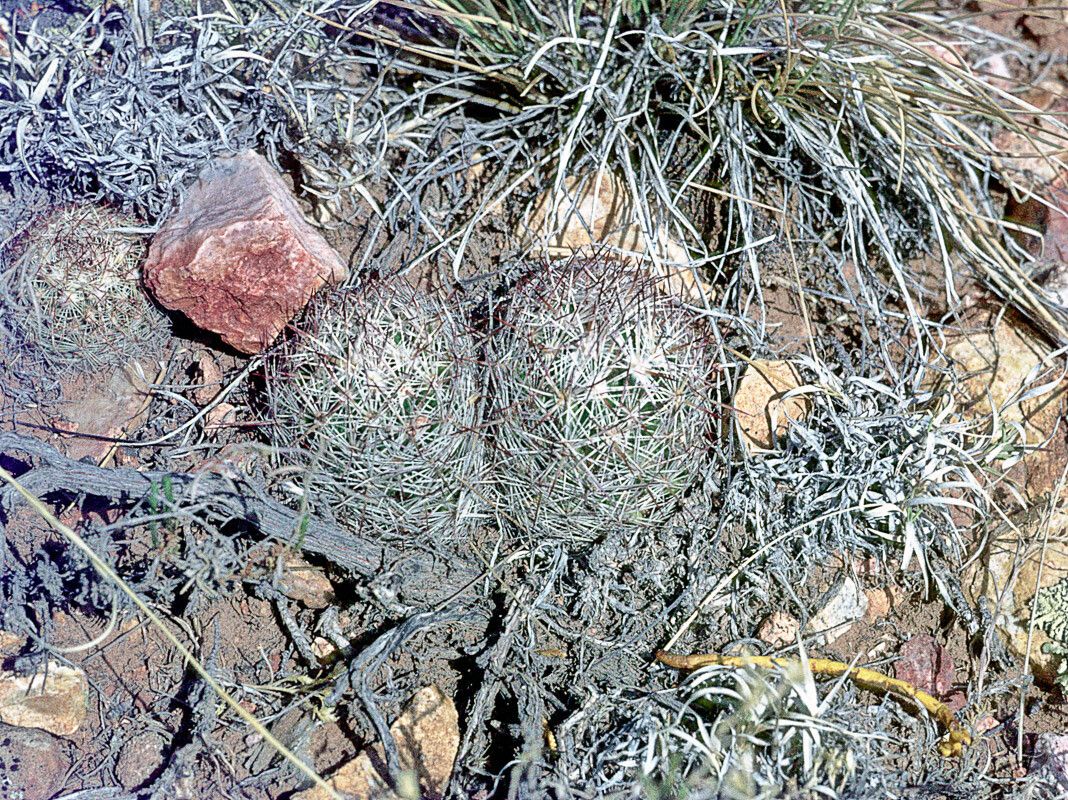
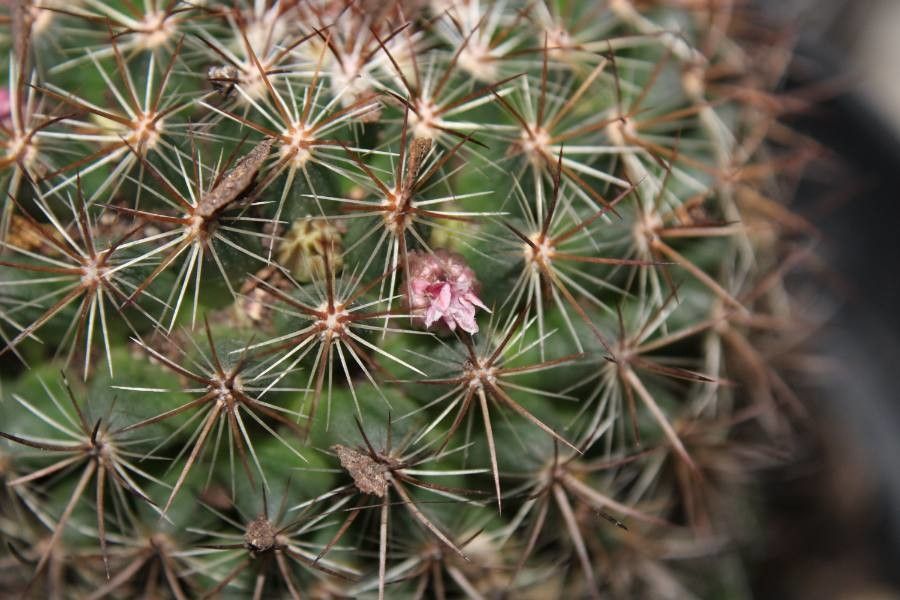
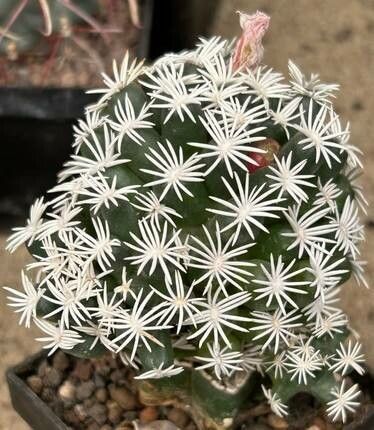
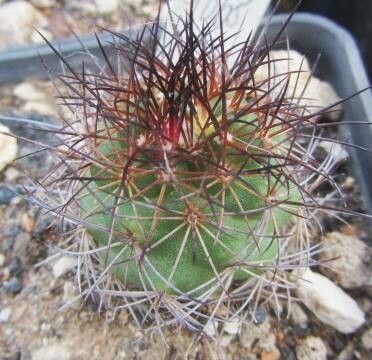
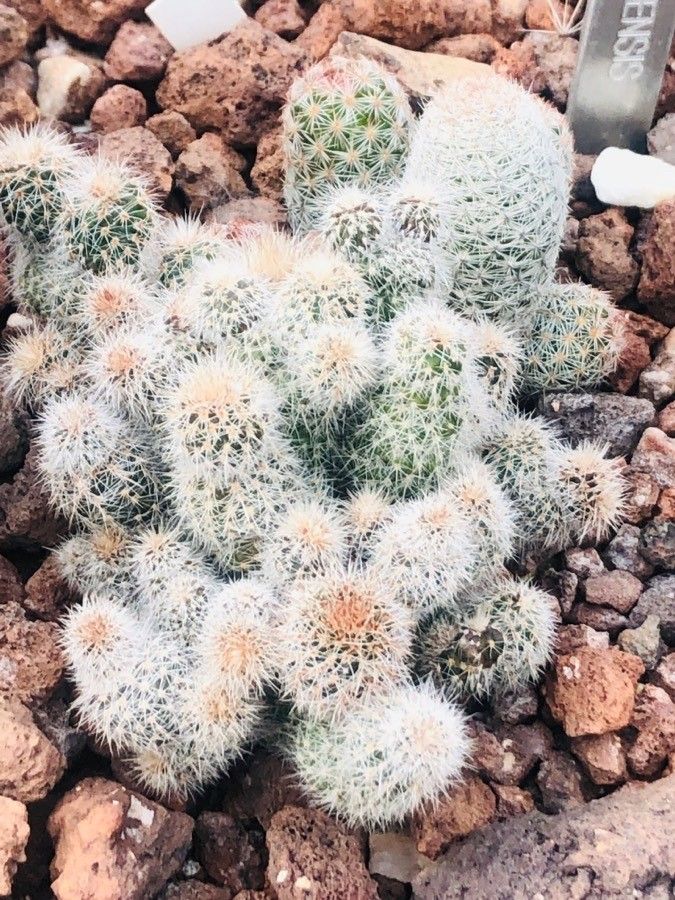
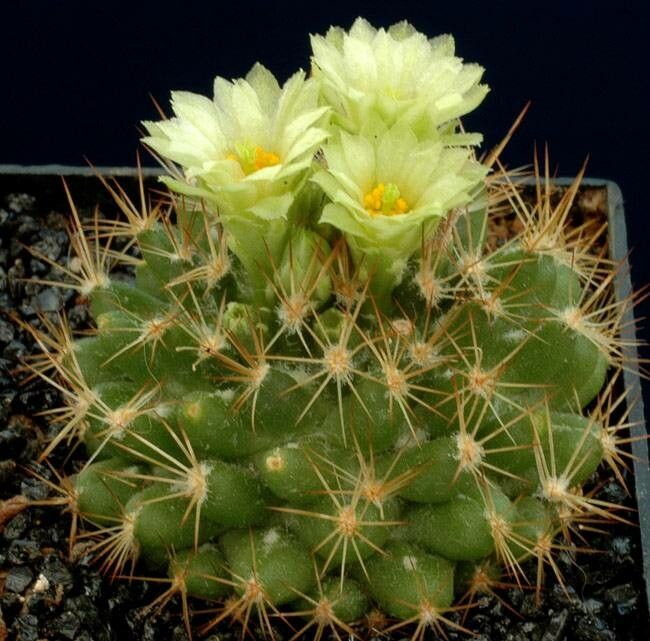
Escobaria vivipara is a small cactus species belonging to the family Cactaceae. Native to North America, it thrives in various habitats including grasslands, rocky slopes, and deserts. The plant typically has a globular or cylindrical shape, with a diameter reaching up to 10 cm and a height of up to 15 cm. Its stem is covered in clusters of small spines.
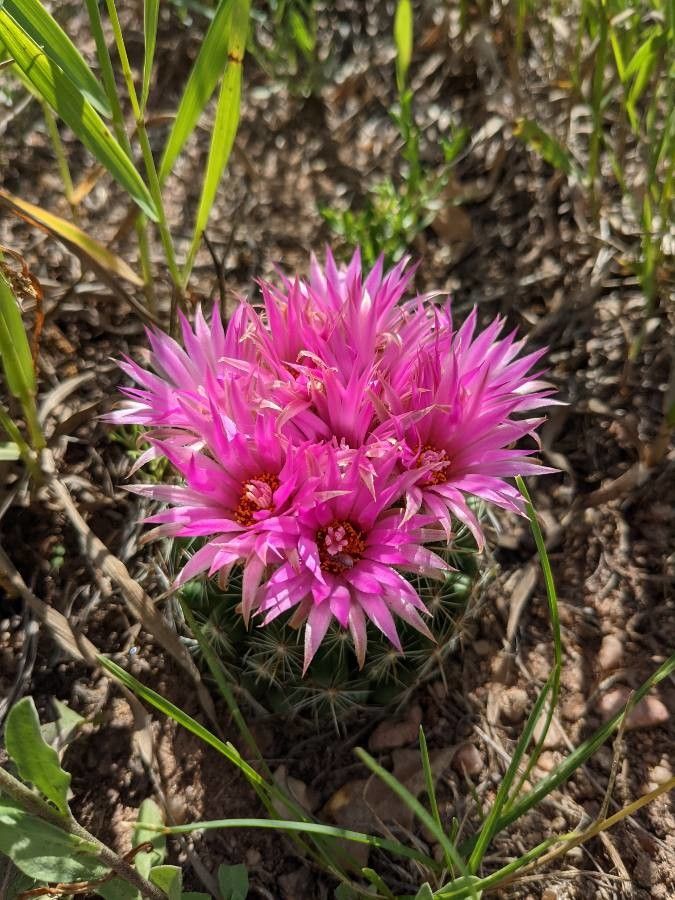
The flowers of Escobaria vivipara are generally pink or purple, though they can also be white or yellow. These flowers bloom from May to July and are about 2-3 cm wide. The cactus produces small fruits that measure approximately 1-2 cm in length.
A fascinating characteristic of Escobaria vivipara is its ability to produce new plants from its seeds while still attached to the parent plant—a phenomenon known as vivipary. This adaptation enhances the survival rates of the offspring, as they develop established roots before detaching from the parent.
For optimal growth, Escobaria vivipara requires well-draining soil and full sun exposure. Although it has low water requirements, it benefits from occasional watering during the hot summer months.
Overall, Escobaria vivipara is an excellent addition to any cactus collection due to its unique features, including its self-propagation capability through seed production while still attached to the parent plant.
Spinystar is fairly resistant to diseases and generally remains healthy under normal care without becoming easily ill. That said, it can be vulnerable to mealybugs; these pests may cause some harm but typically do not pose a major danger. Regarding care, Spinystar is drought-tolerant and does not need frequent watering. It can go long stretches without water and requires little fertilizer. However, if light is inadequate and it is overwatered, it is very prone to root rot. In general, Spinystar is a good choice for people who prefer low-maintenance plants, though it is still important to meet its basic needs. It is especially appropriate for individuals who are away for long periods and might forget to water regularly.
How to keep Escobaria Vivipara.
Light
Spinystar grows best with full-day sunlight exposure, though it can also tolerate periods in partial shade. This tendency mirrors the environments in which its ancestors developed. Too little light can hinder its normal growth, while too much may scorch it. Its light requirements can differ across various growth stages.
Water
Spinystar is extremely drought-tolerant and only needs to be watered once every three weeks. It's important to let the soil dry out completely between waterings. This plant thrives in rocky terrains and is well-suited for xeriscaping. It can adapt to fluctuating moisture levels by efficiently storing water, allowing it to survive in different temperature zones.
Temperature
Spinystar originates from temperate regions and favors a temperature range of 41 to 95 °F (5 to 35 ℃). This information is vital for supporting its growth as the seasons change.
Fertilizer
For Spinystar, light fertilizing once or twice a year during the growing season is enough. Do not fertilize in winter or in summer when the plant is dormant. Cut back on fertilizer for plants that have been repotted and wait a couple of months after repotting before resuming feeding. Fertilizing helps maintain healthy growth and promotes blooming.
Pruning
Spinystar needs very little pruning. You should focus on removing wilted flowers and dead branches so the plant can direct its nutrients toward healthier growth.
Pot & Repot
Repot the spinystar cactus every 2 to 3 years in the spring, choosing a slightly larger container to accommodate its growth. Be sure to use well-draining soil. After repotting, avoid watering for a week to prevent root rot and promote healthy growth. This will help maintain the low-maintenance nature of the cactus.
Botanical profile.
- Plant Type
- Succulent
- Life Cycle
- Perennial
- Genus
- Escobaria
- Family
- Cactaceae
- Hardiness Zone
- 4-10
- Mature Height
- 0 cm to 30 cm
- Mature Spread
- 15 cm
- Leaf Color
- Green
- Leaf Type
- Evergreen
- Flower Color
- Pink
- Flower Size
- 2.54 cm to 5.08 cm
- Bloom Time
- Late spring, Early summer, Mid summer
- Planting Time
- Spring
- Harvest Time
- Late summer, Early fall, Mid fall
Other names.
Reader questions.
What should I do if I give my Spinystar plant too much or too little water?
Spinystar and other succulents are typically able to withstand long periods without water, so it's uncommon to find them suffering from underwatering. However, if you have unintentionally neglected to water your Spinystar for a month or more, you may notice that it appears dry and damaged. Signs of underwatering include a lacklustre and wrinkled appearance, complete drying up or browning of the plant, and shriveled or dropped leaves. To remedy this, thoroughly water your Spinystar by submerging the pot in water for 5-10 minutes, ensuring the soil becomes adequately rehydrated. Check the soil's moisture level by touching the surface with your finger. On the other hand, overwatering poses a danger to Spinystar plants and can be fatal if not addressed. Excess moisture causes root rot, preventing the roots from absorbing necessary nutrients and water. Root rot occurs when fungi and bacteria thrive in waterlogged soil, attacking the roots. The symptoms of overwatering include yellow, swollen, and translucent organs that may burst open, followed by browning or blackening of the plant, and easily detaching leaves. Confirm if overwatering is the cause by examining the soil for excessive moisture. Adjust growing conditions by providing proper air ventilation and adjusting watering frequency. Saving an overwatered plant can be challenging, but catching the issue early is crucial to minimize damage. If the roots have already rotted, it might be impossible to save the plant entirely. To assess the root and soil health, carefully remove the plant from its pot and rinse the roots in room-temperature water to remove any lingering fungus. If you find dark brown or black, soft, mushy, or slimy roots, root rot has likely occurred. In such cases, removing healthy stems and propagating them to grow a new Spinystar is recommended. If only a portion of the roots are affected, there is a chance of saving the plant. Trim away unhealthy roots with a sterilized cutting tool, then dip the remaining pale roots in fungicide to eliminate any remaining spores. Repot the Spinystar in fresh, well-draining potting soil. While this method may not guarantee success, in most cases, the plant will recover and display new growth during the next growing season.
Why should I put fertilizer on my Spinystar?
Fertilizing Spinystar provides nutrients to the growing medium, benefiting its growth. Although it stores water and nutrients, applying plant food during the growing season promotes healthy growth and encourages mature Spinystar plants to produce blooms.
What are the sunlight requirements for Spinystar?
Spinystar requires a significant amount of sunlight to thrive optimally. It does best with more than 6 hours of sunlight, categorizing it as a full sun plant, but it can also manage with about 3-6 hours, making it suitable for partial sun environments. This adaptability reflects its original growth conditions in the wild, where it would have experienced both direct sunlight and semi-shaded environments. The key is to monitor the plant's exposure to ensure it receives enough light without causing stress or damage.
What is the preferred temperature range for growing Spinystar?
Spinystar thrives in temperate zones, preferring temperatures between 41 to 95 °F (5 to 35 °C). It is a heat-loving plant that enters a dormant state during winter. For optimal growth, keeping it within this temperature range throughout the changing seasons is essential. During colder months, especially when the temperature drops below -25°C, it is advisable to move Spinystar indoors and place it near a south-facing window to ensure it receives ample sunlight. If natural light is insufficient, supplemental lighting can be used. As the temperature falls below 5°C, the plant's growth slows, and watering should be reduced or halted to prevent root rot.
How often do I need to water my Spinystar?
Determining how often to water Spinystar plant is not a set rule. The easiest way to determine this is by checking the soil and only watering when it is completely dry. You can check the soil by either inserting your finger into the pot or using a moisture meter to gauge the moisture below the surface. When using a deep pot, a stick or chopstick will suffice for checking the moisture. If you feel any dampness, even if it's just a little bit, it's best to wait a few days and check again. In general, most people will need to water Spinystar approximately every two weeks during the summer and once a month in the winter. However, there are various factors that can influence the frequency. The following section provides some considerations that can assist in determining how often to water.
When should I fertilize my Spinystar plant?
Spinystar only requires a light dose of fertilizer during its growing season, which should be applied 1-2 times a year. It is recommended to fertilize in the spring and autumn, avoiding the winter and summer when the plant is dormant. When repotting, it is important to decrease the amount of fertilizer used, and it is advisable to wait a few months after repotting before applying fertilizer.
How can artificial lighting support Spinystar's growth indoors?
Indoor Spinystars benefit greatly from adequate lighting, especially when natural sunlight is insufficient, such as during winter or in less sunny spaces. Artificial lighting, such as LED lights, can be an excellent solution, offering the specific wavelengths needed for optimal growth. For full sun plants, 30-50W per square foot is recommended, whereas partial sun plants need 20-30W per square foot, and full shade plants require 10-20W per square foot. The light source should be placed 12-36 inches above the plant, ensuring it mimics natural sunlight as closely as possible with 8-12 hours of light per day.
How should Spinystar be cared for in low temperatures?
Spinystar requires special attention during low temperatures as it is not tolerant to the cold, with optimal growth occurring above 5°C. In winter, ensure the temperature remains above -25°C to prevent the plant from becoming weak, wilting, and susceptible to root rot. For temperatures falling below -30°C, there is a significant risk of the plant suffering from frost damage and rot. To care for a Spinystar in low temperatures, affected areas from frostbite should be trimmed, especially if the roots have rotted, which necessitates cutting off the rotted roots and propagating the plant through cuttings. The plant should then be moved to a warm indoor environment near a south-facing window for sufficient sunlight. If the natural light is inadequate, supplemental lighting should be considered.
What do I need to think about when watering my Spinystar?
To ensure proper watering for your Spinystar, consider several environmental factors such as container size, soil type, temperature, and humidity. When choosing a container, opt for one with good drainage to prevent overwatering. A smaller container holds less moisture and requires more frequent watering, while a larger pot retains moisture longer and needs less frequent watering. Avoid using an oversized pot to prevent overwatering. When repotting, gradually move to a container that is only slightly larger than the current one, as Spinystar has shallow root systems. In winter, water the plant less frequently as growth slows down and the plant requires less energy and water. Cooler winter air reduces water evaporation and keeps the soil wet for a longer period compared to warmer months. Keep in mind that the climate in your area also influences watering needs. In humid and rainy locations, watering can be less frequent compared to dry and arid climates. It's important to note that conditions can vary depending on the season and indoor heating or air conditioning. If Spinystar is planted in the ground, it typically doesn't need extra watering once the root system is established. However, during extended dry periods, occasional watering may be necessary. For Spinystar grown in containers, it can be moved outdoors in spring and summer, ensuring proper temperatures, and brought back inside when temperatures drop. Potted Spinystar kept outside generally requires more water due to increased sun exposure, even when placed on a shaded porch.
When is the best time to not fertilize my Spinystar?
Spinystar, like other plants, has a dormancy period where it stops growing. During this time in the summer and winter, it is recommended to withhold fertilizer application. Additionally, it is advisable to refrain from fertilizing for the first few months after repotting in the spring.
What symptoms indicate Spinystar is not receiving adequate light?
Symptoms of inadequate light in Spinystar include small, new leaves that are smaller in size compared to older ones, leggy or sparse growth due to extended spaces between stems or leaves, faster leaf drop as the plant conserves resources, slower or halted new growth, and lighter-colored or yellow leaves indicating insufficient chlorophyll. Extreme sunlight exposure can also lead to chlorosis, sunscald, leaf curling, wilting, and leaf scorching. These signs stress the importance of providing Spinystar with its ideal light conditions to prevent stress and promote healthy growth.
What measures should be taken for Spinystar during high temperatures?
During high temperature periods, specifically in the summer when temperatures exceed 35°C, Spinystar's growth will halt, and it may suffer from water loss, wilting, and increased susceptibility to sunburn. If temperatures soar above 41°C, it's crucial to cut off any sunburned or rotten parts of the plant to assist in its recovery. Providing shade, particularly from the harsh afternoon sunlight, will help the plant recover and resume growth. In cases where the plant suffers from root rot, it is advised to cease watering until new roots have developed. This care strategy helps in managing Spinystar's health during extreme heat conditions.