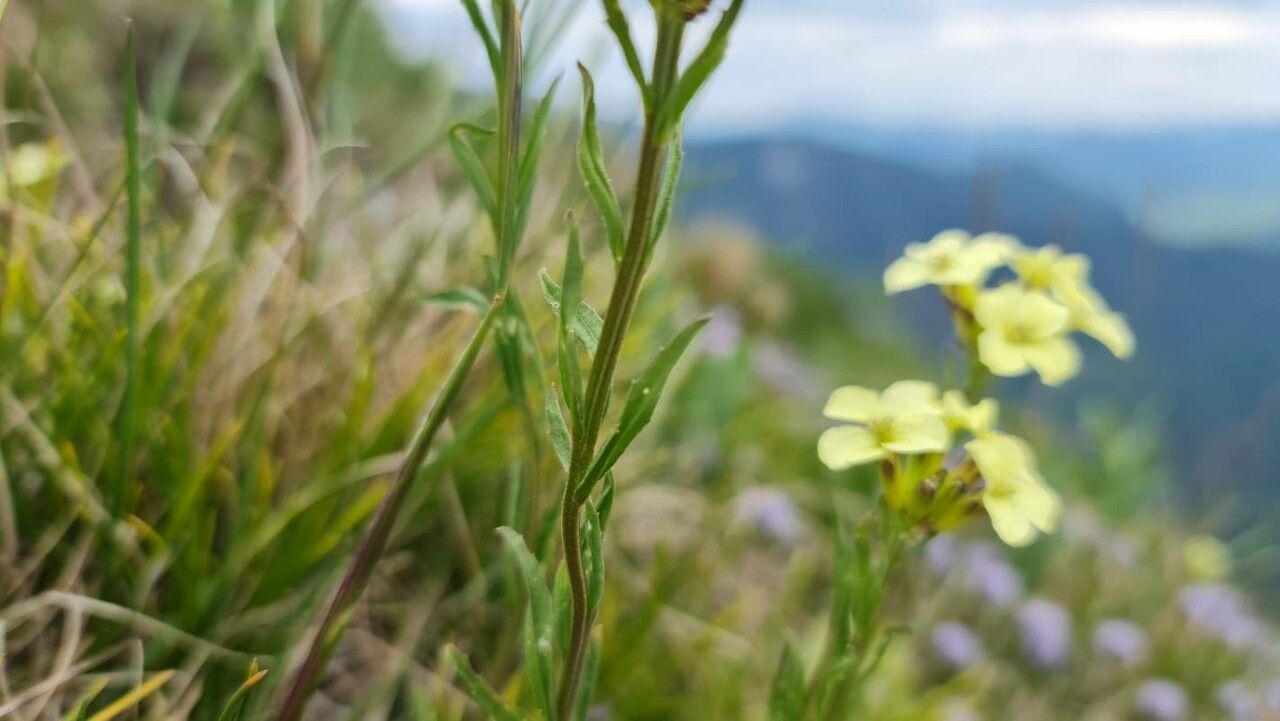
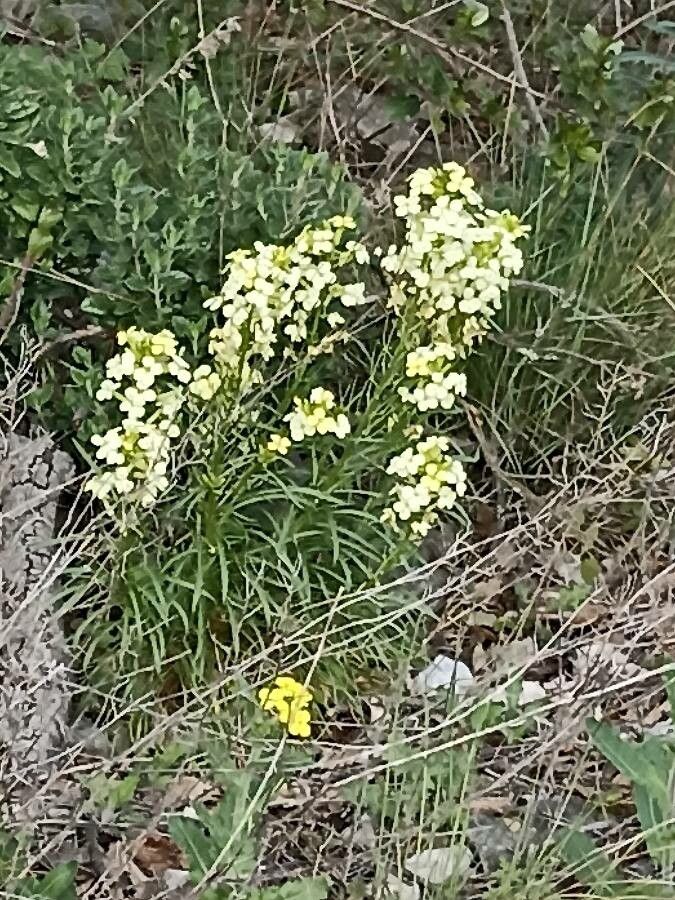
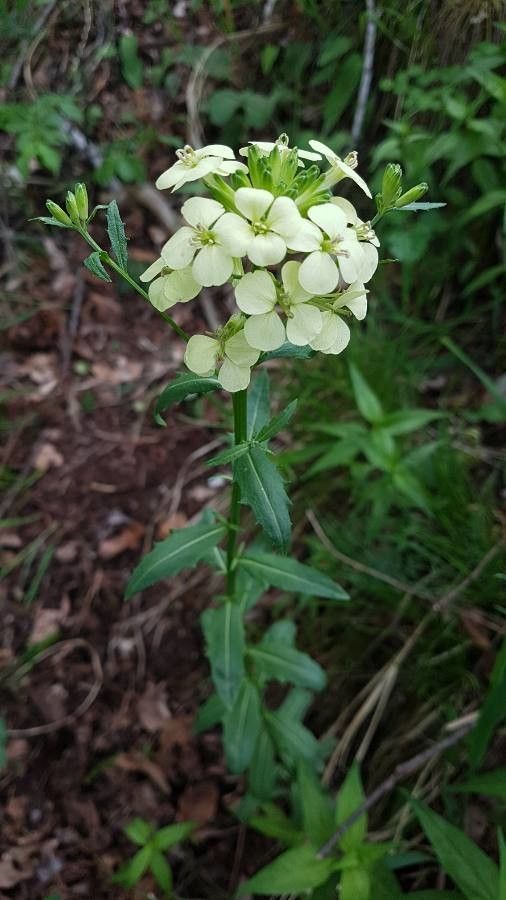
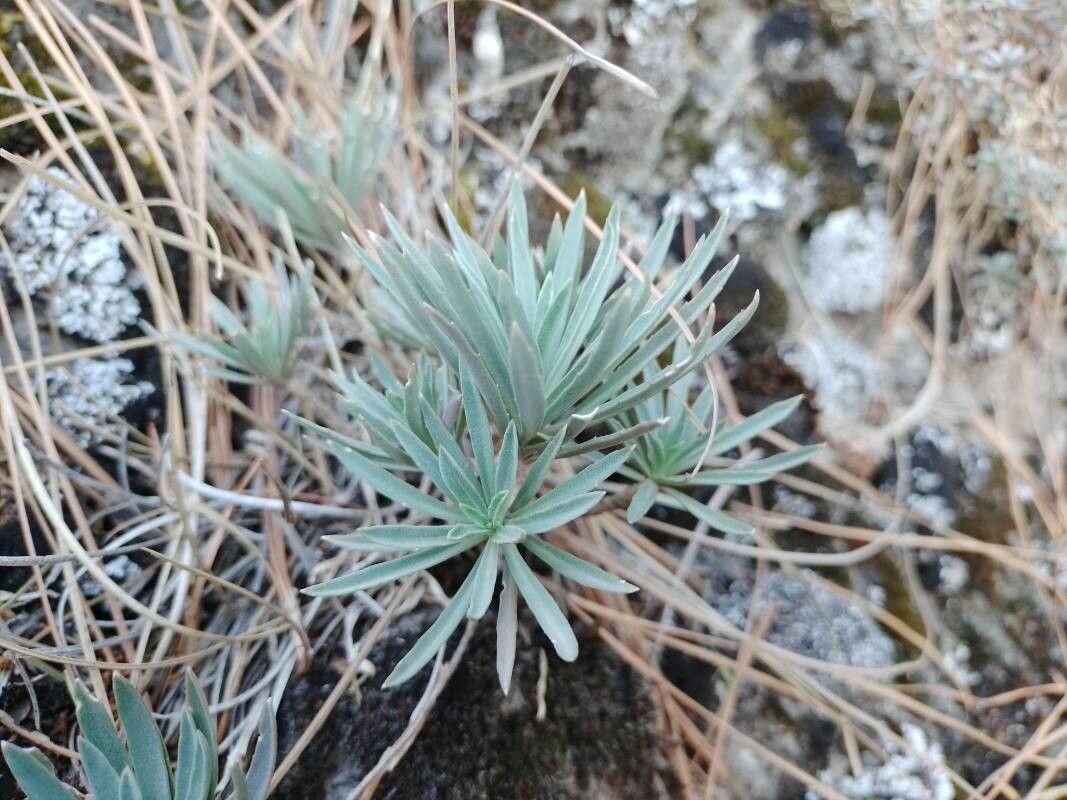
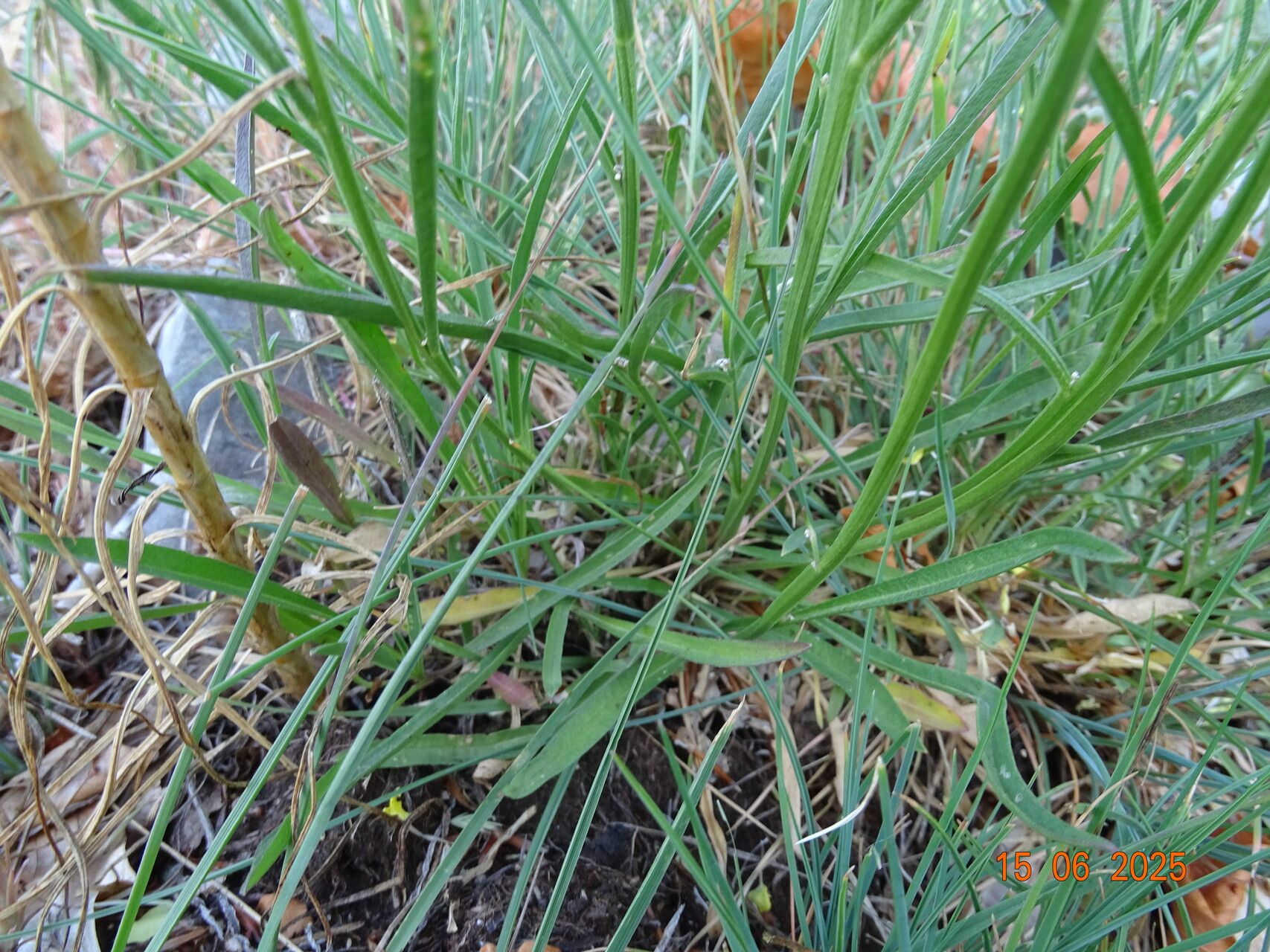
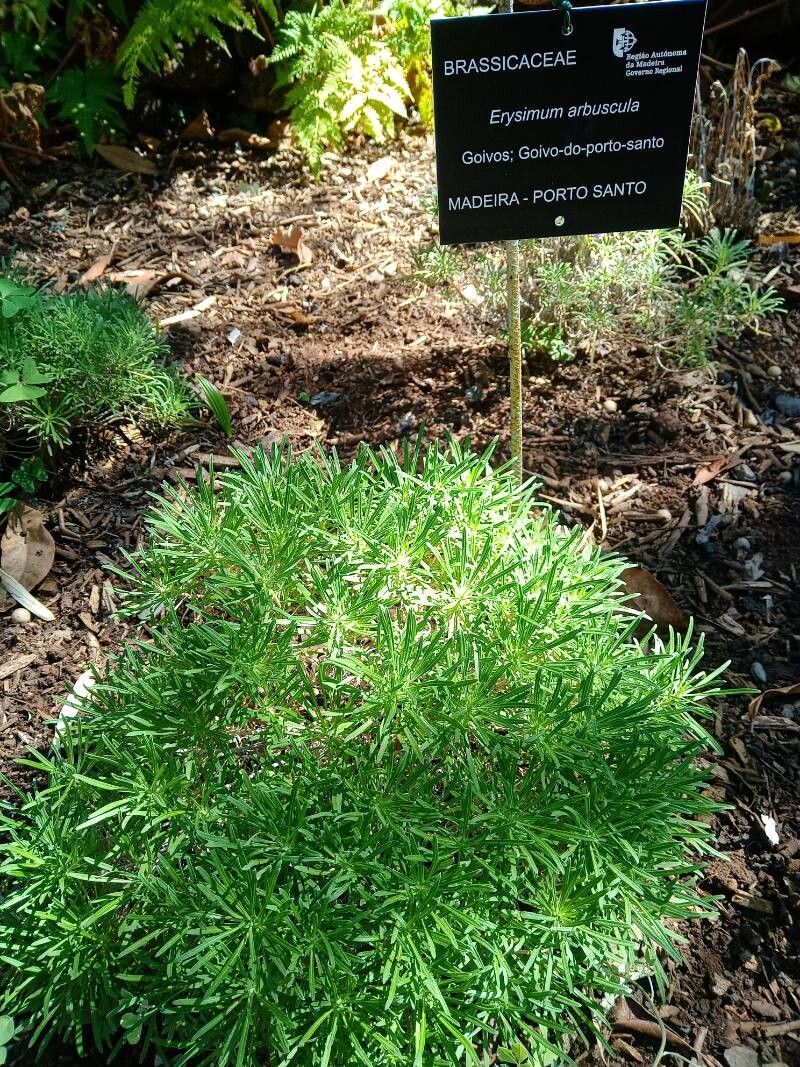
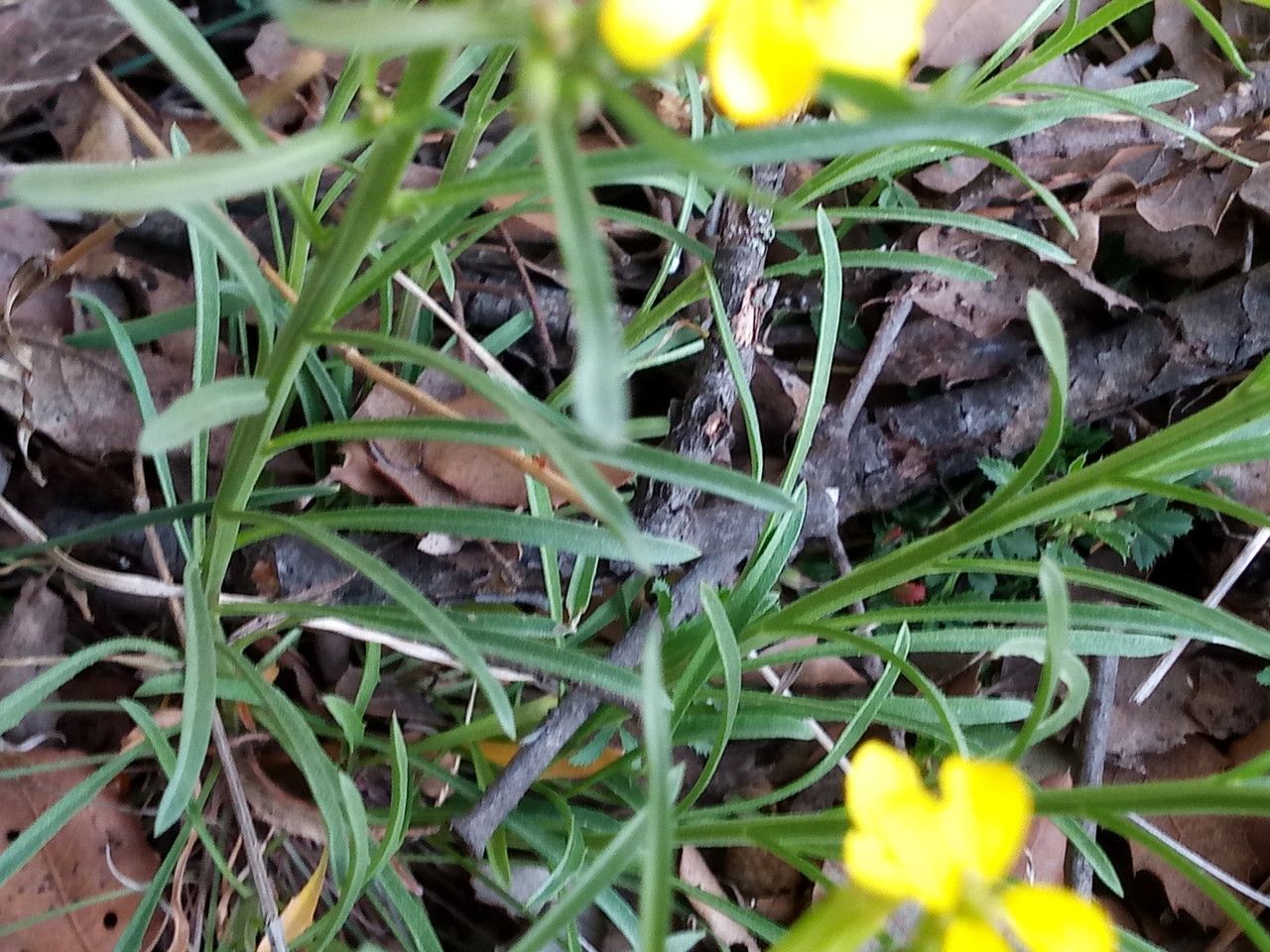
Erysimum franciscanum, commonly known as the Franciscan wallflower or San Francisco wallflower, is a plant endemic to the northern California coast, from Sonoma to Santa Cruz Counties. It is a member of the genus Erysimum in the mustard family, the Brassicaceae. The plant is a biennial or short-lived perennial. The flowers are cream-colored to yellow, with four sepals and four petals arranged in a cross shape, as is characteristic of the Brassicaceae. It flowers from late winter to late spring. The plant prefers open scrubby areas with a fair amount of sunlight, but can flourish on a range of soils including disintegrating serpentine, gravelly and sandy soils. It is fairly easily cultivated in gardens.Although not formally recognized as endangered, the Franciscan wallflower has a limited, discontinuous distribution. It is monitored at the Presidio of San Francisco, which was also its type locality. The plant is propagated in a nursery there and then planted in its native habitat.
San francisco wallflower is fairly disease-resistant and usually not prone to illnesses. However, it can be affected by pests and diseases present in its surroundings. Such infections are typically mild. Regarding care, this plant needs moderate maintenance. It should be pruned regularly to maintain a neat appearance and encourage healthy growth. Applying fertilizer can also help promote flowering. San francisco wallflower is suitable for anyone with outdoor space, such as a garden or patio, and does not require extensive care experience. It may need more attention when grown indoors.
How to keep Erysimum Franciscanum.
Light
San francisco wallflower is a perennial herbaceous plant that prefers sunny sites and comes from open habitats, frequently doing well in meadows and grasslands. It favors full sun but can also tolerate partial sun.
Temperature
The San francisco wallflower can tolerate a broad range of temperatures, but its range may still be restricted by different combinations of moisture and heat. It grows best in warm summer climates with sufficient rainfall or regular watering. Extended periods of cloudy, rainy weather or prolonged high temperatures can raise the chance of the San francisco wallflower dying. During winter, shielding the plant from cold can increase its likelihood of survival.
Fertilizer
The best time to fertilize a San francisco wallflower is in early spring, as it comes out of dormancy and begins active growth. Fertilizing supplies essential nutrients for healthy development. Although the San francisco wallflower requires relatively little fertilizer, feeding it once a year can improve its survival and encourage better, longer-lasting blooms.
Pruning
The San Francisco wallflower is a hardy perennial that produces vibrant blooms. For best results, prune it in early spring to encourage new growth, focusing on light maintenance rather than heavy trimming. Be sure to use clean tools to prevent disease, and consult regional resources for the best care practices.
Botanical profile.
- Plant Type
- Herb
- Life Cycle
- Perennial
- Genus
- Erysimum
- Family
- Brassicaceae
- Hardiness Zone
- 7-10
- Mature Height
- 30 cm to 61 cm
- Mature Spread
- 20 cm to 40 cm
- Leaf Color
- Green, Dark Green
- Leaf Type
- Evergreen
- Flower Color
- Yellow, Orange
- Flower Size
- 1.02 cm to 2.03 cm
- Bloom Time
- Spring
- Planting Time
- Spring, Summer
- Harvest Time
- Summer
Other names.
Reader questions.
What are the sunlight requirements for the San Francisco wallflower?
The San Francisco wallflower, botanically known as Erysimum franciscanum, thrives in varying degrees of sunlight. It requires 'full sun' conditions, which means it needs more than 6 hours of sunlight daily to flourish. Alternatively, it can also grow under 'partial sun' conditions, receiving about 3-6 hours of sunlight a day. It's important to observe the movement of sunlight through your garden to find spots that offer an ideal mix of light and shade, ensuring the well-being of your plants.
What is the botanical name of the San Francisco wallflower?
The botanical name of the San Francisco wallflower is Erysimum franciscanum. This species is part of the Erysimum genus and is known for its specific association with the San Francisco area.