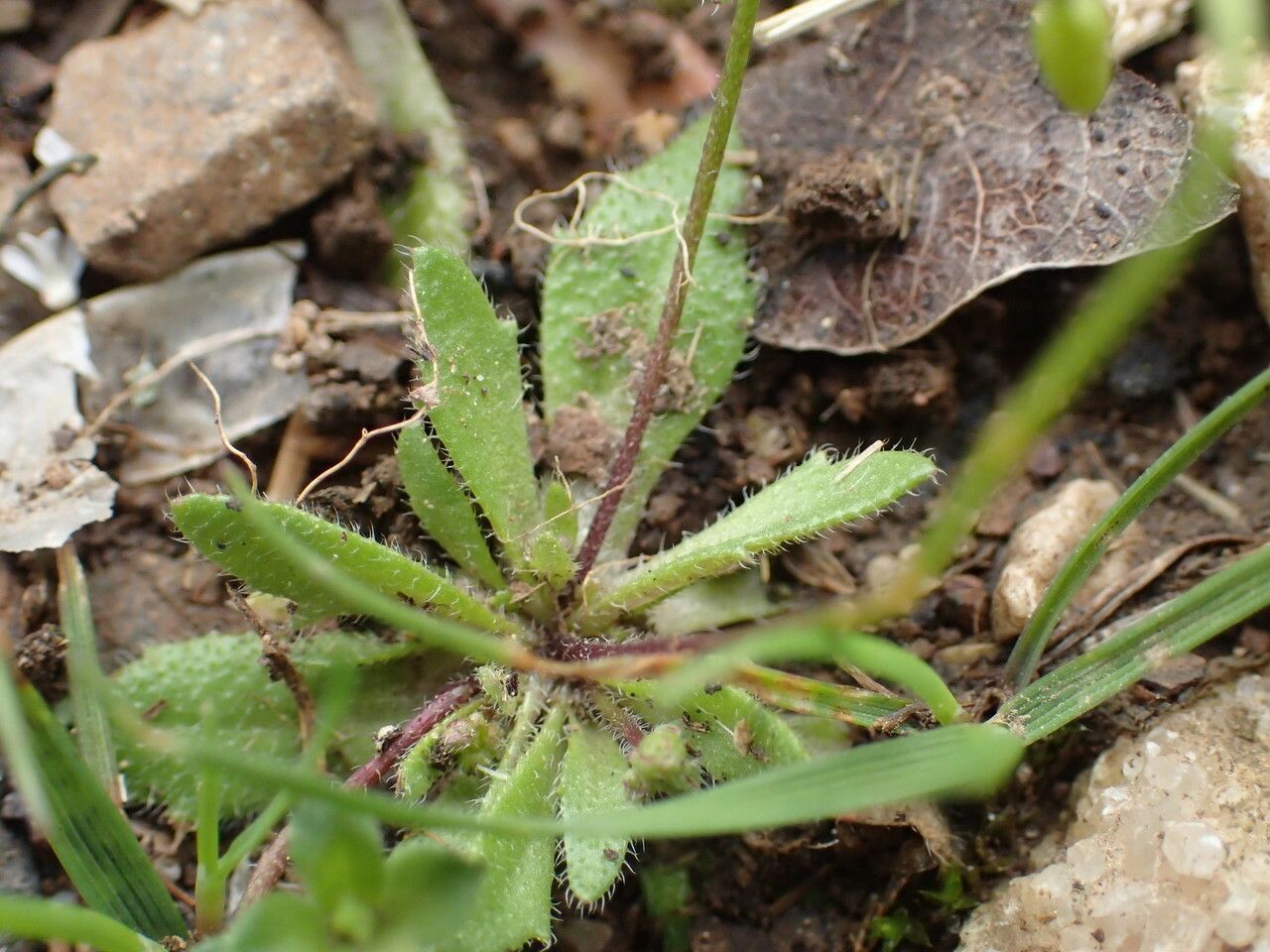
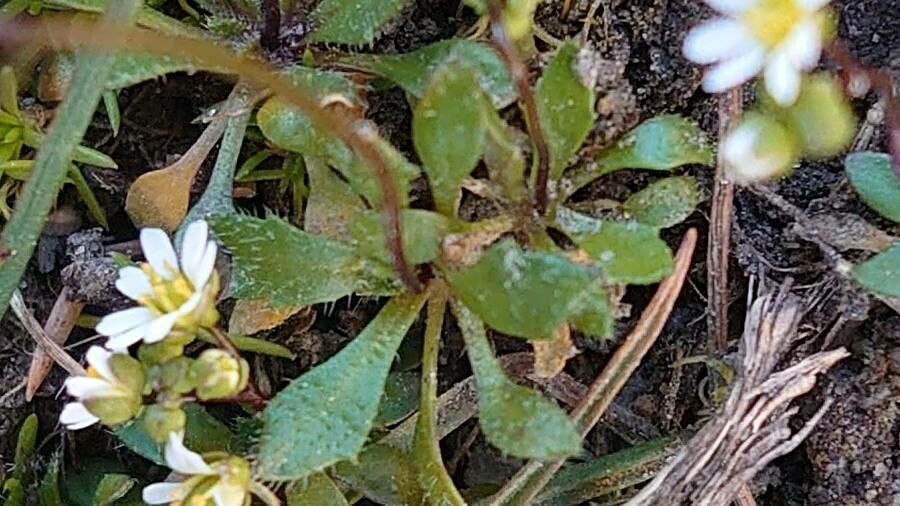
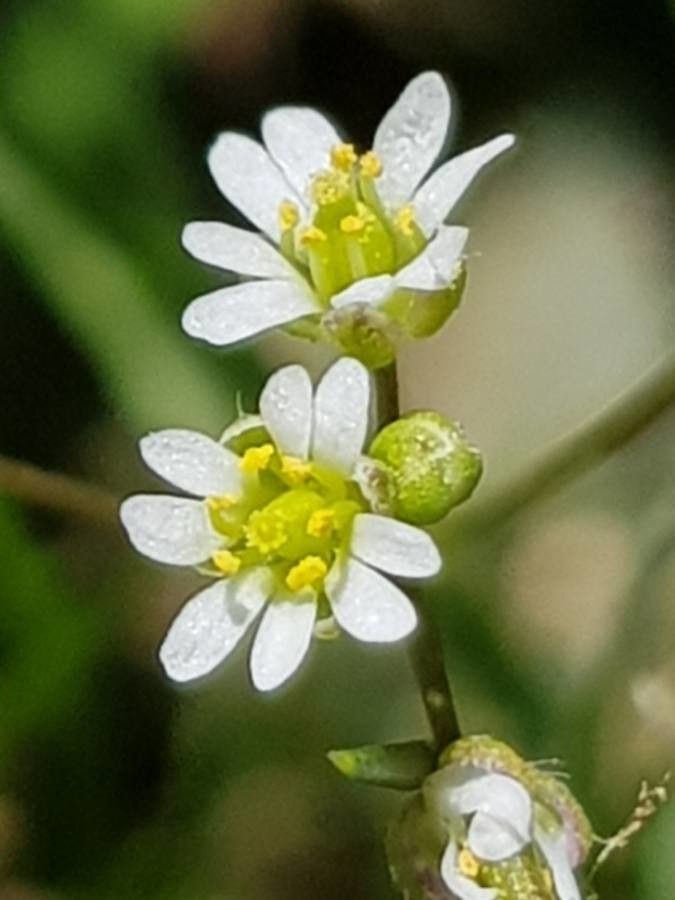
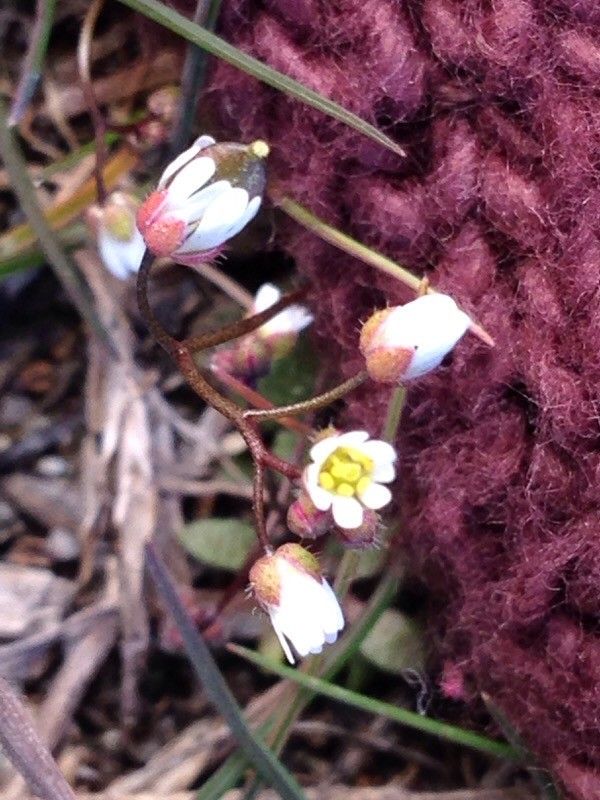
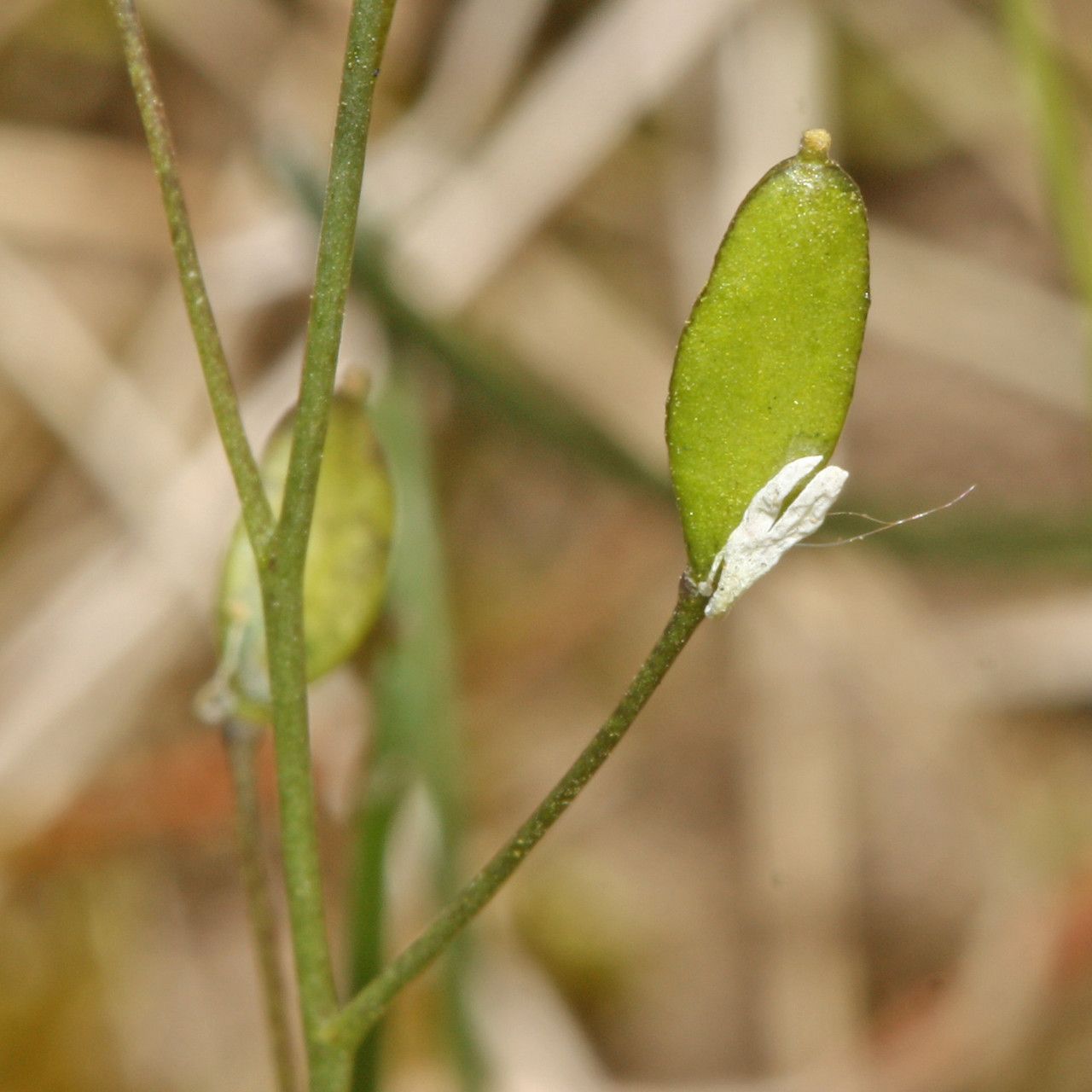
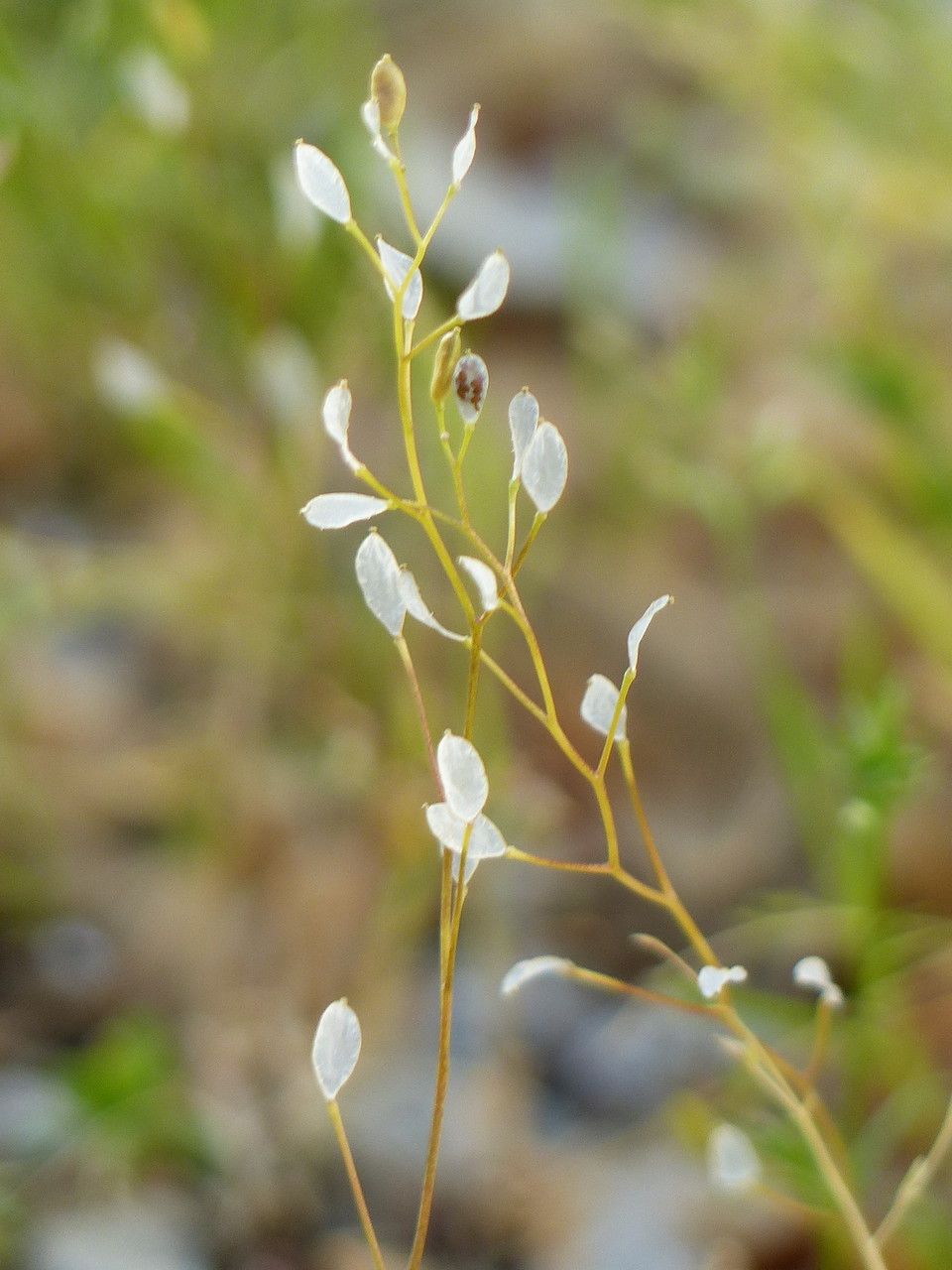
Erophila verna, commonly known as Spring Whitlow-grass, is a small annual or biennial plant belonging to the Brassicaceae family. Native to Europe and Asia, it thrives in various habitats, including meadows, fields, rocky slopes, and disturbed areas.
The plant grows up to 10 cm in height and features a basal rosette of oblong or spatulate leaves. These leaves are greenish-grey with smooth margins and are covered in fine hairs. Erophila verna produces small flowers, measuring 3-4 mm, with four white petals arranged in a cross shape typical of the Brassicaceae family.
Spring Whitlow-grass blooms from March to May, depending on location and climate conditions. As an early spring flower, it serves as an important nectar source for early pollinators like bees.
Traditionally, Erophila verna has been used for medicinal purposes for centuries, thanks to its anti-inflammatory properties that can help alleviate pain caused by rheumatism or arthritis.
In summary, Erophila verna is an ecologically and culturally significant plant species. It plays a crucial role as an early spring pollinator attractor and has been valued for its traditional medicinal uses.
Spring draba is fairly disease-resistant and generally not prone to illness. Still, it can be affected by pests and diseases present in its environment. Such infections tend to be mild. For care, the plant needs moderate maintenance. It should be pruned regularly to maintain a tidy appearance and healthy growth. Fertilizing can also help encourage flowering. Spring draba is well suited to anyone with outdoor space, like a garden or patio, and does not require extensive experience in care. It may demand more attention when grown indoors.
How to keep Erophila Verna.
Light
Spring draba typically performs best with plenty of sunlight, though it can endure mildly shaded conditions. Coming from a sunny habitat, abundant sun encourages vigorous growth and health. Conversely, insufficient light can cause stunted development, while too much sun may induce strain.
Temperature
Spring draba is native to temperate climatic zones. Its optimal temperature range for growth is 68 to 95 °F (20 to 35 ℃). Seasonal temperature adjustments may be crucial for reproducing its native environment, particularly if it is located in an extreme climate.
Fertilizer
Spring draba responds well to regular, light fertilizing to encourage healthy leaf development. Fertilize Spring draba about once a month during the summer. Nitrogen is important for foliage, and supplying nitrogen-rich fertilizers helps Spring draba prosper.
Botanical profile.
- Plant Type
- Herb
- Life Cycle
- Annual
- Genus
- Erophila
- Family
- Brassicaceae
- Hardiness Zone
- 4
- Mature Height
- 5 cm to 15 cm
- Mature Spread
- 3 cm to 8 cm
- Leaf Color
- Green, Dark Green
- Leaf Type
- Evergreen
- Flower Color
- White
- Flower Size
- 0.76 cm to 0.76 cm
- Bloom Time
- Spring
- Planting Time
- Summer, Spring
- Harvest Time
- Late spring, Early summer, Mid summer
- Native Area
- Libya, India, Austria, Turkey, Sweden, Slovakia, Montenegro, Pakistan, Croatia, Slovenia, Morocco, Belarus, Uzbekistan, Russia, Iraq, Germany, Iceland, Estonia, Ethiopia, Romania, Latvia, Belgium, Portugal, Netherlands, France, Tajikistan, Tunisia, Czech Republic, Cyprus, Bulgaria, Poland, Armenia, Greece, Ukraine, Serbia, Lebanon, Lithuania, Norway, Afghanistan, Syria, Kyrgyzstan, Kazakhstan, Italy, Spain, Switzerland, Denmark, Finland, Iran, Albania, Ireland, United Kingdom, Hungary, Algeria, Azerbaijan, Turkmenistan
Other names.