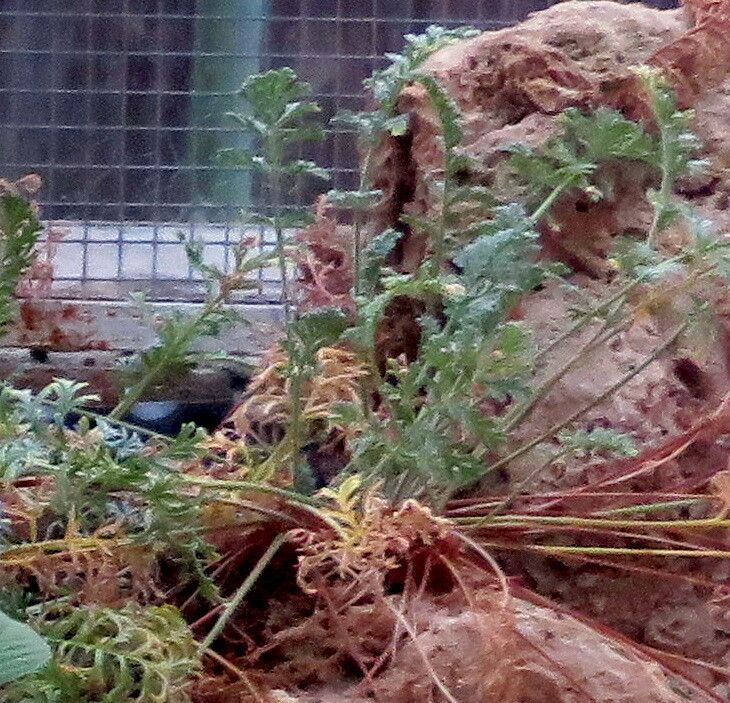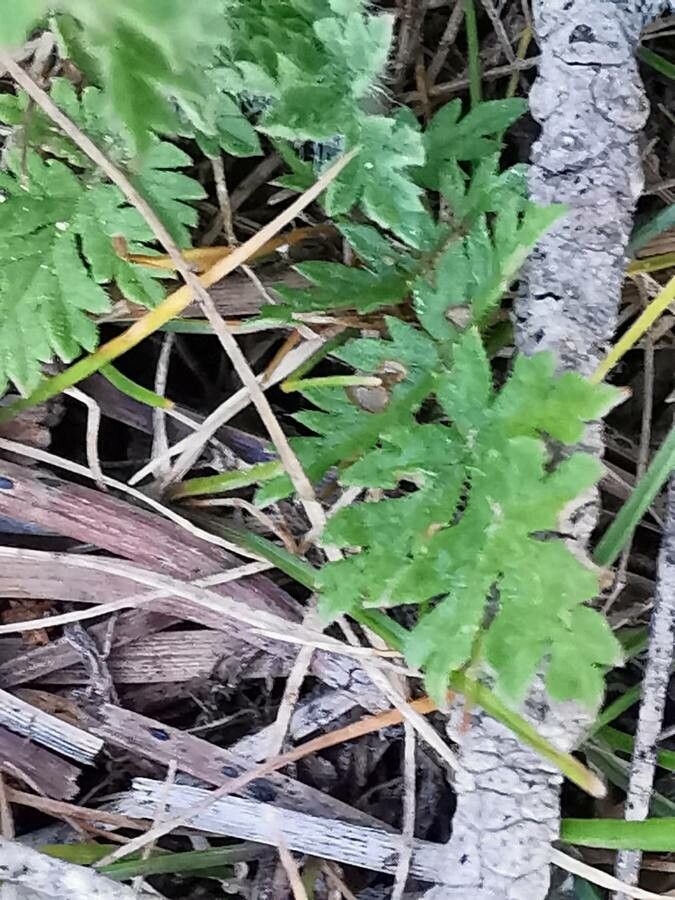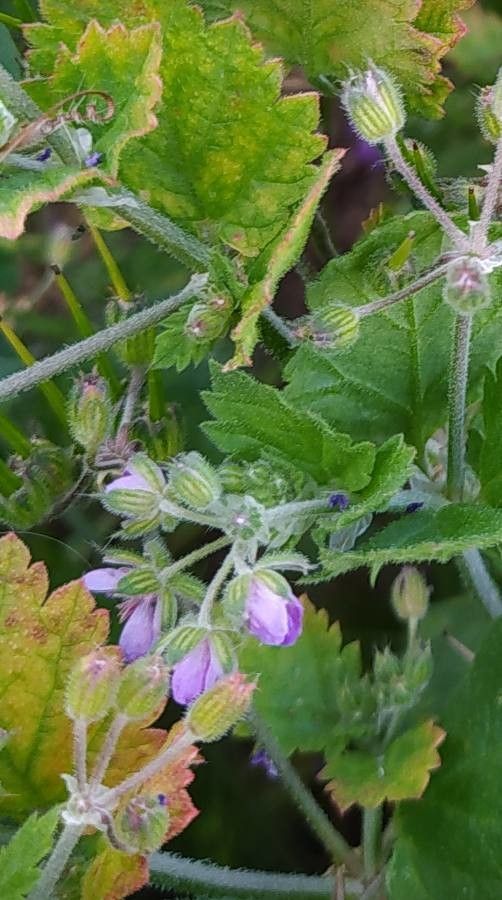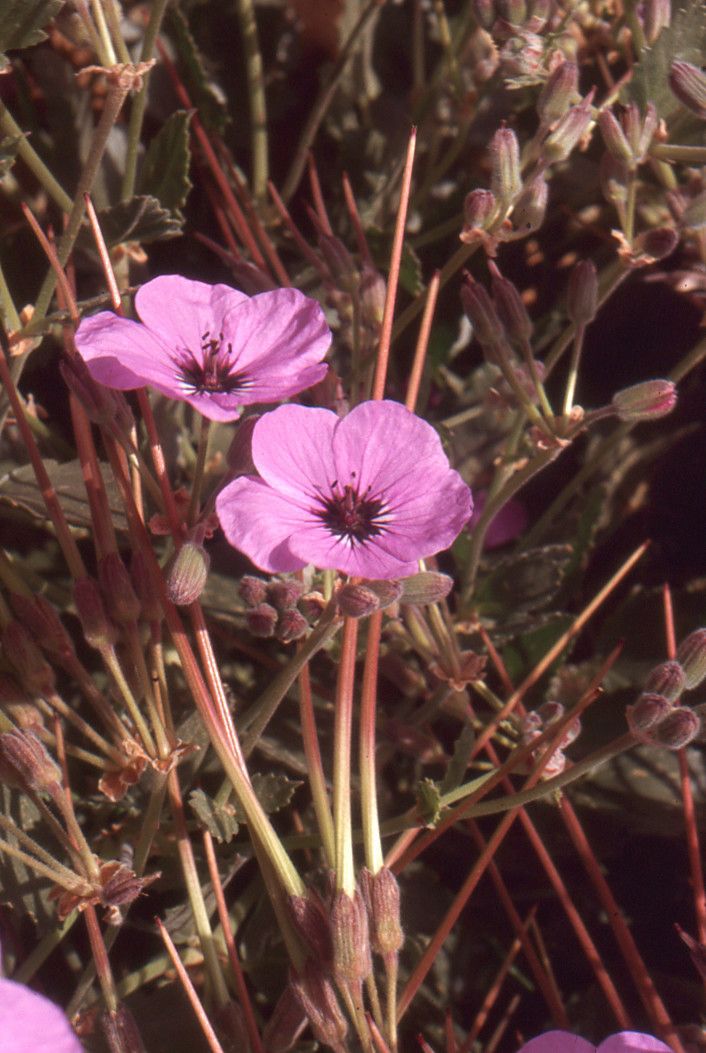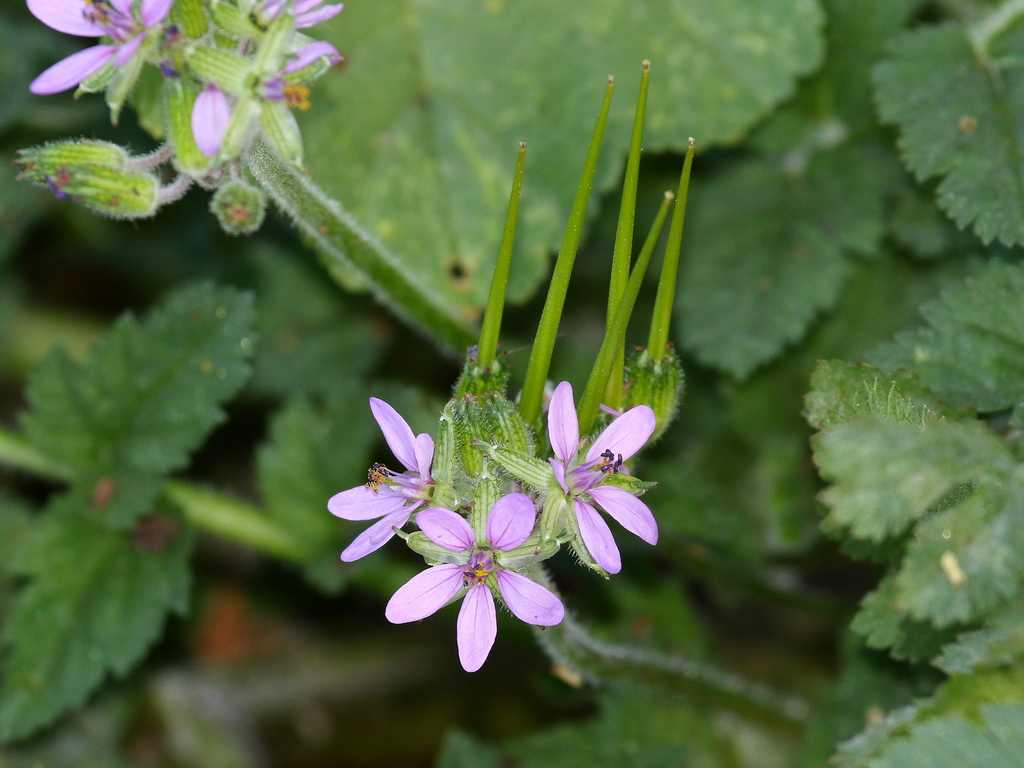
Erodium moschatum, commonly known as musk stork's-bill or musky stork's-bill, is a perennial herbaceous plant in the Geraniaceae family. Native to the Mediterranean region, it thrives in various habitats, including rocky slopes, fields, and roadsides.
The plant features a basal rosette of deeply lobed, hairy leaves. The stem can grow up to 50 cm tall and bears small pink or purple flowers that bloom from April to August. These flowers, with five petals marked by darker veins, are arranged in clusters at the top of the stem.
For centuries, Erodium moschatum has been valued for its medicinal properties, particularly its anti-inflammatory effects. It has also been used as a natural remedy for respiratory issues, such as coughs and bronchitis.
Easily propagated from seeds or cuttings, the plant prefers well-drained soil and full sun exposure. Once established, it requires minimal maintenance but can become invasive if not properly managed.
Overall, Erodium moschatum is an attractive perennial that adds color and texture to any garden while also offering medicinal benefits.
Musky stork's bill has strong disease resistance and is generally not susceptible to illnesses. However, it can be affected by pests and diseases present in its surroundings. These infections are typically not serious. Regarding care, this plant needs moderate maintenance. It should be pruned regularly to keep a good appearance and encourage healthy growth. Fertilizing can also help stimulate flowering. Musky stork's bill is suitable for anyone with outdoor space, such as a garden or patio, and does not require extensive care experience. It may need additional attention when grown indoors.
How to keep Erodium Moschatum.
Light
The musky stork's bill prefers bright sun and needs ample light for healthy development. Its native habitat gets a steady flow of sunlight. Although it can tolerate reduced light, too little can inhibit growth, and excessive sun can be harmful. Its light needs may change at different stages of growth.
Water
Musky stork's bill is a plant native to Mediterranean climates, known for its moderate drought tolerance. It generally requires watering once a week, along with any natural rainfall, to support its health and growth throughout the seasons. This herbaceous species is typically grown outdoors and adapts well to environments where water is available but not plentiful.
Temperature
Musky stork's bill is naturally found in areas where temperatures range from 68 to 95°F (20 to 35°C). It prefers these warmer conditions and may require temperature adjustments in colder seasons to replicate its native habitat.
Fertilizer
Musky stork's bill benefits from regular, light applications of fertilizer to encourage healthy leaf growth. You should fertilize Musky stork's bill about once a month during the summer. Nitrogen is essential for foliage, and supplementing with nitrogen-rich sources helps Musky stork's bill thrive.
Pruning
The Musky Stork's Bill is a fragrant annual plant featuring finely divided leaves and small, purple-pink flowers. To keep the plant healthy, it's best to prune it from early to late spring. This helps remove dead stems and encourages new growth. Pruning also improves airflow, reduces the risk of disease, and promotes robust development and blooming.
Botanical profile.
- Plant Type
- Herb
- Life Cycle
- Annual, Biennial, Perennial
- Genus
- Erodium
- Family
- Geraniaceae
- Hardiness Zone
- 5-9
- Mature Height
- 61 cm
- Mature Spread
- 61 cm
- Leaf Color
- Green, White
- Leaf Type
- Deciduous
- Flower Color
- Pink
- Flower Size
- 1.02 cm to 1.52 cm
- Bloom Time
- Mid spring, Late spring, Early summer
- Planting Time
- Summer, Spring
- Harvest Time
- Early summer, Mid summer
- Native Area
- Saudi Arabia, Libya, Egypt, Turkey, India, Tunisia, United Arab Emirates, Cyprus, Eritrea, Greece, Croatia, Slovenia, Morocco, Lebanon, Russia, Iraq, Portugal, Syria, Italy, Spain, France, Iran, Ethiopia, Albania, United Kingdom, Algeria, Netherlands
Other names.
Reader questions.
What should I do if I give my Musky stork's bill plant too much or too little water?
To prevent underwatering Musky stork's bill, simply water it more regularly when you notice it lacks moisture. Overwatering, on the other hand, can be a serious problem if not caught early. It can cause diseases and eventually lead to the plant's decline and death. To avoid this, choose a suitable location for your Musky stork's bill with ample sunlight to dry the soil and good drainage to prevent water from accumulating. If you accidentally overwater a potted Musky stork's bill, consider transferring it to a new pot with better soil drainage and more efficient drainage holes.
Why should I put fertilizer on my Musky stork's bill plant?
Some plants can get all the nutrients they need without needing additional fertilizers, but Musky stork's bill plants, like others, also need nutrients for growth and other internal processes. The main nutrients that plants use are nitrogen, phosphorus, and potassium, which each contribute to different essential functions. For Musky stork's bill, nitrogen is especially important for foliage growth. However, it can be challenging for these plants to obtain enough nitrogen from the soil, so many gardeners choose to provide extra nitrogen through fertilizers.
What are the sunlight requirements for Musky stork's bill?
Musky stork's bill thrives in full sun, requiring above 6 hours of sunlight daily for optimal growth. It can also tolerate partial sun, which means about 3-6 hours of sunlight. However, it's essential to watch how sunlight plays through your garden to ensure you're placing your plants in spots that offer a good balance of light and shade. This balance is crucial for their health and happiness.
What is Musky stork's bill and where is it native to?
Musky stork's bill, scientifically known as Erodium moschatum, is native to environments that enjoy temperatures ranging from 68 to 95°F (20 to 35°C). It thrives in these warmer conditions and may require adjustments in colder seasons to mimic its natural habitat.
How frequently do I need to water my Musky stork's bill plant?
To properly care for your Musky stork's bill, it is important to provide it with regular water throughout the growing season. In the spring, watering once a week should be sufficient. However, as the weather gets warmer, you may need to increase the frequency to two or three times a week. It's important not to overwater, as this can harm the plant. Regardless of how often you water, make sure the soil remains moist without becoming saturated. If you have a Musky stork's bill in a pot, you will need to water it more frequently compared to one planted in the ground. Generally, watering a potted Musky stork's bill a few times a week is recommended, as the soil in pots tends to heat up and dry out faster.
When should I fertilize my Musky stork's bill?
Musky stork's bill grows well and can benefit from monthly fertilization during its active growth period in spring and summer. It is important not to fertilize during fall and winter when the plant is less active and doesn't need as many nutrients. Look for signs of new growth as an indicator of when to start fertilizing. The fertilization schedule is the same whether the plant is outside or in a container indoors. However, if your Musky stork's bill is in a container, you may not need to fertilize for the first one to two months because the potting soil already contains enough nutrients. Only begin fertilizing after the plant has been in the same soil for some time.
What are the essential care tips for growing Musky stork's bill?
The musky stork's bill loves sunlight and originates from habitats bathed in abundant light. While it prefers plenty of direct sunlight, it can survive in less intense light conditions, but with possible growth stunting or detrimental effects if the exposure is too poor or excessive. During its growth stages, the amount of sunlight needed may vary. Artificial lighting can be a boon for indoor plants not getting enough natural sunlight, especially in winter or shady spaces. LED lights, mimicking the spectrum of natural light, should provide 30-50W/sq ft for full sun plants, 20-30W/sq ft for partial sun, and 10-20W/sq ft for full shade plants. The correct distance between the plant and light (12-36 inches) and the duration of exposure (8-12 hours a day) are crucial for simulating natural light conditions.
How does Musky stork's bill handle cold weather?
Musky stork's bill possesses strong cold resistance and special frost protection measures are usually not required during winter. That said, if temperatures are expected to fall below -25°C, it's crucial to provide protection by covering the plant with soil or straw. Additionally, watering the plant abundantly before the first freeze of autumn ensures the soil remains moist and helps prevent drought and water scarcity during winter and early spring.
How much water does my Musky stork's beak require?
Determining the right amount of water for your Musky stork's bill can be done in a few ways. One method is to assess the soil moisture by feeling it. In this approach, you should water until the top six inches of soil feel moist. Another option is to have a specific measurement for watering. Usually, giving your Musky stork's bill about two gallons of water per week is recommended, considering factors like heat and soil dryness. However, strictly following this guideline may lead to overwatering if your plant requires less water. When growing Musky stork's bill in a container, a different method is utilized. The goal is to moisten all the dry layers of soil, which can be tested by sticking your finger in the soil to check for moisture. Alternatively, you can water until you see a slight trickle of excess water coming out of the pot's drainage holes.
When is it not a good idea to fertilize my Musky stork's bill?
To ensure the health of your Musky stork's bill plant, it's important not to fertilize it if it's already unhealthy due to disease or insect pests. Also, avoid fertilizing a plant that is dehydrated, as the fertilizer can worsen this issue. It is best to only fertilize plants that are already healthy. When watering the plant, be cautious not to splash fertilizer onto the leaves or stem, as this can cause burn spots. Unless you are using a specifically designed foliage fertilizer, avoid direct contact between the plant and the fertilizer.
What symptoms indicate inadequate sunlight for Musky stork's bill?
When Musky stork's bill is not getting enough light, especially indoors, it may show several symptoms. You might notice smaller new leaves, leggy or sparse growth, quicker leaf drop, slower or halted growth, and lighter-colored or chlorotic new leaves. Excessive sunlight, on the other hand, can lead to sunscald, leaf curling to reduce exposure, wilting from too much water loss, or leaf scorching with visibly damaged leaf edges. These symptoms indicate the plant is not in its ideal light conditions and requires adjustment.
What should be done if Musky stork's bill experiences low temperatures?
Despite its cold tolerance and preference for temperatures above 20°C, it should remain above 0°C during winter. If temperatures dip below -25°C, you may not notice immediate changes, but there could be a decrease in sprouting or no sprouting at all come spring. In such cases, remove any parts of the plant that have failed to sprout in the spring.