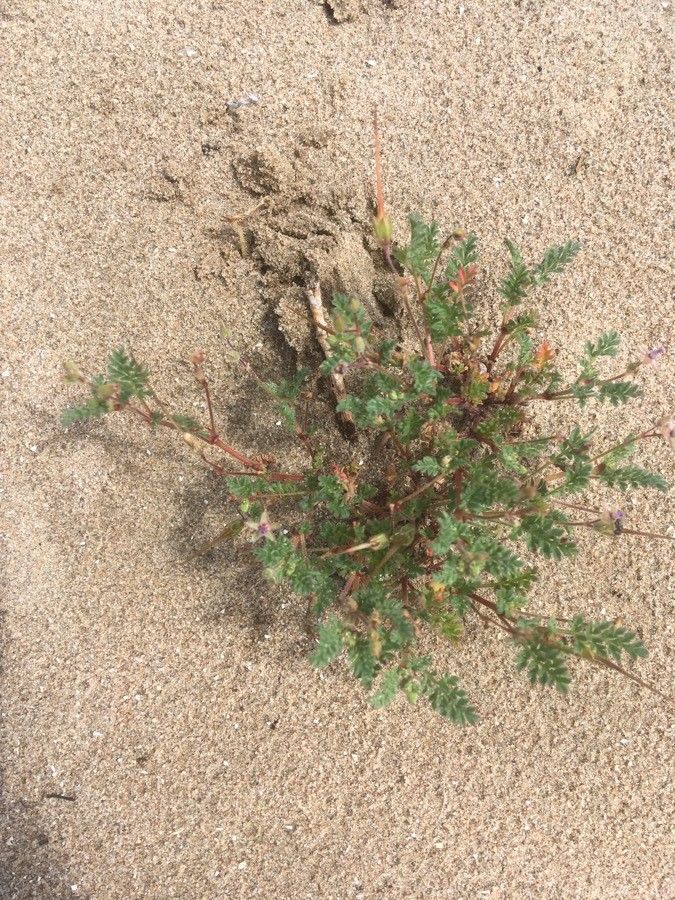
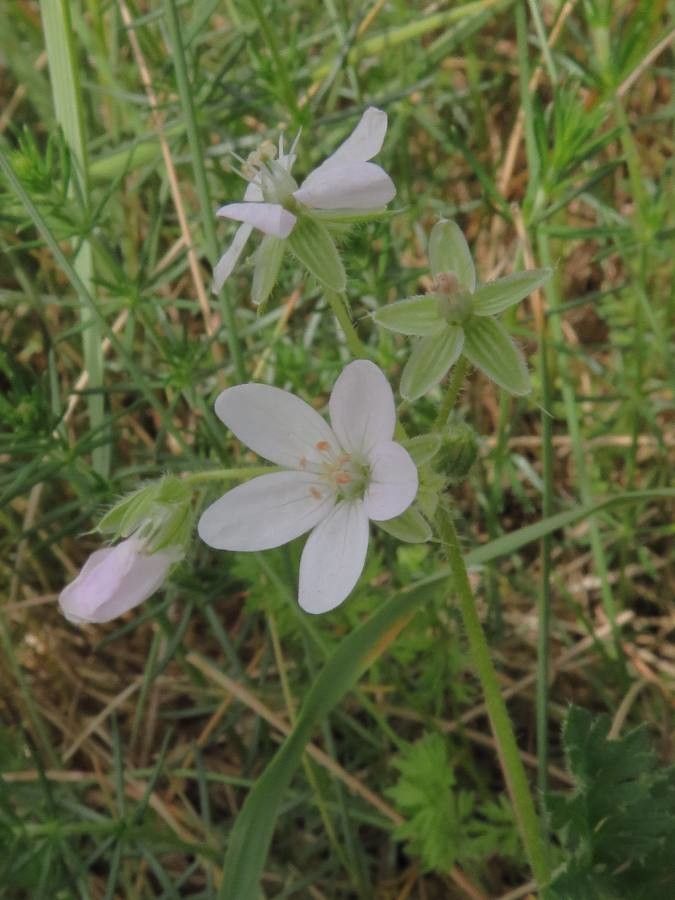
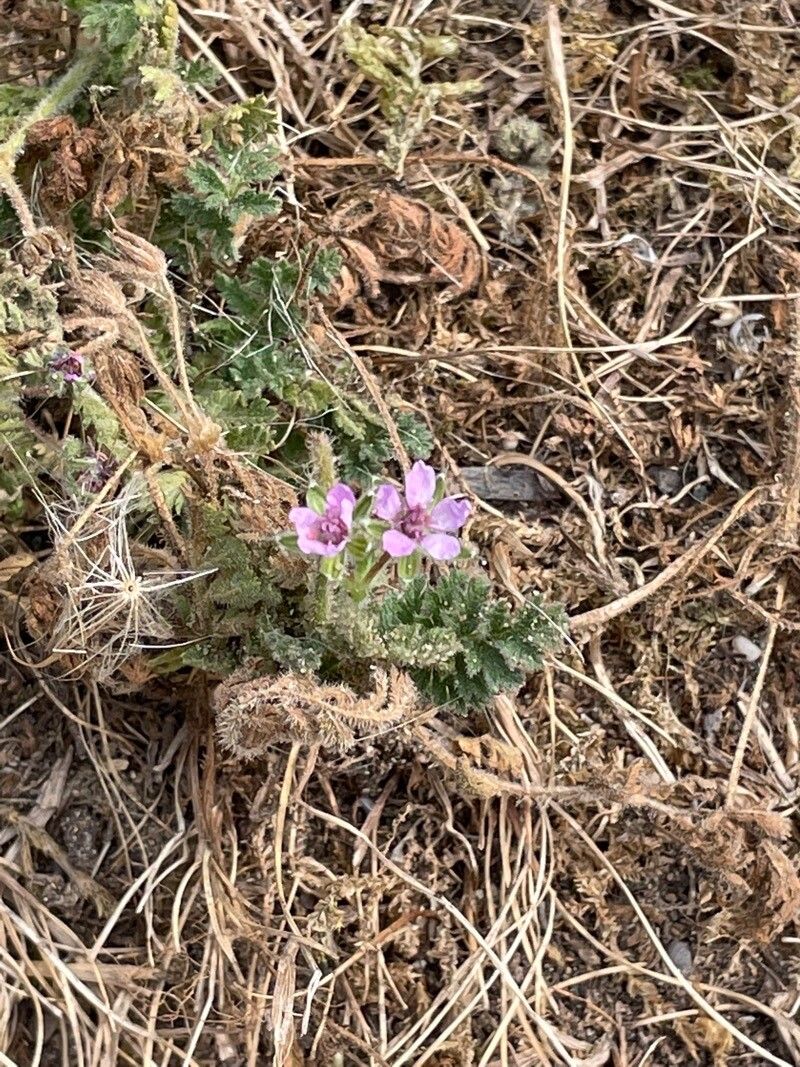
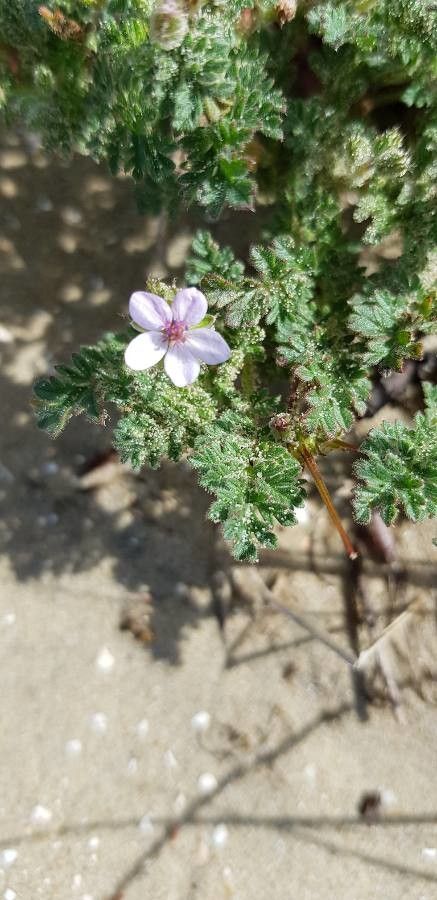
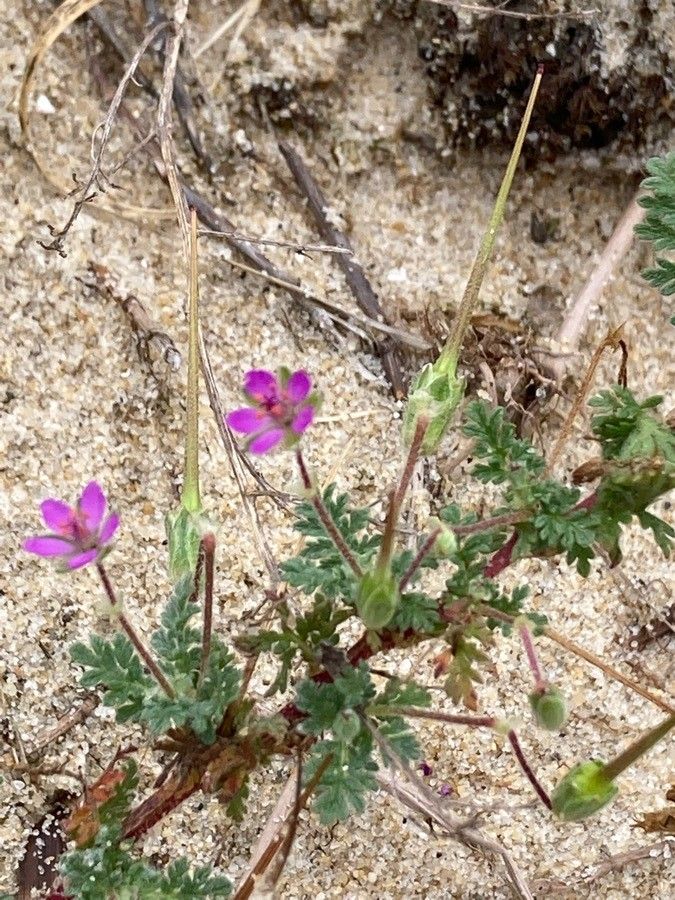
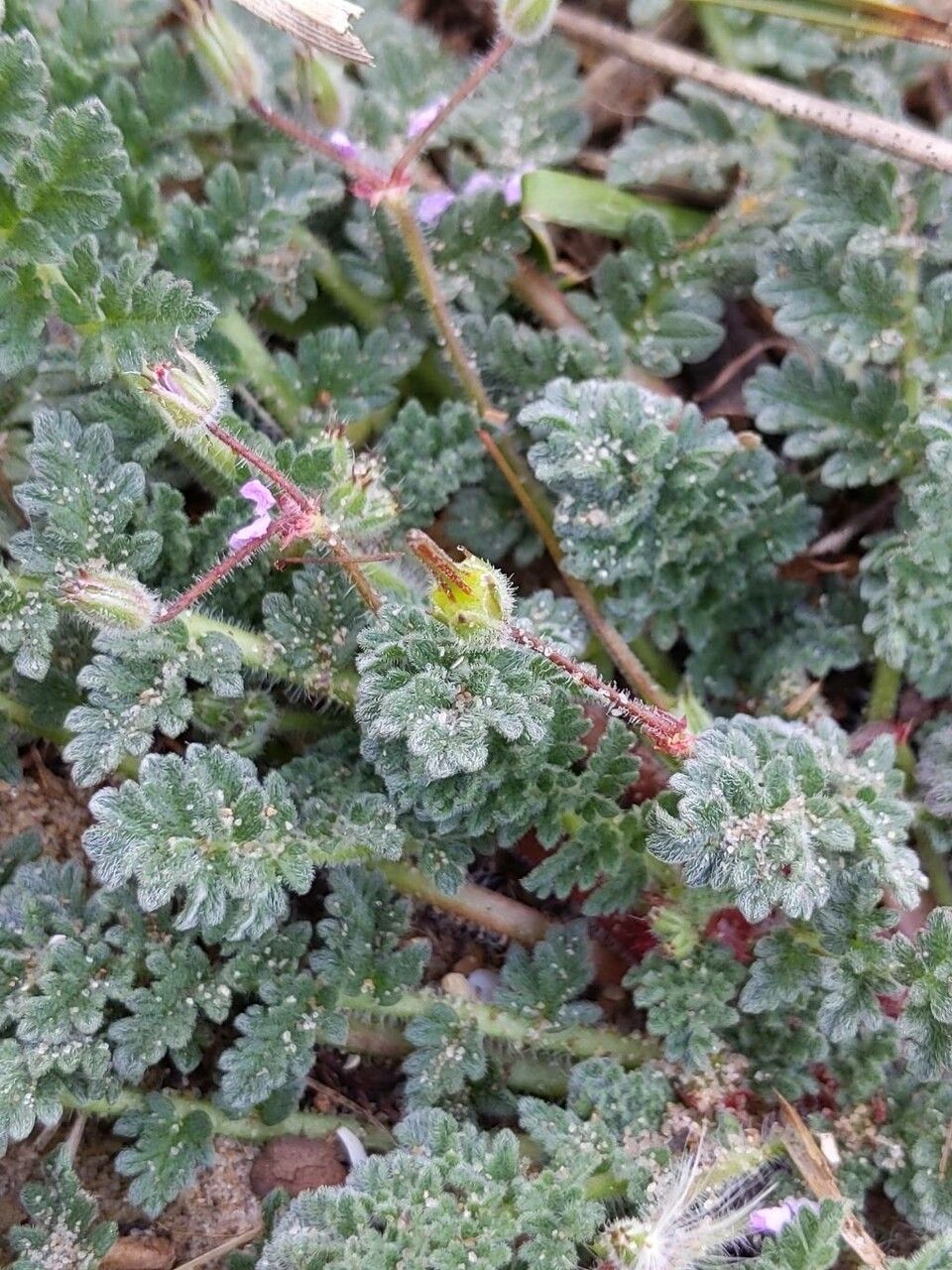
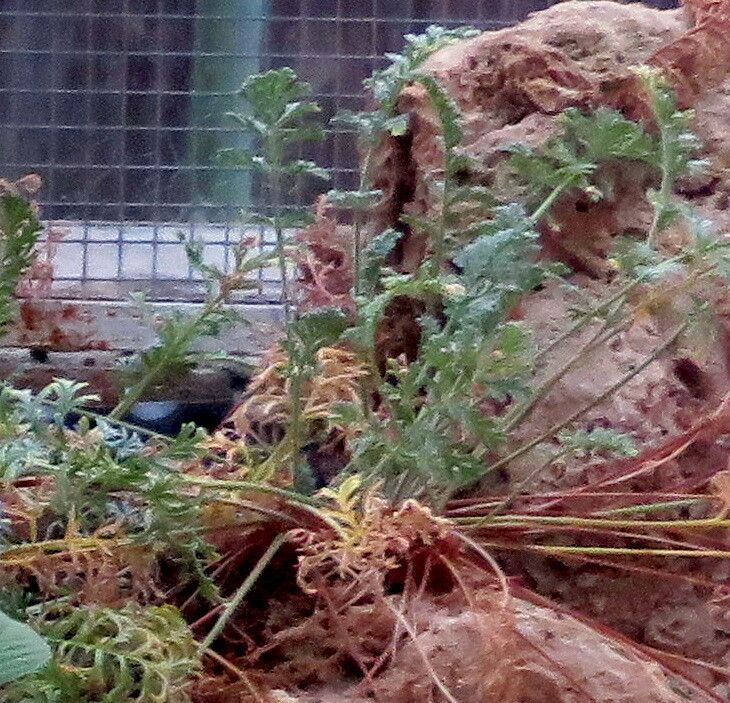
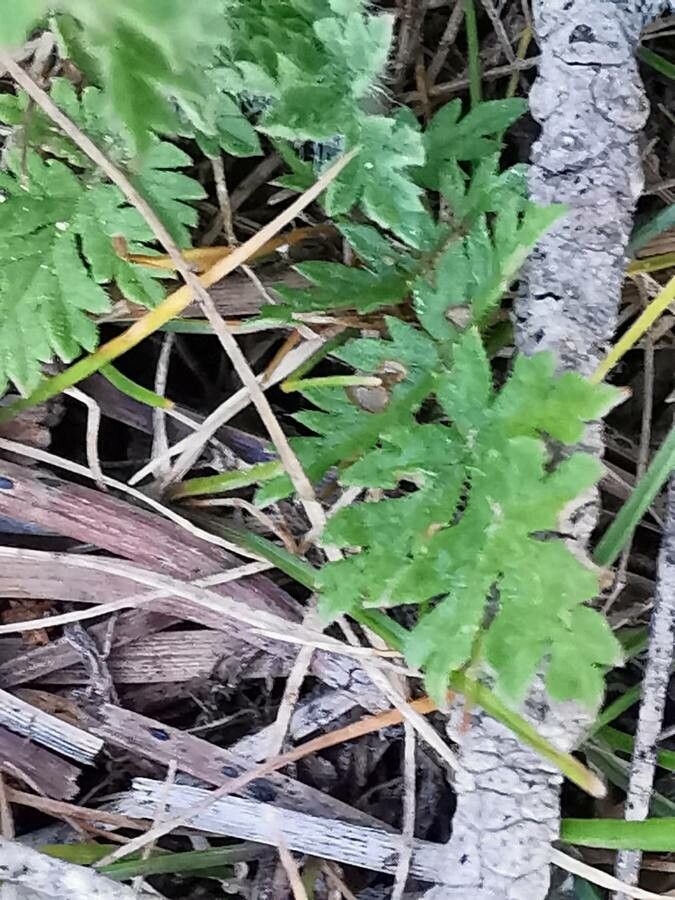
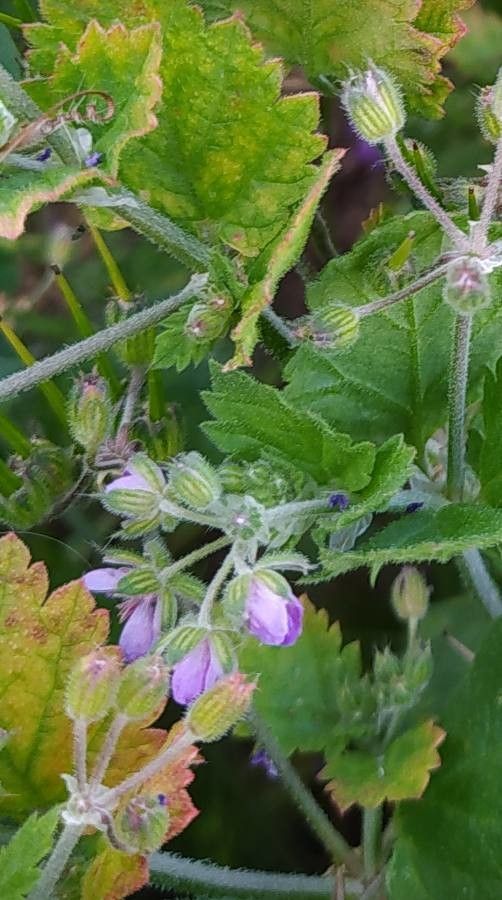
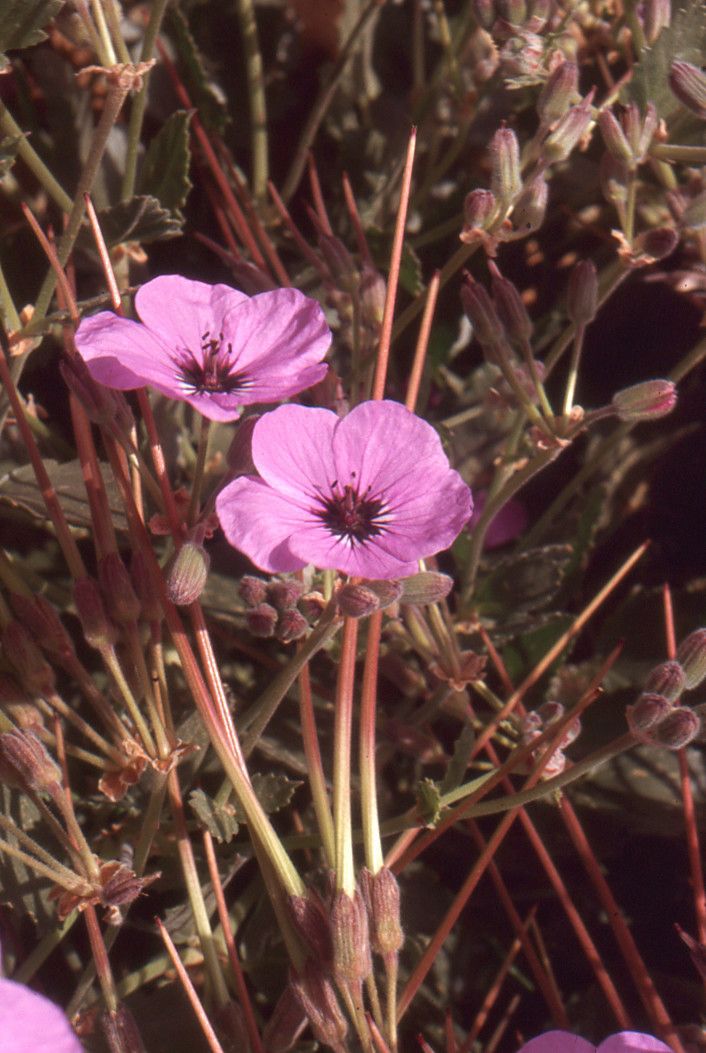
Erodium lebelii, sticky stork's-bill, is an annual plant in the family Geraniaceae. It occurs on sand dunes and heaths on the Atlantic and Mediterranean coasts of western Europe. Its taxonomic status is uncertain: some authorities consider it merely a variety or subspecies of common stork's-bill while others consider it to be the same as the north African species Erodium aethiopicum.
Sticky stork's-bill is fairly resistant to disease and typically does not develop illnesses. However, it can be affected by pests and diseases present in its surroundings. Such infections are usually not serious. In terms of care, this plant needs moderate maintenance. It should be pruned regularly to preserve a neat appearance and support healthy growth. Fertilizing can also encourage flowering. Sticky stork's-bill is suitable for anyone with outdoor space, such as a garden or patio, and does not require a lot of gardening experience. It may need more attention if grown indoors.
How to keep Erodium Lebelii.
Light
Sticky stork's-bill is a sun-loving, perennial herbaceous plant that originates in open habitats and commonly thrives in meadows and grasslands. It prefers full sun but can also tolerate partial sun conditions.
Temperature
Sticky stork's-bill can adjust to a wide variety of temperatures, but its range may still be restricted by different combinations of moisture and heat. It does best in warm summer conditions with sufficient rainfall or watering. Long periods of cloudy, rainy weather, as well as extended high temperatures, can raise the risk of Sticky stork's-bill dying. In winter, adequate protection from cold can increase the plant's survival rate.
Fertilizer
Applying fertilizer once in spring is generally enough for Sticky stork's-bill, though repeated feedings can enhance growth. Feed once every month to a month and a half. Fertilizing improves the leaves' appearance and function, helping maintain even color and a healthy texture. It also promotes root development and nutrient uptake for the plant's long-term health.
Pruning
Sticky stork's-bill is known for its sticky, fern-like leaves and vibrant flowers. Prune the plant from early to late spring to remove dead stems and manage its growth. Regularly deadheading the flowers encourages continuous blooming, enhances the plant's appearance, prevents disease, and supports vigorous growth.
Botanical profile.
- Plant Type
- Herb
- Life Cycle
- Perennial
- Genus
- Erodium
- Family
- Geraniaceae
- Hardiness Zone
- 7-10
- Mature Height
- 10 cm to 30 cm
- Mature Spread
- 15 cm to 25 cm
- Leaf Color
- Green, Dark Green
- Leaf Type
- Deciduous
- Flower Color
- Pink, White
- Flower Size
- 1.02 cm to 1.52 cm
- Bloom Time
- Mid spring, Late spring, Summer, Early fall
- Planting Time
- Spring, Summer
- Harvest Time
- Summer, Fall
Other names.
Reader questions.
What are the sunlight requirements for Sticky stork's-bill (Erodium lebelii)?
Sticky stork's-bill, also known by its botanical name Erodium lebelii, thrives best when it receives more than 6 hours of sunlight daily. It's crucial to observe the way sunlight moves through your garden throughout the day. Identifying the perfect spots that offer a harmonious balance of light and shade will ensure the well-being and happiness of your plants. Paying close attention to these details can make all the difference in the growth and health of Sticky stork's-bill.