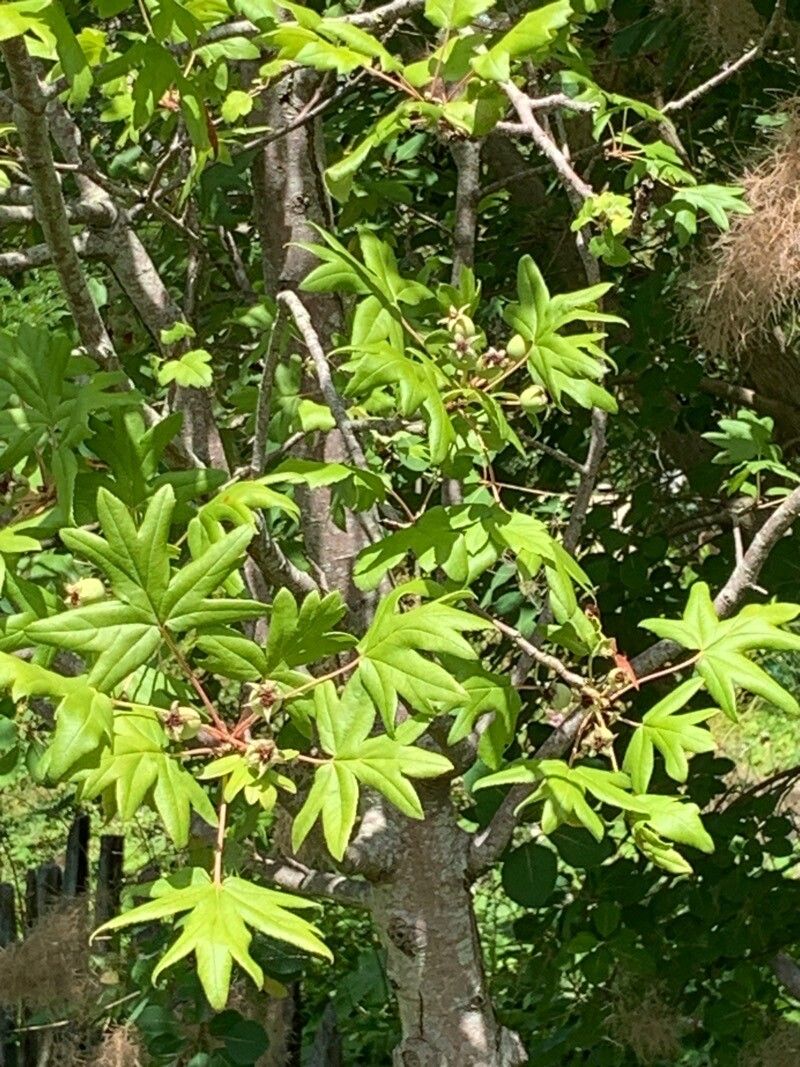
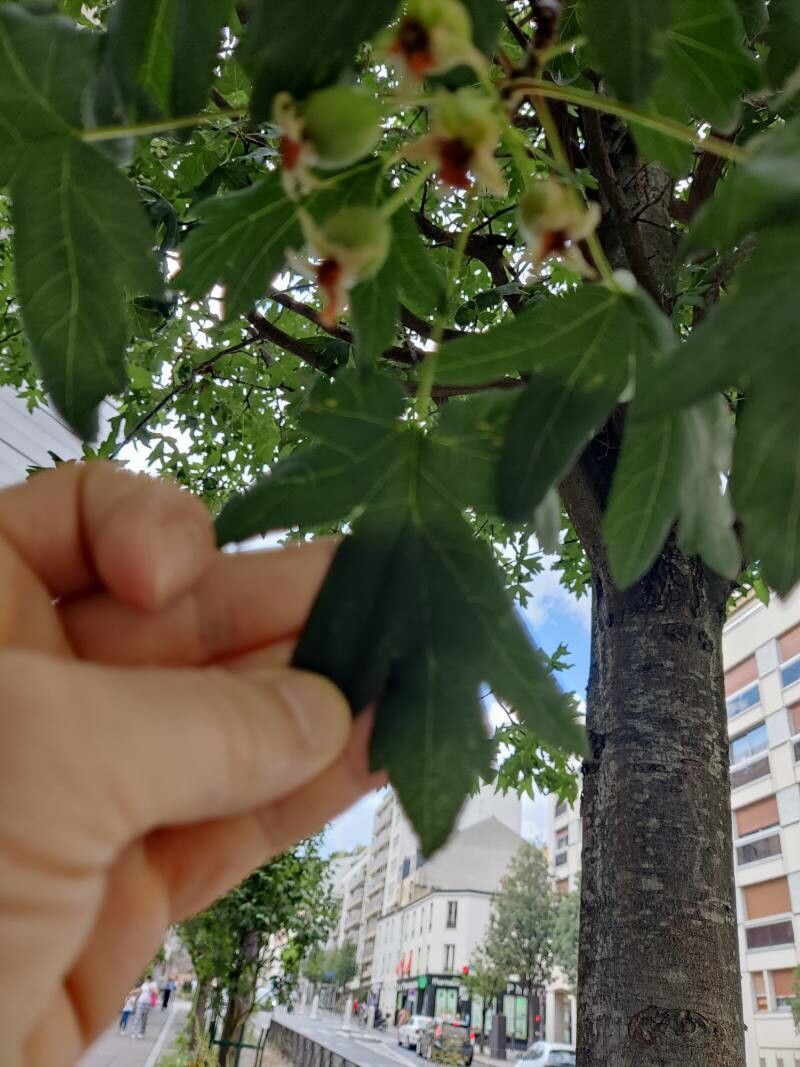
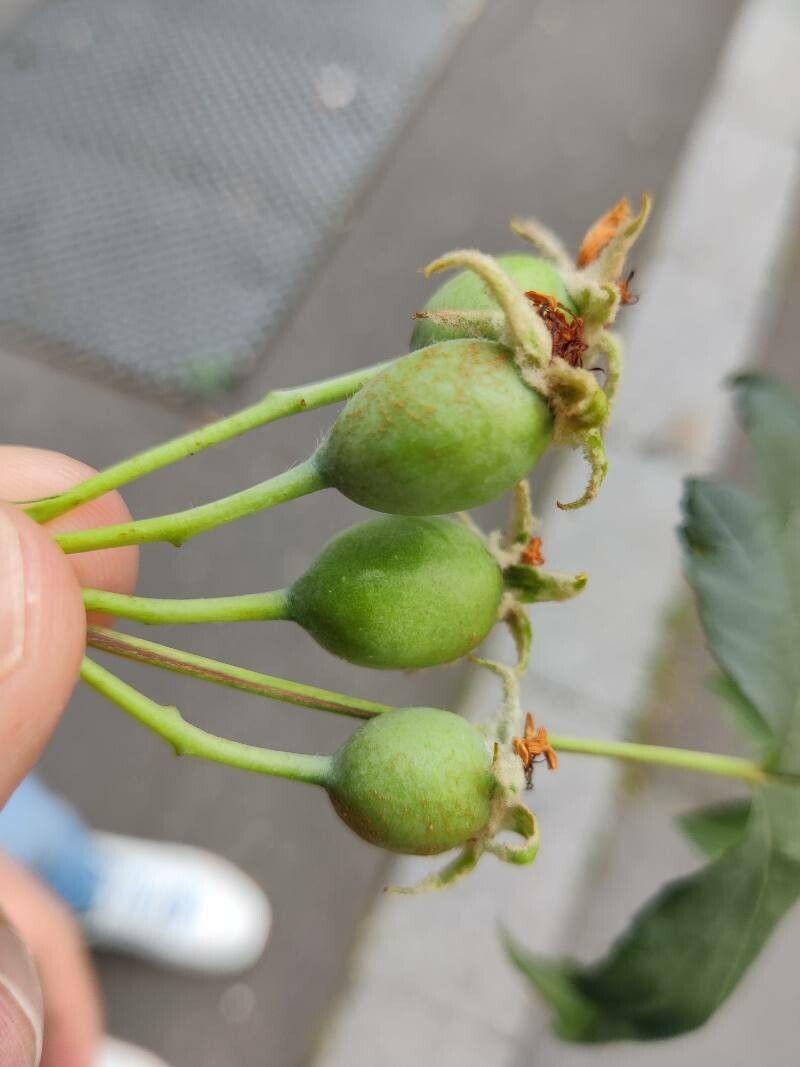
Malus trilobata, the Lebanese wild apple, also known as the erect crab apple, Turkish apple, three-lobed apple or deer apple, is a species of apple (Malus) in the rose family (Rosaceae). It has a discontinuous range in the eastern Mediterranean, including Thrace, coastal Anatolia and the Levant, but almost always as a rare species. First described in 1810 as Crataegus trilobata, it has a complex taxonomic history, and some authorities place it in the segregate genus Eriolobus, as Eriolobus trilobatus, either alone or together with the closely related Italian crabapple from the central Mediterranean. The species is characterised by shiny, maple-like leaves, particularly large, white flowers, large and edible fruits and a narrow growth form. Due to its attractive shape, bloom and foliage along with its drought and frost tolerance, it has found increasing interest in gardening and landscaping. Additionally, its chemical composition and associated microbiome has attracted research investigating its medical and antimicrobial properties. However, the species is thought to be threatened and declining, primarily due to human encroachment and habitat destruction, including from wildfires.
The Lebanese Wild Apple is well resistant to disease and is generally not susceptible to illnesses. As for care, this plant is fairly low-maintenance. When grown outdoors it needs little watering, and larger plants typically do not require pruning. Smaller plants, however, should be pruned after they have finished blooming. Lebanese Wild Applet is appropriate for anyone with an outdoor area, such as a garden or deck, and does not require much care experience.
How to keep Eriolobus Trilobatus.
Light
The Lebanese Wild Apple comes from open habitats, for example sunlit meadows and forest margins, where light is plentiful. It prefers Full Sun but can also tolerate Partial Sun, showing good adaptability to different light levels.
Water
Eriolobus trilobatus is a drought-resistant plant native to semi-arid regions. It needs watering only every 1-2 weeks. As a deciduous outdoor plant, it adapts well to dry conditions by shedding its leaves during dry seasons, conserving water effectively.
Temperature
Lebanese Wild Apple shows strong adaptability to different climate conditions, whether in searing summers or frosty winters. However, it does have an optimal temperature range for growth. When temperatures get too high, the plant is susceptible to heat and humidity stress, which can cause it to die. In areas where temperatures approach the lower boundary of its cold tolerance, providing insulation is important to protect the plant.
Fertilizer
The Lebanese Wild Apple needs adequate nutrients to achieve optimal fruit production. Fertilize in early spring to support new growth and flower development. Regular feeding keeps the plant healthy, promotes more flavorful fruit, and prevents nutrient-deficiency problems like yellowing leaves and poor fruit yield.
Pruning
Eriolobus trilobatus has distinctive foliage and growth patterns. To support its health and appearance, prune the plant in early spring. This helps remove dead branches and improves air circulation, promoting vigorous growth. Be sure to use clean, sharp tools when pruning to prevent the spread of disease. Proper pruning not only enhances the plant's health but also improves its aesthetic structure.
Botanical profile.
- Plant Type
- Tree
- Life Cycle
- Perennial
- Genus
- Eriolobus
- Family
- Rosaceae
- Hardiness Zone
- 4-8
- Mature Height
- 4.88 m to 7.92 m
- Mature Spread
- 3.96 m to 6.1 m
- Leaf Color
- Red, Green
- Leaf Type
- Deciduous
- Flower Color
- White
- Flower Size
- 2.03 cm to 3.05 cm
- Bloom Time
- Mid spring, Late spring
- Planting Time
- Spring, Summer, Autumn
- Harvest Time
- Late summer, Early fall, Mid fall
- Native Area
- Turkey, Lebanon, Greece
Other names.