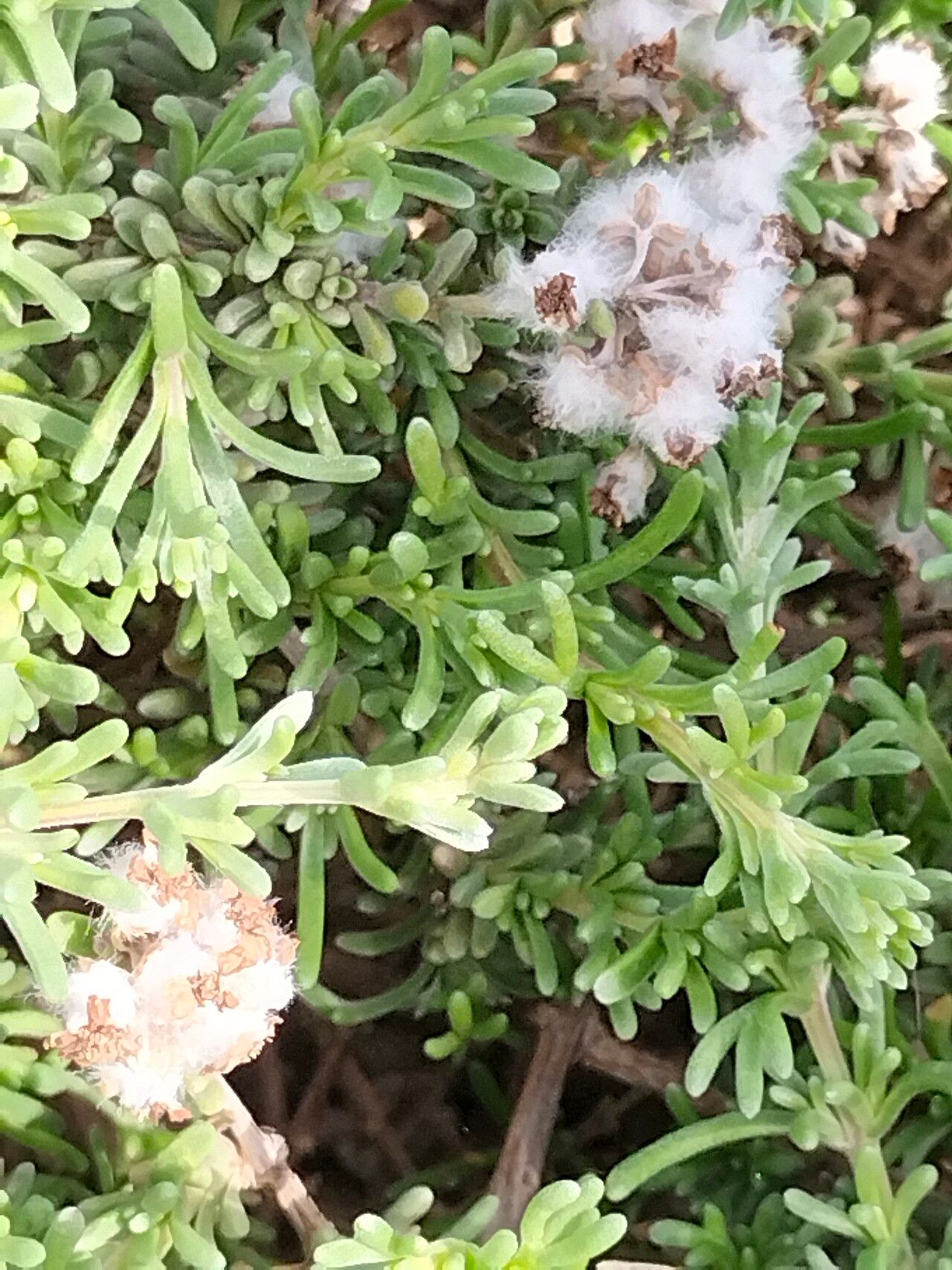
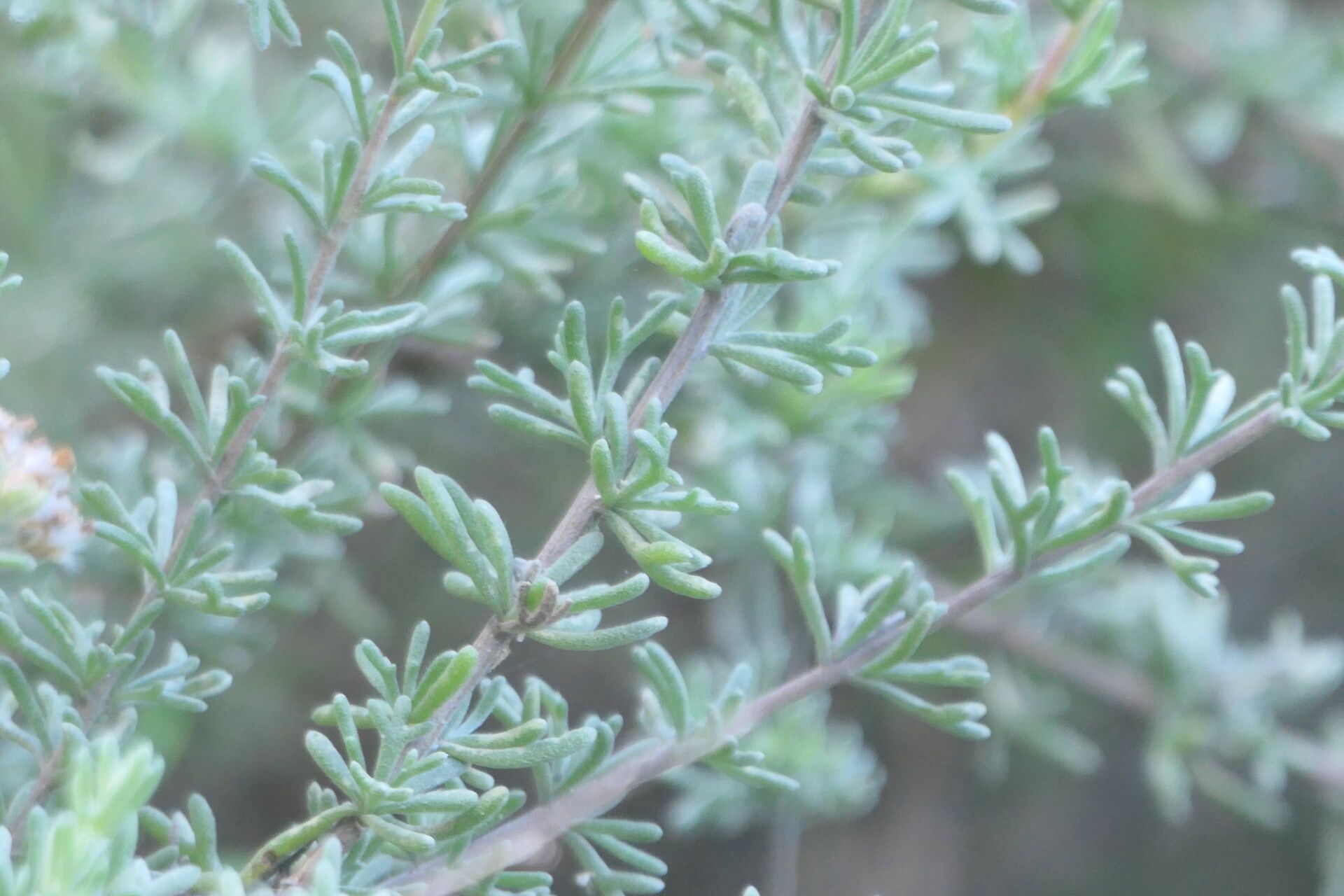
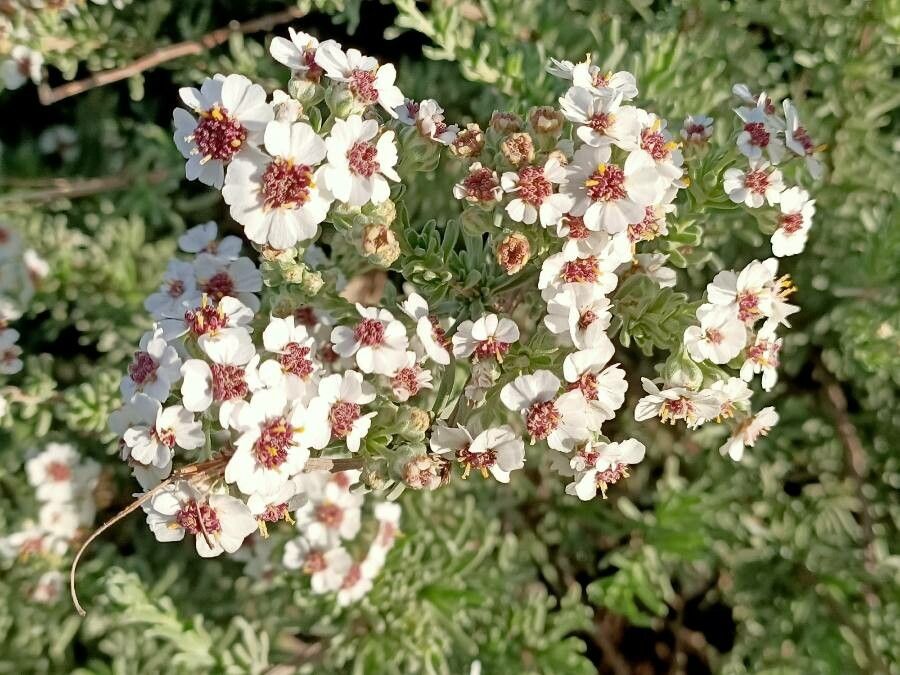
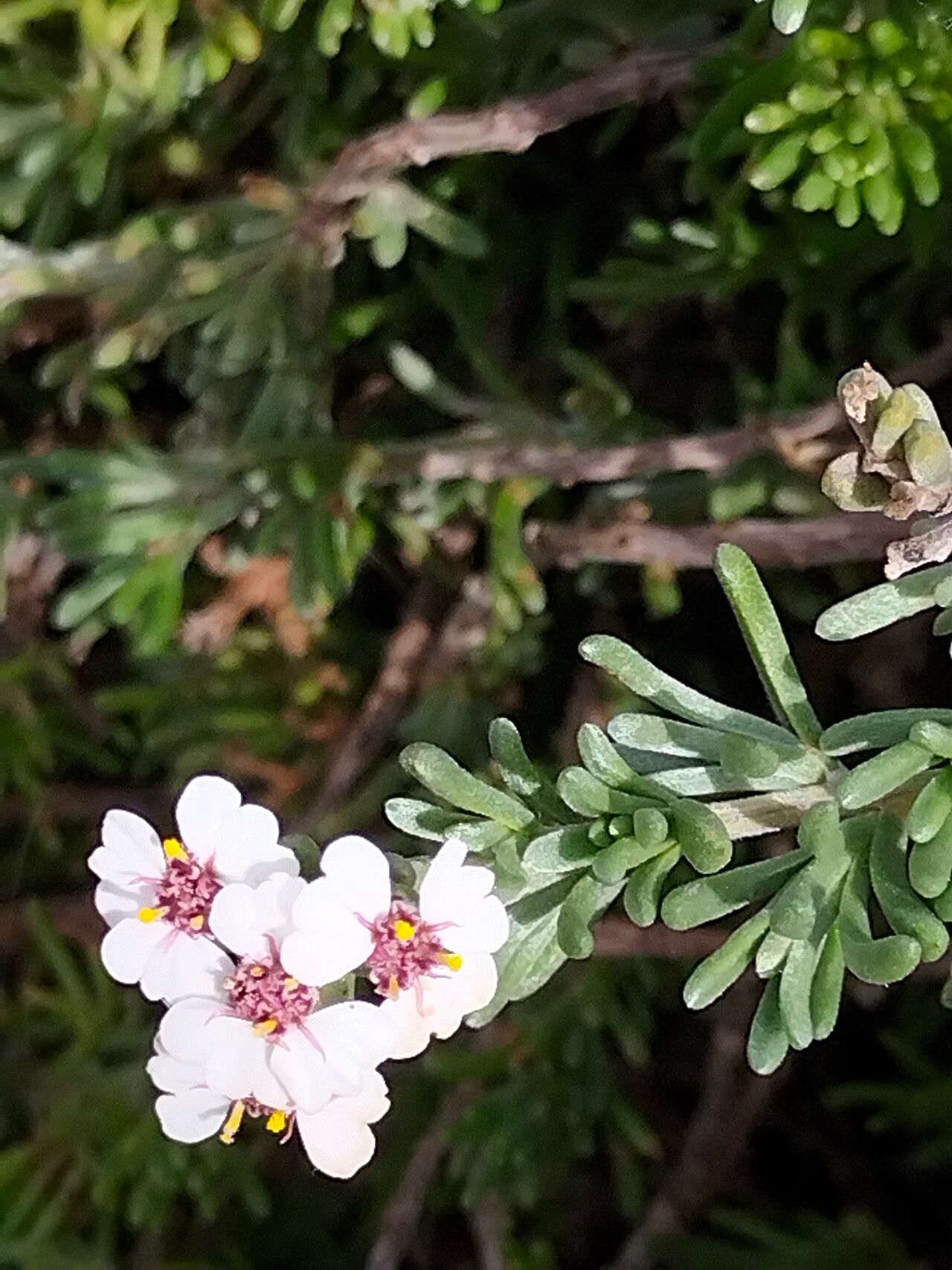
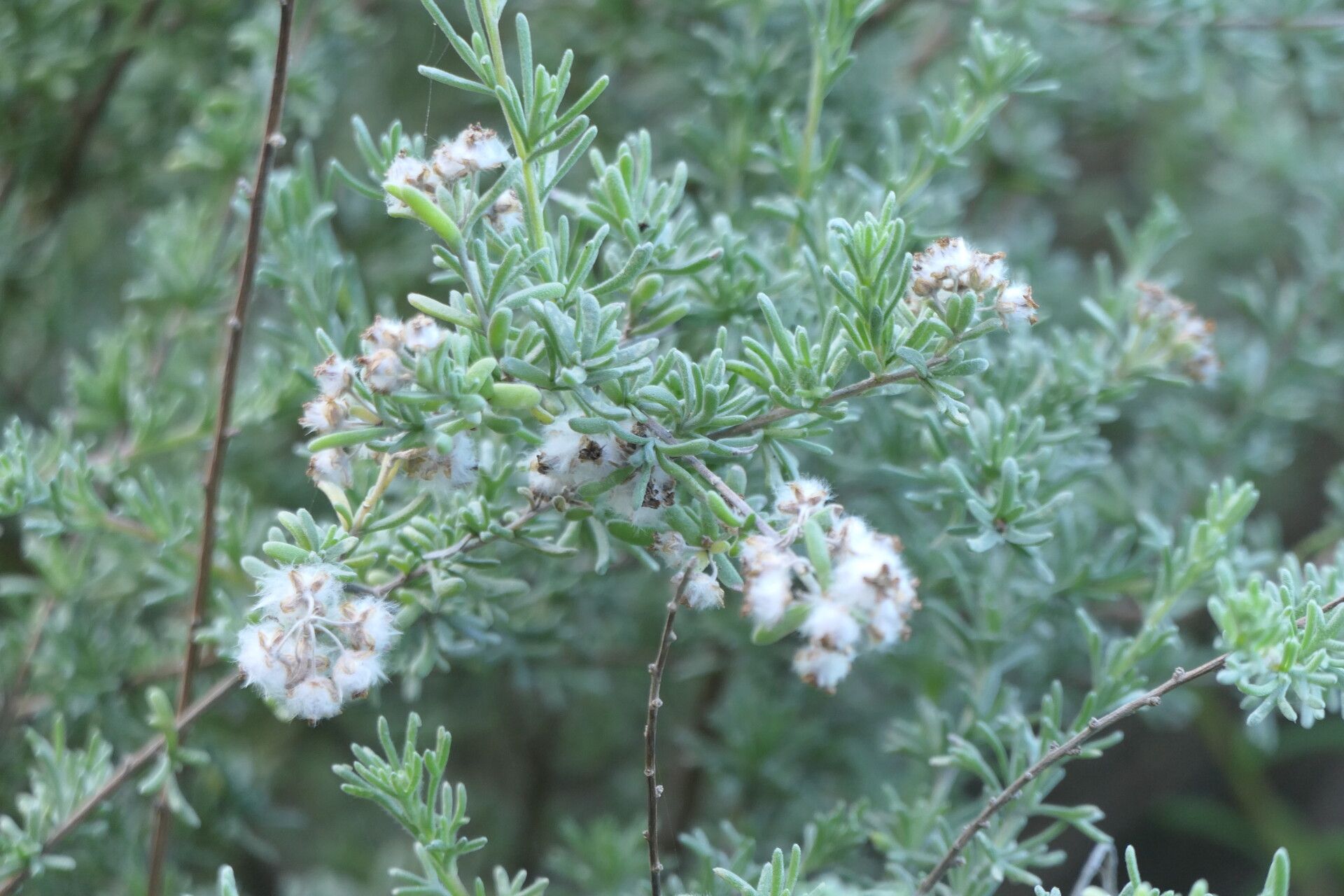
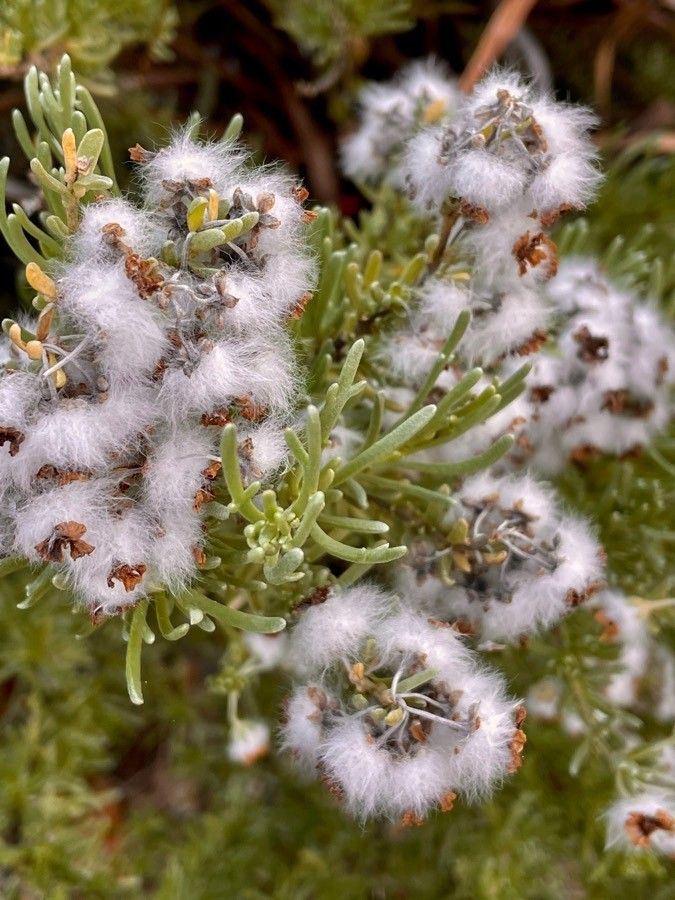
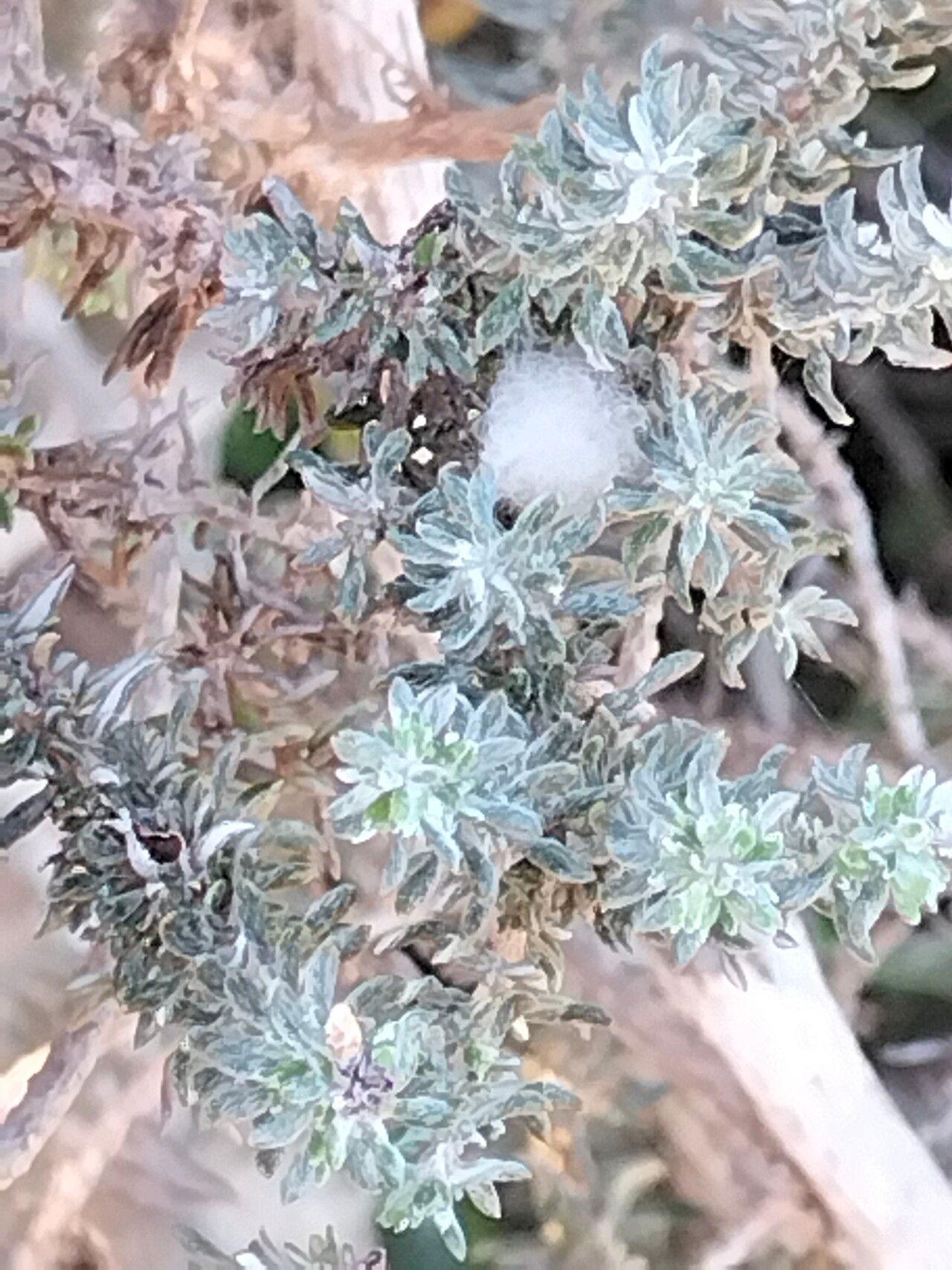
Eriocephalus africanus, commonly known as Wild Rosemary or Kapokbos, is a small shrub native to South Africa. Belonging to the Asteraceae family, it can grow up to 1 meter in height. The plant features a woody stem and small, needle-like leaves covered in fine hairs. These leaves emit a strong aromatic scent similar to that of rosemary.
The plant produces small white or yellow flowers, which bloom from late summer through autumn. These flowers are arranged in clusters at the ends of branches and attract bees and other pollinators.
Traditionally, indigenous people of South Africa have used Eriocephalus africanus for its medicinal properties, treating ailments such as coughs, colds, fever, headaches, and stomach problems.
Beyond its medicinal uses, Eriocephalus africanus is also valued as an ornamental plant due to its attractive foliage and delicate flowers. It can be cultivated in gardens or containers with well-draining soil and full sun exposure.
Overall, Eriocephalus africanus is a fascinating shrub that offers both ornamental beauty and traditional medicinal benefits, making it an important part of South Africa's flora and a valuable asset in biodiversity conservation efforts.
The Cape snow bush is resistant to disease and generally not prone to illnesses. In terms of care, the plant is fairly low-maintenance. When grown outdoors it needs only minimal watering, and larger plants usually do not require pruning. Smaller plants, however, should be pruned after they finish blooming. The Cape snow bush is appropriate for anyone with an outdoor area, such as a garden or deck, and does not demand extensive gardening experience.
How to keep Eriocephalus Africanus.
Light
The Cape snow bush performs best beneath clear, cloudless skies, which foster healthy growth. Native to areas exposed to uninterrupted sunlight, it is used to bright illumination throughout its development. However, too much exposure can harm the plant, and too little light restricts its growth.
Water
The Cape snow bush, which originates from arid regions, is highly drought-tolerant and thrives with minimal moisture. It should be watered every 2-3 weeks, making sure the soil dries out between waterings. As an outdoor plant, it prefers sunny environments and requires less supplemental watering when natural rainfall is adequate.
Temperature
Cape snow bush shows strong adaptability to a range of climatic conditions, from blistering summers to cold winters. However, it does have a preferred temperature range for growth. If temperatures rise too high, the plant is susceptible to heat and humidity stress, which can cause it to die. In areas where temperatures approach the lower limit of its cold tolerance, insulating the plant is important for protection.
Fertilizer
The timing of fertilizing the Cape snow bush is important. Apply fertilizer in early spring and continue monthly until early summer. Fertilizer promotes attractive blooms and supplies energy during both dormant and active growth periods.
Pruning
To ensure healthy growth and maintain the shape of a Cape Snow Bush, it is important to prune it strategically. Lightly trim the plant in late spring after it has flowered, and remove any dead branches. This approach enhances air circulation, reduces the risk of diseases, and ultimately results in a more vigorous and attractive plant.
Botanical profile.
- Plant Type
- Shrub
- Life Cycle
- Perennial
- Genus
- Eriocephalus
- Family
- Asteraceae
- Hardiness Zone
- 9-11
- Mature Height
- 91 cm
- Mature Spread
- 91 cm
- Leaf Color
- Green, Silver, Gray
- Leaf Type
- Evergreen
- Flower Color
- White
- Flower Size
- 1.02 cm to 1.52 cm
- Bloom Time
- Late fall, Winter
- Planting Time
- Spring, Summer, Autumn
- Harvest Time
- Late winter, Early spring, Mid spring
- Native Area
- South Africa
Other names.
Reader questions.
How should I water my Cape snow bush?
Your Cape snow bush is not particular about how you water it. You can use various common watering tools, such as watering cans, hoses, or even cups. Regardless of the tool you use, it's important to water the plant by directly applying the water to the soil. Make sure to moisten all areas of the soil equally so that every part of the root system receives the water it needs. It's preferable to use filtered water to avoid harmful particles found in tap water. Additionally, using water that is at or slightly above room temperature is ideal, as water that is too hot or too cold can be stressful for the Cape snow bush. However, the plant generally responds well to any type of water you provide.
Why should I put fertilizer on my Cape snow bush?
To help your Cape snow bush thrive, fertilizing it is crucial for several reasons. Firstly, fertilization promotes beautiful blooms in your Cape snow bush. For optimal flower production, it is recommended to fertilize in early spring. Secondly, fertilizer provides your Cape snow bush with the necessary energy to store in the ground during its dormant growth phases. By providing extra nutrients during fall planting or late spring, your Cape snow bush will have more energy reserves to utilize when active growth resumes.
What are the sunlight requirements for Cape Snow Bush?
Cape Snow Bush requires above 6 hours of sunlight daily to thrive, signifying the need for full sun exposure. It's important to watch how sunlight moves through your garden to ensure that you're selecting spots that provide an ideal balance of light and shade, catering to the plants' needs for optimal growth. The plant originates from regions that receive clear, cloudless skies, which is crucial for its healthy growth stages. However, it's essential to guard against both overexposure and insufficient illumination, as these can either damage the plant or hinder its growth.
What should I do if I give my Cape snow bush too much or too little water?
Outdoor plants, especially newly planted ones or seedlings, can be prone to lack of watering. It's important to remember to consistently water these plants for the first few months when they are small. Once the roots are established, Cape snow bush plants can rely on rainfall for the most part. When Cape snow bushes are planted in pots, overwatering is more likely. If you accidentally overwater your Cape snow bush, take immediate action to remedy the situation. Stop watering the plant right away to minimize the impact of overwatering. Remove the Cape snow bush from its pot and check the roots. If there are no signs of root rot, you can return the plant to its container. However, if you find any affected roots, trim them away and consider applying a fungicide to prevent further damage. Repotting the Cape snow bush in well-draining soil is also recommended. In the case of underwatering, simply water the Cape snow bush more frequently. This is generally an easy fix. If the plant's leaves droop, dry out, or fall off, they will quickly regain their fullness after sufficient watering. Adjust your watering frequency as soon as you notice signs of underwatering.
When should I fertilize my Cape snow bush?
To ensure effective fertilization of Cape snow bush, it is important to consider the timing. Applying fertilizer too early, while the plant is still dormant, will result in ineffective usage as it is likely to be washed away by rainwater. Therefore, it is recommended to apply the first round of fertilizer in early spring and continue monthly applications until early summer.
How can artificial lighting support Cape Snow Bush growth indoors?
When natural sunlight is inadequate, especially during winter or in less sunny spaces, artificial lighting can significantly benefit Cape Snow Bush's growth indoors. Using the right type of artificial light is essential, with LED lights being a popular choice for their ability to provide specific wavelengths needed by plants. Full sun plants, like the Cape Snow Bush, require 30-50W/sq ft of artificial light. It's important to place the light source 12-36 inches above the plant to mimic natural sunlight and keep the lights on for 8-12 hours per day, replicating the natural daylight duration for optimal growth.
How often should I give water to my Cape snow bush?
Most outdoor plants can grow fine with rainfall, but if you don't get enough rain in your area, you should water them every 2 weeks in the spring and fall, and more often in the summer. In the winter, when plants grow slower and need less water, you should water them less frequently or not at all. If your Cape snow bush is young or newly planted, it needs more frequent watering to help it grow and become more drought tolerant. For potted plants, there are two main ways to determine when to water your Cape snow bush. One way is to follow a set schedule, watering once a week or every other week. However, this may not always work because every plant's growing environment is different. Another option is to check the soil moisture. It's best to wait until the top two to four inches of soil have dried out completely before watering again. This is generally about one-third to half the depth of the pots.
When is it not a good idea to add fertilizer to my Cape snow bush?
To ensure the proper growth of Cape snow bush, it is important to be mindful of the type of fertilizer used. Avoid using a fertilizer that is high in nitrogen as this can result in an excessive amount of leaves but a lack of blooms. Instead, opt for a fertilizer that has a lower nitrogen content compared to other nutrients. Timing is also crucial when it comes to fertilizing Cape snow bush. It is not recommended to fertilize after early autumn as this can lead to excessive growth just before winter. Additionally, avoid fertilizing during hot and dry periods as dry soil does not effectively deliver the fertilizer to the plant. Fertilizing at such times can also stimulate growth, which would require more water that might not be readily available. It is best to apply fertilizer during cooler temperatures earlier in the season. Lastly, be cautious about inadvertently giving Cape snow bush a double-dose of fertilizer. The plant can absorb fertilizer that has been applied to nearby plants or lawns, so it is important to be mindful of this and avoid over-fertilizing.
What symptoms indicate insufficient light for Cape Snow Bush?
Symptoms of light deficiency in Cape Snow Bush include smaller new leaves compared to older ones, leggy or sparse growth, faster leaf drop, and halted or no new growth, indicating the plant's struggle in poor light conditions. Additionally, lighter-colored new leaves may signal a lack of chlorophyll and essential nutrients. Excessive sunlight can cause chlorosis, sunscald, leaf curling, wilting, and leaf scorching. These symptoms showcase the plant's challenges in extreme sunlight conditions and warrant prompt action to adjust light exposure.
How much water does my Cape snow bush require?
To effectively water your Cape snow bush, you don't always need to use a large amount of water. Instead, if only a few inches of soil have dried since the last watering, giving it about five to ten ounces of water each time should support healthy growth. You can also gauge how much water to use by checking the soil moisture. Keep track of how many inches of soil have dried out between waterings. To ensure your Cape snow bush gets enough moisture, provide enough water to dampen all the dry soil layers since the last watering. If more than half of the soil has dried out, it's best to give more water than usual. Keep adding water until you see excess water draining from the pot's drainage holes. If your Cape snow bush is planted in an area with sufficient outdoor rainfall, it may not require additional watering. However, when it's young or still establishing, make sure it receives 1-2 inches of rain per week. As it grows and becomes more established, it can rely solely on rainwater. Only in hot weather with no rainfall for 2-3 weeks should you consider giving your Cape snow bush a thorough watering to prevent stress.
Which fertilizer is best for my Cape snow bush?
To properly fertilize a Cape snow bush, it is recommended to use a fertilizer that has a balanced blend of the three main plant nutrients, with slightly higher amounts of phosphorus. Another option is to enhance the soil by incorporating organic materials like compost, worm castings, and manure. When the flower buds start appearing, experienced gardeners often supplement with water-soluble fertilizers containing phosphorus 1-2 times to promote better flower development, larger size, and longer blooming. While fertilizers for Cape snow bush can take various forms, the most effective ones tend to be either liquid or powdered. Regardless of the form chosen, it is important to dilute the fertilizer and apply it while watering the Cape snow bush.
What solutions can help Cape Snow Bush with insufficient light exposure?
To address insufficient light for Cape Snow Bush, consider gradually moving the plants to sunny locations until they receive at least 6 hours of direct sunlight daily. For indoor plants that aren't easily movable or are large, using artificial light such as desk or ceiling lamps or investing in professional grow lights can help provide sufficient light exposure for at least 8 hours daily. For outdoor plants, choosing the best spot for sunlight and reducing obstructions by pruning or transplantation can significantly improve light access. Notably, parts of the plant that suffered from limited sunlight may not recover, but new growth will be healthy following these adjustments.