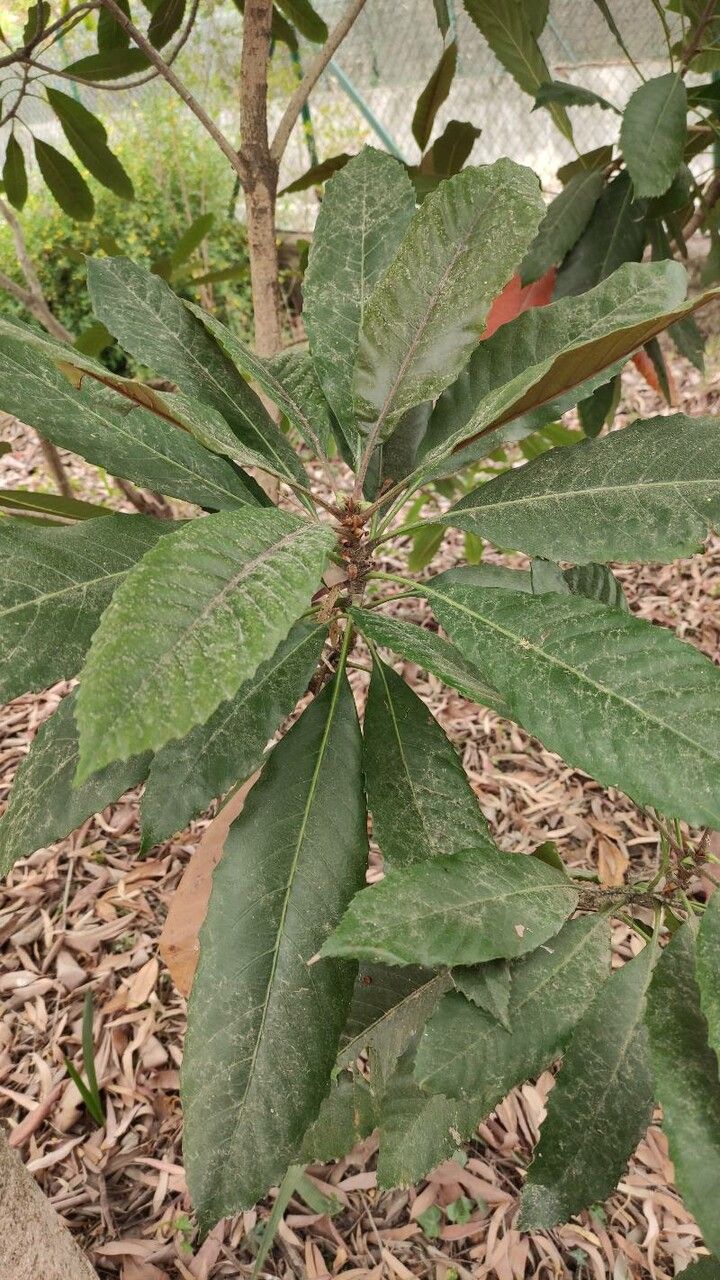
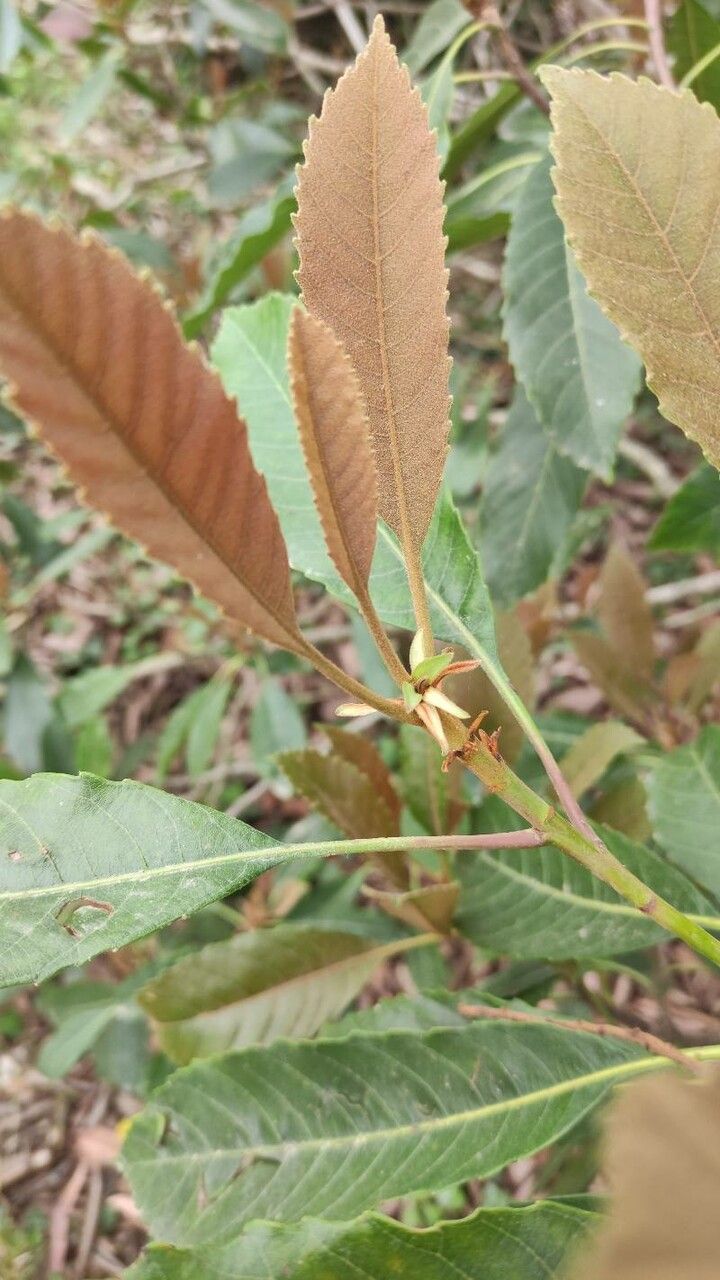
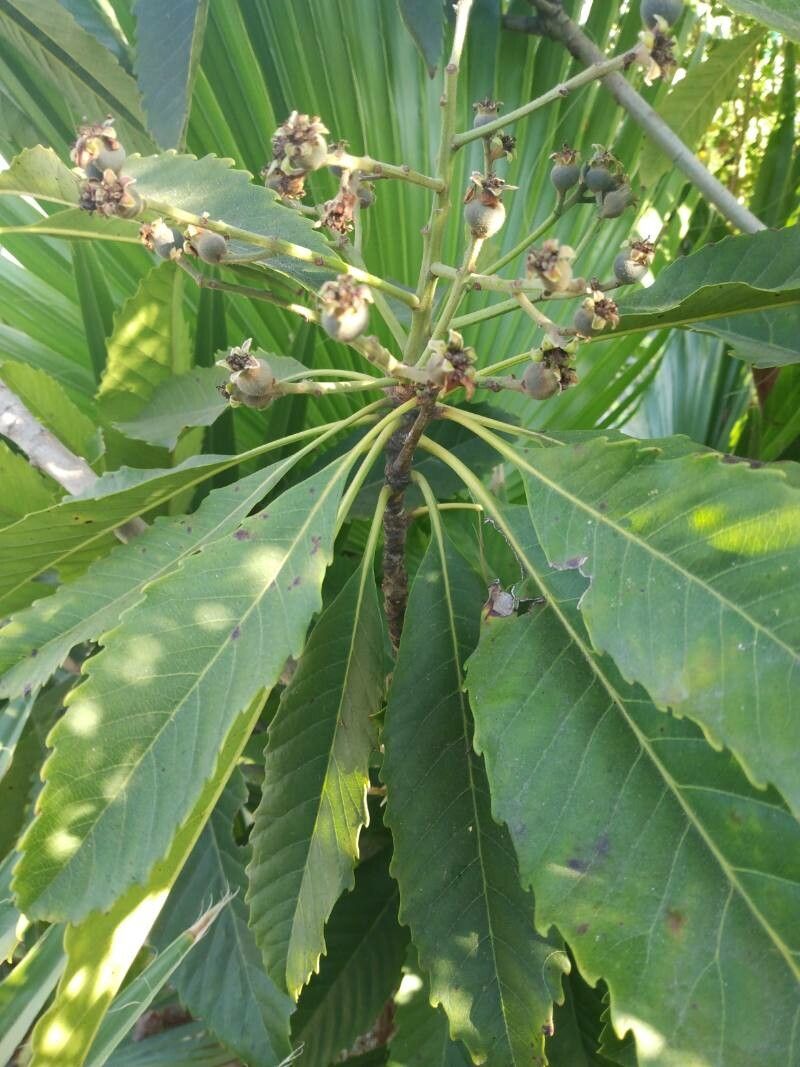
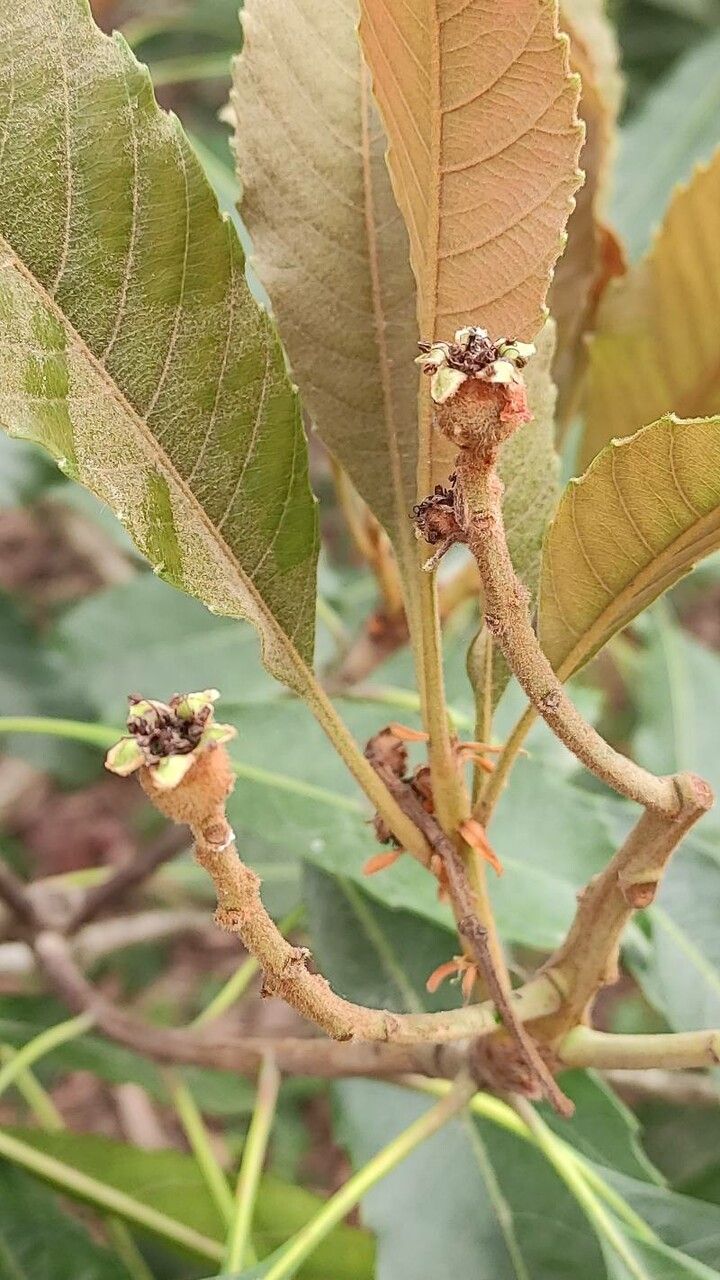
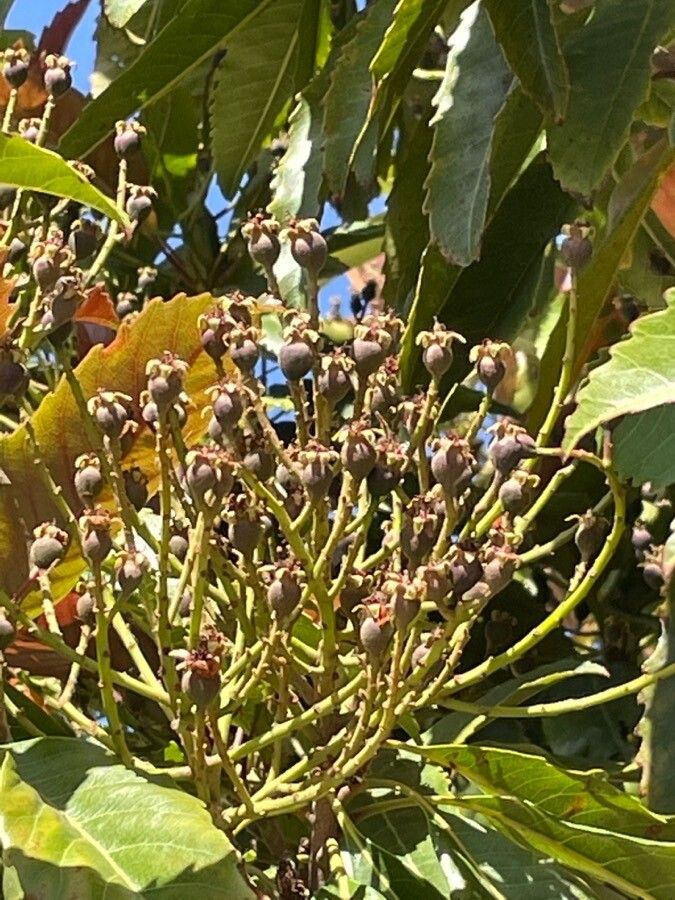
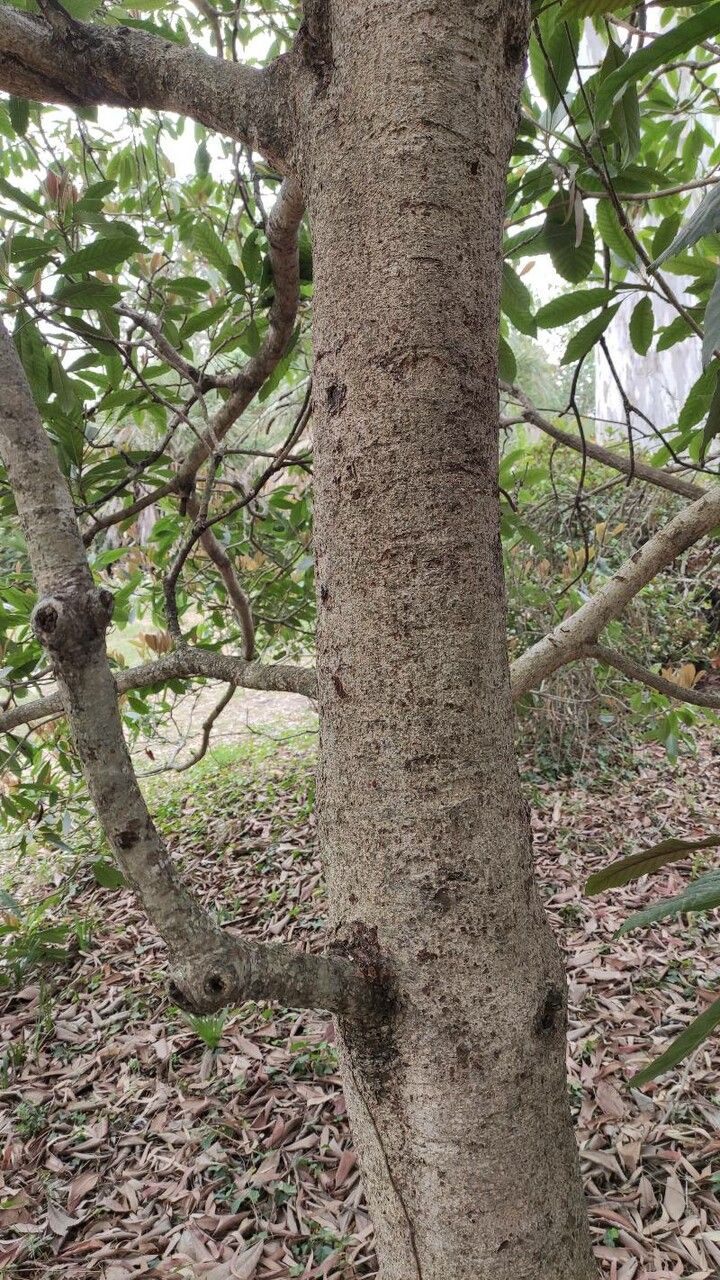
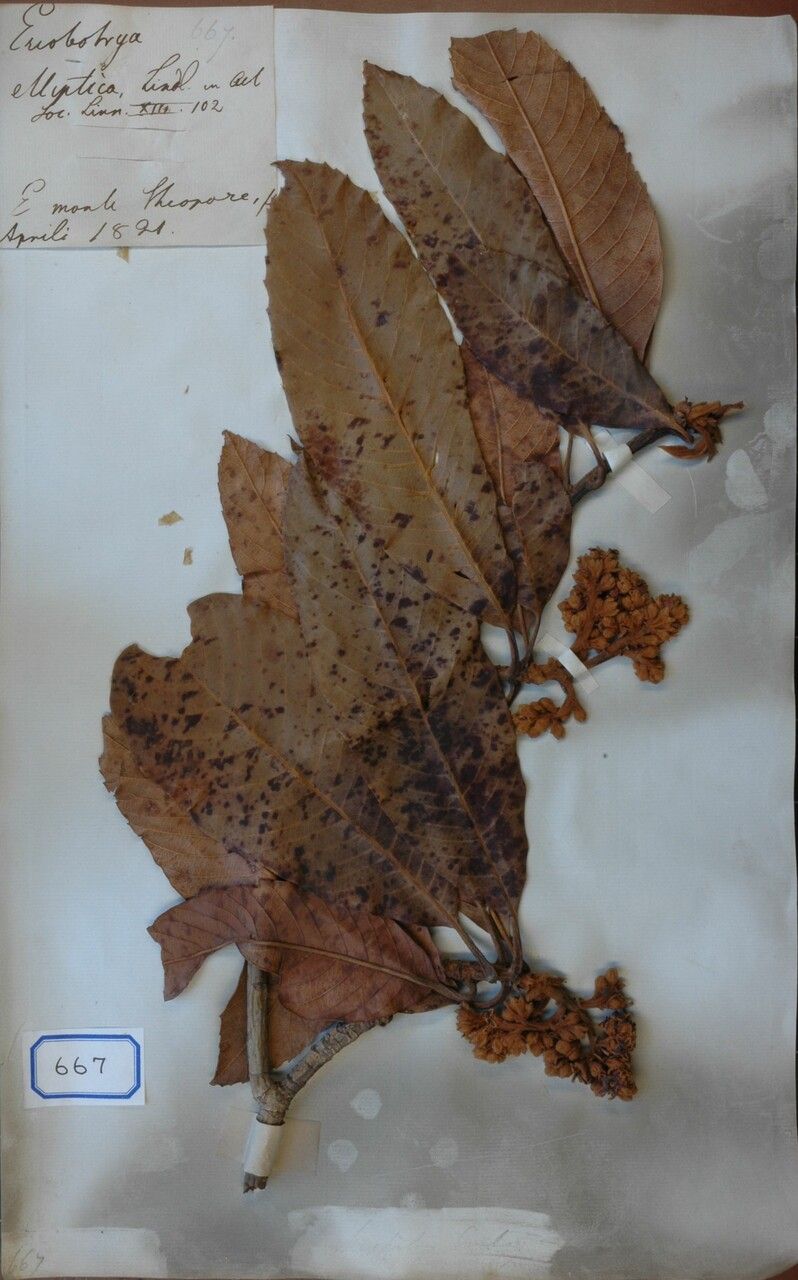
Eriobotrya deflexa, commonly known as the Bronze Loquat, is a small evergreen tree or shrub that belongs to the Rosaceae family. Native to China, it can grow up to 10 meters tall. The plant features a dense canopy of glossy, lance-shaped leaves with serrated edges. The underside of the leaves is covered with fine hairs, giving them a bronze appearance.
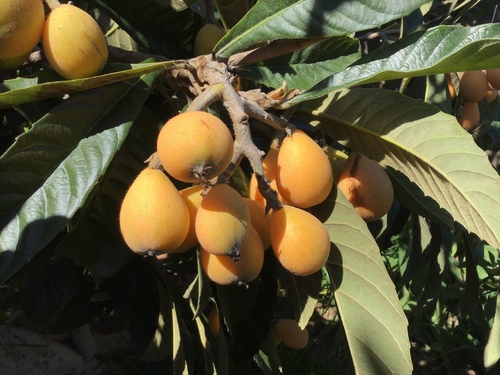
During late autumn or early winter, the Bronze Loquat produces small white flowers in clusters. These are followed by small orange-yellow fruits that resemble apricots in both shape and size. The fruit has a sweet flavor with a slight acidic tang and can be eaten fresh or used to make jams and jellies.
The Bronze Loquat is often grown as an ornamental tree due to its attractive foliage, flowers, and fruit. It thrives in well-drained soil under full sun but can also tolerate partial shade. The plant is relatively easy to grow but requires regular pruning to maintain its shape.
In Traditional Chinese Medicine (TCM), Eriobotrya deflexa has been used to treat coughs, sore throats, bronchitis, and other respiratory ailments due to its anti-inflammatory properties.
Overall, Eriobotrya deflexa makes an excellent addition for gardeners seeking an attractive ornamental tree with edible fruits, while also offering medicinal benefits from TCM practices.
The bronze loquat is disease-resistant and generally not prone to illness. Regarding care, this plant is fairly low-maintenance. When grown outdoors it needs only light watering, and larger specimens typically do not require pruning. Smaller plants, however, should be trimmed after flowering. The bronze loquat is suitable for anyone with an outdoor area, such as a garden or deck, and does not demand extensive care experience.
How to keep Eriobotrya Deflexa.
Light
Bronze loquat grows best with plenty of sun but can also tolerate sites with moderate sunlight. Its native habitats offer these light conditions, which support optimal growth. Too little light can impede its development, while excessive sun may cause some harm.
Water
The Bronze Loquat is native to subtropical regions and thrives in environments with moderate humidity. To keep the soil appropriately moist without causing waterlogging, water the plant every two weeks. Typically grown outdoors, the Bronze Loquat benefits from mulching, which helps retain moisture during its active growing season.
Temperature
The bronze loquat comes from regions where temperatures usually stay between 68 and 100 °F (20 and 38 °C). It does best in temperate environments. Seasonal temperature adjustments may be required to optimize growth.
Fertilizer
The best time to fertilize a Bronze loquat is in early spring, when it is coming out of dormancy. This encourages overall growth and flower development. Fertilization improves the leaves, stems, and branches, while encouraging flowers that are large, vibrant, and long-lasting. It helps transport nutrients from the roots to the flowers and enhances the plant’s health and resistance to disease.
Pruning
The Bronze Loquat is known for its distinctive bronze leaves and compact growth habit. To maintain its health and appearance, it is best to prune the plant from early to late winter. During pruning, remove any unhealthy branches and trim back overgrown shoots to improve air circulation and enhance the plant’s shape. Always use sharp, clean tools to prevent infections, which helps to improve both the plant's health and its aesthetic appeal.
Botanical profile.
- Plant Type
- Tree
- Life Cycle
- Perennial
- Genus
- Eriobotrya
- Family
- Rosaceae
- Hardiness Zone
- 9-11
- Mature Height
- 4.88 m
- Mature Spread
- 3.96 m
- Leaf Color
- Green, Bronze, Red
- Leaf Type
- Evergreen
- Flower Color
- White
- Flower Size
- 2.54 cm
- Bloom Time
- Mid spring, Late spring
- Planting Time
- Spring, Summer, Autumn
- Harvest Time
- Late summer, Early fall, Mid fall
Other names.
Reader questions.
What are the sunlight requirements for Bronze Loquat?
Bronze Loquat requires full sun exposure, above 6 hours of sunlight, to thrive but can adapt to partial sun conditions, which means about 3-6 hours of sunlight. It is essential to observe how sunlight moves through your garden to choose locations that provide a balance of light and shade, ensuring the plant's health and happiness. The native habitats of Bronze Loquat possess such illumination conditions, allowing for optimal growth. Too little light can impede its growth, while too much may cause harm.
What is the ideal temperature range for Bronze loquat?
Bronze loquat thrives in climates where temperatures typically remain between 68 to 100 °F (20 to 38 °C), favoring temperate conditions. It is extremely heat-loving and sensitive to cold temperatures. To optimize growth, it's crucial to adjust seasonal temperatures, especially maintaining above 20°C during winter and ensuring temperatures do not approach 0°C, as this can be detrimental to the plant.
How can artificial lighting benefit indoor Bronze Loquat plants?
Indoor Bronze Loquat plants require adequate lighting for optimal growth, especially when natural sunlight is insufficient, like in winter or less sunny spaces. Artificial lights, such as LED lights, offer a crucial solution by promoting faster, healthier growth. These lights can be customized to provide specific wavelengths needed by the plants. Full sun plants need 30-50W/sq ft, partial sun plants require 20-30W/sq ft, and full shade plants need 10-20W/sq ft of artificial light. The light source should be placed 12-36 inches above the plant to mimic natural sunlight, and most plants need 8-12 hours of light per day.
How should I care for my Bronze loquat during colder months?
During the autumn and winter months, if you're growing Bronze loquat outdoors, it is recommended to bring the plant indoors to protect it from the cold. Place it near a bright window for adequate sunlight but keep it away from heaters to avoid dryness. Maintaining indoor temperatures above 20°C is beneficial for the Bronze loquat's health during colder seasons.
What are the common symptoms of light deficiency in Bronze Loquat plants?
Bronze Loquat plants show several symptoms when they experience light deficiency, especially indoors during winter. These include smaller new leaves compared to older ones, leggy or sparse growth due to longer spaces between leaves or stems, faster leaf drop as the plant conserves resources, delayed or halted growth as the plant enters survival mode, lighter-colored new leaves indicating a lack of chlorophyll and nutrients, chlorosis or yellowing of leaves due to chlorophyll breakdown, sunscald characterized by pale or necrotic areas on the plant, leaf curling as a defense mechanism against excessive sunlight, wilting due to loss of turgor pressure, and leaf scorching seen as brown, dry edges on leaves.
What are the symptoms of cold damage in Bronze loquat, and how can I remedy it?
Bronze loquat is not tolerant of low temperatures and may exhibit symptoms like leaves lightening in color when the temperature falls below -5°C, eventually turning brown or black with wilting and drooping after frost damage. To remedy this, trim off the frost-damaged parts and move the plant to a warm environment indoors, preferably near a south-facing window for ample sunlight. Ensure the plant is not placed near heaters or air conditioning vents to avoid air dryness.
What solutions are available for Bronze Loquat plants suffering from light related issues?
For indoor Bronze Loquat plants suffering from insufficient light, gradually moving them to a sunnier spot each week until they receive at least 6 hours of direct sunlight daily is beneficial. Use a south-facing window and keep curtains open during the day. If the plant is large or not easily movable, consider using artificial light, keeping a desk or ceiling lamp on for at least 8 hours daily or investing in professional grow lights. Outdoors, gradually move plants to sunnier spots to avoid sudden changes that could cause sunburn. Where sunlight is obstructed, reduce obstructions by pruning trees or branches. For smaller plants, consider transplanting during the dormant period to a location with ample sunlight and good drainage. Note that parts of the plant affected by insufficient sunlight may not recover, but new growth after increasing light exposure will be healthy.
How does high temperature affect Bronze loquat, and what are the solutions?
During summer, it's critical to keep Bronze loquat below 38°C to avoid heat stress. Temperatures exceeding 43°C can cause the leaves to lighten and increase susceptibility to sunburn. To counteract this, trim away the sunburned and dry parts of the plant, and relocate it to an area with shade from the midday and afternoon sun. Additionally, water the plant in the morning and evening to maintain soil moisture.