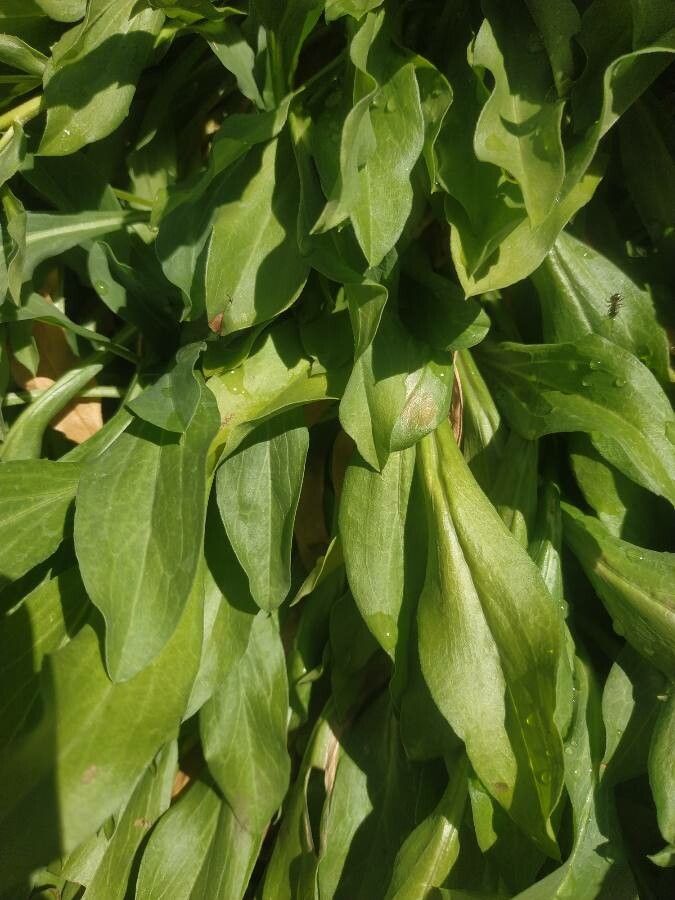
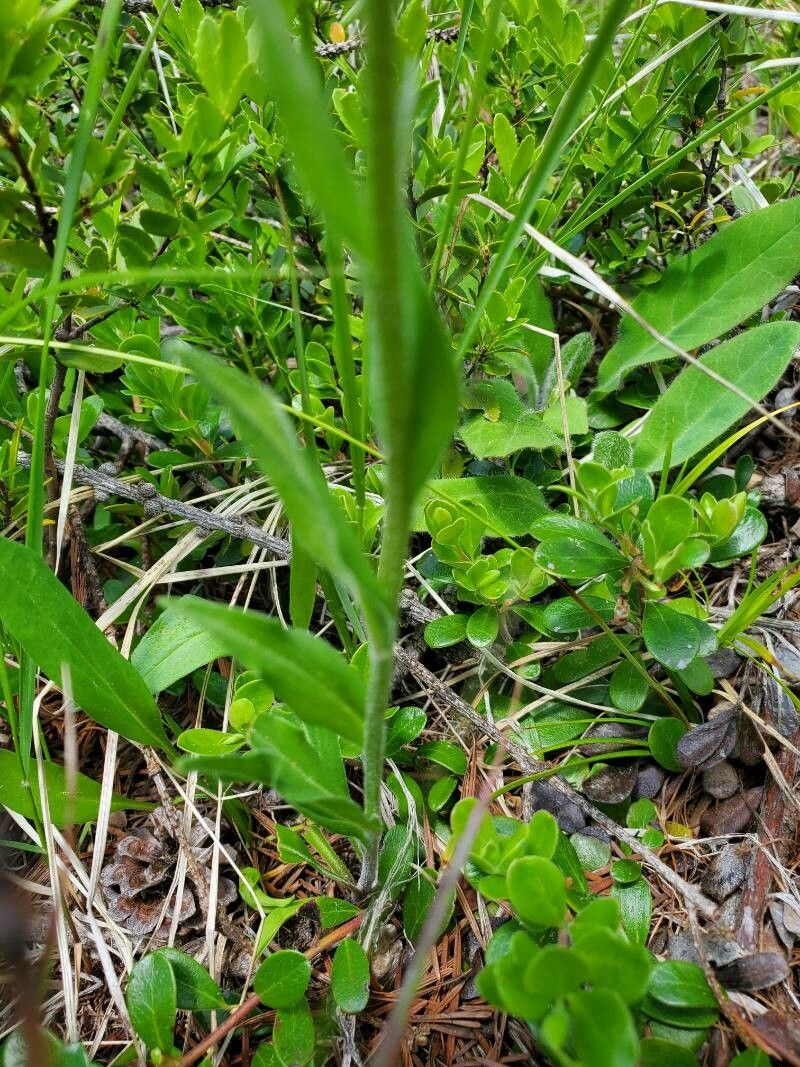
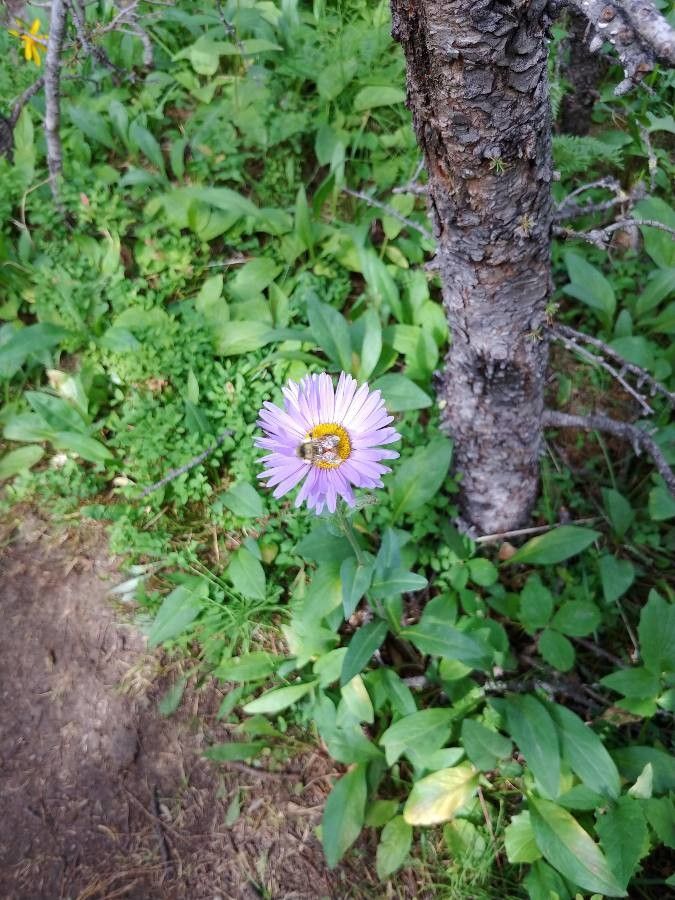
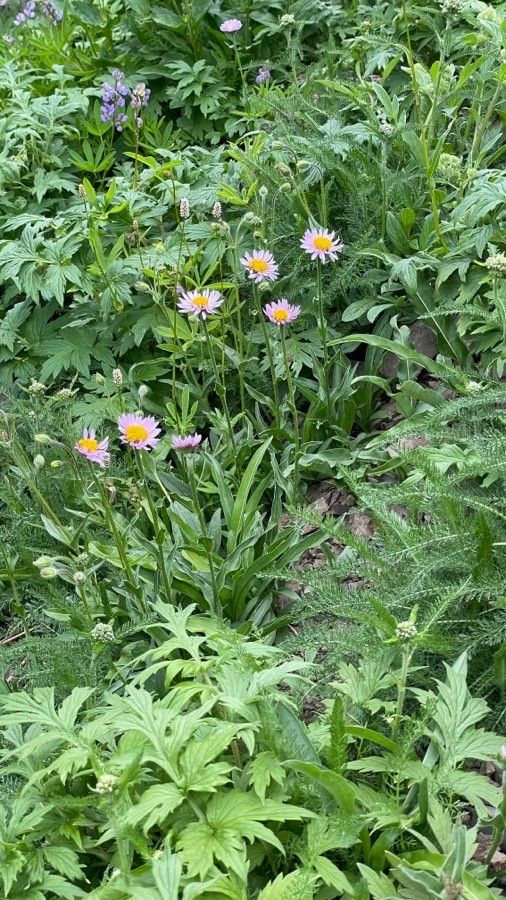
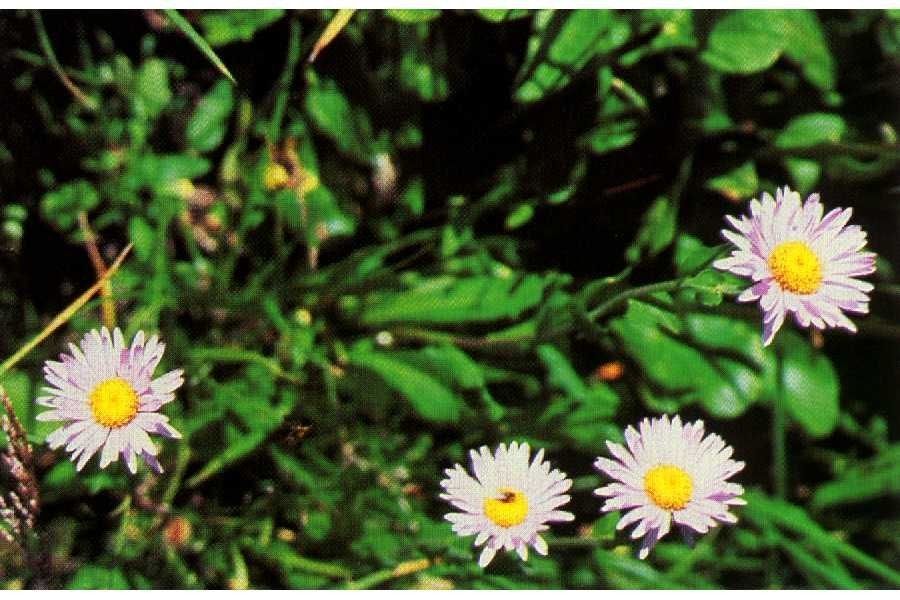
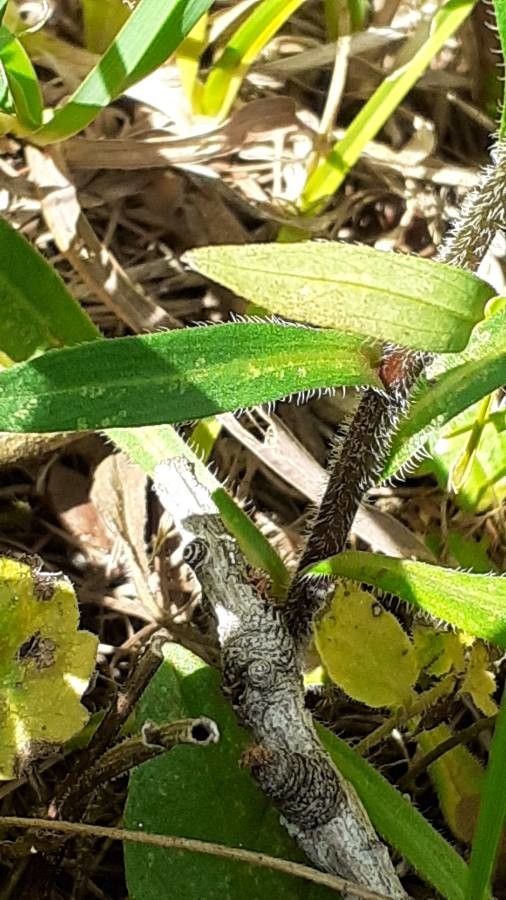
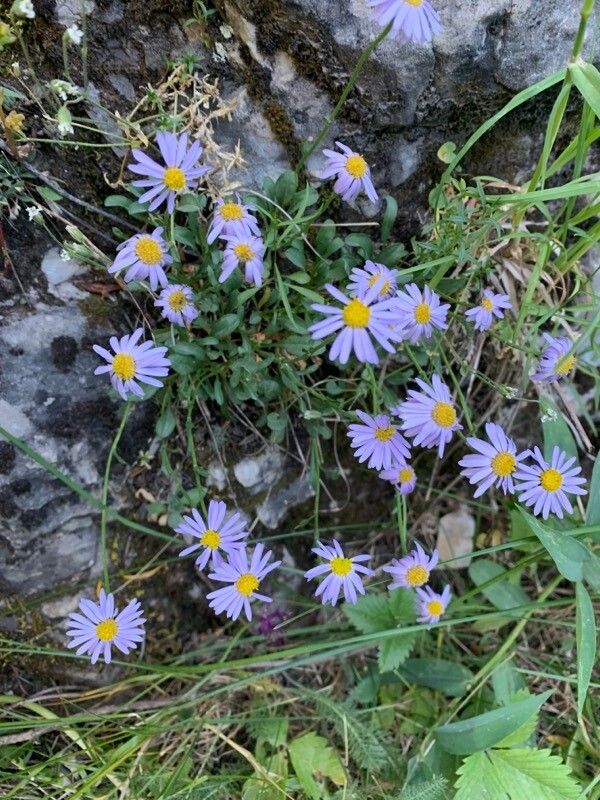
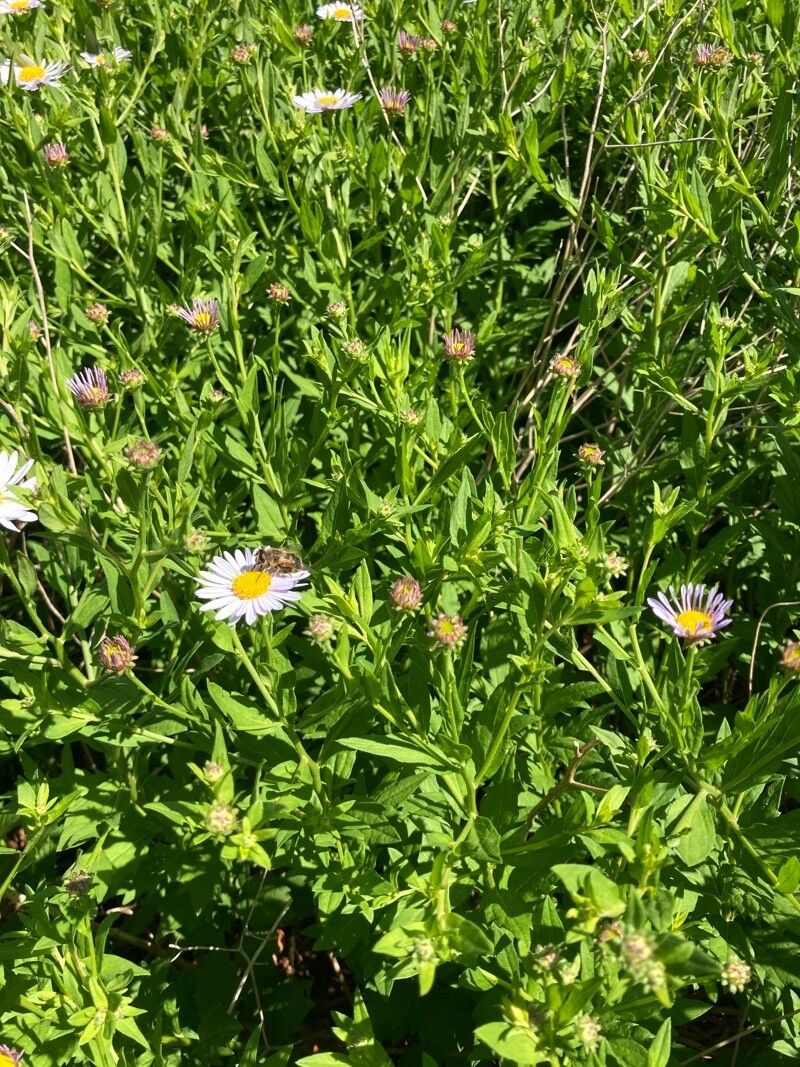
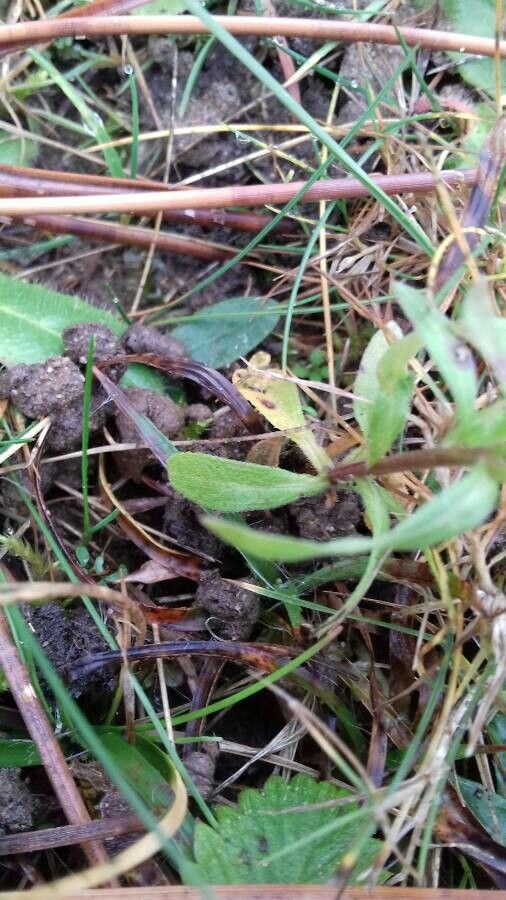
Erigeron peregrinus is a North American species of flowering plants in the family Asteraceae known by the common name wandering fleabane.Erigeron peregrinus is native to northwestern North America from Alaska to Oregon. Some populations from farther south (California, Colorado, etc.) were formerly considered as belonging to this species, but they have now either been moved to other taxa or recognized as distinct species.Erigeron peregrinus is a perennial herb up to 70 centimeters (28 inches) in height, spreading by means of underground rhizomes. It has hairless to hairy leaves reaching up to 10 centimeters long at the base of the branching stem, getting smaller higher up on the stem. The plant usually produces only one flower head per stem, each with 30–80 blue, purple, pink, or white ray florets surrounding numerous disc florets. Flowers bloom July to August. Its habitats include stream banks, bogs, and moist mountain meadows. VarietiesErigeron peregrinus var. peregrinus - Alaska, Yukon, British Columbia, Alberta Erigeron peregrinus var. thompsonii (S.F.Blake ex J.W. Thompson) Cronquist - Washington
Subalpine fleabane is fairly resistant to disease and, in general, does not tend to develop illnesses. That said, it can be affected by pests and diseases found in its environment. When infections occur, they are typically mild. Regarding care, this plant has moderate maintenance needs. It should be pruned on a regular basis to preserve its appearance and support healthy growth. Applying fertilizer can also encourage better flowering. Subalpine fleabane is a good choice for anyone with outdoor space like a garden or patio and does not demand extensive plant-care experience. It can need more attention when cultivated indoors.
How to keep Erigeron Peregrinus.
Light
Subalpine fleabane performs best with moderate sun exposure, similar to its native alpine and subalpine habitats. Excessively strong light can damage the plant, while too little light may hinder healthy growth. Consequently, a balance between sufficient and overly abundant sunlight is essential for its health.
Temperature
Subalpine fleabane is native to areas where temperatures range from 32 to 95 °F (0 to 35 °C). It has a strong preference for a temperate climate. During seasonal shifts, it is important to monitor temperature fluctuations to ensure conditions remain consistent with the plant's natural habitat.
Fertilizer
The best time to fertilize a Subalpine fleabane is in early spring, as it breaks dormancy and starts active growth. Fertilization supplies essential nutrients for healthy development. Although Subalpine fleabane has relatively low fertilizer requirements, applying fertilizer annually can improve its survival and encourage stronger, longer-lasting blooms.
Pruning
Subalpine fleabane features delicate, daisy-like flowers and flourishes in subalpine environments. To maintain its health and appearance, prune in the spring to remove any damaged growth and to encourage a bushier shape. Regularly deadhead the blooms to extend the flowering period. Always use clean tools to ensure proper sanitation and prevent disease. Consistent pruning not only enhances the plant's vigor but also improves the overall aesthetics of your garden.
Botanical profile.
- Plant Type
- Herb
- Life Cycle
- Perennial
- Genus
- Erigeron
- Family
- Asteraceae
- Hardiness Zone
- 2-9
- Mature Height
- 46 cm to 61 cm
- Mature Spread
- 15 cm to 30 cm
- Leaf Color
- Green, Dark Green
- Leaf Type
- Deciduous
- Flower Color
- White, Pink, Lavender
- Flower Size
- 3.05 cm to 5.08 cm
- Bloom Time
- Summer
- Planting Time
- Spring, Summer
- Harvest Time
- Late summer, Early fall, Mid fall
Other names.
Reader questions.
How should I water my Subalpine fleabane plant?
To take care of the Subalpine fleabane, use filtered water at room temperature. Tap water may have harmful particles, so it's best to avoid it. Since the plant is used to warm environments, it's important to use water at room temperature or slightly warmer to avoid shocking the plant. Don't water the plant from above to prevent foliage problems. Instead, water the soil until it is well-soaked. This helps the roots stay moist and spread through the soil to collect nutrients.
What are the sunlight requirements for Subalpine fleabane?
Subalpine fleabane requires about 3-6 hours of sunlight daily, thriving in partial sun conditions. It's important to watch how sunlight moves through your garden to select spots that provide a perfect balance of light and shade, ensuring the plant's happiness. These conditions mirror its natural alpine and subalpine environments, where too intense light can harm the plant and insufficient exposure might impede healthy growth.
What is the natural habitat temperature range for Subalpine fleabane?
Subalpine fleabane is native to environments where the temperature ranges between 32 to 95°F (0 to 35°C), thriving best in temperate climate conditions. It's crucial to watch for seasonal temperature fluctuations to maintain harmony with the plant's natural habitat, ensuring its health and growth.
What should I do if I give my Subalpine fleabane plant too much water or too little water?
Overwatering is a more common issue than underwatering for Subalpine fleabane. When the plant receives too much water, its stems and leaves wilt and turn yellow. Overwatering can also lead to diseases like root rot, mold, and mildew, which can be deadly. Underwatering is less common due to the plant's drought tolerance, but it can still happen and causes brittle, brown leaves. It's important to notice signs of overwatering early and take immediate action. Diseases like root rot may not be fixable if left unaddressed for too long. If you see early signs of overwatering, reduce watering and check the soil's drainage. Replace poorly draining soil with a loose, well-draining potting mix. For underwatering, simply increase watering until signs subside.
How can artificial lighting be used for Subalpine fleabane?
When natural sunlight is insufficient, especially in winter or less sunny spaces, artificial lights offer a vital solution for Subalpine fleabane's growth. LED lights are a popular choice because they can be customized to provide specific wavelengths needed by plants. For optimal growth under artificial lighting, full sun plants need 30-50W/sq ft, partial sun plants need 20-30W/sq ft, and full shade plants need 10-20W/sq ft. The light source should be placed 12-36 inches above the plant to mimic natural sunlight, and most plants require 8-12 hours of light per day.
Does Subalpine fleabane require special frost protection?
Subalpine fleabane has a strong resistance to cold and does not usually require special frost protection during winter. However, in conditions where temperatures are expected to drop below -40°C, it's important to afford the plant extra protection by covering it with soil or straw. Additionally, watering the plant abundantly before the first freeze can help keep the soil moist, preventing drought and water scarcity during the colder months.
How frequently should I water my Subalpine fleabane?
If your Subalpine fleabane is in a pot, the most precise way to determine whether it needs water is by checking the soil. Plunge your finger into the soil and if the top two to three inches are dry, then it's time to water it. The same method can be used for Subalpine fleabane grown outdoors in the ground. When the top few inches of soil have dried out, it's time to add water. Generally, during the spring and early fall, watering once a week is sufficient. However, in extremely hot weather, watering may need to be increased to twice or more per week. Although, it's important to note that mature, well-established Subalpine fleabane plants have a great ability to tolerate drought.
What are symptoms of improper lighting for Subalpine fleabane?
Subalpine fleabane may exhibit several symptoms when exposed to improper lighting, including small and lighter-colored new leaves, leggy or sparse growth, faster leaf drop, and slower or no new growth, indicating light deficiency. Excessive sunlight may cause chlorosis, sunscald, leaf curling, wilting, and leaf scorching, signaling that the plant is receiving too much light.
How does low temperature affect Subalpine fleabane, and what are the solutions?
Subalpine fleabane is cold-tolerant, faring best when temperatures remain above 0°C. It should be kept above -35°C during winter. If temperatures fall below -40°C, the plant may not show immediate damage during winter, but a decrease in sprouting or a lack of sprouting may occur in spring. The recommended solution for any damage incurred during such low temperatures is to remove the parts of the plant that fail to sprout in the spring.
How much water does my Subalpine fleabane plant require?
When watering your Subalpine fleabane, it's important not to hold back. Make sure the top two to three inches of soil are dry before giving it a good, deep watering. Add enough water to fully saturate the soil, allowing excess water to drain out from the bottom of the pot. If you don't see any excess water draining, it means you haven't given enough water. However, be careful not to let water accumulate in the soil, as this can harm the plant. On the other hand, if water doesn't drain well, it indicates poorly draining soil, which is bad for the plant's health. If the plant is outdoors, around 1 inch of rain per week should be enough.
What solutions are available for Subalpine fleabane experiencing improper lighting?
For Subalpine fleabane experiencing improper lighting, gradually moving the plant to sunnier spots each week until it receives the adequate 3-6 hours of direct sunlight daily can help. If natural light is insufficient and the plant is not easily movable, consider using desk or ceiling lamps for at least 8 hours daily, or invest in professional plant grow lights. For outdoor plants, avoid sudden changes in light intensity to prevent sunburn. If parts of the plant have been affected by insufficient sunlight, they may not recover, but new growth should be healthy after adjusting light exposure. Additionally, reducing obstructions like pruning tree branches or transplanting smaller plants during their dormant period to spots with ample sunlight and good drainage can ameliorate conditions.
What are the effects of high temperature on Subalpine fleabane, and how can they be mitigated?
During summer, it's critical to ensure that the surrounding temperature for Subalpine fleabane does not exceed 35°C. Temperatures above 38°C can cause the leaves to lighten in color, become prone to curling, suffer from sunburn, and in severe cases, lead to the wilting and drying of the entire plant. To mitigate these effects, it's advisable to trim away the sunburned and dried-up parts, move the plant to a shaded location or use a shade cloth to protect it from direct midday and afternoon sun. Additionally, watering the plant in the morning and evening will help maintain soil moisture and support the plant's health.