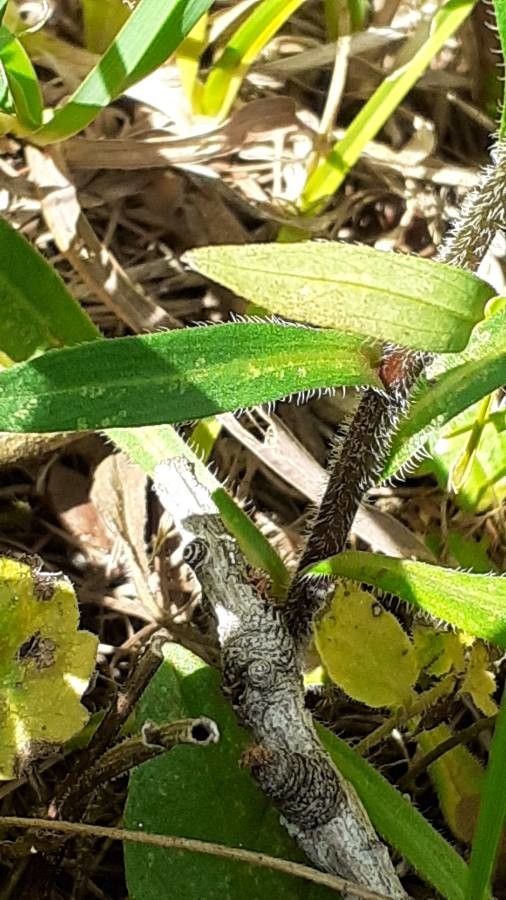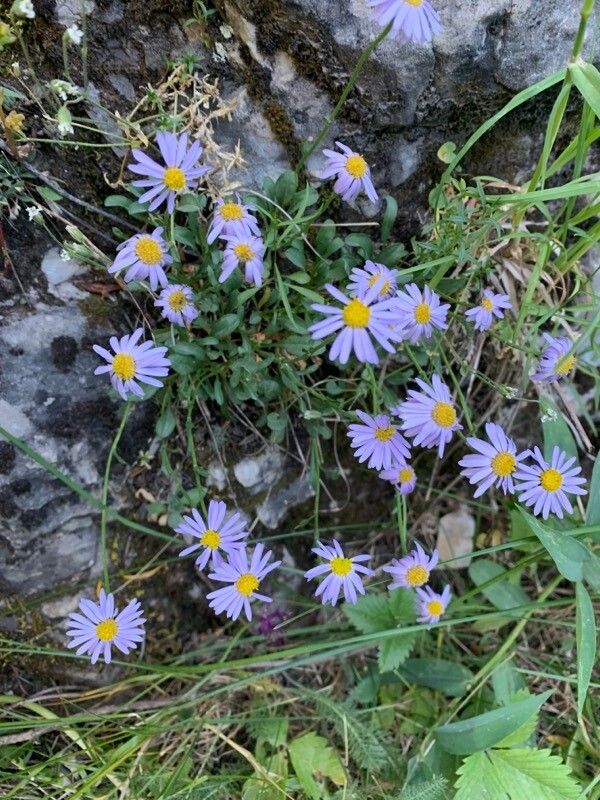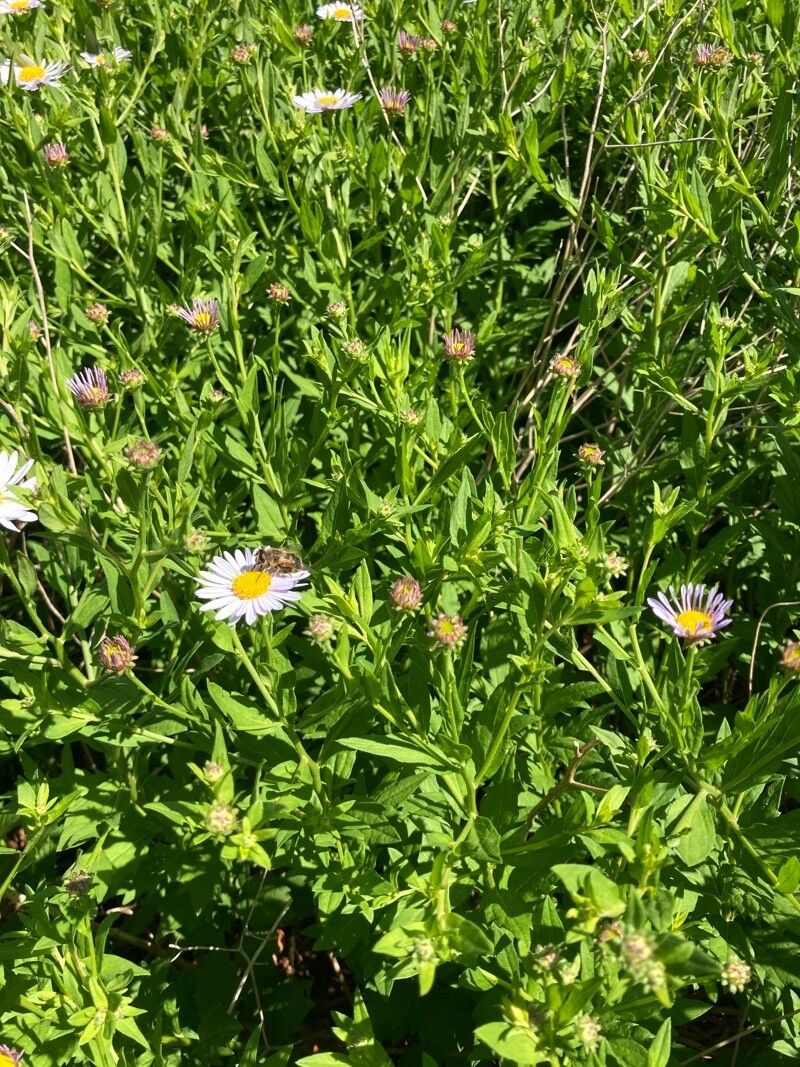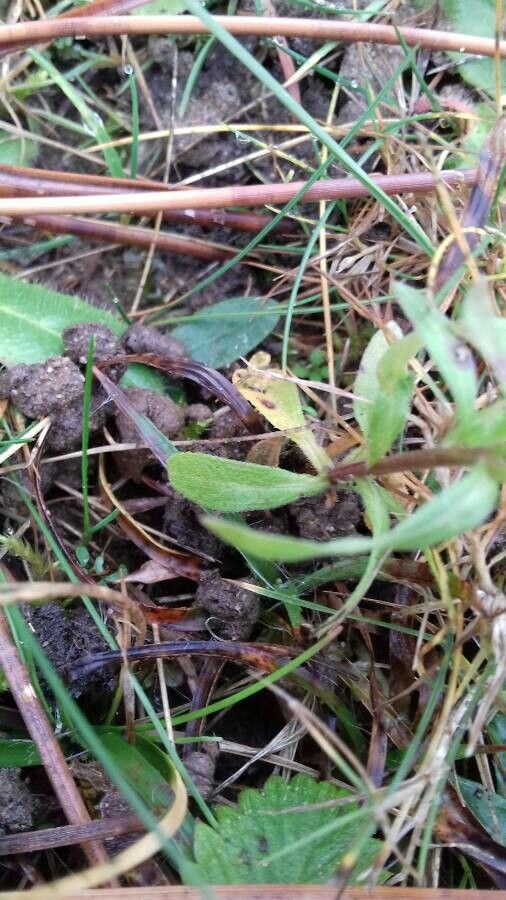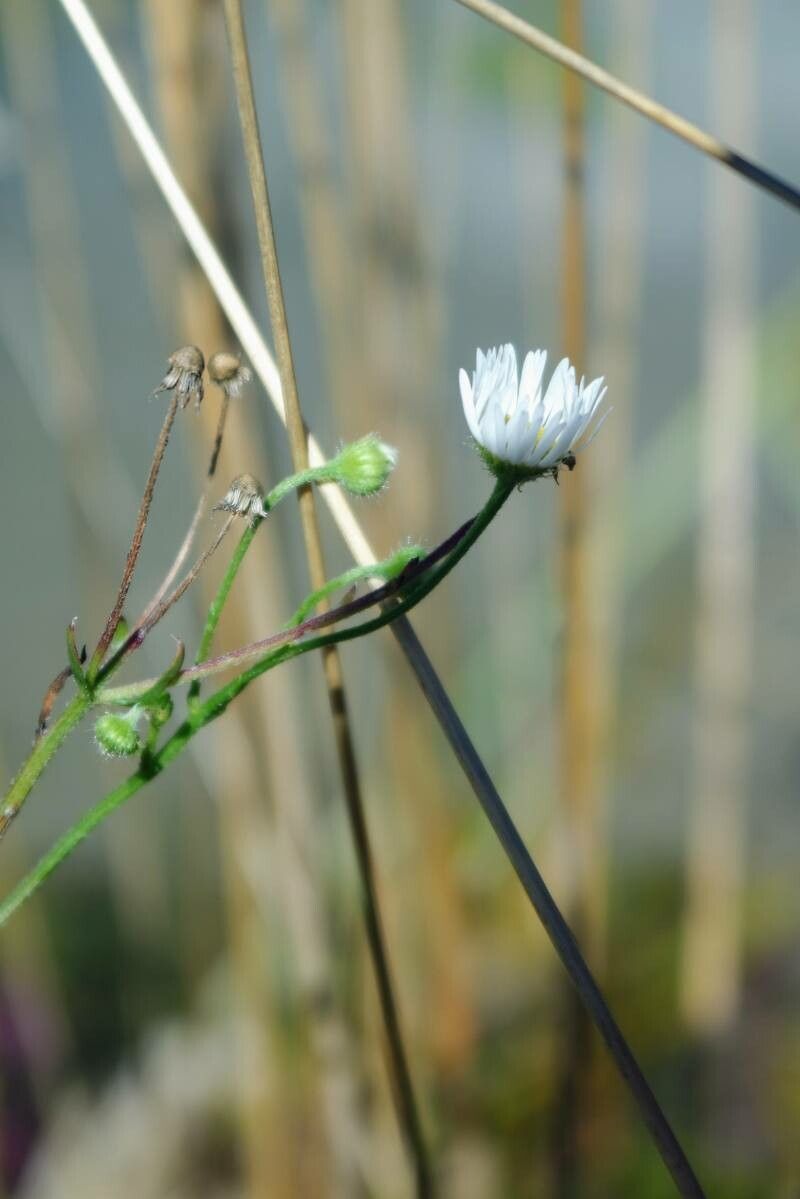
Erigeron lonchophyllus is an Asian and North American species of flowering plant in the family Asteraceae known by the common name shortray fleabane. Erigeron lonchophyllus is native to North America including most of Canada except the 4 Atlantic provinces, as well as the western and north-central United States. It occurs in many types of moist habitat and disturbed areas. It is also found in much of Asia (Siberia, Mongolia, Xinjiang, Kazakhstan, Iran).Erigeron lonchophyllus is an annual or biennial herb growing 2 to 60 centimeters (0.4 to 24 inches tall, its stem hairy to bristly. The leaves are up to 8 centimeters (3.2 inches) long at the base and smaller and shorter along the upper stem. The inflorescence includes one to 12 small flower heads. Each head is lined with hairy purple-tipped phyllaries and contains up to 130 hairlike white to pink ray florets each measuring only 2 or 3 millimeters long. These surround numerous yellow disc florets in the center.
Shortray fleabane is fairly resistant to disease and is generally not prone to illnesses. However, it can be affected by pests and diseases present in its environment. Such infections are typically not serious. Regarding care, this plant requires moderate maintenance. It should be pruned regularly to keep a neat appearance and encourage healthy growth. Fertilizing can also help promote flowering. Shortray fleabane is appropriate for anyone with an outdoor area, such as a garden or patio, and does not demand extensive gardening experience. It may need more attention when kept indoors.
How to keep Erigeron Lonchophyllus.
Light
Shortray fleabane is native to bright, open sites and flourishes in full sun. It can tolerate partial sun but favors direct light for best growth. This species, which may be annual or biennial, is noted for its sun-loving nature.
Water
Shortray fleabane thrives in environments with moderate moisture and requires consistent hydration, ideally through weekly watering. It grows best outdoors in soil that offers excellent drainage, allowing excess water to escape. This drainage is crucial for maintaining the plant's health and vigor in garden settings.
Fertilizer
Shortray fleabane are regarded as heavy feeders with respect to nutrients. They require frequent, small doses of nitrogen and potassium fertilizers and periodic applications of phosphorus, micronutrients, sulfur, and magnesium to maintain healthy growth and bright coloration. Continuous fertilization throughout the growing season is necessary to prevent deficiency symptoms and sustain optimal growth.
Pruning
Shortray fleabane is a compact perennial plant with delicate, daisy-like flowers. To encourage healthy growth, prune it from early to late spring. Regularly trim faded flowers and damaged leaves to help the plant maintain its shape. If the plant becomes sparse, cut it back to ground level in late winter. Proper pruning enhances airflow and light penetration, which promotes vigorous growth.
Botanical profile.
- Plant Type
- Herb
- Life Cycle
- Biennial, Perennial
- Genus
- Erigeron
- Family
- Asteraceae
- Hardiness Zone
- 4-7
- Mature Height
- 1 cm to 61 cm
- Leaf Type
- Semi-evergreen
- Flower Color
- White, Yellow
- Bloom Time
- Spring, Summer
- Native Area
- Kyrgyzstan, Kazakhstan, Mongolia, Pakistan, China